Stories

July 4, 2023

SHARE:

The world of home decor is a place where creativity and self-expression know no bounds. It’s a space where artists and makers come together to craft unique and meaningful designs that add a personal touch to people’s homes.

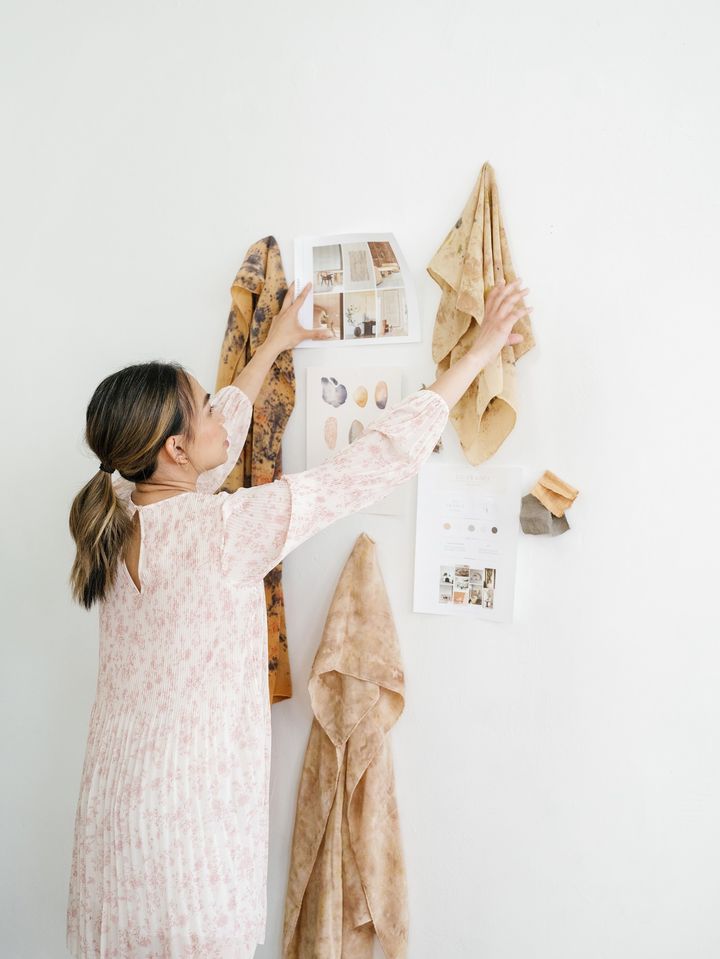
In the heart of San Diego, California is France Malvar. Her story is one of hope, passion, and self-discovery. After 14 years as an early childhood educator, France took a leap of faith and pivoted her career to become a natural dye artist and create Lu France Interiors, a home decor brand for intentional design. For the past two years, she’s been pouring her heart and soul into her work, crafting pieces that are as beautiful as they are sustainable.

France carefully chooses the businesses and artisans that her brand partners with. Her previous collections were made in collaboration with small businesses all over the world, mostly in the Philippines, to support the local weavers and artisans in her homeland.

I HOLD FOND MEMORIES GROWING UP IN THE PHILIPPINES

I’m pretty blessed to have had a childhood full of memorable experiences and surrounded by people who have in one way or another shaped me.

I grew up in my Papa’s ancestral house in the Philippines before my parents eventually built their own, which became our home, and I have nothing but good memories of both. Summers and Christmas breaks were spent with my cousins and we would spend weeks at our Lola’s house, or at our Tita and Tito’s home, or somewhere exploring a new place together.

As my parents got settled in their respective careers, we progressed to traveling more or going out — driving up to Tagaytay, spending Sundays at the park, exploring all sorts of shops and markets, or eating out. They also gave us the opportunity to explore different sorts of activities and I took a special interest in ballet, starting classes at the age of 3 and then continuing through the start of high school before moving to other forms of dance through college. A lot of my memories involve recitals and shows and having my family there to support me. 

I don’t know what defines a typical childhood. But I do know that I hold fond memories growing up in the Philippines. Even to this day, there are moments that I get so nostalgic for every time, and I am grateful for all of them.

TRANSITIONS CAN BE SCARY, PIVOTS AT LEAST TO ME ARE TERRIFYING

Much of my young adulthood has always been about pivots.

Growing up, a career in medicine is what I’ve always been exposed to. A lot of times I’d tag along with my sisters to our Papa’s clinic or I’d wait for Mama in hospital break rooms and offices. Whether those instances were by design or simply out of necessity, I always thought I’d just follow along and take a science course to eventually pursue a career in medicine in one form or another.

So I studied Sports Science in college. During an Adapted Physical Education class, I realized that I liked teaching children. It gave me so much joy seeing how even the smallest actions you make and the lessons you share, impact their days and eventually their lives. After graduation, I applied for teaching jobs with a focus on music and movement, and fitness for young children. I figured I could take my Sports Science degree, my love for dance and movement, and use it to pivot to a career teaching children.

My first job offer out of college was from a school in Singapore, but I chose to stay in the Philippines and worked for a year there before moving to the US. I eventually took a certificate in early childhood education and spent 14 years in that industry working both in the US and the Philippines. It was a career I loved (and honestly actually miss). While I continued to teach, I also kept dabbling in the different art forms I’ve taken a liking to. I took design workshops to relieve my stress – styling, floral arrangement, natural dyes, etc.

When the pandemic happened and schools shut down, I enrolled in Interior Design online and started honing my love for all things design, leaving a career I’ve known for 14 years and taking my love for natural dyes and design a step further by launching my business.

Transitions can be scary, pivots at least to me are terrifying. I’m the type of person who is constantly planning. I need to know where I will be, and what I will do at certain points in my life. When changes happen and I need to adjust, that throws me off and my anxiety kicks in. But I think for the most part it is exactly because I am a planner and because I willingly chose these pivots from Sports Science to early childhood to now, a natural dye artist and small business owner, there was more excitement than anxiety as I took every transition. 

LU FRANCE INTERIORS IS AN EXTENSION OF MYSELF

Much of who I am as a designer and artist are rooted deeply in my being Filipino and more specifically, my experiences and memories I have growing up in the Philippines. That’s true for the things that catch my eye whether it be handcrafted wood pieces, ceramics, or the spaces I gravitate to, I crave rooms and spaces that are “maaliwalas,” full of warmth with a lived-in look, calming, and organic.

The stories that shape my collections are all stories from home. The candle scents I have in collaboration with Terra, a Filipino-American brand, are inspired by my life growing up in the Philippines. Every single scent has a story, a distinct memory attached to it.

The stories that guide and serve as the foundation for my naturally dyed pieces are all inspired by memories from the Philippines too. Sometimes a moment from years ago inspires me or a Filipino word that resonates with me moves me to make a tangible piece of art. Or sometimes an event back in the Philippines moves me to create a whole collection of naturally dyed textiles. I previously dropped a whole collection inspired by the campaign of former Vice President Leni Robredo! What I can’t articulate, I translate in the form of my naturally dyed textiles, always hoping to share a piece of my being Filipino with others. 

My values also play an important role in the people I choose to work with. I have a collaboration collection with Anthill, a social enterprise based in Cebu, Philippines. My thrust for love of community, sustainability, amplifying the work of Filipino artisans, and sharing their stories are some of the values I found in Anthill too. 

And while I proudly work with non-Filipino makers too and curate pieces from artisans and businesses around the globe, the same design influences from my life in the Philippines and the same values guide me in choosing what to pick and who to work with no matter where they come from. I say this often, Lu France Interiors is an extension of myself. It’s me in brand form and while I do not constantly scream about my being Filipino, I think if you browse through my website or follow me on social media, you’ll see why I don’t have to — it’s just naturally, constantly, permanently, and beautifully a part of my identity. 

ALLOWING MYSELF TO ASK FOR HELP FROM OTHERS HELPED ME TO RIDE THE HICCUPS THAT USED TO KEEP ME UP AT NIGHT

As with any other small business, I think the financial uncertainty that comes with building and running a brand is the most challenging part of building a business. The design process comes easily to me (at least thankfully, for the most part, it does!).

My years of teaching children and dealing with difficult parents have also helped me in dealing with customers and suppliers. But navigating slow seasons, courier mishaps, and other unexpected issues that affect cash flow were challenges that really kept me up for nights at some point since I launched my brand. But I’m really lucky to have the constant support of family who all go above and beyond in helping me pursue and monetize this passion, the support of friends, and the support of a very loyal audience who all continue to spread the word about my brand. 

I also found comfort and strength in knowing that I am not the only small business owner who has had to deal with the hardships post-pandemic and I’ve learned much from my fellow makers, artists, and owners. I pivoted to pushing for more wholesale opportunities for my natural dye work so that they are stocked in more retail stores, I joined more pop-up markets to introduce my brand to audiences that social media doesn’t reach, and I adjusted in terms of collection batches and when and how I launch and restock pieces.

The brand is a continuous work in progress for sure as much as I am too as a person and I think changing my perspective on how I view these challenges and using them as learning curves and allowing myself to ask for help from others helped me to ride the hiccups that used to keep me up at night. It’s okay to ask for help and to admit when you need it! 

THE PHILIPPINES IS AND WILL ALWAYS BE MY HOME

That’s not to say that America isn’t because it is too and I’m super grateful for that. But I think wherever I go and whatever I do, the foundation on which my identity is anchored is firmly rooted in calling the Philippines my home. I feel like it has always been my comfort zone, most of my friends are there and I feel like I navigate everyday life more confidently over there.

I’m an introvert and I think that has been magnified so much more here in the US. But you know how situations force you to adjust and adapt? I think I’ve become much braver living here, I push myself to do things I wouldn’t have tried back in the Philippines. I know it sounds cliche but America has really opened doors for me in terms of providing an environment for me to explore and create opportunities for myself and for others. Moving here has been a journey of self-discovery and it still is. This adoptive country of mine has taught me that I am more than one thing and that it isn’t too late to try something else.

If you told me while living in the Philippines that I’d one day call myself a natural dye artist, own a home decor brand, have pop-ups at stores like Madewell, join markets and art exhibits at galleries, and connect with strangers turned customers turned friends through social media, I would have laughed and said you are crazy. Yet here I am surprising myself every single day, bravely going out of my comfort zone, opening myself up to people, and rediscovering a deep sense of love and immense gratitude for 2 countries that I proudly call home. 

CHANGING CAREERS SHOULDN’T BE TAKEN LIGHTLY

I’ll probably raise a few eyebrows in saying this but I don’t believe in the “Do what you love, love what you do” statement or advice. I think that doing a pivot and considering a major career change entails not only sacrifice but careful planning and much… so much patience.

Every situation is different, we all come from different paths and I recognize that it is a privilege to be able to pivot to a new career and explore a whole new industry without worrying about what to eat the next day or where to sleep. So I think before you make that leap you should thoroughly, carefully, consider your situation, your needs, and your goals. 

If you need to stick to doing something that you don’t love at the moment so that it gives you a little more cushion for the pivot you are planning then hang in there for a little bit longer and use your dream as your motivation. Changing careers, especially leaving a stable job with a stable, monthly income shouldn’t be taken lightly. But when you do, if you are able to, give it your all. Do it wholeheartedly, give it 110% of your time and effort, and stick to it. Stick to it long enough for as long as it makes you happy, for as long as the joy you get from it outweighs the sacrifices you make to make it work. And do not ever forget your WHY. Let your WHY guide you always.

CONNECT WITH FRANCE

Instagram: @lufranceinteriors

Website lufranceinteriors.com

Facebook @lufranceinteriors

Related Articles

Daily Expert News-jpg

News

Indian Designer’s Iconic Lehengas Make Mark in Sustainable Fashion

Renowned fashion designer Rahul Mishra has emerged as a leading advocate of ‘slow fashion’ in the industry, redefining bridal wear with his unique ethos.

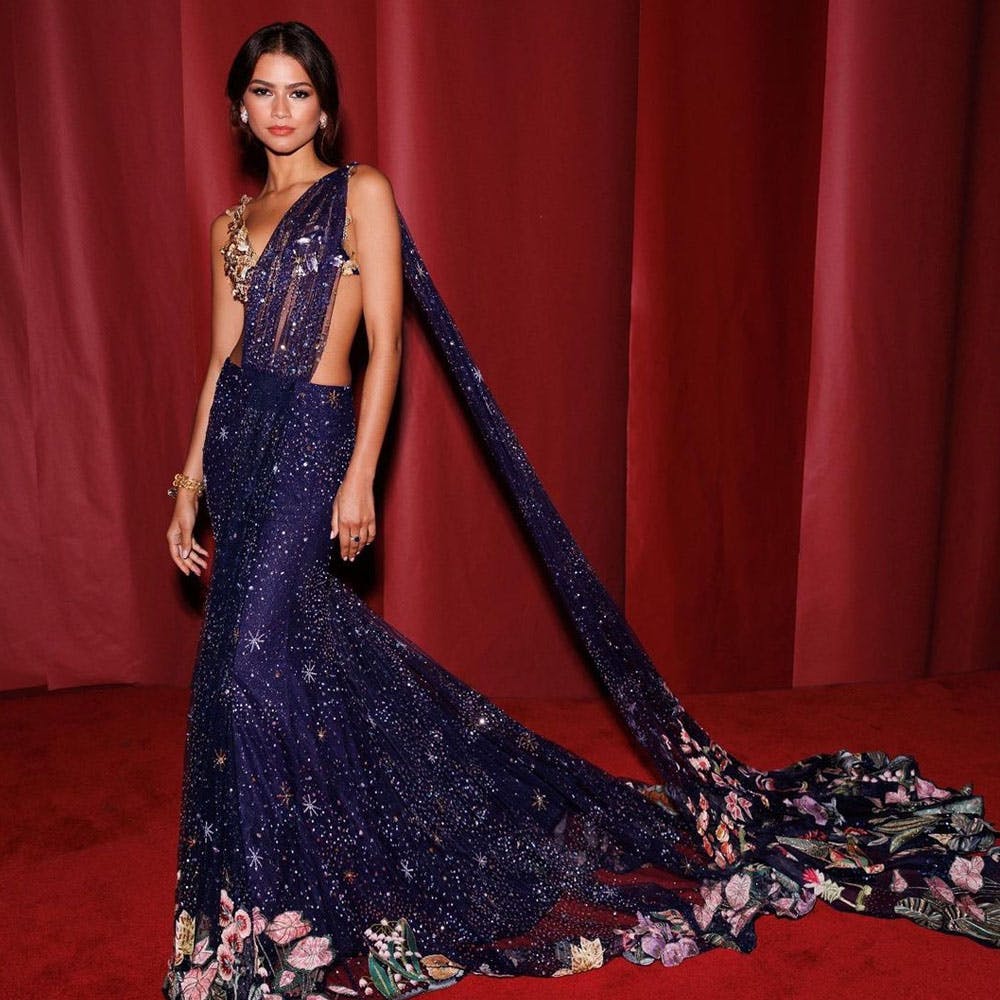
Since his debut in 2017, Mishra has seen a remarkable rise in demand for his bridal lehengas. Today, eager customers face an almost five-month wait to own one of his coveted designs. Mishra’s talent has also caught the attention of international celebrities. He recently made headlines for dressing Zendaya in a stunning blue sari at the opening of the Nita Mukesh Ambani Cultural Center in Mumbai.

Image Source: LBB

Mishra’s accomplishments include being the first Indian designer to showcase his collection at Paris Haute Couture Week in 2020, a feat he continues to achieve year after year.

Drawing inspiration from ancient Indian designs that utilized calico textile, an unbleached fabric made from cotton fibers, Mishra creates lehengas that embody an off-white, ecru aesthetic. The brides who choose Rahul Mishra lehengas appreciate the uniqueness of his designs, characterized by intricate embroidery and unparalleled craftsmanship.

The surge in wedding attire sales, especially during the COVID-19 pandemic, has helped Mishra support and provide employment to over 1,200 embroiderers from rural communities in India. The impact of his creations extends beyond fashion, creating meaningful opportunities for artisans and their families.

Rahul Mishra’s journey started from a small village in Uttar Pradesh. Although his initial aspirations to become a cinematographer were met with rejection, his decision to enroll in an apparel design program opened doors to a fulfilling career in fashion.

Featured Image Source: Daily Expert News

Screen Shot 2023-07-07 at 11.30.52 AM-png

News

Former Pharmacist Opens Cafe While Competing on Gordon Ramsay’s Show

While preparing to open a new cafe in Chicago’s vibrant Uptown neighborhood, pharmacist-turned-entrepreneur Lan Ho is also competing on Gordon Ramsay’s Food Stars, a reality show featuring aspiring chefs and culinary innovators.

The cafe will showcase her own brand Fat Miilk and will pay homage to Vietnamese culture through its space and food offerings.

Image Source: Fat Miilk

Vietnamese coffee holds a significant place in Vietnamese culture, and Lan Ho is determined to offer an elevated coffee experience that truly captures the essence of this rich tradition. By working closely with local farmers throughout Vietnam, Fat Miilk ensures that only the highest quality Robusta beans are sourced for their coffee. 

According to TimeOut, these organic green beans, renowned for their sweet and fruity flavor, are cultivated at different elevations and roasted using the traditional Vietnamese slow drip method. By focusing on Robusta beans, Fat Miilk stands out from other coffee brands, striving to serve the most authentic and flavorsome Vietnamese coffee.

Ho’s Vietnamese heritage and her family’s entrepreneurial spirit have been influential in her journey. As the child of Vietnamese refugees, she witnessed the determination and resilience of her family members who started businesses to provide for their loved ones. This upbringing instilled in Ho a strong sense of purpose and resilience, which helped her in starting her own business.

Participating in Gordon Ramsay’s Food Stars has been a transformative experience for Ho, teaching her valuable lessons in self-advocacy and self-care. 

As the opening of Fat Miilk’s flagship cafe approaches, Lan Ho remains committed to creating a space that authentically represents Vietnamese coffee culture. The cafe will not only serve an array of Vietnamese coffee options but will also feature Vietnamese meat pies and other delicacies.

Featured Image Source: @iamlanho

forbes-jpg

News

Hong Kong-Based and Women-Led VC Firm Invests in Food Security Solutions

CGV Ventures, a Hong Kong-based venture capital firm led by women and backed by fashion billionaire Michael Ying, is actively seeking investments in the food technology sector.

Co-founders Claudine Ying and Mimi Lau are focused on supporting innovative startups that address food security concerns, ranging from fermented oil to AI weeding technology. CGV has already invested in ten companies, with nine based in the United States and one in Hong Kong.

CGV’s portfolio includes notable investments such as Brightseed, a San Francisco-based company recognized in Forbes’ AI 50 list, and Zero Acre Farms, a startup backed by Richard Branson’s Virgin Group and actor Robert Downey Jr.’s Footprint Coalition.

According to Forbes, CGV takes a meticulous approach to selecting investments, evaluating the scientific validity and market potential of startup products, as well as the founder’s experience and execution capabilities. To assess market readiness, Ying and Lau even personally tested products from prospective portfolio companies.

Looking ahead, CGV plans to expand its investments in Asia, beginning with Hong Kong. Good Food Technologies, a plant-based meat startup, received CGV’s sole investment in Hong Kong, securing $1.5 million in seed funding. The duo believes that Asia’s booming countries, such as Singapore and China, face severe food security risks that drive interest in alternative proteins.

For Ying and Lau, investing in FoodTech and AgTech is a matter of survival. They see agriculture and food security as fundamental principles for the future, driven by the belief that farming can be meaningful, economically viable, and free from laborious stereotypes. Ultimately, CGV Ventures aims to contribute to a more secure, sustainable, and just food system.

Featured Image Source: Forbes

20210226_175427 (1)-jpg

Stories

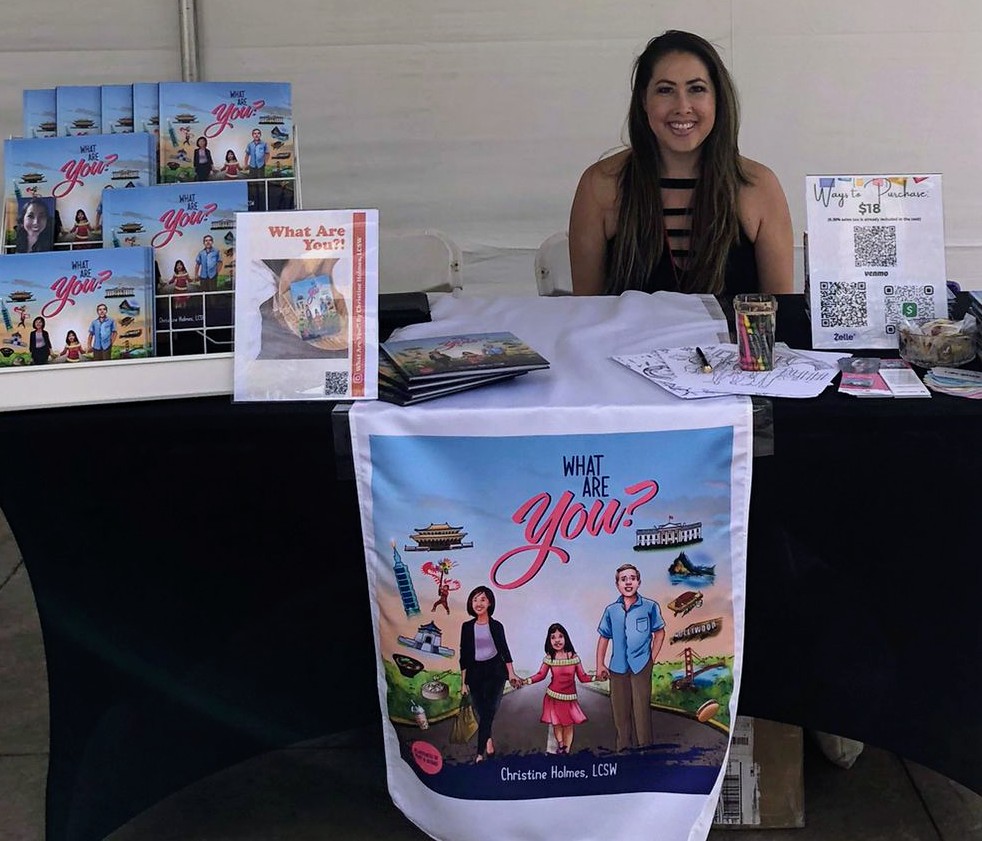
She Wrote a Book to Help Mixed Asian Children Navigate Through Their Cultural Identities in a Way She Never Did When She Was a Kid

Christine Holmes grew up feeling different from her peers due to being a bi-racial Taiwanese-American.

Christine was often referred to as either the “Asian girl” by her non-Asian friends and the “White girl” by her Asian peers until eventually, they referred to her as “Whasian girl,” which she liked because it represented both of her ethnicities.

She struggled to embrace her cultural background and wished to be fully White. It took her long before she learned to love her identity and cultural heritage, but she did.

Inspired by her personal experiences, she wrote the book “What Are You?” to provide representation in children’s literature for mixed Asian children.

The book touches on her personal struggles with food and language, among other things, and highlights the importance of representation in literature for children who come from mixed cultural backgrounds.

GROWING UP WITH A TAIWANESE MOTHER AND AN AMERICAN FATHER

Christine grew up in Irvine, CA, where the population was predominantly white and Asian. However, there were very few mixed children, which made Christine feel very different from her peers, who were either fully White or fully Asian.

As a child, Christine was immersed in Chinese School, Chinese Choir, piano, and tennis, which made her feel even more different from her peers because most of them were fully Asian.

Christine’s dad, who is White but very much into Asian culture and a world-renowned Master of martial arts, made it very important for them that Christine knew her Taiwanese/Chinese culture. Christine’s mother cooked Chinese food for most dinners, and her first language was Mandarin.

Their home is filled with beautiful Chinese/Taiwanese antiques, and they used to visit Taiwan every year until Christine was in junior high/high school.

CHALLENGES OF BEING THE “WHASIAN” GIRL

“To my White friends, I was the Asian girl but to my Asian friends, I was the White girl until I got into high school and my friends decided to call me the “Whasian” girl which I preferred since it represented both of my ethnicities.”

Christine felt different from everybody growing up, which bothered her internally. In fact, she had a teacher in her Chinese school that wasn’t very nice to her because even though she can speak Chinese, she couldn’t write Chinese like the other children. This treatment left Christine feeling isolated and alone, until she eventually quit Chinese school altogether.

Her non-Asian friends also often made comments about the food her mom would bring to potlucks or the bags she would use to pack her lunch, making her feel ashamed of her culture. When her mom spoke Mandarin, her non-Asian friends would be offended and ask why she had to speak Mandarin in front of them. She would have to explain that it was sometimes easier for her mom to speak in her native language than speak English. This made her feel uncomfortable, and she would get angry at her mom for it.

At this point, she wished that she was fully White, perhaps because being White and blonde was considered the most beautiful when she was growing up. Her mom used to pinch her nose to make it look “taller” and less stubby like a typical Asian nose. Some of her Asian peers even told her that she was lucky to be at least half White compared to them being fully Asian.

THE TURNING POINT

It wasn’t until college that she fully embraced being mixed and started to love her identity. Christine found herself surrounded by a diverse group of friends who not only accepted her but celebrated her mixed heritage.

“In college, most of my friends were either mixed or of different ethnicities other than White or full Asian. And, they embraced me,” she said.

They appreciated the unique perspective she brought to the table and encouraged her to embrace her identity. For the first time in her life, Christine felt truly proud of her background and of who she is.

WRITING THE BOOK

Christine’s personal experiences served as the inspiration behind her book, “What Are You?” which is a story about her life growing up as a mixed-race individual in a predominantly white and Asian community.

Christine wrote the book when she realized there were no books that represented mixed Asian children. Despite being able to find books for her own children who are half Black, she couldn’t find any for children who were mixed Asian. So, she decided to create something that represented kids like herself.

“I think the part of the book that was most emotionally challenging was writing about the food and how embarrassed I was about my mom packing me Asian food even though I secretly loved it.” Christine admits to feeling a lot of guilt now as an adult for all the times she blamed and got mad at her mom as a child.

REPRESENTATION IN CHILDREN’S LITERATURE

Christine strongly believes in the power of representation and the need for diverse books that accurately reflect the experiences of mixed-race individuals. Having grown up without any books that reflected her own identity, she recognizes the importance of seeing oneself represented in literature.

She saw firsthand how much her own children appreciated books with characters that looked like them and had similar cultural backgrounds. Writing her book, “What Are You?”, she received overwhelming positive feedback from other mixed Asian individuals who wished they had a book like this when they were children.

Despite increased awareness and acceptance of mixed-race identities in modern times, Christine recognizes that children may still struggle with their identity and the pressure to choose one ethnicity over the other. Her book seeks to empower mixed-race children to embrace and celebrate all aspects of their identity.

OVERJOYED BY THE POSITIVE FEEDBACK

Christine initially had doubts about the book’s reception due to her own insecurities about putting herself out there. However, the encouraging and uplifting words from her readers have exceeded her expectations.

“I was featured on a TikTok page, twice, by someone with 1 million followers, who’s sister bought the book for her. She shared that my book had emotionally resonated with her in many ways. It was then that I realized the impact that my book has had on some people.”

HOPE FOR THE FUTURE

Christine hopes that her book will inspire readers to embrace their identity, no matter where they come from. She wants readers to know that they don’t have to choose between different cultural backgrounds and can be proud of their unique mix.

“I hope they embrace their cultural background, and they are proud of their roots.”

By highlighting her personal experiences, Christine hopes her book will contribute to a larger conversation about identity and belonging in our society today, and ultimately help break down barriers and build more inclusive communities.

CONNECT WITH CHRISTINE

Website: publishyourgift.lpages.co/christine/

Instagram: @whatareyoubook  

Facebook:  What Are You? Book

TikTok: @whatareyoubook