Stories

July 4, 2023

SHARE:

The world of home decor is a place where creativity and self-expression know no bounds. It’s a space where artists and makers come together to craft unique and meaningful designs that add a personal touch to people’s homes.

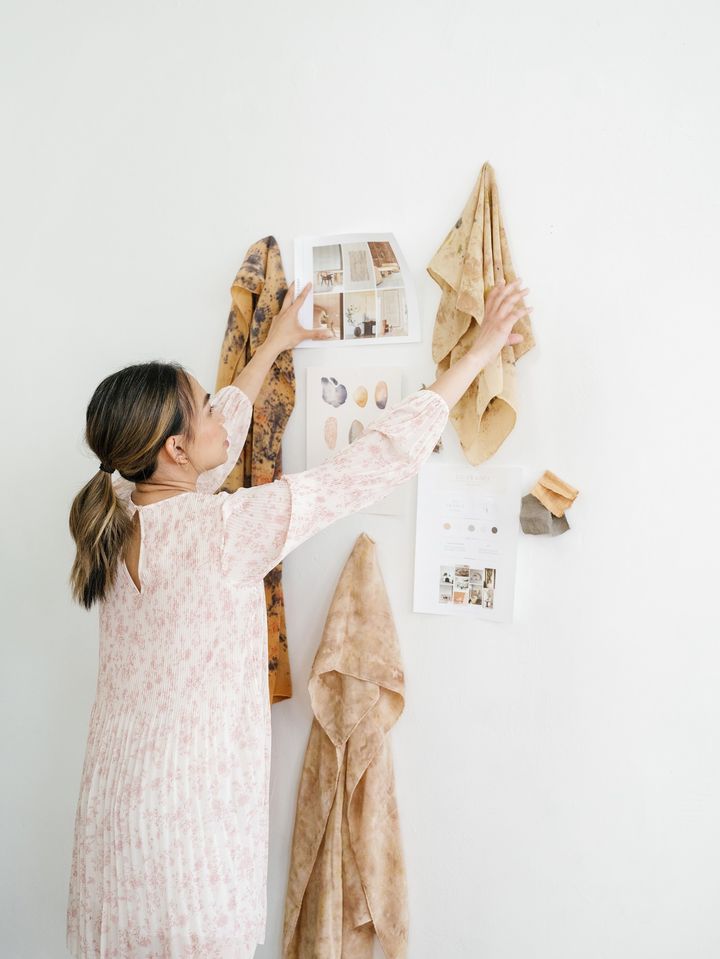
In the heart of San Diego, California is France Malvar. Her story is one of hope, passion, and self-discovery. After 14 years as an early childhood educator, France took a leap of faith and pivoted her career to become a natural dye artist and create Lu France Interiors, a home decor brand for intentional design. For the past two years, she’s been pouring her heart and soul into her work, crafting pieces that are as beautiful as they are sustainable.

France carefully chooses the businesses and artisans that her brand partners with. Her previous collections were made in collaboration with small businesses all over the world, mostly in the Philippines, to support the local weavers and artisans in her homeland.

I HOLD FOND MEMORIES GROWING UP IN THE PHILIPPINES

I’m pretty blessed to have had a childhood full of memorable experiences and surrounded by people who have in one way or another shaped me.

I grew up in my Papa’s ancestral house in the Philippines before my parents eventually built their own, which became our home, and I have nothing but good memories of both. Summers and Christmas breaks were spent with my cousins and we would spend weeks at our Lola’s house, or at our Tita and Tito’s home, or somewhere exploring a new place together.

As my parents got settled in their respective careers, we progressed to traveling more or going out — driving up to Tagaytay, spending Sundays at the park, exploring all sorts of shops and markets, or eating out. They also gave us the opportunity to explore different sorts of activities and I took a special interest in ballet, starting classes at the age of 3 and then continuing through the start of high school before moving to other forms of dance through college. A lot of my memories involve recitals and shows and having my family there to support me. 

I don’t know what defines a typical childhood. But I do know that I hold fond memories growing up in the Philippines. Even to this day, there are moments that I get so nostalgic for every time, and I am grateful for all of them.

TRANSITIONS CAN BE SCARY, PIVOTS AT LEAST TO ME ARE TERRIFYING

Much of my young adulthood has always been about pivots.

Growing up, a career in medicine is what I’ve always been exposed to. A lot of times I’d tag along with my sisters to our Papa’s clinic or I’d wait for Mama in hospital break rooms and offices. Whether those instances were by design or simply out of necessity, I always thought I’d just follow along and take a science course to eventually pursue a career in medicine in one form or another.

So I studied Sports Science in college. During an Adapted Physical Education class, I realized that I liked teaching children. It gave me so much joy seeing how even the smallest actions you make and the lessons you share, impact their days and eventually their lives. After graduation, I applied for teaching jobs with a focus on music and movement, and fitness for young children. I figured I could take my Sports Science degree, my love for dance and movement, and use it to pivot to a career teaching children.

My first job offer out of college was from a school in Singapore, but I chose to stay in the Philippines and worked for a year there before moving to the US. I eventually took a certificate in early childhood education and spent 14 years in that industry working both in the US and the Philippines. It was a career I loved (and honestly actually miss). While I continued to teach, I also kept dabbling in the different art forms I’ve taken a liking to. I took design workshops to relieve my stress – styling, floral arrangement, natural dyes, etc.

When the pandemic happened and schools shut down, I enrolled in Interior Design online and started honing my love for all things design, leaving a career I’ve known for 14 years and taking my love for natural dyes and design a step further by launching my business.

Transitions can be scary, pivots at least to me are terrifying. I’m the type of person who is constantly planning. I need to know where I will be, and what I will do at certain points in my life. When changes happen and I need to adjust, that throws me off and my anxiety kicks in. But I think for the most part it is exactly because I am a planner and because I willingly chose these pivots from Sports Science to early childhood to now, a natural dye artist and small business owner, there was more excitement than anxiety as I took every transition. 

LU FRANCE INTERIORS IS AN EXTENSION OF MYSELF

Much of who I am as a designer and artist are rooted deeply in my being Filipino and more specifically, my experiences and memories I have growing up in the Philippines. That’s true for the things that catch my eye whether it be handcrafted wood pieces, ceramics, or the spaces I gravitate to, I crave rooms and spaces that are “maaliwalas,” full of warmth with a lived-in look, calming, and organic.

The stories that shape my collections are all stories from home. The candle scents I have in collaboration with Terra, a Filipino-American brand, are inspired by my life growing up in the Philippines. Every single scent has a story, a distinct memory attached to it.

The stories that guide and serve as the foundation for my naturally dyed pieces are all inspired by memories from the Philippines too. Sometimes a moment from years ago inspires me or a Filipino word that resonates with me moves me to make a tangible piece of art. Or sometimes an event back in the Philippines moves me to create a whole collection of naturally dyed textiles. I previously dropped a whole collection inspired by the campaign of former Vice President Leni Robredo! What I can’t articulate, I translate in the form of my naturally dyed textiles, always hoping to share a piece of my being Filipino with others. 

My values also play an important role in the people I choose to work with. I have a collaboration collection with Anthill, a social enterprise based in Cebu, Philippines. My thrust for love of community, sustainability, amplifying the work of Filipino artisans, and sharing their stories are some of the values I found in Anthill too. 

And while I proudly work with non-Filipino makers too and curate pieces from artisans and businesses around the globe, the same design influences from my life in the Philippines and the same values guide me in choosing what to pick and who to work with no matter where they come from. I say this often, Lu France Interiors is an extension of myself. It’s me in brand form and while I do not constantly scream about my being Filipino, I think if you browse through my website or follow me on social media, you’ll see why I don’t have to — it’s just naturally, constantly, permanently, and beautifully a part of my identity. 

ALLOWING MYSELF TO ASK FOR HELP FROM OTHERS HELPED ME TO RIDE THE HICCUPS THAT USED TO KEEP ME UP AT NIGHT

As with any other small business, I think the financial uncertainty that comes with building and running a brand is the most challenging part of building a business. The design process comes easily to me (at least thankfully, for the most part, it does!).

My years of teaching children and dealing with difficult parents have also helped me in dealing with customers and suppliers. But navigating slow seasons, courier mishaps, and other unexpected issues that affect cash flow were challenges that really kept me up for nights at some point since I launched my brand. But I’m really lucky to have the constant support of family who all go above and beyond in helping me pursue and monetize this passion, the support of friends, and the support of a very loyal audience who all continue to spread the word about my brand. 

I also found comfort and strength in knowing that I am not the only small business owner who has had to deal with the hardships post-pandemic and I’ve learned much from my fellow makers, artists, and owners. I pivoted to pushing for more wholesale opportunities for my natural dye work so that they are stocked in more retail stores, I joined more pop-up markets to introduce my brand to audiences that social media doesn’t reach, and I adjusted in terms of collection batches and when and how I launch and restock pieces.

The brand is a continuous work in progress for sure as much as I am too as a person and I think changing my perspective on how I view these challenges and using them as learning curves and allowing myself to ask for help from others helped me to ride the hiccups that used to keep me up at night. It’s okay to ask for help and to admit when you need it! 

THE PHILIPPINES IS AND WILL ALWAYS BE MY HOME

That’s not to say that America isn’t because it is too and I’m super grateful for that. But I think wherever I go and whatever I do, the foundation on which my identity is anchored is firmly rooted in calling the Philippines my home. I feel like it has always been my comfort zone, most of my friends are there and I feel like I navigate everyday life more confidently over there.

I’m an introvert and I think that has been magnified so much more here in the US. But you know how situations force you to adjust and adapt? I think I’ve become much braver living here, I push myself to do things I wouldn’t have tried back in the Philippines. I know it sounds cliche but America has really opened doors for me in terms of providing an environment for me to explore and create opportunities for myself and for others. Moving here has been a journey of self-discovery and it still is. This adoptive country of mine has taught me that I am more than one thing and that it isn’t too late to try something else.

If you told me while living in the Philippines that I’d one day call myself a natural dye artist, own a home decor brand, have pop-ups at stores like Madewell, join markets and art exhibits at galleries, and connect with strangers turned customers turned friends through social media, I would have laughed and said you are crazy. Yet here I am surprising myself every single day, bravely going out of my comfort zone, opening myself up to people, and rediscovering a deep sense of love and immense gratitude for 2 countries that I proudly call home. 

CHANGING CAREERS SHOULDN’T BE TAKEN LIGHTLY

I’ll probably raise a few eyebrows in saying this but I don’t believe in the “Do what you love, love what you do” statement or advice. I think that doing a pivot and considering a major career change entails not only sacrifice but careful planning and much… so much patience.

Every situation is different, we all come from different paths and I recognize that it is a privilege to be able to pivot to a new career and explore a whole new industry without worrying about what to eat the next day or where to sleep. So I think before you make that leap you should thoroughly, carefully, consider your situation, your needs, and your goals. 

If you need to stick to doing something that you don’t love at the moment so that it gives you a little more cushion for the pivot you are planning then hang in there for a little bit longer and use your dream as your motivation. Changing careers, especially leaving a stable job with a stable, monthly income shouldn’t be taken lightly. But when you do, if you are able to, give it your all. Do it wholeheartedly, give it 110% of your time and effort, and stick to it. Stick to it long enough for as long as it makes you happy, for as long as the joy you get from it outweighs the sacrifices you make to make it work. And do not ever forget your WHY. Let your WHY guide you always.

CONNECT WITH FRANCE

Instagram: @lufranceinteriors

Website lufranceinteriors.com

Facebook @lufranceinteriors
Related Articles

Stories

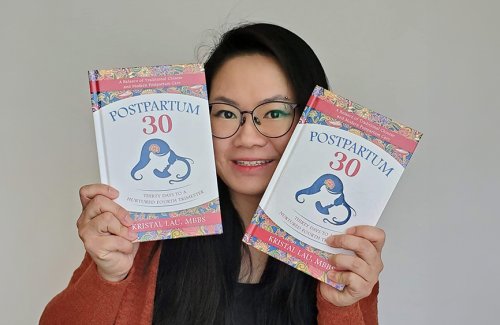
This Doctor Published a Postpartum Book Balancing Chinese Traditions and Modern Approaches For New Mothers’ Well-Being

Postpartum care is a critical period for new mothers, yet it is often overlooked in our society.

Many women struggle with physical and emotional changes after giving birth, and the lack of support and attention to their needs can lead to postpartum depression and other health issues. This is why Dr. Kristal Lau’s book on postpartum care is a crucial addition to the conversation.

When Kristal joined the AHN community two years ago, she was still pivoting out of her medical career. She shared that her mom has been encouraging her to pursue her idea of writing a book on Malaysian Chinese postpartum confinement practices and include notes from her medical background.

During her confinement month after birthing her first child, Kristal compromised with her mother to modernize some of the confinement practices by medical logic. With a balance of traditional Chinese and modern postpartum care, her book provides a comprehensive guide for modern moms to take care of themselves during this important time while feeling connected to their Chinese roots.

In this article, we will dive into Kristal’s journey as an author. We will also explore why postpartum care should be a mainstream topic and why it is important to prioritize the health and well-being of new mothers.

BECOMING A MOTHER OF TWO

I practiced medicine in Australia as a Basic Physician Trainee before moving to the USA and would’ve chosen to specialize in geriatrics medicine if I hadn’t met my husband.

Ironically, I’ve chosen to work in the perinatal world now, because I used to actively avoid seeing pregnant women patients when I was a junior doctor. I felt intimidated by the responsibility of two lives and potentially more if the patient already had children.

Becoming a mother of 2 while facing the challenges of a modern immigrant from South East Asia to the West (and being a US military spouse) opened my eyes to the importance of postpartum care in setting mothers up to thrive in the postpartum year and beyond. Especially when I was planning for my first confinement practice and had to adapt things to where we were living in rural Alabama. From this experience, I decided that contributing to a small part of the perinatal industry was fitting.

POSTPARTUM 30: THIRTY DAYS TO A NURTURED FOURTH TRIMESTER

The core message of my book entitled “Postpartum 30: Thirty Days to a Nurtured Fourth Trimester” is about preserving a traditional and cultural practice so that it remains relevant to current and future generations. Otherwise, we’d forget!

So, the key components of my book showcase the best of both worlds. I discuss postpartum physiology (what we know today about how the birthing body recovers after birth) and basic Traditional Chinese Medicine (TCM) principles around the postpartum body. 

I have chapters dedicated to adapting confinement practices to fit a modern mom and her family’s needs and lifestyle. I also guide readers on how to respectfully tell their mothers or mothers-in-law that they’d like to practice a modern version of confinement and include them in the picture.

MODERN MOMS WITH CHINESE ROOTS CAN EASILY BENEFIT FROM THIS BOOK

Firstly, it’s written in English! Readers don’t have to know any Mandarin or Chinese dialects (just like me!) to understand the TCM and confinement concepts I discuss in the book.

Secondly, I include historical references about the confinement practice and discuss why certain practices made sense to our ancestors. Finally, I challenge two aspects of the traditional confinement practice head-on. I encourage readers to embrace all the emotions that come with the chaos of the postpartum period instead of pushing them away. And I encourage spouses and partners to be the main confinement support person rather than another family member.

PUBLISHING MY BOOK HAS BEEN VERY SURREAL

I fully invested in writing this book after the overwhelming support from Asian Hustle Network group members when this book was just an idea. I also appreciated the nuances brought up by the AHN members in that defining post which added more to developing my book’s content. My first beta readers were also from the AHN community!

I’ve always wanted to be an author ever since I was a teen, so I can’t believe that I’ve done it! The book has also allowed me to represent a small part of Malaysian and Chinese culture to the world. Plus, it’s my biggest ticket away from medicine and into carving out an unconventional career that works for me!

Making time to write my book was the biggest challenge because I got pregnant with my second baby just after starting a 6-month book coaching program to develop my book. I’ve also been living in Germany since 2020 due to my husband being stationed here at a military base. So, I was writing on and off throughout my pregnancy and postpartum year while juggling our newborn, toddler, deployments, 2 dogs, and trying to thrive in a foreign country. The next biggest challenge was believing in myself, and that I have what it takes to write on this topic.

BALANCE AND EVOLUTION FOR POSTPARTUM CARE

To balance traditional Chinese practices of postpartum care with modern medical logic, I drew from my professional background as a medical doctor and a public health graduate, and my personal background as a Malaysian who grew up with both TCM and modern medicine. I also consulted with my medical peers and a TCM doctor (a connection I made through AHN too!) about how postpartum care from the East and West can meet in the middle.

An example of this balance is compromising on the hair-washing practice. Personal hygiene is a big part of the confinement practice. The strict traditional way is no hair washing for the entire confinement month. A modern compromise is to not wash the hair for the first 2 weeks and once you start washing your hair, make sure to dry it completely while in the warm bathroom before stepping out into a more chilly environment.

As more attention is given to the concept of matrescence, the transition a woman goes through to become a mother, it’s important to recognize the need for nurturing and support during this time.

Physical therapy should be a standard part of postpartum care, as many women suffer from pelvic floor and back pain issues after giving birth. Unfortunately, too many women are told that these issues are “normal” and should be lived with. Pain and discomfort should not be considered normal, and pelvic floor rehabilitation should be a global standard of care for all new mothers, rather than being limited to a few countries or requiring out-of-pocket expenses. The rest of us have to learn how to ask for pelvic floor rehabilitation referrals and likely pay out of pocket for it.

CARING FOR NEW MOTHERS

Two big areas where family members can help a new mother in the postpartum period are to help her feel seen and alleviate her mental load.

Unfortunately, new mothers frequently fade into the background as the newborn baby takes the spotlight. So, holding space for the new mother to grow into her new identity and showering her with attention reminds her that she’s still her own person and that she’s equally important as the baby!

Women and mothers are also commonly the main household manager in many families who do all the planning, troubleshooting, and preempting of troubles. This is the mental load of women and mothers. Alleviating this during the postpartum period isn’t just asking her what help she needs, it’s becoming the Project Manager at home while she recovers.

Asking her what she needs still requires her to plan and troubleshoot, and that doesn’t help lighten her mental load when she needs all the energy to recover from birth and care for the newborn.

MODERN MOTHERS HAVE DIFFERENT NEEDS THAN THE GENERATIONS BEFORE

First, society needs to accept that this generation and the upcoming generation of modern mothers have very different needs and challenges compared to the generation before us and not shame us for it. 

For example, many women in my generation (especially us Millennials in developing countries like Malaysia) have been conditioned to “do-it-all” i.e. excel at our careers and in being a mother. It’s ingrained in us to “mother like we didn’t have jobs and achieve in our career like we didn’t have children”. Why do moms today carry this burden? It’s likely because we were exposed to conflicting messages about womanhood and motherhood while growing up. We were empowered to be anything we wanted and that we could achieve anything we put our minds and hard work to i.e. embrace the modern woman identity. Yet, we’re still pressured to marry before 30 and start having kids while constantly reminded, “Don’t waste your education by becoming a stay-at-home mom!”. Balancing the identities of an empowered modern woman with the traditional (and biological) roles within motherhood is a unique challenge for many moms of our generation.

So, only when society is willing to empathize with this struggle, then they can provide the social, emotional, and mental support to help modern moms thrive as they go through matrescence.

My book normalizes the notion of nurturing mothers from the beginning of their motherhood journey; the postpartum year. I encourage mothers to prioritize themselves and not feel completely guilty about it. And to get comfortable with asking for help and accepting help before things get too overwhelming. It’s nice to be recognized as a SuperMom but it’s also nice to not have to live up to that image.

CONNECT WITH KRISTAL

Instagram: @mamaswingwoman

Facebook: @mamaswingwoman

Twitter: @drkristallau

LinkedIn: Kristal L.

Website: mamaswingwoman.com

Book webpage: tinyurl.com/pp30book

Author webpage: Kristal Lau – Mandala Tree Press

From Personal Struggle to Business Triumph- Khai Pham’s Journey with Milky-jpg

Stories

From Personal Struggle to Business Triumph: Khai Pham’s Journey with Milky

Meet Khai Pham, a visionary entrepreneur reshaping how we manage lactose intolerance.

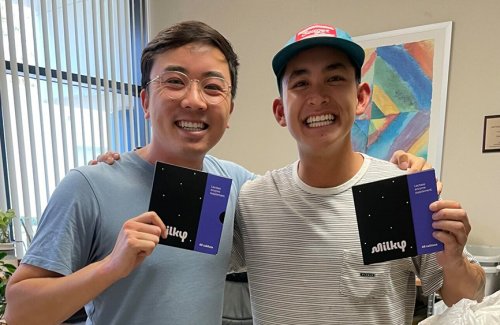
Armed with a business degree from USC, Khai’s journey took an unexpected turn after an eye-opening internship experience. After leading strategy and operations at a tele-orthodontics startup, he took the big step to start his own venture: Milky.

Milky stems from Khai’s personal struggle as a lactose intolerant person. Collaborating with Dr. Michael Seidman, he created Milky, a revolutionary lactase supplement designed for convenience and portability.

The path to Milky’s creation was marked by challenges. Khai and his team encountered manufacturing hurdles and setbacks, but their unwavering dedication and problem-solving spirit prevailed. Join us as we delve deeper into Khai’s journey with Milky.

KHAI PHAM’S JOURNEY WITH VENTURE FOR AMERICA

Venture for America profoundly shaped Khai’s career. Khai revealed the exceptional prospects that startups offer compared to larger corporations. In bigger companies, promotion chances often hinge on the person above you advancing or departing. However, in startups experiencing rapid growth, the entire business expands, creating numerous opportunities.

As a result, Khai’s hard work earned him two well-deserved promotions in just one year, leading him to become an Associate Director, with his initial compensation increasing four times by the time he turned 23. More importantly, Khai was able to engage with more substantial challenges much earlier in his career.

LEADERSHIP LESSONS AS YOUNGEST DIRECTOR

Climbing the ranks at Candid and achieving the distinction of being the youngest Director brought both challenges and growth to Khai Pham. In his perspective, the most demanding aspect of this journey was the increasing gap between decision-making and its outcomes. During the earlier stages of one’s career, tasks are straightforward; you receive assignments like crafting financial models, and when you perform well, immediate feedback follows. That immediate validation is comforting for junior professionals.

However, as one advances into more senior roles, the time gap between decision and result widens significantly. Senior leaders must make weighty choices, such as shaping the market strategy for a new product. Yet, the effects of these decisions might remain concealed for months, even years. This adjustment, bridging the gap between choices and their eventual outcomes, is a formidable mental challenge that confronts most individuals, Khai included. This evolution in leadership style and responsibility marked Khai’s journey as he navigated the complexities of decision-making at Candid.

KHAI’S PERSONAL STRUGGLES THAT LED TO THE BUSINESS OPPORTUNITY

Khai Pham’s personal battle with lactose intolerance ignited the creation of Milky, a transformative lactase supplement.

Khai shared that aside from being lactose intolerant, he also coped with ADHD, which often led him to forget bringing a Lactaid, making casual outings for ice cream, boba, or pizza very hard. Though the idea of a more portable version of Lactaid had crossed his mind, Khai initially didn’t see it as a true business opportunity.

When Khai moved to New York and found his favorite boba shop, Machi Machi, in Koreatown, he kept running the same problem of forgetting his Lactaid. He also noted that the pharmacy in Koreatown always seemed to run out of Lactaids. “Lactaids fly off the shelves at their location,” one of the pharmacy’s employees said. Intrigued by this, Khai went to visit various drug stores across lower Manhattan, asking their employees about Lactaid sales.

Khai shared that the farther he ventured from Koreatown and Chinatown, the less frequently stores experienced Lactaid stock shortages. This was the moment that Khai recognized his idea of a super-thin lactase supplement as a viable business opportunity, setting in motion the Milky journey.

“What I slowly began to realize is that people can’t help you if they don’t know you need help.”

Khai Pham

THE EXPONENTIAL POWER OF NETWORKS

Khai Pham’s collaboration with Dr. Michael Seidman marked a turning point for Milky, their second joint venture. Many wonder how a board-certified surgeon like Dr. Seidman came to co-found a company with Khai. The answer is simple: asking for help.

“I used to play it close to the chest when I was starting a company because I didn’t want to be embarrassed if it didn’t work out. What I slowly began to realize is that people can’t help you if they don’t know you need help,” Khai shared.

With this profound realization, Khai began sharing his desire to start a dietary supplement business with his coworkers and his search for a scientific co-founder. One day, a coworker mentioned a friend whose father, Dr. Seidman, had both a medical background and a penchant for formulating ideas. And the rest was history.

How Khai and Dr. Seidman met illustrates the exponential power of networks, but only if you open up and tell people that you need their help.

KHAI’S INSIGHTS IN NAVIGATING ENTREPRENEURSHIP

When asked what advice he would offer to his younger entrepreneurial self, Khai Pham emphasizes that failure doesn’t equate to poor decision-making. He notes that while they are connected, making the right choice with the information at hand doesn’t guarantee success.

Khai’s experience has taught him that if a decision carries even a 10% chance of yielding a 1000x return, it’s worth taking that calculated risk. Even if it doesn’t pan out, it doesn’t make the decision wrong. He candidly shares that in his earlier career, he often focused on the immediate results of his actions, sticking to high-probability decisions, and missing out on better, higher-expected-value opportunities. For Khai, the key metric for decision-making is expected value, not just the probability of success, a lesson he holds close as he navigates the entrepreneurial landscape.

MILKY’S VISION TO REVOLUTIONIZE DIETARY ACCESSIBILITY

When contemplating the future of Milky, Khai envisions creating an entire ecosystem of dietary accessibility.

While Milky’s initial focus centers on lactose intolerance, Khai recognizes that many individuals face a variety of dietary restrictions, including issues like acid reflux. The prevailing frustration lies in the disconnect between scientific solutions and user experience. Drawing a parallel to Lactaid, Khai points out the impracticality of carrying around large plastic bottles of products like TUMS.

The Milky team aspires to create a world where your entire medicine cabinet can be conveniently carried in your pocket, offering a seamless solution to dietary challenges, thus transforming the lives of those managing lactose intolerance and other dietary issues.

CONNECT WITH KHAI / MILKY

Instagram: @shop__milky

TikTok: @milky

Linkedin: Khai Pham

Stories

How Sheldon Ho Created a Tool to Help Cantonese Speakers Learn Mandarin

For years, Cantonese Americans/Canadians like Sheldon Ho have struggled to learn Mandarin, feeling like existing language learning apps weren’t designed with them in mind.

Through the Canto to Mando Blueprint, there’s a solution that takes advantage of their existing Cantonese knowledge to help them master Mandarin in a fraction of the time.

The Canto to Mando Blueprint is the brainchild of Sheldon, who personally struggled for years with Mandarin learning. Not only has it helped countless Cantonese Americans reconnect with their Chinese culture, but it has also enabled them to learn more of their native tongue.

The success of this program speaks for itself – it has over 400 students and counting! It’s time for the world to take notice of this groundbreaking innovation in language learning. 

Read through as Sheldon shares more about his story and how the Canto to Mando Blueprint is changing the game for Cantonese Americans learning Mandarin.

FAILING TO LEARN CHINESE AS A KID

Growing up, I was really resentful of my culture.

I think having failed at learning Chinese as a kid made me detached from my Chinese culture and resent it. As a result, I grew up hating being Chinese and always felt it was uncool. It made me want to be “extra” Western. 

I would speak to my parents in English intentionally instead of Cantonese and as a result, my Cantonese became mediocre. I never realized this all came as a result of having failed Chinese as a kid but now that I’m older, I can see how things would have been different had I learned the language better when I was young. I would have learned more about my culture, and ancestors, and since the culture is naturally pretty cool, I would have definitely embraced it more.

AN ASIAN AMERICAN CHINESE LANGUAGE LEARNER’S PERSPECTIVE

The big thing plaguing the language learning industry is learning resources that are made for the mass market. I think that language learning businesses definitely cater to the mass market with good reason. ALL Americans Can benefit from one single Chinese learning resource made for English speakers. There’s a lot more money in that space because the market is a lot larger and they have the opportunity to help more people. Given that logic, there’s absolutely no incentive to make something for the Cantonese American market.

Another thing plaguing the language learning industry is having solely native speakers teaching the language. This is due to the curse of knowledge. It’s when you know too much in your brain and you can’t relate to your students as much anymore. They actually find it HARDER to learn from you. 

That’s why from an Asian American Chinese language learner’s perspective, I think representation is really important. I think having more Asian American teachers as opposed to pure Chinese teachers is really beneficial. 

When I was learning, all teachers were from China and while their Mandarin level was top-notch, there was a gap in their ability to relate to my struggles as a Chinese learner. This is because they have never been in my position as they grew up in a 100% Chinese environment. Employing techniques made for kids in China doesn’t work the same with us.

This is why most Asian Americans flunked out of Chinese school when they were kids. It’s made by native Chinese people who don’t understand the differences between the struggles of learning Chinese here in the West vs in China. In the same way, I also can’t relate to the struggles they may have faced learning English. I can confidently say that I’m probably not gonna be a good English teacher because I don’t understand the struggles ESL learners face. 

On the other hand, I understand very well what struggles Cantonese Americans may face when trying to learn Mandarin and improve their Cantonese. I literally went through all those struggles myself. I was the kid unable to write his own Chinese name.

THAT “YOU LOOK CHINESE BUT YOU CAN’T SPEAK CHINESE” MOMENT

I’ve tried countless times to learn Mandarin. I think I’ve had “I’m gonna learn Mandarin this year” as my new year’s resolution for like 10 years straight.

Each time I failed, I wasted MORE time but more importantly, it made me feel like more of a failure. I felt like maybe I was just too dumb to learn my language, maybe I was just too dumb overall. How many more tutors, apps, and university classes am I gonna waste time and money on?

I went through my lowest point when I was unable to talk to the family of the girl I was dating at the time. It was a really big “you look Chinese but you can’t speak Chinese” moment for me where I felt quite embarrassed.

It was a big mental hurdle that really messed with me. Things changed when I finally took time to think about how I could learn by leveraging my existing Cantonese. What if I just took my Cantonese and brought it over to Mandarin? Through an arduous process of figuring out how to do that, I finally learned Mandarin. 

Once I learned this, I realized how easy it is to learn this language for Cantonese speakers. I realized that we’ve been being taught wrong all our lives and that is the reason why we haven’t been able to learn. This motivated me to create this platform. I wanted to help Cantonese Americans finally get this Mandarin learning thing handled and hopefully through that, help them with embracing their culture.

CANTONESE AMERICANS ARE IN A WEIRD MIDDLE GROUND

I always felt that Mandarin was so hard to learn. It always baffled me that I was thrown into the same class as Craig, someone who had no Chinese background at all. 

I tried so many different learning apps and went to so many different Mandarin classes and tutors in college and it was ALWAYS the same. We always wasted WEEKS on basic stuff like “ni hao.” This felt stupid to me as a Cantonese person. I knew “ni hao.”

Cantonese Americans are in a weird middle ground. For the most part, we speak just enough Cantonese to have an advantage over people with no Chinese background – yet we can’t read Chinese, and aren’t good enough to take advantage of Mandarin resources meant for true native Canto people in Hong Kong which leverage your Cantonese. As a result, we have to stick with English resources made for white people.

So fundamentally, when setting up our program the only goal in mind was to create something for Cantonese Americans who can speak a little bit of Cantonese. We wanted to make something for the Cantonese American who spoke a little but couldn’t read or write Chinese. We’d teach them all the fundamentals while leveraging their existing Cantonese.

PLATFORMS MADE FOR PURE ENGLISH SPEAKERS CAN’T DO THIS

With our method, students improve their Cantonese while learning Mandarin. Most Cantonese speakers want to learn Mandarin but it’s also important to them that they improve in their heritage language. 

Because Mandarin and Cantonese have such similar structures – if you know how to leverage them, you can improve on both languages at the same time. This way, as your Cantonese gets better, so does your Mandarin, and vice versa.

Platforms made for pure English speakers can’t do this since they’re not made for Cantonese speakers. The next thing is the speed at which you learn. Our students start speaking literally from day 1 because we’re essentially just teaching you how to bring your Cantonese over to Mandarin in the beginning. 

There are a lot of tips and tricks that make things a lot faster. For example, the Cantonese ‘G’ becomes a Mandarin J about 80% of the time. This takes away a lot of the memorization work when it comes to learning Mandarin. 

So the main difference is just the speed of learning. It’s a lot faster. I don’t want to say the other apps or university courses don’t work because of course they do. But when you have to wait months for marginal results it’s really easy to get discouraged. That’s why we made it a PRIORITY to get people speaking from Day 1 so they see results right away.

SUCCESS STORIES

A large portion of our students happens to be in healthcare. There was this nurse who often felt ashamed at work. Chinese patients would reach out to her because she looked Chinese but when she couldn’t reply in Mandarin – she would feel sad for being unable to help her own people. This is what made her reach out to me and within the first couple weeks of doing the program, she shared with us how good it felt to be able to communicate with Chinese patients, and that was a big win. 

Another success story is about this girl who wanted to surprise her parents with her Mandarin. She started texting them on day one of the program, and it made them really happy.

But my favorite story is about one of our students who had been dating her Taiwanese boyfriend for 10 years. Each time she hung out with his family, it’d be in English. She would have very basic and shallow conversations with her boyfriend’s mom. Note that it’s been 10 years!

Recently, she told me that she had a full Mando conversation with her boyfriend’s mom and that she was so excited that she could finally speak Mandarin. If I could put it in her words, it was like the mom went from being almost mute to being the most talkative person in the world! Excitement grew on her face and she said “OMG I can take you to Taiwan now and show you everywhere!”

IT’S WHAT I WISH I HAD

What we have is a program and curriculum specifically designed for Cantonese Speakers to leverage their Cantonese (no matter what level) to learn Mandarin and improve their Cantonese. 

Along the way, we have tutors for support who are fluent in BOTH Cantonese, Mandarin, and English. From my experience, oftentimes, Mandarin tutors only speak one language. They speak Mandarin amazingly – but the lessons aren’t conveyed in the best way in English. They can’t convey certain concepts to English speakers. We make sure our tutors are able to do that, as well as in the Cantonese perspective. Lessons are all given with the Cantonese English Perspective in mind.

The truth is, in most cases, Mandarin tutors are overqualified in the wrong thing. Cantonese diaspora don’t need someone who studied classical chinese literature and classical chinese to teach them Mandarin. They just need someone who can speak good Mandarin, and understands how to convey that effectively in English to them.

We make sure our tutors have that. I took big a part in training our tutors on how to view things from a Cantonese-American perspective. 

I’ve been through the journey myself as a Cantonese Canadian who learned Mandarin. I pretty much know what each student will struggle with, where the pain points will be, and what type of questions everyone will have. I’ve poured that knowledge into the program and poured that knowledge into our tutors. 

An example is the simple understanding that Cantonese Americans can speak a little bit of Cantonese, but can’t read or write Chinese. How do you tailor-make something for that person? That’s what we sat down for months to figure out. It’s what I wish I had.

HOW THE COMMUNITY HAS RECEIVED THEM

The Cantonese American community has been really thankful to have something made for them.

A lot of people dealt with the same struggles I dealt with so I’ve received a lot of comments from people thanking our team for what we’re building as well. 

From the broader language learning community, there’s been a lot of intrigue about seeing a course that dives this deep into linguistics. We really dug into textbooks to find information like how Cantonese tones map to Mandarin and at what percentage. For instance, it’s really fascinating to know that you can map your Cantonese tones to Mandarin with about 80% accuracy. This means that Cantonese speakers can essentially skip memorizing Mandarin tones and still be right about 80% of the time. This is knowledge that takes YEARS off the Mandarin learning curve.

PROGRAM TAKEAWAYS

Three things that I hope users will take away from using our platform and learning Mandarin through our program:

  • How beautiful Chinese culture is and how great it feels to reconnect with it. If they can get a deeper sense of belonging and more interest in their roots, that’d be incredible.
  • A deeper love for Cantonese. Through our program, students will also improve their Cantonese. As they learn about the differences between Cantonese and Mandarin, they’ll see that Cantonese has its own writing system that makes it really unique. Through this, I hope they feel more pride as Cantonese speakers. I grew up resenting my Cantonese side because Mandarin is more popular – but ironically, as I learned more Mandarin, I grew to love Cantonese more and more.
  • A renewed sense of confidence in their ability to learn. A lot of people feel traumatized as kids because Chinese school was so ineffective. We feel that we’re failures because we couldn’t learn our native tongue and then make memes on subtle Asian traits to feel better about ourselves. I can confidently say that the way they teach Chinese in the West is not the best. I want to help people recover and feel better from that Chinese school trauma.

MANDO TO CANTO

I was surprised by how many Mandarin speakers are interested in learning Cantonese so I’m excited to share that the next big project we’re working on is Mando to Canto! We’re currently in the R&D phase.

CONNECT WITH SHELDON 

Instagram: @sheldonhoho

Stories

Linda Marigliano on Sharing Lessons of Love and Immigration Stories

Love – a universal language that transcends boundaries, cultures, and time.

It’s a force that can inspire, challenge, and ultimately transform our lives. And I’m not just talking about the heart-fluttering, romantic kind of love, but also the tough love, the kind of love that helps us grow, teaches us the hardest lessons, and makes us strong in the face of challenges. Linda Marigliano’s “Tough Love” podcast embarks on a mission to uncover these lessons hidden within the folds of love stories.

Linda is a creator, co-founder, author, and podcaster. She created Tough Love during the most difficult times of her life. It was in the middle of a rigid lockdown in Australia in 2021. After being in a long distance relationship for three years, Linda quit her high profile radio job planning to move overseas and begin a new life with her boyfriend who lived in LA, but the pandemic happened and the world stopped. She found herself stuck in Australia due to border closures and was forced to move back in with her strict parents in her mid-30s. 

Her podcasting journey began with the ambition to share her own story, inspire diversity, and share Australia’s proud immigration stories. Building the podcast from scratch was a challenge she embraced with passion.

Facing Challenges Head-On

Linda’s most significant challenge in this journey was launching, producing, and marketing the podcast as an independent creator. She had to master every facet of the podcasting industry, acquiring equipment to set up her home studio and venturing into the field as a roving reporter, capturing real-life scenes like a documentary. The hustle was relentless as she faced rolling deadlines and created a media campaign to promote the series.

As the podcast’s host, Linda also faced the personal challenge of sharing her vulnerable story. Linda had to let the listeners into her own uncertainty in modern life as she opened up her Italian Chinese family home. She addressed topics about how she froze her eggs during Season 1 and how she navigated her heartbreaking long distance relationship.

These stories, though challenging to share, created a devoted community of listeners who resonated with her journey through uncertain times.

Achievements and Milestones

The “Tough Love” podcast has been a remarkable success. In 2021, it earned the title of Best Lockdown Podcast at the Australian Podcast Awards and was a finalist in the Best New Podcast category. What makes this achievement even more impressive is that “Tough Love” is a completely independent project, with no financial backing from a production company.

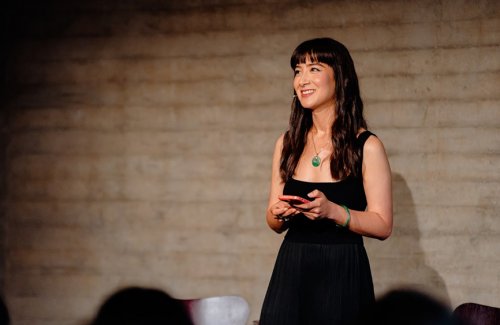
In 2023, Linda achieved another milestone in her journey. Not only did she release her own book, “Love Language,” a deeply personal and true story that inspired the podcast, but she also performed a SOLD OUT live podcast show at the iconic Sydney Opera House.

This performance brought her Chinese mother, Janet, into the spotlight, sharing her experiences of growing up in a tiny village in Malaysia and how her unwavering loyalty to her family back home has shaped the way she lives her life. This narrative moved the audience, making them eager to learn more about Janet, her upbringing and her immigrant journey as a teenager who had a difficult time fitting in when she first moved to Australia.

Mission and Vision

Linda’s mission for the podcast is to share her compelling story using innovative documentary storytelling and music, offering practical lessons for modern life, while her vision involves expanding her audience to live shows, events, and exploring television and film opportunities. 

With Linda’s focus on her Chinese Malaysian culture, especially through her friends and her mother’s portrayal in it as a strong business woman even in her late 60s (and fan-favorite), amplifies diverse Asian perspectives, resonating with a dedicated community of listeners.

Message from Linda

If there is one episode of the Linda Marigliano’s Tough Love podcast you should listen to, make it the Season 2 ‘Help, My Parents Are Getting Older’ episode. This one showcases how we feel when we realize our parents are aging and what it means to remain loyal to family. We attend a salsa party with my Chinese mother, Janet, and she tells us about her Malaysian upbringing. It’s a moving, heartbreaking, but ultimately joyous scene.

I am incredibly proud to have inherited my mom’s deep Asian hustle spirit! There’s delight in hard work, and I love hearing the Asian hustle stories you share.

Now, I’m finally living in LA, reunited with my boyfriend, and the hustle continues. I’m open to exploring the city and connecting with the Asian community, so please reach out. And stay tuned for Linda Marigliano’s Tough Love Season 3!

CONNECT WITH LINDA

Instagram: @lindamarigliano

Linkedin: Linda Marigliano

Tiktok: @lindamarigliano

Facebook: Linda Marigliano