Stories

November 7, 2025

SHARE:

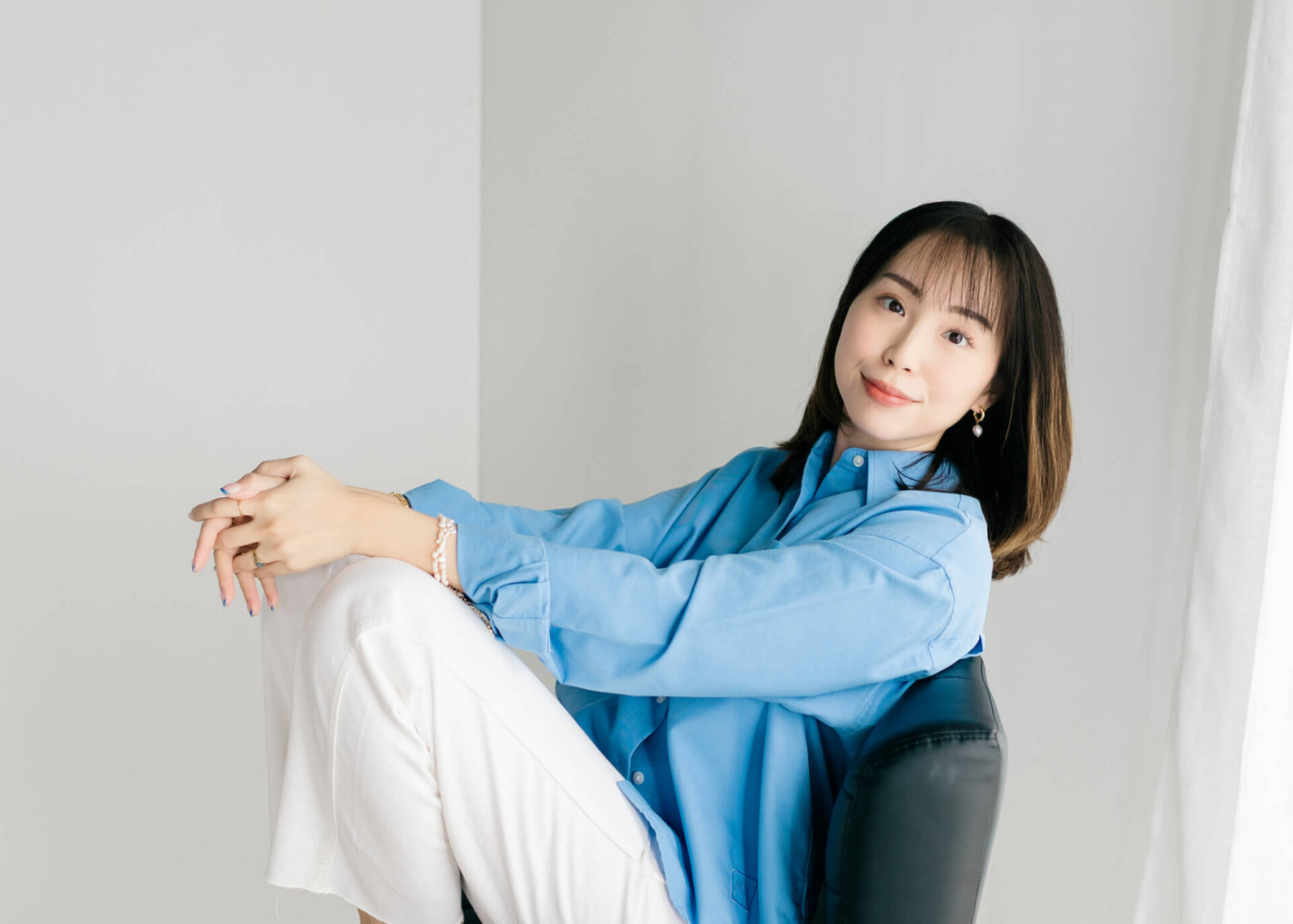
The first time Vivian Kwan realized she could build something on her own terms was during her college years in the U.S. — a time that completely shifted her perspective on what a career could be.

She found herself surrounded by students who were running side hustles, freelancing, and starting companies before graduation. It was a stark contrast to her upbringing in Hong Kong.

“Back home in Hong Kong, the path was pretty clear: study hard, land a stable job, and climb the corporate ladder,” she recalls. “But in the U.S., I met people who were building something entirely their own. That inspired me to think differently.”

Curious and driven, Vivian began experimenting — running a small photography business and creating content for fun. That experiment grew into Meraki Group, a boutique talent management agency representing a diverse roster of lifestyle creators — and now a 7-figure business built entirely from the ground up.

Redefining Success as a First-Generation Founder

When Vivian launched Meraki Group in 2021, she had no network, no outside funding, and no PR machine behind her, just the belief that creators deserved better representation.

As a first-generation Asian immigrant, Vivian was raised to stay quiet and keep her head down. “But entrepreneurship requires something different,” she says. “I had to learn to advocate for myself and my talents loudly and unapologetically.”

Without big teams or resources, she leaned into what she could control: being hands-on, transparent, and relationship-driven. That boutique approach became Meraki’s unique selling point: brands and creators know they can reach Vivian directly, and that trust has allowed Meraki to thrive against the odds. Today, Meraki has closed 300+ brand campaigns with brand partners like HOKA, REI, Shark, Columbia Sportswear, Libman, Google, and UGG.
The Challenge of Balance

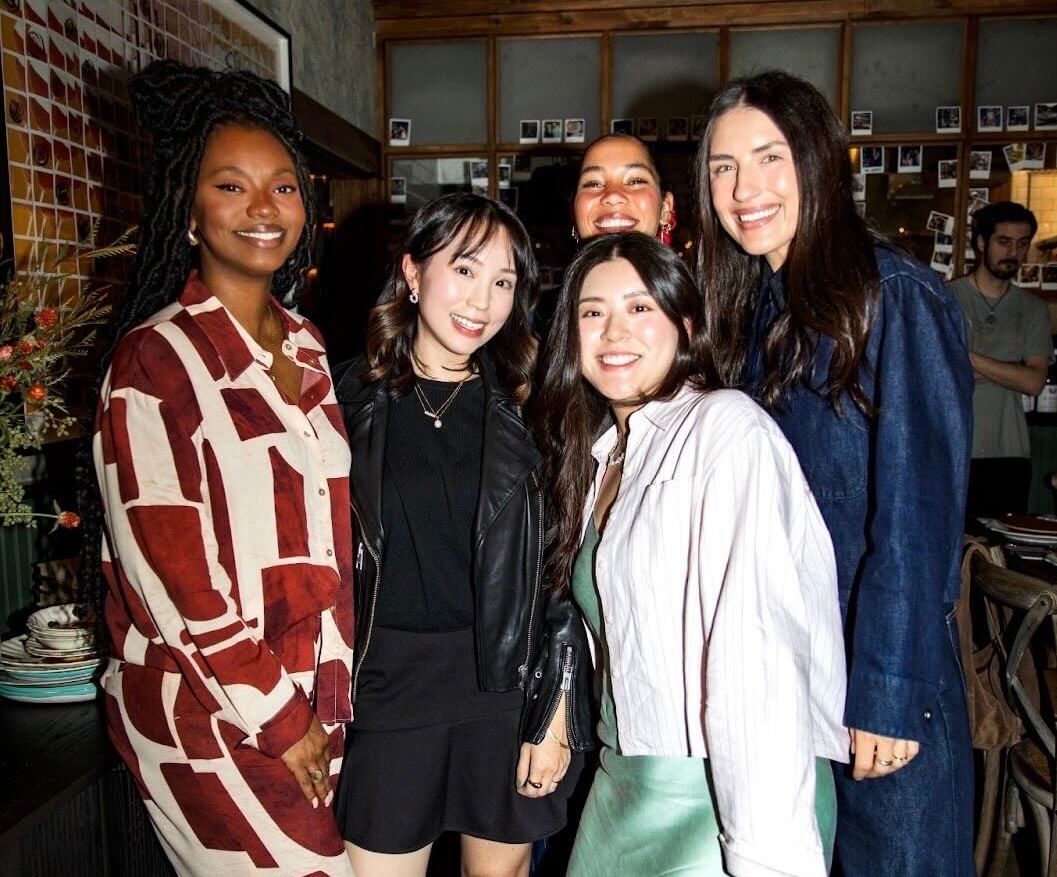
Motherhood has always run parallel to Vivian’s entrepreneurial journey — two worlds that demand her heart in equal measure. In the early years of Meraki, she often found herself caught between deadlines and bedtime stories, client calls and school drop-offs. The guilt was relentless: every hour spent growing the business felt like time borrowed from her children.

But over time, her perspective shifted. She began to see that showing her kids what fulfillment looked like was one of the greatest gifts she could give them. Building Meraki wasn’t just about proving something to the industry — it was about showing her children what resilience, purpose, and self-belief looked like in real life.

“My kids deserve a mother who’s confident and happy,” she says simply. “That thought keeps me grounded when things get hard.”
A Year of Growth and Gratitude

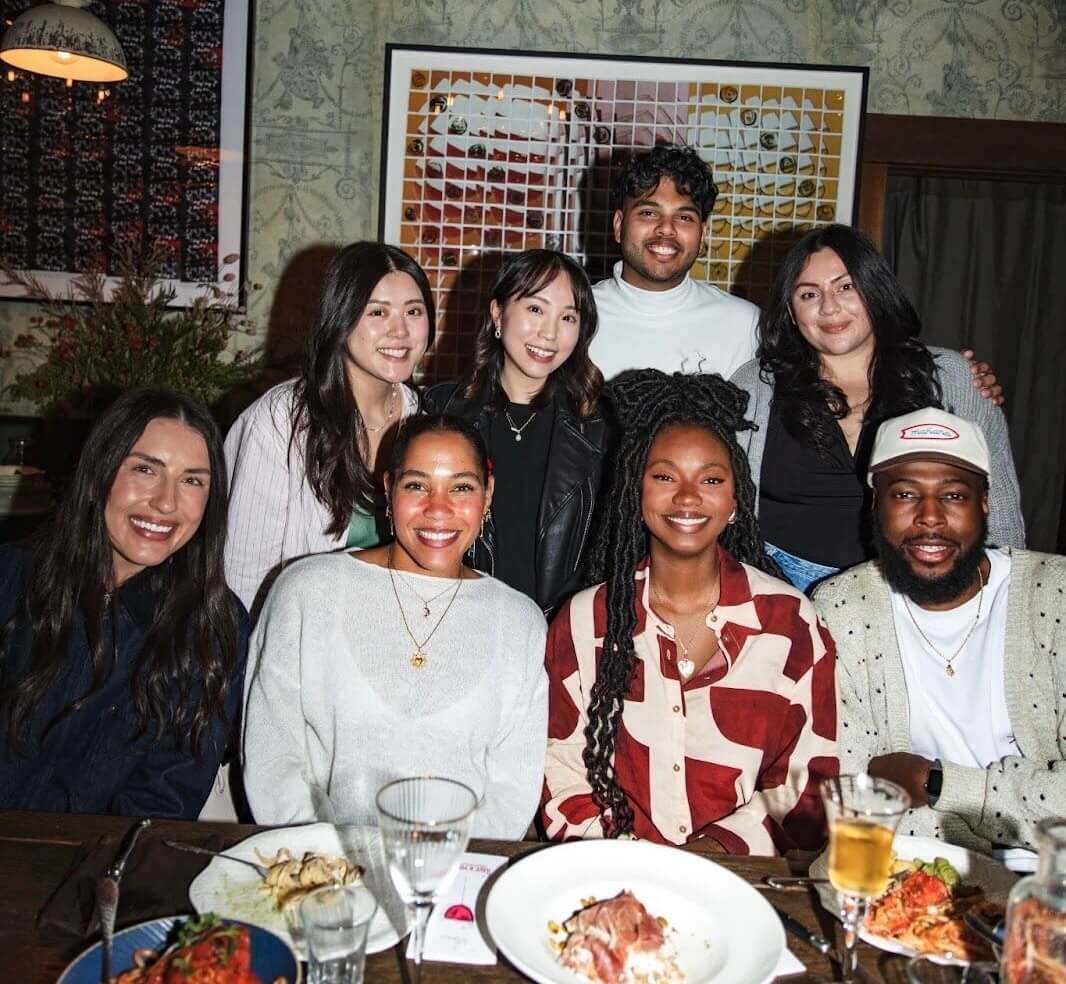
In October, the Meraki community came to life in a way that no Zoom call ever could. Vivian and her team hosted their annual NYC dinner — an intimate gathering of creators, brand partners, and friends who had helped shape the agency’s journey. The room buzzed with laughter, warm reunions, and stories that stretched back to Meraki’s earliest days.

For Vivian, it was a full-circle moment. Many of the guests were creators she had signed during the uncertainty of the pandemic — people she had championed from afar before ever shaking their hands in person. Watching them share a table, swapping stories and ideas, felt like witnessing the agency’s spirit materialise in real life.

It wasn’t a night of flashy sponsors or curated photo ops, but of genuine connection — the kind that has quietly fueled Meraki’s success from day one. “What I’m most proud of isn’t the growth,” Vivian reflects. “It’s loyalty. Many of my creators have been with me for three or four years. In an industry where talent often comes and goes, that kind of long-term commitment means everything.”
What Comes Next

As Meraki continues to grow, Vivian is laying the groundwork for a new chapter — one that strengthens the agency’s foundation while amplifying its impact. She’s focused on expanding her team and refining systems to preserve Meraki’s signature boutique quality, even as it scales.

“I’m being intentional with this next chapter,” she says. “Before stepping deeper into consulting and mentorship, I want to make sure the agency continues to run with the same care and creative integrity it was built on.”

With that foundation in place, Vivian plans to open limited consulting slots and launch educational programs for creators and emerging talent managers. Her goal is to nurture the next generation of creative leaders — empowering them to build with heart, purpose, and the courage to redefine what success can look like.
Follow Vivian’s journey:
📍 LinkedIn | Instagram

Related Articles

Image Source: Fiona Chan

Stories

TikTok Viral Beauty Brand Youthforia Inspired From Asian Roots And Self-Awareness

We spend most of our waking hours trying to care for ourselves, but there’s only so much time in the day. That’s what the makeup brand Youthforia is for — a line of high-quality beauty products that fit seamlessly into your routine. 

Founder Fiona Co Chan accomplished this goal for Youthforia, making it the first East Asian makeup brand to be sold at Ulta Beauty. 

While quarantined in Hong Kong, Fiona realized she should launch a cosmetics line. She also recalled a lesson her Vietnamese refugee mother had taught her early on about the importance of paying attention to what goes into one’s body. Although she didn’t have the best track record with makeup, she was able to consider her interest. 

Before 2020, she worked in technology and visited several highly polluted Asian cities. She realized that her Western cosmetics reacted poorly to heavy pollution, resulting in skin damage. 

This led Chan to work on a gentle formulation and test it out for two months before releasing it to the public on TikTok in 2021. She used the video hosting giant to see if people would be interested in trying out her new makeup creations, such as a liquid blush that adjusts to the skin’s pH. The BYO Blush was a huge success, and Chan’s Youthforia’s TikTok accumulated 40 or 50 million views in its first year.

While the launch of Youthforia on TikTok is undoubtedly cutting-edge, the brand’s core values are founded in the past. This comes directly from Chan’s identity and her upbringing in an Asian San Francisco household where her mother stressed the importance of viewing the body as a whole.

Image Source: Zen Sekizawa

Stories

Linda Lindas: What Life Is Like For Teenage Students Who Are Also In A Punk Rock Band

How does one balance their passions for creativity and artistic expression with maintaining an everyday life? This seems to be one of the hardest things to do when not everyone appreciates your creativity. Perhaps it may be possible, but very few people have been able to pull it off.

Meet the punk rock band Linda Lindas who are all still teenagers and are concentrating on their studies while on stage. They never go out to clubs after their concerts, instead, they do homework.

The Linda Lindas are comprised of the four members Lucia and Mila de la Garza, ages 15 and 12, respectively, their cousin Eloise Wong, age 14, and their friend Bela Salazar, age 17. They hail from Los Angeles and identify as both Asian American and Latinx. 

Linda Lindas didn’t grow up thinking they would be a musician. The fact that Mila and Lucia de la Garza’s father is a Grammy-winning producer had no impact on their future goals. Wong always wanted to study paleontology, while Salazar dreamed of becoming a doctor. Youngest and most gregarious of the bunch, Mila de la Garza always looked up to the character of Olaf from “Frozen.”

In 2018, Kristin Kontrol invited local girls to perform with her at a concert titled Girlschool L.A., marking the debut of Linda Lindas with the Dum Dum Girls. The band’s reputation grew as they continued to perform in Chinatown. They have supported Bikini Kill, Alice Bag, Money Mark, the Dils, and the Alley Cats, among others. Amy Poehler reached out to them to have them perform a medley of “Rebel Girl” by Bikini Kill and “Big Mouth” by The Muffs for her film “Moxie.”

They say they do their homework in the backstage area, on the plane, or during another downtime. They are convinced they are not yet adults, but they would still like to give their full attention to schoolwork. The band’s debut album, titled “Growing Up,” is centered around progress and ongoing education.

Image Source: Mark Ezzer Ligan Facebook

Stories

Filipino Entrepreneur Cultivates Family’s Land With A Goal Of Providing Food For Every Family’s Table

The Philippines, like many countries around the world, is dealing with skyrocketing food inflation due to supply issues and high fuel costs. 

26-year-old Mark Ezzer Ligan, from Bacolod, Philippines, has learned how to start and sustain his farm by producing vegetables such as okra, eggplant, soursop, and coconut in his family’s 3-hectare plot of land called MBL Integrated Farm. He also raises imported goats from Australia, cows, carabaos, and chickens.

Mark continues to cultivate the land and raise livestock to increase community production. He ensures sufficient supplies from eggs to vegetables and corn to fresh milk for the general public. As a farmer, he believes it is his responsibility to ensure that everyone has enough to eat.

More than 80% of Filipinos eat goat meat, but there are only two major commercial goat farms in the Philippines. The opportunity for growth for goat farmers is also substantial in light of this booming market.

Even more importantly, he benefits financially from their crop yields. Mark worked so hard that the provincial government of Negros Occidental recognized him as the 2019 Oustanding Young Animal Raiser. His success hasn’t hindered him from his commitment to his main goal of providing food, especially during the pandemic.

Image Source: ©Studio Ghibli

News

World’s First Studio Ghibli Park In Japan Features Iconic Settings And Characters Animation

It’s the perfect time to visit Kyoto, Japan, as Ghibli Park opened less than an hour away from the city last November 1st. The new Park features some of your favorite animated scenes and characters from Studio Ghibli films.

During an event a few days before the park’s official opening, Studio Ghibli Co. chairman and president Koji Hoshino said that the start of the park has a significant meaning for them that surpasses almost three years of the pandemic.

Overall, the final design for Ghibli Park encompassed some 17.5 acres and was split into five distinct areas. Ghibli’s Grand Warehouse, the park’s centerpiece, is a huge indoor “town” with streets, displays, and reproductions of Studio Ghibli’s “Totoro” and “The Catbus from Outer Space” sets. The Ghibli Museum’s theater shows special short films to visitors of the new park and Tokyo’s Ghibli Museum.

There are also two restaurants, a souvenir shop, a vintage shopping district with lanes, and a play area for children. The “Hill of Youth” antique shop from “Whisper of the Heart” and “The Cat Returns” is the second tourist attraction. The park can be seen in its entirety from this vantage point.

The third and newest section of the park is the Dondoko Forest, which is themed after the anime film “My Neighbor Totoro.” Both the bouncy house and a Totoro-themed playground can be found there.

Valley of Witches will feature elements from “Howl’s Moving Castle,” about a young milliner who accidentally gets caught up in a war, and “Kiki’s Delivery Service,” about an earnest and hardworking young witch. 

According to the director and son of Studio Ghibli co-founder Hayao Goro Miyazaki, the park was conceived with the local community in mind. Miyazaki’s original intention for the site was to be a park, not a typical theme park with rides and attractions. He desires that the people of Aichi share his passion for their gardens, as he believes parks are primarily for the local community.

Check out their official website for ticket and booking information.