Stories

May 27, 2025

SHARE:

From the Boardroom to the Comedy Club

Julie Kim didn’t begin her career in comedy—she initially followed the stereotypically ‘Asian’ path of stable jobs in academia and office work. Born and raised in Toronto to a Korean immigrant family, her upbringing took place in a tight-knit, two-bedroom apartment above her family’s grocery store. “At one point, there were seven people in the apartment,” she recalls. “And for a solid six or seven years, I slept on the pull-out sofa bed in the living room.”

With multiple degrees under her belt—including a Master’s and two attempts at a PhD—she straddled the worlds of business, education, and motherhood. Amidst the hustle and bustle, there remained a silent passion in her for a creative life. “At first, I wanted to speak well to stand out among a sea of old white men in boardrooms,” she says. “I also wanted to do a difficult, admirable thing. It was a checkbox.”
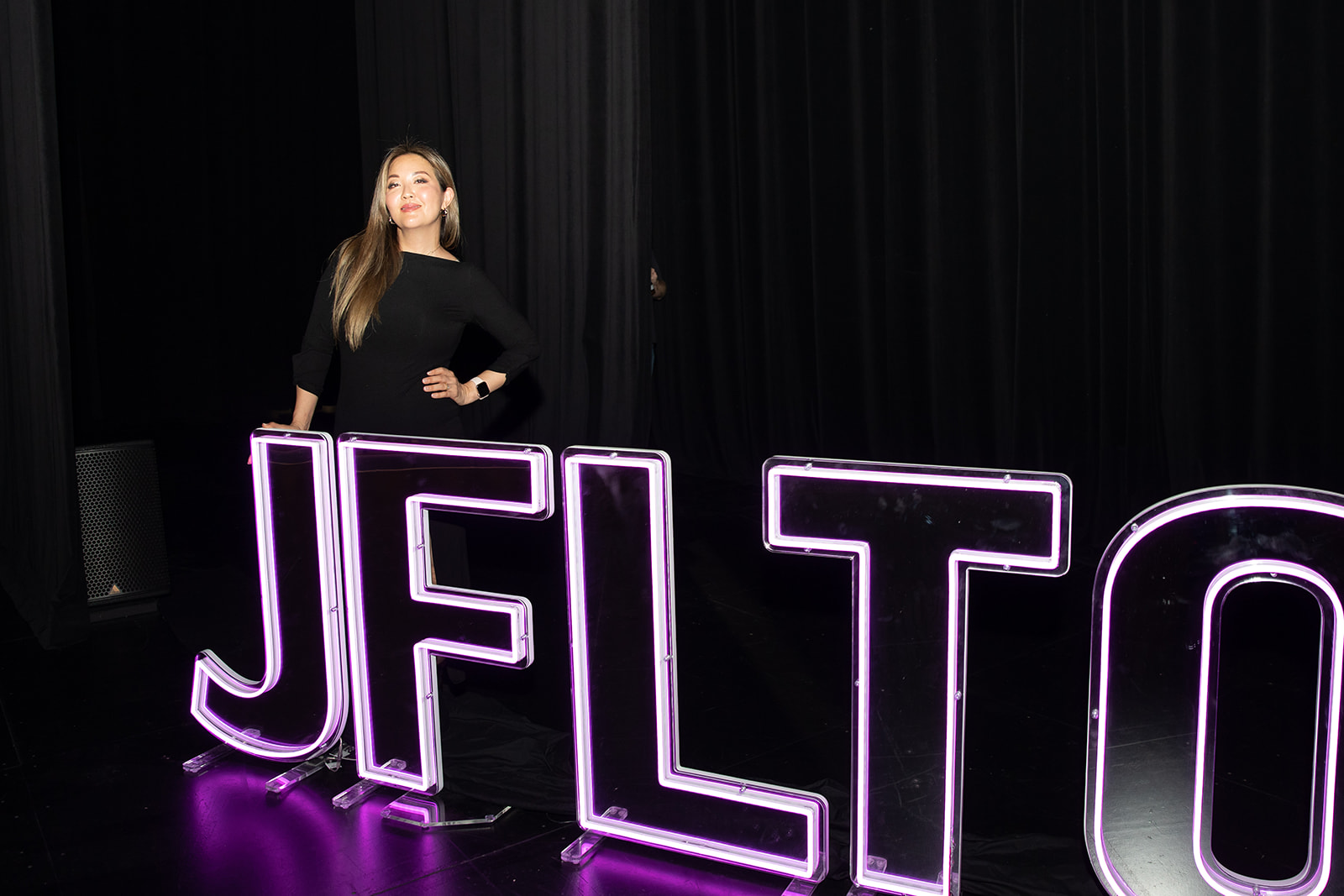
Julie Kim | Comedian

A Dramatic Shift to Comedy

Julie didn’t quit everything overnight to pursue comedy. She experimented with it while holding multiple stable jobs, contract roles, while also pursuing her PhD, oscillating between full and part-time focus on her studies. But passion has a way of growing, and eventually, she did what she had to—crossing what she describes as ‘a bridge between conventional pursuits and creative pursuits.’ She stepped away from academia, turned down secure opportunities, and entered a world full of uncertainty and creative risk.

However, Julie was no stranger to the industry’s harsh stereotypes. She faced mistreatment and discrimination, navigating everything from blatant racism to sexism disguised as condescension.  “One booker tried to push me out of the scene because I winced when someone tried to make me kiss him against my will,” she shares.  “A few local comics hated or resented me from the start because I didn’t ‘need’ to do comedy—as if they deserved it more because I had other options. It was a different kind of discrimination I hadn’t encountered before, but for sure it taught me to stay far, far away from the bitter ones in this industry.”
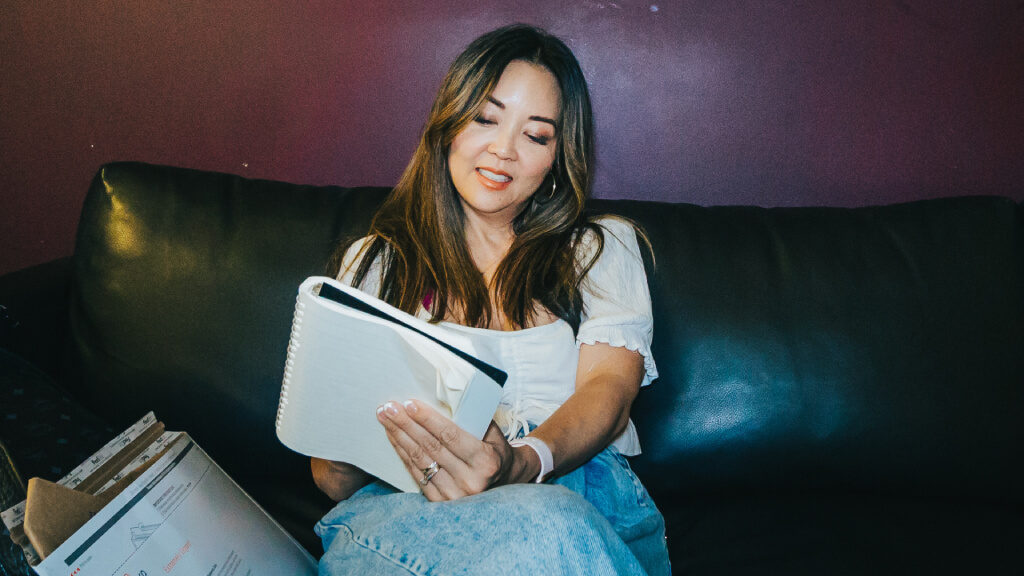
Jumping to comedy, Julie Kim’s now one of Canada’s most sought-after comedians.

Despite this, Julie pressed forward like the boss that she’s always been. “I had to learn how to produce and promote my own shows. And that built tenacity,” she says. “Now, I’m centered in my identity. My cultural identity and my confidence in it are central to much of the  success I’ve had in the past few years.”

Today, she’s one of Canada’s most sought-after comedians, performing alongside stars like Ronny Chieng, Atsuko, JR de Guzman, and more as she headlines major comedy clubs across North America. “This is the best time of my life,” she says. 

“I’m having the time of my life. But also, I’m still working on a little scarcity mentality and the feeling of constant survival mode,” she shares. “Part of me really enjoys that and part of me needs a new car and a real vacation.”

Being a Mom on the Mic

Being a mother in comedy isn’t easy—especially when constantly on the road. Julie has faced criticism from all sides: family members, fellow parents, and the weight of societal expectations. ‘I deal with it by blocking people out of my life or turning them into jokes—or both,’ she says with a laugh.

Her journey as a mother isn’t separate from her comedy—it is integral to it. “To do my work well, I need to be grounded, happy, and creative. So I try more and more to take care of myself to be those things,” she reflects. “I think it’s an accomplishment to still be writing and performing after more than a decade of true hustling. It’s taken a lot of grit, perseverance, some audacity, and foolishness.”
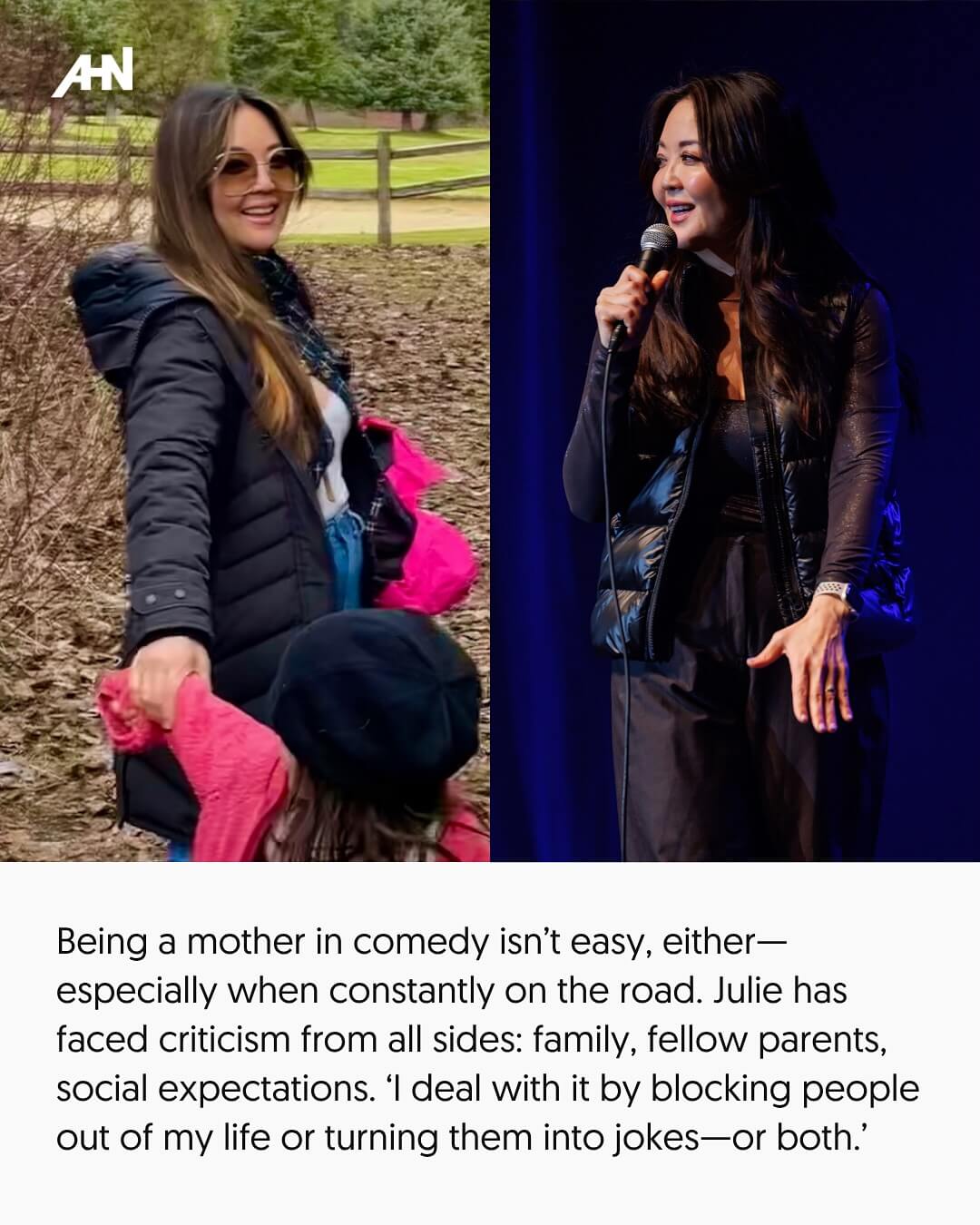
Julie Kim’s experience as a mother isn’t separate from her comedy career.

Julie Kim’s list of accolades is stacked: writing and producing Simu Liu’s iconic I Am Canadian monologue at the JUNO Awards, winning a 2023 Canadian Screen Award, and headlining four sold-out Just for Laughs shows in Toronto.  She’s also written for Kim’s Convenience and Run the Burbs, two shows centred around Asian Canadian families that have reached global audiences. 

As she continues to tour across North America, Julie is also working on upcoming television and film projects and producing her new podcast, Bothered. Next, she will prepare for a new 2026 tour of her solo storytelling show called ‘No One Special’ and writing her first book. 

Connect With Julie Kim

Website: https://www.juliekimcomedy.com/shows 

Podcast: https://www.juliekimcomedy.com/podcast 

Instagram: @juliekimcomedy

YouTube: @JulieKimComedy 

Facebook: Julie Kim

TikTok: @juliekimcomedy

Related Articles

Image Source: Shark Tank

Stories

Slime Company Started By High School Student In His Garage Made $1.2 Million Sales After Joining “Shark Tank”

Mark Lin was only 17 when he started selling food-scented slime out of his Burbank, California garage in 2020. 

He then won over venture capitalists on an episode of ABC’s “Shark Tank,” with his zeal for pitching and the amazing yield his company was generating, where $300,000 was a net profit out of the $540,000 in sales he obtained at the time.

With the assistance of a couple of his buddies, whom he employed for packaging and shipping, Lin, a high school freshman and novice in the industry, developed the slime successfully, enabling him to make $50,000 in sales in his first year of operation.

CNBC reports that Lin’s sales increased to $580,000 the following year.

Sliimeyhoney now sells edible and food-scented slimes with flavors like banana milk, hot cocoa, and birthday cake batter for between $10 and $16 per six-ounce jar utilizing Tiktok as his marketing platform.

The company consistently achieves sold-out sales for its weekly introduction of new products to its almost one million followers.

After a thorough negotiation with Kevin O’Leary and Daymond John, Lin secured $150,000 for 20% share from the two.

This, according to Lin, will be beneficial in moving his company from his garage into a warehouse and gaining mentorship while he still pursues his studies.

John was quoted saying “I believe in you, and we’re going to make sure you go to school, and I will help you with this business.”

Lin is now a first-year college student at UCLA with his company continuously rising.

Image Source: InvisaWear

Stories

Capitalizing On Her Advocacy For Women’s Protection, Young CEO Now Leading Safety Device Company Invisawear

Taking it from her unforgettable and scary experience involving safety and security, Rajia Abdelaziz realized the importance of women’s self-protection which made her put up Invisawear, now a leading safety device manufacturer.

Together with her best friend and now business partner Ray Hamilton, they designed a piece of wearable tech that allows the user to call for help and alert emergency contacts at a double-press.

InvisaWear is jewelry that can save lives. Although their components resemble ordinary accessories, they are actually safety devices supported by America’s top security supplier (ADT).

The devices have a secret panic button that can be set to dial 911, send a pre-programmed text message to five emergency contacts, and send a GPS location to the emergency services. They are worn on the body so they are nearly always available.

The co-owner was quoted saying “InvisaWear also partnered with ADT to provide access to video streaming, voice activation, and self-defense classes as a way of “equipping people to protect themselves,” 

Compared to a cellular phone, it is a more accessible safety device which comes in the form of a charm necklace.

Considering women’s safety as a very important issue, Abdelaziz rejected high-paying job offerings related to her electrical engineering training just to prioritize her advocacy even if she struggled with many challenges in starting it up.

Though laborious, Invisawear was able to raise millions of funds for the safety device.

Five years after its founding, the business has grown to produce more than just gold and rhodium-plated jewelry. It now makes fitness bands, hair accessories, and keychains, all of which have timeless appeal and fashionable, practical designs.

According to Abdelaziz in Forbes, several of their items are now also available in unisex versions since they discovered that safety wasn’t just important for women but also for some guys.

The business intends to grow in Europe and the Middle East and just announced a new cooperation with a Canadian security company.

Invisawear is a technical advancement that has significantly improved people’s lives.

Abdelaziz emphasized “One of the best moments of my life was the first time one of our devices saved someone’s life,” she says, “a young woman had been badly injured in a car accident and her keychain saved her life. Her dad was able to get to her and be with her while they waited for an ambulance, who knows how long it would have taken to find her otherwise.”

Image Source: Ben Marcum Photography

News

Christmas is Merrier at Mall of America With 6 Diverse St. Nicholas Including the First Asian Santa

After three long years of not celebrating Christmas the ‘usual’ way, children at the Mall of America (MOA) were finally sitting again in amusement and happiness on Santa’s lap. 

What makes the experience even happier and better is to have six different Santas whom children and parents can choose from in making The Santa Experience happen.

In 2016, Larry Jefferson became the first African American Santa Claus in MOA. 

Now, Jefferson will not be alone in completing the Christmas vibe as a diverse group of Santas will be working together to do the task. Among them are two African Americans and the first-ever Asian Santa Allan Siu, named “Santa Allan” in MOA’s record.

All of them are ready to listen to the Christmas wishes from young and young-at-heart people.

With two of the Santas able to speak both Spanish and Cantonese, it adds color in telling the children if they were naughty or nice.

“To run across someone who speaks your language, there’s kind of a bond there. Not only is the language a bond but there is also some sort of psychological bond,” Allan told Fox.

Image Source: ESQA

News

First Indonesian Vegan Cosmetic Startup Obtains $6 Million Funding From Unilever Ventures

The first and top vegan cosmetics company in Indonesia, ESQA Cosmetics, raised $6 million in a series A round led by Unilever Ventures marking the latter’s first investment in the Southeast Asian beauty market.

In the said round, East Ventures also participated, the venture arm of the global consumer goods giant.

After spending over ten years living and working in Los Angeles, Cindy Angelina and Kezia Trihatmanto created ESQA in 2016, shortly after their return to Indonesia.

The two intended to redefine luxury cosmetic products and make them more widely available and reasonably priced.

With the acquired funds, the company plans to use the money to reach more cities and markets while also extending its omni-channel distribution.

Additionally, they want to expand their product offerings, foster talent development, and amplify their marketing initiatives.

Prior to this, the company reportedly increased its sales to Vietnam, Singapore, and Malaysia. 

TECHINASIA mentioned that one of the company’s expansion initiatives was to sell its goods through Sociolla’s physical storefronts, another East Ventures-backed startup.

Accordingly, the business stated that despite the pandemic, it had managed to turn a profit with its 120 vegan and Halal-certified products.

Avina Sugiarto, a partner at East Ventures, stated in Deal Street Asia that by having consistent profitability, they weren’t looking for high-quality, hyperlocal, and affordable beauty products.

She continued saying “We were certain that ESQA’s innovative, natural ingredients and wide-product offerings will propel ESQA to be a leader in the beauty market in Southeast Asia.”