Stories

March 17, 2023

SHARE:

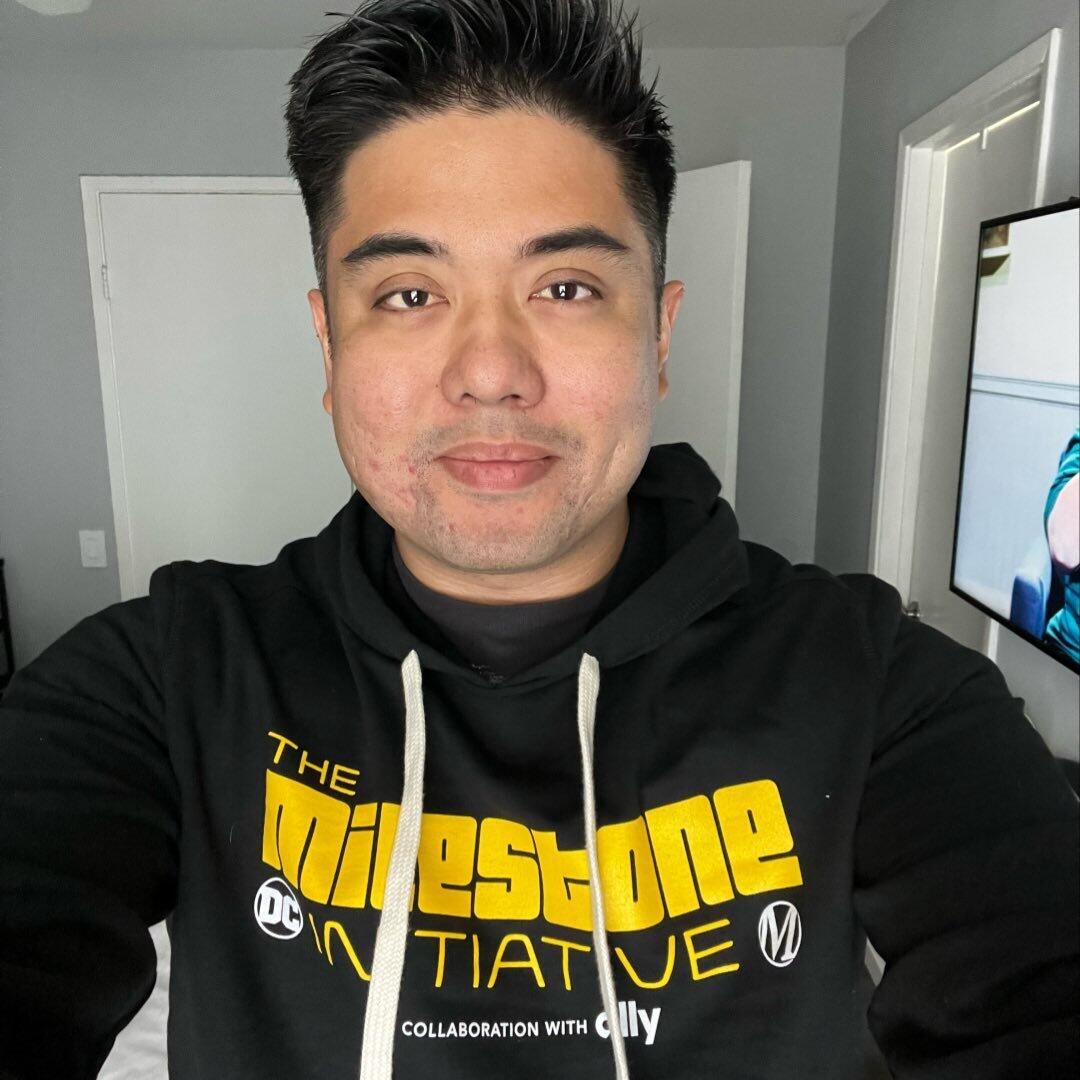
Nathaniel “Nathan” Cayanan is a Filipino-American currently working as a lecturer at Cal State Fullerton part-time, where he teaches business communication. He has been teaching English composition and academic writing for almost a decade and has been in education for 17 years, 8 of those years in college. He studied creative writing and screenwriting at USC and earned a master’s in writing because he wanted to be a filmmaker, but found himself teaching English comp – which he loved for a time.

On a whim last year, Nathan applied for DC Comics Milestone Initiative, a talent development program created in partnership with groundbreaking publisher Milestone Media and Ally Financial for marginalized writers and artists who want to break into the industry. It was highly competitive, but, somehow, the story he wrote for the application caught their eye, and he was officially accepted into their inaugural class. He took part in a program that mentored them as they tried to advance in the comic book industry.

He’s putting more effort into his creative career, not only writing some comics or graphic novels but drawing too. Now, he will be making his DC Comics debut as a writer. His story features the superhero Icon during the Cambodian Civil War.

With his first story to release in just a few months, Nathan’s career is on the rise. But how did he get to this point? Let’s explore the decisions and experiences that brought him here.

I APPLIED BELIEVING THAT I WOULD FAIL

I’ve always loved stories, be they in movies, books, or comics. I have read comics ever since I was about eight years old, my first comic being Batman #416. I watched movies as much as I could growing up, falling in love with not only the stories, but also the craft of telling them. 

I studied creative writing and screenwriting, but as most people know, it’s not a career rife with opportunities, so I found a day job teaching while I tried to develop my creative career. But teaching was a job that took a lot of time and energy, so the amount of effort into my writing career was relatively low. I loved teaching, so I was okay with this for a while, especially since I constantly got rejections for stories I wrote. In short, I settled.

However, about 5-6 years into my college teaching career, I started to feel pigeonholed. Despite earning stellar reviews and even winning Teacher of the Year in 2018, I wasn’t getting consistent opportunities. I was passed up for full-time positions several times. And even though it’s common for adjuncts to make up for a lack of full-time work by finding employment at multiple colleges, many community colleges would not hire me to teach part-time despite me having more experience and qualifications than other candidates they did hire.

So, I realized I needed to let go of this career and go back to school in 2019 for something more practical and get an MBA to pursue opportunities outside higher ed. My logic was that I would continue to teach part-time at only one school and leave my admin job at another school, while I went to graduate school (again).

Then the pandemic happened, and I started to also lose some of the classes at that school because of low enrollment and cut hours. Simultaneously, while I was doing well in my business program (I was earning a 4.0 at the time), I was a bit depressed. The world was collapsing, people were just very unpleasant, student-teacher dynamics changed, and I felt like a failure in TWO careers I pursued.

I applied for the Milestone Initiative, thinking that I’m going to just go work in an office if I give up my passions completely, so I might as well make one last effort and “die trying,” knowing that I fought until the bitter end. I actually applied believing that I would fail and that I just needed one more rejection letter to make it official. But, instead, I was accepted, and that really changed things moving forward.

The world was collapsing, people were just very unpleasant, student-teacher dynamics changed, and I felt like a failure in TWO careers I pursued.

nathan cayanan

CREATIVE INFLUENCES

I have so many creative influences. In film, there are Wong Kar Wai, Christopher Nolan, Quentin Tarantino, Martin Scorsese, and Aaron Sorkin.

If we’re talking literature: Haruki Marakami, Juno Diaz, Amy Tan, Lan Samantha Chang, Edgar Allan Poe, Cormac McCarthy. Comics, Tom King (who was my mentor in the Milestone Initiative), Scott Snyder, Jim Lee, Alan Moore, and Frank Miller. I mean, this list can go on and on, and they all have different influences on my creative voice and eye.

Digital illustration of Sugar Pie DeSant, Filipina jazz singer in the mid-1900s. Drawn by Nathan Cayanan. Colors by Lala Narita.

CHALLENGES OF TRANSITIONING INTO THE CAREER

Most of my work so far is indie and still in the process of being made. I have one comic I’m writing and drawing and any money I get will come after it’s printed, and assuming that it sells enough.

Similarly, I have a graphic novel I’m writing, and an artist is drawing it, and we’ve been offered the opportunity to publish it when it’s finished, but we won’t see a dime until we see units sold in the future. This is why many of us have day jobs. I still teach, just less than I did, and only at a university closer to home. But we do this because we love the art of telling stories.

Drawn by Nathan Cayanan: Ninoy Aquino, a Filipino politician who was assassinated during Ferdinand Marcos’ rule in the Philippines. This illustration depicts Aquino and his wife, future president Cory Aquino, when they lived in Boston, after he was exiled for standing against Marcos.

ADVICE FOR ASPIRING WRITERS OR ARTISTS

It’s not easy, and I think admitting that first is important. Too many young aspiring artists ask for advice, but what I feel like they’re asking is how they make this a career where the opportunities are plentiful, the money is endless, they can do it only from 9-to-5, get a 401K, and feel happy 24/7.

Every person I’ve met in the creative world (especially in comics) has said the same thing. It’s a grind. But, if you love the art, I mean genuinely love it (as opposed to the potential for fame and money), then go for it. But, as many writers and artists have told me, 90% of us have a day job. So, prepare to work, even if you make it. And even when you do, enjoy it, because it may not last.

Also, while it may not feel like it should be important, your ability to work and communicate with others is highly important. VERY few people are talented enough to never have to interact with others. Instead, most must be able to work with each other.

Editors have told me that they don’t care if you’re talented. If you’re not professional, no one’s going to give you the opportunity, especially if you’re rude, always late, flakey, or overly stubborn. You don’t have to be the life of the party or admired by the masses. But surely, you have to be reliable and don’t be a d*&k. 

Drawn by Nathan Cayanan: “It just speaks to the times as we see Asian hate crimes on the rise.”

Website: nathanielcayanan.com

Instagram: @nathan_a.k.a

Related Articles

Image Source: Natalie Naudus

Uncategorized

This Mom Took a Career Switch and Is Now Making Six Figures as a Book Narrator

Natalie Naudus’ voice actor journey began when she realized that narrating audiobooks could be a promising career option. She found that audiobooks were one of the fastest-growing areas of content creation and that most of them were recorded by voice actors in high-quality at-home studios. 

The mother of two decided to pursue it as a new career because she believed that many aspects of the genre she cherished as a classical singer could be incorporated into this new line of work. She now earns six figures annually.

Natalie’s husband helped her set up a home studio. A platform called ACX, which connects narrators with authors, agents, and publishers, gave her her first book job. To make her name and voice more well-known within the community, she started going to events related to book narration. 

During the 2020 pandemic, she decided to share snippets of her book narrator life on Tiktok and Instagram. She wishes others could appreciate this profession as much as she does. This exposure increased her popularity and fan base. Book gigs from publishers who wanted to hire her to publish her works also began to flood in. With this strong online presence, she acknowledged it as one of the most important decisions she has ever made for her professional advancement.

Currently, she still manages to put in a productive 40 hours a week between recording, administrative duties and reading up on material for her next book. Major publishers typically offer her a starting rate of $225 per finished audio hour. 

After three years as a voice actor, she finally reached the six-figure mark in earnings and enabled her to purchase the land for their mountaintop home, as well as upgrade her recording booth.

Natalie had recorded almost 400 books over five years. She is also an award-winning audiobook narrator of more than 250 titles.  Her story shows that taking a chance on a new career path can pay off in ways one never expects.– “It was a difficult decision to give up my opera dreams. But I wouldn’t be where I am today if I hadn’t left it behind and taken this chance.” she tells CNBC’s Make It.

Source Image: Turis.app

Uncategorized

This CEO Transformed Lost Fishing Nets Into Sustainable One-Of-A-Kind Bikinis

Plastic pollution harms our planet and health, but thankfully, companies like Copenhagen Cartel are combating this environmental problem by converting lost or abandoned fishing nets into bikinis with a modern twist on an ancient textile tradition.

Copenhagen Cartel’s founder and ocean lover, Katrine Lee Larsen, was motivated to help mitigate the adverse effects of plastic use and came up with a “brilliant solution” destined to become a global superstar.

Launched in 2019, Copenhagen Cartel has produced swimwear and athletic wear from ocean waste plastic. The deadly ‘ghost nets’ that would otherwise waste away in the ocean and kill countless marine life can be put to good use in this way. Compared to making brand-new nylon, Copenhagen Cartel’s manufacturing process uses less energy and resources.

Larsen views each day as a fresh challenge while launching her own company. Moreover, as a true nature lover, she has been guided and helped by her purpose. She feels the entrepreneurial world is dominated by masculine values that leave little room for feelings and higher goals. However, her experience has shown that a focused, emotional strategy can be very beneficial. She believes a new era of entrepreneurs will emerge due to shifting to a mindset that values meaning over financial gain.

Larsen is an entrepreneur herself, and she has been through the experience of seeing the ocean being depleted of its resources. Despite this, she knows that there is still room for change, which drives her to continue to assist the environment and natural resources.

Image Source: Sean Berry

Uncategorized

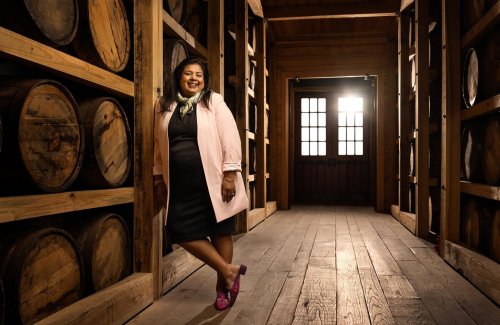
Ann Mukherjee: First Woman of Color CEO of Liquor Brands Shares An Incredible Outlook To Grow

Indian American Ann Mukherjee CEO and chairman of Pernod Ricard, has been a model for success and women’s empowerment. At 56 years old, she is currently managing the world’s second-largest seller of wine and spirits and is also renowned for top-shelf liquor brands such as Absolut, Jameson, and Malibu. In an industry dominated by men, she is the first woman of color to hold the highest position for alcoholic beverage brands.

As soon as she assumed the position of CEO in 2019, she realized that there was a stereotype rooted in an exaggerated machismo of being a self-confident leader. After giving it some thought, she concluded that those beliefs were not only completely false but also destructive, so she chose to disregard them. 

Mukherjee thought the most challenging part of being a CEO was knowing when to ask for help or admit you couldn’t do it alone. She believes it is essential for a leader to accurately understand herself and her people and then learn from them. Although confident in her abilities, she also recognizes the importance of showing humility and honesty.

She also reveals how her failure became the key to her success. She has become more resilient because she has learned to change course when necessary and take advantage of setbacks to advance. And while also acknowledging her drawbacks, she stresses the value of accepting failures. 

Her one piece of advice for anyone just starting in their career is, “Do not worry about fitting in, and do not be afraid to speak up, because when you have confidence in yourself, anything is possible,” she shared with CNBC’s Make It.

Mukherjee is well aware that to be an effective leader, she must first be able to love herself without condition, taking into account all of her attributes, including her strengths, weaknesses, opportunities, and threats. And with that comes the realization that knowing one’s shortcomings can better help one deal with and overcome those. This is the only way for her to achieve genuine personal and professional development.

Image Source: Forbes

Uncategorized

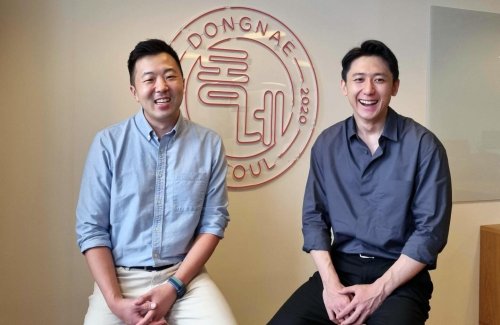
Korean Startup Dongnae Makes Apartment Hunting More Affordable And Accessible

Its key product, Dongnae FLEX, offers short-term, fully-furnished rentals with low deposits, appealing to fresh graduates or travelers unable to cough up the hefty deposits typically required of Korea’s apartments.

Former WeWork executives Insong Kim and Korean-American Matthew Shampine founded Dongnae in 2020. They are “Making it a better experience for the brokers, for the landlords, and especially for the tenants,”  Shampine said in an interview.

Dongnae has welcomed local and global investors. Its $21m series A funding round in March included Lyft and Doordash backer NFX, Airbnb backer MetaProp, and Korea’s oldest investment fund Daol Investment and Hana Financial.

More than 80% of Korean household wealth is in real estate, but it’s increasingly harder to become a homeowner. In Seoul, South Korea’s capital and most populated city, the average apartment price doubled between 2017 and 2021.

The startup company began as a listing platform for renters to book agency visits, but it was unsuccessful. Shampine believes the business model’s early failure generated “good and healthy” but painful reflections. According to Forbes, conversations with customers, brokers, and team members on the ground informed Dongnae’s goal of “becoming the supply, instead of hunting for the supply.” 

The firm switched to serviced apartments in July 2021. At the end of its current investment, the business had 60 apartment buildings; now it has 80 across 12 Seoul districts.

Dongnae wants to offer more home services to its residents in the future, taking advantage of Korea’s booming market for furniture and other lifestyle goods.