Stories

March 17, 2023

SHARE:

Nathaniel “Nathan” Cayanan is a Filipino-American currently working as a lecturer at Cal State Fullerton part-time, where he teaches business communication. He has been teaching English composition and academic writing for almost a decade and has been in education for 17 years, 8 of those years in college. He studied creative writing and screenwriting at USC and earned a master’s in writing because he wanted to be a filmmaker, but found himself teaching English comp – which he loved for a time.

On a whim last year, Nathan applied for DC Comics Milestone Initiative, a talent development program created in partnership with groundbreaking publisher Milestone Media and Ally Financial for marginalized writers and artists who want to break into the industry. It was highly competitive, but, somehow, the story he wrote for the application caught their eye, and he was officially accepted into their inaugural class. He took part in a program that mentored them as they tried to advance in the comic book industry.

He’s putting more effort into his creative career, not only writing some comics or graphic novels but drawing too. Now, he will be making his DC Comics debut as a writer. His story features the superhero Icon during the Cambodian Civil War.

With his first story to release in just a few months, Nathan’s career is on the rise. But how did he get to this point? Let’s explore the decisions and experiences that brought him here.

I APPLIED BELIEVING THAT I WOULD FAIL

I’ve always loved stories, be they in movies, books, or comics. I have read comics ever since I was about eight years old, my first comic being Batman #416. I watched movies as much as I could growing up, falling in love with not only the stories, but also the craft of telling them. 

I studied creative writing and screenwriting, but as most people know, it’s not a career rife with opportunities, so I found a day job teaching while I tried to develop my creative career. But teaching was a job that took a lot of time and energy, so the amount of effort into my writing career was relatively low. I loved teaching, so I was okay with this for a while, especially since I constantly got rejections for stories I wrote. In short, I settled.

However, about 5-6 years into my college teaching career, I started to feel pigeonholed. Despite earning stellar reviews and even winning Teacher of the Year in 2018, I wasn’t getting consistent opportunities. I was passed up for full-time positions several times. And even though it’s common for adjuncts to make up for a lack of full-time work by finding employment at multiple colleges, many community colleges would not hire me to teach part-time despite me having more experience and qualifications than other candidates they did hire.

So, I realized I needed to let go of this career and go back to school in 2019 for something more practical and get an MBA to pursue opportunities outside higher ed. My logic was that I would continue to teach part-time at only one school and leave my admin job at another school, while I went to graduate school (again).

Then the pandemic happened, and I started to also lose some of the classes at that school because of low enrollment and cut hours. Simultaneously, while I was doing well in my business program (I was earning a 4.0 at the time), I was a bit depressed. The world was collapsing, people were just very unpleasant, student-teacher dynamics changed, and I felt like a failure in TWO careers I pursued.

I applied for the Milestone Initiative, thinking that I’m going to just go work in an office if I give up my passions completely, so I might as well make one last effort and “die trying,” knowing that I fought until the bitter end. I actually applied believing that I would fail and that I just needed one more rejection letter to make it official. But, instead, I was accepted, and that really changed things moving forward.

The world was collapsing, people were just very unpleasant, student-teacher dynamics changed, and I felt like a failure in TWO careers I pursued.

nathan cayanan

CREATIVE INFLUENCES

I have so many creative influences. In film, there are Wong Kar Wai, Christopher Nolan, Quentin Tarantino, Martin Scorsese, and Aaron Sorkin.

If we’re talking literature: Haruki Marakami, Juno Diaz, Amy Tan, Lan Samantha Chang, Edgar Allan Poe, Cormac McCarthy. Comics, Tom King (who was my mentor in the Milestone Initiative), Scott Snyder, Jim Lee, Alan Moore, and Frank Miller. I mean, this list can go on and on, and they all have different influences on my creative voice and eye.

Digital illustration of Sugar Pie DeSant, Filipina jazz singer in the mid-1900s. Drawn by Nathan Cayanan. Colors by Lala Narita.

CHALLENGES OF TRANSITIONING INTO THE CAREER

Most of my work so far is indie and still in the process of being made. I have one comic I’m writing and drawing and any money I get will come after it’s printed, and assuming that it sells enough.

Similarly, I have a graphic novel I’m writing, and an artist is drawing it, and we’ve been offered the opportunity to publish it when it’s finished, but we won’t see a dime until we see units sold in the future. This is why many of us have day jobs. I still teach, just less than I did, and only at a university closer to home. But we do this because we love the art of telling stories.

Drawn by Nathan Cayanan: Ninoy Aquino, a Filipino politician who was assassinated during Ferdinand Marcos’ rule in the Philippines. This illustration depicts Aquino and his wife, future president Cory Aquino, when they lived in Boston, after he was exiled for standing against Marcos.

ADVICE FOR ASPIRING WRITERS OR ARTISTS

It’s not easy, and I think admitting that first is important. Too many young aspiring artists ask for advice, but what I feel like they’re asking is how they make this a career where the opportunities are plentiful, the money is endless, they can do it only from 9-to-5, get a 401K, and feel happy 24/7.

Every person I’ve met in the creative world (especially in comics) has said the same thing. It’s a grind. But, if you love the art, I mean genuinely love it (as opposed to the potential for fame and money), then go for it. But, as many writers and artists have told me, 90% of us have a day job. So, prepare to work, even if you make it. And even when you do, enjoy it, because it may not last.

Also, while it may not feel like it should be important, your ability to work and communicate with others is highly important. VERY few people are talented enough to never have to interact with others. Instead, most must be able to work with each other.

Editors have told me that they don’t care if you’re talented. If you’re not professional, no one’s going to give you the opportunity, especially if you’re rude, always late, flakey, or overly stubborn. You don’t have to be the life of the party or admired by the masses. But surely, you have to be reliable and don’t be a d*&k. 

Drawn by Nathan Cayanan: “It just speaks to the times as we see Asian hate crimes on the rise.”

Website: nathanielcayanan.com

Instagram: @nathan_a.k.a
Related Articles

Image Source: Business Wire

Uncategorized

Takashi Cheng Honored With A Special Award For Exemplary Initiatives On Elevating The AAPI Creator Community

The Gala hosted by the Asian Business Association was in full swing during the evening spent celebrating AAAPI contemporaries. The evening’s events revolved around the concept of authentic old Hollywood, and its guest list included several famous personalities. 

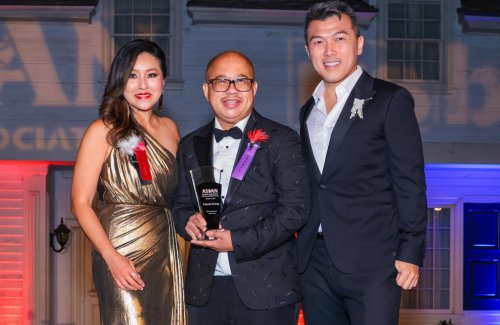
Takashi Cheng was honored with the Media Visionary of the Year Award, one of the night’s main highlights. He is one of the business leaders from the Los Angeles community who highlights the accomplishments of prosperous business owners and corporations and has contributed to advancing the ABA’s goals and mission. 

Cheng serves as the Chief Executive Officer of Society One. He is known to be a creative investor and a public intellectual. Cheng has seen many ups and downs, but he credits his success to the American Bar Association (ABA), which he calls a shelter for young professionals seeking mentorship and employment. He attributed a significant portion of his success to the support of his wife and their young children.

Cheng’s Bling Empire castmate and friend Kane Lim called him a visionary. Lim is proud and happy that Cheng is in the spotlight for investing in people and projects that aim to elevate the Asian community. He is amazed at how Cheng invests in people and projects that seek to promote the Asian community.

Besides all the recognition that night, Cheng modestly used his platform to show the world that a large investment in the AAPI creator community is needed to provide a perspective and a complete spectrum of content that better understands the underrepresented. 

Cheng pledged $100 million to create new films, programs, resources, and infrastructure for Asian American business leaders. This showed Society 1’s support for AAPI creators. He concluded that he had “come full circle” from being a spectator in the crowd to receiving recognition from highly regarded community members.

Image Source: Amberlyns Cake / Danica Lynne Casta

Uncategorized

How An Engineering Graduate Trades Hard Hats For Pastry Becomes 6-Figure Baker

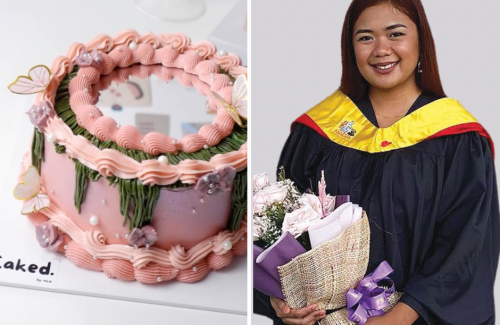
For Danica Lynne Casta, an engineer by profession turned baker, success was hers after she risked taking a big step outside her comfort zone. She now manages her online cake business under “Amberlyns Cake.”

The Filipina baker had just graduated from university when the pandemic struck. Danica began to reconsider her professional goals in baking when her family had financial difficulties, so she looked for a short-term position in the online world.  

Danica had limited experience in baking. But through hard work, she persisted in her quest to become a better baker until she became well-known for her delicious “bento cakes”.

The bento cakes were not only delicious but also the perfect size and price for those watching their spending. She also recently launched a “Selfie Mirror Cake” featuring a real mirror on top of the cake. So, you can take one-of-a-kind mirror selfies while taking a snap of your scrumptious cake.

In only one month, she turned a profit into double digits. At that moment, she knew that baking was her true calling in life. “I told my family that I was quitting my job and would be a full-time baker from now on,” she told The Philippine Star, a digital newspaper in the Philippines.

As of writing, Amberlyns Cake (@amberlynscake) got over 178k followers on Instagram and Facebook.

Image Source: CNBC Make It

Uncategorized

25-year-old Who Earns Half A Million Per Year Proves That No One Is Too Young To Be A Real Estate Investor

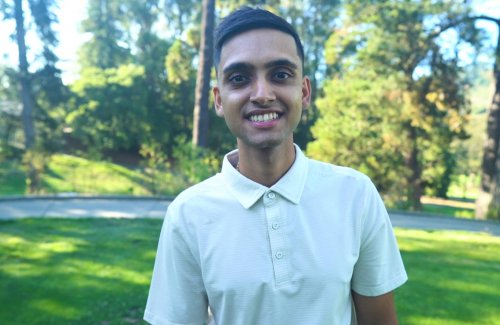
This millennial will inspire you with his quest for financial independence. Sahil Mehta earns $515,000 a year flipping houses in addition to his full-time job at Golden Gate Sotheby’s.

Mehta grew up in a low-income household. He moved to California at 16, where he started college and graduated early to launch a successful career in real estate. Today, he has already put five rental apartments into the real estate market in Berkeley and has been able to make a profit from them.

He acknowledges that prospective investors require substantial capital even to enter the game. One essential thing he considers in investing his money is making deposits into a personal retirement account. Now, Mehta puts a lot of money into himself and puts away about $10,000 monthly for real estate investments. 

The 25-year-old also invests $1,500 per month, while most financial advisers recommend saving 10% to 15% of income for retirement. Brilliant move to put some of it in an IRA, where it can multiply at 6% to 8% every year.

O’Leary, chairman of O’Shares ETFs and a judge on the new CNBC show “Money Court,” was impressed by Sahil Mehta’s connotations to stock market strategies. “That’s what you’re putting aside for your nest egg when you turn 65.”

Made with Canva

Uncategorized

Eight Trailblazing Asian Women Who Are Slaying It In Startups

When it comes to closing the gender equality gap in entrepreneurship, many barriers remain to be addressed. However, female entrepreneurs in the startup industry are now rising and have been taking center stage.

Fortune recently released a list of the 15 Most Powerful Women in Startups based on PitchBook valuation data. 

Eight women on the list are notable Asian women who are either founders of highly valued startups where they hold important jobs or chief executives of highly valued firms.

Without further ado, here are the most powerful women in charge of the most valuable private companies in the world today.


Melanie Perkins

Cofounder and CEO, Canva

Valuation: $26 billion

The Malaysian-Austrailian cofounder and CEO of design software maker Canva was valued at $40 billion in 2021, which makes it the highest-valued female-founded startup in the world. Launching their new office product, the company is ready to take on Microsoft and Google.


Divya Gokulnath

Cofounder and director, Byju’s

Valuation: $22 billion

Gokulnath cofounded India’s most valuable startup, Byju’s. The firm’s aim is to make learning engaging and effective by leveraging deep pedagogy and cutting edge technology.


Miranda Qu

Cofounder and president, Xiaohongshu

Valuation: $20 billion

Based in Shanghai, the social e-commerce app Xiaohongshu (translation: “Little Red Book”) has been key to the rise of experiential shopping in China. The innovative platform integrates the authentic content shared by its community with commerce, quickly becoming one of the most popular destinations for making lifestyle decisions.


Ruchi Kalra

Cofounder and CFO, OfBusiness; cofounder and CEO, Oxyzo

Valuations: $5 billion (OfBusiness); $1 billion (Oxyzo)

Kalra along with her husband Asish Mohapatra, cofounded the carbon management business OfBusiness and the digital lender Oxyzo. OfBusiness provides India’s SMEs access to cash flow-based financing for buying raw materials through its NBFC ‘Oxyzo Financial Services’.


Adi Tatarko

Cofounder and CEO, Houzz

Valuation: $4 billion

The Israeli-American cofounder and CEO started the home remodeling and design platform where people can browse and save beautiful photos of inspiring home, as well as find and hire the right design and construction professionals.


Eynat Guez

Cofounder and CEO, Papaya Global

Valuation: $3.7 billion

Papaya Global is a payroll platform trusted across 160+ countries and all types of employment. Based in Israel, Guez cofounded the startup after a long career in global workforce management.


April Koh

Cofounder and CEO, Spring Health

Valuation: $2 billion

Koh became the youngest woman to run a multibillion-dollar company when the startup hit its $2 billion valuation in 2021. With the mission to eliminate every barrier to mental health, Spring Health offers mental health care services as an employer-provided health benefit.


Jinglan Wang

Cofounder and CEO, Optimism

Valuation: $1.7 billion

Optimism is an Ethereum-based decentralized infrastructure platform that allows for instant transactions and scalable smart contracts.The company valued at $1.7 billion as it worked to scale Ethereum.