Stories

September 4, 2024

SHARE:

Have you ever struggled to find glasses that fit just right? If you have a low-bridge nose, this challenge might be all too familiar.

For many people, especially in the Asian community, finding eyewear that stays comfortably in place without constant adjustment is a common struggle.

Megan Miyamoto, founder of MIKO Eyewear, knows this experience all too well, and it’s what inspired her to create a brand that finally addresses this issue head-on.

The Inspiration Behind MIKO

Growing up, Megan often faced difficulties in finding glasses that fit well. She felt frustrated by the lack of options that accommodated her facial features.

“I was often told to ‘just shop the rack,’ which left me feeling like I needed to fit in or that there was something wrong with my facial features,” Megan shared with AHN.

When she became a mother, she was determined to give the best for her daughter, including the right eyewear. She didn’t want her daughter to go through the same difficulties that she did.

Through her research, Megan discovered that up to 80% of lifetime UV exposure occurs before the age of 18, leading to serious eye health concerns like cataracts and eyelid cancer. Yet, when she went searching for suitable eyewear for her daughter, she found the options disappointingly limited, especially for children with low bridges.

After trying countless samples, including private label options that didn’t meet her standards, Megan decided to give it a go and design a product using high-quality materials that she could feel good about. And that’s how MIKO was born.

Overcoming Challenges with Community Support

One of the toughest challenges that Megan faced as an entrepreneur is the sense of isolation that can come with building something from the ground up. 

“There were moments when doubt would creep in, and it was easy to feel overwhelmed by the sheer amount of work and decisions needing to be made,” she said.

Megan found strength in the community that rallied around her. She pushed herself out of her comfort zone, connecting with mentors, fellow entrepreneurs, and communities like Authentic Asian.

“If you took the time to connect with me, spread the word about MIKO, or made a purchase, sincerely thank you for being a part of our MIKO journey.”

The Creative Process

Seeing her idea turn into a tangible product that her daughter and neighborhood kids genuinely love is one of the milestones that Megan is most proud of. What started as a quest to fill a gap in the market for low-bridge kids’ eyewear has evolved into a brand that brings confidence and joy to its young wearers.

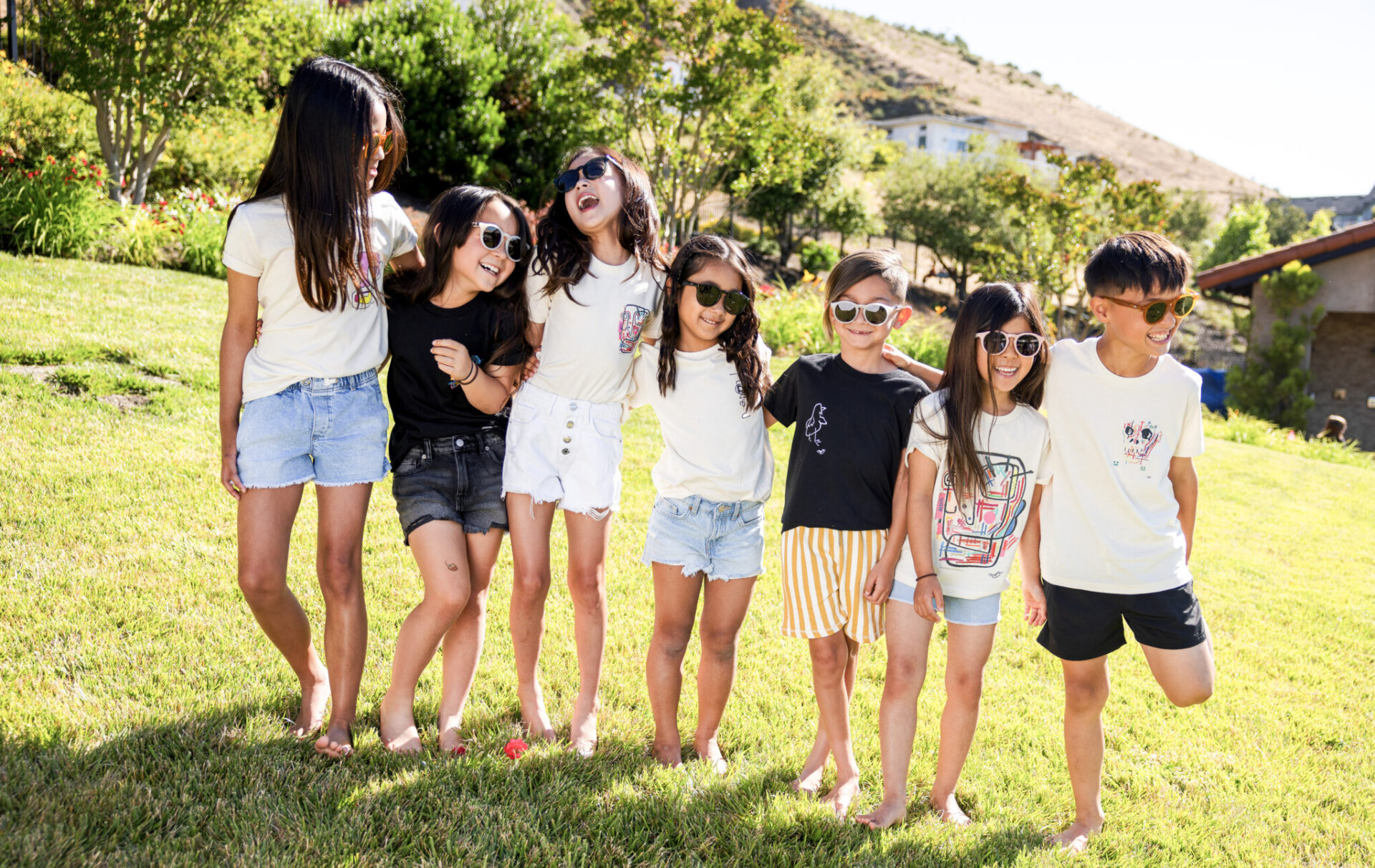
The design process was particularly special for Megan, as it was a collaborative effort involving her daughter and the neighborhood kids, and turning her kitchen island into a mini design studio.

During these sessions, Megan paid close attention to the kids’ feedback, particularly when it came to the fit of the glasses. They tried on various prototypes, providing insights into what felt comfortable and what didn’t. They also got to select the colors for the frames, giving a fresh perspective and opening Megan’s eyes to combinations she probably wouldn’t have considered on her own.

Seeing the kids’ faces light up when they tried on glasses that fit perfectly was incredibly rewarding for Megan. Their creative process reinforced the idea that MIKO isn’t just eyewear made for kids—it’s made with them.

MIKO’s Mission and Vision

MIKO Eyewear is dedicated to empowering the next generation by providing inclusive, stylish, and functional eyewear specifically designed for children with low bridges.

Megan’s vision is to redefine what it means to wear glasses, turning them from a mere necessity into a source of pride and confidence for kids. By addressing the unique needs of low-bridge children, MIKO not only fills a gap in the market but also celebrates the diversity of facial features, empowering the Asian community and beyond.

Connect with MIKO

Instagram: @miko_eyewear

Website: mikoeyewear.com

Get a complimentary eyeglass strap with your MIKO Eyewear sunglasses purchase! It will be automatically added to your cart. Available for the first 100 customers only!
Related Articles

Image Source: Fiona Chan

Stories

TikTok Viral Beauty Brand Youthforia Inspired From Asian Roots And Self-Awareness

We spend most of our waking hours trying to care for ourselves, but there’s only so much time in the day. That’s what the makeup brand Youthforia is for — a line of high-quality beauty products that fit seamlessly into your routine. 

Founder Fiona Co Chan accomplished this goal for Youthforia, making it the first East Asian makeup brand to be sold at Ulta Beauty. 

While quarantined in Hong Kong, Fiona realized she should launch a cosmetics line. She also recalled a lesson her Vietnamese refugee mother had taught her early on about the importance of paying attention to what goes into one’s body. Although she didn’t have the best track record with makeup, she was able to consider her interest. 

Before 2020, she worked in technology and visited several highly polluted Asian cities. She realized that her Western cosmetics reacted poorly to heavy pollution, resulting in skin damage. 

This led Chan to work on a gentle formulation and test it out for two months before releasing it to the public on TikTok in 2021. She used the video hosting giant to see if people would be interested in trying out her new makeup creations, such as a liquid blush that adjusts to the skin’s pH. The BYO Blush was a huge success, and Chan’s Youthforia’s TikTok accumulated 40 or 50 million views in its first year.

While the launch of Youthforia on TikTok is undoubtedly cutting-edge, the brand’s core values are founded in the past. This comes directly from Chan’s identity and her upbringing in an Asian San Francisco household where her mother stressed the importance of viewing the body as a whole.

Image Source: Zen Sekizawa

Stories

Linda Lindas: What Life Is Like For Teenage Students Who Are Also In A Punk Rock Band

How does one balance their passions for creativity and artistic expression with maintaining an everyday life? This seems to be one of the hardest things to do when not everyone appreciates your creativity. Perhaps it may be possible, but very few people have been able to pull it off.

Meet the punk rock band Linda Lindas who are all still teenagers and are concentrating on their studies while on stage. They never go out to clubs after their concerts, instead, they do homework.

The Linda Lindas are comprised of the four members Lucia and Mila de la Garza, ages 15 and 12, respectively, their cousin Eloise Wong, age 14, and their friend Bela Salazar, age 17. They hail from Los Angeles and identify as both Asian American and Latinx. 

Linda Lindas didn’t grow up thinking they would be a musician. The fact that Mila and Lucia de la Garza’s father is a Grammy-winning producer had no impact on their future goals. Wong always wanted to study paleontology, while Salazar dreamed of becoming a doctor. Youngest and most gregarious of the bunch, Mila de la Garza always looked up to the character of Olaf from “Frozen.”

In 2018, Kristin Kontrol invited local girls to perform with her at a concert titled Girlschool L.A., marking the debut of Linda Lindas with the Dum Dum Girls. The band’s reputation grew as they continued to perform in Chinatown. They have supported Bikini Kill, Alice Bag, Money Mark, the Dils, and the Alley Cats, among others. Amy Poehler reached out to them to have them perform a medley of “Rebel Girl” by Bikini Kill and “Big Mouth” by The Muffs for her film “Moxie.”

They say they do their homework in the backstage area, on the plane, or during another downtime. They are convinced they are not yet adults, but they would still like to give their full attention to schoolwork. The band’s debut album, titled “Growing Up,” is centered around progress and ongoing education.

Image Source: Mark Ezzer Ligan Facebook

Stories

Filipino Entrepreneur Cultivates Family’s Land With A Goal Of Providing Food For Every Family’s Table

The Philippines, like many countries around the world, is dealing with skyrocketing food inflation due to supply issues and high fuel costs. 

26-year-old Mark Ezzer Ligan, from Bacolod, Philippines, has learned how to start and sustain his farm by producing vegetables such as okra, eggplant, soursop, and coconut in his family’s 3-hectare plot of land called MBL Integrated Farm. He also raises imported goats from Australia, cows, carabaos, and chickens.

Mark continues to cultivate the land and raise livestock to increase community production. He ensures sufficient supplies from eggs to vegetables and corn to fresh milk for the general public. As a farmer, he believes it is his responsibility to ensure that everyone has enough to eat.

More than 80% of Filipinos eat goat meat, but there are only two major commercial goat farms in the Philippines. The opportunity for growth for goat farmers is also substantial in light of this booming market.

Even more importantly, he benefits financially from their crop yields. Mark worked so hard that the provincial government of Negros Occidental recognized him as the 2019 Oustanding Young Animal Raiser. His success hasn’t hindered him from his commitment to his main goal of providing food, especially during the pandemic.

Image Source: ©Studio Ghibli

News

World’s First Studio Ghibli Park In Japan Features Iconic Settings And Characters Animation

It’s the perfect time to visit Kyoto, Japan, as Ghibli Park opened less than an hour away from the city last November 1st. The new Park features some of your favorite animated scenes and characters from Studio Ghibli films.

During an event a few days before the park’s official opening, Studio Ghibli Co. chairman and president Koji Hoshino said that the start of the park has a significant meaning for them that surpasses almost three years of the pandemic.

Overall, the final design for Ghibli Park encompassed some 17.5 acres and was split into five distinct areas. Ghibli’s Grand Warehouse, the park’s centerpiece, is a huge indoor “town” with streets, displays, and reproductions of Studio Ghibli’s “Totoro” and “The Catbus from Outer Space” sets. The Ghibli Museum’s theater shows special short films to visitors of the new park and Tokyo’s Ghibli Museum.

There are also two restaurants, a souvenir shop, a vintage shopping district with lanes, and a play area for children. The “Hill of Youth” antique shop from “Whisper of the Heart” and “The Cat Returns” is the second tourist attraction. The park can be seen in its entirety from this vantage point.

The third and newest section of the park is the Dondoko Forest, which is themed after the anime film “My Neighbor Totoro.” Both the bouncy house and a Totoro-themed playground can be found there.

Valley of Witches will feature elements from “Howl’s Moving Castle,” about a young milliner who accidentally gets caught up in a war, and “Kiki’s Delivery Service,” about an earnest and hardworking young witch. 

According to the director and son of Studio Ghibli co-founder Hayao Goro Miyazaki, the park was conceived with the local community in mind. Miyazaki’s original intention for the site was to be a park, not a typical theme park with rides and attractions. He desires that the people of Aichi share his passion for their gardens, as he believes parks are primarily for the local community.

Check out their official website for ticket and booking information.