Stories

September 4, 2024

SHARE:

Have you ever struggled to find glasses that fit just right? If you have a low-bridge nose, this challenge might be all too familiar.

For many people, especially in the Asian community, finding eyewear that stays comfortably in place without constant adjustment is a common struggle.

Megan Miyamoto, founder of MIKO Eyewear, knows this experience all too well, and it’s what inspired her to create a brand that finally addresses this issue head-on.

The Inspiration Behind MIKO

Growing up, Megan often faced difficulties in finding glasses that fit well. She felt frustrated by the lack of options that accommodated her facial features.

“I was often told to ‘just shop the rack,’ which left me feeling like I needed to fit in or that there was something wrong with my facial features,” Megan shared with AHN.

When she became a mother, she was determined to give the best for her daughter, including the right eyewear. She didn’t want her daughter to go through the same difficulties that she did.

Through her research, Megan discovered that up to 80% of lifetime UV exposure occurs before the age of 18, leading to serious eye health concerns like cataracts and eyelid cancer. Yet, when she went searching for suitable eyewear for her daughter, she found the options disappointingly limited, especially for children with low bridges.

After trying countless samples, including private label options that didn’t meet her standards, Megan decided to give it a go and design a product using high-quality materials that she could feel good about. And that’s how MIKO was born.

Overcoming Challenges with Community Support

One of the toughest challenges that Megan faced as an entrepreneur is the sense of isolation that can come with building something from the ground up. 

“There were moments when doubt would creep in, and it was easy to feel overwhelmed by the sheer amount of work and decisions needing to be made,” she said.

Megan found strength in the community that rallied around her. She pushed herself out of her comfort zone, connecting with mentors, fellow entrepreneurs, and communities like Authentic Asian.

“If you took the time to connect with me, spread the word about MIKO, or made a purchase, sincerely thank you for being a part of our MIKO journey.”

The Creative Process

Seeing her idea turn into a tangible product that her daughter and neighborhood kids genuinely love is one of the milestones that Megan is most proud of. What started as a quest to fill a gap in the market for low-bridge kids’ eyewear has evolved into a brand that brings confidence and joy to its young wearers.

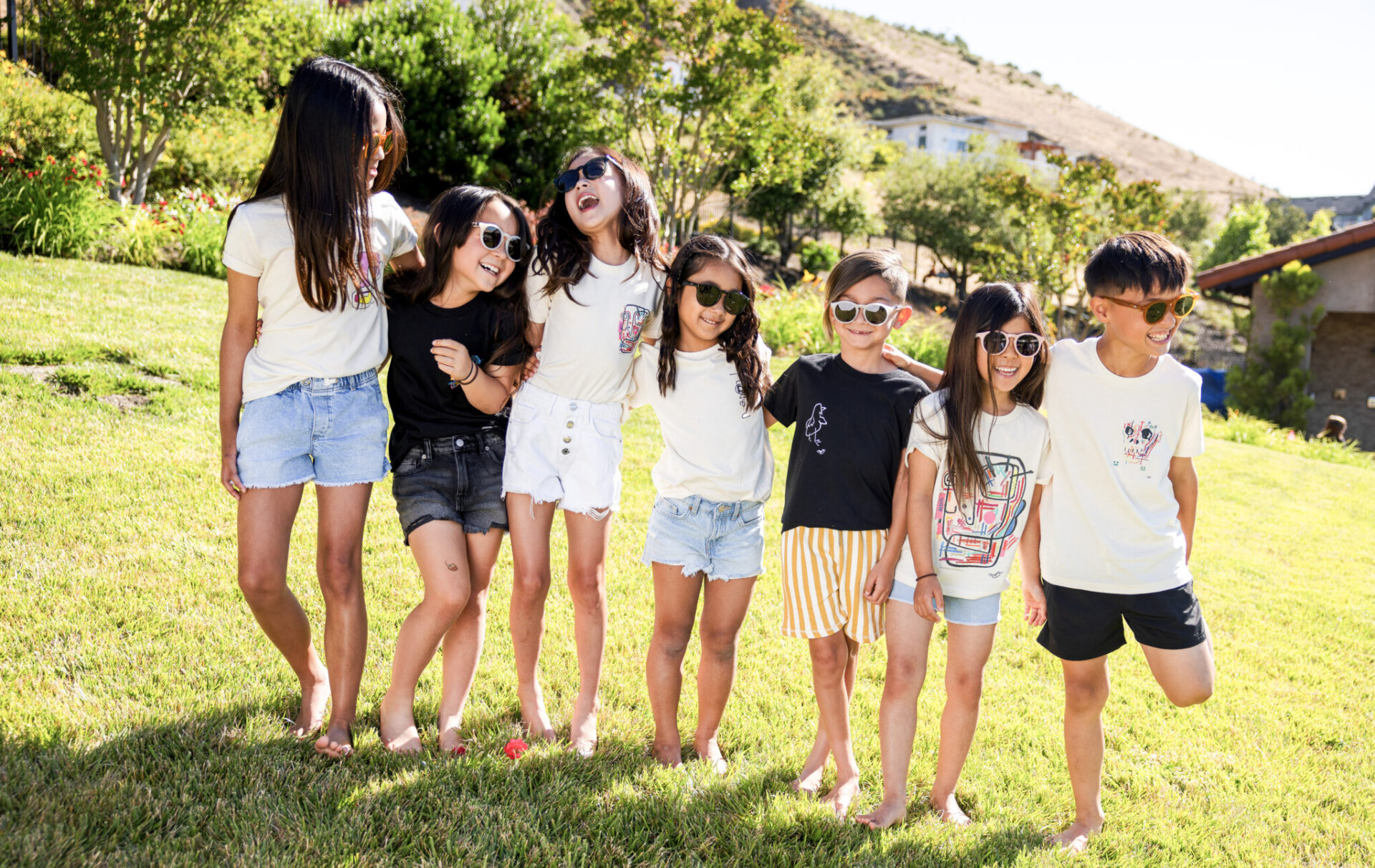
The design process was particularly special for Megan, as it was a collaborative effort involving her daughter and the neighborhood kids, and turning her kitchen island into a mini design studio.

During these sessions, Megan paid close attention to the kids’ feedback, particularly when it came to the fit of the glasses. They tried on various prototypes, providing insights into what felt comfortable and what didn’t. They also got to select the colors for the frames, giving a fresh perspective and opening Megan’s eyes to combinations she probably wouldn’t have considered on her own.

Seeing the kids’ faces light up when they tried on glasses that fit perfectly was incredibly rewarding for Megan. Their creative process reinforced the idea that MIKO isn’t just eyewear made for kids—it’s made with them.

MIKO’s Mission and Vision

MIKO Eyewear is dedicated to empowering the next generation by providing inclusive, stylish, and functional eyewear specifically designed for children with low bridges.

Megan’s vision is to redefine what it means to wear glasses, turning them from a mere necessity into a source of pride and confidence for kids. By addressing the unique needs of low-bridge children, MIKO not only fills a gap in the market but also celebrates the diversity of facial features, empowering the Asian community and beyond.

Connect with MIKO

Instagram: @miko_eyewear

Website: mikoeyewear.com

Get a complimentary eyeglass strap with your MIKO Eyewear sunglasses purchase! It will be automatically added to your cart. Available for the first 100 customers only!

Related Articles

Image Source: Shark Tank

Stories

Slime Company Started By High School Student In His Garage Made $1.2 Million Sales After Joining “Shark Tank”

Mark Lin was only 17 when he started selling food-scented slime out of his Burbank, California garage in 2020. 

He then won over venture capitalists on an episode of ABC’s “Shark Tank,” with his zeal for pitching and the amazing yield his company was generating, where $300,000 was a net profit out of the $540,000 in sales he obtained at the time.

With the assistance of a couple of his buddies, whom he employed for packaging and shipping, Lin, a high school freshman and novice in the industry, developed the slime successfully, enabling him to make $50,000 in sales in his first year of operation.

CNBC reports that Lin’s sales increased to $580,000 the following year.

Sliimeyhoney now sells edible and food-scented slimes with flavors like banana milk, hot cocoa, and birthday cake batter for between $10 and $16 per six-ounce jar utilizing Tiktok as his marketing platform.

The company consistently achieves sold-out sales for its weekly introduction of new products to its almost one million followers.

After a thorough negotiation with Kevin O’Leary and Daymond John, Lin secured $150,000 for 20% share from the two.

This, according to Lin, will be beneficial in moving his company from his garage into a warehouse and gaining mentorship while he still pursues his studies.

John was quoted saying “I believe in you, and we’re going to make sure you go to school, and I will help you with this business.”

Lin is now a first-year college student at UCLA with his company continuously rising.

Image Source: InvisaWear

Stories

Capitalizing On Her Advocacy For Women’s Protection, Young CEO Now Leading Safety Device Company Invisawear

Taking it from her unforgettable and scary experience involving safety and security, Rajia Abdelaziz realized the importance of women’s self-protection which made her put up Invisawear, now a leading safety device manufacturer.

Together with her best friend and now business partner Ray Hamilton, they designed a piece of wearable tech that allows the user to call for help and alert emergency contacts at a double-press.

InvisaWear is jewelry that can save lives. Although their components resemble ordinary accessories, they are actually safety devices supported by America’s top security supplier (ADT).

The devices have a secret panic button that can be set to dial 911, send a pre-programmed text message to five emergency contacts, and send a GPS location to the emergency services. They are worn on the body so they are nearly always available.

The co-owner was quoted saying “InvisaWear also partnered with ADT to provide access to video streaming, voice activation, and self-defense classes as a way of “equipping people to protect themselves,” 

Compared to a cellular phone, it is a more accessible safety device which comes in the form of a charm necklace.

Considering women’s safety as a very important issue, Abdelaziz rejected high-paying job offerings related to her electrical engineering training just to prioritize her advocacy even if she struggled with many challenges in starting it up.

Though laborious, Invisawear was able to raise millions of funds for the safety device.

Five years after its founding, the business has grown to produce more than just gold and rhodium-plated jewelry. It now makes fitness bands, hair accessories, and keychains, all of which have timeless appeal and fashionable, practical designs.

According to Abdelaziz in Forbes, several of their items are now also available in unisex versions since they discovered that safety wasn’t just important for women but also for some guys.

The business intends to grow in Europe and the Middle East and just announced a new cooperation with a Canadian security company.

Invisawear is a technical advancement that has significantly improved people’s lives.

Abdelaziz emphasized “One of the best moments of my life was the first time one of our devices saved someone’s life,” she says, “a young woman had been badly injured in a car accident and her keychain saved her life. Her dad was able to get to her and be with her while they waited for an ambulance, who knows how long it would have taken to find her otherwise.”

Image Source: Ben Marcum Photography

News

Christmas is Merrier at Mall of America With 6 Diverse St. Nicholas Including the First Asian Santa

After three long years of not celebrating Christmas the ‘usual’ way, children at the Mall of America (MOA) were finally sitting again in amusement and happiness on Santa’s lap. 

What makes the experience even happier and better is to have six different Santas whom children and parents can choose from in making The Santa Experience happen.

In 2016, Larry Jefferson became the first African American Santa Claus in MOA. 

Now, Jefferson will not be alone in completing the Christmas vibe as a diverse group of Santas will be working together to do the task. Among them are two African Americans and the first-ever Asian Santa Allan Siu, named “Santa Allan” in MOA’s record.

All of them are ready to listen to the Christmas wishes from young and young-at-heart people.

With two of the Santas able to speak both Spanish and Cantonese, it adds color in telling the children if they were naughty or nice.

“To run across someone who speaks your language, there’s kind of a bond there. Not only is the language a bond but there is also some sort of psychological bond,” Allan told Fox.

Image Source: ESQA

News

First Indonesian Vegan Cosmetic Startup Obtains $6 Million Funding From Unilever Ventures

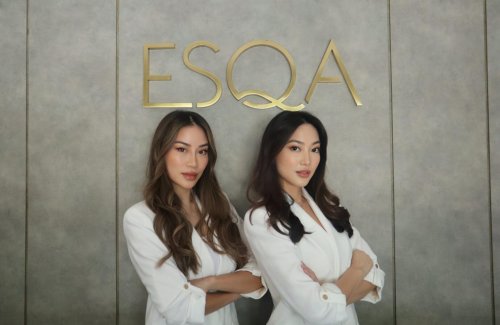
The first and top vegan cosmetics company in Indonesia, ESQA Cosmetics, raised $6 million in a series A round led by Unilever Ventures marking the latter’s first investment in the Southeast Asian beauty market.

In the said round, East Ventures also participated, the venture arm of the global consumer goods giant.

After spending over ten years living and working in Los Angeles, Cindy Angelina and Kezia Trihatmanto created ESQA in 2016, shortly after their return to Indonesia.

The two intended to redefine luxury cosmetic products and make them more widely available and reasonably priced.

With the acquired funds, the company plans to use the money to reach more cities and markets while also extending its omni-channel distribution.

Additionally, they want to expand their product offerings, foster talent development, and amplify their marketing initiatives.

Prior to this, the company reportedly increased its sales to Vietnam, Singapore, and Malaysia. 

TECHINASIA mentioned that one of the company’s expansion initiatives was to sell its goods through Sociolla’s physical storefronts, another East Ventures-backed startup.

Accordingly, the business stated that despite the pandemic, it had managed to turn a profit with its 120 vegan and Halal-certified products.

Avina Sugiarto, a partner at East Ventures, stated in Deal Street Asia that by having consistent profitability, they weren’t looking for high-quality, hyperlocal, and affordable beauty products.

She continued saying “We were certain that ESQA’s innovative, natural ingredients and wide-product offerings will propel ESQA to be a leader in the beauty market in Southeast Asia.”