Stories

August 11, 2024

SHARE:

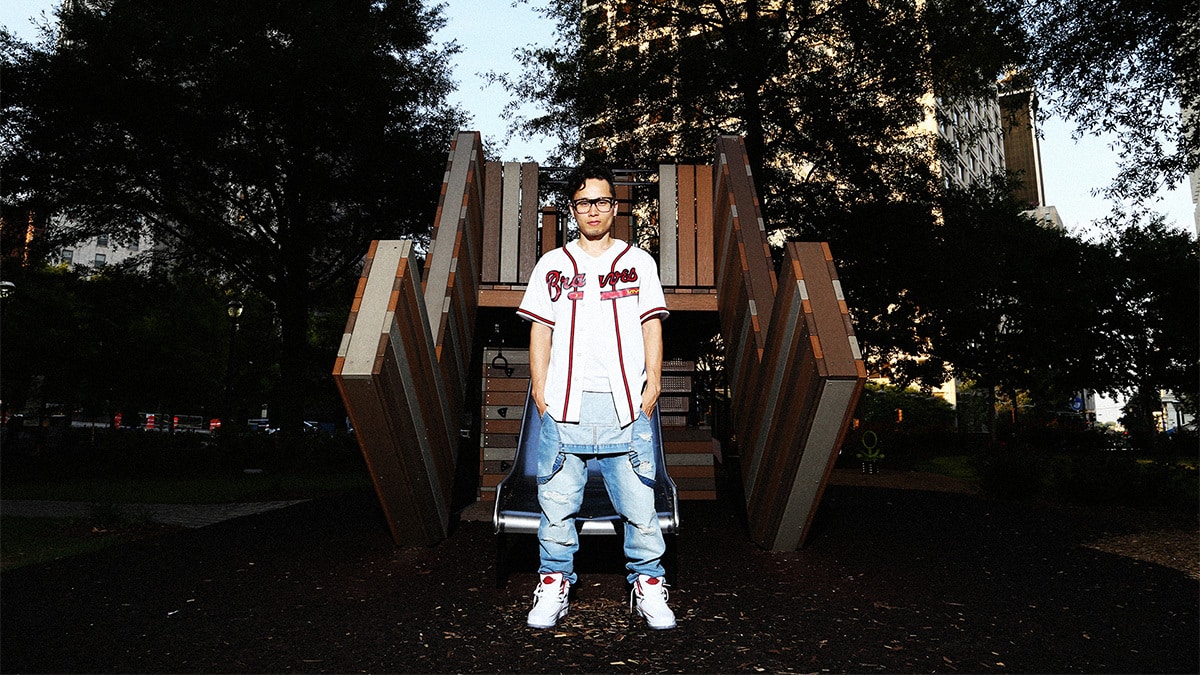
Paddling the world of parties and turntables, DJ Baby Yu’s story may not be in many Asian parents’ favor, who prefer more stable nine-to-five academic jobs. He talks about family expectations, the entertainment industry, the values of his “unconventional” job, and more. 

We all love dancing, don’t we? Sometimes, it feels good to just let your hair down and move to the music for a bit. That’s where DJs come in, blending beats and energizing crowds from all walks of life.

Nonetheless, this job may receive quite a few skeptical and questioning frowns from Asian parents. Uncontrollable parties, unprecedented futures, and unstoppable debaucheries are what the music industry is all about, many would argue. However, DJ Baby Yu is here to bring more Asian creatives to the forefront, shattering the traditional barriers that may hinder them.

Rewind to 28 years ago, in tight-knit local college radios and nightclubs, flooded with ravers and heart-throbbing hip-hop music. Daniel Nakayama, known as Baby Yu, who made mixtapes featuring hosts like Ye, Ciara, and The Game, might be unmoored; but he knew what he was doing and that he was doing it for the fun of it all.

Asian Parents and Conventional Jobs

If the nine-to-five cyclic life is considered to be successful in many Asian households, then the fun-blasting, bass-hitting life would be considered to be one of the most unconventional career paths. “Not all of us are destined for high-paying traditional jobs,” he said. “Generally speaking, our parents weren’t supportive unless we finished school, earned a degree, and pursued a prestigious job.”

Upon the chance meeting with an old friend who happened to be DJ-ing at a house party, uninvited yet inspired, he bought a pair of turntables and records the day right after. Starting to DJ in high school and defining his career at university, he describes the universal battle of fighting for your dream, especially for someone with an immigrant background, where traditional values were the guiding star.

As a child of immigrant parents from Miyazaki, Japan, I share the growing pains experienced by many first-generation Asian children. Our parents often try to shape our futures, pushing us toward careers like doctors, nurses, or lawyers, without considering our personal interests and passions.

At the end of the day, those expectations only came from their own experiences and their desire for their children to have a happy and stable future.

However, once my parents saw me perform on TV, heard me on the radio, and received praise from their friends’ children, they understood that I had found something that made me happy. That realization was all that mattered to them.

The Mash-Ups of Highs and Lows in the Music Industry

This industry is no stranger to a bad reputation, where another rising public darling replaces the ones who don’t transform, where every part of your career move is baselessly evaluated and overblown, where the radio label could count you out if they can no longer profit from you.

DJ Baby Yu (center) with Drake (left) and Jeezy

It’s tough work being an artist in this competitive landscape. One may have to toe the line for mainstream appeal. Some may scream “Smash it, I’m here to do my own thing.”

Whatever approach they may choose, the Internet has given rise to the demand for artists with distinctive musical personalities. “There are no rules for how you should express yourself in life,” he says. “If people understand and believe in you, they’ll follow. If not, that’s okay—they’re not your audience. There will always be those who appreciate your art and direction. Focusing on this has helped me overcome any obstacles life throws my way.”

He Did It for the Fun and He Did It for the Asians

Despite the struggles, Daniel took a moment to reflect on what he had learned from his shows around the world, where he gets to travel to new places, meet new people, throw joyful parties, and try new things.

As I matured in the industry, I ventured into new areas, working on artist development and taking on marketing and branding projects for companies like Puff Puff in Thailand and Whims in Austin. Event planning is another passion of mine, and I particularly enjoy creating fun and unique events.

A shot from the Wiz Khalifa: Under The Influence of Music Tour in Toronto, Canada, featuring Daniel as the tour DJ for Jeezy

Back in Toronto, he was holding a “branded party” called Playbook Social, where he mixed “food, cocktails, karaoke and DJs.” The party sold out, seated the most versatile community in the city. Of course, if you were in the game for the right purpose, like-minded individuals will team up and recognize what you’re doing, even way before you realize it. It turns out that what he’s been doing has such a tremendous impact on the AAPI community.

There have been several times in my life when loyal supporters have come up to me and thanked me for what I do, often ending with the phrase, “You’re doing it for all the Asians!” For a while, I didn’t fully understand that sentiment. In my mind, I was doing it for myself, for the love of music, and to make everyone around me happy.

However, as I traveled and understood my cultural position in the industry, whether I was the only Asian in a room full of Hip Hop leaders or in the pop scene dominated by white people, I realized there weren’t many Asians in these spaces. Times have changed now, with K-pop gaining global popularity, but back then, it was different. Asians weren’t the creators of R&B, soul, Hip Hop, house, rock, or pop music; we were lovers of these cultures, trying to fit in.

Connect With DJ Baby Yu

Curating a unique and eventful experience is the ultimate wish of any musician. DJ Baby Yu has never been one to shy away from collaborating with rising Asian talents. His upcoming event, a collaboration project with UPRISERS, a Japanese female-owned AAPI streetwear brand, is meant to bring together great Asian talent and leaders for celebration and appreciation.

I’ve teamed up with UPRISERS, a Japanese female-owned AAPI streetwear brand, to celebrate their 5th anniversary. Other AAPI groups, such as FACE (Filipinos Advancing Creative Education) and Represent ASIAN Project, are also promoting this event. My goal is to bring together great Asian talent and leaders under one roof to celebrate each other.

This event is also one of the official events of SKAM Summer 2024, a two-day DJ and influencer weekend at the Mondrian Hotel in West Hollywood, created by Sujit Kundu of SKAM Artist (more information at https://skamartist.com/skamsummer).

“Now, I truly understand when people say, “I’m doing it for the Asians.” As a leader, I want to guide and nurture the next generations with the experiences and knowledge I’ve gained over my 28-year career, especially within the Asian community. Collaborating with Uprisers is one way to bring Asian leaders together to celebrate life and acknowledge our achievements.”

Event details:
RSVP: https://UPRISERSxSKAMSUMMERxBABYYU.eventbrite.com
Date: Monday, August 19, 2024
Time: 8 PM – Midnight (PT)
Location: Kimpton Everly Hotel, 1800 Argyle Ave, Los Angeles, CA 90028

Personal contact
Website: https://babyyu.com/
IG: @djbabyyu
Related Articles

Image Source: Richie Fernandez Facebook

News

Filipino Family Grows COVID Financial Aid From Government Through Fishball Sauce Business

Filipino Richie Fernandez, a new entrepreneur, was able to launch a business venture that now generates a five-digit income with the help of $100 in financial aid from the government.

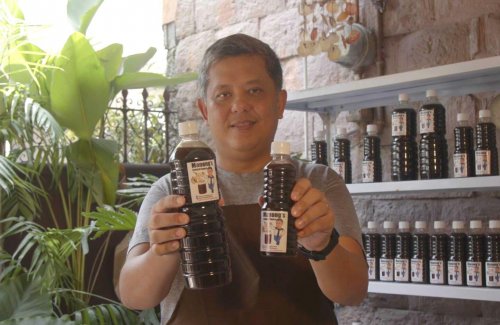
During the height of the pandemic lockdowns, Richie and his family chose to grow the help by opening Manong’s Fishball Sauce, “We thought of how to grow and prolong the money,” Richie said.

With his family’s fondness of eating street food fish balls but at the same time considering the limitations posed by the pandemic at that time, the family decided to sell bottled fishball sauce so people could just enjoy it at home with their own-cooked fish balls.

The modest family business prospered through hard work and perseverance. Not only do they sell their product in the Philippines but they now also export to Japan, Australia, Austria, and the US.

Image Source: The Sacramento Bee

News

Asian American Community Is Prospering In Folsom Sacramento County

The number of Asian American immigrants in Folsom multiplied five-fold from 2000 until last year as found out by the US Census Bureau.

Among them are Chalamcherla of India, Steven Wang of China, and Marcus Yasatuke of Japan.

51-year-old Chalamcherla long decided to come to Folsom after falling in love with the city while attending the birthday celebration of a friend’s son, but it wasn’t until 2006 that he actually did so after spending two years in Singapore and the Bay Area.

Nearly ten years after arriving in the country, Steven Wang, who is currently Folsom’s city attorney, became a citizen.

Back then, it was hard for tourists to enter the US but Wang, together with her brother and mother, swiftly passed the immigration after saying that they would be visiting Disneyland, the only place he knew. 

Wang, who is now a lieutenant colonel, has been a member of the US Army Reserve since 2004. During that time, many of his fellow soldiers were losing their lives while serving, and Wang felt in danger.

Because of this, he worked in Folsom city before finishing the necessary time to serve in his Afghanistan deployment, and he told The Sacramento Bee, “I don’t know if every company is like this, but Folsom has been quite supportive of the military.”

Additionally, in 2003, Marcus Yasutake, 45, moved to Folsom with his wife after receiving job offers from Placerville and Roseville. They were able to reside there and raise a family of three children.

Communications director Christine Brainerd of the city of Folsom said that Asian Americans are likely attracted to the area on the same note as why many citizens choose to call Folsom home.

The head of the Sacramento Asian Pacific Chamber of Commerce’s economic development team believes that the tech-based companies in Folsom may be one factor for the recent increase in Asian residents.

Marcus cited the excellent school system in Folsom as one of the reasons why he came there, whilst Chalamcherla claimed that technology plays a significant role in the city’s increasing Asian population.

Racial discrimination is far from nonexistent in Folsom. That’s why Chalamcherla urges other Asians to immerse them in Asian culture.

Image Source: The Denver Post

News

Denver’s Vietnamese Refugees Share New Life While Keeping Family’s Heritage

Because of the chaos that was happening in their homeland in the 1970s, thousands of Vietnamese fled and some, later on, found a home in Colorado.

The melancholic memory is still fresh for Nga Vương-Sandoval, who, at the age of three, had to temporarily stay in refugee camps in the Philippines, Guam, and Arkansas.

She was with the about 2 million people who were unhoused and still have from within the shock of their suffering. 

It had been very challenging for them as they had to leave behind the good life they have in Vietnam and even depart from their relatives in order for them to leave safely.

Starting their life all over again, Denver has become a home to the 24,000-man Vietnamese Americans.

After being able to establish their community and found a home in the place, Nga said “I’m proud to say that it’s the city that I love, it’s the state that I love.”

Meanwhile, Vo, a 21-year-old grandchild of a Vietnamese who grew up in Aurora after his grannies and parents left Vietnam in the 1990s to seek a better life, had the experience of living in “a very diverse place.”

Knowing very little about his family’s past in Vietnam, he conducted a research project to unleash an “inherently American story,” according to him. 

Enabling people to have a glimpse of the refugees from a different perspective, Vo made use of his relatives as objects of his photography.

“Even though we moved here, they still lived a very Vietnamese life,” Vo said in Denver Post, 

It was also in his research that he found out how the majority of his family members were able to escape Vietnam while being robbed of cash and gold on their way.

He also mentioned how his family kept their culture by still practicing them in Denver which contributed to what America is, a place with diverse cultures. 

Despite having to start from scratch, they were able to begin life anew and even owned an Asian supermarket, Asian cinema, and Truong An Gifts.

His family also started the Far East Center shopping mall in 1987, home to him and his cousins and even to the Asian community.

Image Source: Silicon India

News

South Asians Found Second Home in Devon Avenue’s “Little India”

At Devon Avenue in Chicago, immigrants from India discovered a taste and comfort of their home country.

The area, commonly referred to as “Little India,” has served as a shelter for Indians who miss their culture.

Finding a home in it, Indians such as National Indo-American Museum board member Beverly Kumar, go there every now and then, especially when she craves Kalakand, a traditional Indian fudge.

According to Kumar, “It’s very comforting knowing that just 14 miles away from my house, there is an essence of Little India.” She also mentioned how reminiscing it is to see familiar sights, sounds, scents, and flavors when visiting Devon Avenue since it makes her feel as though she has never left home.

The area not only became a haven for Indians, but also for other South Asians who opened grocery stores, sari and jewelry stores, as well as many other enterprises in addition to food stores.

In the middle of 1960s, the place it became the second and fourth-largest enclave for Indian and Pakistani Americans, respectively.

The Federal Immigration and Naturalization Act of 1965 ushered in the first wave of South Asian immigration, which established settlements for South Asian professionals in Chicago, while the second phase arrived in the 1980s and 1990s.

Psychotherapist Ranjana Bhargava was one of the first immigrants who yearned for vegan food and searched for spices to sate her craving for Indian cuisines, which she found at Mexican places.

Between the first and second waves, businesses such as The Sari Palace sari store and Indian grocery stores began to thrive there.

Since then, a new community has been created where Indians continue to practice their culture through activities like viewing Indian movies, getting together, playing instruments, performing traditional dances, and eating.

The once Jewish-dominated place became a mainly Indian community which captivated more visitors where one can meet not only Indians but people of different races.