San Francisco Design Studio Redefines Sustainable Furniture Perfect for Small Spaces and Urban Living - AHN Media Group

Stories

December 1, 2023

SHARE:

In a world where living spaces are getting smaller and furniture quality is declining, one entrepreneur is striving to make a difference.

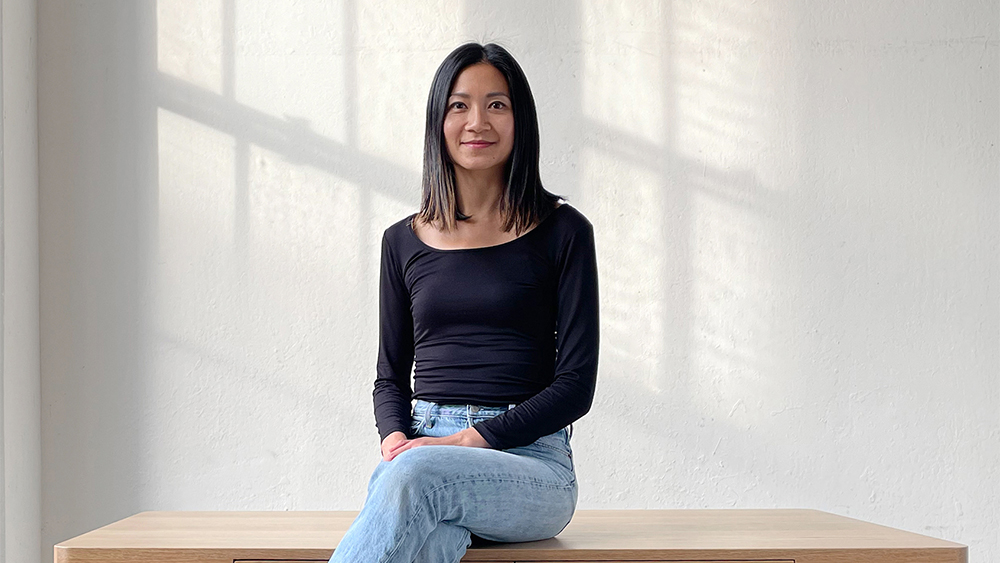
Yvonne Hung, a city-dweller who has lived in some of the world’s largest metropolitan areas, knows firsthand the challenges and constraints of living in small apartments. It can be difficult to have friends over because there isn’t enough space or seats.

For this reason, she founded Otelier in 2020, a San Francisco-based furniture studio with a focus on sustainability, and providing innovative products that are useful even for small spaces.

Yvonne believes that the home is the most intimate social space, and people shouldn’t have to sacrifice that due to a lack of space. Her latest project is called the Quartet, a multi-functional side table that unstacks into four stools.

While the retail industry and consumers have embraced fast furniture with low prices, poor construction, copied designs, and single usage, Otelier is committed to changing that. Yvonne and her team are determined to create sustainable, high-quality furniture that will stand the test of time. With Otelier, urban dwellers no longer have to choose between comfort and the environment, and Quartet is just the beginning of a new era in furniture design.

Quartet, a side table that transforms into four stools.

OTELIER STRADDLES BETWEEN A DESIGN STUDIO AND AN E-COMMERCE BRAND

I’ve always had an obsession with cities—the way they develop over time, how they are shaped by their geographies and industries, and of course how culture and way of life make each city unique.

In fact, I started my career in urban planning, which is what I studied at the Harvard Graduate School of Design. My goal, as cheesy as it sounds, has always been to make the world a better place to live for all. With Otelier, I’m trying to do it at a much smaller scale—the home—because that allows me to get up close and personal with users, and also be hands-on with the creative process.

So much of my design principles still go back to urban planning. For example, I chose to focus on apartment living because higher-density housing is a much more efficient and sustainable way to accommodate a growing population, as compared to single-family homes which encourage urban sprawl. Likewise, sustainability and the cradle-to-cradle approach is always a huge factor in the product design process because protecting the earth is always top of mind.

This generation is going through a lot of changes—higher housing prices, more frequent moving, and smaller apartments are some trends that make life different from what it was 20+ years ago. Activities that used to take place in person, such as work and meetings, now happen online. Social media is both hastening new ideas and increasing anxiety. I think there are many opportunities to address these issues. For me, it’s starting with the most intimate space, the home, and how we can make it a happy experience.

Otelier straddles between a design studio and an e-commerce brand. It’s rare to be both. Most consumer furniture brands aren’t strong on design—there’s a lot of copying of whatever’s trending—and most design studios don’t follow through with the manufacturing and sales process. 

I aspire to do both under Otelier. As a designer, I want to explore and experiment, whether it’s with product ideas, new materials, or collaborations with little constraint. And as an entrepreneur, I want to create an e-commerce brand whose products make an impact at scale.  I’m still figuring out how to do both with very limited resources as a solopreneur.

BIGGEST CHALLENGES AND OPPORTUNITIES IN SUSTAINABLE FURNITURE DESIGN

It seems there’s a race to the bottom in the consumer furniture industry—make it as cheap as possible, sell more, and maximize profits. It’s no wonder why the EPA says the US produces 12 million tons of furnishing waste a year. Not only are these items going into the landfill, but they also contain a lot of non-recyclable and/or non-biodegradable materials. The challenge is that now consumers are trained to believe their furniture should be dirt cheap and don’t realize these problems, similar to the case of fast fashion. 

There’s also a lot of greenwashing everywhere. For example, using recycled plastic bottles is great, but turning them into something that cannot be recycled again is worse than just making another plastic bottle from it because it could then be recycled several more times.

One of my pet peeves is when companies call plastic leather vegan leather. It’s just plastic! Otelier is far from perfect, but I am committed to being honest and looking for the best alternatives that are currently available and financially feasible.

Fortunately, I do think there is a subset of mindful consumers that want high-quality furniture that’s sustainably produced. There are several smaller independent brands, like Otelier, that are trying to address this problem in the furniture space, and a lot of material science and manufacturing companies exploring more sustainable alternatives.

That said, when it comes to innovation on the sustainability front, it’s easy to design or prototype a concept, but much harder to make it commercially viable. I’m fascinated by a lot of the new materials that are currently in development, such as bioplastics. I’m also interested in blockchain for tracking supply chains. But in reality, these ideas are far from being commercially available, especially to small companies like Otelier.

My long-term goal is to have two areas of focus: one for blue sky explorations, including the use of new materials, and a second for producing durable and commercially viable products for the masses. For now, since I’m bootstrapping, the current focus is more on commercially viable products using what’s available today.

There’s plenty we can do now to improve the furniture industry. Taking a methodical approach, I typically break down a product into its materials, manufacturing, logistics & transportation, usage, and end-of-life condition, and then minimize the footprint for each factor. 

MAKING SURE OTELIER PRODUCTS ARE SUSTAINABLE

I use materials that are biodegradable and/or recyclable and minimize the use of petroleum-based plastics for both our products and packaging. The Quartet, for example, uses wood and suppliers that are certified by the Forest Stewardship Council (FSC) to ensure that we’re sourcing from sustainably managed forests. I also use hardwood because it’s more durable since longevity is key to sustainability. Metals are also great for durability and recyclability. My hope is that we create zero landfill waste.  

Otelier is not perfect; I still rely on the existing transportation and energy systems that are available today. For what I cannot control, I use carbon offsets so that our products are carbon neutral. And I also plant trees to compensate for the wood used in our products.

If all businesses take responsibility for their own environmental footprint, we’d be in a much better place.

THE GOAL IS TO ENCOURAGE MENTAL AND PHYSICAL WELLNESS AT HOME

I’m still at a very early stage with Otelier, but I have so many ideas! It takes me a lot of time to develop each since I work alone. 

I think the way this generation lives, post-COVID, requires more flexibility from our home, no matter if you’re living alone or have a family with kids. Some recurring themes in my furniture are multi-functionality and space-saving features. I also am fascinated by objects that are interactive. In a way, I enjoy designing experiences enabled by an object rather than the object itself. For example, the Quartet is a side table that unstacks into four stools. But the goal is to encourage friendship and bonding at home. The furniture is a means to that end.

Eat-Work Table, designed for people working from their kitchen or dining rooms. The height-adjustable table can be used as a dining table.

LONG-TERM GOALS FOR OTELIER

The ultimate goal is to build a brand that creates beautiful and useful furniture that enriches the lives of urban citizens, while also being sustainable and accessible. I hope Otelier will be an international brand, given that apartment living is relevant everywhere. 

From a service perspective, my vision is to create a platform that sells both new and used Otelier furniture.Resale is really a key to countering the fast-furniture problem. Although our furniture is heirloom quality, I think most people of this generation would prefer to just sell their used furniture rather than passing it down to their kids and grandkids. So making resale easy is a service that could benefit everyone.

Innovation is really important to me. I’m not here to create what already exists. I really hope that Otelier can pioneer commercializing some of the sustainable materials that are currently in development. It’s still early days, so there are lots to explore, learn, and create.

CONNECT WITH YVONNE

Website: https://otelier.com

Instagram: @otelier_home

Facebook: @otelierhome

Tiktok: @otelier.com

Kickstarter: https://www.kickstarter.com/projects/otelier/quartet-a-side-table-that-transforms-into-four-stools?ref=8rnt6m


Related Articles

Blogs, Development

Understand Whether Your Website Is User-Friendly: 7 UX Pillars

User Experience, commonly referred to as UX, is a very broad term, which makes it hard to evaluate whether your website works with users.

As such, Peter Morville simplified UX into 7 core pillars, allowing a comprehensive evaluation of the UX:

  • Useful: It should have features that help users achieve certain goals easily.
  • Desirable: It should have add-on features that can cater to users’ specific wants.
  • Accessible: It should be usable by users with disabilities, and it is equally easy to use on mobile devices and laptops/PC.
  • Credible: It should be smooth, and there should not be any major bugs that disrupt the user experience.
  • Findable: It should showcase information clearly, allowing for easy navigation across the website.
  • Usable: As simple as it sounds, users should be able to use the website intuitively; the User Interface should be familiar.
  • Valuable: It should bring value to the user; it should help them save in some way, whether it is time, money, or effort. Simply, what do they gain by using your website (over going in-store, for example)?

Why Asian Hustle Solutions?

At AHS, we specialize in helping brands capture attention and inspire action — whether you’re launching a new product or scaling your business, we’ll guide you to marketing that resonates and delivers results.

If you want to learn more about our services, visit the Asian Hustle Solutions website at asianhustlenetwork.com/services/

an_tran_banc

Stories

An Tran Turned a Receptionist Job Into a 25-Year Journey to Executive Leadership in Banking

When you first meet her, you feel her warmth—grounded, welcoming, and full of passion. With over 25 years in the banking industry, An Tran, Market Executive at Banc of California, has become known not only for her distinctive leadership but also for the deep care she gives to her family—and for her dedication as a passionate skincare and self-care advocate.

Yet behind these roles lies a journey marked by resilience—a story not only of her own, but of many Vietnamese immigrants who navigated life in a new country with hope for a brighter future and the American dream.

An Tran | SVP Market Executive at Banc of California

A Humble Beginning, A Lifelong Commitment

Banking wasn’t part of her plan at the start of her career. In fact, her first job was as a receptionist at a bank in San Francisco. But she didn’t let that humble beginning define her. Fueled by passion, relentless effort, and the sense of responsibility that came from being the eldest of eight children, she turned what she lacked in experience into unstoppable drive.

“My professional life has always revolved around service and sales, with a natural inclination to care for others, perhaps stemming from my role as the eldest of eight,” she says. 

Over the years, she took every opportunity whenever she could to learn, grow, and serve her clients better. Her work ethic and trust-building skills propelled her forward, step by step, until she eventually became the Market Executive for Banc of California—a role she holds today with pride and purpose.

A Journey Rooted in Sacrifice and Survival

By her own admission, she doesn’t have any news-breaking stories. She is simply a daughter born to Vietnamese immigrants who came to America during the 1970s and ’80s. Yet it was her generation that first began to rise out of poverty, despite arriving in the U.S. with nothing in hand. “Through relentless hard work, we’ve not only achieved the American dream but also built the lives our parents envisioned for us when they first arrived,” she reflects.

Her family’s story, like so many others, is one of hope and sacrifice. And through years of determination and resilience, she has proven the grit and strength of her community—successfully building the life her parents once dreamed of when they left Vietnam.

An Tran has successfully built what her parents imagined for their children in the US. 

Facing Challenges with Grace and Grit 

Climbing the banking ladder over the past 25 years was no easy feat for a young woman like An. She faced unique hurdles—from skepticism to subtle sexism in the workplace.

But instead of letting those experiences hold her back, she used them as fuel to move forward.

“Every challenge throughout my life and career has been a positive force, shaping me into the person I am today,” she shares. “These experiences pushed me to find new ways to grow and overcome adversity. I believe challenges are essential for growth—without them, we can’t truly learn. Remaining a lifelong student, absorbing both small and significant lessons daily, is key. The moment you stop learning is the moment you stop achieving.”

An Tran has faced criticism with grace and determination, climbing the banking ladder step by step.

Empowering the Asian Community, One Role Model at a Time

From receptionist to executive, her journey is a remarkable one. But for her, the real achievements aren’t just titles—they’re the impact she’s had on others and the example she’s set for her children, her colleagues, and her community.

“I’m incredibly grateful to be where I am today, creating the life I envisioned and providing for my family in a way my parents dreamed of when we left Vietnam. My pride extends to every step of this remarkable path,” she says. 

She’s living proof. A former refugee who arrived in America with nothing is now leading in one of the most competitive industries in the country—and doing so with compassion, integrity, and purpose.

Connect With An Na Tran 

“My goal is to be a resource for the Asian community, showing that we are strong, career-driven, and incredibly successful.”

LinkedIn: An Na T.

AHS EMAIL ANGLE (1)-png

Blogs, Development

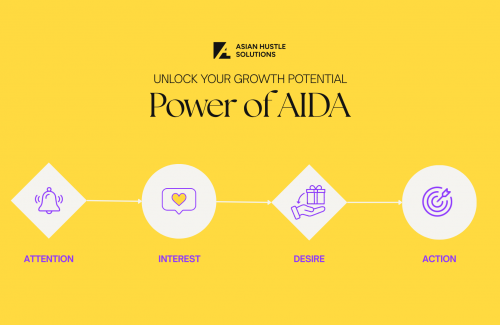
Unlock Your Growth Potential: Harness the Power of AIDA

Your audience is busy — if you want their attention, you need to earn it with a message that cuts through the noise.

AIDA is a time-tested framework that guides your messaging from first glance to final action, helping you craft marketing that actually converts.

  • Attention – Grab your audience with a bold headline, eye-catching image, or intriguing question.
  • Interest – Share a benefit or story that keeps them reading.
  • Desire – Build an emotional connection by showing how your product solves their problem or improves their life.
  • Action – End with a clear call-to-action so they know exactly what to do next.

Why Asian Hustle Solutions?

At AHS, we specialize in helping brands capture attention and inspire action — whether you’re launching a new product or scaling your business, we’ll guide you to marketing that resonates and delivers results.

If you want to learn more about our services, visit the Asian Hustle Solutions website at asianhustlenetwork.com/services/

KyLanActivewear-png

Stories

From Code to Culture: How Hải Bùi Left Tech to Build a Brand for Second Generation Asians

Embracing Heritage Through Style

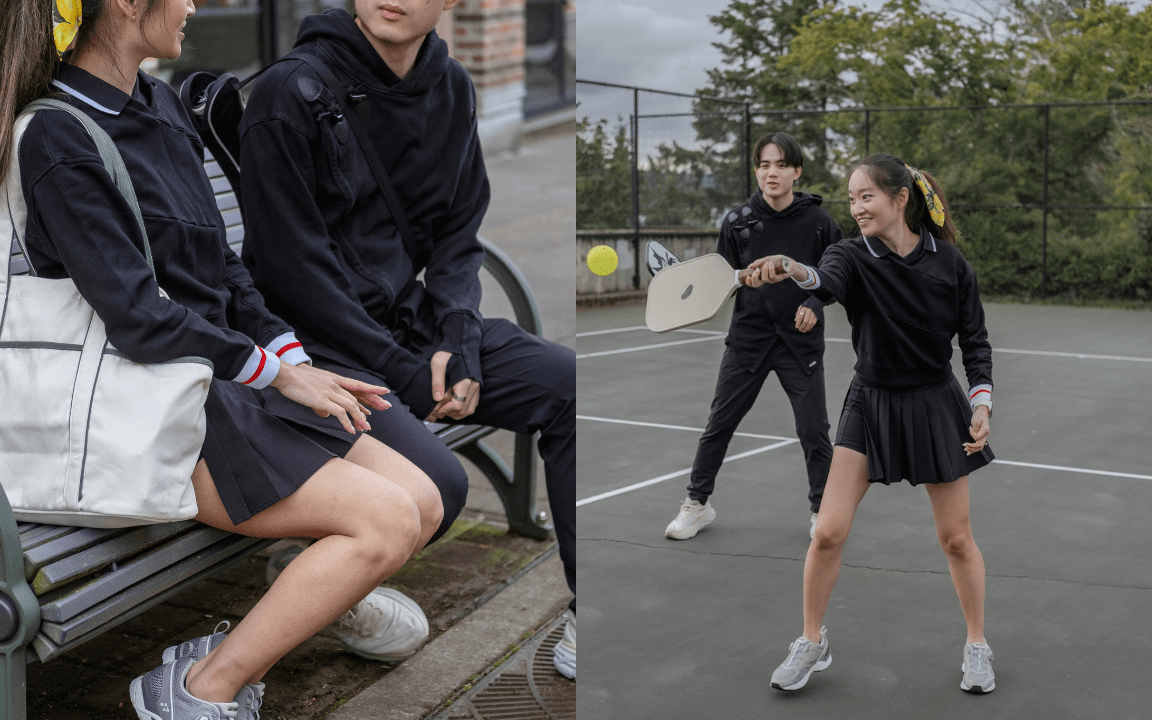
Kỳ Lân is the first activewear brand deeply rooted in Asian aesthetics, created with a powerful mission: to empower second-generation Asians worldwide to embrace their heritage with pride. Born from Hải’s personal journey growing up Vietnamese in Hungary and struggling to find a sense of belonging, Kỳ Lân reflects what it truly means to live between cultures, and finally feel proud of that identity.

For Hải, Kỳ Lân isn’t just about clothing. It’s about rewriting the narrative for second-generation Asians and bringing Asian representation to the forefront of mainstream sports- and streetwear. 

Kỳ Lân’s mission is to help second-gens embrace their Asian heritage through clothing

The Meaning Behind Kỳ Lân: A Symbol of Heritage and Unity

Kỳ Lân is a mythical creature from Asian folklore, often described as having the head of a dragon, the body of a horse, and the tail of a lion. It symbolizes peace, prosperity, and good fortune. Versions of the Kỳ Lân appear in Vietnamese, Chinese (Qilin), Japanese (Kirin), Korean (Girin), and Thai (Kilen) cultures, highlighting the deep cultural connections shared across Asia.

Hải chose this name to honor that shared heritage. As part of his efforts to reconnect with his roots, he began volunteering in the Vietnamese community and eventually became the organizer of a 6,000-member Asian Meetup and Discord group. This community centered around 1.5-generation and second-generation Asians, those who either immigrated as kids or were born abroad to immigrant parents. Together, they explored questions of identity, belonging, and the desire to reconnect. These conversations sparked the idea for Kỳ Lân: a brand that celebrates Asian aesthetics but, more importantly, gives voice to the in-between experience many second-generation live daily.

Kỳ Lân is more than just a clothing brand, it’s a tribute to these stories and a movement towards proudly reclaiming culture.

Hải volunteering in his local Vietnamese community

The Origin Story: From Hungary to the U.S. and Back to His Roots

Growing up in Hungary in the 1990s, often as the only Asian kid in school, Hải vividly remembers the bullying, the stares, and the relentless pressure to fit in. Like many second generation Asians, he spent much of his youth trying to blend in, often distancing himself from his Vietnamese roots just to feel accepted.

It wasn’t until years later, after moving to the U.S., that everything shifted. For the first time, Hải saw second-generation Asians unapologetically taking up space, celebrating their identities through art, food, fashion, and film. Vietnamese cafés were opening everywhere, Asian artists topped the charts, and streetwear inspired by Asian heritage became more mainstream. Gradually, pride replaced shame.

He became proud to be Asian, and curiosity toward his culture blossomed.

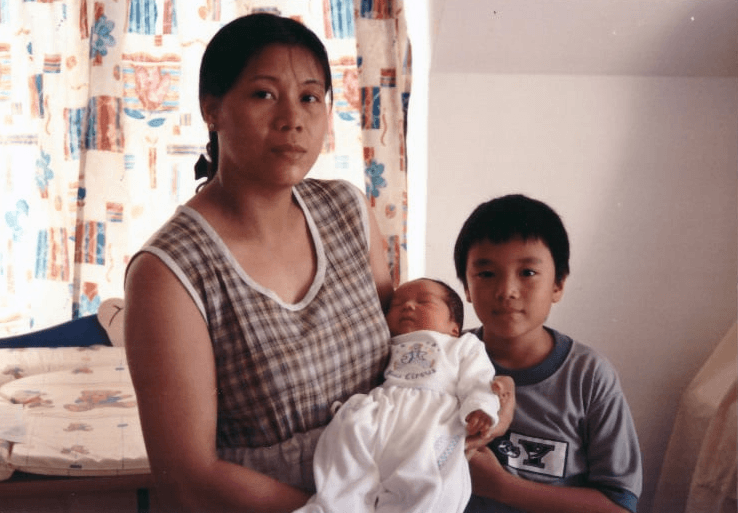
Hải, his little brother and his mom in Budapest

His parents’ story deeply influenced him, too. They immigrated to Soviet-era Hungary on scholarships and chose entrepreneurship over low-paying engineering jobs after graduation. Their hard work and resourcefulness deeply shaped Hải’s values, even though they initially encouraged him to take a safer path.

That growing sense of cultural pride deepened during a visit to Vietnam, where Hải saw relatives and locals running small storefronts straight from their homes. Every corner was buzzing with hustle. “That’s when it clicked,” he says. “Entrepreneurship is ingrained in our DNA. No wonder I felt this constant pull to build something of my own.” 

From Software Engineer to Fashionpreneur: Finding Purpose

For Hải, the realization that entrepreneurship was in his blood didn’t make the decision to quit his job any easier. Like many children of Asian immigrants, he grew up with a very clear definition of success which included stability, a good education and a respectable job. And he achieved exactly this: a successful career in software engineering, after decades of hard work and sacrifice from his parents, who had moved to Hungary in search of a better future.

For a while, he was unsure whether to commit to building a business or return to the comfort of a tech job. However, the dread he felt preparing for software interviews made it clear that he had to make some kind of business idea work, no matter what.

Like so many second-generation Asians, Hải carried an unspoken responsibility to make his parents’ struggles worth it, to succeed and stay on the path they paved.

Eventually, the pull toward his purpose was stronger than the fear of failure.

In a twist of fate, Hải is following in his parents’ footsteps. After immigrating to a foreign country and getting a degree in Engineering, he decided to leave it all behind and pursue Entrepreneurship.

Hải’s parents threw away their Engineering degree to open their heavy metal t-shirt business back in the ‘90s.

The Birth of Kỳ Lân: A Perfect Fit 

Inspired by his parents’ own clothing business selling heavy metal t-shirts at marketplaces, Hải worried initially that they might disapprove of him following a similar path. Instead, they became his biggest supporters once they saw his dedication.

While it might seem like a waste to throw away his engineering career, Hải’s background turned out to be a great asset in building Kỳ Lân. His time at Amazon Ads taught him how to run effective digital campaigns, his logistics experience at Convoy helped him navigate supply chains, and his coding skills meant he could build his own websites without outsourcing. Even his parents’ experience running a clothing business became unexpectedly useful. 

Looking at it all together, it started to make sense. This wasn’t him starting from scratch, it was him finally using all of his skills in one place.

A Movement Rooted in Identity, Representation, and Pride

Kỳ Lân is more than just activewear, it’s a cultural movement. It celebrates the rich fusion of Asian cultures and modern sportsmanship while giving second-generation Asians a platform to proudly reclaim their identities.

Through Kỳ Lân, Hải is not only creating clothing but also rewriting the story for second-generation Asians around the world – one that embraces heritage, community, and pride.

Kỳ Lân’s mission is to help second generation Asians embrace their heritage through clothing

Connect With Hải Bùi & Kỳ Lân Activewear

To celebrate Kỳ Lân’s pre-sale, Kỳ Lân is offering the Asian Hustle Network community an exclusive 20% off with the code AHN20 – valid for one week only.

Website: Kỳ Lân Activewear

IG: @kylan.athletics