Stories

June 23, 2025

SHARE:

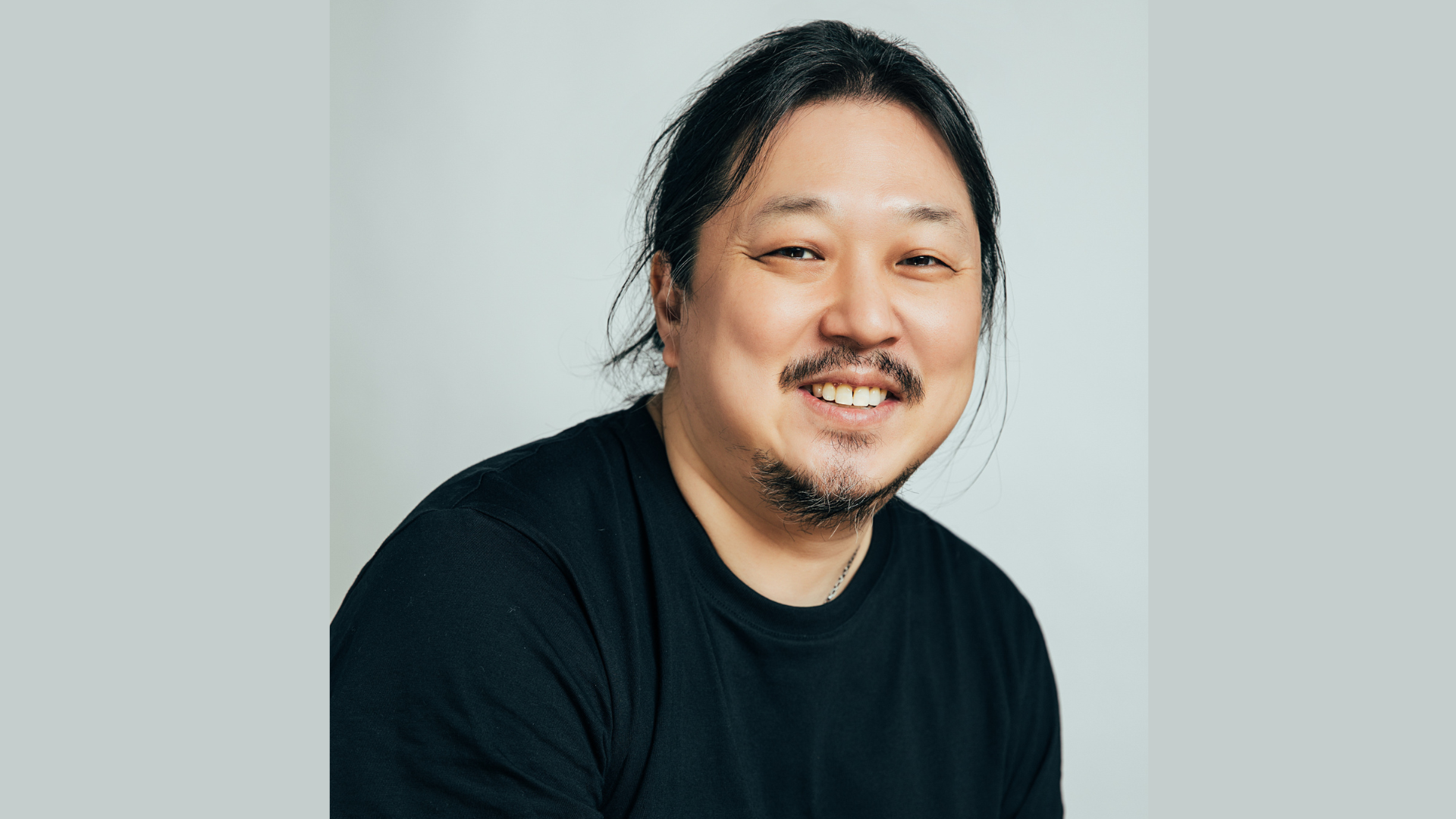
For over two decades, the New York Asian Film Festival (NYAFF) has stayed at the forefront of Asian cinema in North America. Going into its 24th year, NYAFF is a project designed to remind the world that Asian cinema is here to stay and thrive, providing platforms for both well-established and rising filmmakers. At the helm of this meaningful festival is Samuel Jamier, a Korean French curator, filmmaker, and consultant whose passion and vision for Asian cinema drive NYAFF forward.

AHN had a chance to interview the talented Jamier on the festival’s inspiration and mission, and the future of Asian American Pacific Islander (AAPI) and Pan-Asian cinema.

Samuel Jamier | President and Executive Director of the New York Asian Film Festival and Foundation

Bridging Cultures Through Film

Over the course of his well-established career, Jamier has proved himself to be an avid enthusiast for Asian cinema who shows a clear commitment to its artistry and cultural authenticity. Jamier has gone from Chargé de Mission for the Cultural Services of the French Embassy, through his experience working with The Korea Society, The Japan Society, to becoming the guiding force behind NYAFF. 

As a Korean adoptee raised in the idyllic Brittany of northwestern France, it is natural that his journey was one of cultural navigation and a lingering yearning for heritage connections. All this lifelong commitment to Asian cultures made it intriguing to learn where it all began—turns out not all those who wander are lost.

I was always drawn to stories that challenge conventions, that shake you awake in the middle of the night. My inspiration came from literature, philosophy, and cinema—works that make your heart pound and your mind race like you’ve had too much caffeine.

Traveling and living in different countries in my 20s rewired my brain. Experiencing cinema across different cultures made me realize the immense power of storytelling. I was particularly struck by the underrepresentation of Asian narratives in global film industries, which fueled my drive to bridge that gap through my work at NYAFF and beyond.

Jamier, a Korean adoptee raised in France, has dedicated his career to championing Asian cinema and bridging cultural gaps through storytelling.

Leading a “nomadic” life throughout his 20s has reframed his understanding of storytelling, endowing him with the severely underrated power of Asian narratives in global media. That realization has become some sort of a push for him to challenge stereotypes and redefine Western perceptions of Asian cinema beyond just kung-fu flicks and arthouse genres. 

Breaking Barriers for Asian Filmmakers

Hollywood has become a benchmark for world cinema. It only took a few seconds to look up “film classics” on Google, and most of the recommendations would be Hollywood/ Western. As he revealed that one of his greatest challenges lies in “shifting global perceptions of Asian cinema” and “the industry’s gatekeeping,” his answer underscores a limited spotlight on Asian narratives. 

Historically, Western audiences have viewed Asian films through a narrow lens, often limited to action-packed martial arts films or slow, contemplative arthouse works. This raises concerns over “typecasting” Asians in movies and hindering the potential of the world’s largest region. Through NYAFF, Jamier has worked tirelessly to push back these outdated preconceptions and aimed towards a broader, more nuanced appreciation of Asian storytelling.

Jamier is reshaping global views on Asian cinema, breaking stereotypes and opening doors for new voices worldwide.

Jamier has also successfully secured various global distribution deals for Asian filmmakers, shedding light on emerging talents to international audiences. Back in 2020, the pandemic took over New York City, leaving many film festivals canceled and filmmakers struggling. 

Recognizing the urgency and devastating impact, Jamier and his team at NYAFF quickly adapted, launching virtual screenings and digital initiatives to keep Asian cinema in the spotlight. His commitment to dismantling industry gatekeeping and evolving Asian narratives has provided new opportunities for talents from Asia and the diaspora to gain recognition at major festivals and in Hollywood.

A Bridge Between East and West

Through his work at NYAFF and his consultancy firm, SMLX Consulting, Jamier has become a key figure in ensuring cultural authenticity in Hollywood. He never stops encouraging studios, filmmakers, and screenwriters to represent Asians, collectively drawing diverse and respectful depictions of Asian identities in movies. It’s not just about quantity—to Jamier, it’s about both: quality and quantity. 

Beyond curating films, Jamier is about to make his directorial debut with The Huntress, marking his first endeavor in filmmaking. The film, inspired by World War 2, was a powerful manifesto of women’s roles in resistance movements, bringing overlooked histories to the spotlight while challenging conventional war narratives of Southeast Asian stories on screen. His transition from festival curator to director is a testament to his commitment to elevating untold Asian stories on screen. 

The Future of Asian Cinema with New York Asian Film Festival 2025

Recent years have witnessed an interesting spike in Asian media—from K-dramas to anime—Asian cinema is “at an exciting turning point,” he shares. NYAFF remains dedicated to showcasing the depth and innovation of Asian storytelling, and Jamier encourages audiences to explore the incredible films emerging from Asia.

My mission is to bring authentic, compelling Asian stories to the forefront of global cinema. Whether it’s through NYAFF, my consulting work, or my filmmaking, I want to challenge outdated narratives and create new spaces for Asian filmmakers to be recognized and celebrated.

Jamier is championing a new era for Asian cinema, using NYAFF and beyond to spotlight bold, authentic stories and push the industry forward.

Looking ahead, the 24th edition of the New York Asian Film Festival is set to take place from July 11-27, 2025, promising a lineup that further expands the horizons of Asian storytelling. Jamier remains committed to fostering representation and creating new spaces for Asian filmmakers to thrive.

To support NYAFF’s mission and stay updated on the 2025 festival lineup, visit www.nyaff.org.
Related Articles

Image Source: Jonathan Sanchez

Uncategorized

Learning From His Single Mom, Parent Portfolio Co-Founder Jonathan Sanchez Realizes Financial Independence at 37

Now living a financially-stable life, the couple founders of Parent Portfolio, a website that serves families to make progress with their money and helps the younger generations become financially wise, teaches their kids lessons towards a successful life.

Born to a financially precarious environment, Jonathan Sanchez was reared with a thrifty outlook by his single mom, which made him yearn for financial stability.

Sharing the same financial sentiments, or even more, with his mother made him believe that if he would be able to get a degree and land a well-paid career, he would be freed from all his money issues.

However, he then realized that his mindset was not as easy as it seemed as, despite achieving a profession together with his wife, Jacqueline Sanchez, their incomes were just enough for their family’s essential needs. 

The Sanchez couple’s life turned 360 degrees after realizing a $1 million net asset by being economical, able to save, doing part-time jobs, and venturing into real estate.

At 37, Jonathan realized his long-dreamed financial independence and stability. In 2020, he decided to share this with other people by co-founding the Parent Portfolio with his wife.

Aside from helping other people, the couple is also bound in educating their kids with the following five valuable tips they shared on CNBC: 

  1. Always rethink one-time purchases. Living within the means and spending efficiently only on what is needed; 
  2. Budgeting gives you more freedom. Planning your budget is financial freedom which benefits you over and over again; 
  3. Don’t let social media influence your spending. Do not be pressured by what you see in the public network and discipline yourself in using gadgets; 
  4. Know where the money comes in, and where it goes out. The couple exposes their children to their income resources, introduces them to the “real world” and even shows diagrams on how to deal with the people and offices they transact with; and, 
  5. Start saving early, and don’t expect to get rich overnight. Learning from the fable of The Tortoise and The Hare, the couple teaches their children of being wise and patient.

“For now, your mother and I are responsible for providing for your needs and wants. A bank is a safe place to put your money because it allows the funds to grow over time. And when you’re old enough, you can use that money for your own goals,” Jonathan tells his children.

Image Source: Las Vegas Review Journal

Uncategorized

Patricia Lee Sculpts History as First Black Asian American To Succeed Seat F In Nevada Supreme Court

Following her victory over the other two candidates, Patricia Lee made history by becoming the first Black and Asian American attorney to hold the vacant Department F seat on the Nevada Supreme Court.

Lee was chosen by Gov. Sisolak from among the candidates put out by the state Judicial Selection Committee to take the place of Justice Abbi Silver, who resigned from her position due to “unexpected circumstances” and a desire to spend enough time with her family.

Being an attorney in Las Vegas, Lee contended with Washoe County District Judge Scott Freeman and Clark County District Judge Tierra Jones.

The Reno Gazette-Journal cited Sisolak saying, “I am thrilled and honored to appoint Patricia to serve on the Nevada Supreme Court. The breadth and depth of her skill set, as well as her personal and professional experience, make her an excellent addition to the State’s highest court.”

Lee will begin serving her term in January 2025 and must run for reelection in two years in order to preserve her position.

Lee’s mother, a native South Korean, and father, an African-American soldier, brought her up in South Korea. She majored in psychology and communications at the University of Southern California, where she also participated in the Black Students’ Union and had her first political experience.

She started working at Hutchison & Steffan in 2003, concentrating on family law, trademark law, medical claims billing, and business and commercial disputes. She later joined the firm as a partner.

Lee is a skilled attorney with a history of being chosen as the chair of the Nevada Crime Commission by the then-Gov. Jim Gibbons, a volunteer with the Children’s Attorney Project in Las Vegas who advocates for abused and abandoned children, has handled pro bono cases at the Legal Aid Center of Southern Nevada.

Nonetheless, Lee is not just a dedicated lawyer but also a devoted family woman being a mother to Brianna and Devin, and a wife to Ronnie.

Image Source: South China Morning Post

Uncategorized

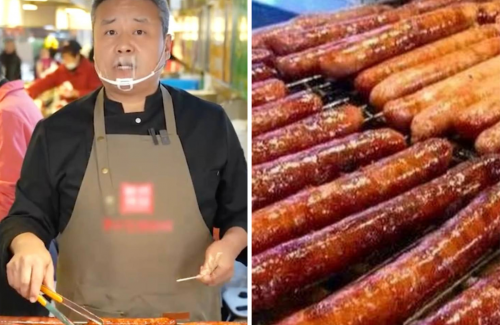
Bankrupt Chinese Restaurant Owner Bounces Back To Pay $6.4 Million Debt Through Sausage-Selling

“We are born with nothing. Why be scared of starting all over again?” says Chinese Tang Jian after starting up a street food stall in Hangzhou, China following his business bankruptcy which left him with $6.4 million.

At 52, the former millionaire Chinese restaurant proprietor is positive of earning funds to pay his multi-million debt by selling barbecued sausages.

Thus, his optimism put netizens in awe as a person, who despite losing his 16-year-old business venture and everything he had because of the unsuccessful investment in the landscape engineering industry, is still hopeful of being able to recover from the downfall.

Tang was once a successful businessman starting at the age of 36. However, because of the fruitless outlay, he was compelled to sell everything he founded through his business including his restaurants, homes, and cars.

Still unable to pay his debts in full, Tang decided to put up the small-time sausage-selling business.

Tang proudly exclaimed that “Every sausage is genuinely filled with meat, and there is no starch in it. When compared with those sold in amusement parks or markets, ours will make you feel safer,” as quoted in South China Morning Post.

Upon knowing that his story trended in social media, Tang explained that it was because all of us face our own challenges in life, however, we must always have that strong spirit of winning each battle. 

He also said that he is really determined to settle his debts although still uncertain when it would be.

Tang shared that bravery is a key to overcoming hardships and going on in life and that we should always seek strength, especially during hard times.

Uncategorized

Virginia Embraces Diversity and Korean Culture, Celebrates First Kimchi Day

Being home to one of the biggest Korean communities in the nation, Virginia had its first-ever Kimchi Day on November 22, through the Korean American Women’s Association.

Held at the Good Shepherd Evangelical Church in  Springfield, the festivity was materialized especially for this motive: acknowledge kimchi as a nonnative dish in Virginia which is specially imported for the increasing number of Korean American citizens in the country. It also reflects how the state has embraced diversity.

During the celebration, roughly 150 people of different colors converged to make their own kimchi, following the traditional and neat process of kimchi preparation. 

Originally, families and acquaintances converge to happily prepare the ingredients, store them in jars, and place them underground for fermentation producing a savory, piquant, and sugary kimchi. This is done every November, a month after harvesting cabbage.

On the other hand, it was officially moved to be celebrated in January through Irene Shin (D), the foremost Korean American servant in the House of Delegates, who acquired two-way support for her proposition.

For Koreans, kimchi is beyond being a cuisine. It narrates Korea’s past, its folks’ tenacity, and its landscape which Koreans are more than proud of. Kimchi is a celebration of family and blessings.

Northern Virginia and Annandale seem to be “Korea Towns” as Korean establishments like diners, worship places, food markets, bakeries, and beauty shops in Hangul inscriptions are all over. The state and Korea have found strong connections with each other that Fairfax County Economic Development Authority can even be found in the latter’s capital.

A Korean American mentioned how Kimchi Day appreciates the essence of exporting not only the product but of Korean culture; a manifestation of how the US whole-heartedly accepted acculturation.