Stories

June 23, 2025

SHARE:

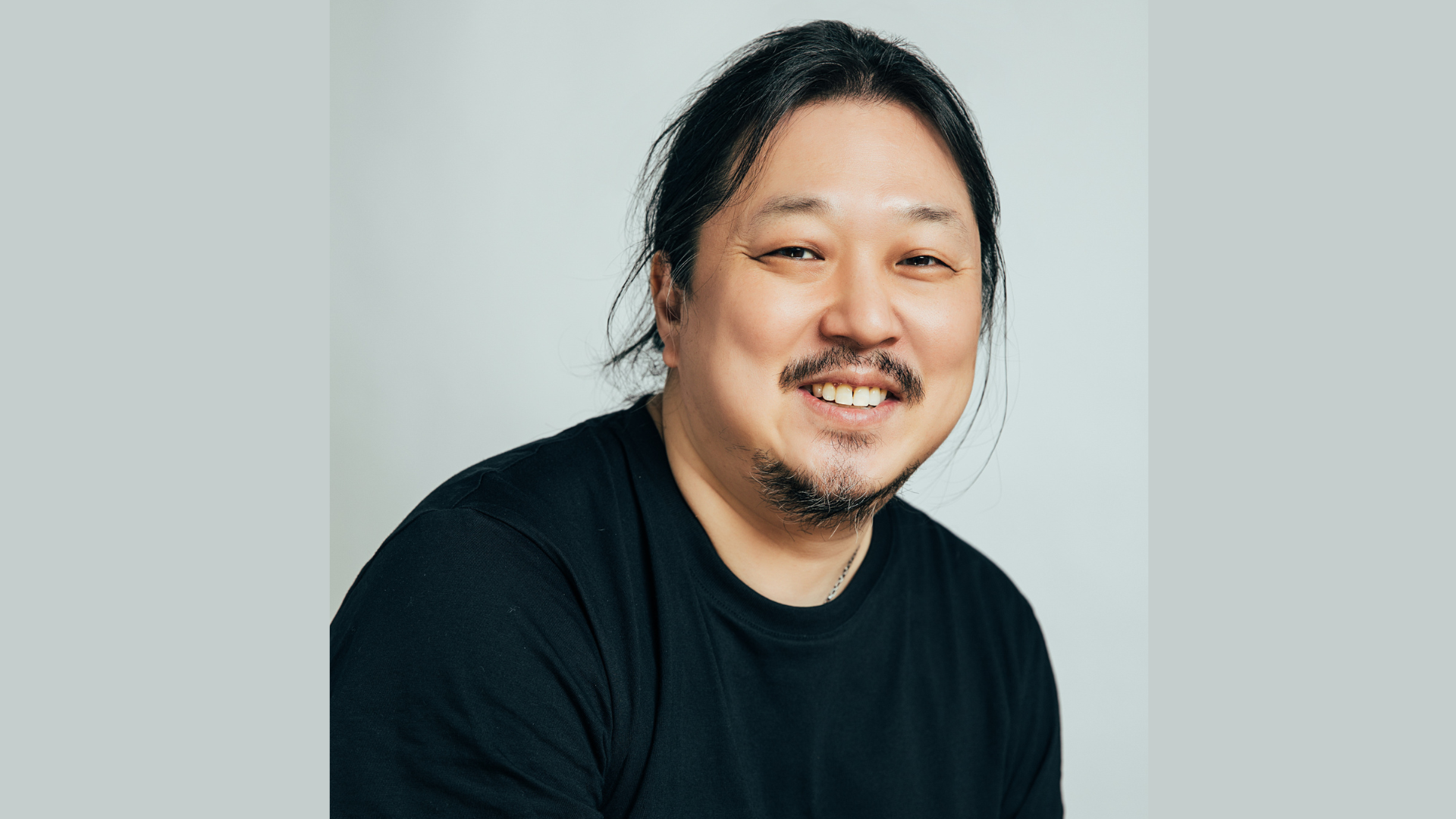
For over two decades, the New York Asian Film Festival (NYAFF) has stayed at the forefront of Asian cinema in North America. Going into its 24th year, NYAFF is a project designed to remind the world that Asian cinema is here to stay and thrive, providing platforms for both well-established and rising filmmakers. At the helm of this meaningful festival is Samuel Jamier, a Korean French curator, filmmaker, and consultant whose passion and vision for Asian cinema drive NYAFF forward.

AHN had a chance to interview the talented Jamier on the festival’s inspiration and mission, and the future of Asian American Pacific Islander (AAPI) and Pan-Asian cinema.

Samuel Jamier | President and Executive Director of the New York Asian Film Festival and Foundation

Bridging Cultures Through Film

Over the course of his well-established career, Jamier has proved himself to be an avid enthusiast for Asian cinema who shows a clear commitment to its artistry and cultural authenticity. Jamier has gone from Chargé de Mission for the Cultural Services of the French Embassy, through his experience working with The Korea Society, The Japan Society, to becoming the guiding force behind NYAFF. 

As a Korean adoptee raised in the idyllic Brittany of northwestern France, it is natural that his journey was one of cultural navigation and a lingering yearning for heritage connections. All this lifelong commitment to Asian cultures made it intriguing to learn where it all began—turns out not all those who wander are lost.

I was always drawn to stories that challenge conventions, that shake you awake in the middle of the night. My inspiration came from literature, philosophy, and cinema—works that make your heart pound and your mind race like you’ve had too much caffeine.

Traveling and living in different countries in my 20s rewired my brain. Experiencing cinema across different cultures made me realize the immense power of storytelling. I was particularly struck by the underrepresentation of Asian narratives in global film industries, which fueled my drive to bridge that gap through my work at NYAFF and beyond.

Jamier, a Korean adoptee raised in France, has dedicated his career to championing Asian cinema and bridging cultural gaps through storytelling.

Leading a “nomadic” life throughout his 20s has reframed his understanding of storytelling, endowing him with the severely underrated power of Asian narratives in global media. That realization has become some sort of a push for him to challenge stereotypes and redefine Western perceptions of Asian cinema beyond just kung-fu flicks and arthouse genres. 

Breaking Barriers for Asian Filmmakers

Hollywood has become a benchmark for world cinema. It only took a few seconds to look up “film classics” on Google, and most of the recommendations would be Hollywood/ Western. As he revealed that one of his greatest challenges lies in “shifting global perceptions of Asian cinema” and “the industry’s gatekeeping,” his answer underscores a limited spotlight on Asian narratives. 

Historically, Western audiences have viewed Asian films through a narrow lens, often limited to action-packed martial arts films or slow, contemplative arthouse works. This raises concerns over “typecasting” Asians in movies and hindering the potential of the world’s largest region. Through NYAFF, Jamier has worked tirelessly to push back these outdated preconceptions and aimed towards a broader, more nuanced appreciation of Asian storytelling.

Jamier is reshaping global views on Asian cinema, breaking stereotypes and opening doors for new voices worldwide.

Jamier has also successfully secured various global distribution deals for Asian filmmakers, shedding light on emerging talents to international audiences. Back in 2020, the pandemic took over New York City, leaving many film festivals canceled and filmmakers struggling. 

Recognizing the urgency and devastating impact, Jamier and his team at NYAFF quickly adapted, launching virtual screenings and digital initiatives to keep Asian cinema in the spotlight. His commitment to dismantling industry gatekeeping and evolving Asian narratives has provided new opportunities for talents from Asia and the diaspora to gain recognition at major festivals and in Hollywood.

A Bridge Between East and West

Through his work at NYAFF and his consultancy firm, SMLX Consulting, Jamier has become a key figure in ensuring cultural authenticity in Hollywood. He never stops encouraging studios, filmmakers, and screenwriters to represent Asians, collectively drawing diverse and respectful depictions of Asian identities in movies. It’s not just about quantity—to Jamier, it’s about both: quality and quantity. 

Beyond curating films, Jamier is about to make his directorial debut with The Huntress, marking his first endeavor in filmmaking. The film, inspired by World War 2, was a powerful manifesto of women’s roles in resistance movements, bringing overlooked histories to the spotlight while challenging conventional war narratives of Southeast Asian stories on screen. His transition from festival curator to director is a testament to his commitment to elevating untold Asian stories on screen. 

The Future of Asian Cinema with New York Asian Film Festival 2025

Recent years have witnessed an interesting spike in Asian media—from K-dramas to anime—Asian cinema is “at an exciting turning point,” he shares. NYAFF remains dedicated to showcasing the depth and innovation of Asian storytelling, and Jamier encourages audiences to explore the incredible films emerging from Asia.

My mission is to bring authentic, compelling Asian stories to the forefront of global cinema. Whether it’s through NYAFF, my consulting work, or my filmmaking, I want to challenge outdated narratives and create new spaces for Asian filmmakers to be recognized and celebrated.

Jamier is championing a new era for Asian cinema, using NYAFF and beyond to spotlight bold, authentic stories and push the industry forward.

Looking ahead, the 24th edition of the New York Asian Film Festival is set to take place from July 11-27, 2025, promising a lineup that further expands the horizons of Asian storytelling. Jamier remains committed to fostering representation and creating new spaces for Asian filmmakers to thrive.

To support NYAFF’s mission and stay updated on the 2025 festival lineup, visit www.nyaff.org.
Related Articles

Image Source: Olivier Koning / Honolulu Magazine

Stories

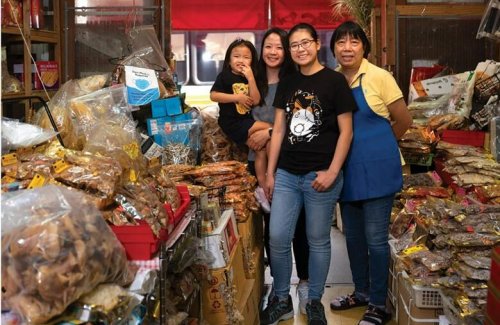
Chinatown’s Oldest and Most Respected Businesses Proudly Carried On By Next Generation

The blood of entrepreneurship runs through the veins of Chinatown’s Chinese food business owners, as three of the longest-running businesses have their children enter the management fields of their family business.

Tony and Selina Chun, together with Alan and Helen Chun, who have been in the business for decades, fully trusted their children to run the meat market company they bought in the 1980s.

The older generation passed it down to their children believing that they would treat it the same way they had after 40 years of building and creating the Chinatown cornerstone with crispy roast pigs, burnished roast ducks, and glazed char siu along with butcher store and seafood vendor.

Frankie, 35, and his cousins are now in charge of running the company that they established through diligence and thrift. Given that they have a family business to manage, Frankie has known since then that he won’t take long in any career.

He was reported in Honolulu magazine as saying, “I knew that anything I was going to pursue wasn’t going to be lengthy, because the family would always ask us back for support.”

He and his cousins learned the operations as a result of early exposure to the business and used them as a means of support, which pleased their parents, especially when they took their first vacation in four decades.

Meanwhile, Liana Fang, whose parents Wesley and Jie Mei Fang founded Sing Cheong Yuan Bakery, assists in running the business.

The pair bought the bakery from its original owners and then expanded it by bringing in more goods. The homemade goods were prepared using original family recipes that they later improved.

The 27-year-old claims she adores Chinatown but acknowledges that she is more passionate about cooking than baking. “It’s so authentic. I love Asian food, the fresh markets, the mom-and-pop shops,” she said.

Completing the list, the 33-year-old daughter of Sun Chong supermarket co-owner Ann Sung also contributes to management of the business.

Sun helps them sell their products and other items by marketing it online and by helping accomplish other stuff needed in the business.

Sun, who grew up at the shop with her cousins, said that their business is like a thread that can connect generations. She also claimed that coming home after studying abroad was like paying back her mother, who had done everything for her. Sun plans to update and improve her mother and aunt’s traditional business structure.

Image Source: Yahoo! Life

Stories

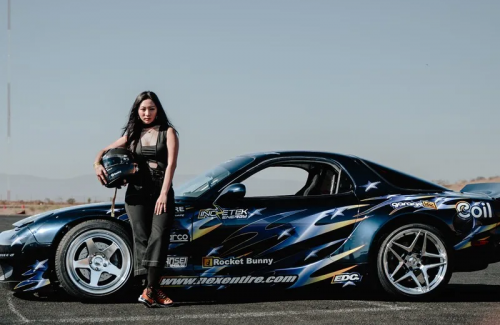
29-Year-Old Drift Racer Sara Choi Excels With Prowess In Male-Dominated Industry

Sara Choi, a South Korean drift racer, is one of the rare female drift racers who compete on an equal or even higher level with men in the automotive industry.

“Men have egos. Men have pride,” says Choi upon knowing that some guys dislike her. 

The 29-year-old was taken care of by a gang of automobile kids after leaving her Hawaii home at 15 and this is when she first acquired her curiosity and passion in cars.

Cool as she is, Choi drives a car at 70 mph while it “drifts” due to oversteering and also has to deal with microaggressions and crude remarks about her body as a drift racer.

Being one of the few women of color who is so skilled at it, vehicles are more than simply a hobby, a source of celebrity, or a source of income to her. Not only did she find a great deal of thrill when she drives sideways at high speed, but a new family as well.

“In Hawaii, we only have three freeways. Every Wednesday and every weekend, they would host a “car cruise meet” at the military base, which was everyone—sometimes up to 200 or 300 cars—going on the freeway and just racing. I would always go with my friends to that,” Choi said in Cosmopolitan. 

When Choi got her first full-time work at a tuning shop, she got a 1999 Civic through her boss, which she paid for with every paycheck. This marked the beginning of her passion for cars. 

After being introduced to drifting, she traveled to Japan, the country where the practice first emerged, years later. After completely experiencing the pleasure of drifting there, she grew passionate about it to the point that it became not only a hobby but a career.

Choi revealed that she is still debating whether or not to compete because it is a male-dominated field and that she is experiencing psychological difficulties.

She is currently concentrating on running racing events to keep the fire going.

One big achievement she had in the arena was when she created the Acura mod, a vehicle she worked on for three months for the SEMA exhibition in Las Vegas.

Additionally, Choi encouraged other women who want to pursue drift racing to “Just do it,” adding that they should put themselves out there to connect with individuals in the field.

Image Source: Twrl Milk Tea

Stories

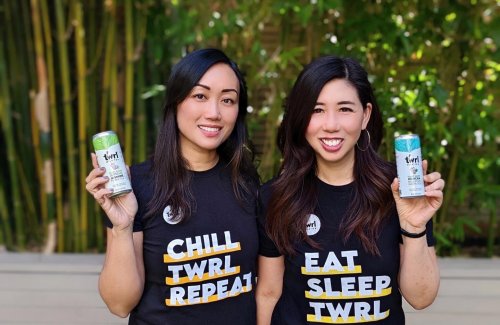
These Two Moms Started Milk Tea Company To Take Pride Of Their AAPI Identity

In order to realize their dream of founding a food company, Olivia Chen and Pauline Ang chose to create Twrl, a milk tea business that embodies their beliefs as mothers, graduates of Berkeley, and members of the AAPI community.

For their whole 20-year friendship, they have always shared a love of food.

In spite of the challenges of setting up a tiny business in the midst of a pandemic, Pauline took the time to experiment and eventually make the tea she wanted. In the Twrl, she invented the first vegan, low-sugar, and low-fat milk tea.

The two eventually hired a co-packer and a food scientist for their canned and on-the-go product.

The co-founders’ early supply purchases from small family farms had been stirring. They were able to help them by making them their suppliers and even assisted them to get non-GMO certification through their products.

Because peas have a neutral flavor, require very little water, and produce significantly fewer carbon emissions than soy and almonds, Twrl used them to make sustainable milk tea.

Olivia and Pauline chose the name Twrl for their company based on a Chinese tale about brewed tea. Twrl is a company that embodies tradition and history with a touch of modernism.

As Asian-Americans who grew up drinking milk tea as part of their family heritage, they are major admirers of it and have even changed its ingredients with their loved ones.

Olivia went on to say that teas in cafés have extremely high-calorie content, low-quality ingredients, and impractical portability. In Twrl, they created its antithesis.

Olivia said they are motivated by the need to create a product that accurately represents America as a nation of immigrants, just like them and their families. A company that offers people the chance to blend their races and serve as role models in the community.

She clears up that as the organization’s founders, they are an Asian-American brand rather than an Asian or American brand.

Image Source: qz.com

Stories

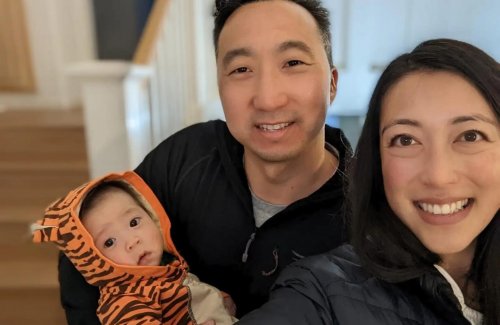
How This CEO and Co-Founder of Insurance Company Raised $25M During Her Pregnancy

Founding a business startup and starting a family simultaneously was proved possible by the CEO and co-founder Hanna Wu of Amplify Life Insurance, a life insurance platform focused on helping people build wealth.

Wu first realized the importance of insurance policy when her 20-year-long best friend lost his father and financial backbone at the same time after the latter’s father died of cancer.

Upon knowing more than a year ago that she was pregnant, it gave her mixed emotions as a 16-hour working woman who travels from here and there.

Trying to sort out the situation, she researched articles on early-stage founders as moms but failed to find ones that fit.

As a BIPOC member, she sought a community from the same race who are also women founders only to find out that barely 7% of the global fintech community are women and that they only receive 2.4% of the total capital invested for startups.

Finding no one, Wu felt alone and wondered how others balanced the various startup stages while starting a family.

The journey was never easy for Wu but truly, hard work, goal orientation, and perseverance make everything achievable.

Wu started to plan everything before and after her delivery and how she would be able to raise funds for her business considering the time when the market dropped so low.

While thinking about getting a nanny and how the set-up would be after her delivery, Wu engaged in lower-stakes conversations to test investor sentiments, and fortunately, she was able to secure a large reinsurer’s venture arm.

Wu also woke up early in the morning daily to study for her investment adviser exam and everything else she did with her impending delivery as motivation.

Three days before finally giving birth, they signed the term sheet for the company.

In the 9-month time of pregnancy and struggle towards establishing the business, Wu raised over $25 million in investments and thereafter hired a full leadership team, kicked off their RIA status, signed several significant partnership contracts, and grew their revenue four times: everything planned in her to-do list.

With her success, she shares in Quartz 5 work strategies to prepare for parenthood:

Sort your parental leave plan. It’s harder for early-stage founders to take leave, but preparing your care plan and naming what’s important to you.

Consider your travel schedule. Prioritize travel by business needs, and don’t be afraid to break from the way it “should be” done.

Become an expert on roles and responsibilities at home. You, your co-parents, and caregivers must become experts on the roles and responsibilities at home. Stay connected to the right people and in the right ways. 

Plan for everything and expect failure. Be easy on yourself when mistakes happen, or roadblocks pop up.

You don’t have to choose. We don’t have to choose between our careers and families. It’s not easy, it will be far from perfect, and undoubtedly you’ll need a lot of support, but you can have it all if that’s what you want.