William Wang's

News

November 25, 2024

SHARE:

This October, William Wang was honored with Lifetime Achievement at the 75th Annual Technology & Engineering Emmy Awards. As the founder of VIZIO, Wang has revolutionized the television industry, shattering the cost-related concerns about whether quality and pricing can go hand in hand. From a Taiwanese immigrant to a trailblazer, his journey is one of innovation and persistence.

Humble Beginnings and Pursuit of the American Dream

Born in Taipei, Taiwan, William Wang immigrated to the United States as a teenager with his family. Settling in Southern California, cultural barriers arose as a major problem for an immigrant teenager like Wang. However, his persistence shone through: he excelled academically, leading him to pursue engineering at the University of Southern California (USC).
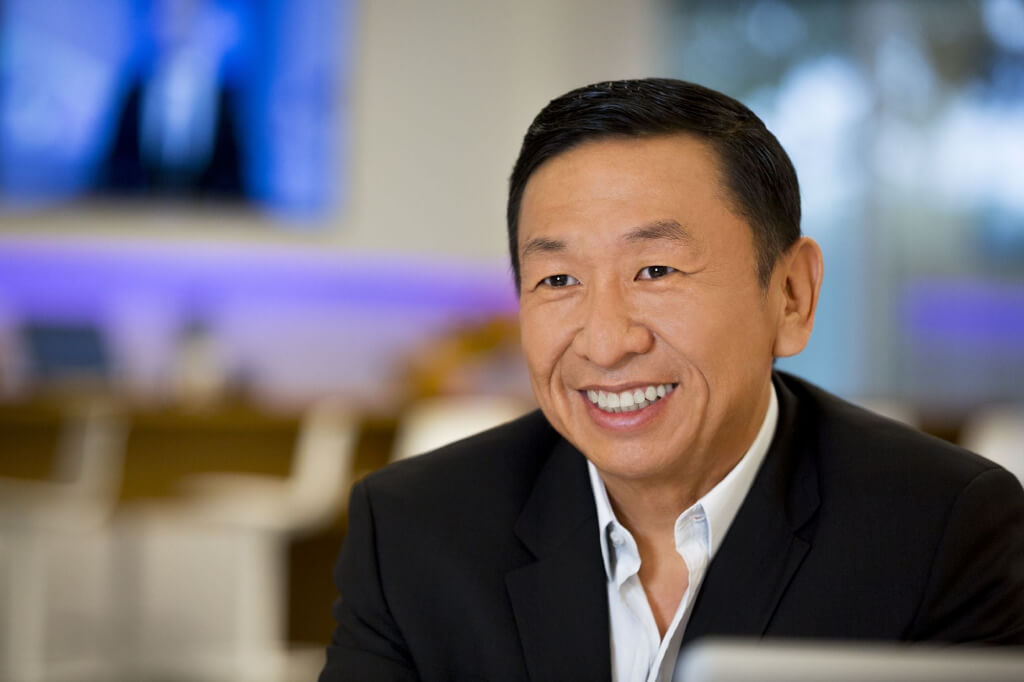
Image Soure: VIZIO

After graduation, Wang was on his way to materializing his dream: starting a company in the tech industry. Yet, he failed multiple times, draining his resources and budget. However, each failure gave him the opportunities and lessons to grow his entrepreneurial endeavors.

The Turning Point: A Life-Altering Experience

But life comes with unheralded events. In 2000, the Singapore Airlines Flight 006 that he was on encountered a crash, and he was one of the few survivors of that fatal incident.

This disastrous event completely altered his outlook on life: he became more grateful for his relationships and the comfort they provide, such as families spending cozy time together watching TV. This newfound perspective catalyzed his entrepreneurial shift into his next venture, fostering an idea that would transform the consumer electronics market. He envisioned a future where the gap between top-tier technology and affordability disappeared—a vision that soon became VIZIO. In 2002, he launched VIZIO. 

By 2007, just five years after its founding, VIZIO had become the top-selling LCD TV brand in the United States—a monumental achievement in an industry dominated by global giants like Sony and Samsung.

Wang’s Humble Reflections on the Achievement
William Wang's
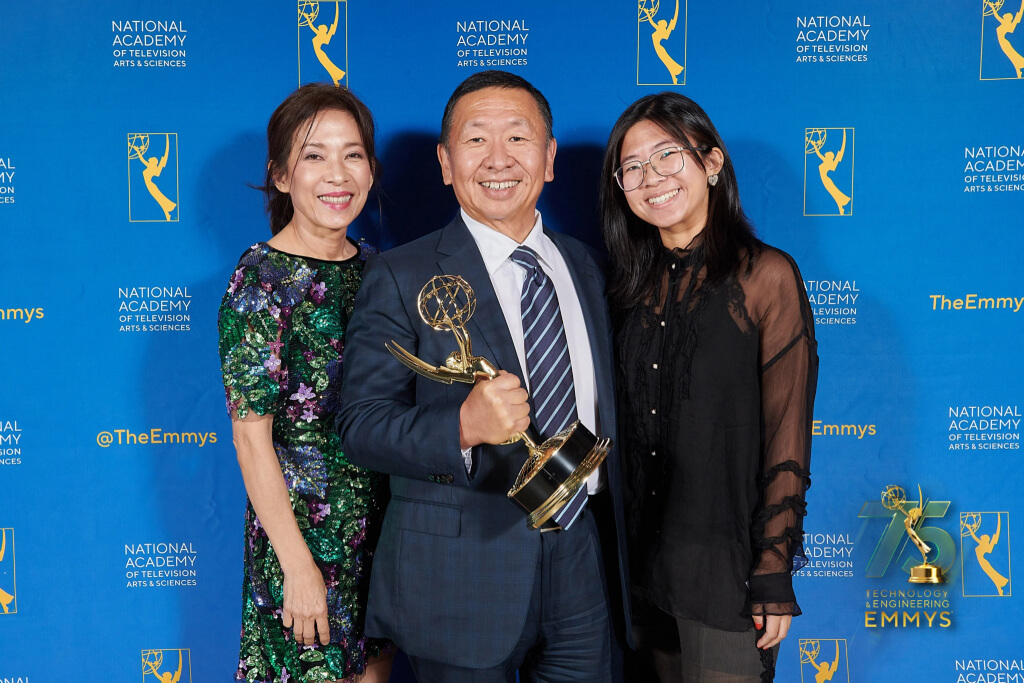
William Wang (center) with his family at the 75th Technology & Engineering Emmy Awards. (Image Source: VIZIO)

When receiving the prestigious Lifetime Achievement Award at the Emmy Awards, he couldn’t help but feel emotional about his near-death-inspired vision. At that moment, his survivor’s guilt had driven him to enrich lives, saying, “My life has been dedicated to bringing great technology to consumers in America.” As influential as he is, he expressed his gratitude for his team, stating, “This recognition is also a testament to the incredible team at VIZIO – it is our lifetime achievement. Together, we’ve challenged the status quo and have created new possibilities for the future of television. I’m proud of what we’ve accomplished and excited for the journey ahead as we continue to push the boundaries of technology and entertainment.”

Featured Image Source: VIZIO
Related Articles

Image Source Artbound

Uncategorized

ARTBOUND Features Giant Robot’s Asian-American Pop Culture Influence In Its Latest Episode

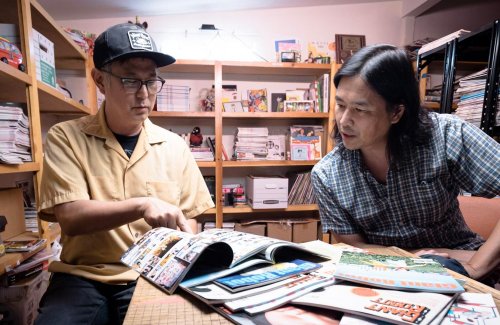
Highlighting the impact of the Asian-American pop culture publication Giant Robot, the debut of the latest episode entitled “Giant Robot: Asian Pop Culture and Beyond” was finally aired last October 26 in the acclaimed arts and culture series ARTBOUND on KCET.

The episode showed Giant Robot’s examination of Sawtelle Boulevard as a Japanese-American neighborhood, sparking interest in Asian and Asian-American popular culture which resulted to a long line of Asian American artists who won recognition on a global scale. 

Established in 1994, Giant Robot was a bimonthly journal that focused on Asian popular culture that soon included works by Asian-American artists including David Choe and James Jean.

Eric Nakamura began publishing Giant Robot as a digest-sized zine. The piece covered a variety of subjects, including trendy Asian American independent filmmakers, Japanese punk rock, and contemporary Hong Kong films. National media sources including the New York Times, Wired, and LA Weekly published the story.

In 2001, Nakamura opened his first store named “Giant Robot Store” in Sawtelle Japantown and expanded in 2003.

Giant Robot co-founder, Martin Wong edited all 68 issues of the glossy magazine on Asian, Asian-American, and new hybrid culture from 1994 to 2010, when it was still a punk zine. His wife Wendy Lau served as Giant Robot’s graphic designer beginning with issue 18. Even today, Martin continues to publish zines and contribute to them.

The popular weekly television program and online site ARTBOUND captures the essence of California’s expanding arts and cultural scene and investigates how it is transforming the state into the world’s creative capital. 

The KCET Original series investigates and clarifies contemporary cultural challenges, offering insightful in-depth study of how the arts and culture impact society.

Image Source: Julie’s Bakeshop

Uncategorized

Dreams Set No Limits To 50-Year-Old Who Started A Bakeshop Now The Philippines’ Most Famous Brand

“In a way, I was poor. I was hungry, maybe not for food but for self-achievement. I thought there must be something more I can do than just being a housewife. I was very determined to succeed, in whatever came my way,” thus said Julie Gandionco as quoted by the Inquirer, the Philippines’ local newspaper.

In January 1981, then-50-year-old Julia Gandionco opened Julie’s Bakeshop to satisfy her thirst for proving that she is more than a housewife.

Julie’s Bakeshop gloriously celebrates being one of the Philippines’ largest bakery chains with more than 500 branches all over the country, which can be traced back to Mandaue City on the Island of Cebu as its place of origin.

In the 1970s, Julie was a canteen concessionaire at a rattan company, and subsequently became a manager of its sister company. She also opened another canteen a year later.

Having these three canteens being managed, she felt the rising demand for bread which made her take the chance of opening a bakeshop, despite having zero knowledge of baking.

Julie stressed that her bakeshop exists because of “a growing need for bread products and a strong trust in God,” and that she desires to encourage and uplift other mothers to dream big and strive for their goals.

Image Source: South China Morning Post

News

Veteran Actor James Hong Lauds Asian-American Representation In Entertainment Industry

During the Critics Choice Association (CCA)’s Inaugural Celebration of Asian Pacific Cinema & Television, veteran actor James Hong received the prestigious Icon award along with a few other awardees.

The veteran actor reflects on his over 700 roles and how Asian representation has changed: “When I was a kid, ‘The Good Earth’ was played by Caucasian leads that taped their eyes up.”

In his speech, Hong commended Asian-American creatives for “carrying through” work to advance their careers in the entertainment world and emphasized that his ultimate goal was to stop hatred and boost the whole level of Asian-Americans.

“To see an organization collect all these people together and work together and stop this hatred for Asians is our main goal, I think, and just boost the whole level of Asian-Americans,” Hong mentioned to the PA News Agency.

Held at Fairmont Century Plaza, CCA’s celebrity-filled event highlighted both new and experienced talents and featured other notable figures from the Asian film industry.

At the age of 93, the veteran vigorously demonstrated a few martial arts movements for the photographers with a smile on his face during the occasion.

In his more than six decades-old career, Hong is a well-accomplished actor with hundreds of film and television credits who co-founded the East West Players in 1965, making him more than deserving to receive the Icon award.

The actor stated that CCA is perhaps one of the pioneering organizations that promote culture.

Image Source: Fiona Chan

Stories

TikTok Viral Beauty Brand Youthforia Inspired From Asian Roots And Self-Awareness

We spend most of our waking hours trying to care for ourselves, but there’s only so much time in the day. That’s what the makeup brand Youthforia is for — a line of high-quality beauty products that fit seamlessly into your routine. 

Founder Fiona Co Chan accomplished this goal for Youthforia, making it the first East Asian makeup brand to be sold at Ulta Beauty. 

While quarantined in Hong Kong, Fiona realized she should launch a cosmetics line. She also recalled a lesson her Vietnamese refugee mother had taught her early on about the importance of paying attention to what goes into one’s body. Although she didn’t have the best track record with makeup, she was able to consider her interest. 

Before 2020, she worked in technology and visited several highly polluted Asian cities. She realized that her Western cosmetics reacted poorly to heavy pollution, resulting in skin damage. 

This led Chan to work on a gentle formulation and test it out for two months before releasing it to the public on TikTok in 2021. She used the video hosting giant to see if people would be interested in trying out her new makeup creations, such as a liquid blush that adjusts to the skin’s pH. The BYO Blush was a huge success, and Chan’s Youthforia’s TikTok accumulated 40 or 50 million views in its first year.

While the launch of Youthforia on TikTok is undoubtedly cutting-edge, the brand’s core values are founded in the past. This comes directly from Chan’s identity and her upbringing in an Asian San Francisco household where her mother stressed the importance of viewing the body as a whole.