News

February 14, 2025

SHARE:

The Immigrant Struggle

“We dream of going to America, to change our lives, we believed. But my life changed so much. I felt sad about life, didn’t know the language, and didn’t know the roads. I had no friends, so I felt very sad.” – Phong, a Vietnamese American expat interviewed by the Pew Research Center.

“I sometimes, just a little, wish that I would disappear so that my parents and my sister could be better off.” – Nolan, an Asian American interviewed by the Pew Research Center.

Dreams vs. Reality

The American Dream is often celebrated as a path to success, yet its reality is far more nuanced. Tales of rags to riches from Asian peers suggest its promise, but the Pew Research Center reports that one in ten Asian Americans still live in poverty as of 2024. The issue lies not solely in the Dream itself but in how it is constructed and understood.

For many Asians, the American Dream is synonymous with upward mobility achieved through hard work and resilience—a belief that effort alone can overcome systemic barriers. But resilience, by its nature, demands enduring hardship and accepting foreignness, perpetuating a narrative that reinforces isolation and discrepancy.

The American Dream is synonymous with upward mobility achieved through hard work and resilience (Image Source: Roberto Parada)

The American Dream is synonymous with upward mobility achieved through hard work and resilience (Image Source: Roberto Parada)

The Illusion of Gold

The idolization of a Western nation paved in gold is an illusion that perpetuates xenophobia and the model minority myth. This ideological flaw is alluring and dangerous. We have all heard heartbreaking stories of illegal labor exports and stowaway immigrants. Yet we tend to remember the rags-to-riches stories because it is comforting to view ourselves as the ones who might make it. All while labeling these immigrants as illegal, the other, the individual Asian Americans who will live in poverty. But by doing so, we have fallen trapped in the American Dream, clawing our way to the top for the sake of others. 

After the pandemic, anti-Asian and hate crimes have increased. The encounter paints a reflection of our society, there is no line between the one and the other nine, we are Asians and that is our identity. Then is the American Dream a lie? Not necessarily—but it is far from universal.

Community as the Key

Like all dreams, it is what we make of it.  Whether in America, Asia, or any part of the world, opportunities coexist with difficulties. Moving to another country means tackling obstacles such as language and cultural barriers alongside the burden you once had at home. Statistics show that 61% of Asian adults seek family and friends when facing financial burdens. This can become challenging when migrating to a new country. 

The key lies in recognizing that success is not achieved alone. Building networks and fostering solidarity within communities can challenge the isolating demands of resilience and redefine the Dream as a collective effort toward meaningful progress.

The American Dream is both a beacon of hope and a paradox. For many Asian Americans, the pursuit of upward mobility comes with sacrifices that are often overlooked. Yet, success doesn’t need to be a solitary journey. By embracing shared struggles and fostering a supportive community, one can find hope by redefining what the American Dream truly means.

Sources: Pew Research Center – 1 in 10: Redefining the Asian American Dream (Short Film), Pew Research Center – The Hardships and Dreams of Asian Americans Living in Poverty, Edelman, C&EN, Reappropriate.
Related Articles

Image Source: Strait Times

Stories

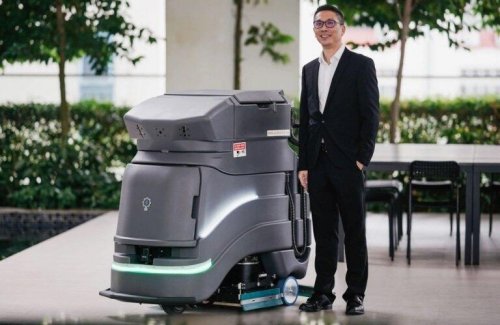
What Motivated A Cleaner To Become Singapore’s Primech Services & Engineering CEO

Starting out poor and being dumped by a girl because she saw no better life with a cleaner is truly a successful and inspirational story for a man who now makes fortune.

Instead of getting frustrated, Vernon Kwek used his heartbreak and the discrimination he went through from his girlfriend who chose a university guy over him as a motivation of working hard and striving further in life.

The 48-year-old is now Singapore’s Primech Services & Engineering CEO who owns a 10% share in the company.

Simultaneously, Vernon also runs A&P Maintenance Services and Maint-Kleen, two other cleaning companies handling some of the biggest companies in Singapore, including Changi Airport Group, with over 3,000 employees under his power.

Vernon was born to a humble family. When he was barely 13 years old, he helped his father find a new job after losing the latter’s job as a salesman.

After his father was accepted as a cleaning supervisor, Vernon manifested his hard work and family-orientedness by helping his father in cleaning toilets and offices during the weekends.

A year after, he gave up school just to work as a full-time cleaner to help his family. Being a responsible teenager, he was shortly promoted to cleaning supervisor at the age of 14.

“I asked the manager if he was sure. My dad became a supervisor only when he was 40. I was only 14. But he said: ‘Don’t worry. You have your dad’s genes. He has leadership qualities, you should have the same too,’” Vernon shared in Strait Times

Later on, he was again promoted to a higher position as a senior supervisor until he finally became the company’s CEO.

Nevertheless, Vernon experienced many downfalls in his journey but never lost hope as he was determined to have a better life. Now, he is a successful family man with four kids.

Image Source: Weilyn Chong Linkedin

Stories

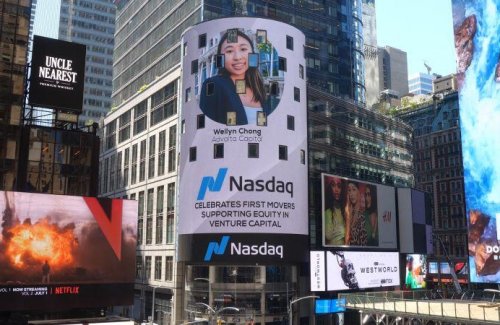
A College Freshman’s “Failure Class” Podcast Project Paved Her Way To Times Square

When Weilyn Chong’s name and photo appeared on a Times Square billboard from the Nasdaq Tower, it instantly went viral, inspiring many young Singaporeans to pursue entrepreneurial endeavors.

Weilyn acknowledges the value of entrepreneurship in Southeast Asia despite the fact that the majority of her work with founders is focused in the US.

Growing up, 20-year-old Weilyn Chong has lived from one place to another between Singapore, Hong Kong, and the Netherlands which made her immersed in varied cultures.

Weilyn’s global exposure enabled her to be more flexible in dealing with many kinds of people especially since their family annually joins in Singapore Global Network events.

Despite their frequent moves, Weilyn’s mother made sure to give them a strong sense of connection to their roots by taking them to see their grandparents, spending time with family, and eating Singaporean food. 

The Singaporean third-year economics student at Princeton University expressed how being among passionate individuals inspires her.

Weilyn started a podcast about women entrepreneurs with her failure project for “The Other ‘F’ Word” class when she was still a freshman, and she has since enjoyed it.

Together with her high school friend Ali Debow, she even converted it into a regular extracurricular activity by co-founding The Entrepre女ers Network, a podcasting startup that connects and promotes female entrepreneurs with topics including design, young changemakers, and Gen Z female founders.

Weilyn wants to increase the visibility of female business owners and give them connections opportunities. Her team has spoken with over 130 creators in a year and increased their listenership and social media reach to 30,000.

She said that they hope to get young females to dream of being an entrepreneur and understand that entrepreneurship doesn’t have to look a specific way.

Learning that bias happens between genders in the global arena as only 2% of total venture capital funding goes to women because they are women, she attended a conference put on by the Nasdaq Entrepreneurial Center (NEC) to address the complex issue of inequity in venture for entrepreneurs of color and women entrepreneurs.

There, she met people from the Center and expressed her interest to get involved in the work they do in any capacity. 

She was asked to join the NEC board in order to represent Generation Z and put a spotlight on young entrepreneurship.

“I grew up thinking those two things are mutually exclusive – either you do charity work or you make money. But what we’re seeing is that you can raise a lot of money and make a positive impact on the world,” she said on CNBC.

Image Source: Taho Klasiko

Stories

Former Teachers Went Outside of Their Comfort Zones, Found Success in MilkTea-Inspired Taho Shop

Both Filipino educators, Camille Ona and Marvin Paclibare found a different world and passion out of their classrooms during the pandemic as teachers-turned-entrepreneurs and founders of Taho Klasiko, a special milk tea-inspired taho shop.

Breaking free from their first-loved profession, the two sculpt their name as entrepreneurs who choose to walk into another path.

Marvin said that if not for the pandemic, he might still be teaching now just as he thought that he would forever be a teacher. He also added how he realized that there is a bigger world waiting outside teaching.

With people becoming more mindful of their health, especially during the onslaught of the pandemic, Marvin said that they eyed tendering a healthier version of milk tea.

The shop attained a grand slam as the two now earn 6-digit figures per month, an amount far way better than their incomes as teachers in the Philippines.

Camille mentioned in an interview that although they are still passionate about teaching, they just chose to be practical.

Despite entering the world of business, the owners are still having the vibe of teaching as entrepreneurs who are open to learning and improving their craft just like when they were still teaching.

They also shared that they hired working students to extend help to them. 

As a piece of advice, the former teachers said that would-be entrepreneurs should go outside of their comfort zones and open their ways to many opportunities.

“It’s not enough that you have a dream; you need to work hard to make it a reality,” Camille added.

Image Source: Shark Tank

Stories

Slime Company Started By High School Student In His Garage Made $1.2 Million Sales After Joining “Shark Tank”

Mark Lin was only 17 when he started selling food-scented slime out of his Burbank, California garage in 2020. 

He then won over venture capitalists on an episode of ABC’s “Shark Tank,” with his zeal for pitching and the amazing yield his company was generating, where $300,000 was a net profit out of the $540,000 in sales he obtained at the time.

With the assistance of a couple of his buddies, whom he employed for packaging and shipping, Lin, a high school freshman and novice in the industry, developed the slime successfully, enabling him to make $50,000 in sales in his first year of operation.

CNBC reports that Lin’s sales increased to $580,000 the following year.

Sliimeyhoney now sells edible and food-scented slimes with flavors like banana milk, hot cocoa, and birthday cake batter for between $10 and $16 per six-ounce jar utilizing Tiktok as his marketing platform.

The company consistently achieves sold-out sales for its weekly introduction of new products to its almost one million followers.

After a thorough negotiation with Kevin O’Leary and Daymond John, Lin secured $150,000 for 20% share from the two.

This, according to Lin, will be beneficial in moving his company from his garage into a warehouse and gaining mentorship while he still pursues his studies.

John was quoted saying “I believe in you, and we’re going to make sure you go to school, and I will help you with this business.”

Lin is now a first-year college student at UCLA with his company continuously rising.