How Asian American Brewers are Celebrating Their Roots in Craft Beer
News
June 28, 2023
SHARE:
The craft beer industry in the United States has long been dominated by white owners, but a new wave of Asian American brewers is making their mark and infusing their heritage into their beers.
Although the number of Asian American-owned breweries remains low, their presence is steadily growing, challenging the prevailing demographics. These brewers are breaking cultural barriers and embracing their identities, creating unique brews that reflect their heritage.
One pioneering example is Highland Brewing in Asheville, North Carolina, which opened its doors under the leadership of Oscar Wong, a Chinese immigrant. Being one of the few Chinese Americans in the craft beer scene at the time, Wong faced the challenge of standing out in a predominantly white industry. Now, his daughter, Leah Wong Ashburn, serves as the CEO of Highland Brewing, continuing her father’s legacy.
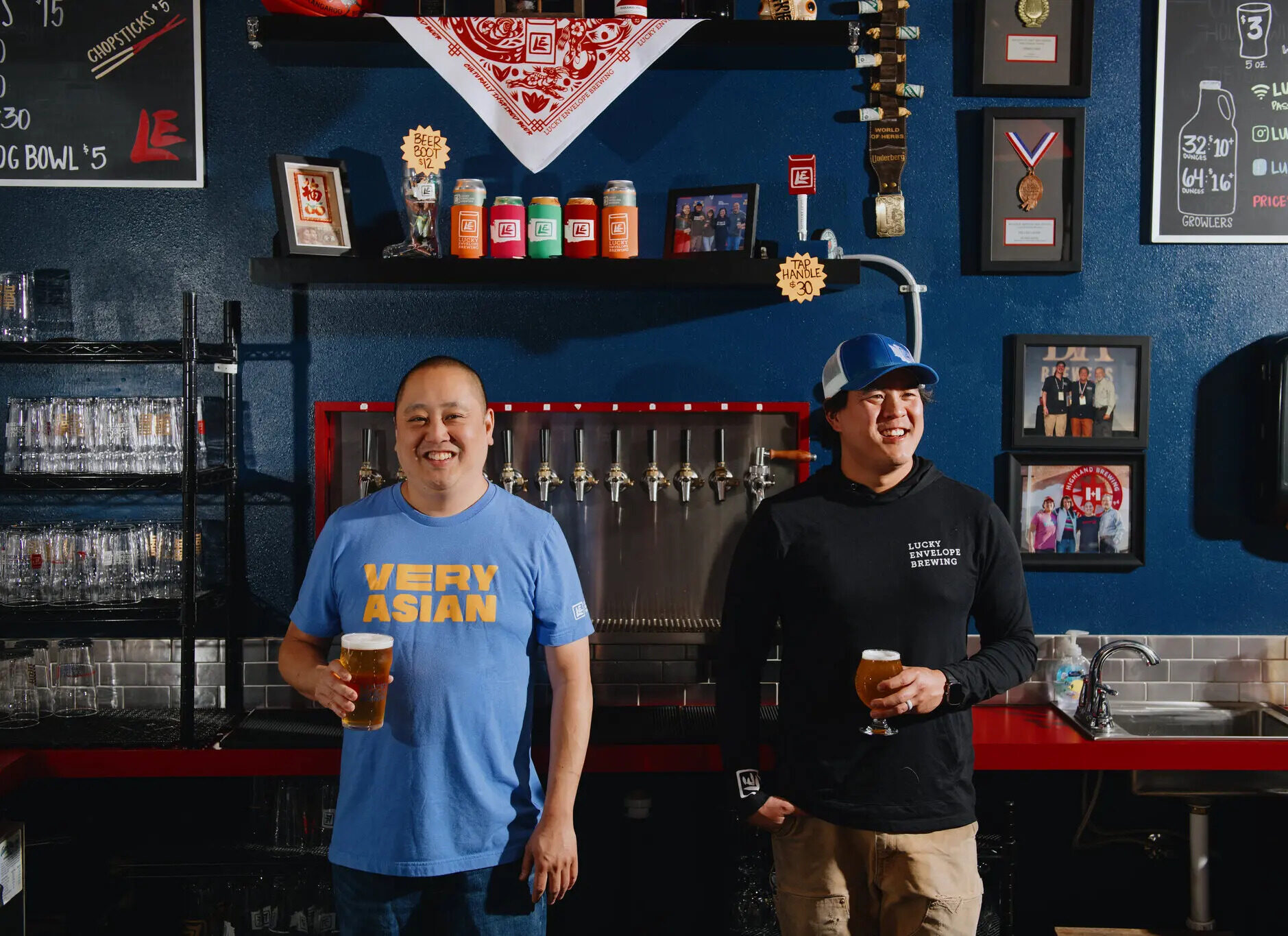
Raymond Kwan and Barry Chan, owners of Lucky Envelope Brewing in Seattle, both children of Chinese immigrants, made a significant career change when they decided to pursue their passion for brewing. According to the New York Times, they took the leap and started their own brewery over a few beers one night.
Similarly, Youngwon Lee, the Korean American founder of Dokkaebier in Oakland, California, as featured also in Asian Hustle Network, drew from his heritage to create unique flavors. Collaborating with his white head brewer, they used elements from homemade kimchi to develop a kettle sour beer, infusing it with the sourness, chile, and ginger found in Korean cuisine.
These Asian American brewers are not only making their mark through their beers but also actively participating in efforts to diversify the craft brewing industry. While challenges persist, these brewers are toasting to a future where diversity and inclusivity thrive in the world of craft beer.
Rice is an essential part of the Asian diet, and it is enjoyed in many different forms. One of these is the classic fried rice, which everybody knows is a tasty and easy meal.
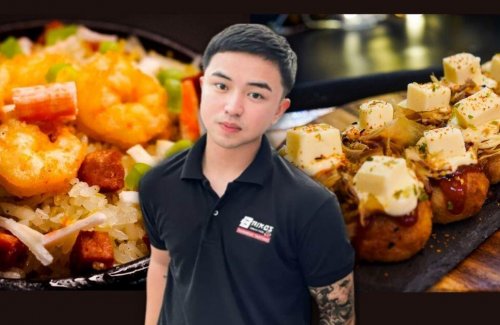
At the age of 21 years old, Briko Galeon from Tarlac City, Philippines, was able to expand his Korean Spam BKB Fried Rice business to 5 branches in just a span of 3 months. Aside from this, he also has a takoyaki business that he was able to expand into 30 branches within 1 and a half years of operation.
One of Briko’s franchisees, Sharmaine Anne De Leon, shared that she used to scroll social media posts about Korean fried rice and have cravings for it. She also said that BKB Fried Rice products are really good, and that’s why getting a franchise with BKB was an easy decision for her.
Briko shared that his inspiration for putting up businesses was his parents. He wanted to give back to his parents and be able to buy them gifts using his own money. Due to his success, he was able to buy 2 cars and is now providing for his family’s needs.
There isn’t an age too young or too old for a person to become an entrepreneur. Briko’s advice is to find a product that you genuinely love or are passionate about. Once you do this, it will be easier for you to learn about the product, its market, and how to serve it.
LOS ANGELES, January 11, 2023 — Blaze.tech, the smarter no-code platform that’s revolutionizing the way teams build web apps and tools, announced its official launch and has raised a $3.5 million pre-seed round led by Flybridge Capital and MaC Venture Capital. The round also included participation from investors and unicorn founders in enterprise SaaS including Vlad Magdalin (CEO, Webflow), Mada Seghete (Co-founder, Branch), Mark Schopmeyer (Co-CEO, CaptivateIQ), ACTAI Ventures, Sangha Capital, and Bill Tai. This funding round will accelerate Blaze’s growing customer base, increase the platforms’ integrations, and expand its AI capabilities.
Today’s public launch follows a successful beta phase in which Fortune 500 companies and startups used Blaze to build dashboards, HIPAA compliant apps, complex workflows, automated invoice generators, and inventory management systems all without writing any code. Because of Blaze’s emphasis on security and its robust suite of enterprise security features, the company has found popularity with organizations in highly regulated industries like healthcare, legal, construction, transportation and logistics, and finance.
With Blaze’s AI-powered no-code platform, teams are able to create and launch highly custom and secure applications and internal tools in minutes. Blaze gives non-technical people the superpower to be entrepreneurial product builders with an intuitive all-in-one drag-and-drop interface and AI system. Blaze AI is powered by OpenAI’s GPT-3 model, the same one used by ChatGPT. App creators can tell Blaze AI to create complex workflows, automatic triggers, custom filters, advanced calculations, and more.
Blaze improves operations and productivity, and with pre-built integrations into Airtable, DocuSign, Freshdesk, Google Sheets, Salesforce, Stripe, Shopify, and many more tools, users can build multiple apps on top of their existing tech stack.
The no-code/low-code market is one of the fastest growing markets (from $25 Billion to $187 Billion in 2030), and Blaze’s unique positioning is enabling teams to build software with complexity, customizability, and security that otherwise would require writing code.
“We’re so excited to maximize the talents of people inside organizations by giving them the ability to solve business problems with software,” said Nanxi Liu, Co-CEO of Blaze. “We’re seeing individuals supercharge and significantly increase the efficiency of their team’s operations with Blaze.”
“Our users can implement their app’s business logic in just a few clicks because Blaze has done all the difficult work on the technical side to provide a platform that generates intuitive front-ends and secure, scalable back-ends,” said Tina Denuit-Wojcik, Co-CEO of Blaze.
“We are thrilled to support the Blaze team in their mission to create powerful tools and dashboards without the need for expensive engineering resources,” said Adrian Fenty, General Partner and Co-Founder of MaC Venture Capital. “Nanxi and Tina have the business acumen to be huge disruptors in the industry, and because they’ve experienced these challenges first-hand, we know Blaze is building a top-tier product.”
“Nanxi and Tina are exceptionally talented founders with deep insights into the needs of Blaze’s customer base. Having watched how well they led and capital efficiently managed their prior company to significant success, we were delighted to invest in this dynamic duo,” said Chip Hazard, General Partner and Co-Founder of Flybridge Capital.
Additional investors in the round include Dean Schnider (Partner, Najafi Companies), Felicia Curcuru (CEO of Binti), Holly Liu (Co-Founder, Kabam), Lin Capital, Michael Einziger (co-founder of the band Incubus), Mike Lu (co-founder of Triller), Root and Shoot Ventures, Socially Financed, and The K Fund.
About Blaze.tech
Blaze.tech is the smarter no-code platform that’s revolutionizing the way teams build web apps and tools. Blaze’s AI-powered platform improves operations and productivity by enabling non-technical people to build and launch custom software in minutes, without writing any code! From dashboards and workflows to portals and more, Blaze’s all-in-one-builder has pre-built integrations, security and reliability.
Blaze is headquartered in Los Angeles and was founded in 2022. The founders, Nanxi Liu and Tina Denuit-Wojcik, previously founded Enplug, a leading digital signage software, which was acquired in 2021.
The rising population of Indian-Americans in North Texas is proving to be a strong force. Indian-Americans like Singh have permanently shaped North Texas’ cultural landscape in a variety of fields, including technology, education, and politics.
Tony Singh grew up with a father in the Indian Navy and moved every couple of years. Today, he’s settled in Little Elm, and even elected as councilman to serve his new neighborhood. Singh established initiatives to benefit Little Elm residents, while actively and regularly volunteering himself.
Most Indian-American employees work in only three industries: computer science and mathematics, management, and health care. Among all immigrants, Indian-Americans are the highest earners in the state. For this reason, Dinesh Hooda came to Texas in 2011 in search of employment.
Dinesh Hooda’s family had trouble adjusting until he attended India Association of North Texas’ Indian Independence Day. Through this, they established friends with Indian-Americans in North Texas who share similar experiences and struggles. Hooda is currently Uber’s senior technical program manager.
The fastest-growing ethnic group in the state is Asian, with Indian-Americans making up the majority of the group. Texas has the second-largest population of Indian Americans in the nation overall. This group will expand even more in the upcoming years, which could have a significant impact in the area.
And while there are many struggles and difficulties to face as immigrants in the state, there are also lots of groups and communities willing to reach out to help one another and make each other feel welcome and at home.
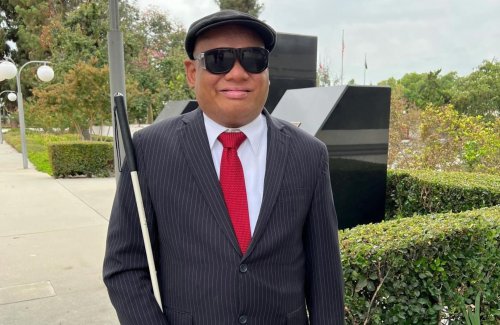
Filipino-American Ollie Cantos, who was born with a visual impairment, is now taking his experience and knowledge to West Covina City Hall.
In 1997, he graduated from Loyola Law School in Los Angeles with a law degree. He served as a staff attorney at the Disability Rights Legal Center after graduating. He also held various roles as a civil rights attorney in the Washington, D.C. government before the coronavirus emerged.
Now, he is a sworn-in member of the West Covina city council and is looking forward to contributing back to his community, where he was raised by his Filipino immigrant parents.
“My excitement level is off the charts because this represents the culmination of a lot of hard work of countless people that got us here and when we look at the opportunities that are ahead of us to unite, and to be supportive of making the city better, this day is also historic,” Cantos said in an interview.
Cantos will collaborate with a fellow Filipino on the current city council, as Letty Lopez-Viado, the first Filipino-Mexican mayor of the city, was also elected unopposed in November. She was first elected to the city council in 2018 and served as mayor of the city from 2020 to 2021.
“Though he can’t see with his eyes, he sees with his heart,” Lopez-Viado said of Cantos as she got sworn in. “He’s a very intelligent, well-spoken gentleman, and I’m very excited to work with him.”