
News

June 28, 2023

SHARE:

The craft beer industry in the United States has long been dominated by white owners, but a new wave of Asian American brewers is making their mark and infusing their heritage into their beers.

Although the number of Asian American-owned breweries remains low, their presence is steadily growing, challenging the prevailing demographics. These brewers are breaking cultural barriers and embracing their identities, creating unique brews that reflect their heritage.

One pioneering example is Highland Brewing in Asheville, North Carolina, which opened its doors under the leadership of Oscar Wong, a Chinese immigrant. Being one of the few Chinese Americans in the craft beer scene at the time, Wong faced the challenge of standing out in a predominantly white industry. Now, his daughter, Leah Wong Ashburn, serves as the CEO of Highland Brewing, continuing her father’s legacy.

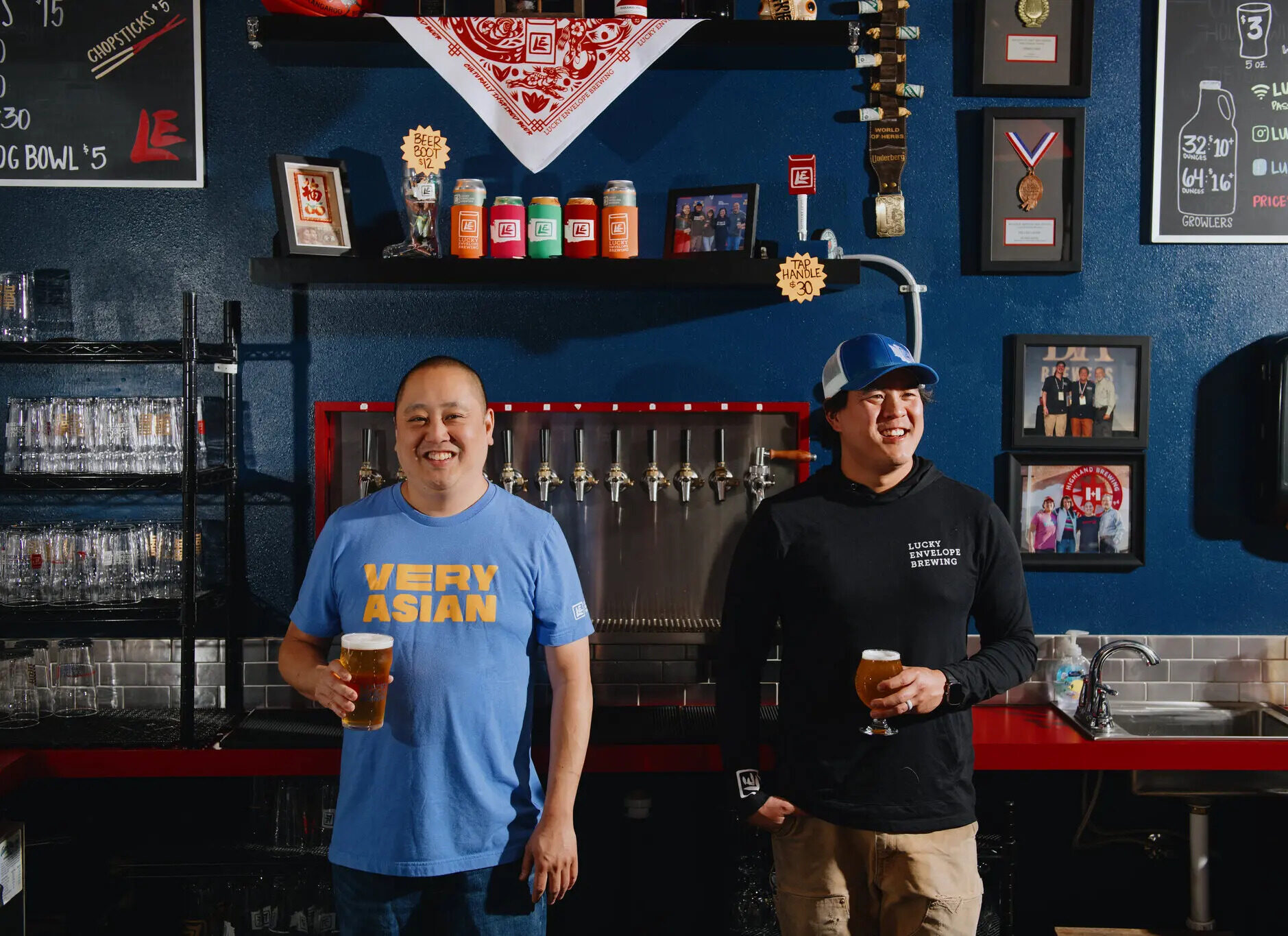
Raymond Kwan and Barry Chan, owners of Lucky Envelope Brewing in Seattle, both children of Chinese immigrants, made a significant career change when they decided to pursue their passion for brewing. According to the New York Times, they took the leap and started their own brewery over a few beers one night.

Similarly, Youngwon Lee, the Korean American founder of Dokkaebier in Oakland, California, as featured also in Asian Hustle Network, drew from his heritage to create unique flavors. Collaborating with his white head brewer, they used elements from homemade kimchi to develop a kettle sour beer, infusing it with the sourness, chile, and ginger found in Korean cuisine.

These Asian American brewers are not only making their mark through their beers but also actively participating in efforts to diversify the craft brewing industry. While challenges persist, these brewers are toasting to a future where diversity and inclusivity thrive in the world of craft beer.

Featured Image Source: NY Times
Related Articles

Image Source generocity.org

Uncategorized

Founder of Penn Asian Senior Services Im Ja Choi Passed Away At 73

A well-known supporter of Asian American seniors and the founder and emeritus CEO of the nonprofit Penn Asian Senior Services, Im Ja Choi,  passed away on Wednesday, June 22, from lung cancer in a South Korean hospital, she was 73. 

A memorial service will be conducted on July 16 at 3:00 pm at the Evergreen Center in Philadelphia. Contributions in her name will be appreciated.

Ms. Choi was born in Seoul, South Korea in 1948, majored in literature, and graduated from Korea University. She moved to Philadelphia after marrying her childhood friend Jung Choi in 1971, where she studied organizational dynamics at the University of Pennsylvania. She was a top-producing real estate agent in the 1980s and 1990s. 

She started Penn Asian Senior Services in 2004 to help Asian American elders with linguistic and cultural obstacles. Because she couldn’t get home care for her mother, and after hearing horrible experiences from other caregivers, she founded the charity that provides in-home care and homemaking services in over two dozen languages.

She undertook the fundraising efforts and strategic planning of the nonprofit, for which the charity received grants from the U.S. Department of Health and Human Services and numerous organizations. 

Moreover, she has also opened an adult day care for immigrants with language and cultural barriers, a state-licensed vocational school for entry-level Asian health-care workers, and a seniors community center. 

In 2013, she received the Ellis Island Medal of Honor from the National Ethnic Coalition of Organizations. The Independence Blue Cross Foundation president Lorina Marshall-Blake wrote that the region needed more health visionaries like Im Ja Choi. Ken Yang, CEO of Penn Asian Senior Services, said Ms. Choi’s care, generosity, and love for her family and community matched her innovative leadership.

She was also recognized by the governor as a 2014 Distinguished Daughter of Pennsylvania for her “extraordinary service and achievements to the Commonwealth.” In the same year, she gave the commencement address at Penn State Abington where she quoted “Where there’s a will, there’s a way.”