News, Stories

August 22, 2022

SHARE:

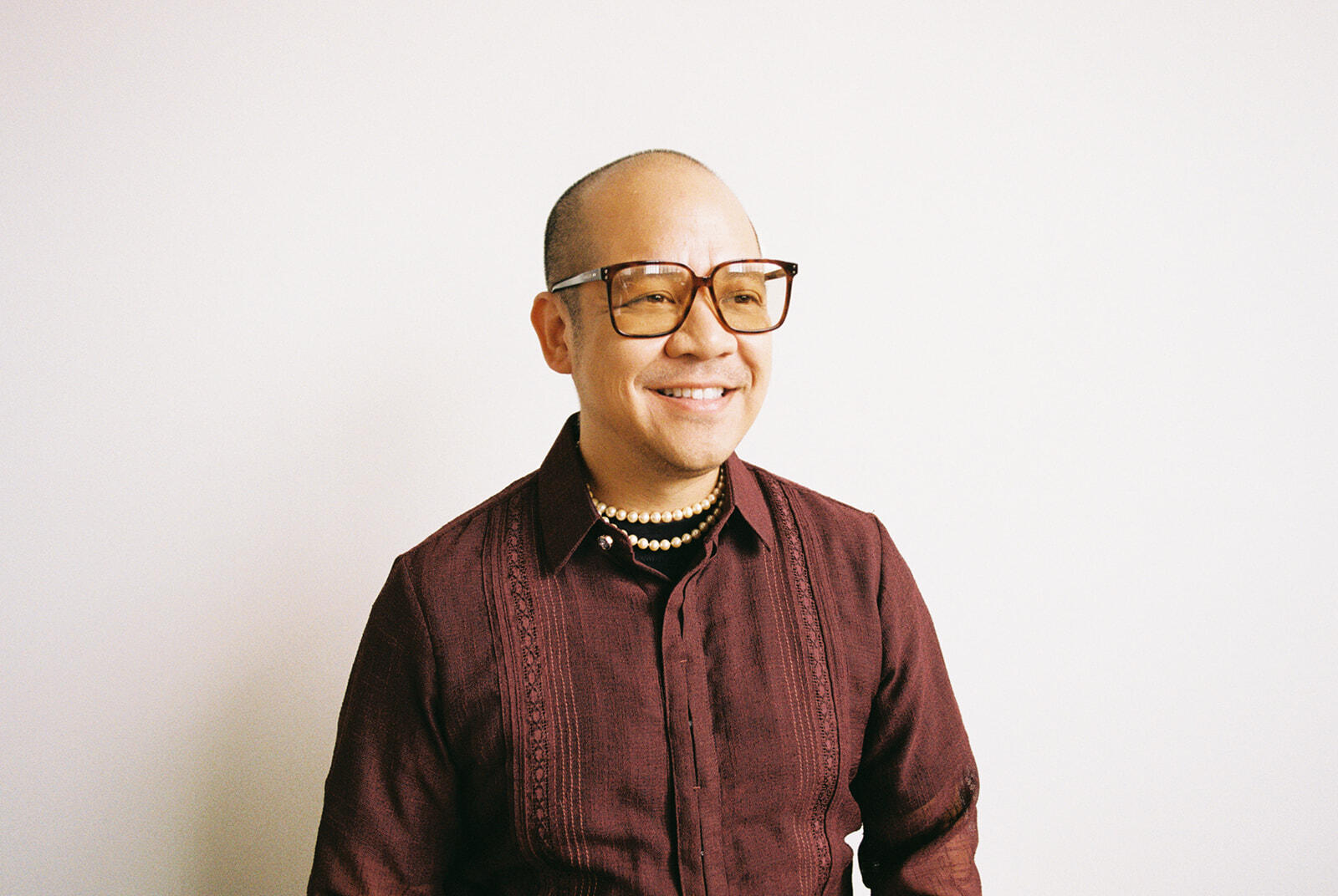
Jeremiah Abraham, the founder and CEO of Tremendous Communications, had bumps in the road in getting to where he is today. Starting his business right before the pandemic, he doubted the path that he created and considered quitting everything that he was doing. But with mentors along his side and his determination to uplift the AAPI community, his company has contributed to protecting and celebrating the Asian American and Pacific Islander communities when they needed it the most.

Working at renowned companies like Disney and Warner Bros., Jeremiah has spent years hustling at the intersection of technology and entertainment. Using his talent in marketing, he has constantly shed light on the AAPI community by promoting films such as Everything Everywhere All At Once and co-producing the Filipino American musical drama film Yellow Rose. He still finds ways to balance work and life by tearing down the systematically ingrained notion of working from 9 to 5.

In this one hour interview, Jeremiah lays out his story of how he entered this industry, experiencing ignorant approaches to different cultures in a white dominant workplace, and his immense passion for AAPI representation.

Blend of Tech and Entertainment

I got my degree in computer engineering from UC Irvine and that was when I needed to decide what I wanted to do in life. I wanted to make a difference in technology back then, so I got that degree. One of my first jobs was in the aerospace industry. I was working there and I realized that I was just really bad at math. I didn’t think I could realistically pursue this as a long-term career. It was one of those moments where you had to have this introspective, realization, or catharsis about what you thought you were going to be and what you want in life.

Then I found this blend of tech and entertainment, which I was always interested in. I ended up being a front-end developer for Disney, which was a nice blend of the programming skills that I learned from school and the entertainment brands that I’ve always admired. Social media was still fairly new at these companies. This was back in 2007, and I would say that the biggest leap from this tech world to this communications world was when I discovered a Master’s program for Digital Social Media and Online Communities at USC. So I worked at Disney full-time, and at night I tried to get my master’s degree. I knew in my head what I wanted to build for myself and that was this intersection.

An intersection of my interest in engineering and social dynamics is interesting because a lot of people didn’t know why I even majored in computer engineering and minored in sociology. Engineers build societies, but you can’t build it without understanding it first. I ended up pursuing this even more and realized that I had a knack for marketing which I ended up pursuing after receiving my degree at USC.

Uplifting the Filipino Community

After I got my master’s degree, I decided to pursue my thesis project as a full-on business venture, which was an online community and editorial group for Filipino Americans called BakitWhy.com. Uplifting the Filipino community has always been a constant in my life. Since high school, I was part of a Filipino club where we celebrated our culture and volunteered for Filipino community organizations. I knew that whatever I did, whether it was engineering or marketing, was in the service of our people.

So I started this website and it was one of the first, if not the first, Filipino American digital destinations for editorial and news content. We were covering events and a new emerging digital identity among the Filipino American community. I called this the golden age of Filipino YouTubers back in 2007. These were the days of HappySlip, NinjaDrops, ndtitanlady, and more. We were able to rally this community both on the digital side and also offline to develop not just a thriving company and brand, but a lifestyle destination that people could relate to. I wanted to create something wonderful for us.

One of the things that I pride Tremendous on is that we’re not just there to engage the AAPI community as a business, but we primarily want to instill genuine progress and impact. We are immersed in our Asian American community. We don’t clock out after a certain time and say “Sorry we’re done today Asians, it’s five o’clock and we’re not going to do anything anymore.” No, this is our life. This is what fulfills us and I think it helps set our campaigns apart. The way we communicate and interact with our clients also influences the strategy we give to them because we’re not just looking at numbers, we’re looking at people. We are all about uplifting authentic Asian American experiences, diasporas, stories and narratives. For us not to be authentic with that presence in our daily lives would be hypocritical.

One of the things that I pride Tremendous on is that we’re not just there to engage the AAPI community as a business, but we primarily want to instill genuine progress and impact

– Jeremiah Abraham

Marketing in a White Dominant Setting

There was one instance where I was the only person of color in the room at a large entertainment company, still very green and inexperienced. I didn’t feel like I had the authority and the voice to chime in and redirect these senior leaders of this space. And they’re sitting around going like, “Hey, it’s February next month. It’s almost Black History Month. What can we do?” And then someone just started listing off all the movies in their catalog that had some resemblance of Black narrative. And I’m just like, “All right, well, that’s very top-level. But what more can we do? Can we bring in more people who actually represent this community in the room and have a conversation about it?” That situation really helped me realize that we needed to be part of that room of decision-makers. Being there that day sparked a drive in me that I’ll never forget.

One of the things that I had issues with while leading the publicity and marketing for Yellow Rose before we got acquired by Sony Pictures, was that people didn’t understand what Filipinos were, that our stories were relatable to all moviegoers, and that we were equally as valuable in Hollywood. People couldn’t wrap their brains around this and asked “Why is a Filipino family living in Texas? Do they really sing country music like that? Will non-Filipinos even relate to this?” They were seeing the Filipino diaspora within one specific lens instead of embracing the spectrum of the Filipino experience. They didn’t realize that there are mechanisms that historically pushed us to these areas that we’re thriving in, to these places where they may not think that there is a large thriving Filipino community. The lead characters are Filipino American, but the story is universal. If you took the lead characters out and made them Latinx or Black, for example, you would still have the same emotion. You’d still have the same humanity. You’d still have the same story. It just so happened that these people are Filipino. This is one of the things that Jo Koy discusses during his  interviews for Easter Sunday. The movie isn’t about Filipinos, it’s a movie about his family and his mom. That’s one of the biggest things I appreciated about this film. It’s a story for everyone.

The first movie that I ever saw when I moved to the United States was Superman 2 with my dad and that’s always ingrained in my head. I was in such awe of this superhero and I’ve always wondered how impactful it would have been if Superman was Filipino. That would have made such a big difference for me growing up. I love Christopher Reeve as Superman, but imagine if it was a Christopher Santos or a Christopher Dela Cruz in that heroic cape instead! Today I’m so happy that our next generation can enjoy seeing themselves as heroes with films like Shang-Chi and people like Iman Vellani as Kamala Kahn making a difference.

I think it’s incredibly important for us to make these decisions on how we are portrayed and valued for ourselves, with representation across every part of the process –  behind the camera, in front of the camera, in business and below the line. We can bring these little nuances of authenticity to these stories that are so important and help shape the next generation of folks who want to do this work. 

They were seeing the Filipino diaspora within one specific lens instead of embracing the spectrum of the Filipino experience. They didn’t realize that there are mechanisms that historically pushed us to these areas that we’re thriving in, to these places where they may not think that there is a large thriving Filipino community.

– Jeremiah Abraham

A Chronicle of Starting a Business Right Before a Pandemic

Starting a business at the cusp of a global pandemic was a big lesson in resilience. There is a lot of strategy, planning, introspection and decisions that need to be made behind the scenes. I had been planning Tremendous for years. I spent so much time creating the structure of it, the business strategy, forecasting our trajectory and all those things that you need to help lay the foundation of a business… then the pandemic hit and I needed to shift very quickly.

Tremendous incorporated in 2019 and started to plant the seeds of studio partnerships. When we were ready to sign a couple of contracts, all the major movie studios suddenly shut down. I had to take a step back and I realized the mission of Tremendous is not rooted in movies and entertainment, but it exists to uplift the visibility of Asian Americans as a whole. We couldn’t work in entertainment at the time but that didn’t stop us from working within the community. That’s when we helped support Racism is a Virus, and co-founded Unapologetically Asian and CollaborAzian. We used our expertise to help uplift Stop AAPI Hate. We were able to leverage our network and our skills and our desire to make change in this very crucial moment of the Asian American community.

There certainly were many surprises along the way. I pitched this movie that was supposed to come out on January 2021. We were ready! We put this beautiful deck together, we brainstormed, we strategized. And then they told me, “Hey, we’re going to make an announcement today that this movie is going to be pushed to January 2022.” I was like, “What am I going to do for a year?” It’s a lot of those things that I learned as an entrepreneur that it doesn’t necessarily go how you forecast, even though you spend so much time strategizing and pulling numbers. And that’s fine because that will push you to be more dynamic as a business and help you imagine new, creative avenues for yourself. But for me, it was a lesson in resilience, being flexible, and not beating yourself up too much for things that are outside of your control.

I had to take a step back and I realized the mission of Tremendous is not rooted in movies and entertainment, but it exists to uplift the visibility of Asian Americans as a whole.

– Jeremiah Abraham

Confinements that Pull us Back

There were many moments where that lingering voice of doubt made me wonder if this was the right path for me. Should I go back to a safe, stable job with benefits and a retirement plan? What if I end up losing all my money in this venture? Is it okay that I decided not to work today?

Even now, I can make my own schedule. I can wake up at noon if I wanted to and keep working until 2:00 am or just take a random afternoon off. And that’s my choice to make. But because I’ve been so conditioned to think that the limits of my brain power need to be confined between nine to five, having this new freedom came with a sense of guilt.

I have such a hard time realizing that you don’t need to operate within those confines to be productive and successful and fulfilled. I just have to keep reminding myself that it’s okay to permit yourself to watch Netflix for an hour at 2:00 pm for you to refocus and recenter. It’s okay that you’re sleeping in until 11:00 am or 12:00 pm today because you worked until 1:00 am last night. I have to keep reminding myself that nobody is telling you what you need to do except for yourself. That’s the life of an entrepreneur and I’m still learning how to adjust to this new level of control, even today.

Shining Leadership Skills for Better Productivity

Throughout the years, I have applied my learning lessons in leadership – especially with how I lead my team and how I conduct business. Sometimes we have many projects to work on at the same time, sometimes we have less. I’ve always told my team, as long as you get your stuff done and you are communicative and responsive, then I’m good with that.

I really encourage them to explore their interests, experience life and bring those experiences back to the company. This helps bring fresh, new ideas during our brainstorms and campaigns. One of the things that I took away from working as a Marketing Director at Condé Nast is that they encouraged you to go travel. Travel changes you, it opens up your mind. It allows you to experience new things so you can bring that experience back into your editorial piece or your marketing strategy.

I’ve never liked the idea that you need to clock in at 9:00 am every day or else you’re considered a bad employee. Just because I’m sitting there physically doesn’t mean I’m mentally there. I’ve never understood that kind of leadership where it’s more important to appease other people and make them feel better about themselves because of your presence. It’s those antiquated expectations and older ways of doing business that I’m constantly reshaping for Tremendous. As long as we get our projects done, we don’t miss meetings, and our clients are happy… who cares if you sleep in an extra hour that day?

Travel changes you, it opens up your mind. It allows you to experience new things so you can bring that experience back into your editorial piece or your marketing strategy.

– Jeremiah Abraham

People that helped along the way

I never had one specific mentor during my career. Instead, I’ve had some amazing senior executives who have taught me different aspects of my leadership skills. One of them taught me negotiation skills, another taught me how to properly communicate my ideas in a meeting, another pushed me to be more assertive with what I need to succeed in a business setting. I’ve really taken these lessons and made them my own.

One of these executives is Terra Potts, who is the Executive Vice President of Worldwide Marketing at Warner Bros. Pictures. We kind of grew up at WB together back in the day. She taught me how to stand up for your worth in situations where people may not immediately see it. I take that into every negotiation that I am part of. Teal Newland, my Senior Vice President at Condé Nast Entertainment helped me hone my creative eye and incorporate different perspectives in my marketing campaigns. Diane Paragas, who is the director of Yellow Rose, mentored me in the filmmaking process. These are just some of the people who empowered me in my journey and I’m happy to give back to others who are working with me today.

Another friend of mine is Jose Antonio Vargas, who is the Founder of Define American. We had many check-ins during the pandemic and I told him straight up once that I was thinking about quitting because I didn’t know if I was doing the right thing. No studios hired me, no movies went out, the movies that were supposed to be in theaters were going out into streaming services. And it was hard for me to see what was coming down the line and the larger picture of it all. He gave me some tough love and said “Jeremiah, you’re building something that doesn’t currently exist. Obviously you’re going to run into these situations where the solution isn’t immediately there because you have to make it up for yourself.” I never thought about it that way. If the path has not always been taken, obviously you have the flexibility and the responsibility to forge a new one to create something that never existed before. That conversation inspired me to realize that I can’t hold myself to the same standard that I had before because I’m creating new standards for myself now. That helped shift my thinking and my perspective about it and, honestly, helped shape the development of Tremendous. I could have easily quit because of the pandemic, but I would have regretted it the rest of my life.

I would encourage people to pursue multiple avenues of mentorship. It was very valuable to me to learn from many very skilled individuals, not just one. And you never know where your new life lesson is going to come from or which experience you’re going to value for years to come. For me, it was the guidance of many people that helped me get to where I am today.

I can’t hold myself to the same standard that I had before because I’m creating new standards for myself now.

– Jeremiah Abraham

How to reach out

I am @jerabraham on Instagram and Twitter, and Tremendous is @tremendous_comm on all those platforms as well.

Interviewed by Tiff Soga
Related Articles

341742102_699791085234766_8776330555256744004_n-jpg

Stories

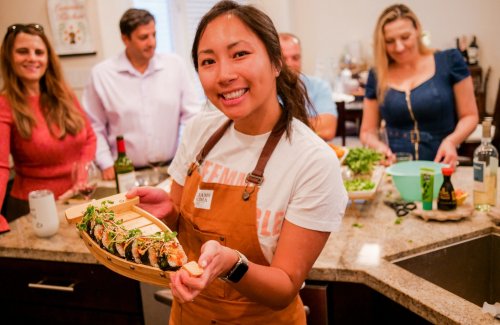
She Started A Sushi Side Hustle After Getting Engaged, Generated $100K One Year Later For Her Wedding

Whether you’re planning a wedding, considering starting a side hustle, or simply looking for some inspiration to pursue your passions, this story is one you won’t want to miss.

Weddings are supposed to be one of the most memorable moments in a couple’s life, but the reality is that the cost of making that dream a reality can be overwhelming, especially for Asian weddings – with the elaborate customs and traditions, and the pressure of inviting every distant relative, including aunts you may not even know.

This is why last year, Lavinia Doan (Bao Nhu) decided to start LAV SUSHI, shortly after getting engaged. She wasn’t sure how to come up with funds for her wedding, and as a daughter of refugees, she had to start from scratch.

In a year of engagement, Lav achieved a milestone: she was able to save up $100K from this side hustle that she used to pay for her wedding. From being a one-woman team, her husband has now joined her in her sushi journey.

FOR THE LAV OF SUSHI

Lav is originally from DC, but she moved to Texas about 5 years ago for a job in oil and gas. She was supposed to work off-shore as an engineer in South America, but due to COVID, she was sent to various places like Midland, Carlsbad, and West Virginia. Although not the most exciting places, she tried to make the most of it by expensing meals, specifically sushi, which she loved. However, she found that the sushi in those places was terrible, so she started making her own.

Lav enjoyed making sushi, but there was a lot of prep work involved, so she started inviting friends over for sushi-making parties to share her passion with them. For her, having friends and family over for a meal was a way to show that she cared for them. Eventually, she left her job in oil and gas and started working in tech, where she was fully remote. Missing the human interaction from her previous job, she began seeking out ways to meet new people.

Being an extroverted person, Lav decided to list sushi classes on Airbnb Experiences as a way to meet people and share her passion with them. What started as a passion project soon turned into a side hustle when she got engaged and needed to find a way to pay for her wedding.

They started with sushi classes which are still their bread and butter, but have since expanded into catering, and homakases (omakase at home).

CHALLENGES OF STARTING HER BUSINESS

It was only two months after the first few classes when Lav got engaged.

Lav and her partner, Dan, started the wedding planning process and quickly realized that the cost of their dream wedding was almost triple what they had planned for. Post-COVID backups and inflation made for an expensive wedding. She knew that they had to either sacrifice their vision for the wedding or find another way to save up.

For them, the wedding was more than just a party to celebrate their marriage; it was an opportunity to give back to their friends, family, and colleagues and treat them to a fun weekend. They felt positively impacted by the people around them and wanted to return the favor at their wedding.

Starting her own business posed the biggest challenge for Lav as she struggled to manage and prioritize her time. In addition to working full time and planning their wedding in the US and Vietnam, she also wanted to maintain a semi-normal social life. She enjoyed spending time with friends, family, her partner, and even alone time. The business was a one-woman show for a long time until she realized that it wasn’t sustainable.

“I would joke with my partner that we would be able to afford the wedding we wanted but wouldn’t have anyone to invite because I hadn’t been able to find time to spend time with friends and colleagues, even my dog and partner were feeling the neglect!” Lav shared. She sacrificed sleep, workouts, and nutrition.

Many nights, after a long day of work and sushi-making, she questioned if it would all be worth it.

EFFECTIVE TIME MANAGEMENT WHILE RUNNING A BUSINESS AND PLANNING A WEDDING

In terms of time management, Lav admits that she is still learning how to do it well.

“I am a normal person and sometimes find myself spending too much time on my phone mindlessly scrolling, forgetting tasks that need to be done, and inefficiently bouncing from one task to the other. But I think it’s okay!” Lav said, and shared a few strategies that have helped her become more productive:

  • Waking up early – She wakes up early every morning at 6 am to work out at a pilates studio that charges her if she misses a class. This incentivizes her to start the day early and avoid the temptation to stay in bed and scroll through her phone.
  • Blocking off hours – She blocks off hours in her schedule to focus on specific tasks, which helps her prioritize and manage her time more effectively.
  • Outsourcing – She has learned to outsource tasks that don’t bring her joy or are too time-consuming. This includes hiring people to help with her sushi business and outsourcing tasks in her personal life.
  • Knowing your worth and what your time is worth – This helps her weed out opportunities that aren’t worth pursuing from a time, profitability, and brand standpoint.
  • Never compromising the mission – Her mission is to bring the joy of sushi into people’s homes and educate them along the way. She refuses to sacrifice the quality of ingredients or cut costs to increase profitability because the joy and fulfillment of bringing this experience to people’s homes are more important to her than money.

MEMORABLE MOMENTS AND EXPERIENCES

Most of Lav’s friends know that she really likes a challenge, so much so that she feels like being purposefully unprepared presents its own challenge.

Lav signed up for the Houston Marathon, her second marathon ever at that point in time, which she had not trained at all for. She also accidentally overbooked a public sushi class for that same evening in her home. It was her biggest class so far.

So she ran the Houston Marathon, walked to a bar to get some drinks with friends, and then went home to start prepping for her sushi class. LAV SUSHI was still very young at this point, so procedures weren’t very optimized at that point. “The class went well, but there were definitely moments where I thought I would drop the rice pot because my legs were quivering, and I could definitely tell that some guests were uncomfortable by how full the class was. Let me tell you, I never overbooked a class again,” she shared.

That’s not the end of it. After class, Lav cleaned up and started packing for a 2-month ski trip in Colorado. She couldn’t remember if she slept or not, but she did manage to catch her 5 am redeye the following morning.

“Sometimes I think about that day, and get tired just thinking about it. But I really did show myself what I can get done in a day. There are countless amazing experiences I have had with clients that I could write a novel. I have made so many friends and connections through the business, and am thankful to have gotten to know these people!” she adds.

EXCITING NEWS FOR LAV SUSHI

Despite all the challenges that Lav faced in running her business, she was able to generate $100K in one year for her wedding.

Lav and Dan got married just a month ago and they are now taking a break from their Houston-based business to focus on personal matters and other projects. They will soon embark on a six-week expedition to Asia to celebrate their second wedding and honeymoon adventure.

Their dedicated team will be taking care of LAV SUSHI in their absence, ensuring the city continues to enjoy the sushi experiences they offer.

In the meantime, they have some exciting news to share:

“We have been working on launching LAV SUSHI in Atlanta and it is fully operating and ramping up. We would LOVE some AHN support in ATL!”

WHAT MAKES LAV SUSHI UNIQUE AND WELL-LOVED

Lav thinks that the reason why clients of 2000+ love LAV SUSHI could be due to the personalized experience that is tailored to their taste preferences, with each menu being curated to suit their needs.

LAV SUSHI also offers unique catering menus that include a live chef and unlimited sushi, which always brings a “wow” factor to the guests. “People love that they can watch the chef’s roll the sushi right in front of them, and that they can make any requests on demand,” Lav said.

Another highlight of LAV SUSHI is their omakase concept, where they curate a surprise menu within the clients’ budget, which they can enjoy in the comforts of their own home.

CONNECT WITH LAV

Instagram: @lavsushi

Facebook: @lavsushi

Tiktok: @lavsushimaking

kelly-bit-sublima-jewelry-headshot-png

Stories

This Former Journalist Pursued Her Passion of Creating Wearable Art Through SUBLIMA Jewelry

In a world that often values practicality over creativity, it can be challenging to pursue our passions and follow our hearts. But for Kelly Bit, the founder of SUBLIMA, it was a calling that she couldn’t ignore.

After years of working as a financial news journalist, Kelly realized that she missed the creative arts as a major part of her life. She started spending her free time making jewelry, and the intentional lifestyle switch brought her a lot of fulfillment.

SUBLIMA is a sustainable, handmade jewelry brand, referencing subliminal messages that produce hidden feelings in our everyday lives. Art imitating life.

In this article, we will explore Kelly’s journey of following her passions, the artistry and intentionality behind her jewelry, and how she is bringing her love of art and design to the world through SUBLIMA.

HOW IT ALL STARTED

I’ve always loved crafting. I’m an only child, and when I was very young, I spent a lot of my time drawing or creating cardboard models of things that I found delightful. I’ve always been captivated by beautiful forms and well-loved objects in our every day and creating artful homages to them.

During my career as a journalist, I missed crafting and the creative arts, so I started spending my free time making—drawing, painting, sewing, and creating jewelry. I wanted to invest in one of those hobbies in a more disciplined way, and I saw jewelry as having commercial prospects. I enrolled in metal smithing and wax carving classes after work, and that’s what gave me the skills and confidence to start a jewelry brand.

THE CREATIVE PROCESS

I love commemorating ordinary moments of delight by capturing something of their essence through elevated and artful jewelry that I make by hand.

I have many delightful memories centered around food and the people I enjoy it with, so that’s one reason why many of the pieces are Asian food inspired. I also tend to notice beautiful and aesthetic aspects of food all the time—like the way milk tea splashes with movement, or the mesmerizing repeating folds of dumplings—so those types of details make me want to highlight how interesting they look through an unexpected art medium.

The way that I make my pieces is by carving wax by hand to create wax prototypes. The prototypes are then molded, and from the molds, the pieces are cast in recycled brass or sterling silver and polished and assembled by hand.

HER APPROACH TO SUSTAINABILITY IN MAKING JEWELRY

The casting company I work with, which is based in midtown Manhattan and family-run, uses a New York-based company called United Precious Metals to recycle their metal and for purchasing refined recycled metal to use in new castings.

In choosing to partner with my casting company, their ability to source recycled metals was important, and I love how I’ve been able to offer sustainable jewelry since day one. It’s important to me because using recycled metals compared to newly mined metals reduces greenhouse gas emissions and conserves natural resources. And I’m thrilled with the quality of the pieces—the recycled brass and sterling silver are both beautiful bright colors, and I provide a polishing cloth to keep the pieces shiny forever since none of the casted pieces are plated.

WHAT SHE HOPES TO COMMUNICATE WITH HER DESIGNS

I love seeing how different people style the jewelry and how they implement their vision of themselves—what they want to project into the world through their self-expression—using the jewelry as part of their toolkit.

My general hope is that the pieces can be marveled at as wearable works of art and that conceptually they serve as a reminder to see an elevated beauty in everyday moments. For some styles, like those based on Asian food or other cultural motifs, I’d love for people to wear them with a sense of pride or appreciation of Asian culture.

WHAT SETS SUBLIMA APART FROM OTHER BRANDS

Aesthetically, I aim to make jewelry that looks unlike anything else in the market, at once striking and timeless, with quality that lasts a lifetime. My designs are unusual and eye-catching, somewhat abstract, and can be styled as edgy or classic. Executing these concepts while drawing inspiration from my Chinese American heritage and Asian culture helps set SUBLIMA even further apart from the rest.

The rise in anti-Asian hate after the pandemic made me turn specifically to Asian culinary delicacies as a source of inspiration, to create symbols of cultural pride by elevating the beauty of Asian food through the art of jewelry in a highbrow way, and it’s not something that I’ve seen done by other artists.

Since the pandemic, and even before, there’s been a growing and palpable demand for Asian products and stories. There’s an appetite for consumer brands to create products that help reinforce the emotional connection to identity and culture. The way that I’ve been doing that with SUBLIMA is a two-pronged approach: first through visual representation, and more meaningfully, I’ve pursued partnerships with local nonprofits serving the Asian American and Chinatown communities here in New York. Since 2020, SUBLIMA has donated $65,000 to nonprofits supporting NYC’s Chinatowns, after-school programming, affordable housing, and food security.

KELLY’S VISION FOR SUBLIMA

My long-term vision is to be the premiere jewelry brand for Asians and Asian Americans and to have the jewelry represent not only high art but humanism and community impact.

One of my biggest desires and goals is for my work to gain more exposure so that its inspiration and aesthetic beauty reach more people. That means collaborating with more organizations and people who share SUBLIMA’s values, being part of events where I can meet people and build connections, getting my jewelry into more stores, and working with more cultural gatekeepers, such as editors or stylists, to spread the word.

CONNECT WITH KELLY

Website: sublimajewelry.com

Facebook: @sublimajewelry

Instagram: @sublimajewelry

Tiktok: @sublimajewelry

320723654_842347016993817_2387408927084427642_n-jpg

Stories

A Life-Changing Decision to Leave Home in Vietnam 8 Years Ago Found Success as an Amazon FBA Seller

Nhut Cao is living proof that with consistency and the right plan, you will get there.

Despite facing numerous challenges while chasing his true calling, Nhut “Justin” Cao refused to be defeated by setbacks and never lost sight of his goals. His story is not simply about winning, but also about not letting the failures hold him back. You may want to grind harder after reading about his life. 

In 2014, Nhut Cao made a life-changing decision to leave his home in Vietnam and move to the United States. Despite being deeply familiar with and accustomed to his old life, he made the difficult decision to leave everything behind and start a brand new life from scratch. He got into a decent college, and earned scholarships, hoping to follow the traditional American dream of getting a stable 9-5 job and settling down. But that kind of path didn’t make him happy.

So he dropped out of school and decided to pursue entrepreneurship full-time. He tried many different businesses – from garage sale hunts, reselling and flipping items, tutoring, nail tech, and selling goods from America to Vietnam.

One day, he decided to take a leap of faith and entered into Amazon FBA. Despite all the negativities circulating on the internet about Amazon FBA that time and his fear of failing, he still risked everything to go for it.

Follow along as we delve into Nhut Cao’s journey towards pursuing his dreams.

I SAW MANY PEOPLE BUILDING AN EMPIRE ONLINE BACK THEN WITH A HIGH 5 TO 6 FIGURES MONTHLY — AM I BEING TOO LATE TO THE PARTY?

I learned about Amazon FBA through a stranger in an online forum, the BrickSeek Deals Group for resellers. I always wondered how he could make money flow into his wallet so easily.

It didn’t take me long before I searched “How to sell on Amazon” on Google and Instagram. I saw many people building an empire online back then with a high 5 to 6 figures monthly. The first thing that came to my mind at that time was “Am I being too late to the party?”

I fell deeper into the rabbit hole and found myself searching Youtube on how to get started. But the more I looked, the more I stumbled upon negative opinions, including:

“Amazon is overly saturated,”

“It’s impossible to make money with Amazon FBA in 2015”

“Don’t try or you’ll dive straight into failure!”

As a young entrepreneur, I was too scared to fail at that time, so I blindly believed them.

I delayed my plan until two years later, after the burnout of being constantly on-the-run sourcing for products through garage sales, going to Walmart at 1 am trying to snatch some discounted laptop BrickSeek deals to only make an insignificant amount of profit, I was mentally and physically exhausted from the reseller hustle and being the one-man team from sourcing to listing, fulfilling orders to customer services. I escaped the rat race with the hope of earning my time back for my family and loved ones, but this life is draining me even more. 

I finally gave in to the idea of risking it all to Amazon FBA. I remembered telling told myself:

“After all, what do I have left to lose as an immigrant? Nothing.”

“I don’t want to keep trading my time for money as a reseller.”

“I don’t want to continue being a one-man team doing all the work myself. If I ever fail, I still have time to make it back with more experience rather than regret not doing it”

Then I scooped up all of my savings and liquidated everything I had to start my Amazon FBA. And the rest was history.  

BUT YOU KNOW WHAT IS THE BEAUTIFUL THING ABOUT BEING AN IMMIGRANT? WE DON’T GIVE UP EASILY.

It was not as easy and beautiful as many other Amazon gurus portrayed it to be on social media. I was constantly making a bunch of mistakes as a new seller and sometimes fell into the trap of self-doubting for not being able to make it drift in.

I learned everything I could from Youtube. I bought courses. I signed up for classes. But after all the hard work, there was still no sign of payoff. But you know what is the beautiful thing about being an immigrant? We don’t give up easily.

I paused to rethink all of my problems and tried to seek credible information from books and the internet to solve them. Then it finally hit home to me that maybe I was too invested in the ‘how’ when instead I could start with the ‘who’.

So I started to widen my circle, find more people who were truly making money on Amazon FBA and work for them for free. In exchange, I could build a long-term, win-win relationship with them. I could ask them for help and be always surrounded by experienced sellers.

But certainly, success won’t come overnight. There were days, weeks, and even months of not seeing any progress or result. I couldn’t find a product. I couldn’t make a sale. Being overwhelmed with bad reviews no matter how much I tried to improve the quality.

I applied many methods to overcome the challenges, such as celebrating even the smallest wins every day; or breaking my biggest goal into smaller, more manageable ones. However, the principle that helped me the most during this trying time was the 1% each day approach. 

Even on the most exhausting days, I am committed to spending at least 15 minutes on my business. By consistently dedicating time to my store, I developed a habit of working towards my goals, which can help me stay motivated and focused even during challenging times. And as I made progress, I found that my motivation and momentum increased, making it easier to stay on track and achieve even more.

Finally, in 2019, I was able to bring in close to $500k in revenues by 2019, thankful that I didn’t give up on myself.

STRATEGIES TO STAY COMPETITIVE IN THE CONSTANTLY EVOLVING AMAZON, ACCORDING TO NHUT

  • Put data over emotions: When making business decisions, it’s important to rely on data and facts rather than emotions or assumptions. 
  • Surround yourself with experienced sellers: Building a network of experienced sellers can provide you with valuable insights and knowledge that can help you make informed decisions and stay ahead of the competition.
  • Enhance your social presence: Building a strong social identity can help you connect with your customers, build brand awareness, and enhance trust. 
  • Stay away from selling me-too products: Selling unique or innovative products can help you stand out in the crowded Amazon marketplace. Focus on offering something new and different that solves a problem or fulfills a need for your customers.
  • Do not rush into the game without researching: Never think that you have known it all. There’s always something to learn, especially in the ever-changing environment of e-commerce like Amazon.

MAKING MONEY IS NO LONGER MY PRIORITY

As a seasoned Amazon FBA seller, making money is no longer my priority. Instead, I’m driven to give back to my community. As the saying goes, we attract what we want, and I have been fortunate enough to connect with like-minded individuals who share my passion for helping others.

My team in Vietnam connected me with local authorities to aid those in need and support me in every step of this ‘paying it forward’ journey. I am also proud to say that my mentees have used the financial power they earned by learning from my secrets, to donate to many less fortunate lives. Isn’t it incredible how we can use our skills and resources to make a positive impact on the world around us? 

TAKE A CHANCE

If I could go back in time, I would tell my younger self to trust in his abilities more. When I was starting, I got scared by all the negative things people were saying about Amazon and ran away in fear of failure. But once I learned to trust in myself, even when things were tough and I wasn’t making money right away, I was able to stay focused and keep pushing forward.

And that’s also what I want to say to anyone who’s still scared to take a chance. The hardest thing to overcome usually isn’t a lack of money or support from others – it’s the doubts and fears in your head. But you have to step outside of your comfort zone to make progress and grow.

So take that chance – believe in yourself, and remember, life starts outside your comfort zone!

CONNECT WITH NHUT

Find more about Nhut’s story at:

Instagram: @justinthehuncho @nhutcao

Website: amzshifu.com

V2 2023 AHN News & Stories Cards (8)-png

News

How the Covid-19 Pandemic Impacts AAPI Women Entrepreneurs

The ongoing Covid-19 pandemic has increased the obstacles facing Asian American, Native Hawaiian, and Pacific Islander (AAPI) women-owned enterprises.

Despite being a fast-growing group of business owners, AAPI women confront structural challenges and have limited access to capital, which is made worse by the pandemic’s effects on sectors like dining, retail, and personal care services. According to Hello Alice, their access to financial resources is further hampered by language problems and a lack of banking connections.

AAPI women have borne the harshest economic consequences of the Covid-19 crisis, including business closures, job losses, and increased caregiving responsibilities. However, data on their experiences remains limited and fragmented. AAPI Women’s Equal Pay Day highlights the persistent wage gap, with AAPI women earning $0.92 for every dollar earned by white men, according to the National Women’s Law Center. This wage gap, if unaddressed, could result in AAPI women losing around $267,000 over a 40-year career.

AAPI women also face significant challenges in accessing grants, loans, and capital, despite their entrepreneurial potential. Only a small fraction of federal funding provided through programs like the Paycheck Protection Program reaches AAPI-owned businesses.

FoundHer, a small business accelerator founded by Gloria Lau and Bella Hughes, aims to bridge this funding gap. It focuses on Native Hawaiian, Pacific Islander, and Asian women entrepreneurs in Hawaii, providing non-dilutive grant funds and resources to support their businesses.

Historical patterns indicate that women of color, including AAPI women, are often the first to feel the negative effects of economic downturns and the last to recover, but despite all the obstacles, AAPI women entrepreneurs exhibit resilience and resourcefulness.