News

September 11, 2024

SHARE:

For years, Asian Americans have been documented as caricatures through the “white gaze.” They’re often depicted as emasculating tech geeks who are socially awkward, and lacking in romantic appeal, and, if they happen to like someone, they’ll get rejected quicker than they can solve 1+1. Just take a look at Long Duk Dong from Sixteen Candles (1984).

Long Duk Dong from the 1984 film Sixteen Candles, widely criticized for perpetuating negative Asian stereotypes, as his portrayal relies heavily on exaggerated accents and mannerisms (Image Source: Universal Pictures).

That seeming lack of nuanced portrayals was increasingly a benchmark for every Asian male cast- side characters that add no value but purely humor for the story. However, the rise of Crazy Rich Asians may not be the perfect stereotype-breaker; it definitely made a change in bringing Asian males to the forefront of romance.

According to a new study from the University of Southern California’s Annenberg Inclusion Initiative, there has been a considerable increase in AAPI characters in films, rising from 3.4% to 15.9% between 2007 and 2022. You can see this specific buzz in global blockbusters like Parasite and Everything Everywhere All at Once, which, along with the boom of K-pop, Squid Game, anime, and Indian cinema, contribute to the bursting allure of Asian entertainment. 

Simu Liu stars as the title character in Shang-Chi and the Legend of the Ten Rings (Image Source: Jasin Boland/Marvel Studios).

This was one of the few times Hollywood truly let Asians showcase their talent. Their roles are more diverse, multidimensional, and resonant—sometimes even diaristic—as they gradually gain more control over their narratives. 

Joel Kim Booster’s 2022 film Fire Island, which he both wrote and starred in, was a self-affirming act of a gay Asian American man, grounded in personal experience and insecurities. Alongside Booster, actors like Randall Park, Kumail Nanjiani, and Simu Liu have taken on roles that challenge traditional stereotypes, playing superheroes and romantic leads that are not always ethnically centric. Sean Wang’s 2024 critically-acclaimed movie Dìdi also looks into the complex growing-up experience of an Asian American man, carving out new territories in the monotonous Asian-led narratives.

Fire Island (2022) is a rom-com directed by Andrew Ahn, starring Joel Kim Booster, Bowen Yang, and Margaret Cho. It follows a group of gay friends on vacation, exploring romance and class struggles (Image Source: Searchlight Pictures).

Yet in spite, representation remains uneven, with many characters still marginalized. The road to diverse and well-portrayed depictions of Asian American men continues, hopefully with more individuals and organizations to create and support the community. 

With the rise of streaming platforms like Netflix, more eyes are on the global moviescape, particularly from Asian audiences, the fastest-growing population in the world. While well-rounded representation still has a long way to go, the current strides for AAPI talents are promising and appealing.

Related Articles

Image Source: Social Bella

News

A Millennial’s Gamble Pays Off As Her New Beauty Product Line Has Just Raised Over $225M

When the pandemic struck, all Chrisanti Indiana wanted to do was help her family and create jobs in her community.

Nonetheless, as the pandemic worsened, each day appeared to be a gamble. She gambled on her dreams, created her employment opportunity, and risked everything for her family because she had no safety or security options.

The Indonesian co-founder, and chief marketing officer of Social Bella, surprised everyone by taking her successful online store offline. In 2019, her online beauty and personal care store, Sociolla, already had two physical locations in Indonesia. It currently operates 47 outlets in Indonesia and 16 in Vietnam, making its earnings multiplied by ten by the end of 2021.

It started after Indiana had finished her studies in Australia in 2015 when she moved back to Jakarta, where she conceived the idea for Sociolla.

Chrisanti found that Australia was a great place to stock up on her favorite cosmetics because of the abundance of international brands. There couldn’t have been a bigger contrast with Indonesia.

With a combined $13,000, Indiana, her brother, and a close friend founded Social Bella to provide customers with access to legitimate goods and services.

“Since we started, we ensure that we only work with authorized distributors or brand owners,” Indiana said. 

The three founders of Sociolla had bigger plans than just building an online store. They have expanded beyond offline stores to become a global beauty and personal care product distributor. In Indonesia, they also became an associate partner for numerous international brands.

‘We want to ensure that we are scaling up and reaching more and more consumers. If Social Bella becomes a unicorn, it’s a bonus.” – Chrisanti Indiana shared with CNBC.

Image Source: DoorDash

Blogs, Development, Ideas, Stories

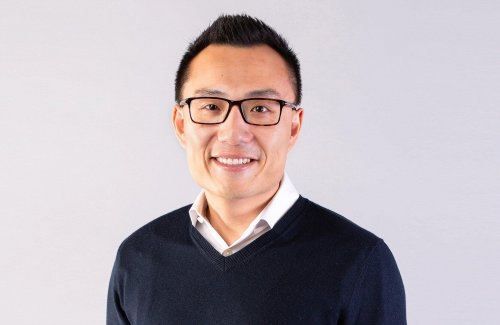
What Separates DoorDash Founder Tony Xu From The Rest Of The Tech Billionaire

Learn more about Tony Xu, the co-founder, and CEO of DoorDash, the most extensive service in the US for delivering food. Xu is a Chinese-American tech billionaire who has worked for eBay and PayPal in the past, but he attributes his current success to the experience he gained working as a dishwasher.

DoorDash went public in December 2020 after being co-founded in 2012 by a group of excellent Stanford University students, including Xu. Today, the platform has more than 6,000 employees and more than half the market share in the food ordering and delivery industry. Company earnings for 2021 were reported to be over US$4.8 billion.

Xu shared that he once felt discriminated against when surrounded by other entrepreneurs who were different from him. As the sole Asian-American cofounder of the company, he proudly and responsibly accepted the challenge. He is aware that there are not nearly as many Asian-American CEOs or other types of founders, so he remains a minority throughout this setting. He believes it serves as a gentle reminder always to recognize that and to maintain a lowly but humble attitude.

Not only has Xu found success with DoorDash, but he also serves on the board of directors for Meta, the parent company of Facebook, and was named to Fortune’s 40. He is also a huge NBA fan, leading to DoorDash becoming the league’s first official food delivery partner.

As of 2022, Xu’s net worth was estimated at US$1.3 billion, placing him at #2,190 on Forbes’ list of billionaires.

Image Source: Paulo Chun / NBC News

Stories

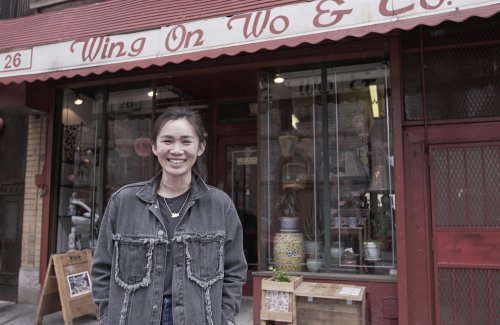
Fifth-generation Entrepreneur Reimagines NYC Chinatown Landmark While Preserving Cultural Traditions

Even though times are tough and New York’s Chinatown is on the verge of dying, there is one place where things appear to be mostly the same as they have always been.

Since Mei Lum started volunteering as a child, Wing on Wo & Co has been run by her family. Brilliant and creative heritage enterprises have withstood generations of economic ups and downs. Mei represents her family’s legacy and New Yorkers and future generations of Chinatown residents.

The 32-year-old fifth-generation owner has bigger plans. Mei revived Wing on Wo’s late-19th-century ambiance. The store was a meeting place, credit union, and informal post office for low-income Chinese employees during the Chinese Exclusion Act.

She wants to run things because she has always wanted to expand the store’s conceptual boundaries. “A business doesn’t have to be so economically driven. There can still be genuine connections, which sustain a community,” she told The Guardian.

Wing on Wo is still primarily run by the original family for over a century. For 30 years, Mei’s father Gary has chatted with clients at the counter. Lorraine, her mother, handles the website and order processing. Her 105-year-old grandmother, Nancy, promotes the store’s hand-painted wine cups, fish-shaped glazed vases, and elegant dinner plates on Instagram.

In 2016, her grandmother intended to sell the family-owned porcelain specialty shop, which was worth close to $10 million. Mei took over the business to preserve it and create a community hub. She was planning to study international relations at Columbia University, but she now wants to run the family business. She wanted the store to be a hub for activists and artists to fight gentrification and displacement.

As a result of the pandemic, Mei decided to focus her efforts on online sales, digital advertising, and social media. To ensure that the business is preserving tradition and shaping the future of Chinatown, she has added several new initiatives, such as youth programs, an artist residency, and a ceramicist fair.

Image Source: Korina Sanchez Youtube Channel

Stories

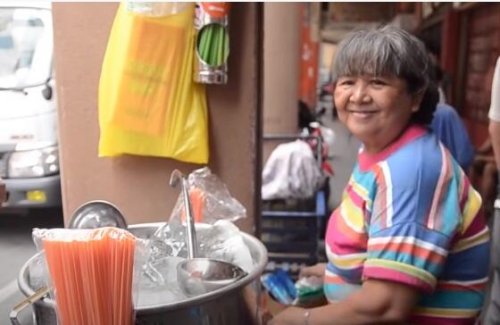
This Street Vendor Selling “Magic Water” Proves That No One Is Too Small To Be Successful

Priscilla Cornejo, better known as Nanay Bebe to the local people (“Nanay” means mother in Filipino), has been selling her magical water to the community since 1980 in the Philippines. She is convinced that her drink’s distinctive flavor is why so many customers seek out her business.

Magic Water, or known to be its local term “Samalamig” is also recognized as a leading refreshing drink in the Philippines. Despite coming from modest means, Nanay Bebe makes it her mission each day to quench the thirst of those hungry for success.

She explained that her drink is not just ordinary cold water. It has clear agar, sugar, mineral water, and tons of ice. When the agar hits the ice, it tends to melt, creating the ‘magic water,’ that will surely quench your thirst. 

Her business may not look like much compared to big companies or restaurants, as she only sells on the street, but it has tremendous growth potential. Nanay Bebe sells her magic water for PHP5 or PHP10 ($0.08 or $0.17) in small plastic bags, cups or some customers even bring their own Aquaflask or tumblers. From what she described, weekly earnings for her business could reach PHP35,000 ($600).

An endless line of curious onlookers from the street awaits to sample Nanay Bebe’s magic water. Many online publications, including those dedicated to food and social news, have featured it. Even today, some people attempt to duplicate Nanay Bebe’s traditional drink formula.