News

January 24, 2025

SHARE:

Japan has an old proverb: “The nail that sticks up gets hammered down.” 

While in China, there is a saying, “The higher the tree, the stronger the wind.”

In a critical lens, both idioms illustrate harmony and unity – a vital essence of Asian culture and heritage. Nevertheless, the proverbs also shed light on a contrasting school of thought: conformity and crab mentality. 

Crab mentality refers to the situation one can explore by placing a crab or a collective of crabs in a bucket. A lone crab can inevitably crawl out of the bucket, however, a peculiar scenario would arise if one situates a group of crabs in a bucket. As a crab tries to crawl out, the other crabs will pull it back down. If it tries again, the others will rip its claws off to ensure it can never do so again. Ultimately, no crabs can go anywhere besides the stew pot you are brewing. 

Crab in a bucket scenario (Image source: Microsoft Designer)

Crab in a bucket scenario (Image source: Microsoft Designer)

It is naivety to assume human beings are a unified collective group. History, wars, and jealous conflicts are testaments to human being’s selfishness. Hence, it is arguable that we are inclined to place ourselves above others, even if it means at the expense of our peers. Despite being a precarious thought, this insight opens new dimensions to understanding crab mentality in the human context. 

“Remember your cousin Timmy in China? He has 15 years of experience. He’s nine!” 

Steven He’s dad (played by Steven He) exclaimed.

Terms like “Asian-level difficulty,” “Tiger Moms,” and “Asian parents” have become widely recognized through memes, movies, and other mainstream media, serving as a lens for global audiences to understand and appreciate aspects of Asian culture. Yet, one community still paints a negative view of the Asian community, even discriminating against its individuals – and the answer is ironically the Asian community itself.

The purpose of this work is not to discriminate or criticize any peculiar group but to foster intellectual discourse and encourage reflection on societal dynamics and individual perspectives. The chosen quote embodies this intention, capturing four intertwined facets.

Understanding the concept of face is crucial when discussing Asian culture and heritage. Face serves as a societal construct that governs social interactions and determines one’s standing within a social hierarchy. It is a dynamic measure that can be given, earned, taken away, or lost, often extending beyond the individual to include family and friends. For those unfamiliar with this concept, here’s a simplified explanation:

  • A wife who earns a promotion gains face for herself in front of her boss, while also bringing face to her husband and parents through her achievement. 
  • Conversely, a student who performs poorly on an exam loses face among peers, and their parents, in turn, lose face within their social and familial circles.

Despite being debatable, visualizing face as a form of currency provides an interesting lens through which to examine crab mentality in Asian communities. Much like any valuable asset, currency must be earned, safeguarded, and strategically utilized. Losses, even those meant for long-term gains, are approached with caution and calculation. Consequently, individuals strive to enhance their reputation while using criticism to diminish the face of others.

The concept of face is deeply tied to education and parenting, playing a role in fostering crab mentality. Asian children are often raised to prioritize self-achievement above personal aspirations, adhering to predetermined paths for the “greater good” of the family. This emphasis on collective reputation often comes at the cost of individual dreams, reinforcing a mindset where personal success is weighed against familial expectations.

Parenting can affect mindsets, a reflection on Tiger Moms (Image source: Mims On The Move)

Parenting can affect mindsets, a reflection on Tiger Moms (Image source: Mims On The Move)

Indeed this is a generalized claim that leaves certain minorities for speculation, but the interplay between face and sacrifice is crucial in understanding the environment Asian children grow up. Literary works like Truyện Kiều (Tales of Kieu), a renowned Vietnamese poem, highlight traditional ideals through terms like cầm-kỳ-thi-họa—the four virtues defining a successful woman. Similarly, the stereotype of Asian children being expected to become doctors or lawyers has become a familiar cultural reference in contemporary discourse.

No parents want their children to grow up as bad people. Hence, it would be injudicious to blame parents and the system for a negative societal mentality. Yet, there are certain repercussions to sacrificing a child’s dream in return for a destined path to greatness. This leads to the third facet of crab mentality in Asian communities: A ramification for every child following the same success path means comparison and competition. 

Let’s revisit Steven He’s joke: Timmy is used as a benchmark for comparison. The only way for Steven to save face is by climbing the same ladder and offering Timmy a similar spiteful insult. This vicious cycle of comparison fuels crab mentality within families, peers, and the broader community. True to reality, Asian students often spend countless hours in extra classes and clubs to meet rigorous expectations. Tiger moms push their children to excel in every class as if their lives depend on it. There is no middle ground—you’re either a winner or a failure.

This brings us to the final facet: the absence of praise and apologies. Ironically, according to BBC and Vocal Media, Asia is home to some of the politest people in the world, with countries like Japan and Thailand leading the way. Despite this, hierarchy plays a pivotal role in relationship dynamics. To save face, many Asian parents rarely offer praise to their children. Astonishingly, when it comes to apologies, parents often go to great lengths to defend their actions rather than acknowledge their mistakes. 

A similar response can be seen in Asian workplaces, where higher-ups are more inclined to criticize and are far out of reach from their team members. Individuals will praise their peers and colleagues in hopes of receiving similar treatment instead of actual commemoration. Workers often segregate themselves into teams of interest to promote one another instead of collaborating as a group. These groups create outcasts who, despite their talents, are looked down upon and have their accomplishments taken or snuffed out by negative criticisms. This reluctance to give praise and apologize reinforces a mindset of self-achievement above all else. At first glance, mentality such as these are not wrong, but they leave cracks for detrimental thoughts of arrogance and selfishness – ultimately sustaining the crab mentality.

While this article explores the crab mentality within the Asian community, it is important to recognize that this negative mindset is not exclusive to any one group—it exists everywhere. The concepts of face, self-achievement, competitiveness, community, and sacrifice are what make Asian heritage unique and beautiful. This work argues that these cultural elements are not the root cause of the crab mentality, but rather, insights into why such a mindset may emerge. 
Related Articles

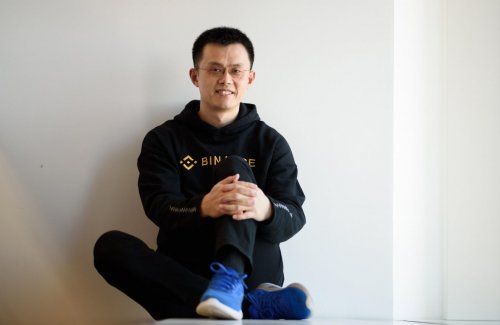
Image Source: Binance

Stories

From Gas Jockey To Binance CEO: How Changpeng Zhao Became Richest Man In Cryptocurrency

Binance is one of the most valuable cryptocurrency exchanges in the world as of today, and its founder and current CEO is Changpeng Zhao, according to the Bloomberg Billionaires Index, had a net worth of approximately $30 billion, which placed him in 33rd spot on the list of the world’s richest people.

Early on in life, Zhao was born into a family of educators in a rural village in Jiangsu province, China. He claimed that as a child living in rural China, he had to endure food rationing. His family immigrated to Canada in the late 1980s and felt incredibly fortunate to have been able to leave China.

When Zhao and his family moved to Canada, he worked several part-time jobs, including one at McDonald’s. He attempted to earn money at 14 by working at a Chevron gas station and as a volleyball referee.

He studied computer science at McGill University in Montreal, where he developed an interest in technology similar to that of his father, a math prodigy and programmer in his teens.

Zhao began coding when he was only 16 years old and took programming classes in high school before enrolling at McGill University.  After finishing college, Zhao worked at the Tokyo Exchange and then at Bloomberg in the Tradebook department from 2001 to 2005. Zhao left his job in 2005 to become a partner at the Shanghai firm Fusion Systems, which developed software for the financial markets. 

After discovering Bitcoin in 2013 while playing poker, he went all-in on crypto and committed his life to it. He even gave up his home to fund his Bitcoin investment. He persisted, even as the value of bitcoin dropped from $600 to $200 after he bought it.

Being a tech leader at Blockchain, a cryptocurrency wallet provider, and OKCoin, a cryptocurrency marketplace, Zhao decided to create his exchange, combining the efficiency of high-frequency trading platforms he had previously developed with the potential of cryptocurrencies. Thus, he started Binance with a $15 million initial coin offering.

However, getting to the top is more complicated than it seems, especially for Binance. When Binance’s cryptocurrency, BNB, dropped in value below its ICO price, Zhao and his early colleagues were forced to adapt quickly to changing market conditions.

As a result, Zhao initiated the initiative to make Binance a distributed organization with a flexible international staff. He was also instrumental in growing Binance into a user-friendly platform with maximum bandwidth, low fees, and other benefits.

In a relatively short period, Binance’s offering became too attractive to the cryptocurrency community to be held back by persistent difficulties. Six months after its launch, Binance soared to the top of the cryptocurrency exchange rankings, which remains to this day.

He is now widely known by his alias CZ and is widely regarded as the cryptocurrency industry’s most influential and prosperous figure. His majority stake in the cryptocurrency platform is responsible for much of his wealth at around $30.6 billion. Since the exact value of Zhao’s cryptocurrency holdings is unknown, Bloomberg’s blog post reported that it did not factor them into his wealth.

Image Source: Harper's Bazaar Singapore

News

A Culinary Adventure With Mark Wiens On HBO Go To Debut This November

As the nation’s most famous foodie Mark Wiens is coming back to HBO Go with his very own show. He is currently located in Thailand and is a co-owner of Phed Mark, a popular Thai eatery known for its “very spicy” pad krapao.

A small look into the culture of Singapore will be presented in the Food Affair with Mark Wiens episode that will be made available on HBO GO on November 18th. Food is a serious matter; for Mark, it is not simply about consuming food; instead, he will bring each dish’s cultural and traditional elements to life.

The six-part series will feature him shooting the breeze up with everyone from Michelin-starred chefs to legendary street food vendors in Singapore.  He is impressed but used to being delighted by the city because it is home to more than fifty restaurants with Michelin stars and over sixty entries in the Bib Gourmand guide.

Mark found it inspiring to hear how the owners of different restaurants came to follow their dreams and create the unique cuisines they do today. ”It’s undeniable that food is at the center of all our lives, and that’s what brought us all together,” Mark shared.

The 36-year-old food enthusiast has persisted in pursuing his hobby of food vlogging, and he frequently takes the 9.3M audience of his YouTube channel around the world as he samples a variety of mouthwatering cuisines. The expressions on his face communicate to anyone who watches him exactly how delicious each dish is.

Follow Mark as he explores all aspects of Singapore’s food culture, from hawker centers and high-end restaurants.

Image Source: Open Table

Blogs, Development, Ideas

If You Are Doubting On Your Career Move, Take It From This CEO Who Made Corporate Twists and Turns

If you’re worried about making the wrong career move because you’ve started to second-guess yourself, keep in mind that there is no bad decision regarding your professional development. Debby Soo, CEO of restaurant reservation service OpenTable, can understand.

Consider Soo’s words carefully if you’re struggling to make a major career choice or feel paralyzed by uncertainty.

She eventually settled on a mantra that brought her peace. She struggled with worry and stress over her future career path and doubted her choices at each turning point. Eventually, things worked out for her. 

She realized that her work experience was valuable despite her dissatisfaction with her job. She knew that her decision which appeared disastrous at the time might ultimately result in professional success in ways she could never have imagined. Soo firmly believed there are no wrong turns in any career, “I didn’t have to spend so much time stressing about it,” she told CNBC Make It.

To maximize one’s employment as a learning opportunity, Soo suggested working diligently in any position. Soo advised, “Do the work, do the homework, and be prepared, even if it’s a boring and tedious task or position,” Soo explains to CNBC Make It, “If you put in the effort, something will come to fruition eventually.”

As a result of keeping an open mind and learning from her mistakes, she has come to appreciate the tasks she once found tedious. She has acquired knowledge in areas such as the types of work one never wants to do again and the best ways to handle problematic coworkers.

Soo was well aware that one choice regarding a job opportunity would not determine the course of the rest of her life. She may find that her definition of an ideal dream job shifts for the better due to the twists and turns she encounters along the way toward her goal of advancing her career. 

At the moment, Soo has continued to manage OpenTable since 2020. After more than a decade at the travel search company Kayak and work experience at Google that left her with a great deal of doubt about her professional future, Soo is now actively working to better herself and is successfully advancing her career as a CEO woman.

Image Source: Brendan Duong

Stories

A Secret Business Purchase Grew Into A Multi-million Dollar Enterprise

Tess Nguyen who is a trained physiotherapist was searching Gumtree, Australia’s marketplace, for a physiotherapy clinic to buy. Instead, a sleepwear ad called Midnight Mischief captured her eye, “I’d never heard of personalised pyjamas, and I was pretty up-to-date with trends, so I sent an inquiry,” she told 7life.

She consulted her friends who have accounting and business experience and told Tess it was worth nothing and advised her not to buy it. However, she liked the pyjamas’ style and name, plus she was able to bargain the business down to $15,000. So, a month later she bought the business.

Tess kept the purchase secret from her family. The business was going slow during the first two years, and running the business while working as a full time physiotherapist, took its toll.

When 2020 hit, the business was ready for the huge demand prompted by COVID and people staying at home. The big moment was when TV presenter Jules Sebastian posted a photo of herself wearing Midnight Mischief pyjamas.

The brand grew 165% in the year to July 2021. And Tess has gone from pyjama girl to Pyjama Queen – selling a set every 10 minutes. The designs retail for about $99.95 – and her sleepwear empire is now turning over $2.3 million.

“I’m so glad I did it and I’d tell anyone else to do the same,” Tess told 7Life, “Just go for it. You can figure it out as you go along. It’s worked for me.”