News

January 24, 2025

SHARE:

Japan has an old proverb: “The nail that sticks up gets hammered down.” 

While in China, there is a saying, “The higher the tree, the stronger the wind.”

In a critical lens, both idioms illustrate harmony and unity – a vital essence of Asian culture and heritage. Nevertheless, the proverbs also shed light on a contrasting school of thought: conformity and crab mentality. 

Crab mentality refers to the situation one can explore by placing a crab or a collective of crabs in a bucket. A lone crab can inevitably crawl out of the bucket, however, a peculiar scenario would arise if one situates a group of crabs in a bucket. As a crab tries to crawl out, the other crabs will pull it back down. If it tries again, the others will rip its claws off to ensure it can never do so again. Ultimately, no crabs can go anywhere besides the stew pot you are brewing. 

Crab in a bucket scenario (Image source: Microsoft Designer)

Crab in a bucket scenario (Image source: Microsoft Designer)

It is naivety to assume human beings are a unified collective group. History, wars, and jealous conflicts are testaments to human being’s selfishness. Hence, it is arguable that we are inclined to place ourselves above others, even if it means at the expense of our peers. Despite being a precarious thought, this insight opens new dimensions to understanding crab mentality in the human context. 

“Remember your cousin Timmy in China? He has 15 years of experience. He’s nine!” 

Steven He’s dad (played by Steven He) exclaimed.

Terms like “Asian-level difficulty,” “Tiger Moms,” and “Asian parents” have become widely recognized through memes, movies, and other mainstream media, serving as a lens for global audiences to understand and appreciate aspects of Asian culture. Yet, one community still paints a negative view of the Asian community, even discriminating against its individuals – and the answer is ironically the Asian community itself.

The purpose of this work is not to discriminate or criticize any peculiar group but to foster intellectual discourse and encourage reflection on societal dynamics and individual perspectives. The chosen quote embodies this intention, capturing four intertwined facets.

Understanding the concept of face is crucial when discussing Asian culture and heritage. Face serves as a societal construct that governs social interactions and determines one’s standing within a social hierarchy. It is a dynamic measure that can be given, earned, taken away, or lost, often extending beyond the individual to include family and friends. For those unfamiliar with this concept, here’s a simplified explanation:

  • A wife who earns a promotion gains face for herself in front of her boss, while also bringing face to her husband and parents through her achievement. 
  • Conversely, a student who performs poorly on an exam loses face among peers, and their parents, in turn, lose face within their social and familial circles.

Despite being debatable, visualizing face as a form of currency provides an interesting lens through which to examine crab mentality in Asian communities. Much like any valuable asset, currency must be earned, safeguarded, and strategically utilized. Losses, even those meant for long-term gains, are approached with caution and calculation. Consequently, individuals strive to enhance their reputation while using criticism to diminish the face of others.

The concept of face is deeply tied to education and parenting, playing a role in fostering crab mentality. Asian children are often raised to prioritize self-achievement above personal aspirations, adhering to predetermined paths for the “greater good” of the family. This emphasis on collective reputation often comes at the cost of individual dreams, reinforcing a mindset where personal success is weighed against familial expectations.

Parenting can affect mindsets, a reflection on Tiger Moms (Image source: Mims On The Move)

Parenting can affect mindsets, a reflection on Tiger Moms (Image source: Mims On The Move)

Indeed this is a generalized claim that leaves certain minorities for speculation, but the interplay between face and sacrifice is crucial in understanding the environment Asian children grow up. Literary works like Truyện Kiều (Tales of Kieu), a renowned Vietnamese poem, highlight traditional ideals through terms like cầm-kỳ-thi-họa—the four virtues defining a successful woman. Similarly, the stereotype of Asian children being expected to become doctors or lawyers has become a familiar cultural reference in contemporary discourse.

No parents want their children to grow up as bad people. Hence, it would be injudicious to blame parents and the system for a negative societal mentality. Yet, there are certain repercussions to sacrificing a child’s dream in return for a destined path to greatness. This leads to the third facet of crab mentality in Asian communities: A ramification for every child following the same success path means comparison and competition. 

Let’s revisit Steven He’s joke: Timmy is used as a benchmark for comparison. The only way for Steven to save face is by climbing the same ladder and offering Timmy a similar spiteful insult. This vicious cycle of comparison fuels crab mentality within families, peers, and the broader community. True to reality, Asian students often spend countless hours in extra classes and clubs to meet rigorous expectations. Tiger moms push their children to excel in every class as if their lives depend on it. There is no middle ground—you’re either a winner or a failure.

This brings us to the final facet: the absence of praise and apologies. Ironically, according to BBC and Vocal Media, Asia is home to some of the politest people in the world, with countries like Japan and Thailand leading the way. Despite this, hierarchy plays a pivotal role in relationship dynamics. To save face, many Asian parents rarely offer praise to their children. Astonishingly, when it comes to apologies, parents often go to great lengths to defend their actions rather than acknowledge their mistakes. 

A similar response can be seen in Asian workplaces, where higher-ups are more inclined to criticize and are far out of reach from their team members. Individuals will praise their peers and colleagues in hopes of receiving similar treatment instead of actual commemoration. Workers often segregate themselves into teams of interest to promote one another instead of collaborating as a group. These groups create outcasts who, despite their talents, are looked down upon and have their accomplishments taken or snuffed out by negative criticisms. This reluctance to give praise and apologize reinforces a mindset of self-achievement above all else. At first glance, mentality such as these are not wrong, but they leave cracks for detrimental thoughts of arrogance and selfishness – ultimately sustaining the crab mentality.

While this article explores the crab mentality within the Asian community, it is important to recognize that this negative mindset is not exclusive to any one group—it exists everywhere. The concepts of face, self-achievement, competitiveness, community, and sacrifice are what make Asian heritage unique and beautiful. This work argues that these cultural elements are not the root cause of the crab mentality, but rather, insights into why such a mindset may emerge. 

Related Articles

Image Source: Zen Sekizawa

Stories

Linda Lindas: What Life Is Like For Teenage Students Who Are Also In A Punk Rock Band

How does one balance their passions for creativity and artistic expression with maintaining an everyday life? This seems to be one of the hardest things to do when not everyone appreciates your creativity. Perhaps it may be possible, but very few people have been able to pull it off.

Meet the punk rock band Linda Lindas who are all still teenagers and are concentrating on their studies while on stage. They never go out to clubs after their concerts, instead, they do homework.

The Linda Lindas are comprised of the four members Lucia and Mila de la Garza, ages 15 and 12, respectively, their cousin Eloise Wong, age 14, and their friend Bela Salazar, age 17. They hail from Los Angeles and identify as both Asian American and Latinx. 

Linda Lindas didn’t grow up thinking they would be a musician. The fact that Mila and Lucia de la Garza’s father is a Grammy-winning producer had no impact on their future goals. Wong always wanted to study paleontology, while Salazar dreamed of becoming a doctor. Youngest and most gregarious of the bunch, Mila de la Garza always looked up to the character of Olaf from “Frozen.”

In 2018, Kristin Kontrol invited local girls to perform with her at a concert titled Girlschool L.A., marking the debut of Linda Lindas with the Dum Dum Girls. The band’s reputation grew as they continued to perform in Chinatown. They have supported Bikini Kill, Alice Bag, Money Mark, the Dils, and the Alley Cats, among others. Amy Poehler reached out to them to have them perform a medley of “Rebel Girl” by Bikini Kill and “Big Mouth” by The Muffs for her film “Moxie.”

They say they do their homework in the backstage area, on the plane, or during another downtime. They are convinced they are not yet adults, but they would still like to give their full attention to schoolwork. The band’s debut album, titled “Growing Up,” is centered around progress and ongoing education.

Image Source: Mark Ezzer Ligan Facebook

Stories

Filipino Entrepreneur Cultivates Family’s Land With A Goal Of Providing Food For Every Family’s Table

The Philippines, like many countries around the world, is dealing with skyrocketing food inflation due to supply issues and high fuel costs. 

26-year-old Mark Ezzer Ligan, from Bacolod, Philippines, has learned how to start and sustain his farm by producing vegetables such as okra, eggplant, soursop, and coconut in his family’s 3-hectare plot of land called MBL Integrated Farm. He also raises imported goats from Australia, cows, carabaos, and chickens.

Mark continues to cultivate the land and raise livestock to increase community production. He ensures sufficient supplies from eggs to vegetables and corn to fresh milk for the general public. As a farmer, he believes it is his responsibility to ensure that everyone has enough to eat.

More than 80% of Filipinos eat goat meat, but there are only two major commercial goat farms in the Philippines. The opportunity for growth for goat farmers is also substantial in light of this booming market.

Even more importantly, he benefits financially from their crop yields. Mark worked so hard that the provincial government of Negros Occidental recognized him as the 2019 Oustanding Young Animal Raiser. His success hasn’t hindered him from his commitment to his main goal of providing food, especially during the pandemic.

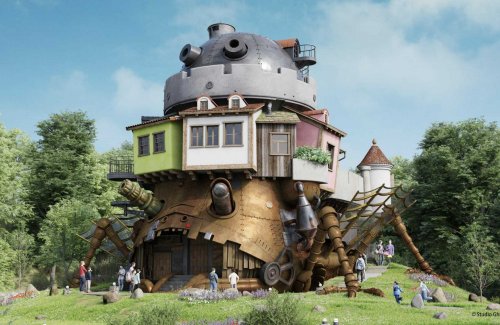
Image Source: ©Studio Ghibli

News

World’s First Studio Ghibli Park In Japan Features Iconic Settings And Characters Animation

It’s the perfect time to visit Kyoto, Japan, as Ghibli Park opened less than an hour away from the city last November 1st. The new Park features some of your favorite animated scenes and characters from Studio Ghibli films.

During an event a few days before the park’s official opening, Studio Ghibli Co. chairman and president Koji Hoshino said that the start of the park has a significant meaning for them that surpasses almost three years of the pandemic.

Overall, the final design for Ghibli Park encompassed some 17.5 acres and was split into five distinct areas. Ghibli’s Grand Warehouse, the park’s centerpiece, is a huge indoor “town” with streets, displays, and reproductions of Studio Ghibli’s “Totoro” and “The Catbus from Outer Space” sets. The Ghibli Museum’s theater shows special short films to visitors of the new park and Tokyo’s Ghibli Museum.

There are also two restaurants, a souvenir shop, a vintage shopping district with lanes, and a play area for children. The “Hill of Youth” antique shop from “Whisper of the Heart” and “The Cat Returns” is the second tourist attraction. The park can be seen in its entirety from this vantage point.

The third and newest section of the park is the Dondoko Forest, which is themed after the anime film “My Neighbor Totoro.” Both the bouncy house and a Totoro-themed playground can be found there.

Valley of Witches will feature elements from “Howl’s Moving Castle,” about a young milliner who accidentally gets caught up in a war, and “Kiki’s Delivery Service,” about an earnest and hardworking young witch. 

According to the director and son of Studio Ghibli co-founder Hayao Goro Miyazaki, the park was conceived with the local community in mind. Miyazaki’s original intention for the site was to be a park, not a typical theme park with rides and attractions. He desires that the people of Aichi share his passion for their gardens, as he believes parks are primarily for the local community.

Check out their official website for ticket and booking information.

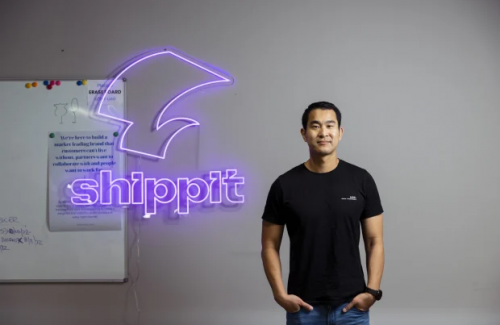
Image Source: Dominic Lorrimer/ Australian Financial Review

News

Australian Logistics Tech Firm Shippit Procures Singapore Startup Luwjistik for $11M

Shippit has announced that it will pay $18 million to buy the logistics SaaS platform Luwjistik, based in Singapore. 

Founded by longtime friends William On and Rob Hango-Zada in 2014, with a mission to improve shipping for small businesses, as they have personally experienced the drawbacks of online shopping.

After two years of operations in the region for the Sydney-based company, the Australian logistics tech company co-founder and co-CEO William On has relocated to Singapore to lead the new expansion and manage the existing 50-person Luwjistik team.

This comes after the company raised $65 million in Series B2 funding, which helped operations in Southeast Asia, and almost seven months after it bought the last mile logistics tech platform Premonition.

Shippit’s inclusion of Luwjistik’s co-founders, who bring extensive industry experience and connections to the table, is expected to revolutionize the company’s approach. The acquisition of Luwjistik will also enable the company to provide tailored solutions for the Southeast Asian market. Therefore, Shippit can be the best option for many who manage their warehouse or search for a logistics partner.

The startup works with carriers such as Ninja Van, J&T Express, and JNE Express, as well as logistics companies such as Maersk, POS Malaysia, Lion Parcel, and Summer International.

Within a month of launching Luwjistik, the duo raised US$1.1 million (AUD$1.7 million) in a seed round led by East Ventures, including MDI-Arise Finches and Global Founders Capital.

William anticipated a significant increase in e-commerce in Southeastern Asia, which will continue if Shippit and Luwjistik join forces. Currently, they can provide a one-stop platform for enterprises and the expanding SME segment, particularly in Indonesia, Malaysia, the Philippines, and Thailand.

More than 40 million deliveries were booked via the Shippit platform in the fiscal year 2022. Since its inception in 2014, Sydney-based Shippit has fulfilled e-commerce orders worth $5.5 billion for more than 3,500 retailers.

“I strongly believe that by combining our strengths, we can continuously innovate and offer the most impactful, reliable, and relevant solutions to a fast-changing, dynamic market.” – William shared with Business News Australia.