News

January 24, 2025

SHARE:

Japan has an old proverb: “The nail that sticks up gets hammered down.” 

While in China, there is a saying, “The higher the tree, the stronger the wind.”

In a critical lens, both idioms illustrate harmony and unity – a vital essence of Asian culture and heritage. Nevertheless, the proverbs also shed light on a contrasting school of thought: conformity and crab mentality. 

Crab mentality refers to the situation one can explore by placing a crab or a collective of crabs in a bucket. A lone crab can inevitably crawl out of the bucket, however, a peculiar scenario would arise if one situates a group of crabs in a bucket. As a crab tries to crawl out, the other crabs will pull it back down. If it tries again, the others will rip its claws off to ensure it can never do so again. Ultimately, no crabs can go anywhere besides the stew pot you are brewing. 

Crab in a bucket scenario (Image source: Microsoft Designer)

Crab in a bucket scenario (Image source: Microsoft Designer)

It is naivety to assume human beings are a unified collective group. History, wars, and jealous conflicts are testaments to human being’s selfishness. Hence, it is arguable that we are inclined to place ourselves above others, even if it means at the expense of our peers. Despite being a precarious thought, this insight opens new dimensions to understanding crab mentality in the human context. 

“Remember your cousin Timmy in China? He has 15 years of experience. He’s nine!” 

Steven He’s dad (played by Steven He) exclaimed.

Terms like “Asian-level difficulty,” “Tiger Moms,” and “Asian parents” have become widely recognized through memes, movies, and other mainstream media, serving as a lens for global audiences to understand and appreciate aspects of Asian culture. Yet, one community still paints a negative view of the Asian community, even discriminating against its individuals – and the answer is ironically the Asian community itself.

The purpose of this work is not to discriminate or criticize any peculiar group but to foster intellectual discourse and encourage reflection on societal dynamics and individual perspectives. The chosen quote embodies this intention, capturing four intertwined facets.

Understanding the concept of face is crucial when discussing Asian culture and heritage. Face serves as a societal construct that governs social interactions and determines one’s standing within a social hierarchy. It is a dynamic measure that can be given, earned, taken away, or lost, often extending beyond the individual to include family and friends. For those unfamiliar with this concept, here’s a simplified explanation:

  • A wife who earns a promotion gains face for herself in front of her boss, while also bringing face to her husband and parents through her achievement. 
  • Conversely, a student who performs poorly on an exam loses face among peers, and their parents, in turn, lose face within their social and familial circles.

Despite being debatable, visualizing face as a form of currency provides an interesting lens through which to examine crab mentality in Asian communities. Much like any valuable asset, currency must be earned, safeguarded, and strategically utilized. Losses, even those meant for long-term gains, are approached with caution and calculation. Consequently, individuals strive to enhance their reputation while using criticism to diminish the face of others.

The concept of face is deeply tied to education and parenting, playing a role in fostering crab mentality. Asian children are often raised to prioritize self-achievement above personal aspirations, adhering to predetermined paths for the “greater good” of the family. This emphasis on collective reputation often comes at the cost of individual dreams, reinforcing a mindset where personal success is weighed against familial expectations.

Parenting can affect mindsets, a reflection on Tiger Moms (Image source: Mims On The Move)

Parenting can affect mindsets, a reflection on Tiger Moms (Image source: Mims On The Move)

Indeed this is a generalized claim that leaves certain minorities for speculation, but the interplay between face and sacrifice is crucial in understanding the environment Asian children grow up. Literary works like Truyện Kiều (Tales of Kieu), a renowned Vietnamese poem, highlight traditional ideals through terms like cầm-kỳ-thi-họa—the four virtues defining a successful woman. Similarly, the stereotype of Asian children being expected to become doctors or lawyers has become a familiar cultural reference in contemporary discourse.

No parents want their children to grow up as bad people. Hence, it would be injudicious to blame parents and the system for a negative societal mentality. Yet, there are certain repercussions to sacrificing a child’s dream in return for a destined path to greatness. This leads to the third facet of crab mentality in Asian communities: A ramification for every child following the same success path means comparison and competition. 

Let’s revisit Steven He’s joke: Timmy is used as a benchmark for comparison. The only way for Steven to save face is by climbing the same ladder and offering Timmy a similar spiteful insult. This vicious cycle of comparison fuels crab mentality within families, peers, and the broader community. True to reality, Asian students often spend countless hours in extra classes and clubs to meet rigorous expectations. Tiger moms push their children to excel in every class as if their lives depend on it. There is no middle ground—you’re either a winner or a failure.

This brings us to the final facet: the absence of praise and apologies. Ironically, according to BBC and Vocal Media, Asia is home to some of the politest people in the world, with countries like Japan and Thailand leading the way. Despite this, hierarchy plays a pivotal role in relationship dynamics. To save face, many Asian parents rarely offer praise to their children. Astonishingly, when it comes to apologies, parents often go to great lengths to defend their actions rather than acknowledge their mistakes. 

A similar response can be seen in Asian workplaces, where higher-ups are more inclined to criticize and are far out of reach from their team members. Individuals will praise their peers and colleagues in hopes of receiving similar treatment instead of actual commemoration. Workers often segregate themselves into teams of interest to promote one another instead of collaborating as a group. These groups create outcasts who, despite their talents, are looked down upon and have their accomplishments taken or snuffed out by negative criticisms. This reluctance to give praise and apologize reinforces a mindset of self-achievement above all else. At first glance, mentality such as these are not wrong, but they leave cracks for detrimental thoughts of arrogance and selfishness – ultimately sustaining the crab mentality.

While this article explores the crab mentality within the Asian community, it is important to recognize that this negative mindset is not exclusive to any one group—it exists everywhere. The concepts of face, self-achievement, competitiveness, community, and sacrifice are what make Asian heritage unique and beautiful. This work argues that these cultural elements are not the root cause of the crab mentality, but rather, insights into why such a mindset may emerge. 
Related Articles

280828065_10210184429204132_8785869350725322057_n

Uncategorized

26-Year-Old Filipino Entrepreneur Turns Waste Coconut Shells Into A Thriving Business

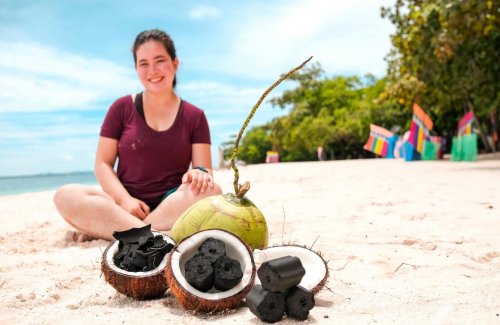
With zero funding, Filipino entrepreneur MJ Loleng built her start-up company, Ecobriqs Charcoal Briquettes, an innovative eco-friendly charcoal business from waste coconut shells.

She was able to attract investors with her idea who also had a passion for sustainability and providing employment to those who are poor in the Philippines, as she said that she experienced being poor herself. MJ wants to show that poverty is no reason to give up on ambitions.

MJ wrote on her Facebook, “For the past 4yrs I was just crystal focus on surviving and making things happen. I know I’ve always wanted to help, and I know that I can do it by building a business.”

When “Samgyeopsal” or Korean BBQ restaurants became popular in the Philippines, Ecobriqs experienced a surge in popularity. Briquettes were the ideal kind of coal to use since they did not produce smoke or odor and could be used more than once.

The pandemic drove several eateries to close, putting Ecobriq into a major setback for half a year, but MJ thought of another idea. She collaborated with her friends and opened their own Korean BBQ restaurant, Umma’s Samgyup Café, with a starting capital of P5,000 ($90).

As a result of MJ’s expanding business portfolio, she is now able to bring in more than P100,000 ($2000) per month, and learned stock trading in order to increase her income.

Her advice to aspiring entrepreneurs is to be persistent in achieving their goals, “I also didn’t know how we got this far. I just keep the faith, believe in my team, took the risk, give it ALL IN, and did my best” 

Image Source John Andrew Dangca Facebook

Uncategorized

From Former Janitor To Leading A Flourishing Filipino Restaurant In Australia

Who would have thought that the odd jobs of a janitor and a street vendor would lead to such a great story? This is what actually transpired to John Andrew Dangca, the owner of a Filipino restaurant in Canberra, Australia.

Before establishing his popular restaurant among Filipinos, he worked as a street vendor and janitor. Despite his difficult beginning, he was determined to succeed. He saved money and eventually opened his own restaurant. His business success has allowed him to provide for his family. 

Salu-Salo Restaurant, which has been serving Filipino cuisine in Canberra, Australia was also impacted by the pandemic. Fortunately, he was able to adapt by pivoting to a delivery and take-out model. 

He says that they’ve been able to weather the challenge because of the support of their customers. Andrew admitted that he reaches out to his customers to order some food, and if they do, he personally travels to them, regardless of the distance. 

His journey to Australia began when he was young and open to the idea of studying or working abroad. His aunt sponsored his trip to Australia in 2013, where he enrolled in college and began training as a cleaner. It was never easy for him to juggle a job and schoolwork, but he did it because he wanted to provide for his family.

Andrew’s story demonstrates that it is possible to achieve success despite challenging circumstances if one is willing to work hard and never give up. “I put in a lot of effort and always try to do my best in order to be where I am now,” he stated on a Philippine TV show. 

He proved that beginning in a low position, such as working as a janitor or street vendor, is not an obstacle to future success. Rather, this will serve as the fuel that propels you forward toward achieving your goals.

Untitled design

Uncategorized

Humphry Slocombe Launched Filipino-Inspired Ice Cream In Collaboration With Popular Eatery Señor Sisig

There is nothing quite like a scoop of ice cream on a hot day, as we’re sure you’ll agree! And what better way to enjoy one than with a tasty serving of delectable creations alongside your best dishes?

This summer, the renowned Filipino food truck now restaurant Señor Sisig will open a branch in the food hall of the San Francisco Bay Area and collaborate with the Filipino-inspired experimental ice cream Humphry Slocombe.

They have been starting to develop a new ice cream flavor that evokes childhood and promotes the favorite dishes with an accompanying dessert. According to SFGate, both businesses have decided to work together as they get ready to become Ferry Building tenants.

It may be a new flavor for Humphry Slocombe customers, but it’s not for Filipinos. Made with cinnamon and bananas, the ice cream is as delicious as it sounds. Named “churron”, a mash-up of “churro” and “turon,” a Filipino caramelized fried banana roll.

The new Señor Sisig restaurant will serve drinks with Filipino and Mexican tastes including ube, pandan, and calamansi.

Stop by one of the six Humphry Slocombe locations around the Bay Area to enjoy this new flavorful ice cream before it sells out!

Melody

Uncategorized

Melody Hahm on Shaping a Diverse Venture Capital Landscape for Entrepreneurs

Melody Hahm has held many roles as an acclaimed business journalist for CNBC and Yahoo Finance and a platform and community manager for venture capital firm Harlem Capital. But her Twitter bio begins with “unapologetically Korean.” That’s a good indicator of the kind of person Melody is. 

In her interview with AHN, Melody is unapologetically honest about her experiences as, often, the only Asian in the room. She shares her journey of finding value in her work and, as a result, recognizing her self-worth to advocate for herself in traditionally male-dominated newsrooms. 

Since joining Harlem Capital in July 2021, she has helped female entrepreneurs and people of color make their mark in history. She leads off-site and operator networking events and content strategy for the firm’s portfolio companies. But she’s doing so much more for the BIPOC community of entrepreneurs by giving them the resources and platform to succeed. 

A CHILD OF KOREAN IMMIGRANTS FINDING HER PASSION FOR JOURNALISM

I was born in New York City and raised in the tri-state area in Connecticut and Jersey. I was a lifelong east coaster. My parents are Korean immigrants who met in the States, and I’m their only child. It became my passion early on to become a journalist. 

I had a dream of telling international stories, given my background as a child of Korean immigrants. Starting in elementary school, I took a liking to my Spanish class, and I performed the best in English reading and comprehension. So, pairing those things together, I was like, I’ll think I’ll figure out what this journalism thing is. It was after a journalism and writing summer program that I did after eighth grade that I realized this is the area I want to focus on. 

I started to write for my school newspaper and contributed to my local newspaper, the New Haven Register. There weren’t necessarily Asian bylines I could look to. There was Connie Chung and a few token Asian women on TV. But I could not envision what my career would look like. 

I’ll never forget what my mom said. She said, if you watch TV or go to a Broadway show and see someone that looks like you, it’s probably the stereotypically nerdy character who has a line or two, but you’ll never see someone who looks like you as the main character. She didn’t mean to discourage my dreams, but I think it was a reality check that perhaps it wasn’t the most practical route. 

“There weren’t necessarily Asian bylines I could look to…I could not envision what my career would look like.” 

-Melody hahm

FROM PRE-LAW TO BUSINESS JOURNALISM AND VENTURE CAPITAL

I went into college pursuing pre-law, but all my internship interests were in journalism. Then, I got a grant through school to go to New Delhi, India, for two months on a broadcast journalism internship. That was a turning point for me. Until that point, I didn’t understand what a real career in journalism could look like. When I got back, I tapped into any potential connection I had in the journalism world. It was through an alum of my school, who was the managing editor of Fortune magazine, who connected me to a couple of folks, and one of his contacts at CNBC reached out to me in my senior year. 

They said a news associate position was open and asked if I wanted it. I had no idea what financial and business journalism was, but it seemed like an opportunity I couldn’t pass on. So, I began my career in financial journalism on CNBC’s flagship morning show, Squawk Box. I produced segments and pitched ideas for startups to be featured on the show. At the time, it was very markets-driven, and I carved a niche for myself. 

I recognized that there wasn’t a platform for women and people of color running interesting startups to share their stories in a mainstream way. I took it upon myself to prove that these companies were going to be meaningful one day. I also wanted more experience on-air and I ended up finding an opportunity as an on-air reporter for Yahoo Finance. It was a great transition because Yahoo Finance is all digital. I got the chance to create content in a medium that I consumed. I hosted a show called Breakouts, which focused on entrepreneurship, especially among women and people of color. 

In July 2021, I left traditional media to join an early-stage venture fund called Harlem Capital which invests in diverse and women entrepreneurs. I lead their community and platform, which essentially means working with the portfolio companies and founders. As well as expanding our purview and reach as we think about democratizing venture capital for people who deserve it. It shouldn’t matter what you look like. 

It’s been a wild journey so far. There are a lot of different hats I wear. Some of my media expertise and savviness does play a role at Harlem, but I’m getting to flex my muscles to help entrepreneurs in a different realm and world, which I’m excited about. 

“I recognized that there wasn’t a platform for women and people of color running interesting startups to share their stories in a mainstream way. I took it upon myself to prove that these companies were going to be meaningful one day.” 

-melody hahm

TAKING STEPS TOWARD WHERE SHE IS TODAY

I would love to say it was well-thought-out, squarely defined, and manifested, but it wasn’t and never is. It’s always messy. Oftentimes, there are little signals along the way that remind you maybe this is not where my attention should be. I initially did not pursue a business or financial journalism career, the opportunity found me. I recognized that it was not my passion to report on the market’s daily moves. I can talk about it, but did I feel like I was getting value? Probably not. Making the 1% richer was never part of my mission. I obviously never went into journalism to make money. 

Being in that corner of media made me reconsider and reflect on who my audience was. Both Yahoo Finance and CNBC served the investor class, which tends to be more affluent and privileged. During COVID, I started excavating a bit. I asked myself how I could play a role in helping entrepreneurs, especially people who look like me, succeed. 

If you wanted to cover a startup in mainstream media, it was always about who backed them. That’s when I first started covering venture capitalists. I interviewed a lot of VCs and participated in conferences to interview VCs and the startups they funded. My mind was open to the opportunity to work at a venture capital firm where I could play a role in the process of helping entrepreneurs and equipping them with tools so they can have a fighting chance in making their mark on history. 

RECOGNIZING SELF-WORTH IN TRADITIONALLY MALE-DOMINATED WORK ENVIRONMENTS

I think my experience working in two traditionally male spaces has only fueled my fire to identify opportunities where I can change the narrative. I am very fortunate to have had mentors and direct bosses sticking their necks out for me, including the person who connected me to CNBC. I met him when I was a college student in 2011, and he ended up becoming my boss at Yahoo Finance. I’ll never forget this one conversation we had. It was our mid-year check-in, and I was so nervous. I knew I deserved a raise, but I didn’t want to be disappointed if I didn’t get it. 

I even went to seminars coaching women on negotiations. So, I was like, “Melody, you can do it. He’s always believed in you.” During the conversation, he gave me a 24% raise. I was going to ask for a third of that. My walkaway number was going to be 8%. That illustrated to me: Why was I valuing myself so little? Part of it is systemic, but I was selling myself short. That was an inflection point for me to recognize that even if this macrosystem is stacked against me, I know my worth, I know my strengths, and I know that I work hard. There are very clear and measurable things to show that makes you believe you deserve more. I recognized that even if the landscape is so male-dominated, that will not deter me. 

Tying it back to the venture capital world, so much it is bleak. Very few top-tier firms have BIPOC partners at all levels. Then, I joined Harlem Capital, which is founded by Black men. We have three Black men who are partners, and four of us are women of color, which is unheard of. You don’t see that in venture capital. I’m the only Asian woman, so it empowers me to know that they value and invest in people of color. I have a seat at the table, and I recognize my fight for my community. 

Our tagline is that we want to invest in 1,000 diverse entrepreneurs over the next 20 years. I think the only way you can do that is if the investor class and the people in the firm reflect the type of people you want to empower. We have the upper hand in understanding the problems and queries facing diverse founders. We’re the ones trying to solve the issues and provide the resources to feel the gap. It feels like a unique position to be in the venture landscape. 

“Even if this macrosystem is stacked against me, I know my worth, I know my strengths, and I know that I work hard. There are very clear and measurable things to show that makes you believe you deserve more.”

-melody hahm

NAVIGATING THE NEWSROOM AS AN ASIAN WOMAN

There were so many incidents of micro and clear aggressions from my colleagues, especially at Yahoo Finance, where I was, for a long time, the token Asian. Over the nearly six years I was at Yahoo Finance, our newsroom really blossomed. We had a flurry of people of color and lots of Asian women who joined the team. But the first couple of years were really difficult. If there was news related to ongoing issues in the Asia continent, I was expected to know the answer. I’m like, I was born in New York. I’m connected to my Korean heritage, but I don’t know the ins and outs of the dynamic of Japan and Korea. The assumption that I would have these answers definitely messed me up a little bit. 

In light of the hate crimes facing Asians, it was difficult for me during the work day because we wouldn’t cover that news. It was only when there was a business angle or organizations pledged tens of millions of dollars that it became a story in the business world. I understood that we weren’t working under a general news system, but at the same time, the lack of care felt disappointing to me. I felt I had to advocate for myself and the Asian community. 

In my current role in the venture world, it’s night and day because my colleagues are all people of color. Even when Michelle Go passed, against this influx in hate crimes was happening, they would check in on me, asking how I was doing on a personal level. To be honest, Harlem Capital has grown over the last couple of years, alongside the deaths of Black Americans like George Floyd and Breonna Taylor. My colleagues recognize how hard it is to compartmentalize pain and trauma as you experience professional success, trying to reconcile the two. I think there’s empathy in my current role and organization that gives me a little bit more strength and hope. 

THE FUTURE OF VCS

I think 20 years from now, we’ll see a magnificent diaspora of Asian, African, and Latino founders who go on to raise future rounds of capital, take their companies public, maybe start their own VCs, and become angel investors. It’s beyond my wildest dreams to think about what that diaspora looks like. Tier one VCs are already investing in Africa and Latin America. We’re seeing people choose to operate in international landscapes, and they’re all contributing to changing the face of entrepreneurship. 

I have no doubt in my mind that when hopefully my child is growing up that if they were an entrepreneur, they could look at the options and say, ‘There’s a partner who looks like me and understands my story.’ It won’t be tokenization as a poster child of diversity. It will be an integration as the DNA of up-and-coming VCs, VCs that have yet to be created, and existing firms where it won’t be an option anymore to not be diverse. This is a one-way street, and if you don’t buy into it, you will get left behind.

“It will be an integration as the DNA of up-and-coming VCs, VCs that have yet to be created, and existing firms where it won’t be an option anymore to not be diverse.”

-melody hahm

HOW TO REACH OUT

You can reach me on Twitter @melodyhahm, on Instagram @melhahm, and on LinkedIn. If you want to learn more about Harlem Capital, or if you want to learn more about my journey, I’m always excited and happy to chat with folks. If anyone is contemplating a move, career or otherwise, feel free to hit me up because I love to talk about those kinds of transitions. 

Interview credit: Tiff Soga