21-Year Old Who Had Motor Skill Challenges Breaks Record as World’s Fastest Rubik’s Cube Solver
News
July 3, 2023
SHARE:
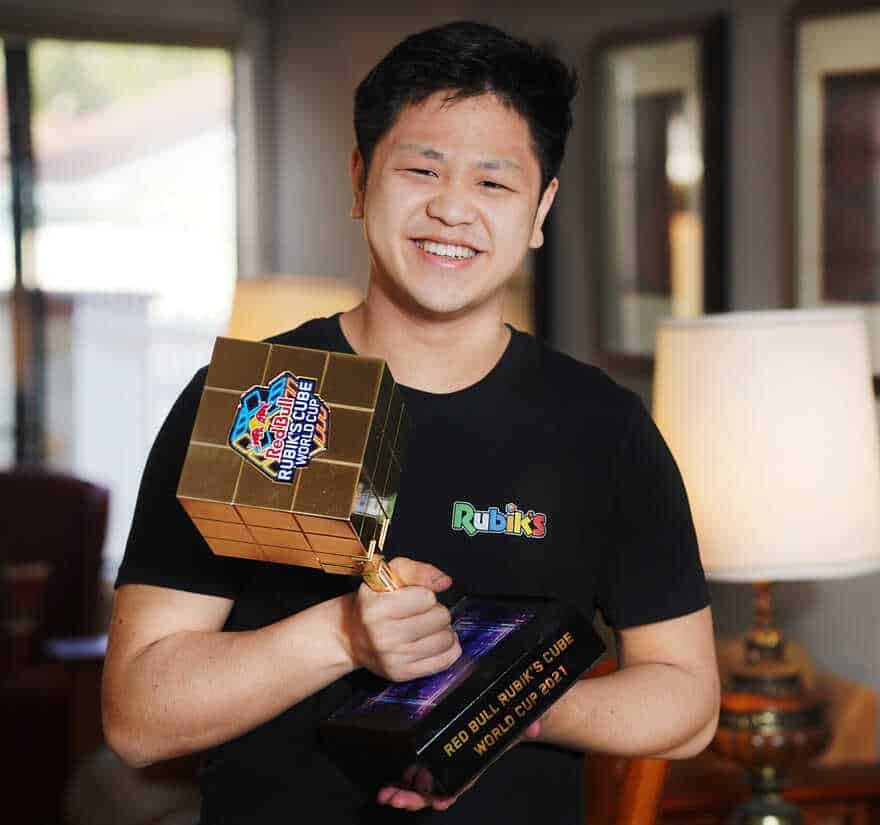
Max Park, a 21-year-old Korean-American from Cerritos, California who lacked fine motor skills, as a symptom of his autism, emerged as the world’s fastest Rubik’s cube solver, setting a new world record of solving the cube in just 3.13 seconds.
According to NPR, Max faced motor skill difficulties during his preteen years as a result of autism, making even simple tasks like unscrewing a water bottle cap a challenge for him. Now, Max can solve a Rubik’s cube faster than most people can read a sentence.
During a recent competition in Southern California on June 11th, Max astounded the speedcubing community by setting a new world record for the fastest 3x3x3 Rubik’s cube time, clocking in at a mind-boggling 3.13 seconds. Matthew Dickman, the senior delegate for the United States and Canada at the World Cube Association, described Max’s achievement as the “holy grail of records.”
Max’s journey began at the age of 9 when he developed an interest in the Rubik’s cube. His mother, Miki, took the initiative to learn how to solve it herself through YouTube tutorials. Within a mere couple of days, Max solved the puzzle effortlessly. This newfound passion for cubing led him to participate in his first speedcube competition in downtown Los Angeles at the age of 10.
Image Source: Guinness World Record
The popularity of speedcubing has surged in recent years, with over a dozen competitions held worldwide each weekend and a registered base of over 140,000 cubers from 140 countries. These events encompass various challenges, ranging from blindfolded solves to one-handed techniques.
However, the original 3x3x3 cube remains the centerpiece of the sport, attracting the most skilled competitors who have mastered hundreds of algorithms to conquer the puzzle. The speedcubing scene has become increasingly competitive, with participants continually pushing the limits, often beating their rivals by mere fractions of a second.
Schwan, Max’s father, said that his success gives a sense of hope for the parents too, that their child can find something they’re passionate about and it will help give them a sense of purpose.
As Max continues to break barriers, his impact extends far beyond solving a puzzle. His achievements serve as a symbol of determination, resilience, and the boundless potential that lies within each of us.
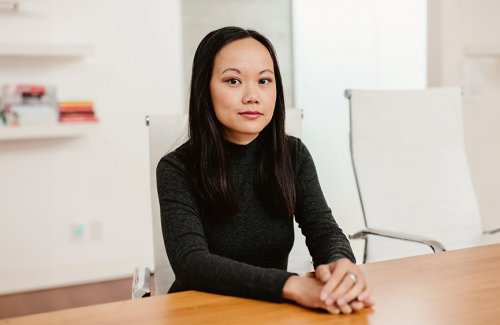
Tracy Young is a founder who has been on my radar for a long time. Beyond the fact that she is a successful exited founder, having sold PlanGrid to Autodesk for just under $900 million, Tracy’s family–like my own father–immigrated to the United States following the Vietnam war. With one major success under her belt, Tracy is going for a second, having recently founded a new startup named TigerEye, which focuses on AI-powered strategic planning. I sat down with Tracy to chat about lessons from PlanGrid, what she’s currently working on at TigerEye, and her identity as an Asian woman.
On Identity
I wasn’t the only one with a newsletter on the call! Tracy also recently started a LinkedIn newsletter titled Predictable Growth, a monthly Q&A with women leaders generating revenue for their businesses. I asked Tracy what the motivation behind starting it was, and what she hoped to see it accomplish:
Representation matters. In sales and go-to-market functions, women are underrepresented at the leadership level. However, many impressive, talented, and hardworking women have achieved the CRO/CMO level, and I wanted to hear their stories. So, it’s a way for us to showcase women and give them a platform to tell their stories and how they got to where they are. There are many great jobs in sales, but many women don’t realize that they’re available to them. Anyone can be good at sales, it’s not just men. Reaching the highest levels in sales gives women a lot of power to help out their families, help the economy, etc.
In previous interviews, Tracy has pointed out how women are especially underrepresented in enterprise SaaS. I asked Tracy if she had any ideas why this is the case, and how we can increase representation:
I’m not sure why that’s the case. But you can see it if you look at the stats or walk into any enterprise company. I would guess it’s systemic. I think it starts with the words we use for boys and girls, the way we treat them, and what is expected of them. This is part of our cultural history. One way to change that is to show what is possible. What Predictable Growth aims to achieve is to showcase all these women who are leaders at their companies. There’s no decision that the CEO is making without running it by them. We want to say: “This could be your future, if you want it”, for anyone reading, and hopefully, it’s a young woman reader.
Next, I wanted to get Tracy’s thoughts on how being an Asian woman has affected her experience as a founder:
My PlanGrid co-founder, Ryan, and I met in college. He’s been trying to convince me to start a company with him since I was 18. Being an Asian woman, I didn’t think it was possible. I brushed him off for many years. I thought, “I’m not a founder,” because I looked at all these other founders, and they didn’t look like me. That kept me from starting a company for a long time. Around 2007-2009, I remember Ryan really wanted me to apply for Y Combinator with him. And again, I told him, “I just don’t think it’s going to work.” I didn’t think other people would accept me, and I didn’t want to put myself through it. It wasn’t until Y Combinator put out a request for startups working on the exact problem we were working on that I felt comfortable applying. That request for startups almost gave me permission to apply to YC. But even when we got in, and we were making real revenue, and we fundraised, and we had real customers, and our product was getting better… even then, I still felt that founders should look a certain way. I don’t know how many years in we were before I finally realized how wrong I was.
In an interview eight years ago with Ron Miller at Techcrunch Disrupt, Tracy responded to a similar question very differently. I asked her what motivated her shift in perspective since then:
Back then, I really tried to separate myself from being a woman. I felt like that was not part of the equation. And again, it’s such a big part of me, I am a strong woman. For many years, I pretended that I wasn’t, down to how I dressed. What really woke me up was becoming a mom. Going through pregnancy and birth and postpartum recovery, and taking care of a baby, I think it was really at that point when I realized how strong women are, how strong our mothers and grandmothers are, and how strong my colleagues are. It was a disservice not to acknowledge that our journey is different. It’s not better or worse. It’s just different.
TigerEye
I asked Tracy how she came up with the idea for her new startup, TigerEye:
There’s no shortage of problems to solve in business software. If you talk to anyone who works for a public company, you’ll find a lot of outdated software still in use. After selling my last startup, I worked for a public company and got to use these expensive products that our company was paying for every year. I saw firsthand how they made us less productive and frustrated our team. Many areas need improvement, such as HR software, finance software, sales software, and everything in between, including development tools.
A common strategy I hear from founders is that they want to start by selling to other startups, and then grow into an enterprise software company alongside their clients. I asked Tracy how she decided to skip that and go straight for enterprise customers:
I like to solve problems that I have experienced. TigerEye comes from my experience running a fast growth company for ten years. When we reflected on our PlanGrid journey, we asked ourselves a few questions: What would have accelerated growth? What would have made the difference between us still running PlanGrid today versus needing to sell? TigerEye is that product. This is a scientific tool that would have helped us grow more efficiently, be more profitable, and would’ve enabled us to be more courageous in our decision-making by providing extra validation. It’s an AI-powered business simulator. You can test out your plans before you make your team execute it. You can test out as many plans as you want and as many scenarios as you want before you bring it to the board for sign-off. Back at PlanGrid, we had a bunch of very smart people trying to generate the same thing that took months that TigerEye is outputting instantaneously now. This is the product that I wish I had to help grow PlanGrid. And this is why we are building for the enterprise. All I know to do is build things to help me with problems I’ve faced.
Starting a Company as a Second-time Founder
I asked Tracy what she thought about distribution at PlanGrid, and how that has changed for TigerEye:
PlanGrid was always mobile first. We really benefited from timing. Steve Jobs announced the first generation iPad, and we decided to start building construction software for that device soon after. We were one of the first enterprise apps to launch on all of the app stores.
Let’s say you’re a construction person and you’ve got your new iPad or other tablet. You search for construction because that is your profession, and PlanGrid pops up as the top result. If it looks interesting, you might download it, and we had a freemium model so users could try us out. As a mobile-first company, having great SEO on the app stores was crucial for our inbound growth. That’s how we thought about distribution for PlanGrid, but that is totally irrelevant for TigerEye (although we do have a mobile version of our software). TigerEye is an enterprise-grade product, and you can’t just try it out as an individual. It is being deployed to whole departments, and that is a completely different distribution model. For many years, PlanGrid was sold on a per-seat basis. At TigerEye, we have an unlimited seat model, and it’s deployed to several teams at once, and the starting fee is five figures. It’s an enterprise-grade product. And so for us to get deployed and adopted usually takes a field sales team two or three conversations with the company, because it’s not just sales, it’s revenue operations, it’s strategic finance, and then it’s a champion at the C-suite level. It’s very different from PlanGrid’s model, where anyone with a credit card in a job site could swipe their credit card and buy PlanGrid today.
Next, I asked if she felt that being a second-time founder came with any benefits:
There are definitely benefits. For example, the first 15 people we recruited were people we had handpicked and worked with before. As a result, we were able to recruit a talented team with a strong track record and a strong work ethic. It’s difficult for first-time founders in their early 20s to attract talented individuals. The people who worked for us were our friends or recent college graduates. From our decade of experience, we’ve also seen what works and what doesn’t in terms of core values. This time, we made sure to have a set of values that we live by personally and professionally. These core values are non-negotiable and we share them with candidates we’re trying to recruit during our first phone call. We’re serious about it. Everyone says they care about their core values, but we actually hire and fire by them.
Tracy’s emphasis on core values stood out because this was the first time I had heard a founder emphasize them to this degree. I asked Tracy why this mattered so much to her:
Through my experience growing PlanGrid to 450 employees and scaling the team to 1,300 employees post-acquisition, I got to see what slows down a team. I got to see how infighting can destroy a company. There are minor things that you can put in place to mitigate this, such as basic rules of engagement. We have a document called “Our commitments to working with each other,” which outlines how we work together at TigerEye. The document clarifies our five core values. It’s very simple, you cannot misinterpret what the core values mean. I’ll give you a couple of examples: 1) I will walk it like I talk it. 2) I will never speak destructively behind my teammate’s back. 3) If I have a problem, I will go to you and talk it out because we’re professionals and I can trust that we can have the hard conversations. If everyone follows these rules, then we’re in a really good place. That means that when there are problems, we can speak openly as a team and get through it together. We were very deliberate about the culture and work environment we were creating, especially as a remote company. I think our culture is especially important because we aren’t together every single day.
Fostering a Culture of Authenticity
Throughout my research, a consistent theme Tracy touched on was being authentic as a leader. I asked her if she felt there are boundaries to authenticity and if it’s fine for CEOs to express fear or lack of confidence to their team.
There is definitely a line in terms of vulnerability and authenticity. It’s never acceptable to be disrespectful. Some might argue that they’re just being direct, but there’s a difference between being direct and being rude. It’s okay to question things and suggest new approaches. When I’m concerned about something related to the company, I share it with the team. I either present a potential solution or let them know that I’m working on one. This approach makes it easier to lead and get the team on board with the direction we’re heading. They may not always agree, but at least they understand why I’ve made certain decisions. If they understand, it’s easier for them to commit to the decision, even if they initially had reservations.
To your second question, I think it is completely okay for a leader or anyone in the company to show that they are human, and as humans we experience fear and insecurity–they are natural emotions. As a leader and a productive teammate, it isn’t beneficial to dwell on these negative emotions. It’s challenging, if not impossible, to suppress these feelings because they will eventually surface. My approach is to allow myself to experience these emotions when things are tough, but also to take control and not let them linger. For instance, I might allow myself a day to experience these feelings, but the next day, it’s time to put on a game face and figure things out together. As long as there’s movement and progress, then it’s okay. Feelings like anger, insecurity, and sadness, when prolonged, are completely useless. They don’t serve anyone any good. They’re just there making everyone feel bad and that is absolutely not okay.
I asked Tracy what actions she takes to make sure everyone on her team is comfortable being authentic and vulnerable with each other:
We do this fun activity. We all take the Enneagram test. New teammates will take the test and present their enneagram results sometime within the first few weeks. The presentations are basically: “This is when I’m at my best. This is how I am at my worst. This is how I want to get feedback.” This helps us understand who we are as people because there are all kinds of different personalities, and conflict comes from two personalities at their worst coming together. If we can acknowledge and understand that might happen, it’s easier to get through it together. Essentially, it’s having self-awareness and giving your team a blueprint of being aware of who you are.
For those who don’t know, Enneagram is a popular personality test that emphasizes how you interact with other personality types, making it a popular choice for teams. I am normally skeptical of these kinds of tests, but even I am a big fan of Enneagram, and I think it has helped me better understand myself and my interactions with others. For those curious, Tracy is Enneagram type 1, “The Reformer”. A fitting type for a person with such ambition and vision.
Shoutouts
If you are a leader in sales, RevOps, finance, or marketing, TigerEye has built a go-to-market planning tool to help you track, plan, and predict your go-to-market performance. The tool analyzes every change in your CRM using artificial intelligence to guide decisions and show you where you’re headed.
If you are interested in checking out what Tracy and TigerEye. have built, please drop her a note on LinkedIn or on X (f.k.a. Twitter) @Tracy_Young. Thank you Tracy for the interview!
AHN and Meta Prosper have partnered on a new podcast series highlighting API creators. Meta Prosper is dedicated to amplifying and supporting the API community and driving economic growth and equitable representation. The Creators Podcast series delivers stories on how creators achieved success and created impact through their platforms, serving as an inspiration for the community.
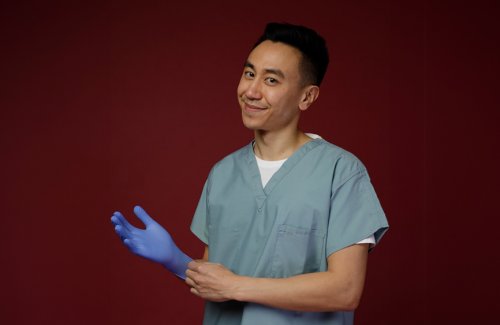
In the second episode of the Creators Podcast series, we would like to share the story of Steven Ho whose career path has witnessed an unexpected turn, moving from the emergency room to the entertainment industry.
Steven Ho is a Vietnamese American stand-up comedian and an online sensation, garnering over 16 million followers across social media.
Throughout his school years, Steven encountered racism and bullying from his peers, particularly directed at his surname.
It was his introduction to “Paris By Night,” a Vietnamese-language performance variety show that sparked his interest in sketch comedy. However, his initial career prospect was working in the medical field as an Emergency Medical Technician (EMT).
During college, while working for Stanford ER, Steven discovered his love for acting and started taking acting classes and minor roles in small-scale projects. During this time, he had a hard time finding a balance between his medical career and his acting passion.
When the pandemic happened, everyone turned to social media. Steven was no exception and this is when the silver lining shone through. He started posting to social media and gaining popularity from his signature comic video series, “Tips From the ER.” Since then, he has made social media and comedy his full-time job and gained significant success. His talent has landed him many stand-up shows at the Comedy Store, Ice House, and The Hollywood Comedy.
Listen to The Creators Podcast featuring Steven Ho here.
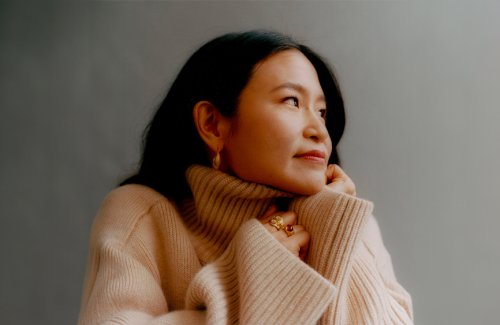
In today’s digital age, the online world is filled with countless content creators and influencers, all trying to make their mark. Yet, only a few manage to create real impact, and Zoe is one of them.
With over 3 million YouTube subscribers under the name “zoeunlimited,” Zoe has built a dedicated community through her insightful content on fitness, fashion, dating, and navigating the complexities of girlhood. Her work has even caught the attention of celebrities like Olivia Rodrigo, who stated that she watches Zoe’s videos all the time. In just 14 days, Zoe doubled her subscribers from 1 million to 2 million, when she was creating videos as a hobby outside her 9-to-5 job.
Read through as we learn more about Zoe’s secrets to success as she shares it in detail with Asian Hustle Network.
ABOUT ZOE
I am a multiformat creator navigating girlhood with my Gen Z and Millennial community. My goal is to encourage women to tap into their unlimited potential by thinking critically via my pop culture video essays about beauty, fashion, and confidence.
I grew up in China and Canada and came to LA initially to study Business Economics at UCLA. The different cultural environments I grew up in gave me broader perspectives on the various pop culture topics I’m interested in and inspired me to share that vision with the unlimited community to learn and grow together.
ZOE’S JOURNEY AS A CONTENT CREATOR
Growing up, I’ve always been artistically driven and drawn to creative mediums like fashion, film, and fine arts. Scared of becoming a “starving artist,” I didn’t pursue fashion and studied Business Economics instead, but I always felt like something was missing.
I was very fortunate to discover YouTube as a creative outlet after college and began documenting my life in video format. I always make videos on what I’m interested in at the moment, which was a lot of fitness, college, and even CPA content at the very beginning. Throughout time, I discovered that the central theme of all my content revolves around growth – in becoming fitter, healthier, more confident, more reflective, and so on. My community of mostly women feels like a precious friend group to me and I realized through interacting with them, that many of us are going through similar challenges in our girlhood and there’s much more to share and discuss than just my personal journey.
With that, I began creating my video essay series that served as a discussion ground to think critically about topics many could relate to, including beauty standards, dating, and fashion. Girlhood is such an intriguing and confusing experience in the modern setting, and I just hope to create a community where women feel seen, heard, and not alone when encountering the ever-changing concept of how to be a modern woman. I don’t have the answers but I hope to create a safe space for all of us to explore and reflect!
RAPID GROWTH AND STRATEGIC SUCCESS
Although part of the growth (growing subscriber count from 1M to 2M in 14 days) was extremely rapid, the story before the lift-off was a consistent grind of weekly uploads for 3 years as a pure hobby. The tipping point always feels exciting and amazing, but what truly felt rewarding was 3 years of building something I love.
OVERCOMING CHALLENGES AND CELEBRATING MILESTONES
I’d say one of the biggest challenges was the lack of initial support and understanding from my family. It was painful for me to see something I love doing creating a chasm in my relationship with the people I love, but I’m grateful that we have cleared past misunderstandings and grown close again. I’m so grateful for the community that stuck with me as well as my closest friends who believed in me even when I had a lot of self-doubt, especially during the years I felt judged and not understood.
BALANCING AUTHENTICITY AND PRIVACY
I love and respect the people closest to me and want to protect their privacy as much as possible online. When it comes to my own journey, I believe my community comes with a good heart, and I see them as good friends I can confide in. So even when it comes to moments that aren’t the most glamorous and the failures I’m not extremely proud of, I do want to share that experience if I know someone can benefit from it by feeling less alone or could simply learn from the mistakes I’ve made.
That’s the goal with my Healing Diaries series, where I share some of my biggest struggles including my health, mental health, and dating. I hope to normalize talking about uncomfortable topics and reduce any shame or guilt for anyone going through a similar experience.
BUILDING “UNLIMITED THOUGHTS” AND A COMMUNITY
The most rewarding moments are the ones when I get to meet my followers in person and learn about their journeys and goals. I’m beyond grateful for a community of kind and driven women who have allowed me to tag along with them on their growth journeys. Some are in college, some just landed their third job, some are going through heartbreaks, and some are creating amazing art and inspiring many people including me.
It was really sweet when a subscriber told me how one of my videos in the “Unlimited Thoughts” series inspired her to write a final paper that got her an A. That brought me way more joy than hitting my personal milestones. The love and passion for turning ideas into something that others can enjoy watching and perhaps benefit from, make all the blocks and times of doubt worth it.
WINNING A SIX-FIGURE INVESTMENT FROM CREATORDAO
I had a major imposter syndrome moment because I entered the contest without expecting to win.
It was a huge encouragement to be more confident in myself as a creator and a wake-up call to think bigger. An advice I’d share with other creators is to trust that you are way more capable than you think. Do not limit yourself.
LOOKING AHEAD
I wish to continue improving my storytelling and critical thinking as a creator to bring hope and joy that people can feel and pass on.
Whether it comes to future content projects or a brand that I launch, I wish to uplift my community and support them in building their self-confidence and identity. I’m excited to explore many more unfamiliar areas in content I haven’t tapped into yet, including podcasting, to challenge and expand my own limits.
A MESSAGE OF REPRESENTATION AND EMPOWERMENT
When I first began making videos about pop culture, I felt a little out of place given the limited AAPI representation in beauty, fashion, and entertainment. It is exactly for this reason that I must show up more in this space to bring my unique narrative shaped by my multicultural experience of growing up in China and Canada.
Authentic self-expression cannot occur without bringing forward the full self, and that includes our beautiful heritage, no matter what that is for each individual. As Lucy Liu said at the Gold Gala “You never know how far just a little bit of support can carry you.”
It resonated with me so much because I cannot imagine how far I’d come without that initial bit of support. I hope to be that supporter for my community and help them break out of their previous limiting beliefs.
FINAL THOUGHTS
It warms my heart to see more and more women and members of the AAPI community daring to dream big, not just in content creation, but in all facets of entrepreneurship. I hope to use my platforms to further support these creators and entrepreneurs, who are sharing the spirit of breaking limits and redefining what’s possible.
Venture capitalist Ann Lai is, by all measures, an absolute beast. From earning a PhD from Harvard at 25 to becoming Managing Director at her own firm–Skeleton Key, Ann has clearly achieved a great deal of success throughout her career. Ann is also notable for speaking up publicly about the misogyny she has faced in VC, despite it nearly forcing her out of the industry. I had the honor to chat with Ann about her career journey pre-VC, reflections on her identity, and also about her exciting new firm.
Journey to Venture Capital
Ann’s journey to Venture Capital is at least 50x cooler than mine. In fact, it’s one of the coolest there is. It all started when she read a biography of Marie Curie at the age of six. I asked Ann to explain what drew her to Marie Curie so much that it set her on a trajectory she is still on today:
The recognition of women in science has historically been insufficient, and I have consistently been attracted to narratives that feature an underdog. Marie Curie’s achievement as the first woman to win a Nobel Prize, and then winning it a second time, was profoundly significant to me as a young person. From a very young age, I had an affinity for science and engineering. My mother, a teacher of literature, encouraged me to read or listen to autobiographies of diverse individuals. My early fascination with NASA was spurred during the time my father worked there. Marie Curie significantly altered the landscape and methods of many scientific endeavors.
Marie Curie’s story inspired Ann to study science. By age 25, she had earned three STEM degrees from Harvard including a PhD in microfluidics. While studying, Ann was starting to notice things that would push her away from being a scientist towards investing:
I noticed that many significant scientific advancements were transitioning to privatization. There was a golden era of science in the United States during the 1970s, characterized by substantial government funding and innovative labs such as Xerox and Bell Labs, but it is now over. I hypothesized that the most groundbreaking scientific discoveries would increasingly be funded privately. The sectors that remained vibrant, like CRISPR and space exploration, were those receiving substantial private investment. And although I was satisfied in the laboratory, my broader interests and extroverted personality drew me toward the funding side of science.
However, that was not quite what the universe had in mind for Ann. Ann graduated right around the 2008 financial crisis, which had pretty much killed off all appetite for investments in science. Thus, she instead started her career at a firm pioneering big data analysis:
I joined a company on Wall Street that pioneered what is now commonly referred to as “alt data”. We acquired, scraped, and sourced new and proprietary datasets, transforming them into predictive models for public company earnings. This was a rigorous introduction to the underlying forces that influence corporate dynamics; we had to understand the key performance indicators driving stock market values. (It was like going through a condensed MBA program.) By modeling quarterly earnings, where data points were scarce, I applied methodologies from my graduate research, collapsing extensive data sets by normalizing or parameterizing the variables, allowing for a comprehensive, dynamic model. This approach was highly effective, blending scientific and business analytics.
After her stint working in finance, Ann went on to lead business intelligence for international territories at Riot Games and then worked in a few early-stage startups in preparation for a transition into Venture. One thing she said especially caught my attention:
There was noticeable skepticism towards PhDs and academics in venture capital. Despite my extensive scientific background, I was told to strategically minimize the emphasis on my PhD on my resume. It’s evident in the venture space that there is a prevailing belief that academics lack practical business acumen.
When asked whether this skepticism extended to PhD founders, Ann elaborated:
This skepticism is indeed still prevalent. However, many PhDs are exceptionally practical. For companies involved in iterative development, such as SaaS companies, the requirements are different. In these fields, the emphasis is more on user interaction and less on deep scientific knowledge. But, for science-driven enterprises, a thorough understanding of the fundamental sciences is crucial.
Hopefully, this gives some hope to the PhDs out there who are looking to start a company! In fact, VC has been trending more towards deep tech evidenced by an increased share of investments into the space.
Advice for Women in Venture
One aspect Ann has been noted for is her outspokenness on the misogyny she has faced in the Venture ecosystem. For more specifics about her experiences, you can check out this Elle article written about her. Given her experiences, I asked her what advice she would give to women who want to go into the VC or startup space, but are concerned about the misogyny and fraternity culture that is still rampant.
Establishing a close network of mentors and peers for support is essential. This has been invaluable to me. Unfortunately, the prevailing culture remains challenging, and the progress we’ve made has perhaps deteriorated in the past year due to decreased venture capital availability on the LP side. There’s still a lot of work to do. The solidarity of women supporting one another is crucial for fostering progress. Maintaining a commitment to support each other is critical. Although most days it may not seem particularly difficult, there are specific moments where you can just feel a very big demographic difference in terms of who’s empowered. Partners are partners, but managing partners are different categories of partners. Until more women are managing partners or running their own sizable firms as partners, there’s still not enough leverage in the space.
Being Asian
I asked Ann to reflect on how her identity as an Asian woman has affected her lived experience:
My mother is incredibly liberal for her generation of Taiwanese. She has always been supportive, telling me I don’t need to get married early or worry about having kids, which is rare for Asian moms of her generation. At the same time, my parents weren’t financially very well off when we came back to the States. I contributed to my family’s income from the age of 12. There was no safety net. If I didn’t make it, nobody could pay the bills. It taught me resilience and gave me a “no way back” approach to life.
My dad raised me with a strong sense of right and wrong (We watched a lot of Asian martial arts dramas and stories.) It’s not really about being visible–it’s about doing the right thing. This Asian heroism as defined by martial arts movies approach is quite different from American heroism, and it’s the reason why I stood up for myself even when it might have prevented me from working again.
Being an Asian woman in the US is difficult. I often get the assumption that I’m a lot younger, for example. So, you always have to go into a meeting fighting that. That’s something my cohort and I have talked about a lot, like, you learn how to dress and style yourself to appear older sometimes so that you will be taken more seriously.
For meetings in East Asia, I was coached to open meetings by stating my qualifications, the PhD from Harvard, etc.This way, they respect the degree and then they respect you. Male executives and men who attend meetings weren’t prepped in this way. But I’m starting to see more evolution, especially with the younger, successful Asian male founders and groups. They’re very supportive, which is great. The older generations still tend to have a more patriarchal mindset, but it’s getting better, especially in the US.
Anecdotally, children of first-generation immigrants often pursue more stable, high-paying careers (doctor, lawyer, etc.), yet Ann has clearly bucked this trend. I asked her why she thought she ended up doing so:
My parents have been very modern in their thinking. They’ve never said I had to do things in a certain way. They’ve always supported my decisions. It made me feel like I could do anything. I’ve never worried that I might not succeed. If you are fearless, you end up doing aggressive things, aggressive in a good way.
Having grown up in both the US and Taiwan, I think Western and Eastern education are quite different. The American system encourages exploration and aspirations, whereas there’s a lot more regimen in the Eastern education system. The way I was raised was very much a marriage of those two aspects in an unexpected way. I have a lot of friends who were told to be a doctor or a lawyer, but if you think you can do better at other things, why do you have to do that?
Skeleton Key
A Skeleton Key is a type of master key in which the serrated edge has been removed in such a way that it can open numerous locks. It is also the name of Ann’s new firm. While researching for this interview, I came across this article by Ann, where she lays out the argument for why Deep Tech is venture-backable. Towards the end of the article, she shifts the focus to ScienceTech (SciTech), which she defines as: the software, platforms, or tech-enabled services that accelerate scientific discovery or assist in bringing science to life. I asked Ann why she chose Skeleton Key’s focus to be on SciTech instead of Deep Tech:
Deep tech is definitely fundable, as I’ve talked about. But now with AI, I’m thinking about how to make deep tech happen faster. Instead of investing in a drug, I’m looking at the platforms helping people discover drugs faster. Those layers are interesting to me, and I think those are the layers where a lot of the accelerated computing power can come into fruition in an interesting way. The accelerated computing power means you can map out a lot of things that have historically been very difficult such as fatigued glass behavior or certain thermal dynamics, nonlinear dynamics, and anything that’s related to nonlinear systems.
There’s even a lot of interesting stuff happening around the application layer of science. For instance, bringing chemicals to real-life applications usually takes a long time. You find a chemical and wonder where to use it and what it can be used for. Then, usually, you need a different type of manufacturing protocol or a different variation for each use case. But now, you can find a lot of those variants much faster. The formulation or the tuning of that molecule, protein, etc. can be assisted on by AI and you accelerate that process of bringing it to a real-life application much faster.
As you may have gathered from her background, one of Ann’s specialties is data analysis. In her previous VC roles, Ann leveraged her background to evaluate companies based on their data in an apples-to-apples way. You can hear more about her approach in this podcast. Given that Skeleton Key is working with a type of company that isn’t what the typical VC invests in, I was curious to know if she had to adapt her process:
It’s definitely different for Skeleton Key. We deal with a lot more data around R&D and early applications because we’re focusing on a second or third institutional round for these folks–so it’s a post- R&D but before they actually hit ramping revenue. That means you still have time to work with them on exploring the business–is it a software platform approach, or is it a single molecule approach, or a single robot approach?
I asked Ann what revenue the companies typically are at in their second or third institutional round:
I think the specific revenue number doesn’t really matter. It’s the mechanics of what the early performance looks like. If they have a couple of contracts which are scalable over time and show real adoption and real usage–that’s a lot more important than one marquee SaaS contract that you can get through relationships. It’s more around the usage, the actual day-to-day functionality or day-to-day use.
Earlier in our chat, Ann touched on how Skeleton Key plans to help startups explore different business angles, I asked Ann to elaborate on this process:
Our approach is very collaborative. My philosophy has always been to provide as much help as the founder wants. The goal post-investing is to help them with monetization, go-to-market strategies, and thinking about how to scale from a scientific lab mindset into building a company. We also assist them in fundraising. There are a lot of resources post-investment, and whether a founder will leverage them is their choice, but we prefer that they are open to us being more involved. In this category, where there are no established revenue models and many founders are coming from academic backgrounds, this advisory capacity is helpful to give them the full lay of the land, let them explore, and let them test different monetization hypotheses quickly. Inflexibility or lack of adaptability can be a problem down the line, especially in these categories that require a lot of money for ramping up and the revenue models aren’t so obvious. In fact, we’re planning on helping founders in this way before even investing, as part of our process.
I mentioned to Ann that this kind of help seems very valuable, especially since the only resources available online tend to be very reductive:
My biggest pet peeve is when VCs prescribe a framework without actually understanding the problem. When we help companies, we don’t do that. We workshop their unique situation and how to price best for their product, without capping future revenue. For example, a lot of people like to suggest ARR subscription SaaS, but that model doesn’t work for everyone. There’s a lot of possibilities around pricing and revenue that isn’t just about “getting ARR.” I think those are the interesting exercises to think through when you’re in these new categories.
Shoutouts
Ann is amazing and I am super excited for the launch of Skeleton Key. If you’d like to hear more from Ann, you can sign up for her Science Fair newsletter here, where she writes about science and venture. Thank you Ann for the great interview!