
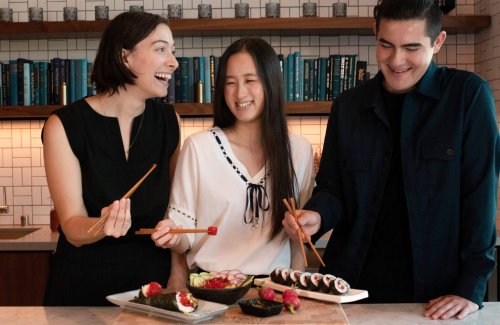
The effects of climate change are becoming increasingly evident today. This is why three visionary individuals came together to address one pressing issue: the unsustainable practices in our food system, particularly regarding seafood.
Kelly Pan, Adrian Miranda, and Stephanie Claudino Daffara, the founders of Impact Food, combined their diverse expertise and unwavering commitment to create a positive impact.
Driven by a shared passion for food innovation and ocean sustainability, they embarked on a journey to revolutionize the concept of seafood. Through meticulous research and cutting-edge technology, by studying the composition of animal-based seafood and leveraging their knowledge in food science and molecular biology, they developed their first product, Impact Tuna.
With Impact Food, Kelly, Adrian, and Stephanie strive to redefine the way we approach food. By choosing plant-based seafood, individuals not only enjoy a delectable culinary experience but also contribute to a healthier future for our planet, our oceans, and ourselves.
Read through as we learn more about the remarkable journey of Impact Food and its founders, Kelly, Adrian, and Stephanie, through an exclusive interview with Asian Hustle Network.
IMPACT FOOD’S DYNAMIC FOUNDER TRIO
In January 2020, we met while studying at UC Berkeley in renowned scientist and entrepreneur Dr. Ricardo San Martin’s Alternative Meat Challenge Lab, a product-design-based entrepreneurship course that examines how food is made and why alternative meats are a key solution to creating a more sustainable food system.
A passionate foodie-business student (Kelly), a vegan home chef-computer science student (Stephanie), and a scientist-biochemistry student (Adrian) found each other and decided to combine their fields of expertise to work towards a shared passion for food innovation and ocean sustainability.
REDEFINING SEAFOOD SUSTAINABILITY
We were inspired by the innovative solutions we saw in terrestrial meat products like beef and chicken, and the science behind creating them. As we brainstormed in class for a protein alternative that could become the center of the plate, we realized that seafood was a wide white space in dire need of new solutions.
With an ever increasing global population, the conventional seafood industry (e.g. commercial fishing and aquaculture) continues to overfish and deplete our oceans but is still unable to keep up with rising seafood demand. 90% of fish stocks have been used up, and we’re rapidly losing biodiversity and destroying marine ecosystems which support all life on our planet, so we need to take action now before it is too late.
This is when we knew we were on a mission to reimagine a more sustainable food system through delicious and nutritious seafood created using plants and scientific innovation. Through Impact Food, we would be able to do our part in alleviating pressure on our oceans and transform our global food system to be better for our people, planet, and animals.

OVERCOMING OBSTACLES IN PLANT-BASED SEAFOOD INNOVATION
At Impact Food, one of our core values is “Delicious Innovation” – to always develop the tastiest, high-quality food.
All seafood species have a very unique, complex taste and texture profile, so we knew that it would be challenging to recreate the sensory experience of conventional seafood. To overcome the challenge of developing realistic seafood texture, we focused heavily on R&D and consulted with industry experts from chefs to scientists and seafood purveyors to truly understand the composition of fish. This knowledge combined with a lot of experimentation allowed us to match the subtle ocean flavor, nutritional profile, and delicate texture of species like bluefin tuna.
Another challenge we faced was scaling our proprietary seafood texturization technology. We were very fortunate to bring on a talented bioprocess engineer last fall, who helped us scale our process and significantly accelerate our commercialization timeline.

IMPACT FOOD’S UNIQUE SEAFOOD PRODUCTION PROCESS
The process of making our first flagship product (raw sushi-grade Impact Tuna) began with extensively studying the scientific composition of seafood and developing a proprietary production process using plants and biotechnology.
Our novel food technology platform relies on our unique texturization process that optimizes and transforms our seafood base (a blend of plant ingredients such as pea protein, algae, & vegetable juice) into a whole-muscle structured seafood product.
In addition to completely removing animal fish from the seafood supply chain, our plant-based seafood is a more sustainable food choice that can always be consistently supplied with exceptional quality. Due to supply chain volatility, the quality and pricing of animal-based seafood products are constantly in a state of uncertainty and harm the entire food system.
Therefore, we developed a craveable, true replacement for sushi-grade tuna with under 10 plant ingredients and a longer shelf life than conventional tuna. Our product is also high in omega 3, protein, fiber, and potassium with none of the negative consequences such as overfishing and mercury contamination.
IMPACT FOOD’S EFFORTS IN RAISING AWARENESS
Since food is a very social and cultural experience, we realized that we needed to collaborate with the food service industry to reinvent the seafood consumption experience while remaining authentic to traditional cuisines.
Restaurants, chefs, and cafeterias (e.g. corporate and college campuses) play a critical role in introducing customers to new culinary experiences, encouraging trial, and familiarizing them with plant-based seafood and its benefits. By adding these sustainable options to their menus, they are also able to influence a wider audience and drive market demand for seafood alternatives.
Recently, we launched Impact Tuna in Southern California at Pokeworks and became the first fish-free seafood ever offered at the world’s leading poke chain with 65+ locations across the US and internationally. Pioneering this novel dining experience with Pokeworks is a major step for us in creating large-scale demand for sustainable eating and bringing plant-based seafood to the masses.
In addition to our food service partnerships, we also utilize channels such as social media to raise awareness about the benefits of plant-based seafood. Although we only sell our plant-based seafood ingredients to food service, we still prioritize connecting with end consumers via the visual and informational content we share on channels such as Instagram and TikTok.
Recent media coverage about the unsustainable and inhumane practices involved in commercial fishing such as the Seaspiracy documentary has also been immensely helpful in generating awareness about an obscure and complex seafood industry.

SCALING WITH QUALITY AND ENVIRONMENTAL CARE
We have begun commercial production and are currently building out our own manufacturing pilot plant to ensure high-quality control and consistency of our food innovations.
Because our proprietary process can use standard equipment that is traditionally used in other industries, we can reach price parity with conventional seafood and scale to high volumes very quickly. We are continuously investing our resources into R&D and optimizing our supply chain so that we can constantly innovate, and maintain product quality while scaling our production.
To meet increasing market demand while ensuring the quality and sustainability of our products as we scale in the US and soon internationally, we are also building strategic partnerships with and collaborating with other companies (e.g. foodservice distributors, suppliers, restaurants, startups, etc.) to strengthen the ecosystem for sustainable protein solutions. Together, we’ll be able to develop and scale products with better taste, texture, and nutritional value.
IMPACT FOOD’S FUTURE OF DELICIOUS PLANT-BASED SEAFOOD
Our primary driver at Impact Food is to make a positive global impact by creating a future of food that can sustainably feed the world while protecting our oceans and marine life.
We strive to create a global impact and movement of consumers eating more consciously and sustainably. To do this, we need to make our innovations available and accessible everywhere our consumers eat, around the globe.
Today, we’re excited to continue scaling our production, onboard more food service partners, and expand distribution to major markets for seafood such as Japan. Our goal is to reconstruct the center of the plate with a new, tastier whole-muscle seafood experience that is healthier for you and the planet without harming any animals.
Impact Tuna is just the beginning, and we’re excited to leverage our seafood technology platform to expand our product pipeline and recreate various other seafood species using plants. Stay tuna’ed and join us on our voyage to revolutionize the global seafood system.
CONNECT WITH IMPACT FOOD
Website: eatimpactfood.com
Linkedin: Impact Food
Tiktok: @eatimpactfood
Instagram: @eatimpactfood
Facebook: Impact Food
Twitter: @eatimpactfood
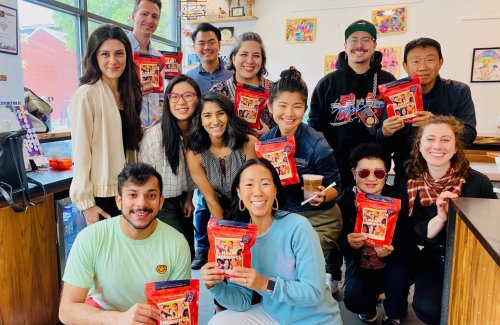
Something special is brewing at Harrisburg’s Elementary Coffee Co.
Elementary Coffee Co. partnered with the Harrisburg Asian American Pacific Islander (HAAPI) group to introduce a brand-new coffee called “HAAPI Mornings.” This tasty blend is inspired by Vietnamese flavors and was launched during AAPI Heritage Month in May. The goal is to show more people from different backgrounds and cultures, making them feel included and seen.
“It’s all about visibility and representation,” Ellen Min, a member of HAAPI, said to The Burg News. “The more representation and visibility, the less we are excluded.”
It all started when members of the HAAPI group visited a coffee shop in New York City that had special Asian coffees. They thought it would be great to have something like that in their own city.
So, they talked to Andrea Grove, the owner of Elementary Coffee Co., and she jumped at the idea. They worked together to create a unique blend using beans from India and making it a dark roast for a rich taste.
Besides the yummy “HAAPI Mornings” coffee, Elementary Coffee Co. also offers other special drinks inspired by Vietnam. You can try the traditional Vietnamese hot and iced coffee, as well as the Ube Iced Latte and Saigon Iced Coffee.

“Coffee really brings people together, and this coffee is doing that in such an impactful way,” Andrea Grove said to The Burg News.
Featured Image Source: The Burg News
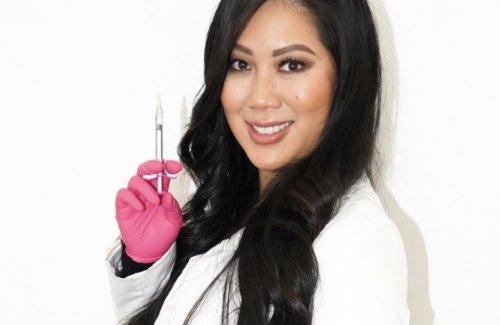
Dr. Lanna Cheuck, an Ivy-League Trained, Board Certified Urologic Surgeon turned entrepreneur has made a significant impact in the field of aesthetic medicine.
Today, she is the proud owner of LC Medical, a medical spa in Manhattan, and also leads FACE Med-Spa Training, where she shares her expertise with fellow medical professionals.
She has been featured in esteemed publications like Forbes and has been recognized as a Key Opinion Leader in the industry. Nevertheless, she remains grounded and motivated by the positive transformations she brings to her patients and the opportunity to guide others on their own professional journeys.
Beyond her entrepreneurial endeavors, Dr. Cheuck continues to excel as a Board Certified Urologic surgeon, practicing at Jacobi Hospital. She is a respected educator, sharing her knowledge on topics such as penile rehabilitation and making significant contributions to the ISSM.
In an interview with Asian Hustle Network, Dr. Lanna Cheuck shares her remarkable journey and insights into the world of aesthetic medicine. Join us as we delve into her experiences, challenges, and triumphs, discovering how she defied conventions and built a thriving career that empowers both herself and others.
HUMBLE BEGINNINGS OF DR. LANNA CHEUCK
I was born in Chinatown in the Smith Housing Projects and was later moved out to live with my grandparents on Long Island in the middle of second grade as the crime was increasing in our building and my parents had been mugged and beaten up multiple times.
My parents immigrated from China during the Cultural Revolution. They built a raft to escape to Macau, then paid to be smuggled through a vegetation boat before coming to Hong Kong. I grew up very poor and was one of five Asians living in a predominantly white neighborhood on Long Island.
For as long as I remember I wanted to become a Urologic Surgeon, but I didn’t realize the sacrifices I would make to get there. While it is a male-dominated field, I remember at the time I was one of 8% of women in urology.
I had my first child born prematurely with special needs and blindness and took off six months to be with her in the ICU. It was at this time that I realized if I wanted to provide for my family, especially my daughter who will be dependent on me and my husband for a very long time, then I would need to find a new trajectory to help me become more financially independent.
DR. LANNA CHEUCK’S RESILIENCE IN THE FACE OF INEQUALITY AS A UROLOGIC SURGEON
I asked the administrator at the hospital for a salary increase and he told me that I needed to prove why I needed to make more. So, I went and got a different job offer to become a program director of a New York City Academic Institution as their residency director with a 40% pay increase.
When I presented my job offer to the hospital administrator, he took one look and told me that I should leave and he could not match my salary. It was also at this time that my male counterparts were making six figures more than me while I was working with the toughest patients and doing the toughest work.
CHALLENGES AND OBSTACLES SHE OVERCAME
My father started as a busboy in a restaurant, then became a taxi cab driver, worked at a sweatshop, and then got into the spa business. He opened up a Spa called Eden Day Spa on Broadway. He asked me to help and that’s when I figured I can help my family business and go into aesthetics as a physician.
My biggest obstacle was being under the radar and so I couldn’t really grow. I asked the hospital administrator at the hospital for permission to pursue my second job and he gave me permission.
I was working full-time as a urologic surgeon doing the most difficult surgeries and on nights and weekends, I was taking care of my child and working at my father’s spa trying to grow the aesthetics part of the business.
I remember waiting for one patient to come at 9:00 pm because that was the only time I had available. I was missing my newborn and questioning whether this was worth it. In the beginning, it was very tough to garner any patients, I usually had one patient a week and most of the time they were a no-show. I would wait for hours and drive an hour from Harlem in hopes of seeing even one patient. The obstacles were juggling time, family, wondering if I was making the right decision, and whether or not it was worth being away from my child who was also breastfeeding.

DR. LANNA CHEUCK EMPOWERING THE AESTHETIC MEDICINE COMMUNITY
I realized that if nobody put me on their platform then I would make my own, therefore, I opened my own aesthetic training business.
When I was first starting, I took two training courses and realized that these courses do not prepare you for the field of aesthetic medicine neither clinically nor from a business standpoint.
As a surgeon, I’ve always been the type to see one; do one; teach one, and that’s exactly what I did. I started an online community for physicians to pivot into aesthetic medicine because one of the things we were never taught in school was business. Since then, I’ve trained hundreds–if not thousands–of physicians and nurses. Some other huge and field-relevant accomplishments include being featured in Forbes and named a Key Opinion Leader for InMode and Galderma as well as a GAIN Trainer.

HER ADVICE TO ASPIRING ENTREPRENEURS
Network with as many people as you know, be a connector.
Help other people and let everyone else know what you need, if you don’t ask you’ll never know how they could’ve helped you. Additionally, since I’m a visionary, I realized that I need processes and systems in place and strong integrators who help me to fulfill my visions.
This means hiring people who have strengths in other areas that I would consider my weaknesses thus allowing me to build a team that is good at operations.
We were never taught business in medical school which means everything from there on out is learning, absorbing, networking, connecting, and making opportunities out of meeting new people and helping others.
MOST REWARDING ASPECT OF HER CAREER TRANSITION
The most rewarding aspects of my career transition include feeling more valued by my work, patients, and staff and being compensated for something I’m good at, my techniques, and making people feel more confident.
I’m lucky to have patients from all walks of life; from the nurse’s aide who puts away money under her mattress to see me, to the successful CEOs, celebrities, models, actors, dancers, teachers, healthcare professionals, etc. What keeps me pushing forward is that I’m able to help other people pivot and transition.
CONNECT WITH DR. LANNA
Instagram: @doctorlanna
Website: doctorlanna.com