

This edition was a collaboration with The Early Newsletter by Michaela Gordon. You can read her thoughts on our conversation with Patrick here. Thank you Michaela for collaborating and please go check out her article!
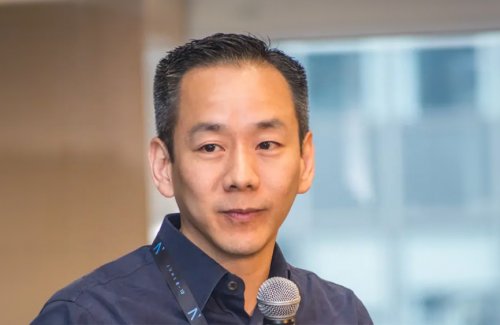
The startup ecosystem has gone through a lot of changes over the years. From the dot com era to the modern era of AI, Patrick Lee has seen it all. A stalwart of the startup ecosystem, Patrick has started seven different companies over the last 30 years, including everybody’s favorite movie review website: Rotten Tomatoes. Michaela and I had the chance to sit down with Patrick to talk about Rotten Tomatoes, advice for founders, and Patrick’s reflections on being Asian.
How did Rotten Tomatoes get started?
Rotten Tomatoes had three co-founders. I was the CEO. There’s Senh Duong, who was the creator of Rotten Tomatoes, and he was basically our chief product officer, and Stephen Wang, who was our CTO. I knew them all from my freshman year of college. Senh was down the hall from me in the dorms.
Prior to Rotten Tomatoes, Stephen and I had founded a web design firm. We were doing a lot of work for the entertainment industry, a lot of work for Disney Channel, stuff for Warner Bros., Artisan Entertainment, MTV, VH1, and ABC. We even made the online flash game for Who Wants to Be a Millionaire.
During that time, Senh was our creative director, and he came up with the idea on the side. He was a huge movie buff. He came up with it and launched it on his own. It was written in static HTML because he wasn’t able to code at the time. And we hosted it for him. After about a year of hosting, we were like, “maybe this should be the business?” So we actually merged our company with his company and became co-founders of both companies and had equity in both. I went out and raised a million in funding, then transitioned our design firm off to another group to take over. We kept an equity stake in that design firm, but then we basically passed our clients to another group to take over. They took over the name and everything so that we could focus on Rotten Tomatoes fully.
What was your experience raising money like?
Rotten Tomatoes was my third company. In my first company, we put in our own savings. For the second company – the design firm – we took loans from our families. $10,000 from my mom and $20,000 from Stephen’s uncle. Once we started getting clients, we paid back the loan with interest.
For Rotten Tomatoes, one of our clients raised some venture money, so they put us in touch with their VC who said they would lead the round. They put in half a million. The rest we actually raised from our old design firm clients. A number of them were tech companies and had successful exits. So they were totally open to investing, and they knew what we could do because they were our clients.
Why did you decide to raise venture capital for Rotten Tomatoes?
This was in late 1999, right before the dot-com crash, so there was a lot of money going around and a lot of investment into the internet. It’s kind of like what Web3 was like a few years ago or what AI is like now. Multiple companies we worked with had raised a lot of money and had successful exits. We were basically building for all these companies and realized that we were on the wrong side of the business. We decided to try to build something that was our own instead of being a services company. That’s why we went and approached the VC that we had contact with. It was a small VC out of Taiwan. I remember we had a couple of different ideas. The first one was Rotten Tomatoes, which already had traction. The other one we thought was interesting was making a portal for Asians and Asian Americans. We were doing the official Jet Li site. We were working with Yolk magazine at the time. I remember having a meeting with Jet Li and he was getting excited about that idea. He was saying he could bring on Jackie Chan. At that time, there were a couple of other Asian magazines that were within our reach. It was a very small community back then. Our thought was, what if we got the different magazines, the different Asian sites, some of the big Asian and Asian American celebrities, and brought them all together? I remember when we pitched these two ideas to our VC, they told us to do Rotten Tomatoes because movies were mainstream. At the time, only 3% of the population in the US was Asian. Even among Asians, there are many different types and they might identify separately as Chinese, Japanese, Korean, Filipino, etc. The investor felt it would be very difficult to have content that appeals to all of them. They recommended we do Rotten Tomatoes, which, looking back, was definitely the correct decision. The other idea would have probably been about 20 years too early.

Rotten Tomatoes was launched in just two weeks. How did you navigate the tension between creating the perfect product versus getting it out as soon as possible?
Rotten Tomatoes was our creative director Senh Duong’s idea. He was a huge Jackie Chan fan. He wanted to know what everyone was saying about Rush Hour when the movie was coming out, so Senh went to the library and gathered reviews from magazines and newspapers–back then, very little was online. He decided that if he was putting all this work together, he might as well share it with other people. So he went home, built a page for Rush Hour and the other mainstream movies coming out that week, and put all the information up there. Because the scope was limited, he was able to go from idea to launch in about two weeks. He was gathering twenty to fifty reviews per movie for three or four movies. It was a lot of work, but doable by one person.
It turns out that just having the new releases was still very useful because people were most interested in the movies coming out that week. He didn’t need to have tens of thousands of scores for the long tail of movies. He just focused on the head, the tippy top of the head. It was immediately useful, and instantly started getting traffic and attention. Then he just kept it up. He would work on the next week and the next week and the next week. It wasn’t until a year in that we said; “hey, maybe we should turn this into a business.”
My advice for anyone is to launch quickly and test quickly. A lot of people, and I’ve made this mistake multiple times, spend six months to a year or two trying to make this perfect thing. They end up spending a lot of their own money or burning half or more of the funding that they raised trying to build this thing. The issue is you don’t know what perfect is until you actually get it out there.
You’ll see over and over, especially in consumers, folks put something out as a test and then it blows up. Twitter was a weekend project and then they just blew up. Twitch was Justin.tv in the beginning. They just messed around and put something out there. You just have to get the basic thing out there to see if people want it. Sometimes you don’t even have to build anything, you can literally just interview people or just do a mockup, and make a walkthrough of what the product would look like. It could literally be a napkin scribble and you can immediately start getting feedback. That feedback can actually give you a lot more information than putting something “perfect” out there. Go back to almost any consumer site or app and try to look up what version one looks like. Go look at the first versions of Facebook, eBay, Amazon, or whatever. They were ugly. But they solved something. That’s why they kept growing and taking off. I’m always recommending that.
The other thing I say to people a lot of times is to really focus. It’s generally a single thing that people care about. For Rotten Tomatoes, it’s the TomatoMeter. We could get rid of the cast, crew, filmography, photos, movie showtimes, and almost everything else on the site. But really, as long as you have a score, that’s the critical thing that you need.
If you think about fast food chains, every fast food chain specializes in a single type of food. The restaurants that offer multiple types of food are generally all mom-and-pop shops. The really big chains do one type of food. Every single one of them. When you look at social media, every social media platform started off with one unique singular feature. Like TikTok, Snapchat, Clubhouse, Twitter, YouTube, Instagram, and Substack, they all started as one thing. And again, as they got big, they started looking more like each other because they added more features. But they all started out as one thing. You find one thing that people actually care about. And you try to put that one thing out as fast as possible to see if they really care.
How do you know when to give up on an idea?
Testing doesn’t have to be serial. You can actually do some stuff in parallel. As an analogy: if you have a kitchen, you can test a few different types of food concurrently. You could even do a survey before you start cooking to narrow down your options. Then, you can try each of them out and go forward with the best-performing one. It doesn’t have to be: Let’s try chicken, now let’s try hamburgers, now let’s try pizza. You can try all of them at once.
In terms of knowing if an idea will work–you’ll know it when you see it. Rotten Tomatoes got the press instantly. It was getting noticed. USA Today was writing about it and Netscape was highlighting it at Yahoo. The day Pixar released A Bug’s Life, right around the time we released Rotten Tomatoes, we saw spiking traffic coming from Pixar.
When you look at Asian Hustle Network, they just put something out there and it went crazy. Facebook and Twitter had the same thing. Especially with consumer products, when it works, it works. You’ll know when it doesn’t work because it’s crickets. You’ll be trying to tell everyone to go on, you’ll be telling your friends and family, and some of them will go on once and never come back. That’s normal. That’s actually what happens almost every time.
Take an average YouTube video. You’d have a hard time getting even 100 views on it. Then every once in a while, for whatever reason, someone puts up a video and it gets millions of views and everyone’s sharing it like crazy. You kind of know it when you see it. If you’re begging everyone you can get, you’re trying to market in every way, you’re even buying ads and you’re having trouble getting a hundred views or a thousand views, you’re probably done. If it’s an app or a website, it’s probably not the right one. The way you know if you have product-market fit is if people tell other people about it without being asked to or incentivized to. Think about TV shows like The Queen’s Gambit a couple of years ago or Squid Game. People were sharing it with each other unprompted. They would just tell other people about it and it’s essentially free marketing.
Is it necessary to have startup experience or experience working for another company to execute and test ideas well? Or do you think the best experience to start a company is just to go and start it?
I would say that there is an optimal founder. That founder would be very bootstrappy. They would be able to launch things very quickly, iterate quickly, and without many resources. Also, they would have what I call irrational confidence. They just believe in themselves and what they’re trying to do with this insanely crazy confidence, and often based on nothing.
“When we did Rotten Tomatoes, we didn’t know anything about movies. The Airbnb people weren’t hotel people. The Uber people were not taxi people. Industry disruption often comes from outsiders because disruption requires something out of the box and those people were never in the box to begin with. It’s rare that the disruption happens from within.”
I often speak to students and recent graduates. Some of them will come up and say, “Hey, I was thinking about doing a startup, but I wanted to go work in corporate or management consulting for a couple of years, get experience, and then start it.” There’s a 99% chance you’ll never leave once you’re in and you’re used to a salary, getting raises, promotions, and all that stuff. It’s going to get harder and harder to quit, especially if you get to a point where you’re in your early 30s, married, with kids and a mortgage. The chance of you risking all of that is pretty much zero.
These people, when they come up to me, they’re saying, “Look, I’m too scared. I’m too conservative to actually go out and do it.” The best ones just do it. Yahoo, and Google, they were grad students at Stanford and just left. Zuckerberg was an undergrad at Harvard. Steve Wozniak and Steve Jobs just left and did it. Most of them don’t even finish school because they’re not scared of leaving early. They have so much belief that they just have to do it. This has happened so many times.
In some ways, dropping out was a good sign. It’s not that they dropped out to bum at home playing video games, they believed in themselves so much they didn’t have that fear of failure. I absolutely think that founding a startup is not for everyone. I don’t recommend it if you’re someone who’s very conservative, and very scared. Go get a normal job, and do the safe thing. But there are people who just have to do it. Even if you have the confidence, you still have to have the ability to iterate, to bootstrap, to do those things properly.
When you see that mix, it almost doesn’t matter what the idea is, assuming that they want to do something big. When you see that mix, that’s the right person. It doesn’t matter what their idea is, they’ll figure out something that’s going to work.
They are sharp and bold – it doesn’t surprise me at all when they make it later on. Look at any of these great athletes or entertainers, and when they were young, they probably had that spark. There is an element of luck, but a lot of it is who they are as a person. The biggest thing when looking at young founders is their irrational confidence. This is true for athletes, entertainers, or anyone who takes that risk. Go back to the beginning and look at them, they have that spark.
You’ve been founding startups for many years now. How have you seen the landscape for Asian American founders change since you started, particularly within tech and venture?
In tech and venture, we generally punch above our weight. At the highest levels, if you look at Nvidia, Yahoo back in the day, YouTube, Twitch, and Zoom, there are Asian founders. If you’re also counting South Asians, look at corporations such as Microsoft and Google, the heads are all Indian.
A lot of Asians tend to lean towards engineering, so we tend to be weaker on the executive side. When people talk about diversity, they often don’t count Asians as diversity for tech and venture.
Similar to college, it’s actually harder for Asians than anyone else. From when I started until now, it’s gotten better, but overall, we could use help on the executive side. In other industries like entertainment, it’s getting better but it’s still not great.
A lot of your business partners have been Asian. Is this intentional or coincidental?
Part of it is because I went to Berkeley. I wanted to go there because it was 40% Asian. I was born in LA but grew up in Maryland. There were only three Asians in my grade in elementary school, so I felt a little invisible sometimes. I later attended a magnet program for intermediate school and high school, where there were obviously more Asians. When college came around, I wanted to find a place that had more Asians so that I would find more people like me. After we sold Rotten Tomatoes, I went to China and then later on, I went to Hong Kong. What I realized was that when I went to China, they could tell I wasn’t like them just by looking at me. I realized that I’m actually a minority everywhere. The closest thing to people like me are Asian Americans, or even more specifically, Chinese Americans.
My circle tends to be at the intersection of tech and entertainment, and it leans more heavily Asian. The folks I was working with, like Holly, Kun, and Kevin, they’re Asian but they also were all doing companies at the intersection of tech and entertainment. I did Rotten Tomatoes, Holly did Kabam, Kun did Crunchyroll, and Kevin did Twitch. With Kun and Holly, we also had a connection through Berkeley. I was also really into Chinese martial arts when I was at Berkeley. Because of Berkeley and martial arts, I naturally had a pretty Asian group. But for me, I’ve tried really hard to get good diversity across industry, race, and gender.
What have you been working on recently?
When I came back from Asia, I did another startup, a mobile gaming company. We raised a lot of money – five million – but it didn’t work. We made every mistake you could make, including not being focused. I took a break and then ended up doing PKO Investments with Holly, Kun, and Kevin. We made an investment syndicate, investing at the intersection of tech and entertainment. We had about 800 people in our syndicate, half of which invested in at least one company. From 2021 to 2022, we invested in 45 companies and raised $35 million for those companies. Around November 2022, there was a big market crash and a lot of our angels needed to take a break. At that point, no one in our syndicate was looking to invest. We talked about potentially doing a fund or doing something else and eventually, we decided to do another startup.
That’s [Fanverse] what I’m currently working on full-time, and we’re basically doing a membership-driven community. We’re bringing together all the best builders, creators, and talent in the geek fandom space. Geek fandom being things like comic books, video games, anime, sci-fi, and fantasy. Geek fandom is something I’ve loved my whole life. We have founders of companies like Patreon and YouTube. We have gaming people: the CEO of Tetris, an ex-chairman of Midway Games, a board director from Roblox, and a board director from Atari. We have entertainment people, such as Adele Lim (a Malaysian director/writer), Shannon Lee, (Bruce Lee’s daughter who produced the TV series, Warrior), and Karen Gillen (Nebula in Guardians of the Galaxy). We have sci-fi authors like Neil Stevenson. This is a super cool group of people. There are about 80 people so far and it’s all community. We’re doing dinners, larger events featuring different speakers, a WhatsApp group, online Zoom stuff, all these things to try and get this community together.
At a very high level, we want to be broad enough that you’re going to meet people outside of your lane that you don’t know, but narrow enough that they are people you should know and could potentially collaborate with in the future, especially since pop culture and geek fandom IPs often span multiple mediums. For example, you have The Last of Us, Halo, and Fallout which are games that became TV shows. You have One Piece, which was a manga that became an animated TV show that has become a live-action TV show. You have the Marvel and DC comics which have become TV shows, movies, and games.
With all this crossover, our idea is to bring in people from each of those different mediums together, let them all meet socially, and then see what happens. We’re already seeing folks working together and investing in each other. Essentially, it’s a networking group of these nerdy folks.
Is there anything else you’d like to share?
For anyone who’s reading this, Asian or not, I would say that when you look historically, the biggest companies tend to form every time there’s a new wave of technology. Desktop computing gave us Apple, Microsoft, IBM, and Hewlett-Packard. The internet gave us Google, eBay, Amazon, and others. Mobile and cloud computing brought more. Today, I think AI is bigger than all of those combined times a thousand. It’s crazy what AI can do to change literally everything we know.
Rotten Tomatoes, for example, rode the wave of the internet. Most of these companies that are still around rode some wave. AI is the biggest wave ever and if you are interested in entrepreneurship and you are reading this article, get on that wave. When there’s such a massive wave, why wouldn’t you get on it? Why would you just go and get a normal job and do something boring and have this wave pass you by? Assuming you’re not too scared and you’re not too conservative, you should get on the wave, do something, and just survive and stick with it for a while. Everyone I know who got into entrepreneurship and stuck with it for ten years ended up doing something pretty interesting.
We at AHN Ventures are of the same mind as Patrick, and encourage our readers to go out there and start building! If you like what you read, you can follow Patrick @rottendoubt on all socials. Thank you for the interview, Patrick!
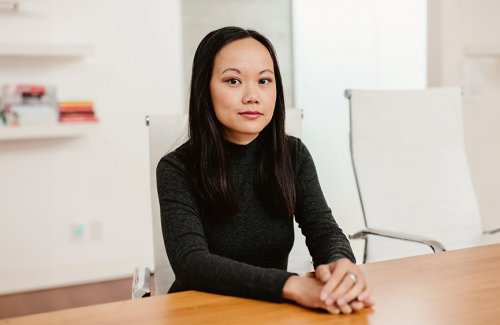
AHN and Meta Prosper have partnered on a new podcast series highlighting API creators. Meta Prosper is dedicated to amplifying and supporting the API community and driving economic growth and equitable representation. The Creators Podcast series delivers stories on how creators achieved success and created impact through their platforms, serving as an inspiration for the community.
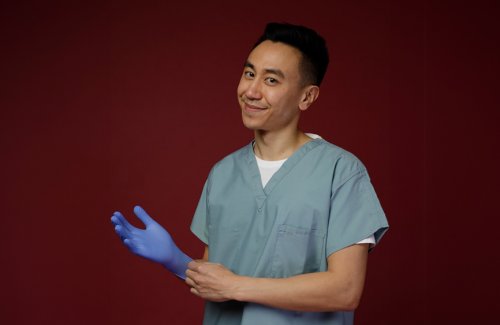
In the second episode of the Creators Podcast series, we would like to share the story of Steven Ho whose career path has witnessed an unexpected turn, moving from the emergency room to the entertainment industry.
Steven Ho is a Vietnamese American stand-up comedian and an online sensation, garnering over 16 million followers across social media.
Throughout his school years, Steven encountered racism and bullying from his peers, particularly directed at his surname.
It was his introduction to “Paris By Night,” a Vietnamese-language performance variety show that sparked his interest in sketch comedy. However, his initial career prospect was working in the medical field as an Emergency Medical Technician (EMT).
During college, while working for Stanford ER, Steven discovered his love for acting and started taking acting classes and minor roles in small-scale projects. During this time, he had a hard time finding a balance between his medical career and his acting passion.

When the pandemic happened, everyone turned to social media. Steven was no exception and this is when the silver lining shone through. He started posting to social media and gaining popularity from his signature comic video series, “Tips From the ER.” Since then, he has made social media and comedy his full-time job and gained significant success. His talent has landed him many stand-up shows at the Comedy Store, Ice House, and The Hollywood Comedy.
Listen to The Creators Podcast featuring Steven Ho here.
CONNECT WITH STEVEN HO
Instagram: @steveioe
Facebook: @steveioe
Threads: @steveioe

In today’s digital age, the online world is filled with countless content creators and influencers, all trying to make their mark. Yet, only a few manage to create real impact, and Zoe is one of them.
With over 3 million YouTube subscribers under the name “zoeunlimited,” Zoe has built a dedicated community through her insightful content on fitness, fashion, dating, and navigating the complexities of girlhood. Her work has even caught the attention of celebrities like Olivia Rodrigo, who stated that she watches Zoe’s videos all the time. In just 14 days, Zoe doubled her subscribers from 1 million to 2 million, when she was creating videos as a hobby outside her 9-to-5 job.
Read through as we learn more about Zoe’s secrets to success as she shares it in detail with Asian Hustle Network.
ABOUT ZOE
I am a multiformat creator navigating girlhood with my Gen Z and Millennial community. My goal is to encourage women to tap into their unlimited potential by thinking critically via my pop culture video essays about beauty, fashion, and confidence.
I grew up in China and Canada and came to LA initially to study Business Economics at UCLA. The different cultural environments I grew up in gave me broader perspectives on the various pop culture topics I’m interested in and inspired me to share that vision with the unlimited community to learn and grow together.
ZOE’S JOURNEY AS A CONTENT CREATOR
Growing up, I’ve always been artistically driven and drawn to creative mediums like fashion, film, and fine arts. Scared of becoming a “starving artist,” I didn’t pursue fashion and studied Business Economics instead, but I always felt like something was missing.
I was very fortunate to discover YouTube as a creative outlet after college and began documenting my life in video format. I always make videos on what I’m interested in at the moment, which was a lot of fitness, college, and even CPA content at the very beginning. Throughout time, I discovered that the central theme of all my content revolves around growth – in becoming fitter, healthier, more confident, more reflective, and so on. My community of mostly women feels like a precious friend group to me and I realized through interacting with them, that many of us are going through similar challenges in our girlhood and there’s much more to share and discuss than just my personal journey.
With that, I began creating my video essay series that served as a discussion ground to think critically about topics many could relate to, including beauty standards, dating, and fashion. Girlhood is such an intriguing and confusing experience in the modern setting, and I just hope to create a community where women feel seen, heard, and not alone when encountering the ever-changing concept of how to be a modern woman. I don’t have the answers but I hope to create a safe space for all of us to explore and reflect!
RAPID GROWTH AND STRATEGIC SUCCESS
Although part of the growth (growing subscriber count from 1M to 2M in 14 days) was extremely rapid, the story before the lift-off was a consistent grind of weekly uploads for 3 years as a pure hobby. The tipping point always feels exciting and amazing, but what truly felt rewarding was 3 years of building something I love.
OVERCOMING CHALLENGES AND CELEBRATING MILESTONES
I’d say one of the biggest challenges was the lack of initial support and understanding from my family. It was painful for me to see something I love doing creating a chasm in my relationship with the people I love, but I’m grateful that we have cleared past misunderstandings and grown close again. I’m so grateful for the community that stuck with me as well as my closest friends who believed in me even when I had a lot of self-doubt, especially during the years I felt judged and not understood.

BALANCING AUTHENTICITY AND PRIVACY
I love and respect the people closest to me and want to protect their privacy as much as possible online. When it comes to my own journey, I believe my community comes with a good heart, and I see them as good friends I can confide in. So even when it comes to moments that aren’t the most glamorous and the failures I’m not extremely proud of, I do want to share that experience if I know someone can benefit from it by feeling less alone or could simply learn from the mistakes I’ve made.
That’s the goal with my Healing Diaries series, where I share some of my biggest struggles including my health, mental health, and dating. I hope to normalize talking about uncomfortable topics and reduce any shame or guilt for anyone going through a similar experience.
BUILDING “UNLIMITED THOUGHTS” AND A COMMUNITY
The most rewarding moments are the ones when I get to meet my followers in person and learn about their journeys and goals. I’m beyond grateful for a community of kind and driven women who have allowed me to tag along with them on their growth journeys. Some are in college, some just landed their third job, some are going through heartbreaks, and some are creating amazing art and inspiring many people including me.

It was really sweet when a subscriber told me how one of my videos in the “Unlimited Thoughts” series inspired her to write a final paper that got her an A. That brought me way more joy than hitting my personal milestones. The love and passion for turning ideas into something that others can enjoy watching and perhaps benefit from, make all the blocks and times of doubt worth it.
WINNING A SIX-FIGURE INVESTMENT FROM CREATORDAO
I had a major imposter syndrome moment because I entered the contest without expecting to win.
It was a huge encouragement to be more confident in myself as a creator and a wake-up call to think bigger. An advice I’d share with other creators is to trust that you are way more capable than you think. Do not limit yourself.
LOOKING AHEAD
I wish to continue improving my storytelling and critical thinking as a creator to bring hope and joy that people can feel and pass on.
Whether it comes to future content projects or a brand that I launch, I wish to uplift my community and support them in building their self-confidence and identity. I’m excited to explore many more unfamiliar areas in content I haven’t tapped into yet, including podcasting, to challenge and expand my own limits.
A MESSAGE OF REPRESENTATION AND EMPOWERMENT
When I first began making videos about pop culture, I felt a little out of place given the limited AAPI representation in beauty, fashion, and entertainment. It is exactly for this reason that I must show up more in this space to bring my unique narrative shaped by my multicultural experience of growing up in China and Canada.
Authentic self-expression cannot occur without bringing forward the full self, and that includes our beautiful heritage, no matter what that is for each individual. As Lucy Liu said at the Gold Gala “You never know how far just a little bit of support can carry you.”
It resonated with me so much because I cannot imagine how far I’d come without that initial bit of support. I hope to be that supporter for my community and help them break out of their previous limiting beliefs.
FINAL THOUGHTS
It warms my heart to see more and more women and members of the AAPI community daring to dream big, not just in content creation, but in all facets of entrepreneurship. I hope to use my platforms to further support these creators and entrepreneurs, who are sharing the spirit of breaking limits and redefining what’s possible.
CONNECT WITH ZOE
YouTube: zoeunlimited
Instagram: @zoeunlimited
TikTok: @zoeunlimited
LinkedIn: @zoeunlimited