In Luffy Huang’s Vision for Pulse Events, Cultures Align Through EDM Music
Stories
September 22, 2024
SHARE:
CEO of Pulse Events Luffy Huang made waves across New York City this past Labor Day weekend. Known as “the world’s wettest party,” the S2O event made a splash in the Brooklyn neighborhood, delivering euphoric EDM melodies with Thai-inspired traditions that stretch across borders to America.
But as the CEO of Pulse Events, his vision yearns for unity and togetherness through the power of music. Throughout the years, Luffy has been a driving force behind the diversification of the EDM festival scene, condensing the beats into a spectacular celebration of culture and community.
The Sounds of Luffy Huang’s Chinese Upbringing and American Dream
Growing up in China, his early passion for music led him to a career as a singer and TV host between 15 to 20 years ago. Encouraged by the eclectic soundscape in the U.S., his American dream for a successful music career was granted by one of the artists he was touring along with, paving the way for his move to the States.
“I grew up in China and following my passion for music, I became a singer and TV host 15 to 20 years ago. Since it was always my dream to break into the music industry in the U.S., I began touring with artists and finally came to America with one of them in 2020.”
When he arrived in the U.S., Luffy was bewildered yet determined. The hustle in a foreign land might have caught him off guard for a moment but it also helped him head towards a new direction. “I found the industry here to be very open-minded and felt inspired and encouraged to start my own entertainment company here,” he says.
Luffy left China for the U.S., driven by the fast-paced music scene.
This geographic shift is a tableau of music inspirations, cultural shock and a deepening sense of identity, all of which prompted him to create Pulse Events, an event agency focused on bridging the Eastern and Western cultures through music and community.
Cultural Harmony Through Music and Luffy Huang’s Pulse Events Journey
“What inspired me the most was seeing people of different cultures embrace shows produced in Asia and influenced by Eastern traditions,” he says.
Such ethos were themselves echoed throughout his work, by introducing a global audience to the purpose he wanted to share more of, from highlighting notable Asian creatives and talents, to celebrating the vibrant culture of the Asian community. “I realized that this experience was missing in the U.S. and it became my mission to produce shows here that expose fans to the traditions and dance community culture in Asia,” he says. “I am proud that my shows include elements like Asian night markets, lion dances and spraying water that is the Songkran Thai New Year custom.”
One of the drawbacks of starting Pulse Events in a new country, however, is the balance and harmony among different communities, especially in the U.S. where multiculturalism has long been its celebrated trademark. Yet, despite this animated diversity, Luffy needs to traverse the tricky waters of inclusivity, representation and U.S. culture:
“Turning my vision into a reality took a bit of time. But once we put on our first Pulse Events show, we learned from the process and got into a good rhythm where we put on multiple shows annually and continued to expand. One of thechallenges I face on a daily basis is figuring out how to represent Asian culture in the most authentic way possible, while having our shows appeal to a diverse audience. Striking that balance takes a lot of thought and hard work, finding the right partners to bring that to life. Another challenge I face is that English is my second language, so I sometimes have to take the extra step of using translation tools or making a greater effort to make sure my ideas are communicated correctly.”
Luffy Huang leads Pulse Events with determination, expanding the reach of Asian culture through unforgettable shows
While those challenges might have vexed him in the beginning, every show, event and festival was an emblem of the connectivity that he always has in mind for Pulse Events. The 2023 Spring Festival that Pulse Events had orchestrated last year was an EDM-heavy event to honor Lunar New Year and pull together traditional elements, joyful moments and different communities. It was the first event to infuse electronic music and Asian culture that introduced the beauty of this cultural festival to more American youths:
“I am proud of every show Pulse Events has put on and the legacy we are slowly building by making them annual. We are gearing up for our second Winter Festival in November and our third Spring Festival next year, and planning to bring back S2O after debuting it to the U.S. this past Labor Day weekend. I feel fortunate that we have established a good working relationship with one of the most famous venues in New York City and the world, The Brooklyn Mirage. I am also proud to be the founder of the Krazy Super Concert elevating K-pop in America.”
When East Meets West in Luffy Huang’s Vision for Pulse Events
As an organization that holds the same values as AHN to uplift and highlight the Asian community, AHN takes this interview as a special opportunity to explore how Asian talents are being showcased and represented in the industry. Luffy’s vision remains unchanged:
“Themission and vision of Pulse Events is to bridge the East and the West through music events that unite people of all backgrounds and educate them. Through bringing fans of all kinds together through the common love of music, we are able to open their minds and hearts to understanding Asian culture and embracing the immense talent within our community, from music producers and DJs to entrepreneurs like myself and my colleagues.”
This determination and commitment has led Luffy on a road of success, producing annual mega shows like the Lunar New Year Spring Festival, the Winter Festival and most recently S2O New York, all to celebrate cultures and unite communities through EDM. Even just at the start, Pulse Events has landed performance deals with many prominent artists in the electronic music scene, from the enigmatic Marshmello to platinum record-selling DJ Afrojack.
Luffy’s goal is clear: bridge the East and West through music, uniting fans from all backgrounds while showcasing Asian talents.
Connect With Luffy Huang
Much of Luffy’s current success comes less from pure luck and more from a consistent performance of hard work and innovation. Whether it be electric live festivals, or getting deep down into his heritage, Luffy knows better than ever that Pulse Events was a child of hustle and resilience, no matter where you came from and who you are:
“From my own journey,I believe that if you hustle hard enough and never give up on your dreams, you will succeed, even in a foreign country or place outside of your comfort zone.”
Ken Chan, a 29-year-old Filipino actor, proves that the pandemic has not only caused bad things but has also brought good fortune to some, being a celebrity-turned-entrepreneur after losing his job during the crisis.
Ken swiftly expanded his franchised iFuel gas station with 10 branches in different parts of the country in just a year. He also opened Cafè Claus, a Christmas-themed café, which has extended into three branches around Metro Manila, Philippines.
Nonetheless, he also braved the wellness industry with his Aromagicare Luxury Massage Chair. He mentioned that his triumph is also because of saving and spending wisely.
Ken said he had taken to heart the financial lesson his parents had taught him wherein he learned not to overspend on himself.
During his recent interview, Ken said that he takes pride in the fact that he rarely makes purchases for himself and even makes the most of his cars while they are still roadworthy.
The actor realized during the pandemic that artists should secure their fallback in case they lose their jobs in the industry.
Shadiah Sigala co-founded HoneyBook, a $2 billion financial management software platform for small businesses, motivated by her ability to negotiate uncertainty while gathering information and making decisions.
When Shadiah was a child, her Mexican mother together with her two siblings moved to southern California. Despite most of her family members being unable to attend college, she was an honor student whose lifelong ambition was to acquire the greatest degree of education.
Shadia attended Pomona College for Latin American Studies and Harvard Kennedy School for public policy. As a result, she established a strategy for reaching goals she wasn’t sure about.
Before becoming an accomplished millennial, she finished her master’s degree and became the highest-earning member of their family as a project manager at Aetna, a health insurance company, where she learned about entrepreneurship, realized she is a “builder,” and thought starting her own company was the best option.
However, Shadia realized that she wouldn’t be happy there since she wouldn’t be valued. Shadia ultimately started a personal chef business in 2010, using her Pomona College alumni network to find well-off grads who wanted someone to cook for them.
In 2012, another realization occurred to her that cooking wasn’t for her. Shadiah then decided to move with her then-husband to San Francisco and found tech. She arranged informative interviews with everyone in the sector and learned that the problem she wanted to tackle was one she’d experienced as a business owner: no effective method to handle backend logistics like emails, payments, and bills.
With the three Israeli business people who have a similar concern as hers, they decided to digitize all these tedious procedures that micro small firms must complete to free them up to genuinely focus on doing what they love.
Using that concept, Shadia established HoneyBook in 2013 and worked there for five years according to CNBC.
As her most recent business, Shadia co-founded Kinside in 2018, a child-care marketplace that is available to employees that offers new parents a centralized location to look for daycare in their neighborhood, which has reached over $16 million, according to Crunchbase.
Letting fear and excitement be one’s guide and being open-minded is what Shadia advises to other aspirants.According to her, opportunities that “feel like they are beyond your pay grade” are exactly how stellar is made.
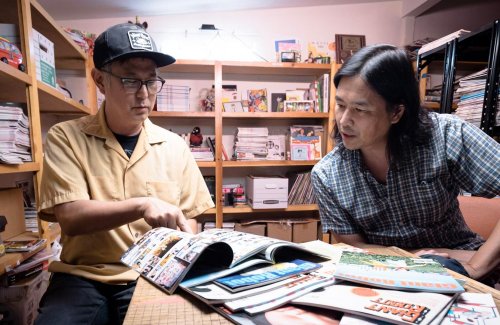
Highlighting the impact of the Asian-American pop culture publication Giant Robot, the debut of the latest episode entitled “Giant Robot: Asian Pop Culture and Beyond” was finally aired last October 26 in the acclaimed arts and culture series ARTBOUND on KCET.
The episode showed Giant Robot’s examination of Sawtelle Boulevard as a Japanese-American neighborhood, sparking interest in Asian and Asian-American popular culture which resulted to a long line of Asian American artists who won recognition on a global scale.
Established in 1994, Giant Robot was a bimonthly journal that focused on Asian popular culture that soon included works by Asian-American artists including David Choe and James Jean.
Eric Nakamura began publishing Giant Robot as a digest-sized zine. The piece covered a variety of subjects, including trendy Asian American independent filmmakers, Japanese punk rock, and contemporary Hong Kong films. National media sources including the New York Times, Wired, and LA Weekly published the story.
In 2001, Nakamura opened his first store named “Giant Robot Store” in Sawtelle Japantown and expanded in 2003.
Giant Robot co-founder, Martin Wong edited all 68 issues of the glossy magazine on Asian, Asian-American, and new hybrid culture from 1994 to 2010, when it was still a punk zine. His wife Wendy Lau served as Giant Robot’s graphic designer beginning with issue 18. Even today, Martin continues to publish zines and contribute to them.
The popular weekly television program and online site ARTBOUND captures the essence of California’s expanding arts and cultural scene and investigates how it is transforming the state into the world’s creative capital.
The KCET Original series investigates and clarifies contemporary cultural challenges, offering insightful in-depth study of how the arts and culture impact society.
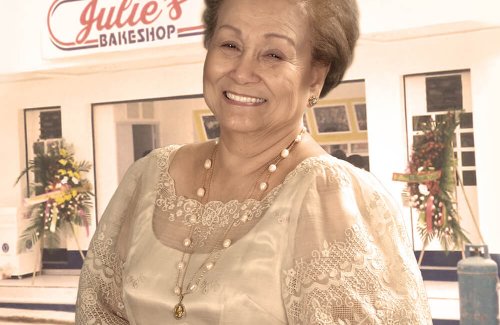
“In a way, I was poor. I was hungry, maybe not for food but for self-achievement. I thought there must be something more I can do than just being a housewife. I was very determined to succeed, in whatever came my way,” thus said Julie Gandionco as quoted by the Inquirer, the Philippines’ local newspaper.
In January 1981, then-50-year-old Julia Gandionco opened Julie’s Bakeshop to satisfy her thirst for proving that she is more than a housewife.
Julie’s Bakeshop gloriously celebrates being one of the Philippines’ largest bakery chains with more than 500 branches all over the country, which can be traced back to Mandaue City on the Island of Cebu as its place of origin.
In the 1970s, Julie was a canteen concessionaire at a rattan company, and subsequently became a manager of its sister company. She also opened another canteen a year later.
Having these three canteens being managed, she felt the rising demand for bread which made her take the chance of opening a bakeshop, despite having zero knowledge of baking.
Julie stressed that her bakeshop exists because of “a growing need for bread products and a strong trust in God,” and that she desires to encourage and uplift other mothers to dream big and strive for their goals.