Ideas

March 12, 2025

SHARE:

Are you looking to build a new website or revamp an existing one in 2025? One of the first things to consider is the cost of web development services. The price can vary greatly depending on several factors, from the development team’s location and experience to the project’s complexity and scope. In this article, we’ll take a closer look at the average hourly rates for web development services in 2025, the factors that can affect the cost of a website project, and some tips for budgeting for ongoing maintenance and support. So, let’s dive in and find out exactly how much you can expect to pay for web development services in 2025.

The Average Hourly Rates for Web Development Services in 2025

In 2025, the average hourly rate for web development services can range anywhere from $20 to $150 per hour, depending on the development team’s location, their experience level, and the specific technologies and tools required for the project.

Ukraine, Poland, and Belarus are some of the best countries to hire offshore developers. These countries offer some of the most affordable hourly rates for web development services, ranging from $20 to $50 per hour.

In addition to the location of the development team, the specific technologies and tools required for the project can also affect the hourly rate for web development services. For example, developers with expertise in more specialized technologies such as React JS or Node JS may have a higher hourly rate than those with expertise in more standard and widely-used technologies such as PHP or HTML/CSS.

The Cost of a Website Project: Basic vs Complex

Basic websites, also known as informational websites, are typically smaller in scope and are designed to provide basic information about a company or organization, such as contact information and a list of services. These types of websites can often be built for as little as $1,000 to $5,000.

On the other hand, complex websites are typically larger in scope and may include features such as e-commerce functionality, custom databases, and advanced user interfaces. These types of websites can often cost anywhere from $5,000 to $50,000 or even higher, depending on the specific requirements and features included.

When determining the cost of a website project, it’s essential to consider the specific needs of your business and the types of features and functionality necessary for your website to succeed. While a basic website may be sufficient for some companies, others may require a more complex solution to meet their needs fully.

Savvy Strategies for Cutting Costs on Web Development in 2025

Web development can be a significant expense for any business, but there are ways to save money without compromising on quality. Here are 6 tips to help you cut costs when developing a website or application.

  1. Have a clear plan and scope of work: Define your project’s requirements, goals, and objectives before beginning development. This will help you identify the features and functionalities that are essential to your project and avoid unnecessary costs. I recommend you write a web design brief which is a document that outlines the specifics of a website design and development project.
  2. Use open-source software: Leverage open-source software, such as WordPress, Joomla, or Drupal, to reduce the development cost.
  3. Outsource to a cost-effective location: Outsourcing web development to countries such as Ukraine or Poland can be cost-effective and save you money on development costs.
  4. Use pre-designed templates and themes: Using pre-designed templates and themes can save you time and money on design costs.
  5. Avoid customizing unnecessary features: Only customize features that are essential to your project. Customizing unnecessary features will add to development costs.
  6. Use a project management tool: Using a project management tool to keep track of progress and timelines can save you money on development costs.

Factors That Affect the Cost of Web Development Services

Here are 8 factors that can affect the cost of web development services:

  1. Location of the development team: The cost of living and average wages in a given location can affect the hourly rate for web development services. Generally, web development services in countries with a higher cost of living, such as the US and Europe, tend to be more expensive than those in countries with a lower cost of living.
  2. The development team’s level of experience and expertise: Developers with more experience and expertise may charge a higher hourly rate for their services. On the other hand, full-stack web developers can spend less time on a project and provide more quality services that are essential for enterprise web projects.
  3. Specific technologies and tools required for the project: Projects that require specialized knowledge and experience in certain programming languages or frameworks may have a higher hourly rate compared to those that use more common and widely-used technologies.
  4. Project complexity and scope: The complexity and scope of the project can affect the amount of time and resources required to complete it, which can, in turn, affect the cost.
  5. Design and branding: The cost of web development services can be affected by the cost of design and branding elements, such as the cost of creating a custom logo, selecting color schemes and layouts, and other visual elements that are unique to the project.
  6. Third-party integrations: The cost of web development services can be affected by the cost of integrating third-party tools or services, such as payment gateways, analytics, and other features that are not included in the core development services.
  7. The level of customization required: Customized solutions will require more time and resources to develop, resulting in higher costs.
  8. The need for SEO and marketing: Implementing an SEO strategy and a marketing plan can add to the development costs. This may include optimizing website structure, content, and meta tags for search engines, building backlinks, developing an ongoing content marketing strategy to improve search engine rankings, and developing a marketing strategy to increase visibility and attract users to the website.

Budgeting for Ongoing Maintenance and Support in Web Development Services

Website maintenance is essential to keeping your online presence up to date and running smoothly. The cost of website maintenance can vary greatly depending on your website type and the level of maintenance required. In this case, we will explore the different types of websites and the corresponding maintenance costs you can expect to incur.

  1. Basic websites: These are simple websites that typically consist of a few pages, such as a home page, about us page, and contact page. The maintenance cost for these types of websites is usually low, averaging around $30 to $50 per month.
  2. E-commerce websites: These types of websites allow customers to purchase products or services online. The cost of maintenance for e-commerce websites is typically higher than basic brochure websites, averaging around $50 to $100 per month.
  3. Custom websites: Custom websites are tailored to a specific business or organization and often require more complex features and functionality. The cost of maintenance for custom websites can range from $100 to $200 per month.
  4. Content Management System (CMS) websites: CMS websites are built using platforms such as WordPress, Joomla, and Drupal. The maintenance cost for these types of websites can range from $50 to $100 per month.
  5. Social media websites: Websites that are focused on social media interactions, such as forums and message boards, require regular updates and maintenance to keep content fresh and users engaged. The maintenance cost for these types of websites can range from $50 to $150 per month.

It is important to note that these costs are approximate and can vary depending on the specific needs of your website. Additionally, getting a quote from a website maintenance company is always recommended before committing to a contract. By understanding the different types of websites and the corresponding maintenance costs, you can make an informed decision when it comes to maintaining your online presence.

Sum up

In conclusion, the cost of web development services can vary greatly depending on several factors, including the development team’s location and experience, the project’s complexity and scope, and the specific technologies and tools required. In 2025, the average hourly rate for web development services can range anywhere from $20 to $150 per hour. Basic websites can often be built for as little as $1,000 to $5,000, while complex websites can cost anywhere from $5,000 to $50,000 or even higher. 

To save money on web development costs, businesses can consider outsourcing to cost-effective locations, using open-source software and pre-designed templates and themes, and avoiding customizing unnecessary features. It is also essential to have a clear plan and scope of work before beginning development and use a project management tool to keep track of progress and timelines.

Related Articles

Stories

How Saigon Cider Became The First Vietnamese Organic Cider

In every sip of cider, there’s a story waiting to be told—a narrative of flavors, a journey of craftsmanship, and a celebration of culture.

For Saigon Cider, it all began when Hannah Jefferys left her job as an architect in 2011 and moved to Vietnam when she was just 25 years old. Hannah grew up in a little place in the British countryside called Somerset, where she witnessed how cider evolved from being a farmer-associated drink to a cosmopolitan summer beverage.

Upon reaching Saigon and basking in the daily dose of sunshine, Hannah delved into the rich Vietnamese ‘nhậu’ culture, centered around shared dishes and toasts on plastic chairs lining the pavements of Saigon.

“There’s nothing quite like it elsewhere in the world — certainly not in the UK,” Hannah shared.

Yet, amidst the rich cultural tapestry, there was something she missed… cider.

A STORY OF INSPIRATION

Hannah found inspiration in the everyday scenes of Vietnamese individuals setting up shop just about anywhere and having a go. “Us British tend to think about risk rather than how things might work, and tend not to take the leap,” she says. She was also inspired by some local F&B brands that started their hustle in home kitchens, gradually expanding to a national and global scale.

This is how Saigon Cider was brought to life. What started as a humble stall at Saigon Outcast became the first organic craft cider in Vietnam.

CELEBRATING VICTORIES

Saigon Cider has notched up some impressive achievements on its journey. With their lineup of three ciders, they have been able to win 15 international awards, beating brands from established cider-making countries like the UK, US and France in some of the competitions.

Even despite the hurdles during the global pandemic and the challenges of being a small yet growing company in a bustling market, Saigon Cider has stood tall, and built a strong brand and following.

This year, Saigon Cider is entering new international markets, and they are incredibly proud to be able to share a taste of Vietnam with the world.

A NARRATIVE OF FLAVORS

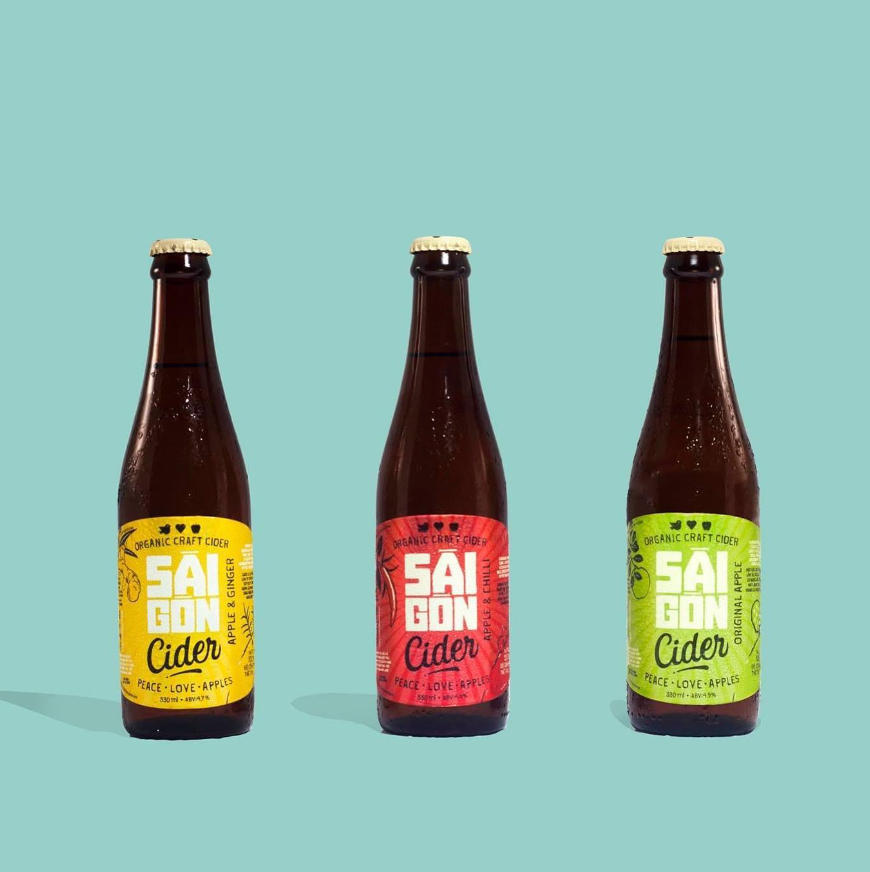
Saigon Cider currently has three delightful flavors to offer:

  1. APPLE & GINGER: A blend featuring organic apples with a punch of Vietnamese ginger. This one is a revitalizing splash of a cider.
  2. ORIGINAL APPLE: This cider is crafted from fuji, gala and other favorite organic apples, perfect for a well deserved chill break after chaos.
  3. APPLE & CHILLI: A combination of organic apples with a Vietnamese chilli kick, delivering a dose of spice and sense of mischief.

Each flavor is thoughtfully crafted to bring a delightful and invigorating experience to everyone’s palate.

A GLOBAL TASTE WITH LOCAL ROOTS

Despite cider being an original British drink, Hannah is proud to present Saigon Cider as a Vietnamese brand.

“From the start, we have been a Vietnamese brand first and foremost, and proudly so. We were created here, grown here and inspired by here and I’m now personally rooted here with my Vietnamese family. 

Our Vietnamese-ness runs through everything we do, our choices of organically farmed ingredients, our labeling and of course, our name. In export markets we retain as much Vietnamese wording on our labels as we can and we hope that we are chosen with pride by Vietnamese and that wider Asian consumers will also feel some sense of ownership over our brand,” Hannah shared with Asian Hustle Network.

The brand currently has openings for exclusive distribution deals in various countries. They would love to grow with overseas Vietnamese distributors who know how to ‘nhậu’, so now is the time to hit them up and be a part of sharing Peace, Love & Apples globally.

CONNECT WITH SAIGON CIDER

Facebook: Saigon Cider

Instagram: @saigoncider

Linkedin: Saigon Cider

Fei-Fei_Li.original-png

News

Fei-Fei Li’s Exclusion from Influential List Fuels Debate on Gender Disparity in AI Leadership

In a recent revelation, the artificial intelligence (AI) community has been thrust into a contentious discussion surrounding gender representation after the omission of Fei-Fei Li from the New York Times’ “Who’s Who Behind the Dawn of the Modern Artificial Intelligence Movement” list.

The list, published on December 3, 2023, spotlighted twelve influential figures instrumental in the growth of AI over the past decade, including industry giants such as Sam Altman, Bill Gates, Elon Musk, and Mark Zuckerberg. However, a striking absence of women, notably Fei-Fei Li, has ignited a broader conversation about gender diversity in the AI landscape.

Image Source: IEEE Spectrum

Fei-Fei Li is a distinguished computer science researcher recognized for her creation of ImageNet, a pioneering dataset, that drove progress in computer vision, and paved the way for AlexNet. Her contributions, spanning nearly 15 years as a professor at Stanford University and co-director of the Stanford University Human-Centered AI Institute, have significantly shaped the AI field.

According to VentureBeat, the New York Times described the featured individuals as “a group of researchers, tech executives and venture capitalists” who “had worked for more than a decade to fuel AI” before chatbots “exploded in popularity.”

The list’s lack of gender diversity, particularly the absence of women like Fei-Fei Li, has sparked widespread criticism and calls for a more inclusive representation of the diverse talent within the AI community.

Featured Image Source: Caltech EE

Stories

Husband and Wife Duo Revolutionizing Athleisure and Streetwear with Passion and Community Support

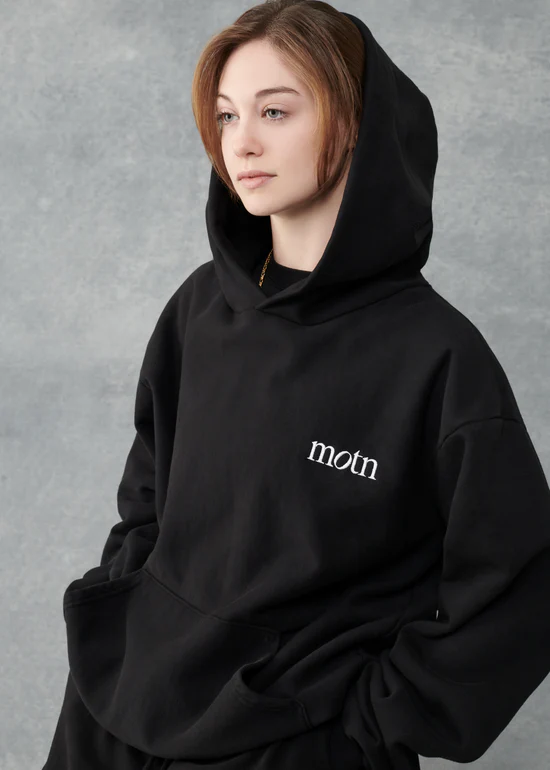
In a world where exercise is becoming increasingly important to maintain a healthy lifestyle, finding comfortable and stylish workout clothes is essential. Unfortunately, many brands in the athletic-wear space have similar designs and aesthetics, leaving little room for uniqueness. That’s where MOTN comes in.

Founded by Alice Kim, with the support of her husband, in Los Angeles, MOTN is an athleisure/streetwear brand that aims to provide clothing that encourages people to stay active or to be “always in motion,” as in their slogan.

With their unique approach to combining fitness and streetwear, MOTN has created a loyal community of individuals who are always in motion. As Alice said, “We need other people to encourage us and support us. This is what I hope people wearing MOTN would also feel – that there is a community of people who are always in motion.”

Inspired by Alice’s love for fitness and Josh’s passion for sneakers and fashion culture, one of the main goals of MOTN is to balance workout gear and streetwear. The couple noticed a gap in the market for brands that emphasized both aspects of fashion.

To make their pieces unique, every collection requires dedicated time and thought to execute the style and design they are going for. They aim to create pieces that differ from every collection and keep customers engaged. MOTN values versatility and flexibility, allowing customers the freedom to mix and match pieces or choose an entire outfit to rock.

Starting a new business came with its fair share of challenges, including moments of doubt and uncertainty. Alice often found herself questioning how their brand would stand out in a market that already had thousands of clothing brands. However, Alice shared, “Throughout the uncertainty, I’ve had an amazing group of friends and family, especially my mom, that pushed me and encouraged me to still give it my all and try to make it work!”

Maintaining quality is also a top priority for MOTN. The brand aims to never compromise on quality, even if it means sacrificing on their end, “ Whether it’s taking longer to sample fabrics/materials, sourcing different fabrics/materials, or even taking a hit financially. We know that when it comes to a brand, customers are always first and so we want to prioritize them,” Alice explained.

As an Asian-owned business, the brand has fortunately not faced any large difficulties in the fashion industry. Alice acknowledges the support from the Asian community and is thankful to have individuals who already support MOTN. However, she wants to make it clear that their brand is all-inclusive and not focused solely on the Asian community.

When asked about her biggest piece of advice for someone starting a business, Alice emphasizes the importance of being passionate about what you do and not comparing yourself to others. Growing up, Alice looked up to her single mom, who worked diligently to get to where she is today. Because of that, she acknowledges that building a successful brand takes a lot of hard work and time, but if you work hard and stay committed, people will see your efforts. Alice also stresses the importance of patience and not getting discouraged by slow progress.

Lastly, Alice highlights the value of community support. “Through launching our brand, I realized how important it is to lean into your community,” she says. “The MOTN team may just be two people but the MOTN family is so much bigger, and we cannot thank our community enough for their love and support.”

KN106313-jpg

Stories

Gong Grocer by Thai Kee: A 30-Year Legacy of Family, Tradition, and Entrepreneurship

Gong Grocer by Thai Kee is a family-owned and operated Asian grocery business with a legacy spanning over 30 years. In this article, Brian Nguyen, one of the co-founders and a Director of Gong Grocer, shares insights with Asian Hustle Network.

Brian’s family is well-known in the Sydney community for their Thai Kee roots. Their journey originated with their grandfather, Thai Trinh, the esteemed namesake of the family’s original supermarket, Thai Kee. Gong Grocer represents the family’s evolutionary step, a mission to revitalize and modernize the Asian grocery shopping experience.

Brian acknowledges the shifting expectations of customers in physical in-store retail settings, and it’s their goal to meet these expectations in their new stores. As the Co-Founder and Director, Brian brings a unique blend of family tradition, personal journey, and a commitment to delivering an exceptional Asian grocery shopping experience.

A FAMILY OF IMMIGRANTS

Brian’s parents, uncles, and aunties were immigrants who fled Vietnam during wartime. Striving for a new life, they left behind everything in pursuit of opportunities in Australia.

Australia’s policy of multiculturalism provided a unique chance for Brian’s family and immigrants alike. The open embrace of diversity allowed families like theirs to openly celebrate their culture, thrive, and share their rich heritage with the broader community.

The origin of the name Thai Kee comes from their grandfather Thai Trinh, who they lovingly referred to as their “Ah Gong” (阿公), meaning grandfather in their dialect. He was the patriarch, and the original entrepreneur of the family. He sold Chinese donuts to supermarkets, waking up at 2 am each morning to bake them, then walking and hand delivering these donuts to supermarkets by 9 am each and every day.

THE FIRST THAI KEE SUPERMARKET

Despite limited means, Thai Trinh invested $5,000 in the first Thai Kee Supermarket in Cabramatta, providing a foundation for his children. But aside from money and most importantly, he passed onto his children a profound sense of hard work, dedication, and a deep commitment to one another, in their culture, and their community.

These values, instilled by their Ah Gong, form the cornerstone of their family’s identity. Known as “Thai” from Thai Kee to customers, to the family, he’s always been Ah Gong. 

To honor the spirit of their beloved Ah Gong, Brian and his family launched Gong Grocer by Thai Kee, or 阿公超市, paying homage to the heritage and principles instilled by their grandfather. 

FULL-TIME LAWYER TURNED ENTREPRENEUR

As Brian got older and heard more about his family’s stories, he felt a strong desire to carry on their traditions. He saw it as his mission to come up with new and interesting ways to share their culture with the diverse Chinese, Asian, and Australian communities.

Formerly a full-time lawyer, Brian Nguyen took the leap into entrepreneurship, co-founding Gong Grocer alongside his wife Wendy Lin, who herself manages her own successful business, Lioness Fashion.

Brian draws inspiration from his family’s entrepreneurial legacy, rooted in hard work, service, and dedication. The values instilled by his grandfather, Thai Trinh, continue to guide Brian in his pursuit of business excellence and cultural celebration.

OVERCOMING CHALLENGES

In his career and business journey, Brian Nguyen faced significant challenges, notably in time management. Gong Grocer started as a passion project for him. The transition from law to full-time business, alongside his wife Wendy Lin in Lioness Fashion, posed a wild adjustment.

Shifting from a lawyer to a business owner brought its own set of challenges. Balancing the demands of Lioness Fashion, an internationally recognized brand with immediate growth needs, and Gong Grocer, a venture built from scratch, proved to be extremely difficult. The latter involved design, planning, construction, and eventual launch and operations.

To overcome these challenges and achieve success, Brian drew inspiration from his family’s values. He doubled down on hard work and commitment, using them as guiding principles. Recognizing the need for a strong team, he leaned on his family and those around him to build a purpose-driven team that shared his vision. Together, they navigated the complexities, turning Gong Grocer into a thriving reality.

CELEBRATING GONG GROCER’S FLAGSHIP STORE

One of Brian Nguyen’s proudest achievements in this journey is the flagship supermarket store.

“Seeing the tangible transformation coming to life and physical form, from cutting out a giant hole in a concrete floor to creating a whole new level in a shopping centre, and doing this with my family no less, was incredibly rewarding,” Brian shared.

The grand opening events further highlighted the significance of the brand and its story. Brian was genuinely pleased by the support received from the community and the broader public. This positive response reflects the hard work of Brian and his family as entrepreneurs, their active role in the community, and the strong connections they have forged within the industry.

CONNECT WITH GONG GROCER / BRIAN 

Website: www.gonggrocer.com.au

Instagram: @gonggrocer

LinkedIn: www.linkedin.com/in/brian-nguyen-09a067125/