Stories

August 10, 2023

SHARE:

Anise Health is on a mission to improve mental healthcare for Asian Americans.

Recognizing the lack of health equity in the existing mental healthcare system, especially for people of color, Anise Health aims to create a positive change by offering culturally-responsive care.

Anise Health wants to make mental health care accessible and affordable for everyone. They work with different health plans and offer affordable plans for those who pay themselves. They have big plans to reach more people of color and support them in their mental health journey. 

Anise Health believes that everyone deserves the care and support they need to live a happier and healthier life. Read through the inspiring insights from Anise Health in an interview with Asian Hustle Network.

Alice and Nisha, founders of Anise Health

ADDRESSING THE UNIQUE MENTAL HEALTH NEEDS OF THE ASIAN COMMUNITY

Anise Health is building the gold standard of mental healthcare for Asian Americans because there is an urgent need to advance health equity.

People of color are extremely underserved by the existing mental health care system, with 50% dropping out of therapy after just the first session. Specifically, 41% of Asian Americans experience current symptoms of depression and anxiety, yet only 30% report feeling supported today. The sharp increase in anti-Asian hate crimes compounded with the model minority myth means that the Asian community often suffers in silence, leading to devastating consequences such as Asian young adults being the only ethnic group with suicide as the leading cause of death.

Anise is on a mission to change these trends by creating a culturally-responsive digital mental health platform built by and for the Asian community. We’re humbled by the incredible results our clients achieve on our platform, including:

  • 97% completion rate of the first 4 weekly sessions, which far exceeds the industry benchmark of outsized dropouts after the first session
  • 95% of our clients report feeling heard or understood by their provider, demonstrating a strong therapeutic alliance between providers and clients
  • Net promoter score of 84 (46 points above the industry average), indicating unparalleled satisfaction with our provider curation and training

SPECIFIC CHALLENGES THAT INDIVIDUALS FACE WHEN SEEKING MENTAL HEALTH SUPPORT

Asian Americans experience unique stressors such as collectivistic family dynamics, bicultural tension living as a minority in a majority culture, pressure to achieve and perfectionism from reinforced narratives of self-sacrifice, intergenerational trauma from unhealed historical wounds, excessive shame and guilt leading to internalized self-criticism, rigid gender norms and relationship expectations, to name a few. 

Our clinical advisory board comprises pioneering experts in the field who are leading evidence-based research to address these stressors and empower the well-being of the Asian community. We infuse their expertise into our care models and translate this information into digestible educational formats which are curated in our digital resource library.

DESTIGMATIZING MENTAL HEALTH

Anise normalizes mental health by delivering psychoeducational webinars and interactive workshops tailored to Asian Americans. Our clinicians lead these group services across a diverse range of topics for a variety of enterprise partners and schools, including Netflix, LinkedIn, Microsoft, and many more. We also host free community engagement programming with a large network of over two dozen nonprofit partners, as well as speaking at multicultural conferences and celebratory events.

For individuals seeking 1-on-1 services, Anise has developed care models that are clinically validated and culturally tailored, which research shows to be ~5x more effective than one-size-fits-all offerings. We are the only platform providing a holistic suite of services that integrate individual teletherapy, behavioral coaching, peer support groups, alternative medicine, and a curated library of self-service digital resources. Furthermore, our approach enables the accurate assessment of cultural stressors and personalization of care using machine learning technology. Anise’s proprietary clinical care model incorporates cultural adaptation along every step of the client’s journey from intake to blended treatment plans.

THE CULTURALLY-RESPONSIVE CARE MODEL

At Anise, culturally-responsive care means seeing a client as more than just a set of symptoms and diagnoses. Clients are seen as unique individuals whose racial and cultural contexts shape how they experience the world and how their needs are not being met.

Our providers are recruited for their deep expertise in culturally-responsive care and extensive experience supporting Asian clients. Once hired, providers are trained in our proprietary curriculum to explore clients’ intersecting identities and empowered in monthly consultation sessions, which offer providers their own space for connection and continued learning. In fact, our providers are diverse and maintain a wide range of ethnic backgrounds, sexual orientations, language capabilities, and therapy approaches.

Therapists and coaches work together as a dedicated team for clients, where the therapist helps the client navigate through psychological history and set concrete therapy goals, while the coach works with the client to achieve these goals. This empowers Asian clients to achieve lasting outcomes.

TESTIMONIALS

  • Anise Client – “Therapy had not worked for me before, but after meeting my Anise clinician I have regained confidence in the process and am excited to continue working with my therapist.”
  • Anise Clinician – “I found Anise’s clinical model to be such a culturally effective way to provide mental health services for clients and clinicians. Especially the way it incorporated coaching with therapy.”
  • Enterprise Partner – “I had never thought about burnout through the lens of cultural identity and how that may impact me. This session helped me understand deeper elements of what I was dealing with.”

ACCESSIBILITY AND AFFORDABILITY

Anise is in-network with Managed Health Network and Optum, and is in the process of contracting with several large health plans, in addition to accepting HSA and FSA benefits. For self-pay clients, Anise is affordable with subscription plans averaging $200 per month, nearly 1/4 the cost of average private practice rates in New York and California. For clients who want to supplement their holistic health, Anise offers clinician-led peer support circles along a variety of diverse themes at only $25 per week.

LOOKING IN THE FUTURE

We have ambitious growth plans to support the Asian community and people of color more broadly, which include expanding to more states, partnering with universities to support students, and offering our services as covered employee benefits for businesses. We are open to feedback and love piloting solutions with our community. Contact Anise Health’s Head of Growth, Angel Wang, for ideas at angel@anisehealth.co

CONNECT WITH ANISE HEALTH

Website: anisehealth.co

Instagram: @anisehealth

Linkedin: Anise Health

TikTok: @anisehealth

Facebook: Anise Health
Related Articles

Image Source: houstoniamag.com/SHANNON O’HARA

Stories

From A Struggling Restaurateur To Successful Netflix Chef

The ability to cook does not, however, automatically translate into the capacity to manage a restaurant. The food industry is a fiercely competitive one.

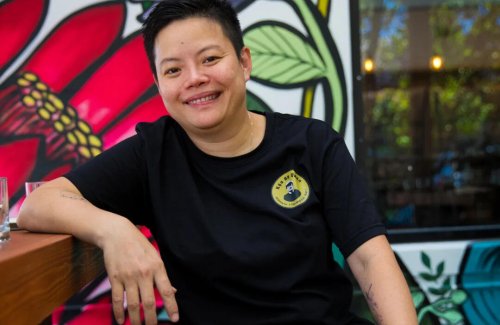
Fortunately for Vietnamese chef Nikki Tran, he succeeded as an “accidental chef” despite his previous failures in the restaurant industry. But what exactly is the secret to his success? 

Nikki launched his first restaurant in Vietnam but was doomed to flop from the beginning because of its quick decline. It started on a drunken night when he drafted his first business plan. He had put down a deposit on a new location that same night, hired a chef, and opened a new restaurant within a week. 

The only problem was that the chef didn’t show up which caused trouble on the first day it was open. The restaurant also struggled to bring in customers despite the backing of Nikki’s famous actress friend, which resulted in a steady loss of revenue. 

Nikki recognized his missteps and realized he was not as well prepared as he thought. Consequently, he worked to improve and reinvent his culinary skills. It did not end up being a challenge for him; instead, he worked toward opening a second restaurant in Houston, Texas, when he returned to the United States. 

At that time, he got hooked on crawfish and began eating them frequently. He took it to Vietnam and experimented with it using a typical technique of its culture. His family, friends, and the first people in Vietnam are thrilled to try it out, and they’ve called it “Viet-Texan cuisine.”

This innovation, which was his take on the now-classic Viet-Cajun crawfish boil made using Vietnamese river prawns, became the one that accidentally brought and pushed him into the international limelight.

Soon, he was profiled by media outlets such as Vice, NBC’s Travel Voyager, Houston Eater, and Netflix. He did not let his first failure or lack of experience prevent him from pursuing his dreams and developing relationships until he became a Netflix star. He is also a familiar face in David Chang’s Ugly Delicious, Phil Rosenthal’s Somebody Feed Phil, and the critically acclaimed Street Food: Asia.

Today, Nikki operates three locations of his restaurant, known as “Ku Ba Quán.” And even though he is known for breaking the rules of traditional Vietnamese cuisine and blending in international influences whenever he feels it is appropriate, he has the impression that he has always gone his own way.

Image Source: tribune.com.pk

News

Wu Makes Historic Singles Match Grand Slam Win For China In 63 Years

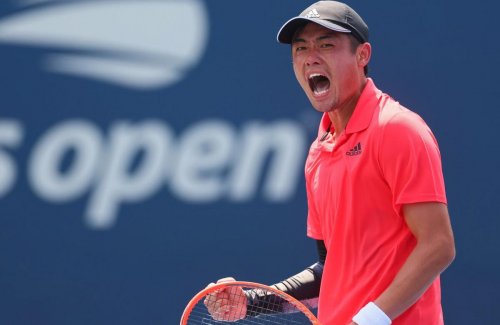
Wu Yibing became the first male tennis player from China in 63 years to win a Grand Slam tennis match with a victory in this year’s US Open beating Nikoloz Basilashvili 6-3 6-4 6-0 in the first round.

The 22-year-old didn’t compete from March 2019 to January 2022 owing to elbow, back, shoulder, and wrist injuries, with elbow surgery being the most significant. But Wu didn’t want to use his injuries as an excuse.

“I don’t really like to talk about those injuries in too (much) detail because every player has injuries,” Wu had told the ATP website, “The mental strength that you have to go through the pain is part of the game,” he added.

Wu’s compatriot Zhang Zhizhen nearly joined him in the second round, but Tim van Rijthoven saved seven match points in the third set to win 3-6 6-7(4) 7-6(9) 6-1 6-4.

But Wu hopes they can both raise China’s flag, “We are both pushing Chinese men’s tennis levels and we’re still young… I think we’re going to get to the Top 100,” 

As of this writing, Wu is ranked 173rd in the world for men’s singles. However, he hopes to move up the ranks when the 2022 U.S.

Image Source: Pesconex Facebook, Latest Chika

News, Stories

Young Siblings’ Pest Control Startup Skyrocketed In Two Months After Their Tiktok Video Went Viral

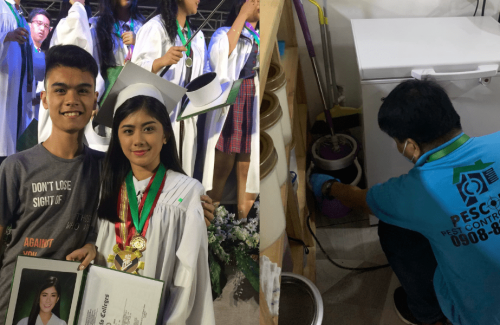
In just two months, these two siblings launched a pest control business that now serves a wide area around Quezon Province and nearby cities in the Philippines. They are like any other young adult with unfortunate life prospects, but they’ve persevered because they know there must be a better way. 

Pesconex Pest Control Services is owned jointly by its co-founders, Clark Dennies and Clarissa Joyce Demejes. They started their team with their cousin, who has grown to include four more members. 

What began as a training ground provided by their uncle is now a well-recognized business offering services with a quick phone call around Quezon Province and even reached the island of Palawan. 

Their uncle quickly loaned them money to help them start their own business. The effective pest control technique they use is a standardized process and is a convenient way to get rid of pests. They also made sure it is safe and environmentally friendly.

Within the first month, they serviced only a handful of clients, including a few homes, small sari-sari stores, and some bakeries — their parents even drove them to their clients. Nowadays, certain large companies and grocery stores are among the few that hire the team. 

Their success and customer acquisition began when Clarisse posted a TikTok video demonstrating the service they are providing. Many netizens have praised what the two have been doing, and some are so impressed that they would like to utilize their services. 

In just two short months, the siblings have established themselves financially and have also acquired their company car with their first significant earnings successfully.

Instead of focusing on the possibility that the endeavor will be unsuccessful, Clarissa encourages taking the risk. “Manifest that your business will be successful, do your best to succeed.” — she added. 

Image Source lawmagazine.bc.edu

Stories

Asian-American Woman in Law On Finding Her Voice That Lead To Her Success In The Courtroom

When looking at an Asian-American woman, certain implicit biases exist. They are often judged as being too meek, timid, or passive to achieve their goals. They may be held back by such an evaluation, preventing them from realizing their full potential.

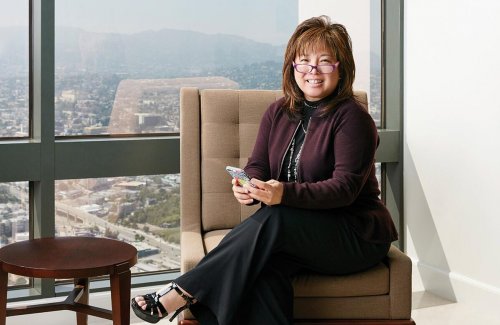
It was difficult for Asian-American lawyer Debra Wong Yang to speak up throughout her early career. In the long run, she realized that her inability to stand up for herself did not only hurt her but also her clients.

“Eventually, we all find a voice — my advice is to just make sure the one you ultimately adopt is actually yours,” she advised in her essay published by Law360.

Yang graduated from law school in 1985 when women were still relatively powerless in the legal field. Since she was still working toward the goal of following the path she had chosen, she has faced many challenges along her journey. She has witnessed it all, from the very traditional Chinese upbringing she received to the various sacrifices, frustrations, and challenges she must face on a day-to-day basis in her chosen field.

After years of practicing law and facing challenges in the courtroom, she came to a number of important realizations that helped her become a successful attorney. She remembered when she thought up some strategies that she hoped would assist her in communicating effectively with others. 

Yang also tried to conquer her fear, and her motivation helped her cope with the situation and make further progress. With a lot of the many books she has read on leadership, she knows she has finally found her own approach to developing herself. 

She aspires on detailing how she was preparing for her court session with an outline of her questions and concerns, and other litigants will be able to better manage their time with counsel. She realized she was getting better at defending her clients in court because she was able to keep her attention solely on the issues and evidence in her case.

When she was currently going through a period of learning and challenges, she learned that holding a position of authority does not guarantee respect from subordinates. She came to understand that one of the responsibilities of a leader is to address concerns raised by those who doubt one’s abilities.

In her courtroom sessions, Yang strongly suggests analyzing the situation first and looking for authentic solutions carefully. She strongly believed that the solutions to some problems sometimes are not immediately obvious and have never been tried before, or that it’s extremely straightforward. However, she is challenged to keep turning the issue over and over in her mind until she begins to see it from a new perspective.

Yang also stressed the importance of having mentors to turn to for advice and insight. She was assertive in her belief that one should be guided by the process of sitting down, thinking it through, and acting in a way that is most beneficial to them. She went on to say that if the message comes from within, the receiver will perceive it as more genuine and at ease.

In 2002, She was appointed by President George W. Bush as United States Attorney and became a former judge serving the Los Angeles County Superior Court. The fact that her success can be attributed to her strong leadership and the bravery that she possesses as an individual is a reason why she wields her power. 

Not only does Yang share her own experiences, but she also provides valuable advice that other women can use to advance their careers. She stated, “My wish for each of you is that you will be brave when facing self-doubts, challenges, and obstacles. That you will dig deep, reach out if needed, do the research, make the tough decision and not be afraid of losing.”

The fact that Yang, an Asian American woman-in-law, was able to take control of her power demonstrates that one’s race should not determine the opportunities available to them or the path they choose to take in their professional advancement. However, by maintaining a positive attitude and giving oneself the power to make decisions, one will be able to live up to the standards and goals that have been established to assist in one’s own success.