News

January 31, 2025

SHARE:

In San Fernando, the Philippines, thousands of locals and foreigners flock to the streets to celebrate Christmas. The town, adorned with giant and intricate star lanterns, symbolizes hope and the victory of light over darkness. 

Star Lanterns in San Fernando, the Philippines (Image Source: Dico Calingal)

But how did a holiday rooted in Western tradition become celebrated in an Asian country, and what about the reverse? This raises an intriguing question about hybrid holidays and their influence on a nation’s cultural identity, particularly in Asian countries. Truth be told, nothing is perplexing about an Asian country celebrating a Western holiday and vice versa—who doesn’t want more holidays to celebrate? However, hybrid holidays allow for the exploration of whether these celebrations diversify the identity of Asian countries or act as a catalyst for eroding their traditions and heritage.

As one of the largest diaspora populations on Earth, the Filipino diasporic communities provide a valuable lens through which to examine the rise of hybrid holidays and their impact on national cultural identity. According to Dr. Anthony C. Ocampo’s interview with NBC, the Philippines underwent a dramatic transformation during its three-and-a-half-century Spanish colonial period. Similar to the Philippines, many Asian nations also endured decades of colonization, imperialism, and the imposition of Orientalist ideologies. For example, countries like Vietnam have adopted numerous terms from Latin, such as Noel, festival, flan, and vin (the Vietnamese term for wine, rượu vang, is pronounced vin). Scholars widely acknowledge that colonizers employed various tools—religion, education, and language—to assert control. Thus, it’s debatable whether exposure to foreign holidays and customs serves as another subtle form of maintaining dominance.

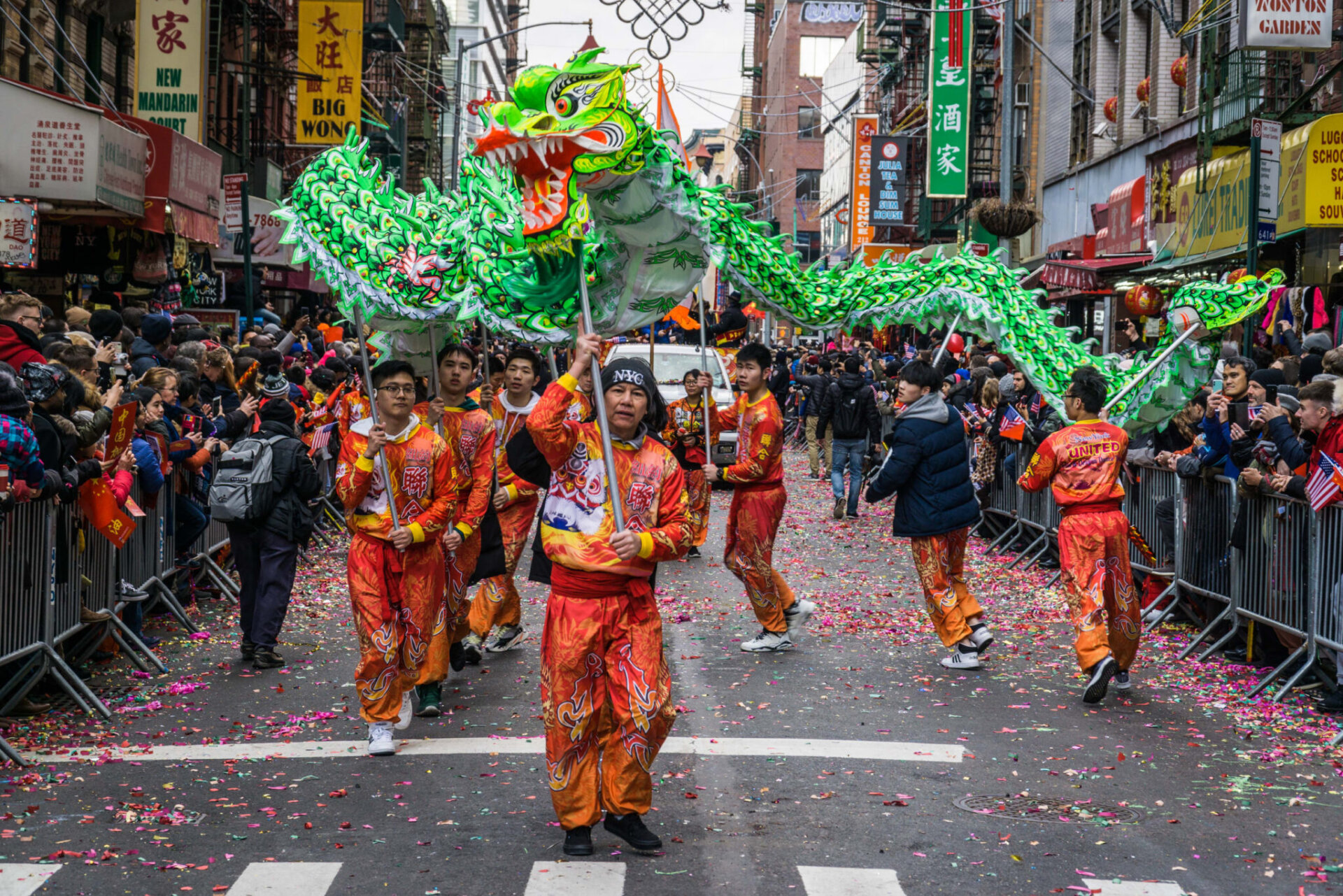
Yet, both nations, like many other Asian countries, have become uniquely distinct. More interestingly, many countries under foreign rule experienced a period of hesitation in adapting to these foreign changes. Only in the modern era did we see these holidays being adopted. Globalization and social media have accelerated cultural exposure and sparked a desire to assimilate among individuals. As a result, we see holidays becoming more homogeneous and embraced regardless of ethnicity. For instance, Vietnam celebrates both New Year and Lunar New Year with fireworks and live events aimed at captivating both international and local audiences. In contrast, states like California in the U.S. not only celebrate the Lunar New Year but declare it a state holiday to promote diversity and honor the traditions of its Asian community.

People celebrating Lunar New Year at Santa Monica, California (Image Source: Santa Monica)

For many, globalization represents homogeneity and modernization, but the challenge of rapid development lies in balancing it with cultural identity. On this precipice, an argument emerges that cultural hybridity is unattainable without conflict. While the topic of immigration might seem like a digression from the discussion of hybrid holidays, it provides insight into why such holidays may disadvantage Asian communities. The upcoming article on The Broken Dream delves deeper into the harsh realities faced by Asian immigrants, addressing the barriers to cultural assimilation. Upon arriving in a new country, many immigrants face language barriers that hinder their ability to engage in daily life. Additionally, being in a foreign land creates a disconnect from cultural practices once shared back home. This amalgamation has contributed to the erosion of cultural identity within the Asian diasporic community and, ultimately, a lack of representation and recognition of Asian holidays in Western nations. Thus, despite both Western and Asian countries experiencing globalization, the lack of representation and centuries of influence have made Asian communities more likely to accept Western holidays rather than maintain their own.

Understanding the significance of hybrid holidays on a nation’s cultural identity requires accepting that not all nations are the same. Globalization offers vast development, but it also poses the risk of diluting cultural identity, particularly for Asian communities across the globe. However, the growth opportunities outweigh the risks, as seen in the increasing recognition of holidays like Diwali and the growing acknowledgment of the Lunar New Year by international brands seeking to connect with consumers. Hybrid holidays provide an intriguing perspective on how Asian cultural identities have evolved, influenced, and grown. Through globalization, the world has come to recognize and appreciate the profound impact of the Asian community. This opportunity to celebrate and embrace holidays from diverse backgrounds has enriched Asian cultures, making them more accessible to people from different parts of the world. 

The implications of this insight are vast. As members of the Asian community, we must understand that representation matters. The holidays we celebrate reflect our individual and collective identity, showing that we are adaptable to change while remaining true to our roots. This adaptability is one of the reasons why the cultural identity of Asian countries is so idiosyncratic. Now, the only question for us as readers is how we can represent our identity in a way that makes us proud while staying true to our heritage.

Related Articles

1

Stories

A $38M Startup Exit That Rarely Happens in Vietnam: How Skinetiq Founder Hannah Nguyen Built a Trust-First Beauty Brand and Landed a Deal with Marico

Big exits in Vietnam’s startup scene are rare, but Hannah Nguyen proved they’re possible with the right foundation.

Long before Skinetiq became a multi-million-dollar brand, her journey started with a simple curiosity for beauty.

What followed was a business built not just on products, but on trust, community, and systems that scale.

Image Source: The Business Times

Starting With Trust

Hannah Nguyen’s story began on a rural coffee farm, where she experimented with making lipstick from berries using whatever she had on hand. That early curiosity grew into a strong passion for beauty, shaping how she approached products and people. It became the foundation of how she would later build her brand.

As she shared her journey online, she built a loyal community that trusted her voice. In a market like Vietnam where counterfeit products are common, that trust became her biggest edge. Instead of following trends, she focused on being real, which helped her turn followers into customers.

Image Source: Vietnam Investment Review

Growing Into a Real Business

Rather than continuing to sell other brands, Skinetiq chose to create its own skincare line. By solving real customer problems, the brand reached $16.5 million in revenue and proved strong demand. This step helped shift the business from content-driven sales to a product-focused company.

At the same time, Skinetiq built systems that allowed the business to run without relying on Hannah every day. This made the company more stable and easier to scale over time. That independence attracted Marico, leading to a majority stake deal at a $38 million valuation and showing how creators can build businesses that last.

1-jpg

Stories

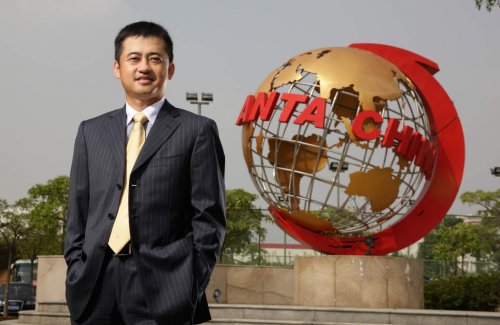
How China’s Anta Became Puma’s Largest Shareholder and the World’s No. 3 Sportswear Giant Behind Nike and Adidas

China’s Anta Sports is making a bold global move, stepping beyond its home market with a major investment in Puma.

The company acquired a 29 percent stake in the German sportswear brand in a $1.8 billion deal, becoming Puma’s largest shareholder.

This signals Anta’s growing ambition to compete head-to-head with the biggest names in the global sportswear industry.

Image Source: Yicai Global

From Small Workshop to Global Brand

Anta’s journey began in 1986 when founder Ding Shizong, a high school dropout from Fujian, borrowed 10,000 yuan from his father to start reselling shoes. After quickly turning a profit, he reinvested his earnings and built a small manufacturing workshop. This early hustle laid the foundation for what would become one of China’s biggest sportswear companies.

By 1991, Anta had officially launched its own brand and began expanding across China. Over time, the company focused on scaling production, improving product quality, and building strong local distribution. These efforts helped Anta grow from a small business into a global brand with a strong foothold in the sportswear market.

Image Source: CGTN

Competing With the World’s Biggest Brands

Today, Anta controls around 23 percent of China’s sportswear market, surpassing both Nike and Adidas within the country. Its dominance at home has helped fuel its rise on the global stage, where it now ranks as the third-largest sportswear company. This growth reflects both strong local demand and strategic expansion beyond China.

Founder Ding Shizong has made it clear that Anta’s vision goes beyond being a regional leader. Rather than becoming the “Nike of China,” he aims to build what he calls the “Anta of the world.” With its recent investment in Puma, the company is taking a major step toward that goal and solidifying its place among the industry’s global giants.

image-png

News

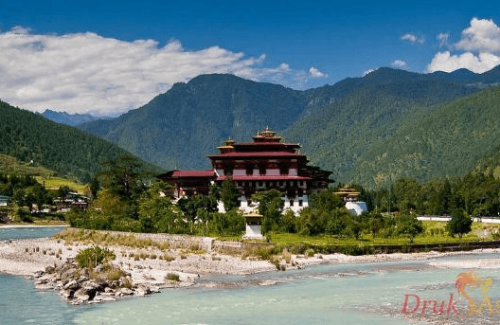
Why Bhutan is the Smartest Place for Founders and Entrepreneurs to Reset in 2026

Most founders today are running on packed schedules but feeling mentally drained, and burnout is quietly becoming part of the routine.

When everything feels urgent, there is barely any space left to think — and decisions made from pressure rarely lead anywhere worth going.

That is exactly where Bhutan comes in. Its slower pace and untouched stillness create the kind of environment that gives ambitious minds the room to pause, reflect, and return with sharper focus.

The Philosophy That Reframes Success

Bhutan approaches progress differently, placing equal importance on well-being and growth. Through its Gross National Happiness framework, the country measures success beyond economic output, and recent data shows that over 93% of the population falls within the happiness gradient. This perspective is not theoretical, it is reflected in how people live and make decisions every day.

You start to notice it in small but meaningful ways, like how conversations are not rushed and how people are fully present. There is a steady rhythm to daily life that feels intentional rather than pressured. That alone creates a different kind of mental space.

For founders and entrepreneurs, being in that environment naturally raises questions about what really drives their decisions. It becomes easier to see how much of leadership is shaped by urgency rather than purpose. That shift in awareness is often where real clarity begins.

The Travel Model That Guards Your Headspace

Bhutan keeps tourism at a manageable level, which helps protect both the experience and the environment. In 2025, the country welcomed nearly 210,000 visitors, a number that is intentionally kept low compared to other destinations. As a result, places feel calm and never overcrowded.

There is also a Sustainable Development Fee of about USD 100 per night, which supports conservation and local communities. This approach ensures that tourism grows in a way that does not take away from what makes Bhutan special. It also sets the tone for a more thoughtful way of traveling.

Because of this model, the pace of each trip feels more balanced and unhurried. Days are not tightly packed, which gives you time to take in each experience without feeling rushed. For founders and entrepreneurs, that space often becomes the most valuable part of the journey.

The Environment That Resets How You Think

Bhutan’s landscapes make it easy to slow down without trying too hard. In places like the Phobjikha Valley, the wide open views and quiet surroundings create a sense of calm that is hard to find elsewhere. Even visiting Tiger’s Nest requires a steady climb, which naturally shifts your pace and focus.

There is no constant noise pulling your attention in different directions. Instead, the stillness gives your mind room to settle and process things more clearly. It is often in these quiet moments that new ideas begin to form.

Over time, you notice a change in how you think and respond to things. Decisions feel less rushed and more intentional, which is something many founders and entrepreneurs struggle to achieve in their usual environment. By the end of the trip, the reset feels real and something you can carry with you.

If you are looking for a reset that goes beyond rest and actually changes how you think, explore Bhutan with Druk Asia here:

📍Website

unnamed-png

Stories

The Journey of 20-Year-Old Alex Eala to the WTA Top 50 After Taking Down the Biggest Names in Women’s Tenn

At just 20 years old, Alex Eala is emerging as one of the most exciting new forces in women’s tennis. The Filipina athlete has captured global attention after defeating some of the sport’s most established champions.

In a sport historically dominated by Western powers, Eala’s rapid climb is a major milestone for Asian representation in tennis. Her growing success signals a shift in the global landscape of the sport.

Image Source: SCMP

A Breakthrough That Turned Heads in Miami

Eala’s breakthrough moment came at the 2025 Miami Open, where she entered the tournament as a wildcard. Few expected the young Filipina to make a deep run, but she quickly stunned the field with a series of commanding victories.

During the tournament, Eala defeated multiple Grand Slam champions, including Iga Świątek, Madison Keys, and Jeļena Ostapenko. She later added a win over Coco Gauff, further proving she could compete against the very best in the sport.

Her run to the semifinals became one of the biggest stories of the tournament. It pushed her ranking into the WTA Top 100 and introduced her to a much wider global audience.

Image Source: DZRH

Climbing Into the WTA Top 50

Following her breakout performance, Eala continued to build momentum throughout the season. Strong results in several tournaments helped her steadily climb the rankings and establish herself among the sport’s rising contenders.

By the end of the year, Eala officially entered the WTA Top 50, becoming the first Filipina player to reach that milestone. The achievement marked a historic moment not only for Philippine tennis but also for Southeast Asian representation in the sport.

More than just a personal accomplishment, her rise is inspiring a new generation of young athletes across Asia. As she continues to compete on the world stage, Alex Eala’s journey shows how talent, discipline, and opportunity can reshape the future of global tennis.