News

January 31, 2025

SHARE:

In San Fernando, the Philippines, thousands of locals and foreigners flock to the streets to celebrate Christmas. The town, adorned with giant and intricate star lanterns, symbolizes hope and the victory of light over darkness. 

Star Lanterns in San Fernando, the Philippines (Image Source: Dico Calingal)

But how did a holiday rooted in Western tradition become celebrated in an Asian country, and what about the reverse? This raises an intriguing question about hybrid holidays and their influence on a nation’s cultural identity, particularly in Asian countries. Truth be told, nothing is perplexing about an Asian country celebrating a Western holiday and vice versa—who doesn’t want more holidays to celebrate? However, hybrid holidays allow for the exploration of whether these celebrations diversify the identity of Asian countries or act as a catalyst for eroding their traditions and heritage.

As one of the largest diaspora populations on Earth, the Filipino diasporic communities provide a valuable lens through which to examine the rise of hybrid holidays and their impact on national cultural identity. According to Dr. Anthony C. Ocampo’s interview with NBC, the Philippines underwent a dramatic transformation during its three-and-a-half-century Spanish colonial period. Similar to the Philippines, many Asian nations also endured decades of colonization, imperialism, and the imposition of Orientalist ideologies. For example, countries like Vietnam have adopted numerous terms from Latin, such as Noel, festival, flan, and vin (the Vietnamese term for wine, rượu vang, is pronounced vin). Scholars widely acknowledge that colonizers employed various tools—religion, education, and language—to assert control. Thus, it’s debatable whether exposure to foreign holidays and customs serves as another subtle form of maintaining dominance.

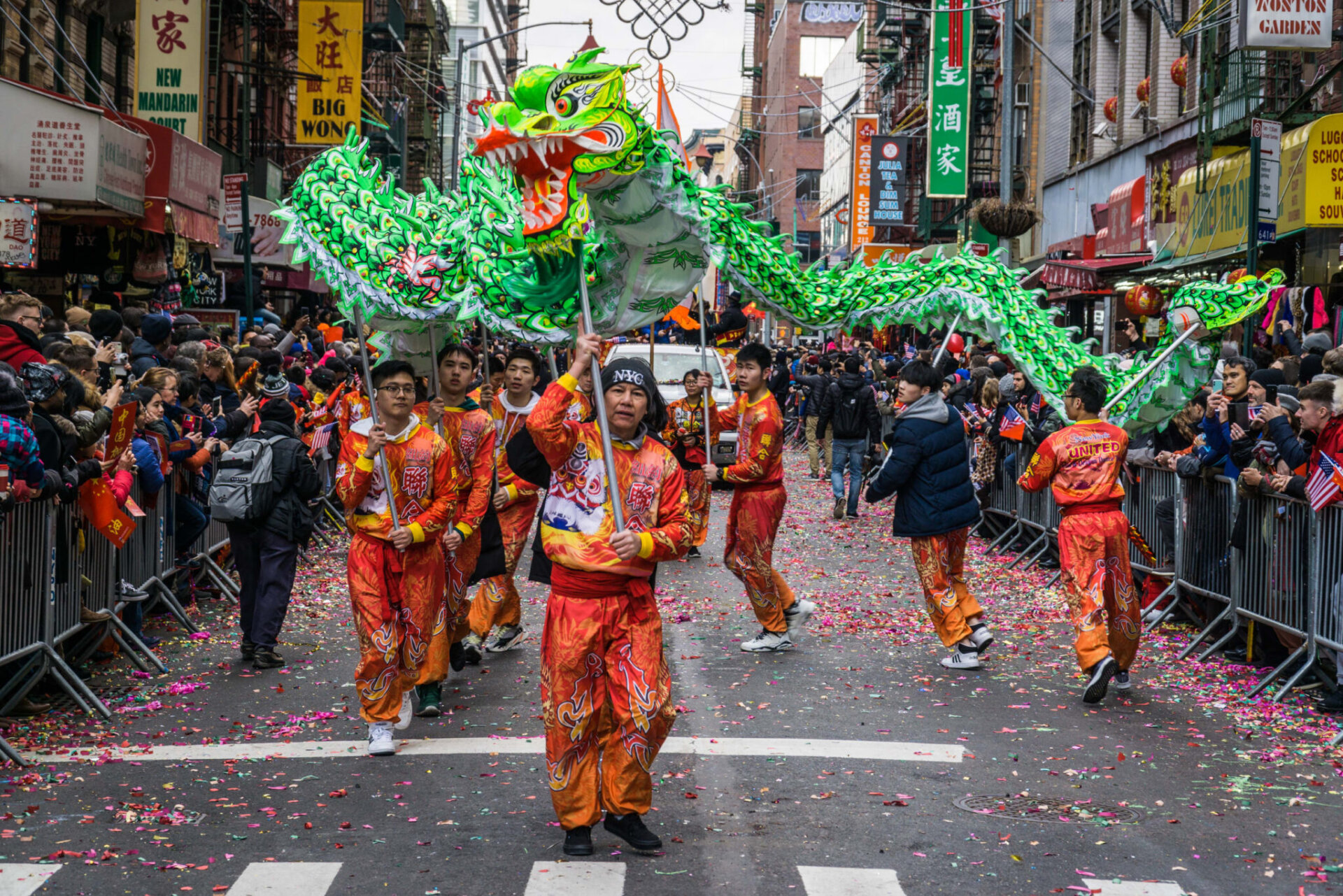
Yet, both nations, like many other Asian countries, have become uniquely distinct. More interestingly, many countries under foreign rule experienced a period of hesitation in adapting to these foreign changes. Only in the modern era did we see these holidays being adopted. Globalization and social media have accelerated cultural exposure and sparked a desire to assimilate among individuals. As a result, we see holidays becoming more homogeneous and embraced regardless of ethnicity. For instance, Vietnam celebrates both New Year and Lunar New Year with fireworks and live events aimed at captivating both international and local audiences. In contrast, states like California in the U.S. not only celebrate the Lunar New Year but declare it a state holiday to promote diversity and honor the traditions of its Asian community.

People celebrating Lunar New Year at Santa Monica, California (Image Source: Santa Monica)

For many, globalization represents homogeneity and modernization, but the challenge of rapid development lies in balancing it with cultural identity. On this precipice, an argument emerges that cultural hybridity is unattainable without conflict. While the topic of immigration might seem like a digression from the discussion of hybrid holidays, it provides insight into why such holidays may disadvantage Asian communities. The upcoming article on The Broken Dream delves deeper into the harsh realities faced by Asian immigrants, addressing the barriers to cultural assimilation. Upon arriving in a new country, many immigrants face language barriers that hinder their ability to engage in daily life. Additionally, being in a foreign land creates a disconnect from cultural practices once shared back home. This amalgamation has contributed to the erosion of cultural identity within the Asian diasporic community and, ultimately, a lack of representation and recognition of Asian holidays in Western nations. Thus, despite both Western and Asian countries experiencing globalization, the lack of representation and centuries of influence have made Asian communities more likely to accept Western holidays rather than maintain their own.

Understanding the significance of hybrid holidays on a nation’s cultural identity requires accepting that not all nations are the same. Globalization offers vast development, but it also poses the risk of diluting cultural identity, particularly for Asian communities across the globe. However, the growth opportunities outweigh the risks, as seen in the increasing recognition of holidays like Diwali and the growing acknowledgment of the Lunar New Year by international brands seeking to connect with consumers. Hybrid holidays provide an intriguing perspective on how Asian cultural identities have evolved, influenced, and grown. Through globalization, the world has come to recognize and appreciate the profound impact of the Asian community. This opportunity to celebrate and embrace holidays from diverse backgrounds has enriched Asian cultures, making them more accessible to people from different parts of the world. 

The implications of this insight are vast. As members of the Asian community, we must understand that representation matters. The holidays we celebrate reflect our individual and collective identity, showing that we are adaptable to change while remaining true to our roots. This adaptability is one of the reasons why the cultural identity of Asian countries is so idiosyncratic. Now, the only question for us as readers is how we can represent our identity in a way that makes us proud while staying true to our heritage.

Related Articles

News

Celebrating Hope: JED Gala 2025 Unites Advocates for Youth Mental Health

The Jed Foundation (JED) held its annual gala on June 4 at Cipriani Wall Street in New York City, gathering more than 650 guests for a special evening dedicated to raising awareness and taking action for youth mental health. The sold-out event raised over $1.6 million in support of JED’s mission: to protect emotional health and prevent suicide among teens and young adults.

Hosted by Emmy-winning journalist, Savannah Sellers, the gala recognized individuals and organizations at the helm of the drive for youth mental health awareness. “The mental health struggles of our young people are undeniable, as suicide remains a leading cause of death for this population,” said JED CEO John MacPhee who emphasized the urgency of their work. “The dedication of tonight’s incredible individuals, organizations, and advocates — helping JED protect and prioritize student mental health with life-saving tools, resources, and connections — serves as a positive reminder that it takes every one of us to prevent suicide and foster a kinder community here at home and across the country.”

Honoring Voices Making an Impact

Singer, actor, and DIVE Studios co-founder Eric Nam and Peloton instructor and entrepreneur Ally Love received the 2025 Voice of Mental Health Award. Both were praised for destigmatizing mental health and encouraging open dialogue.

Nam highlighted the importance of prioritizing self-care, “Mental health is universal; it impacts how every one of us shows up in the world.” His work with JED and Mindset has helped connect AAPI youth and K-pop fans to personal mental health stories. 

Eric Nam | Singer, Actor, and DIVE Studios Co-founder

Love also shared her own experiences: “Living with mental health challenges is part of my story, but it does not define who I am. ”

Ally Love | Entrepreneur, CEO/Founder of Love Squad

Victoria’s Secret PINK earned the Corporate Voice of Mental Health Award, recognized for a five-year partnership with JED focused on Gen Z engagement. Through digital tools, campus outreach, and initiatives like the PINK with Purpose Project — which awarded $25,000 grants to 10 young advocates — PINK has helped expand access to support and resources.

“PINK is all about inspiring Gen Z to show up authentically and find joy in this chapter of life,”  said Leslie Nixon, Associate Vice President of Community Relations at Victoria’s Secret & Co. “Our work with JED highlighted that supporting positive mental health is the key to fostering growth, connection, and future success. 

Leslie Nixon, Associate Vice President of Community Relations at Victoria’s Secret & Co.

Celebrating Student Advocates and Voices of Hope

Model and mental health advocate Remi Bader introduced the recipients of the 2025 Student Voice of Mental Health Award: Rohan Satija, a recently graduated Texas high school senior, and Nora Yanyi Sun, a rising junior at Harvard. Both students shared powerful reflections on their mental health journeys and their work to uplift peers through advocacy.

The evening featured performances by Lorna Courtney, Thomas Robert Kitt, BAILEN the Band, and the Brooklyn United Marching Band, each contributing to a moving celebration of resilience, hope, and connection.

To view event photos, visit JED’s Facebook photo album.
To support JED’s work, visit jedfoundation.org/donate.

Blogs, Development

Understand Whether Your Website Is User-Friendly: 7 UX Pillars

User Experience, commonly referred to as UX, is a very broad term, which makes it hard to evaluate whether your website works with users.

As such, Peter Morville simplified UX into 7 core pillars, allowing a comprehensive evaluation of the UX:

  • Useful: It should have features that help users achieve certain goals easily.
  • Desirable: It should have add-on features that can cater to users’ specific wants.
  • Accessible: It should be usable by users with disabilities, and it is equally easy to use on mobile devices and laptops/PC.
  • Credible: It should be smooth, and there should not be any major bugs that disrupt the user experience.
  • Findable: It should showcase information clearly, allowing for easy navigation across the website.
  • Usable: As simple as it sounds, users should be able to use the website intuitively; the User Interface should be familiar.
  • Valuable: It should bring value to the user; it should help them save in some way, whether it is time, money, or effort. Simply, what do they gain by using your website (over going in-store, for example)?

Why Asian Hustle Solutions?

At AHS, we specialize in helping brands capture attention and inspire action — whether you’re launching a new product or scaling your business, we’ll guide you to marketing that resonates and delivers results.

If you want to learn more about our services, visit the Asian Hustle Solutions website at asianhustlenetwork.com/services/

an_tran_banc

Stories

An Tran Turned a Receptionist Job Into a 25-Year Journey to Executive Leadership in Banking

When you first meet her, you feel her warmth—grounded, welcoming, and full of passion. With over 25 years in the banking industry, An Tran, Market Executive at Banc of California, has become known not only for her distinctive leadership but also for the deep care she gives to her family—and for her dedication as a passionate skincare and self-care advocate.

Yet behind these roles lies a journey marked by resilience—a story not only of her own, but of many Vietnamese immigrants who navigated life in a new country with hope for a brighter future and the American dream.

An Tran | SVP Market Executive at Banc of California

A Humble Beginning, A Lifelong Commitment

Banking wasn’t part of her plan at the start of her career. In fact, her first job was as a receptionist at a bank in San Francisco. But she didn’t let that humble beginning define her. Fueled by passion, relentless effort, and the sense of responsibility that came from being the eldest of eight children, she turned what she lacked in experience into unstoppable drive.

“My professional life has always revolved around service and sales, with a natural inclination to care for others, perhaps stemming from my role as the eldest of eight,” she says. 

Over the years, she took every opportunity whenever she could to learn, grow, and serve her clients better. Her work ethic and trust-building skills propelled her forward, step by step, until she eventually became the Market Executive for Banc of California—a role she holds today with pride and purpose.

A Journey Rooted in Sacrifice and Survival

By her own admission, she doesn’t have any news-breaking stories. She is simply a daughter born to Vietnamese immigrants who came to America during the 1970s and ’80s. Yet it was her generation that first began to rise out of poverty, despite arriving in the U.S. with nothing in hand. “Through relentless hard work, we’ve not only achieved the American dream but also built the lives our parents envisioned for us when they first arrived,” she reflects.

Her family’s story, like so many others, is one of hope and sacrifice. And through years of determination and resilience, she has proven the grit and strength of her community—successfully building the life her parents once dreamed of when they left Vietnam.

An Tran has successfully built what her parents imagined for their children in the US. 

Facing Challenges with Grace and Grit 

Climbing the banking ladder over the past 25 years was no easy feat for a young woman like An. She faced unique hurdles—from skepticism to subtle sexism in the workplace.

But instead of letting those experiences hold her back, she used them as fuel to move forward.

“Every challenge throughout my life and career has been a positive force, shaping me into the person I am today,” she shares. “These experiences pushed me to find new ways to grow and overcome adversity. I believe challenges are essential for growth—without them, we can’t truly learn. Remaining a lifelong student, absorbing both small and significant lessons daily, is key. The moment you stop learning is the moment you stop achieving.”

An Tran has faced criticism with grace and determination, climbing the banking ladder step by step.

Empowering the Asian Community, One Role Model at a Time

From receptionist to executive, her journey is a remarkable one. But for her, the real achievements aren’t just titles—they’re the impact she’s had on others and the example she’s set for her children, her colleagues, and her community.

“I’m incredibly grateful to be where I am today, creating the life I envisioned and providing for my family in a way my parents dreamed of when we left Vietnam. My pride extends to every step of this remarkable path,” she says. 

She’s living proof. A former refugee who arrived in America with nothing is now leading in one of the most competitive industries in the country—and doing so with compassion, integrity, and purpose.

Connect With An Na Tran 

“My goal is to be a resource for the Asian community, showing that we are strong, career-driven, and incredibly successful.”

LinkedIn: An Na T.

AHS EMAIL ANGLE (1)-png

Blogs, Development

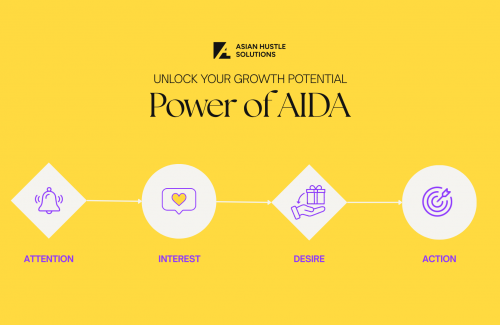
Unlock Your Growth Potential: Harness the Power of AIDA

Your audience is busy — if you want their attention, you need to earn it with a message that cuts through the noise.

AIDA is a time-tested framework that guides your messaging from first glance to final action, helping you craft marketing that actually converts.

  • Attention – Grab your audience with a bold headline, eye-catching image, or intriguing question.
  • Interest – Share a benefit or story that keeps them reading.
  • Desire – Build an emotional connection by showing how your product solves their problem or improves their life.
  • Action – End with a clear call-to-action so they know exactly what to do next.

Why Asian Hustle Solutions?

At AHS, we specialize in helping brands capture attention and inspire action — whether you’re launching a new product or scaling your business, we’ll guide you to marketing that resonates and delivers results.

If you want to learn more about our services, visit the Asian Hustle Solutions website at asianhustlenetwork.com/services/