News

January 31, 2025

SHARE:

In San Fernando, the Philippines, thousands of locals and foreigners flock to the streets to celebrate Christmas. The town, adorned with giant and intricate star lanterns, symbolizes hope and the victory of light over darkness. 

Star Lanterns in San Fernando, the Philippines (Image Source: Dico Calingal)

But how did a holiday rooted in Western tradition become celebrated in an Asian country, and what about the reverse? This raises an intriguing question about hybrid holidays and their influence on a nation’s cultural identity, particularly in Asian countries. Truth be told, nothing is perplexing about an Asian country celebrating a Western holiday and vice versa—who doesn’t want more holidays to celebrate? However, hybrid holidays allow for the exploration of whether these celebrations diversify the identity of Asian countries or act as a catalyst for eroding their traditions and heritage.

As one of the largest diaspora populations on Earth, the Filipino diasporic communities provide a valuable lens through which to examine the rise of hybrid holidays and their impact on national cultural identity. According to Dr. Anthony C. Ocampo’s interview with NBC, the Philippines underwent a dramatic transformation during its three-and-a-half-century Spanish colonial period. Similar to the Philippines, many Asian nations also endured decades of colonization, imperialism, and the imposition of Orientalist ideologies. For example, countries like Vietnam have adopted numerous terms from Latin, such as Noel, festival, flan, and vin (the Vietnamese term for wine, rượu vang, is pronounced vin). Scholars widely acknowledge that colonizers employed various tools—religion, education, and language—to assert control. Thus, it’s debatable whether exposure to foreign holidays and customs serves as another subtle form of maintaining dominance.

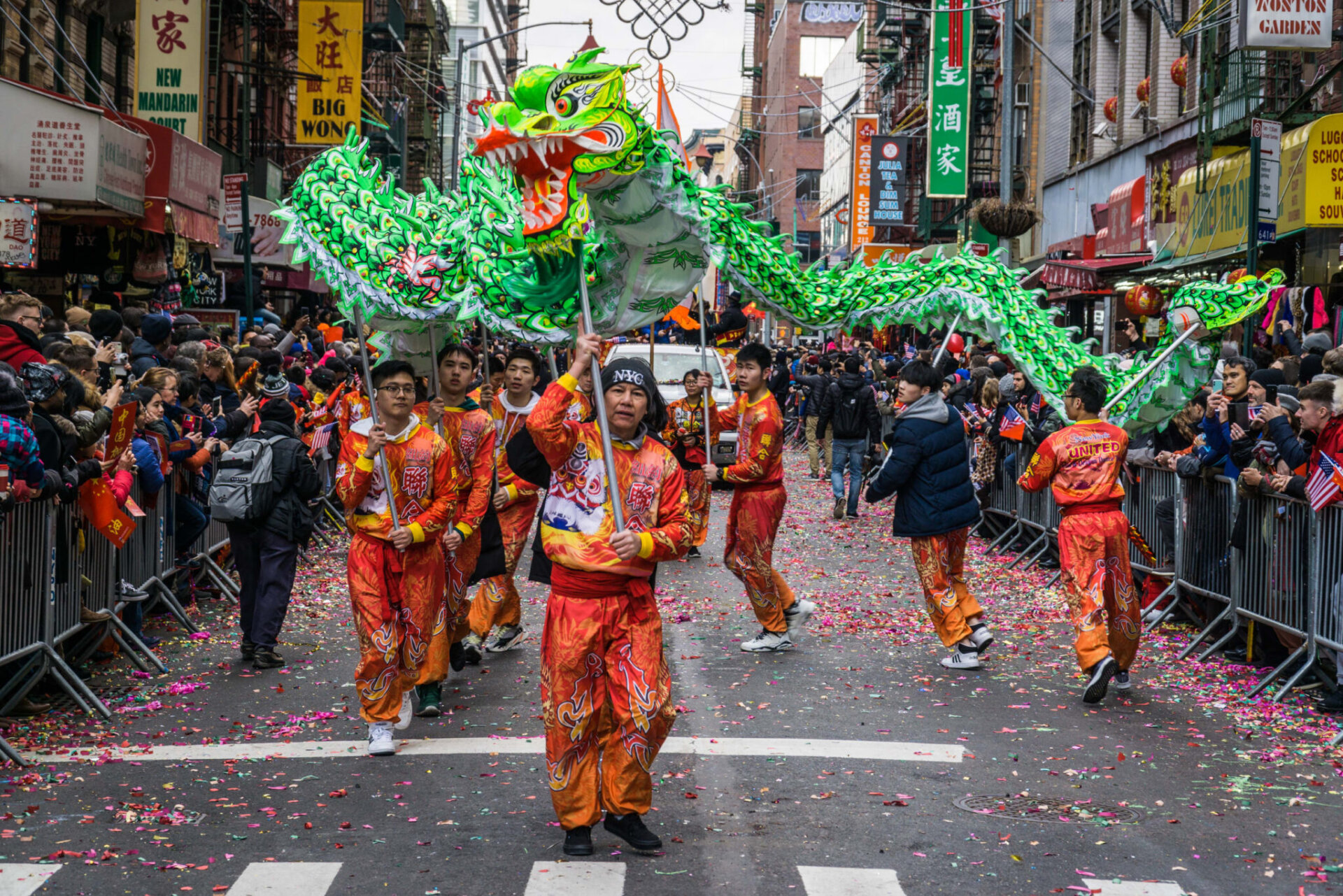
Yet, both nations, like many other Asian countries, have become uniquely distinct. More interestingly, many countries under foreign rule experienced a period of hesitation in adapting to these foreign changes. Only in the modern era did we see these holidays being adopted. Globalization and social media have accelerated cultural exposure and sparked a desire to assimilate among individuals. As a result, we see holidays becoming more homogeneous and embraced regardless of ethnicity. For instance, Vietnam celebrates both New Year and Lunar New Year with fireworks and live events aimed at captivating both international and local audiences. In contrast, states like California in the U.S. not only celebrate the Lunar New Year but declare it a state holiday to promote diversity and honor the traditions of its Asian community.

People celebrating Lunar New Year at Santa Monica, California (Image Source: Santa Monica)

For many, globalization represents homogeneity and modernization, but the challenge of rapid development lies in balancing it with cultural identity. On this precipice, an argument emerges that cultural hybridity is unattainable without conflict. While the topic of immigration might seem like a digression from the discussion of hybrid holidays, it provides insight into why such holidays may disadvantage Asian communities. The upcoming article on The Broken Dream delves deeper into the harsh realities faced by Asian immigrants, addressing the barriers to cultural assimilation. Upon arriving in a new country, many immigrants face language barriers that hinder their ability to engage in daily life. Additionally, being in a foreign land creates a disconnect from cultural practices once shared back home. This amalgamation has contributed to the erosion of cultural identity within the Asian diasporic community and, ultimately, a lack of representation and recognition of Asian holidays in Western nations. Thus, despite both Western and Asian countries experiencing globalization, the lack of representation and centuries of influence have made Asian communities more likely to accept Western holidays rather than maintain their own.

Understanding the significance of hybrid holidays on a nation’s cultural identity requires accepting that not all nations are the same. Globalization offers vast development, but it also poses the risk of diluting cultural identity, particularly for Asian communities across the globe. However, the growth opportunities outweigh the risks, as seen in the increasing recognition of holidays like Diwali and the growing acknowledgment of the Lunar New Year by international brands seeking to connect with consumers. Hybrid holidays provide an intriguing perspective on how Asian cultural identities have evolved, influenced, and grown. Through globalization, the world has come to recognize and appreciate the profound impact of the Asian community. This opportunity to celebrate and embrace holidays from diverse backgrounds has enriched Asian cultures, making them more accessible to people from different parts of the world. 

The implications of this insight are vast. As members of the Asian community, we must understand that representation matters. The holidays we celebrate reflect our individual and collective identity, showing that we are adaptable to change while remaining true to our roots. This adaptability is one of the reasons why the cultural identity of Asian countries is so idiosyncratic. Now, the only question for us as readers is how we can represent our identity in a way that makes us proud while staying true to our heritage.

Related Articles

Image Source tinhte.vn

Uncategorized

Google Data: Nearly Half of Gen Z Searches on TikTok Rather than Google

TikTok, which is the social media app that is expanding at the fastest rate, has seen its user base skyrocket over the past few years.

A Google executive has confirmed that the format of TikTok is changing the way that young people conduct internet searches, and Google is working to keep up with these changes. 

According to data that was initially discovered within Google and reported by TechCrunch, nearly 40% of members of Gen Z prefer to search using TikTok as well as Instagram rather than Google Search and Maps when they are looking for a place to eat lunch.

Google has now confirmed this figure to Insider and has acknowledged that they face stiff competition from a variety of sources, including general and specialized search engines, as well as apps that are designed specifically for searching. 

It is also predicted that TikTok’s advertising revenue will overtake YouTube by 2024, according to Insider Intelligence.

Google has outlined the modifications it intends to make to its search engine in order to appeal to a younger audience. One of these adjustments is the addition of a feature that will allow users to pan their camera over an area and obtain instant information about multiple objects in a wider scene.

Image Source king5.com

Uncategorized

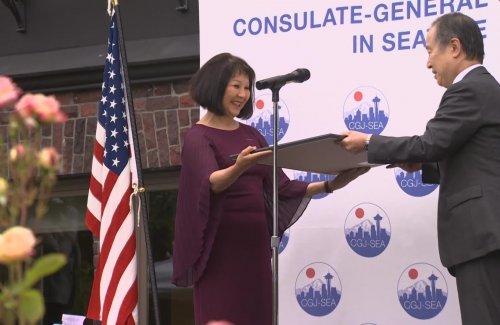
Former King 5 Anchor Lori Matsukawa Receives One Of Japan’s Highest Honors

Lori Matsukawa, a former Hawaii resident, and Seattle news anchor received the ‘Order of the Rising Sun Sun, Gold and Silver Rays’, one of Japan’s highest honors.

The award was for her contribution to promoting Japan-U.S. friendship. “This is a true honor and thrill for me because for the last several years, I’ve been really working hard to connect people in Japan and people in the United States on a person-to-person basis,” Matsukawa told KING 5.

The award was more generally bestowed upon distinguished members of the Japanese military since 1875, but in 2003, the honor was extended to women.

Matsukawa was a well-known journalist for the Seattle media and KING 5, as well as a former president of the Japanese Cultural & Community Center of Washington. She brought to light important events in Japanese American history, particularly those that occurred during World War II, through her reporting.

Her Emmy-award-winning documentaries centered on the detention of Japanese people in the Pacific Northwest during World War II.

Matsukawa was also instrumental in founding a chapter of the Asian American Journalists Association.

King County has designated June 29, 2019, as Lori Matsukawa Day in honor of her retirement.

Image Source planetnewspost.com

Uncategorized

Renowned NYC Little Tokyo Restaurateur Faces $95M Sexual Assault Lawsuit

A $95 million lawsuit has been filed against a restaurant owner behind several top East Village Japanese restaurants, Shuji Bon Yagi for allegedly sexually assaulting an employee this winter. 

The lawsuit was filed by Nozomi Horikoshi, a top executive at Yagi’s restaurant group T.I.C., who claims Yagi allegedly assaulted her while she had passed out after a night of drinking and could not consent, according to the New York Post.

According to the allegations made in her file, Horikoshi, who has been employed by the well-known restaurateur for close to a decade, stated that he invited himself to celebrate the birthday of another female colleague “knowing that his wife was in Japan throughout the weekend.”

Horikoshi claimed that her boss forced her into a taxi sometime after 2:00 a.m. and then began groping, caressing, and attempting to kiss her when she was very intoxicated. She “tried to push Yagi off her and told him to stop, but due to her level of intoxication, the plaintiff eventually lost consciousness inside the taxi,” the filing alleges.

Yagi reportedly drove her directly to his residence on West 58th Street, as obtained from the GPS information from Horikoshi’s cell phone. Horikoshi ultimately awoke with her employer allegedly resting on top of her while she was naked from the waist down.

“I realized I was naked from the waist down … that was so embarrassing.” The 51-year-old married mother of three told the New York Post, “I was like what happened? I have to go home. I knew that something happened already,” she continued. “There was a feeling of shame.”

Horikoshi’s attorney claimed the lawsuit was about “power and accountability” for Yagi, a high-profile businessman renowned for influencing Japanese cuisine in New York.

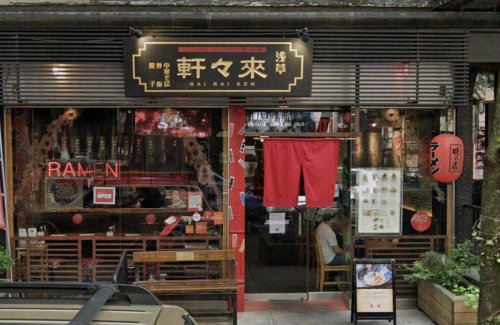
Dubbed an “East Village ambassador for Japanese cuisine” by the New York Times, Yagi’s restaurants include Rai Rai Ken, Cha-An, Sobaya, and Bar Decibel.

Sinful Treats

Uncategorized

Recession, Pandemic Won’t Stop This Momma Baker For Taking On New Opportunities

Have you ever thought of opening a business during a recession? How about during the pandemic? Well, this lionhearted momma just did that!

Filipino-American Mariel Black started her baking business, Sinful Treats, in June 2009, at the peak of the recession — everyone thought she was crazy to start a business at that time. She had only one product to sell, some unknown Filipino pastry called ‘Food for the Gods’. “No one knew what it was. I had to tell people, ‘it’s like a blondie with dates and walnuts’” she said. Starting out as an online bakery, she gave out samples to whoever was open to trying her product. People never heard of it, but once they tasted it, they loved it! 

Because everyone was hurting during the recession, she found that people were more inclined to help each other. Soon, a few coffee shops agreed to carry her products, and she also kept selling online.

“This photo marks the beginning of our Sinful Treats adventure. My boys have been involved since Day 1.” -Mariel

Her big break came in 2011 when the Railroad Museum in Old Sacramento ordered 19,800 Snickerdoodle cookies for their main holiday event, The Polar Express. A year before that, she took her 4-year-old son on the train ride, where they served cookies and hot cocoa just like in the movie, Polar Express. He took one bite of the cookie, then he told her that she should make the cookies. “Ah, the power of suggestion, from a 4-year-old!” Mariel exclaimed. 

She talked to the coordinators and gave them cookie samples and they loved them. The following year, they ordered 19,800 Snickerdoodles. “I said YES, even if at that time,” she said, “I had no kitchen and no employees to help me. I had a couple of months to figure out how to make it happen.”

She rented a kitchen in a restaurant at night and asked friends to help, “I had a crew of 5 people. Like little elves, we’d bake all night while the restaurant was closed.” They only had one oven with 2 racks, only able to bake 48 cookies every 12 minutes. The cookies were baked from scratch, scooped by hand, packaged individually, sealed with a heat sealer, and labeled — all 19,800 of them! 

“It was the most exhausting but exhilarating experience. It was then I knew that I loved the thrill and pain that came with being a business owner.” She’s been baking for the Railroad Museum since then.

“Ah, the power of suggestion, from a 4-year-old!”

-Mariel black

Sinful Treats grew to have its own retail location a few years later and became a full-service bakery and catering company. They created and launched their first baking mix in 2015 with their signature product, “the treat that started it all” — Food for the Gods Baking Mix.

The year 2020 would have been their 10th year baking for the museum, “but 2020 had a different plan for all of us” she said. All of their Fall and Holiday events have been canceled. “Being in the baking business, our fourth quarter is when we make the most. Suddenly, all of it was gone. Having survived and thrived during the recession, I can honestly say this year, this pandemic is a lot harder than the recession.”

But the lockdown didn’t stop Mariel to continue her passion, rather she pursued another idea – to have a one-stop shop for baked goods. “Recession, pandemic, lockdowns won’t stop me. There are always opportunities even in the worse scenarios.” 

In October 2020, she launched an online marketplace where local bakers can sell their products and grow their small businesses. Sinful Treats is now home to the best local brands. Mariel’s goal is to empower small business owners, especially women and minority-owned businesses. All Bakers and Food Makers who have something special and have unique products to offer are welcome to join, “The food industry is already very competitive, but we are stronger together. So my hope is that through this marketplace, we can all help each other grow.” They ship cakes, cookies, desserts, and gourmet food across the United States.

Sinful Treats’ Business Partners

“The food industry is already very competitive, but we are stronger together. So my hope is that through this marketplace, we can all help each other grow.”

-Mariel black

“Everything I have worked for seemed to be a stepping stone to what I’m doing now,” she said, “Having a brand that’s already established, a working website, products that have been tried and proven, years of networking and relationship building, all of this and more are now helping to make this new path easier to take and faster to grow.”

Mariel always gets a thrill watching businesses grow, she also shares over a decade of her experience and wisdom with new small business owners. “I love baking, but my real passion is business”. She guides her marketplace sellers with what they need; teaching them about branding, pricing, basic accounting, packaging, shipping, and even how to improve their products and come up with new ones.  

“I always tell my kids, when something bad happens, it’s usually a blessing in disguise,” she added, “True entrepreneurs find opportunity even in the worst scenarios.” 

Website: sinfultreats.net

Instagram: @sinfultreats

Facebook: Sinful Treats

Twitter: @SinfulTreats