What is UX

Design

March 13, 2025

SHARE:

What does UX stand for? Learn more about what UX means, why it’s so important and what defines good UX.

“UX” stands for “user experience.” It describes the quality of the experience an end user has with a specific product, service, company or brand.

Although it’s often talked about in relation to digital products, like apps and websites, UX can relate to anything that an end user can interact with or encounter.

Take the example of going into your local bank to open a new account. If the process is quick and simple with clear instructions, easy-to-find information and friendly customer service, you’d come away feeling like you had a good user experience.

The same goes for ordering something online or using an app on your phone. If you’re able to accomplish your desired tasks with minimal effort, you’ll find the user experience to be a pleasant one.

UX doesn’t relate to one specific thing. It’s the sum of all the smaller parts that determines whether the overall encounter between the product/service and the user is a positive one. You can think of it as the impression the user leaves with and whether or not they’d be keen to repeat the experience. To learn more, keep reading.

What is user experience (UX) design?

If UX describes the quality of a user’s encounter with a particular product or service, UX design is the process of creating and shaping these experiences, with the goal of making them positive, pleasant and valuable for the end user.

UX design isn’t about how a product looks; that’s just one aspect of the overall user experience. It’s about ensuring that the product is logical, functional, easy to navigate and generally user-friendly.

There are 5 elements of UX design to consider:

  1. Strategy: Deciding which objectives the product should meet, including both end user goals and client/business stakeholder objectives.
  2. Scope: Fleshing out the details of the product, determining which features and functionality it should offer.
  3. Structure: Mapping out the structure of the product, considering how users will navigate from one point to the next and what information they’ll need to move around the product and accomplish their goals.
  4. Skeleton: Drilling down to the finer details of how each page should be structured and which elements (buttons, menus and other content) will go where.
  5. Surface: Considering the user’s sensory experience of the product, defining how the product will look in terms of colors, imagery, spacing, typography and so on. This is where UI design comes in.

Where does the term “UX” come from?

The term “UX” was invented by Donald Norman, a cognitive psychologist who started working at Apple in the early 1990s. He took on the role of User Experience Architect, making him the first (known) person in history to have UX in their job title.

Explaining the origins of UX, Donald Norman said:

“I invented the term because I thought human interface and usability were too narrow. I wanted to cover all aspects of the person’s experience with a system, including industrial design, graphics, the interface, the physical interaction and the manual.”

What is the difference between UX and UI?

If you’ve heard of UX, you’ve probably also heard of UI. The terms are often used together but it’s important to be clear on the difference between them.

UX is a much broader term, covering everything that influences how a user feels when they use a product or service. It’s a comprehensive discipline that involves research, analysis, and understanding user needs. 

UI stands for “user interface”, which is the point of interaction between an end user and a digital product. It’s a more narrow discipline that involves the visual design of the screens, buttons and other touchpoints you might use to navigate an app or a website. 

The way the user interface (UI) is designed has an impact on the overall user experience, so UI is an important part of UX.

UXUI
Stands for “user experience”Stands for “user interface”
A broad disciplineA narrow discipline
Involves the quality of the experience as a wholeInvolves the design of the user interface
Concerned with research, analysis, and understanding user needsConcerned with visual design

You can learn more about the difference between the two, as well as how they go hand-in-hand, in this guide to UX vs. UI.

Why is UX important?

UX is important for two reasons: business value and human value. Let’s look at both.

The business value of UX design

If you have a positive experience with a product or service, you’re more likely to use it again and become a loyal customer. You might even recommend it to friends and family. That’s great for the brand reputation, which ultimately determines whether or not the product or service is successful and profitable.

On the flip side, a negative user experience leaves a bad impression of the product, service or brand. If it’s less than satisfactory, you’ll be inclined to go elsewhere, like a competitor with better UX.

Wherever there are two similar products or services offering the same functionality, the one with the best UX will always win out. UX is therefore crucial for winning and keeping customers, developing a positive brand reputation and, ultimately, for driving profit and business growth.

In sum, the business value of UX design includes:

  • A competitive edge in the market
  • Increased sales and revenue
  • Higher conversion rates
  • Better word-of-mouth marketing
  • A strong brand reputation
  • Improved customer loyalty and retention

We compiled some interesting statistics about the business value of UX, like the fact that 66% of customers are willing to pay more for a great user experience. 

The human value of UX design

In addition to being valuable to businesses, end users also value good UX even if they don’t know it. UX influences whether we enjoy an experience or not and whether products and services are efficient and easy or frustrating and difficult. 

In addition, UX determines whether products are accessible and inclusive for as many users as possible. Whether they are disabled, come from a different place with different needs, or have different requirements, good UX make products and services accessible for all.

What defines good UX? The fundamental principles of UX design

Defining good UX can be tricky. It’s not down to one specific thing. There are seven principles of UX design that all designers should follow. They are:

  • User-centricity — Design products and services in a way that centres the user’s needs and helps to solve their problems.
  • Consistency — This can mean keeping your designs consistent across all pages, screens, and products within the same product family. It can also mean meeting the user’s expectations for the kind of product you’re designing.
  • Hierarchy — This includes putting more important elements in more prominent positions in both a site’s information architecture and in the visual hierarchy. 
  • Context — Consider the circumstances in which your products of services will be used and how that will effect the user experience.
  • User control — Give the user the right amount of control over their interactions with a product, such as being able to reverse or undo errors to a text message without throwing the whole user experience into disarray.
  • Accessibility — Ensure your product or service is accessible to as many users as possible, including people with disabilities or in other environments.
  • Usability — Usability relates to how easy a given product is to use and it’s influenced by things like:
    • Learnability – how easy it is for a user to learn how to use the product for the first time.
    • Efficiency – how quickly and seamlessly the user is able to complete their goals and tasks.
    • Memorability – how easy it is for the user to jump back into the product after not using it for a while.
    • Errors – how many errors does a user typically make when using the product.
    • Satisfaction – how pleasant or enjoyable is the product to use.

What is the UX design process?

The UX design process focuses on identifying and solving a problem for a specific target audience. It includes:

  • Conducting user research to understand who you’re designing the experience for and what problems they need solving.
  • Narrowing it down to one problem and coming up with potential solutions.
  • Designing the chosen solution.
  • Making prototypes to test and validate the design, i.e. to make sure it will actually solve the user’s problem.
  • Developing the prototypes into a fully-fledged product or service which people can use.
  • Continuously improving the product/service (and thus the user experience) based on continuous testing and feedback.


Related Articles

ezgif.com-webp-to-jpg (1)-jpg

News

Anjali Barman is the Only Indian Woman at Stanford University’s Special Program and This is How

From a small town called Raniganj in Bengal to the prestigious Stanford University, Anjali Barman’s journey is truly amazing.

She became famous for making an app called ‘Ema’ that lets people chat with their friends. And now, she’s the only Indian woman chosen for the special program at Stanford University.

Anjali kindly shared how she got into Stanford with Local 18 so that other Indian students can learn from her experience. According to her, Stanford has two types of classes for executives. One is for individuals who want to learn something specific. They apply on the university’s website, and if they’re chosen, they get a notification. Some short courses can also be done online.

The second type is for bosses like CEOs and directors. Their organizations apply for them to go to Stanford. Stanford also picks some cool start-up companies from all over the world and invites them. Anjali’s start-up was one of the lucky ones.

Anjali got the invitation because her company did really well. It became famous in other countries, not just India. Stanford noticed how quickly her company grew, and they wanted her to join their program.

Stanford will pay for everything, including her research, study costs, and even her stay there. Anjali is leaving for California soon, and her story shows us that with hard work and smart ideas, we can achieve big things no matter where we come from.

Featured Image Source: Indian Express Bangla

erik (1)-jpeg

Stories

How Erik Sun’s Unwavering Passion for Food Led Him to Entrepreneurship

Erik Sun is a lot of things. More than a businessman, he is a spearfisher, hunter, chef, and now farmer of the finest meats.

Erik is part of restaurants Bestia and Bavel located in Los Angeles, head chef of Intercrew in Koreatown, and 2 more restaurants in San Francisco. The focuses of the restaurants are fun, vibrant vibes with original recipes and unique takes on food.

He is also the founder of Pursuit Farms, perhaps the most interesting of his ventures yet. What started off originally as direct purchasing at the Japanese Auctions to import Wagyu Beef has transformed into a full farm that will support his most anticipated Asian BBQ with Mangalitsa Pork (think Iberico, but even bigger and more dynamic), and fat-tail sheep (so legendary, the first three US Presidents had flocks of these sheep).  

When it comes to ingredients, Erik only chooses or raises the best. 

And to make his pursuit of food even more delicious, he recently launched his new business, XXHEAT – a high-quality seasoning powder to take your food to the next level.

He learned some of the ingredients of this powder from a master chef from Sichuan and decided to blend 5 different chilies and 2 of the highest quality Sichuan peppercorns available in all of Asia.

ERIK AND HIS LOVE FOR SPEARFISHING

Erik Sun grew up in Orange County, California, where he discovered his deep passion for spearfishing and the ocean’s treasures.

What started as a personal hobby soon became a business venture, as he began making spearguns in South Africa and connecting with fellow underwater hunters worldwide. Erik’s love for spearfishing allowed him to experience the physical and mental aspects of diving in a single breath, with each day on the water offering new adventures.

His inspiring story showcases how pursuing one’s passion can lead to remarkable achievements and a lasting impact on a global community.

CONNECTIONS MADE OVER FOOD

Erik Sun’s journey into the food business began with a memorable encounter at a renowned Los Angeles restaurant helmed by the esteemed Italian chef, Gino Angelini. Captivated by the exceptional dining experience and the sommelier’s generous pouring of wine, Erik felt compelled to reciprocate the hospitality in his own unique way.

Determined to express his gratitude, Erik made a bold promise to the sommelier: “I’m going to bring you some fish.” With that, he embarked on a mission to deliver an assortment of seafood delicacies, including lobster, scallops, scorpionfish, and octopus.

When he presented the bountiful catch to the sommelier, the sommelier said, “Show up for dinner tomorrow.” Erik told him that those were for him but the sommelier insisted on inviting him over saying, “If you don’t show up for dinner, you’re never allowed back here.” He prepared an extraordinary feast using the ingredients Erik had brought and they have been friends ever since.

The sommelier turned out to be Ori Menashe. And when Ori expressed his desire to open his own restaurant, Erik was the first to pledge his support, eventually becoming a partner of Bestia Restaurant, and occasionally cooking there.

CHALLENGES THAT ERIK FACED

Erik encountered a lot of challenges while establishing his businesses, particularly in the demanding landscape of San Francisco. The process of obtaining permits and navigating the intricacies of building regulations proved to be a daunting task. The estimates provided by architects and project managers fell significantly short of the actual time required to transform a small coffee shop into a larger restaurant.

To compound matters, the unexpected arrival of the COVID-19 pandemic brought construction to a grinding halt, and Erik dealt with some fraudulent contractors. Shifting his focus away from construction woes, he channeled his energy into enhancing the customer’s journey and creating memorable dining moments.

ABOUT XXHEAT SEASONING

XXHEAT is Erik’s latest venture, introducing a distinctive blend of seasonings that promises to elevate the flavor profiles of various dishes, particularly when used on the grill. The inspiration for this unique blend came from Erik’s desire to infuse meats, including Sichuan fried chicken, with boldness and aromatic richness. The reception of XXHEAT has been overwhelmingly positive, with its captivating fragrance and exceptional taste capturing the attention of culinary enthusiasts.

Erik uses XXHEAT on 烧烤, the Chinese term for barbecue skewers. Unlike many alternatives that offer one-dimensional flavors, XXHEAT boasts a blend of the top two peppercorns and a harmonious combination of five blended chilies.

ERIK’S ADVICE TO FELLOW HUSTLERS WHO WANT TO START A BUSINESS

  1. Start and figure it out – There’s always going to be naysayers but if you believe in it, give it a shot and live with no regrets. Problems will come? Figure them out. Not starting is a worse problem. It’d be like playing poker and never playing a hand, just losing your ante every round.
  1. Research and Development – For me, eating is my “research” and then getting back to the kitchen is the “development.” Try all the top that’s available in your sector and figure out how to make it better.
  1. Customer Service – Focus on your customers and when you get negative feedback, do your best to fix it. At one point, we had a lot of shipping issues and UPS / Covid-related delays. Turning a bad situation into good is powerful and having people who rave about your company/service will keep you in business.

CONNECT WITH ERIK

Pursuit Farms Website: pursuitfarms.com

Pursuit of Food Website: thepursuitoffood.com

XXHEAT Website: xxheat.com

Instagram: @pursuitoffood @pursuitfarms @xxheatofficial

Memphis Flyer-jpg

News

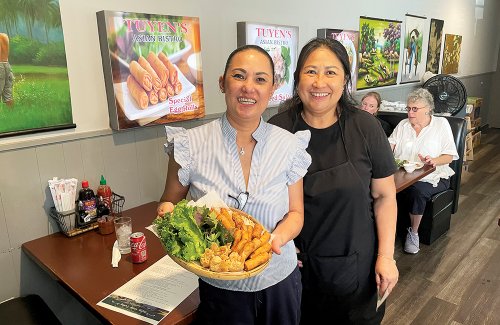
Tuyen Le’s Inspiring Journey from Being a Reluctant Server to a Beloved Chef and Restaurant Owner

Tuyen Le, the owner of Tuyen’s Asian Bistro, has come a long way from her days as a server at her family’s old restaurant, Saigon Le.

Tuyen’s mother opened Saigon Le in 1992. She joined her family at the restaurant, planning to only stay for a day. But she ended up dedicating over 30 years to the establishment. Saigon Le became renowned for its unique dishes, like the little-bitty egg rolls wrapped in lettuce with a special sauce that attracted celebrities like Woody Harrelson, Cybill Shepherd, and MTV’s Jeff Buckley.

When she was working as a server in Saigon Le, Tuyen had a gambling addiction which was evident in the way she served. According to Memphis Flyer, Tuyen didn’t like being a server, but her mother forced her to be one, saying that she can’t say no to her mama.

When Tuyen decided to quit gambling, she turned to cooking. She claimed that she didn’t know she was good at it, until everything she cooked turned out to be good.

Eventually, Tuyen pursued other ventures and started a seafood restaurant named “New Orleans Seafood,” where she served crab legs, lobster, and other items, but no Asian food. However, economic challenges, exacerbated by the pandemic, led to its closure.

Customers were longing for the return of Saigon Le’s authentic Vietnamese flavors, so Tuyen opened Tuyen’s Asian Bistro. Located at 288 North Cleveland, the tiny restaurant focuses solely on Vietnamese cuisine.

Though Tuyen’s Asian Bistro may be small, it is undoubtedly big on flavors and hospitality. Tuyen ensures that every guest feels welcomed and cherished throughout their dining experience, treating them as family.

Featured Image Source: Memphis Flyer

ezgif.com-webp-to-jpg-jpg

News

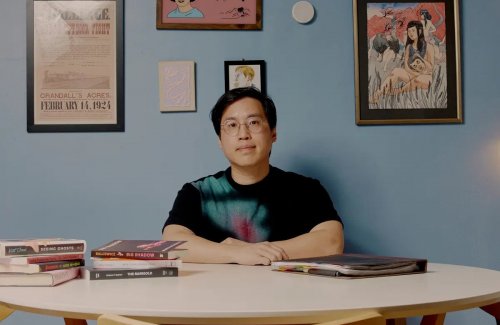
Asian American Writer Runs a Workshop in His Apartment to Support His Career and Help Aspiring Writers

Tony Tulathimutte, an accomplished literary author, has established a unique side hustle that supports both his writing career and aspiring writers.

His writing workshop, Crit, held in his Brooklyn apartment, attracts eminent guest speakers and launches the careers of new authors. Renowned figures such as Jonathan Franzen, Hua Hsu, and Carmen Maria Machado have participated as guest speakers.

Tulathimutte’s success, including an O Henry award and the sale of his second novel, Rejection, inspired him to create Crit. The class tackles topics like money management for writers, which is crucial in today’s challenging writing landscape, where traditional media companies and publication venues are shrinking, and making a living as a writer is becoming increasingly difficult.

According to The Guardian, Crit accommodates nine students per session, meeting twice a week over two months and costs $800 per spot, amounting to an annual income of approximately $30,000 for Tulathimutte. To supplement his earnings, he takes up freelance writing assignments, visiting faculty positions, and currently serves as a thesis adviser at Brooklyn College.

Over the years, Crit has not only become a successful side venture but also fostered a thriving community of writers. Tulathimutte encourages alumni interaction through book swaps, parties, and a dedicated Slack channel, providing opportunities for aspiring authors to connect with potential agents or editors.

While Crit students have achieved 12 book deals to date, Tulathimutte remains humble about his role in their success. He believes many of them would have succeeded eventually, but he takes pride in offering a high-quality writing workshop that aids their growth.

Featured Image Source: The Guardian