What is UX

Design

March 13, 2025

SHARE:

What does UX stand for? Learn more about what UX means, why it’s so important and what defines good UX.

“UX” stands for “user experience.” It describes the quality of the experience an end user has with a specific product, service, company or brand.

Although it’s often talked about in relation to digital products, like apps and websites, UX can relate to anything that an end user can interact with or encounter.

Take the example of going into your local bank to open a new account. If the process is quick and simple with clear instructions, easy-to-find information and friendly customer service, you’d come away feeling like you had a good user experience.

The same goes for ordering something online or using an app on your phone. If you’re able to accomplish your desired tasks with minimal effort, you’ll find the user experience to be a pleasant one.

UX doesn’t relate to one specific thing. It’s the sum of all the smaller parts that determines whether the overall encounter between the product/service and the user is a positive one. You can think of it as the impression the user leaves with and whether or not they’d be keen to repeat the experience. To learn more, keep reading.

What is user experience (UX) design?

If UX describes the quality of a user’s encounter with a particular product or service, UX design is the process of creating and shaping these experiences, with the goal of making them positive, pleasant and valuable for the end user.

UX design isn’t about how a product looks; that’s just one aspect of the overall user experience. It’s about ensuring that the product is logical, functional, easy to navigate and generally user-friendly.

There are 5 elements of UX design to consider:

  1. Strategy: Deciding which objectives the product should meet, including both end user goals and client/business stakeholder objectives.
  2. Scope: Fleshing out the details of the product, determining which features and functionality it should offer.
  3. Structure: Mapping out the structure of the product, considering how users will navigate from one point to the next and what information they’ll need to move around the product and accomplish their goals.
  4. Skeleton: Drilling down to the finer details of how each page should be structured and which elements (buttons, menus and other content) will go where.
  5. Surface: Considering the user’s sensory experience of the product, defining how the product will look in terms of colors, imagery, spacing, typography and so on. This is where UI design comes in.

Where does the term “UX” come from?

The term “UX” was invented by Donald Norman, a cognitive psychologist who started working at Apple in the early 1990s. He took on the role of User Experience Architect, making him the first (known) person in history to have UX in their job title.

Explaining the origins of UX, Donald Norman said:

“I invented the term because I thought human interface and usability were too narrow. I wanted to cover all aspects of the person’s experience with a system, including industrial design, graphics, the interface, the physical interaction and the manual.”

What is the difference between UX and UI?

If you’ve heard of UX, you’ve probably also heard of UI. The terms are often used together but it’s important to be clear on the difference between them.

UX is a much broader term, covering everything that influences how a user feels when they use a product or service. It’s a comprehensive discipline that involves research, analysis, and understanding user needs. 

UI stands for “user interface”, which is the point of interaction between an end user and a digital product. It’s a more narrow discipline that involves the visual design of the screens, buttons and other touchpoints you might use to navigate an app or a website. 

The way the user interface (UI) is designed has an impact on the overall user experience, so UI is an important part of UX.

UXUI
Stands for “user experience”Stands for “user interface”
A broad disciplineA narrow discipline
Involves the quality of the experience as a wholeInvolves the design of the user interface
Concerned with research, analysis, and understanding user needsConcerned with visual design

You can learn more about the difference between the two, as well as how they go hand-in-hand, in this guide to UX vs. UI.

Why is UX important?

UX is important for two reasons: business value and human value. Let’s look at both.

The business value of UX design

If you have a positive experience with a product or service, you’re more likely to use it again and become a loyal customer. You might even recommend it to friends and family. That’s great for the brand reputation, which ultimately determines whether or not the product or service is successful and profitable.

On the flip side, a negative user experience leaves a bad impression of the product, service or brand. If it’s less than satisfactory, you’ll be inclined to go elsewhere, like a competitor with better UX.

Wherever there are two similar products or services offering the same functionality, the one with the best UX will always win out. UX is therefore crucial for winning and keeping customers, developing a positive brand reputation and, ultimately, for driving profit and business growth.

In sum, the business value of UX design includes:

  • A competitive edge in the market
  • Increased sales and revenue
  • Higher conversion rates
  • Better word-of-mouth marketing
  • A strong brand reputation
  • Improved customer loyalty and retention

We compiled some interesting statistics about the business value of UX, like the fact that 66% of customers are willing to pay more for a great user experience. 

The human value of UX design

In addition to being valuable to businesses, end users also value good UX even if they don’t know it. UX influences whether we enjoy an experience or not and whether products and services are efficient and easy or frustrating and difficult. 

In addition, UX determines whether products are accessible and inclusive for as many users as possible. Whether they are disabled, come from a different place with different needs, or have different requirements, good UX make products and services accessible for all.

What defines good UX? The fundamental principles of UX design

Defining good UX can be tricky. It’s not down to one specific thing. There are seven principles of UX design that all designers should follow. They are:

  • User-centricity — Design products and services in a way that centres the user’s needs and helps to solve their problems.
  • Consistency — This can mean keeping your designs consistent across all pages, screens, and products within the same product family. It can also mean meeting the user’s expectations for the kind of product you’re designing.
  • Hierarchy — This includes putting more important elements in more prominent positions in both a site’s information architecture and in the visual hierarchy. 
  • Context — Consider the circumstances in which your products of services will be used and how that will effect the user experience.
  • User control — Give the user the right amount of control over their interactions with a product, such as being able to reverse or undo errors to a text message without throwing the whole user experience into disarray.
  • Accessibility — Ensure your product or service is accessible to as many users as possible, including people with disabilities or in other environments.
  • Usability — Usability relates to how easy a given product is to use and it’s influenced by things like:
    • Learnability – how easy it is for a user to learn how to use the product for the first time.
    • Efficiency – how quickly and seamlessly the user is able to complete their goals and tasks.
    • Memorability – how easy it is for the user to jump back into the product after not using it for a while.
    • Errors – how many errors does a user typically make when using the product.
    • Satisfaction – how pleasant or enjoyable is the product to use.

What is the UX design process?

The UX design process focuses on identifying and solving a problem for a specific target audience. It includes:

  • Conducting user research to understand who you’re designing the experience for and what problems they need solving.
  • Narrowing it down to one problem and coming up with potential solutions.
  • Designing the chosen solution.
  • Making prototypes to test and validate the design, i.e. to make sure it will actually solve the user’s problem.
  • Developing the prototypes into a fully-fledged product or service which people can use.
  • Continuously improving the product/service (and thus the user experience) based on continuous testing and feedback.

Related Articles

seo-

Development, Ideas

Is Your SEO Outdated? AHN Solutions Can Help!

SEO is constantly on the run, and what used to be your waving lucky cat might lose its charm the next day. Here are three key signs that your SEO’s “waving lucky cat” mode may have been deactivated. 

Dropping Search Rankings

If Google search is keeping your website on the low-low, it’s time that your SEO strategy needs a reboot. Or else, algorithm updates or stronger competition could be dragging you down.

Low Organic Traffic

If your organic traffic is at a standstill, your keywords may be outdated, or your content may not be what the audience needs anymore.

High Bounce Rate

If visitors visit your website like a casual one-click-stand, then there’s a problem, too. It could mean slow load times, poor mobile navigation, or irrelevant content. Whatever it may be, all of them may hurt your SEO performance.

Why AHN Solutions?

If your brand is facing any of these SEO challenges, it’s time for an update. AHN Solutions offers expert SEO strategies to help you improve rankings, increase traffic, and drive more conversions.

If you want to learn more about our services, visit the AHN Solutions website at asianhustlenetwork.com/services/

smart-paid-ads

Development

AHN Solutions: Smarter Paid Ads, Bigger Results!

Running a successful paid ads campaign is not just about budget–paying hard doesn’t mean paying smart. To maximize your ad performance, here are three tips that AHN Solutions believes you can take to step up your paid ads game.

Define Your Audience Clearly

Bring out the magnifying glass because we’re going deep into our target demographics, interests, behaviors, and lookalike audience. Make sure you’ve got everything covered and detailed as much as possible. By doing so, you gain a much deeper and more unique understanding of your audience; henceforth, you can adapt your strategy to target them.

Define your audience clearly

Optimize for Each Platform

Each audience group has a different preferred content format and platform. You can not run ads on Facebook and expect to touch Gen Z? Customize your ad format, visuals, and messaging based on the platforms and the desired target audience.

Use Compelling Creatives & CTAs

It’s the era of visuals. Impactful content must go with eye-catching visuals and resonant CTAs. Test different versions to identity the most resonant one with your audience.

Why AHN Solutions?

While these tips are extremely valuable for improving your SEO game, having a professional handle will not only save resources but also boost results. AHNS’ services in branding, SEO, and website development will take care of the technical details, so you can focus on growing your business.

If you want to learn more about our services, visit the AHN Solutions website at asianhustlenetwork.com/services/

Duolingo Shares Climb 7% as Users Swarm to App to Learn Mandarin (4)-png

Stories

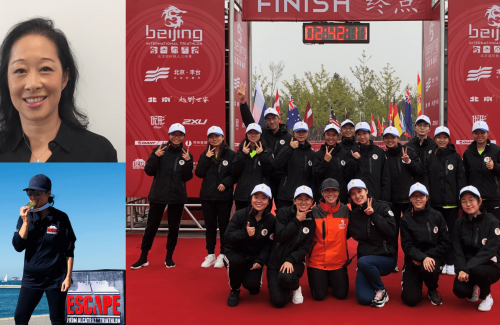
Jennifer Lau on Shaping the Future of Triathlons and Elevating Women in Sports

In celebration of Women’s History Month, we shed light on the incredible women transforming the world and driving the community forward. This month, we are honored to interview the visionary at the helm of the world’s toughest multi-course race—the Escape from Alcatraz Triathlon: Jennifer Lau. As the Vice President of Action Sports Events at IMG, Jennifer is a proud Chinese American who has constantly stayed at the forefront of the sports and entertainment industry for over 25 years.

PIONEERING CHANGE IN SPORTS AND ENTERTAINMENT

It’s the era of women making big moves and solidifying their status in society. Jennifer is also part of the movement. Fueled by a passion for storytelling and inclusivity, Jennifer made her way into the sports and entertainment industry through determination and a vision for change. “I always knew I wanted to work in sports and entertainment,” she shares. “Growing up, I loved reading and watching movies, TV shows, and sports that featured stories I could relate to. Regardless of economic class, gender, or ethnicity, these stories resonated with me, and I wanted to be part of that creative process.” And what is her goal? It has always been through storytelling that she wants to connect and uplift others.

Jennifer has been dreaming of a narrative where she could pave her own path in the male-dominated industry, earn the top ranks with her own talent, and she did just that. She rose through the ranks at IMG and earned her place at some of the world’s most iconic sporting events—the Escape from Alcatraz Triathlon.

Jennifer Lau Vice President of Action Sports Events at IMG
From dreaming of change to leading it, Jennifer Lau is making waves in the sports and entertainment industry.

Reflecting on this, Jennifer shares:

The sports and entertainment industries have historically been male-dominated, presenting challenges in leadership and visibility for women, particularly women of color. Throughout my career, I’ve had to advocate for myself, push boundaries, and challenge preconceived notions about what leadership in sports looks like. I’m grateful to the executive team at IMG. Over the last 25 years, they have always supported me and continue to encourage me to pursue new business opportunities and ideas, which has allowed me to grow and evolve.

FOSTERING INCLUSIVITY IN THE ESCAPE FROM ALCATRAZ TRIATHLON

The Escape from Alcatraz Triathlon has roots in this stretch of odds, which holds a powerful claim of Jennifer’s commitment to inclusivity. The race, known for its strenuous course—plunging into the ice-cold waters of San Francisco Bay, biking on steep and bumpy hills, running through the dirt and rocks—pushes the envelope for many athletes. What makes the 2025 race special is that this year, an impressive number of 405 women will take part in this challenging race, exemplifying the growing influence of women in endurance sports.

This marks a significant milestone as women have long been underrepresented in the sports industry. Jennifer recognizes the need for greater Asian representation in the triathlon space. 

Asian females, like many women, are underrepresented in sports and entertainment—whether behind the scenes, in management, as athletes, or as content producers. Growing up, I rarely saw stories that reflected my identity in the industry, which motivated me to push for more representation. The perspectives and stories from the Asian community are essential in shaping the future of the industry, not only for visibility but for driving meaningful business and cultural impact.

EMPOWERING ATHLETES AND FUTURE GENERATIONS

Beyond race day, Jennifer’s commitment is a reminder of sportsmanship, which is unity and camaraderie. She aims to highlight the human connections behind the competition, with a focus on the fact that the Escape from Alcatraz Triathlon is not about elite athleticism. The race is a beacon of people connecting, sharing, and uplifting each other. “The camaraderie that emerges as athletes cross the finish line makes the achievement even more meaningful. It’s a celebration of resilience, determination, and unity.”

Companionship at the Escape from Alcatraz Triathlon
Sportsmanship is not just about health and fitness, it’s also about unity and camaraderie.

“With the Escape from Alcatraz Triathlon, we’ve noticed that not many Asians participate in the sport,” she explains. “While many run or bike, swimming opportunities are often limited in Asian communities due to a lack of access to pools or open water environments. Our priority is to engage with Asian communities and other underrepresented groups, creating opportunities for them to experience this incredible sport.”

CONNECT WITH JENNIFER LAU

“One of my proudest achievements is seeing the events I’ve helped create continue to provide opportunities for athletes, inspire future generations, and entertain global audiences. Witnessing athletes who started in our events go on to compete at the Olympic level is incredibly rewarding.”

Instagram: @jenwlau 
LinkedIn: Jennifer Lau

image

Development

Mastering SEO: Tips to Elevate Your Business Game With AHN

SEO can be a tad bit difficult, especially when you have to worry about your business as well. We understand and have prepared some valuable tips to improve your SEO game!

Use an Advanced Keyword Glossary

Creating a keyword glossary can be a game-changer for your business. With 52% of Google searches being informational, a well-crafted glossary helps you plan content strategically and stay ahead of the curve.

Find the Question Behind the Query

Keywords are crucial, but thinking ahead is key. Consider your buyers’ needs and how your chosen keywords can provide the solutions they’re searching for.

Publish Optimized Content

Impactful content resonates with both search engines and audiences. Focus on relevance and depth, and use your keyword glossary to solve your customers’ problems effectively.

Why AHN Solutions?

While these tips are extremely valuable for improving your SEO game, having a professional handle will not only save resources but also boost results. AHNS’ services in branding, SEO, and website development will take care of the technical details, so you can focus on growing your business.

If you want to learn more about our services, visit the AHN Solutions website at asianhustlenetwork.com/services/