
What is UX

Design

March 13, 2025

SHARE:

What does UX stand for? Learn more about what UX means, why it’s so important and what defines good UX.

“UX” stands for “user experience.” It describes the quality of the experience an end user has with a specific product, service, company or brand.

Although it’s often talked about in relation to digital products, like apps and websites, UX can relate to anything that an end user can interact with or encounter.

Take the example of going into your local bank to open a new account. If the process is quick and simple with clear instructions, easy-to-find information and friendly customer service, you’d come away feeling like you had a good user experience.

The same goes for ordering something online or using an app on your phone. If you’re able to accomplish your desired tasks with minimal effort, you’ll find the user experience to be a pleasant one.

UX doesn’t relate to one specific thing. It’s the sum of all the smaller parts that determines whether the overall encounter between the product/service and the user is a positive one. You can think of it as the impression the user leaves with and whether or not they’d be keen to repeat the experience. To learn more, keep reading.

What is user experience (UX) design?

If UX describes the quality of a user’s encounter with a particular product or service, UX design is the process of creating and shaping these experiences, with the goal of making them positive, pleasant and valuable for the end user.

UX design isn’t about how a product looks; that’s just one aspect of the overall user experience. It’s about ensuring that the product is logical, functional, easy to navigate and generally user-friendly.

There are 5 elements of UX design to consider:

  1. Strategy: Deciding which objectives the product should meet, including both end user goals and client/business stakeholder objectives.
  2. Scope: Fleshing out the details of the product, determining which features and functionality it should offer.
  3. Structure: Mapping out the structure of the product, considering how users will navigate from one point to the next and what information they’ll need to move around the product and accomplish their goals.
  4. Skeleton: Drilling down to the finer details of how each page should be structured and which elements (buttons, menus and other content) will go where.
  5. Surface: Considering the user’s sensory experience of the product, defining how the product will look in terms of colors, imagery, spacing, typography and so on. This is where UI design comes in.

Where does the term “UX” come from?

The term “UX” was invented by Donald Norman, a cognitive psychologist who started working at Apple in the early 1990s. He took on the role of User Experience Architect, making him the first (known) person in history to have UX in their job title.

Explaining the origins of UX, Donald Norman said:

“I invented the term because I thought human interface and usability were too narrow. I wanted to cover all aspects of the person’s experience with a system, including industrial design, graphics, the interface, the physical interaction and the manual.”

What is the difference between UX and UI?

If you’ve heard of UX, you’ve probably also heard of UI. The terms are often used together but it’s important to be clear on the difference between them.

UX is a much broader term, covering everything that influences how a user feels when they use a product or service. It’s a comprehensive discipline that involves research, analysis, and understanding user needs. 

UI stands for “user interface”, which is the point of interaction between an end user and a digital product. It’s a more narrow discipline that involves the visual design of the screens, buttons and other touchpoints you might use to navigate an app or a website. 

The way the user interface (UI) is designed has an impact on the overall user experience, so UI is an important part of UX.

UXUI
Stands for “user experience”Stands for “user interface”
A broad disciplineA narrow discipline
Involves the quality of the experience as a wholeInvolves the design of the user interface
Concerned with research, analysis, and understanding user needsConcerned with visual design

You can learn more about the difference between the two, as well as how they go hand-in-hand, in this guide to UX vs. UI.

Why is UX important?

UX is important for two reasons: business value and human value. Let’s look at both.

The business value of UX design

If you have a positive experience with a product or service, you’re more likely to use it again and become a loyal customer. You might even recommend it to friends and family. That’s great for the brand reputation, which ultimately determines whether or not the product or service is successful and profitable.

On the flip side, a negative user experience leaves a bad impression of the product, service or brand. If it’s less than satisfactory, you’ll be inclined to go elsewhere, like a competitor with better UX.

Wherever there are two similar products or services offering the same functionality, the one with the best UX will always win out. UX is therefore crucial for winning and keeping customers, developing a positive brand reputation and, ultimately, for driving profit and business growth.

In sum, the business value of UX design includes:

  • A competitive edge in the market
  • Increased sales and revenue
  • Higher conversion rates
  • Better word-of-mouth marketing
  • A strong brand reputation
  • Improved customer loyalty and retention

We compiled some interesting statistics about the business value of UX, like the fact that 66% of customers are willing to pay more for a great user experience. 

The human value of UX design

In addition to being valuable to businesses, end users also value good UX even if they don’t know it. UX influences whether we enjoy an experience or not and whether products and services are efficient and easy or frustrating and difficult. 

In addition, UX determines whether products are accessible and inclusive for as many users as possible. Whether they are disabled, come from a different place with different needs, or have different requirements, good UX make products and services accessible for all.

What defines good UX? The fundamental principles of UX design

Defining good UX can be tricky. It’s not down to one specific thing. There are seven principles of UX design that all designers should follow. They are:

  • User-centricity — Design products and services in a way that centres the user’s needs and helps to solve their problems.
  • Consistency — This can mean keeping your designs consistent across all pages, screens, and products within the same product family. It can also mean meeting the user’s expectations for the kind of product you’re designing.
  • Hierarchy — This includes putting more important elements in more prominent positions in both a site’s information architecture and in the visual hierarchy. 
  • Context — Consider the circumstances in which your products of services will be used and how that will effect the user experience.
  • User control — Give the user the right amount of control over their interactions with a product, such as being able to reverse or undo errors to a text message without throwing the whole user experience into disarray.
  • Accessibility — Ensure your product or service is accessible to as many users as possible, including people with disabilities or in other environments.
  • Usability — Usability relates to how easy a given product is to use and it’s influenced by things like:
    • Learnability – how easy it is for a user to learn how to use the product for the first time.
    • Efficiency – how quickly and seamlessly the user is able to complete their goals and tasks.
    • Memorability – how easy it is for the user to jump back into the product after not using it for a while.
    • Errors – how many errors does a user typically make when using the product.
    • Satisfaction – how pleasant or enjoyable is the product to use.

What is the UX design process?

The UX design process focuses on identifying and solving a problem for a specific target audience. It includes:

  • Conducting user research to understand who you’re designing the experience for and what problems they need solving.
  • Narrowing it down to one problem and coming up with potential solutions.
  • Designing the chosen solution.
  • Making prototypes to test and validate the design, i.e. to make sure it will actually solve the user’s problem.
  • Developing the prototypes into a fully-fledged product or service which people can use.
  • Continuously improving the product/service (and thus the user experience) based on continuous testing and feedback.
Related Articles

Image Source theguardian.com

Uncategorized

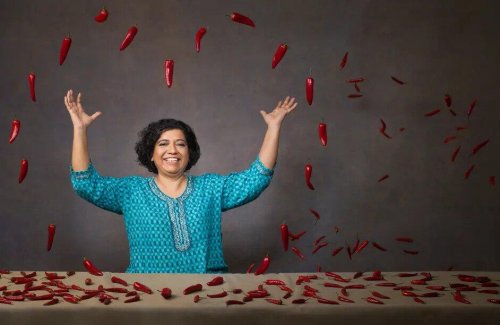
Darjeeling Express Chef Asma Khan’s New Cookbook Celebrates Women and Her Ammu (Mother)

Cookbook author, activist Indian chef Asma Khan is so much more than just being in the kitchen. 

In addition to owning London’s Darjeeling Express and hosting her own online cooking class, YesChef, she uses her platforms to advocate for world hunger, mentoring immigrant women, gender equality, and calling out toxic work cultures in kitchens.

With the release of ‘Ammu: Indian Home-Cooking to Nourish Your Soul’, The Bengali chef continues to redefine how women are portrayed at home and in restaurant kitchens, with a loving ode to her Ammu (or mother).

“Ammu [is] a tribute to these powerful women”, Asma tells Elle Canada, “the sharp things in our lives and the anchors that kept us going in difficult and stormy times. There [are] births, deaths [and] marriages in our culture; food is a very important element of that. That’s what this book really reflects.”

Ammu is filled with 100 dishes that will leave your mouth-watering recipes that have been carefully passed down from generation to generation.

Asma hopes the readers to try her chicken biryani, “Because I’ve worked so hard on getting the recipe right and I [know] people have recreated it” she tells Elle Canada.

According to The Guardian, Asma Khan’s biryani has the power to make you cry — not in the hyperbolic, internet vernacular sense, where food is considered “amazing”, “divine” or “to die for”

Asma also recommends trying out cooking any of the kababs, fish dopiyaza, and prawn malai.

“So much of our food is bastardized into [something that is] super spicy, oily, with cream and butter. If I put [that] much cream and butter in my shoe, it’ll taste nice! Our food is actually light and refreshing, but most people don’t associate those words with Indian food.” 

As the only female-founded, all-female kitchen cooking Indian food globally, she hopes that the next generation of women would surpass her, “That will be my greatest victory.”

Caroline Mangune Alanis

Uncategorized

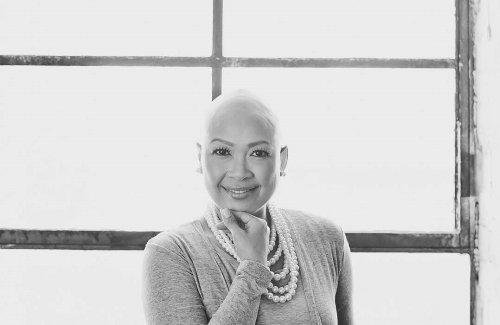
Bald, Bold, and Beautiful: Proud Of Being Fifty-Five Walking My Truth

In the view of society, hair is connected with youthfulness and beauty in women, virility, and masculinity in men. It should come as no surprise that hair loss may make many men and women feel self-conscious. But should that be always the case?

Caroline Mangune Alanis was only 4 years old when she lost all her hair, “I don’t even know what it is like to have hair.” she said. Caroline has Alopecia Universalis (AU)  — the rarest form of Alopecia Areata, it’s an autoimmune condition that attacks the hair follicles.

Growing up Bald

Born in the Philippines to a strict father and a sweet and kind soul mother, as she describes, “My dad didn’t allow me to go out with friends a lot. I was never allowed to go on sleepovers.  He sheltered me from people. I never realized that until I was an adult, and reflected on my childhood.” She also has two brothers who were protective as well.

At the tender age of 4, she was already practicing “DAILY AFFIRMATIONS” although she never knew how impactful they were,  “I was always told to look in the front of the mirror.  I would say, I am beautiful, I am strong, I am special. I have beautiful eyes, beautiful skin, etc.”  Her parents never told her the pain and heartbreak of raising her, rather they just always told her how special and beautiful she was, “They always told me I was meant to stand out.”

She had no recollection of the time her hair started falling out, but she was told that her hair fell off within a 2-week time frame, “My mom said it could have been brought by stress from an earthquake we had in the Philippines.”  

Caroline was never allowed to say negative words about herself, or else her father would scold her. She was imparted that words she says about herself will either bring her up or tear her down, “So maybe I thought negative things about myself, but I never said it. Growing up bald, I never felt ugly, just incomplete.”

Growing up bald, I never felt ugly, just incomplete.

– Caroline Mangune Alanis

Although her parents taught her how to be courageous and had always made her feel how beautiful and blessed she was, growing up bald was not easy — she had to endure the everyday pressure of life. “There was the pressure of seeing little girls with beautiful hair and wishing every day that I had that. There was the pressure of kids being mean and pulling off my bandana and laughing at me because I was bald.” She faced the pressure of name-calling and bullying.

Caroline’s parents finally convinced her to start wearing a wig which, unfortunately, didn’t make things easier as she recalls. Walking home from school one day with her brother, a girl decided it would be fun to pull Caroline’s wig off and throw it on the ground. “At that moment, all I could do was cry and run home,” she adds, “every day I feared leaving the house, the emotional scar is unimaginable.”

She learned how to hide her AU, she felt as if people wouldn’t accept her for being her so it became a secret, and only her family and those she truly trusted, which were not many, knew the real Caroline.

In high school, only a handful knew about her AU, “which made it so easy to try to blend in since I never wanted to stand out, never!” The ironic part about it, as Caroline describes, was she would always be the one to be called by her teachers to lead a project, sing solos, and participate in plays and fashion shows. They even nominated her to join the homecoming queen and enter a beauty pageant. However, “I realized that my fear never really went away by keeping my AU a secret and the emotional scar was also still a part of my life.”

Every day I feared leaving the house, the emotional scar is unimaginable.

-Caroline Mangune Alanis

Being Bold With The Love Of Her Life

She met her husband Mark from work, where they were both managing stores at a mall in Chicago. They became best friends and were each other’s plus one at weddings, “We didn’t start dating until I transferred to another mall.” she said.    

But the day has to come when she must tell Mark about her condition, “Telling Mark about my alopecia was very difficult. He once told me that he loved hair and eyes on a woman,” she adds, “He himself has gorgeous hair.” Caroline felt she didn’t have one of the criteria Mark was looking for. Although she mentioned several times that she had something to tell him and he would always say “whenever you are ready.” Caroline thought that they both knew that Mark is aware of her wearing a wig, they just never talked about it. 

Mark and Caroline had been dating for about a year when she finally tried to tell him one evening. She got choked up and started crying. He told her, “Caroline, don’t you think I know you by now from your head down to your toes?” He had tears in his eyes. She then asked Mark why he didn’t tell her.  He replied, “I wanted you to trust me enough to tell me”.  

As they began to start their family, Caroline’s AU became their secret. She held her family bound to her alopecia. When her daughters’ were infants, she wouldn’t carry them in public for fear that they would pull her wig. “They were taught never to touch mommy’s hair, ever!” 

Her daughter could never have friends sleep over because it would be very uncomfortable for Caroline to be her in her own home. “My daughters were always fearful when we were out in public, especially on windy days.” 

Caroline’s baldness was a big secret, even her husband’s family didn’t know, “because I hid so much all my life, I didn’t realize I walked in fear every day.  I didn’t realize I lived in bondage.”

Mark told her, “Caroline, don’t you think I know you by now from your head down to your toes?” He had tears in his eyes. She then asked Mark why he didn’t tell her.  He replied, “I wanted you to trust me enough to tell me”.  

Embracing Being Beautiful

In the summer of 2015, her life opened a new door, she became a part of an International Alopecia Group on Facebook and realized that her journey with AU has prepared her to help others like her. She saw so many men and women devastated by losing their hair. They were going through a lot of emotional pain, “You see, alopecia can happen at any time in one’s life so the adults experience a loss and have to grieve.” Caroline said. Alopecia might not be life-threatening but it is life-altering. Hair, eyebrows, and lashes truly make a difference in one’s appearance, “I myself put my face on every day.” she added. 

She also saw some men and women walking proudly bald. One man, in particular, Anthony Carrigan, an actor who also kept his alopecia a secret but he came out and had been helping others and is a beacon of light.  

Then, Caroline started giving advice about doing daily affirmations, “doing lots of SELF LOVE!”  as well as giving makeup tips, the alopecia community knows her as the “Eyelash Queen”.

But once the parents of alopecia children started posting their heartbreaks, “that’s when I realized my parents’ challenges of raising me, a bald child.” Caroline started reiterating what her parents taught her. She gave advice to parents, about how special their child was, how they were perfect and beautiful just as they were. “Alopecia children are so strong,” she noted.

“I then realized I was all those things: perfect, beautiful, and strong,” she said, but her baldness was still a secret. Caroline thought to herself, how does she encourage others to accept themselves if she herself could not let people know about her condition? So as those thoughts lingered in her head, she began telling her family and friends — she only wanted to tell people, not show people. Her goal was to have 30 different wigs for each day of the month.

“But God! God had other plans for me,” the unexplainable started occurring, her wigs became unbearably uncomfortable to wear, “it almost felt like my scalp was burning,” which she thought was completely strange since she has been wearing them for 40 years. It took a lot to take a look at herself bald.  She then began to think, “How can I tell my daughters  and others that beauty really lies deep within if I myself can’t see past my lack of hair?”

On August 14, 2015, on her way home with her husband from dinner, Caroline’s wig was getting itchy so she took it off to scratch her head. She was about to put her wig back on but Mark held her hand to stop her. He said “Honey, don’t put it on, you’re fine. You are safe with me, nothing can hurt you, and no one will hurt you. You are beautiful.” She reluctantly did what he asked and wanted to be strong for him. 

Mark kept holding her hand tight and kept asking if she was okay,  “I just kept saying it is scary.”  As they were nearing their home, her husband pulled over and said “Come on let’s take a selfie.” to lighten the situation. Her husband dropped Caroline off in front of their home, with her wig in her purse. Mark told her to go ahead and go into their home.  

“For the first time in 40  years, I felt God’s love on my head. The soft wind touched my head, a few raindrops falling on my head. I cried and laughed as I ran to my house.” she recalls.  

After that night, her husband helped Caroline with her small steps into seeing herself for who she was — a beautiful woman living with AU. Slowly, she found herself no longer wearing her wigs. They would go on drives and take walks on the beach. “I felt free, my secret slowly fading; including the emotional scar.”

I felt free, my secret slowly fading; including the emotional scar.

-Caroline Mangune Alanis

“On Sept 9, 2015, I posted it on Facebook, I cried the whole night.  Everyone was so kind.  I was still afraid, but I started walking bald.” she expressed.

In the fall of that year, it started getting cold and she didn’t like her hats since they looked terrible without any hair. She was pretty sad because she really did not want to start wearing her wigs again, “I just prayed and asked God to lead me in what I am supposed to do. I got my answer on Sunday, October 4th,” A lady stopped her and asked if she has Alopecia, to which she responded “Yes!”. The woman said, so did she, and asked Caroline, how does she do it? — She knew the lady meant how she could walk around without her wig.

Caroline answered “I don’t know. This is all new to me. “God is giving me the strength to do this. I couldn’t have done this on my own.” So that day, she officially retired all her wigs. “Yes, I put them all away for those special occasions,” she added.

She has met so many people just like her all over the world which inspired her to start her own Alopecia Group in Chicago, where they meet once a month. “I love having a family I call my own, people who truly understand me.”

The Chicago Alopecians

Caroline together with her friends started the Facebook group, with her as the main facilitator. It is a place where they can share their personal journeys and ask for advice or help. The Chicago Alopecians’ mission is to ensure that no one feels alone. Recently, they have been planning to create more events to cater to everyone, children, teens, and men. 

“We each have our own alopecia journey and we just want to connect with each other,” said Caroline. They also allow wig vendors in the group, “Chicagoland is such a big place. I love having a solution for everyone in the group.” As of writing, they currently have 332 members, and they’ve also started an Instagram page to widen their reach.

For the international group, Caroline is also encouraging others to create their own alopecia groups — their own tribe in their local towns.

“I have always known God wanted me to stand out, but I was always afraid.  These days, I am no longer afraid to not have my wig on, I embrace it.”

Caroline is truly a woman who is defying what society calls “beautiful”. 

Image Source tinhte.vn

Uncategorized

Google Data: Nearly Half of Gen Z Searches on TikTok Rather than Google

TikTok, which is the social media app that is expanding at the fastest rate, has seen its user base skyrocket over the past few years.

A Google executive has confirmed that the format of TikTok is changing the way that young people conduct internet searches, and Google is working to keep up with these changes. 

According to data that was initially discovered within Google and reported by TechCrunch, nearly 40% of members of Gen Z prefer to search using TikTok as well as Instagram rather than Google Search and Maps when they are looking for a place to eat lunch.

Google has now confirmed this figure to Insider and has acknowledged that they face stiff competition from a variety of sources, including general and specialized search engines, as well as apps that are designed specifically for searching. 

It is also predicted that TikTok’s advertising revenue will overtake YouTube by 2024, according to Insider Intelligence.

Google has outlined the modifications it intends to make to its search engine in order to appeal to a younger audience. One of these adjustments is the addition of a feature that will allow users to pan their camera over an area and obtain instant information about multiple objects in a wider scene.

Image Source king5.com

Uncategorized

Former King 5 Anchor Lori Matsukawa Receives One Of Japan’s Highest Honors

Lori Matsukawa, a former Hawaii resident, and Seattle news anchor received the ‘Order of the Rising Sun Sun, Gold and Silver Rays’, one of Japan’s highest honors.

The award was for her contribution to promoting Japan-U.S. friendship. “This is a true honor and thrill for me because for the last several years, I’ve been really working hard to connect people in Japan and people in the United States on a person-to-person basis,” Matsukawa told KING 5.

The award was more generally bestowed upon distinguished members of the Japanese military since 1875, but in 2003, the honor was extended to women.

Matsukawa was a well-known journalist for the Seattle media and KING 5, as well as a former president of the Japanese Cultural & Community Center of Washington. She brought to light important events in Japanese American history, particularly those that occurred during World War II, through her reporting.

Her Emmy-award-winning documentaries centered on the detention of Japanese people in the Pacific Northwest during World War II.

Matsukawa was also instrumental in founding a chapter of the Asian American Journalists Association.

King County has designated June 29, 2019, as Lori Matsukawa Day in honor of her retirement.