What is UX

Design

March 13, 2025

SHARE:

What does UX stand for? Learn more about what UX means, why it’s so important and what defines good UX.

“UX” stands for “user experience.” It describes the quality of the experience an end user has with a specific product, service, company or brand.

Although it’s often talked about in relation to digital products, like apps and websites, UX can relate to anything that an end user can interact with or encounter.

Take the example of going into your local bank to open a new account. If the process is quick and simple with clear instructions, easy-to-find information and friendly customer service, you’d come away feeling like you had a good user experience.

The same goes for ordering something online or using an app on your phone. If you’re able to accomplish your desired tasks with minimal effort, you’ll find the user experience to be a pleasant one.

UX doesn’t relate to one specific thing. It’s the sum of all the smaller parts that determines whether the overall encounter between the product/service and the user is a positive one. You can think of it as the impression the user leaves with and whether or not they’d be keen to repeat the experience. To learn more, keep reading.

What is user experience (UX) design?

If UX describes the quality of a user’s encounter with a particular product or service, UX design is the process of creating and shaping these experiences, with the goal of making them positive, pleasant and valuable for the end user.

UX design isn’t about how a product looks; that’s just one aspect of the overall user experience. It’s about ensuring that the product is logical, functional, easy to navigate and generally user-friendly.

There are 5 elements of UX design to consider:

  1. Strategy: Deciding which objectives the product should meet, including both end user goals and client/business stakeholder objectives.
  2. Scope: Fleshing out the details of the product, determining which features and functionality it should offer.
  3. Structure: Mapping out the structure of the product, considering how users will navigate from one point to the next and what information they’ll need to move around the product and accomplish their goals.
  4. Skeleton: Drilling down to the finer details of how each page should be structured and which elements (buttons, menus and other content) will go where.
  5. Surface: Considering the user’s sensory experience of the product, defining how the product will look in terms of colors, imagery, spacing, typography and so on. This is where UI design comes in.

Where does the term “UX” come from?

The term “UX” was invented by Donald Norman, a cognitive psychologist who started working at Apple in the early 1990s. He took on the role of User Experience Architect, making him the first (known) person in history to have UX in their job title.

Explaining the origins of UX, Donald Norman said:

“I invented the term because I thought human interface and usability were too narrow. I wanted to cover all aspects of the person’s experience with a system, including industrial design, graphics, the interface, the physical interaction and the manual.”

What is the difference between UX and UI?

If you’ve heard of UX, you’ve probably also heard of UI. The terms are often used together but it’s important to be clear on the difference between them.

UX is a much broader term, covering everything that influences how a user feels when they use a product or service. It’s a comprehensive discipline that involves research, analysis, and understanding user needs. 

UI stands for “user interface”, which is the point of interaction between an end user and a digital product. It’s a more narrow discipline that involves the visual design of the screens, buttons and other touchpoints you might use to navigate an app or a website. 

The way the user interface (UI) is designed has an impact on the overall user experience, so UI is an important part of UX.

UXUI
Stands for “user experience”Stands for “user interface”
A broad disciplineA narrow discipline
Involves the quality of the experience as a wholeInvolves the design of the user interface
Concerned with research, analysis, and understanding user needsConcerned with visual design

You can learn more about the difference between the two, as well as how they go hand-in-hand, in this guide to UX vs. UI.

Why is UX important?

UX is important for two reasons: business value and human value. Let’s look at both.

The business value of UX design

If you have a positive experience with a product or service, you’re more likely to use it again and become a loyal customer. You might even recommend it to friends and family. That’s great for the brand reputation, which ultimately determines whether or not the product or service is successful and profitable.

On the flip side, a negative user experience leaves a bad impression of the product, service or brand. If it’s less than satisfactory, you’ll be inclined to go elsewhere, like a competitor with better UX.

Wherever there are two similar products or services offering the same functionality, the one with the best UX will always win out. UX is therefore crucial for winning and keeping customers, developing a positive brand reputation and, ultimately, for driving profit and business growth.

In sum, the business value of UX design includes:

  • A competitive edge in the market
  • Increased sales and revenue
  • Higher conversion rates
  • Better word-of-mouth marketing
  • A strong brand reputation
  • Improved customer loyalty and retention

We compiled some interesting statistics about the business value of UX, like the fact that 66% of customers are willing to pay more for a great user experience. 

The human value of UX design

In addition to being valuable to businesses, end users also value good UX even if they don’t know it. UX influences whether we enjoy an experience or not and whether products and services are efficient and easy or frustrating and difficult. 

In addition, UX determines whether products are accessible and inclusive for as many users as possible. Whether they are disabled, come from a different place with different needs, or have different requirements, good UX make products and services accessible for all.

What defines good UX? The fundamental principles of UX design

Defining good UX can be tricky. It’s not down to one specific thing. There are seven principles of UX design that all designers should follow. They are:

  • User-centricity — Design products and services in a way that centres the user’s needs and helps to solve their problems.
  • Consistency — This can mean keeping your designs consistent across all pages, screens, and products within the same product family. It can also mean meeting the user’s expectations for the kind of product you’re designing.
  • Hierarchy — This includes putting more important elements in more prominent positions in both a site’s information architecture and in the visual hierarchy. 
  • Context — Consider the circumstances in which your products of services will be used and how that will effect the user experience.
  • User control — Give the user the right amount of control over their interactions with a product, such as being able to reverse or undo errors to a text message without throwing the whole user experience into disarray.
  • Accessibility — Ensure your product or service is accessible to as many users as possible, including people with disabilities or in other environments.
  • Usability — Usability relates to how easy a given product is to use and it’s influenced by things like:
    • Learnability – how easy it is for a user to learn how to use the product for the first time.
    • Efficiency – how quickly and seamlessly the user is able to complete their goals and tasks.
    • Memorability – how easy it is for the user to jump back into the product after not using it for a while.
    • Errors – how many errors does a user typically make when using the product.
    • Satisfaction – how pleasant or enjoyable is the product to use.

What is the UX design process?

The UX design process focuses on identifying and solving a problem for a specific target audience. It includes:

  • Conducting user research to understand who you’re designing the experience for and what problems they need solving.
  • Narrowing it down to one problem and coming up with potential solutions.
  • Designing the chosen solution.
  • Making prototypes to test and validate the design, i.e. to make sure it will actually solve the user’s problem.
  • Developing the prototypes into a fully-fledged product or service which people can use.
  • Continuously improving the product/service (and thus the user experience) based on continuous testing and feedback.
Related Articles

Ai Nguyen

Uncategorized

“My dad left our family for another woman when I was around 6 years old”

You might have heard a tale similar to this one here and there, but for every family who is now going through this — it feels like the beginning of the end. 

What more if your father left your family when you were young and just beginning a new life in a foreign place?

Nevertheless, it is utterly devastating that some even end up questioning themselves, “what have I done wrong or what should I have done right?” But eventually, you’ll come to the conclusion that you should just accept it, keep a positive attitude and figure out how to go on living your life without a father figure.

But what if one day your father knocks on your door and asks if he could come back to your family’s life?

Here’s Ai Nguyen, A Life and Business Breakthrough Coach, who shares a powerful story through her voice and experience of her 80-year-old dad.

The Crucial Memory

Last week, I celebrated my dad’s 80th birthday.  It was a deeply healing experience for me. Many of you don’t know this, but my dad left our family for another woman when I was around 6 years old, about a year after we had immigrated from Vietnam over to America. Here we are in a strange new country, and then he left us.

One of the last memories I had at that time was that he took me to the bus stop in the morning for school and told me that he was leaving the family and wasn’t coming back. That was it. I came home from school and he was gone.

For decades, I had blocked out this CRUCIAL memory of the bus stop day. It was brought out again during a healing hypnosis session I had last year. While growing up, he would come and visit our family from Guam every few years to attend any huge celebrations such as family weddings. 

Here we are in a strange new country, and then he left us.

-Ai nguyen

The Comeback

But then, about 18 years ago, he asked us if he could come back because he was struggling with his business. He was basically going to be homeless if we didn’t take him in.

This was such a stressful time in my life because we had to learn to build a life without him fully being there and then we had to also learn to accept him as he came back. Long story short, when he came back, even though he stayed, he had lost his power in the family.

We weren’t interested in what he had to say. I wasn’t interested in his opinions. Because, honestly, he lost our respect when he left the family. So, we had never celebrated his birthday.   

My dad had to learn how to make peace with himself. He practiced Buddhism, spirituality, and yoga to calm his internal state.

Long story short, when he came back, even though he stayed, he had lost his power in the family.

-Ai nguyen

The Celebration of Birthday and Healing

Fast forward to last week, his birthday party, my husband Dave and I flew back to St. Louis, Missouri to celebrate this with my family. My dad has been asking the family for the past year to do a party for him. He had an inkling that he would die soon and it was important for him to experience this. And so we made tons of food and brought the whole family together.

And there was a moment where I caught him feeling super happy, in front of the colorful walls, getting photos taken by me. Like a child’s smile when they are being acknowledged and celebrated. I caught it in the moment and in the photos.  

Ai’s father all smiles for his 80th birthday

And all of a sudden..

A deep level of compassion and forgiveness fell into my body.

(As I am writing this, I am CRYING. Nose dripping, wiping my shirt all over my face type of crying)

I suddenly realized that this man is 80 years old. And now he’s finally being celebrated. My heart felt the pain of living in a body for 80 years and not experiencing the greatest, most loving moments in life.  

I felt compassion for the pain of him having to forgive himself for his mistakes. I felt compassion for him, probably realizing he could have done more in his lifetime, but he didn’t get to do so. I felt compassion for him for having to release guilt, shame, and resentment over the years. Because death is near, and he simply wants to be acknowledged.

At that moment, I saw the inner child in him; the child who just wants more praise, love, and attention on this special day. And I wish if I had been quicker in my realization, that I had taken more pictures, to make him laugh, and make it even more of a special day for him. 

(A moment of regret showed up for me)

I suddenly realized that this man is 80 years old. And now he’s finally being celebrated. My heart felt the pain of living in a body for 80 years and not experiencing the greatest, most loving moments in life.  

-ai nguyen

This was the level of compassion that I had prayed for, and I wasn’t ready to fully receive it for many years until I participated in this birthday party.

I got balloons with his favorite celebration colors: red and gold. (Coincidentally, his outfit matched my balloon colors).  Intuitively, I knew what he wanted. If my sister had not asked me to be in charge of the balloons and decorations at the last minute, I would have missed out on seeing the joy and happiness in my dad.  

It was as though SPIRIT planned all of this to happen FOR ME.

I share this story with you because I want you to know that we all have the opportunity to experience forgiveness and healing. Be present, be open, and compassionate and spirit will give you powerful insights. Life flies by fast. Always celebrate yourself. Find gratitude and greatness in your reality and everything will shift for you!

Lastly, you have the power to turn your pain into your purpose.

Ai Nguyen

Your Life and Business Breakthrough Coach

Image Source Esquire Philippines

Uncategorized

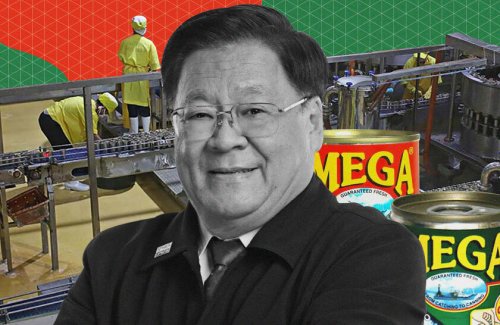
Filipino Founder of Mega Sardines William Lim Shares Business Wisdom

Mega Global Corporation began as a fishing vessel in 1975 and is now one of the Philippines’ most successful canned sardine manufacturers. It has 88 ships, two functioning factories, one under development, and two headquarters.

The company’s founder William Lim said that her wife was from a fishing family and his enthusiasm for fishing sparked his successful business – but his entrepreneurial journey wasn’t easy.

Be a risk-taker

He advised taking calculated risks and anticipating outcomes. “When we came up with advertisements, in three to six months, our sales started to improve slowly. You need to spend to build your brand name so people will have confidence in your product,” he told Esquire.

Good Brand Communication

By learning how to communicate effectively to store owners and consumers about your brand, you will be able to differentiate it from its competitors. “Because nobody knew our brand, supermarket owners did not want to accept our products to be on their shelves,” he told Esquire Magazine, he had to personally visit the stores to convince them for a chance to sell their product. 

Adapt to the times

Simply abandoning ineffective old methods, and always taking opportunities to improve.

Remain focused on your vision

Never forget what the goal was when starting and always remember what the company stands for. He added that when it comes to making decisions about the company, these guiding principles will serve as the primary motivation and compass. “If you keep changing your focus, you have less time to succeed. You have to put your heart and mind to your vision and never give up, no matter the odds,” he tells Philstar.

Image Source Sharon Cuneta Youtube Vlog

Uncategorized

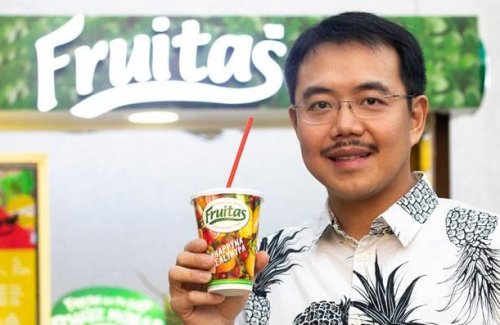
Filipino-Chinese Lester Yu Of Fruitas Holdings Inc. Further Expands His 25+ Brand Portfolio

One of the leading groups in the food cart industry in the Philippines, Fruitas Holdings Inc., owned by Chinese-Filipino entrepreneur Lester Yu, has expanded its brand portfolio with the acquisition of Ling Nam, a 72-year-old establishment that operates three locations in Manila, Philippines. 

Fruitas’ wholly-owned subsidiary Soykingdom bought 100% of LN Banaue Inc. This firm operates Ling Nam restaurants such Peter K. Fung and Wanton Parlor.

Established in the 1950s, Ling Nam has long served authentic Cantonese noodles, congee, and dim sum. Beef Wanton Noodles, along with various other sizzling and mouth-watering dishes, can be found on the menus of restaurants in Manila’s Banawe and T. Alonzo districts in Quezon City.

Yu’s 25+ brand portfolio is one of the assets to be purchased as part of the acquisition. Soykingdom will pay 60% of the acquisition price when the deal closes. The remaining 40% will be paid till March 2023. The acquisition price is less than 10% of Fruitas’ March 31 assets and book value.

Fruitas had 720 stores across the country as of the end of December 2021, according to Bilyonaryo where they provided customers with fresh fruit shakes and juices, lemonade, coolers, milk tea, desserts, meat-filled pastries, soya-based products, baked goods, and lechon.

Image Source Canlis Restaurant

Uncategorized

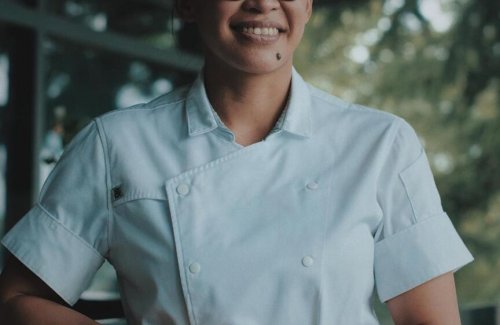
Seattle’s Famous Canlis Restaurant named the First Female Executive Chef

Aisha Ibrahim has been announced as the new head chef of the famed restaurant Canlis in Seattle. She is the first female executive chef at Canlis and joins a long list of notable chefs who have worked at the restaurant over its seven decades.

The management at Canlis was looking for a chef who was interested in that way of thinking, someone who was interested in not simply putting his or her ego on a plate, but rather in actually trying to help inspire an entire industry.

Ibrahim was a sous chef at California’s three-star Manresa. She worked with chef Eneko Atxa at Aziamendi and Azurmendi, developing her culinary horizons.

The new head chef was drawn to Seattle’s wealth of locally sourced ingredients, according to the New York Times, her Canlis dishes would explore the region’s microclimates, traditional cuisine, and Asian influences.

Brian Canlis, a co-owner of the restaurant, considered Ibrahim’s test meal as the final step in the long process. “We set out to find a leader who could help rebuild a broken industry,” he tells Eater. Many kitchen cultures are toxic, he added. They want to continue creating a new norm for how individuals are regarded in kitchens and restaurants.

During the COVID-19 pandemic, Canlis, along with many other restaurants in the past year, experimented with a variety of different service formats. These formats included everything from parking lot yurts to drive-through burgers. 

The famed restaurant has informed that they will soon be opening a restaurant that will be distinct from the one that they previously operated but which they shut down a year ago. They have no interest in going in the other direction and would much rather proceed in the future path.

Canlis will be led by Ibrahim into the post-pandemic future, with the debut of her menu slated for July 2021.