Awaken* newsletter

December 9, 2024

SHARE:

In this month’s edition of the Awaken* Newsletter, we speak with Kristy Kim, Founder and CEO of TomoCredit, a fintech startup focused on improving access to credit for underserved consumers. By using AI to evaluate real-time cash flow data rather than traditional credit scores, TomoCredit connects consumers with lenders.

Kristy discusses her journey as an immigrant, an Asian female founder, and an entrepreneur working to transform the financial industry. Through her leadership, TomoCredit aims to provide more people with better access to capital and lending opportunities.

Can you start by giving us an overview of your company and what you’re trying to solve?

Kristy Kim: Sure! At TomoCredit, our mission is to bridge the gap between underserved consumers and lenders using AI technology. We are focused on serving individuals who have been left behind by traditional financial systems, especially those without credit scores or with limited credit history.

There are millions of people in the U.S. who are underbanked, and the financial institutions that could potentially help them either don’t have access to their data or don’t understand their risk profile. We leverage AI to evaluate consumers based on their cash flow instead of relying solely on traditional credit scores. This enables us to match these individuals with lenders who are willing to serve them without taking on additional risk. Our platform helps both consumers and lenders—consumers get access to capital, and lenders expand their market in a low-risk way.

What motivated you to start TomoCredit?

As a first-generation immigrant from South Korea, I moved to the U.S. at eleven. In my early twenties, I faced the challenges of building my own credit history. After graduating from UC Berkeley, I worked in investment banking.

Despite having a stable income, I was denied an auto loan five times because I lacked a credit score. This experience highlighted a significant gap in the financial system, where many immigrants, young adults and many other underserved communities are excluded due to the absence of a credit history. After being turned down multiple times, I knew something had to change. I saw that the traditional credit system wasn’t serving millions of people, particularly immigrants, who had the ability to repay but lacked a credit history to prove it.

That experience of being excluded from the financial system really motivated me to find a way to help people like myself access the credit they needed. Determined to address this issue, I founded TomoCredit to provide credit solutions for those who, like me, struggle to access traditional credit avenues.

I wanted to create a system that didn’t rely on traditional credit scores but instead used alternative data, like cash flow, to assess creditworthiness. The idea was to connect underserved consumers to lenders in a way that wouldn’t increase their risk. TomoCredit was born out of this desire to make the financial system more inclusive—so others wouldn’t face the same rejections I did, and would have the chance to access capital and thrive.

As an immigrant founder, have you faced any challenges or biases in fundraising or building relationships with big institutions?

Kristy Kim: Yes, there are definitely challenges that come with being an immigrant founder, and at times, it can feel like an uphill battle. But, interestingly, my background has also played to my advantage.

As an immigrant, I have a unique lens on the problems facing underserved communities. I know firsthand what it’s like to struggle with the traditional credit system. I’ve faced the same barriers that many of our customers face, and that gives me an edge when I’m speaking to financial institutions. I’m able to say, “Look, I know my customers better than anyone else. These people are creditworthy, but they’re being overlooked by the traditional system.”

There is some bias, of course, especially when you’re dealing with legacy institutions, but I think they also recognize that I bring something different to the table—an intimate understanding of the market and the customers they often don’t have access to. Lenders are willing to listen because they know that by partnering with us, they can expand their pool of potential customers without taking on additional risk.

You’ve been in this industry for over five years now. What keeps you motivated despite the challenges you’ve faced?

Kristy Kim: That’s a great question. Honestly, the progress we’ve made keeps me motivated. Every year, I see the interest in our approach growing, and it reinforces that we’re heading in the right direction.

When we first started, it felt like I was an outsider trying to convince traditional financial institutions to embrace an entirely new way of evaluating credit. But now, year after year, we see more and more mainstream players realizing that there’s a huge market for underserved consumers—and that these consumers are creditworthy if we just use the right tools to understand them. It’s exciting to be at the forefront of this change.

For me, it’s not just about building a business—it’s about creating lasting impact. The U.S. consumer credit industry is worth over $4 trillion, and the fact that we are focusing on a largely ignored segment of that market feels like we’re making a real difference. And, of course, as a founder, seeing our technology evolve and improve with time and data is incredibly motivating.

How does your solution differ from other competitors in the market who are also targeting underserved consumers?

Kristy Kim: The key differentiator is that we don’t just rely on traditional credit scores to assess risk.

Our AI model is powered by cash flow data—essentially, we evaluate consumers based on their spending and income patterns, which gives a far more accurate picture of their financial health. Over the past five years, we’ve accumulated a wealth of data that allows us to refine our model, and with every new data point, we get better at underwriting.

Unlike competitors who may be using generic data or building from scratch, we have a more granular understanding of how underserved consumers behave financially. Additionally, the beauty of our system is that we’re not just looking at data from one financial institution—we’re aggregating data from multiple sources. Our customers might have accounts with multiple banks, and that gives us a fuller picture of their financial habits. In comparison, other companies might only have access to data from one bank, which limits their ability to assess risk accurately.

As a founder, what has been the most rewarding part of your journey so far, and what has been the hardest?

Kristy Kim: The most rewarding part has been seeing the validation from both the industry and our customers. When leaders of financial institutions tell me that TomoCredit makes sense, it’s incredibly validating. It’s a feeling of affirmation that, yes, we’re on the right path. But it’s also rewarding to see the real-world impact we’re having on people’s lives. We’ve helped thousands of people access capital who otherwise wouldn’t have had the chance.

On the flip side, the hardest part has been dealing with the mental burden of being a startup founder. When things are going well, it feels like everything is moving at full speed, but when challenges arise—whether it’s fundraising hurdles, market uncertainty, or hiring struggles—the pressure is immense. Unlike larger companies with more resources, startups have less margin for error. It can feel like one wrong move could jeopardize everything, and that can be emotionally exhausting. But it’s in those moments that you really find your resilience, and you learn that, no matter how tough it gets, you have to push forward.

As a seasoned founder, what key lessons from your previous startup experience have you applied to building TomoCredit?

When I launched my first company, I was in my early twenties, full of energy but lacking experience. It was a trial-and-error journey, where I learned a lot, but I quickly realized that having a clear vision and understanding the real impact you want to make is crucial.

Starting TomoCredit was a completely different experience. This time, I approached it with a clear strategy, having learned the importance of tackling a problem that I was personally passionate about. My previous startup experience taught me how to make more strategic decisions, prioritize what matters most, and stay resilient through the inevitable ups and downs of entrepreneurship.

What advice would you give to aspiring founders, particularly those who may be feeling discouraged after a tough year?

Kristy Kim: My advice would be to stay grounded in your purpose and conviction. It’s easy to get distracted by the ups and downs of the startup world, but at the end of the day, your mission should drive you more than the fear of failure or the setbacks you face along the way.

When I first started my company, it wasn’t about just building a business—it was about solving a real problem that I deeply cared about. The passion for the idea needs to be stronger than the fear of failure. Even if things don’t work out the way you hope, you can still be proud knowing that you tried to create something that could have made a real impact.

The most successful founders I know are the ones who are able to maintain a strong sense of purpose, even when it feels like everything is falling apart. If you believe in what you’re doing and are committed to the long-term vision, that will carry you through the hard times.

What are some recent key achievements or milestones that you’re excited to share?

Kristy Kim: Thanks for asking. First, our AI-driven platform continues to help underserved consumers access credit by using cash flow data to connect them with lenders.

We’ve also made significant strides in improving our underwriting capabilities by leveraging years of data to assess creditworthiness more accurately. This year, we paused issuing new credit cards to focus on refining our AI and underwriting technology. While we haven’t issued new cards yet, we’re still accepting customers and offering other financial services. Additionally, our partnerships with larger financial institutions are also growing, with increasing interest from major players. These collaborations are essential to our mission of expanding access to lending for underserved communities.

And lastly, on the team front, we’ve made several key hires, including the former CTO at Experian and the former CEO of LegalZoom. Their expertise in open banking and scaling high-growth companies will help us continue to expand our offerings and further our mission.

Looking ahead, what’s next for TomoCredit?

Kristy Kim: We’re expanding our offering, bringing more lenders into the network, and continuing to refine our AI technology to provide better risk assessments.

We’ve been growing the B2B side of our business over the last year, and we’re seeing significant interest from bigger players in the financial sector. We’re also planning to expand our product offerings to include more types of loans, like auto loans and mortgages, to help more customers get the access they need.

We’re also actively hiring, which is very exciting for us. We’re looking for a talented marketing person to help us build our brand and spread the word about what we’re doing. Our mission is to make financial access easier for everyone, and we’re excited to continue growing and impacting even more lives.


Kristy Kim’s journey proves that determination, a clear vision, and a deep understanding of your market can break through even the toughest barriers. At TomoCredit, she’s not just building a company; she’s seeking to reshape how credit is accessed, especially for those often left behind by traditional systems. Stay tuned for more updates on TomoCredit’s journey, and learn how they’re challenging the status quo while creating new opportunities for underserved communities.

Author: Donna Yu

Related Articles

116018653_728607294654083_6041310441211220664_n

Stories

Her Father Ignored Her For 8 Months When She No Longer Wanted To Be A Doctor

This may have happened to you (maybe not the musical writing part), or you may know someone from an Asian background who is currently struggling as their parents had strongly expected or already had chosen a job for them.

But how many of you have bravely rejected your parents’ desires, and followed your true passion? Take it from this courageous girl, Joy Regullano. You might remember her from the viral YouTube sketch called White Fetish, or various random acting gigs like the TV Series Crazy Ex-Girlfriend (her line was “Yeah, bitch!”) or Modern Family (with her line was “You fools!”).

That’s right, Joy is quite too far from wearing a white coat. She’s an actress, comedian, and writer — every Asian parents’ nightmare. So when she told her parents that she didn’t want to be a doctor anymore, her father didn’t talk to her for 8 months. Years later, she wrote a comedy musical about it, called Supportive White Parents.

“Working on this musical has been a major part of my healing journey (my parents are imperfect people who were just passing down intergenerational trauma) and maybe it can be part of yours too,” Joy expresses.

Read through as Joy shares how she has discovered her passion for comedy, and her journey to healing and acceptance through her musical.

MY WHOLE LIFE, I THOUGHT I WAS GOING TO BE A DOCTOR JUST LIKE MY PARENTS

My parents were born and raised in the Philippines. My dad grew up very poor in one of the provinces, but after scoring in the top percentage of all students across the country on an exam, he got a scholarship to a prestigious science high school in Manila that was all expenses paid. My parents met in medical school, and soon after graduating, they came to the US by way of New York. Eventually, they made their way across the country to Eagle Rock in LA and then Orange County, where I grew up. 

My whole life, I thought I was going to be a doctor just like my parents. I tried my best to be the perfect daughter. I got straight A’s and took piano lessons since I was 3 and violin lessons starting at 8. (Well, actually, I got one B+ in AP/IB Physics, but we don’t talk about that B+) I studied math outside of school at Kumon and played educational computer games because it was a productive use of my time. I read medical books my parents had lying around the house and had subscriptions to science magazines in high school, for fun.

But as I grew older, there was a part of me that was starting to love writing and making people laugh. For 7th-grade vocabulary exercises, I cared more about making my sentences funny than using the word right. My favorite part about English and Spanish group projects was writing the scripts and acting in them. I wrote bad high school poetry. But I didn’t think that was an acceptable thing to want to do with my life, so I shoved that part down, deep inside me. I did write for the school newspaper and compete in speech contests and debate teams, but that was about the extent of my (public) creative life. 

But as I grew older, there was a part of me that was starting to love writing and making people laugh.

-Joy Regullano

I LOVED FEELING LIKE I COULD MAKE THE AUDIENCE LAUGH AND CRY JUST BY TELLING AN HONEST STORY

I went to UC Berkeley pre-med and was planning to take over my dad’s clinic when he retired. But in the first semester of my freshman year, I got a B on my first math test and a C on my first chem test, and I panicked. After some soul-searching, I realized I wasn’t actually passionate about any of that and ended up cycling through a bunch of different majors before landing on Theater and Southeast Asian Studies.

I wrote a play in college about a friend who had passed away in high school, and when I put it up in front of an audience, I was hooked. I loved feeling like I could make the audience laugh and cry just by telling an honest story. Just by being myself. I wanted to do that for the rest of my life. I loved Tina Fey and Amy Poehler’s work so much that I couldn’t even watch them for a long time because it hurt that I wasn’t doing what they were doing. 

WHITE PARENTS: A MUSICAL INSPIRED BY MY LIFE

I wrote the book and the lyrics to a comedy musical called “Supportive White Parents” about an Asian girl who tells her parents she doesn’t want to be a doctor anymore, and when they’re disappointed, she wishes on a shooting star for supportive white parents. Eventually, she learns to love her Filipino parents for who they are. My friends Sam Johnides and Tony Gonzalez wrote the music.

The musical was inspired by my life. When I told my parents I didn’t want to be a doctor like them and take over my dad’s clinic, my dad yelled at me, called me selfish, and didn’t talk to me for 8 months. I was absolutely devastated, even though I knew that making people laugh and cry was what I had been put on this earth to do. 

I felt so jealous of my white theater classmates with their seemingly endlessly supportive white parents. And funny enough, they were jealous of me because I had something called “discipline”, played multiple instruments, and knew other languages. And thus, the seed of a musical was born.

Eventually, she learns to love her Filipino parents for who they are.

-Joy Regullano

LAUGHING AT OURSELVES CAN BE ONE OF THE BEST WAYS TO HEAL

There aren’t many Asian American musicals, let alone comedy Asian American musicals. One of my teachers says that comedy is the back door to the truth. I think that laughing at ourselves can be one of the best ways to heal, as well as realizing that we are not alone. 

We as a generation are going through this together, and also, we, as well as our parents, are the products of society and intergenerational trauma. We are all imperfect people who are trying the best we can with the tools we have. 

ACCEPTANCE IS THE QUICKEST WAY TO SANITY AND PEACE

I love the serenity prayer. There are some things that we can change, and we should do what we can to change those things. There are some things we can’t change, and it’ll drive you crazy trying to. You can’t control other people. You can only control yourself. The sooner you can accept other people are how they are, the sooner you’ll stop giving your energy away. 

Also, one thing I learned that blew my mind is that it’s actually not love, to wish that your parents or family were different than who they are. If what I was asking from them was to love me for exactly who I am, with all my imperfections, isn’t that what I should be giving them too? Unconditional love and acceptance? (That’s not to say that you shouldn’t have boundaries – that could be a whole other article.) But accepting things you can’t change is the quickest way to sanity and peace. 

If what I was asking from them was to love me for exactly who I am, with all my imperfections, isn’t that what I should be giving them too?

-Joy Regullano

It’s a daily practice. But try it! After reading “The Subtle Art of Not Giving a F*ck”, I tried to imagine that I only had one f– to give a day. How much energy would I be saving by only getting bent out of shape over the most important things!? I’m not really good at giving only one f– a day. But I’ll keep trying.

One more thing – some people need to be angry before they move to acceptance. I know I did, and I still feel angry sometimes. Accepting yourself and your feelings is part of the process too. Wherever you are in your journey is okay.

CONNECT WITH JOY

Instagram: @supportivewhiteparents @joyregullano

Twitter: @swpmusical @joyregullano

Website: www.supportivewhiteparents.com

Be on the lookout for the upcoming Supportive White Parent concept album, to be released in January 2023, with singles leading up to it! 

Image Source: Melissa Keomoungkhoun / Tatsu Dallas

News

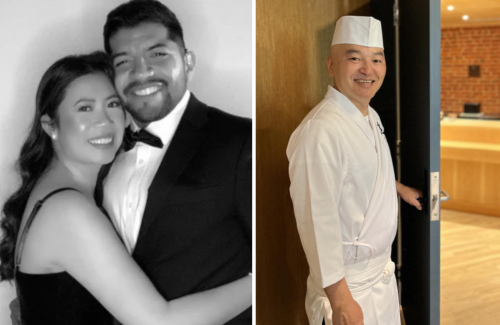
Dallas Omakase Restaurant Makes Memorable Dining Experience For Deaf Couple With Staff Using ASL

Victor Montiel and Melissa Keomoungkhoun were on the verge of tears as they expressed their gratitude to the Tatsu Dallas’ personnel for making their experience unforgettable.

The couple, who are both deaf, revealed in Today that they are used to getting ready in explaining themselves using their voices and American Sign Language, displaying texts from their phones, or even asking for pen and paper.

Melissa’s sister was worried that interaction with the staff would be difficult because she was aware that “omakase” means that diners receive meals that include foods chosen especially by the chef, which means more word-of-mouth discussion.

In advance of this, Melissa wrote Tatsu to inquire as to whether they could still enjoy the meal to its fullest without being able to hear the chef describe each course. She was shocked to learn that they had already gotten the tasting menu, which also listed the available drinks/cocktails, and that a complete menu will be available when they visited.

What surprised them more was the night of their reservation as they were greeted in American Sign Language (ASL) by the staff, including the Beverage Director who is the wife of the chef-owner.

Melissa was quoted saying that “With the staff signing at Tatsu, we didn’t feel left out even though it created some attention in the room.”

She also shared that they gazed in wonder at the excellent service that they received.

The excellent personnel and food service that Tatsu delivers to its guests were posted on Twitter by Melissa’s sister Nataly Keomoungkhoun, the online dining editor of D magazine. Her tweet received thousands of likes and retweets.

The chef-owner Tatsuya Sekiguchi, claims that when working in New York City, he had an encounter that solidified his resolve to always offer the best service he can, he stated “I believe that everyone and every day are unique.” He went on to clarify that his current objective is to just make every meal a special and memorable one.

In her tweet, Nataly put into words how Tatsu exceeded the couple’s expectations where they had the best experience possible.

Image Source: Michael Tran / FilmMagic file

News

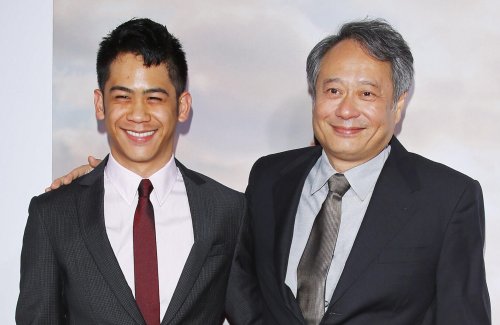
Award-Winning Director Ang Lee To Direct Bruce Lee’s Latest Biopic With Son As Lead Role

Multi-award-winning director Ang Lee is set to direct Bruce Lee’s latest biopic with his son Mason Lee playing the role.

The martial arts legend died young at 32 in 1973, a month before “Enter the Dragon,” the first Hollywood/Hong Kong film he co-produced, was set to premiere as mentioned in NBC News.

Since his passing, many biopics have been made like Dragon: The Bruce Lee Story, Bruce Lee: A Dragon Story, Bruce Lee: The Man, and many more.

And now, the Academy Award–winning director of “Brokeback Mountain” and “Life of Pi,” along with Lawrence Grey, Ben Everard, Brian Bell, and Shannon Lee, Bruce Lee’s daughter, will be directing and co–producing his newest biopic in honor of him as an actor, style icon, leader, and philosopher who brought martial arts to the global stage.

Ang’s son, Mason Lee, who is known for his roles in “Hangover Part II” and “Billy Lynn’s Long Halftime Walk,” will be playing the role.

“Accepted as neither fully American nor Fully Chinese, Bruce Lee was a bridge between East and West who introduced Chinese Gung Fu to the world, a scientist of combat and an iconic performing artist who revolutionized both the martial arts and action cinema,” Ang Lee was quoted saying.

He also said that he feels driven to share the story of this intelligent, singular human being who craved belonging, possessed incredible strength in a 135-pound frame, and through unrelenting hard work, converted impossible goals into reality.

Ang Lee is the first person of color to win the Oscar for best director and directed the 2000 martial arts film “Crouching Tiger, Hidden Dragon,” the highest-grossing foreign-language film in U.S. history. 

As an accomplished director, 12 of his 38 films which were nominated for Academy Awards won. 

Meanwhile, 3000 Pictures president Elizabeth Gabler said that Ang has long dreamed of directing Bruce Lee’s biopic, an inspirational tale of twists and turns, a story of the timeless premier real-life action hero.

unnamed

Stories

How Christopher Thang Juggles Medical School and Entrepreneurship With Time Optimization Strategies

You don’t really need to feel motivated to start — you just need to start! (easier said than done, right?)

While it’s also important to understand why you put off doing something and what causes it, what’s even more important is overcoming it.

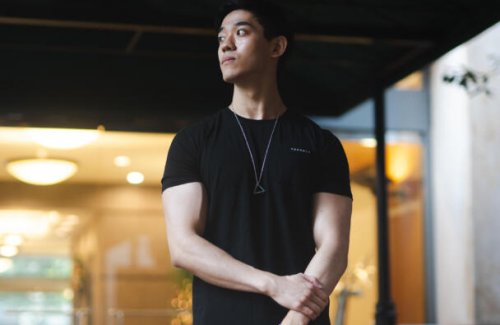
Christopher Thang is a medical student at the University of Texas Medical Branch. He is also an Online Fat Loss Specialist certified by the National Academy of Sports Medicine.

His current mission is to help busy working professionals lose 15+ lbs in 60 days with his Progressive Eating Strategy and fitness-lifestyle optimization systems.  

Read through as Christopher shares how he manages his time as both a full-time medical student and entrepreneur.

The Chronic Procrastinator

Now, I am not saying I have the busiest schedule out there, and I definitely do not. But, I’ve included a breakdown of my time-saving strategies below that help me find time to work on my business, study for medical school exams, and travel across the US to meet clients.

My deep dive into time management started in college. I was a chronic procrastinator and always rushed to meet deadlines the night before they were due. This left me super anxious and my disorganized tendencies, unfortunately, caused me to arrive late to almost everything. It got so bad that I showed up late to or forgot about work meetings, social events, and even important family gatherings.

Eventually, I had enough of winging my schedule every day (some days I didn’t even know I had tasks due). I tried countless things to improve my time management, and after a few years of trial and error (still ongoing), I came up with these 3 approaches that helped.

I was a chronic procrastinator and always rushed to meet deadlines the night before they were due. This left me super anxious and my disorganized tendencies, unfortunately, caused me to arrive late to almost everything.

-Christopher Thang

Strategy 1: Time Block Everything

Simply put, I time block my entire day out on Google Calendar as the day goes along. It may sound intense, and it honestly is… But, after I delegate tasks, meetings, and other life events, I gain structure and peace of mind for the day. I’m also able to look back at each day to see what I can be more efficient on.

Now, I don’t time block out every single minute of each day a week in advance (would be overwhelming), but I plan ahead for important events. By including things such as meal prep, working out, and business meetings, I can make a micro-commitment beforehand to fit these things into my schedule.

On the day of such events, I time block my day in 15, 30, or 1 hour+ chunks. Once I gain control and understanding of my time, I leverage it to do more work in less time throughout the day (of course, I have to be realistic when time blocking out tasks). I’m also able to enjoy social events, family time, and travel without worrying about work which brings me to Strategy 2.

Strategy 2: 100% Work or 100% Relaxation

Building off of Strategy 1, I stick to a hard rule of either working 100% or relaxing 100%. I take every effort to avoid the gray area in between, where I’d end up working inefficiently or trying to relax (and failing) because work is on my mind.

So, on my calendar, I include 15-minute blocks labeled “Break” (when I’m dividing up work into several chunks using the Pomodoro Method) and long hours blocked off for “Social Events” or “Family Time.”

Of course, life happens frequently, and sometimes events may take longer/shorter than expected or something may come up that interrupts my entire schedule. This brings me to Strategy 3 below.

Strategy 3: Plan Ahead, But Be Flexible

Whenever something unexpected happens, I time block it out in my calendar and shift everything down (Google Calendar lets me click and drag events around on my phone really easily).

Sometimes I shift down tasks so much that I have to move them on to the next day (if possible), but I remind myself to stay realistic if life suddenly hits on some days.

Connect with Christopher 

Now, I didn’t develop these approaches overnight, and they took time to develop into daily habits.

However, I hope my strategies would be able to inspire others to stay mindful of their time and perhaps try some of my approaches to elevate their personal lives and hustles.

Linkedin: Christopher Thang

Instagram: @christopher.thang

Website: https://www.hgbtconsulting.com/free-case-study