Awaken* newsletter

December 9, 2024

SHARE:

In this month’s edition of the Awaken* Newsletter, we speak with Kristy Kim, Founder and CEO of TomoCredit, a fintech startup focused on improving access to credit for underserved consumers. By using AI to evaluate real-time cash flow data rather than traditional credit scores, TomoCredit connects consumers with lenders.

Kristy discusses her journey as an immigrant, an Asian female founder, and an entrepreneur working to transform the financial industry. Through her leadership, TomoCredit aims to provide more people with better access to capital and lending opportunities.

Can you start by giving us an overview of your company and what you’re trying to solve?

Kristy Kim: Sure! At TomoCredit, our mission is to bridge the gap between underserved consumers and lenders using AI technology. We are focused on serving individuals who have been left behind by traditional financial systems, especially those without credit scores or with limited credit history.

There are millions of people in the U.S. who are underbanked, and the financial institutions that could potentially help them either don’t have access to their data or don’t understand their risk profile. We leverage AI to evaluate consumers based on their cash flow instead of relying solely on traditional credit scores. This enables us to match these individuals with lenders who are willing to serve them without taking on additional risk. Our platform helps both consumers and lenders—consumers get access to capital, and lenders expand their market in a low-risk way.

What motivated you to start TomoCredit?

As a first-generation immigrant from South Korea, I moved to the U.S. at eleven. In my early twenties, I faced the challenges of building my own credit history. After graduating from UC Berkeley, I worked in investment banking.

Despite having a stable income, I was denied an auto loan five times because I lacked a credit score. This experience highlighted a significant gap in the financial system, where many immigrants, young adults and many other underserved communities are excluded due to the absence of a credit history. After being turned down multiple times, I knew something had to change. I saw that the traditional credit system wasn’t serving millions of people, particularly immigrants, who had the ability to repay but lacked a credit history to prove it.

That experience of being excluded from the financial system really motivated me to find a way to help people like myself access the credit they needed. Determined to address this issue, I founded TomoCredit to provide credit solutions for those who, like me, struggle to access traditional credit avenues.

I wanted to create a system that didn’t rely on traditional credit scores but instead used alternative data, like cash flow, to assess creditworthiness. The idea was to connect underserved consumers to lenders in a way that wouldn’t increase their risk. TomoCredit was born out of this desire to make the financial system more inclusive—so others wouldn’t face the same rejections I did, and would have the chance to access capital and thrive.

As an immigrant founder, have you faced any challenges or biases in fundraising or building relationships with big institutions?

Kristy Kim: Yes, there are definitely challenges that come with being an immigrant founder, and at times, it can feel like an uphill battle. But, interestingly, my background has also played to my advantage.

As an immigrant, I have a unique lens on the problems facing underserved communities. I know firsthand what it’s like to struggle with the traditional credit system. I’ve faced the same barriers that many of our customers face, and that gives me an edge when I’m speaking to financial institutions. I’m able to say, “Look, I know my customers better than anyone else. These people are creditworthy, but they’re being overlooked by the traditional system.”

There is some bias, of course, especially when you’re dealing with legacy institutions, but I think they also recognize that I bring something different to the table—an intimate understanding of the market and the customers they often don’t have access to. Lenders are willing to listen because they know that by partnering with us, they can expand their pool of potential customers without taking on additional risk.

You’ve been in this industry for over five years now. What keeps you motivated despite the challenges you’ve faced?

Kristy Kim: That’s a great question. Honestly, the progress we’ve made keeps me motivated. Every year, I see the interest in our approach growing, and it reinforces that we’re heading in the right direction.

When we first started, it felt like I was an outsider trying to convince traditional financial institutions to embrace an entirely new way of evaluating credit. But now, year after year, we see more and more mainstream players realizing that there’s a huge market for underserved consumers—and that these consumers are creditworthy if we just use the right tools to understand them. It’s exciting to be at the forefront of this change.

For me, it’s not just about building a business—it’s about creating lasting impact. The U.S. consumer credit industry is worth over $4 trillion, and the fact that we are focusing on a largely ignored segment of that market feels like we’re making a real difference. And, of course, as a founder, seeing our technology evolve and improve with time and data is incredibly motivating.

How does your solution differ from other competitors in the market who are also targeting underserved consumers?

Kristy Kim: The key differentiator is that we don’t just rely on traditional credit scores to assess risk.

Our AI model is powered by cash flow data—essentially, we evaluate consumers based on their spending and income patterns, which gives a far more accurate picture of their financial health. Over the past five years, we’ve accumulated a wealth of data that allows us to refine our model, and with every new data point, we get better at underwriting.

Unlike competitors who may be using generic data or building from scratch, we have a more granular understanding of how underserved consumers behave financially. Additionally, the beauty of our system is that we’re not just looking at data from one financial institution—we’re aggregating data from multiple sources. Our customers might have accounts with multiple banks, and that gives us a fuller picture of their financial habits. In comparison, other companies might only have access to data from one bank, which limits their ability to assess risk accurately.

As a founder, what has been the most rewarding part of your journey so far, and what has been the hardest?

Kristy Kim: The most rewarding part has been seeing the validation from both the industry and our customers. When leaders of financial institutions tell me that TomoCredit makes sense, it’s incredibly validating. It’s a feeling of affirmation that, yes, we’re on the right path. But it’s also rewarding to see the real-world impact we’re having on people’s lives. We’ve helped thousands of people access capital who otherwise wouldn’t have had the chance.

On the flip side, the hardest part has been dealing with the mental burden of being a startup founder. When things are going well, it feels like everything is moving at full speed, but when challenges arise—whether it’s fundraising hurdles, market uncertainty, or hiring struggles—the pressure is immense. Unlike larger companies with more resources, startups have less margin for error. It can feel like one wrong move could jeopardize everything, and that can be emotionally exhausting. But it’s in those moments that you really find your resilience, and you learn that, no matter how tough it gets, you have to push forward.

As a seasoned founder, what key lessons from your previous startup experience have you applied to building TomoCredit?

When I launched my first company, I was in my early twenties, full of energy but lacking experience. It was a trial-and-error journey, where I learned a lot, but I quickly realized that having a clear vision and understanding the real impact you want to make is crucial.

Starting TomoCredit was a completely different experience. This time, I approached it with a clear strategy, having learned the importance of tackling a problem that I was personally passionate about. My previous startup experience taught me how to make more strategic decisions, prioritize what matters most, and stay resilient through the inevitable ups and downs of entrepreneurship.

What advice would you give to aspiring founders, particularly those who may be feeling discouraged after a tough year?

Kristy Kim: My advice would be to stay grounded in your purpose and conviction. It’s easy to get distracted by the ups and downs of the startup world, but at the end of the day, your mission should drive you more than the fear of failure or the setbacks you face along the way.

When I first started my company, it wasn’t about just building a business—it was about solving a real problem that I deeply cared about. The passion for the idea needs to be stronger than the fear of failure. Even if things don’t work out the way you hope, you can still be proud knowing that you tried to create something that could have made a real impact.

The most successful founders I know are the ones who are able to maintain a strong sense of purpose, even when it feels like everything is falling apart. If you believe in what you’re doing and are committed to the long-term vision, that will carry you through the hard times.

What are some recent key achievements or milestones that you’re excited to share?

Kristy Kim: Thanks for asking. First, our AI-driven platform continues to help underserved consumers access credit by using cash flow data to connect them with lenders.

We’ve also made significant strides in improving our underwriting capabilities by leveraging years of data to assess creditworthiness more accurately. This year, we paused issuing new credit cards to focus on refining our AI and underwriting technology. While we haven’t issued new cards yet, we’re still accepting customers and offering other financial services. Additionally, our partnerships with larger financial institutions are also growing, with increasing interest from major players. These collaborations are essential to our mission of expanding access to lending for underserved communities.

And lastly, on the team front, we’ve made several key hires, including the former CTO at Experian and the former CEO of LegalZoom. Their expertise in open banking and scaling high-growth companies will help us continue to expand our offerings and further our mission.

Looking ahead, what’s next for TomoCredit?

Kristy Kim: We’re expanding our offering, bringing more lenders into the network, and continuing to refine our AI technology to provide better risk assessments.

We’ve been growing the B2B side of our business over the last year, and we’re seeing significant interest from bigger players in the financial sector. We’re also planning to expand our product offerings to include more types of loans, like auto loans and mortgages, to help more customers get the access they need.

We’re also actively hiring, which is very exciting for us. We’re looking for a talented marketing person to help us build our brand and spread the word about what we’re doing. Our mission is to make financial access easier for everyone, and we’re excited to continue growing and impacting even more lives.


Kristy Kim’s journey proves that determination, a clear vision, and a deep understanding of your market can break through even the toughest barriers. At TomoCredit, she’s not just building a company; she’s seeking to reshape how credit is accessed, especially for those often left behind by traditional systems. Stay tuned for more updates on TomoCredit’s journey, and learn how they’re challenging the status quo while creating new opportunities for underserved communities.

Author: Donna Yu
Related Articles

Business Insider-jpg

News

Hmong Entrepreneurs are Making an Impact in the US Culinary Cuisine

In recent times, Hmong cuisine and culture have been experiencing a remarkable surge in popularity and recognition within the United States, thanks to the efforts of Hmong restaurateurs and farmers.

One chef, Yia Vang, defied his parents’ wishes to have a traditional career and decided to follow his passion for cooking. Today, he takes immense pride in showcasing Hmong foodways to the world, weaving incredible stories through his culinary creations.

Different chefs are drawing in new customers by sharing dishes that remind them of home-cooked meals. The use of fresh Hmong-produced ingredients have been appealing to many.

Young Hmong entrepreneurs are also making a difference by starting businesses and helping older Hmong Americans enter larger markets. They have been instrumental in reshaping the economic landscape of the community.

Hmong farmers have also been pivotal in shaping the agricultural landscape of the United States. With over 50% of growers at the Twin Cities’ metro markets being Hmong, they have significantly contributed to the nation’s production of strawberries and poultry.

Initiatives like the Hmong American Farmers Association’s Food Hub have provided farmers with opportunities to grow and sell their produce, allowing the Hmong community to thrive in the agricultural sector.

The future looks promising for Hmong businesses and farmers as they continue to preserve their traditions while embracing new opportunities. Their dedication to their cultural heritage and entrepreneurial spirit are driving innovation and making a positive impact in the US.

Featured Image Source: Business Insider

5280 Magazine-jpg

News

Denver’s First Vietnamese Coffee Shop Celebrates Their Second Anniversary

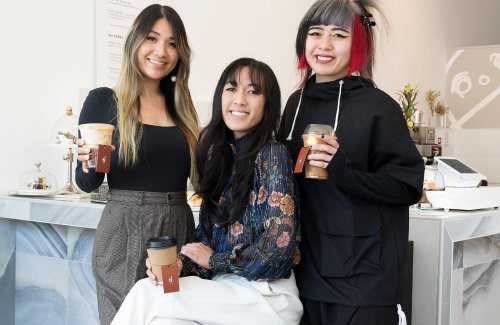
Tí: Cafe Ta, the first-ever Vietnamese coffee shop in Denver, celebrated its second anniversary with joy and pride. Founded by three sisters, Sashaline, Shominic, and Shasitie Nguyen, the café has become a warm and welcoming space for people to connect over coffee and culture.

The idea for the café came from the sisters’ love for their Vietnamese heritage. They wanted to share the joy of Vietnamese coffee with Denver’s residents and visitors. Opening during the pandemic was a leap of faith, but the response has been overwhelmingly positive.

The café offers a unique blend of flavors by using robusta beans and sweet condensed milk in their coffee. They take pride in slow-dripping the coffee through traditional filters, keeping the essence of Vietnamese coffee culture alive.

Beyond coffee, Tí serves up a variety of drinks like Vietnamese egg coffee, sodas with lychee whipped cream, and matcha drinks. They also host themed weeks, like Anime Week, where they serve beverages inspired by popular anime shows.

Despite opening amid the challenges of the pandemic, Tí: Cafe Ta has experienced overwhelming support from Denver residents. They have been embraced as a place where people can gather, share cultural experiences, and engage in conversation.

Looking ahead, the Nguyen sisters aspire to expand their brand while staying true to their roots. The goal is to continue curating new menu items, hosting more events, and fostering an even stronger sense of community within Denver and beyond.

Their vision for the next two decades includes opening new stores in different states, all while maintaining a commitment to delivering authentic Vietnamese coffee culture and providing a warm, inviting space for coffee enthusiasts and curious visitors alike.

Featured Image Source: 5280 Magazine

335590593_731331605109386_7047023362761355809_n-jpg

Stories

This Young Baker Is Changing the Food System by ‘Vegan-izing’ Asian Snacks

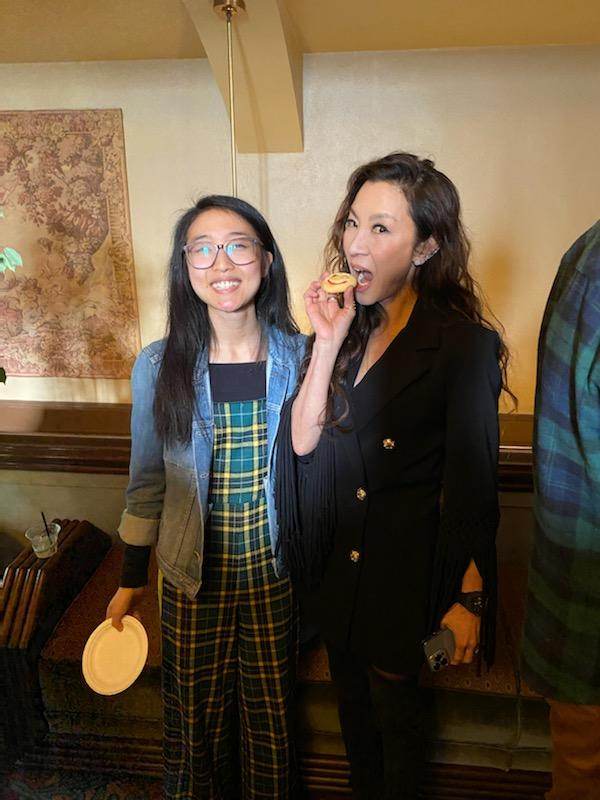
Annie Wang, a baker from Oakland, recently had the opportunity of making custom almond cookies for the premiere of Everything Everywhere All At Once.

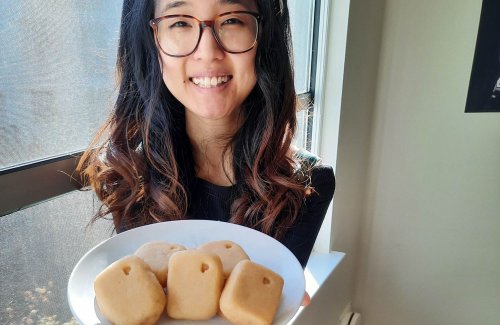
Made from only the freshest, high-quality ingredients and created with sustainability in mind, Annie’s vegan, gluten-free, and upcycled Taiwanese Pineapple Cakes are perfect for anyone who cares for the environment and their taste buds.

In this interview, Annie shares her experience of growing up in rural towns in America, where she witnessed firsthand the harsh realities of food production, her journey of developing her recipes, her passion for reducing the use of animal products, and her experience of baking for the premiere of Everything Everywhere All At Once.

SEEING THE HARSH REALITIES OF HOW FOOD WERE BEING PRODUCED WHILE GROWING UP

I was born in New York City, but growing up, my family and I moved every three years. The towns we moved to in the later years were smaller and more rural than the others. During the time I lived in these states, I saw the harsh realities of how we produce and handle food in America.

In one town in Illinois, my classmates and I had to plug our noses to guard against the toxic smell wafting towards us from a nearby pig farm. When we lived in Arkansas, we lived 15 minutes away from a Tyson chicken factory where runoff from the factory sat in huge silos. Ironically, these rural towns where I got to school by walking through crop fields were the towns where neighbors often struggled the most with unstable access to nutritious and responsibly grown food.

These towns were also where I first learned about the enormous harm inflicted on people and animals by our current agricultural system and decided to adopt a plant-based diet. That decision meant a lot of the staples I grew up eating with my family were no longer an option.

After working at environmental nonprofits and food tech companies, I decided to start Annie’s T Cakes to help myself and others once again partake in culturally important foods while also helping to improve the food system.

MY DREAM AS A KID WAS TO OPEN A BAKERY

The first thing I ever cooked was a scrambled egg in fifth grade. I forgot to oil the pan so you could say the first go was a fail. I didn’t really bake growing up unless it was a box of brownie mix or Pillsbury cookies. Most of my time in the kitchen was spent working the stovetop via stir-frying, steaming, and boiling.

I’d watch my mom cook traditional dishes like tomato and scrambled eggs with noodles or filled buns. As I got older, I started taking on more responsibilities in the kitchen and would cook tea eggs, and steamed bread on my own. I loved getting experimental. I always made my bread and dumplings in unique shapes.

Last year, my dad told me that my dream as a kid was to open a bakery. It was news to me since the one fleeting dream I can remember was about being a vet. But hey, here we are! Definitely much further than my first failed scrambled egg.

The base of the Taiwanese pineapple cake recipe only took me three tries to make (the fastest I’ve yet to develop a recipe). I started by making milk bread and buns but I remembered how much I used to love Taiwanese pineapple cakes growing up and took a crack at it. A friend of mine in Oakland runs a business upcycling tofu fiber into flour (Renewal Mill). Since the pineapple cakes didn’t need to rise as the bread did, I thought it would be a perfect way to create a gluten-free option for customers and support her business as well. 

VEGAN-IZING ASIAN SNACKS AND FOODS

I started to dig deep into climate change, including the impact of animal agriculture on the environment, when I was in college. At the time, I got involved in our school’s student-led fossil fuel divestment campaign (our school divested in 2020!).

I was taking classes and reading about all the intersections between society, the food system, policies, etc. with our environment. I also learned so much from the other passionate student activists I worked with. To this day, I still draw from the incredible strength and compassion I felt from the student leaders I worked with in those days as I think about how to build a team and partnerships. 

A couple of years after I graduated college, I started working in food tech. I was interested in the field for its vast potential to positively impact the climate by shifting our food systems. I wanted to start a business ‘vegan-izing’ the Asian snacks and foods I grew up eating for years.

When the pandemic hit and I was laid off along with half of my team, I took the plunge. Building the business now, I think really deeply about sourcing ingredients and how to make things sustainable. In addition to building a vegan brand, I also use compostable packaging and try to reuse shipping materials to reduce waste. 

We see more food products on the market these days that do not use animal products. Heavily reducing the use of animal products as a society would be huge for reducing our negative impact on the environment and taking care of all living things on our planet.

THE ‘EVERYTHING EVERYWHERE ALL AT ONCE’ EXPERIENCE

My experience baking for the premiere of Everything Everywhere All At Once was a whirlwind!

The week before the premiere, I was put in touch with A24. In each of the markets the studio had launched the movie in, they’d worked with local bakers to create the smiley face cookie that appeared in the movie, and they still needed someone for the San Francisco premiere.

When they reached out to me, I actually didn’t have my almond cookie recipe finalized yet. I had been working on the recipe for a year at that point and felt like I just had a couple of days to nail it. So, I told the studio I would get back to them, and I cranked out test batch after test batch over the weekend.

After a couple of days, I finally had it done! And just like that, the next week, I took the recipe I had just finalized, made and packed 800+ cookies for the premier. Two nights before the premiere, I had started baking at around 7 am and continued into the night packing half of them. I thought it wasn’t that late but when I looked at the time it was 4 am! Thankfully the next day my boyfriend and two of our close friends came and helped me pack the other half of the cookies and it only took us only a few hours.

To see a cookie I made in the hands of hundreds of people, including the cast and directors of a movie that has touched so many lives was a once-in-a-lifetime event, to say the least. At the premiere, one of the directors expressed his happiness to me. He told me I had been the only baker that had made an actual almond cookie. Remembering that moment, and countless others throughout the week, I am so grateful that I got to be a part of such a special event with incredible changemakers. 

ADVICE TO BUSINESS OWNERS TOWARD SUSTAINABILITY

As small business owners, most of the time we’re just running around trying to get products out the door. Compromise happens daily because bandwidth is limited and nothing ever happens in an ideal way. 

For those that are trying to find ways to be more sustainable, take small steps toward a long-term plan of sustainability. Take note of things like the ingredients you use, where you source everything from, the amount of packaging you use, etc. and make changes where and when you can to reduce your footprint. Start small and intentionally design your business in a way where you are putting yourself on the road toward your ultimate, climate-friendly operation. 

WHAT TO EXPECT FROM ANNIE’S T CAKES 

My vision for Annie’s T Cakes is to bring these nostalgic vegan treats to people across the globe, starting first in California. I also aim to support local agricultural efforts by donating profits to organizations focused on sustainable agriculture in their communities.

In the near term, I’ll be in my kitchen, continuing to bring delicious and culturally relevant foods to our community!

Website: www.anniestcakes.com

Instagram: @anniestcakes

pioneer press-jpg

News

Culinary Icon Leeann Chin’s Journey to Building an Asian Cuisine Empire in Minnesota

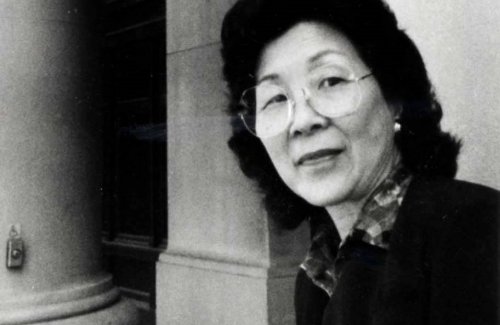
Many Minnesotans are familiar with the name Leeann Chin and her beloved chain of Chinese restaurants across the state. But not everyone knows the extraordinary story behind her rise to success.

In 1980, at the age of 47, Leeann, a determined Chinese woman, opened her first restaurant in Minnetonka. Her life wasn’t easy from the start. She was forced into marriage as a young girl and moved to Minnesota with her husband.

Life in Minnesota was tough for Leeann. She had to raise six children in a small house with just one bathroom. Despite all the challenges, she remained strong and devoted to her family.

Cooking became Leeann’s way of expressing love, even though she didn’t say it with words. When her older daughter tragically passed away, Leeann found comfort in the kitchen, and her passion for cooking grew. Her delicious Chinese dishes quickly gained fame when she catered a luncheon for her sewing clients. They loved her food so much that they encouraged her to teach cooking and cater more events.

With hard work, Leeann’s restaurant business flourished. She even got support from unexpected sources, like Carl Pohlad, the owner of the Minnesota Twins, thanks to a party she catered where Sean Connery, the famous actor, was a guest.

As word spread about her delectable dishes, lines of eager customers formed around her restaurant, and her culinary empire flourished. In time, General Mills acquired her successful chain, marking a remarkable milestone in her journey.

Leeann’s passion for cooking didn’t end with her success; it carried on through her daughter Katie Chin, who also pursued a career as a chef. Together, they became celebrated national TV cooking stars, preserving Leeann’s legacy for future generations.

Today, Katie honors her mother’s memory with a cookbook, showcasing Leeann’s cherished recipes, including the famous chicken chow mein.

Featured Image Source: Pioneer Press