Awaken* newsletter

December 9, 2024

SHARE:

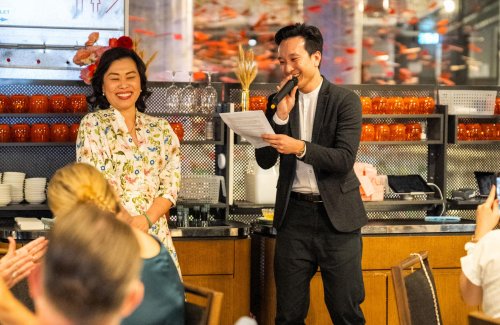
In this month’s edition of the Awaken* Newsletter, we speak with Kristy Kim, Founder and CEO of TomoCredit, a fintech startup focused on improving access to credit for underserved consumers. By using AI to evaluate real-time cash flow data rather than traditional credit scores, TomoCredit connects consumers with lenders.

Kristy discusses her journey as an immigrant, an Asian female founder, and an entrepreneur working to transform the financial industry. Through her leadership, TomoCredit aims to provide more people with better access to capital and lending opportunities.

Can you start by giving us an overview of your company and what you’re trying to solve?

Kristy Kim: Sure! At TomoCredit, our mission is to bridge the gap between underserved consumers and lenders using AI technology. We are focused on serving individuals who have been left behind by traditional financial systems, especially those without credit scores or with limited credit history.

There are millions of people in the U.S. who are underbanked, and the financial institutions that could potentially help them either don’t have access to their data or don’t understand their risk profile. We leverage AI to evaluate consumers based on their cash flow instead of relying solely on traditional credit scores. This enables us to match these individuals with lenders who are willing to serve them without taking on additional risk. Our platform helps both consumers and lenders—consumers get access to capital, and lenders expand their market in a low-risk way.

What motivated you to start TomoCredit?

As a first-generation immigrant from South Korea, I moved to the U.S. at eleven. In my early twenties, I faced the challenges of building my own credit history. After graduating from UC Berkeley, I worked in investment banking.

Despite having a stable income, I was denied an auto loan five times because I lacked a credit score. This experience highlighted a significant gap in the financial system, where many immigrants, young adults and many other underserved communities are excluded due to the absence of a credit history. After being turned down multiple times, I knew something had to change. I saw that the traditional credit system wasn’t serving millions of people, particularly immigrants, who had the ability to repay but lacked a credit history to prove it.

That experience of being excluded from the financial system really motivated me to find a way to help people like myself access the credit they needed. Determined to address this issue, I founded TomoCredit to provide credit solutions for those who, like me, struggle to access traditional credit avenues.

I wanted to create a system that didn’t rely on traditional credit scores but instead used alternative data, like cash flow, to assess creditworthiness. The idea was to connect underserved consumers to lenders in a way that wouldn’t increase their risk. TomoCredit was born out of this desire to make the financial system more inclusive—so others wouldn’t face the same rejections I did, and would have the chance to access capital and thrive.

As an immigrant founder, have you faced any challenges or biases in fundraising or building relationships with big institutions?

Kristy Kim: Yes, there are definitely challenges that come with being an immigrant founder, and at times, it can feel like an uphill battle. But, interestingly, my background has also played to my advantage.

As an immigrant, I have a unique lens on the problems facing underserved communities. I know firsthand what it’s like to struggle with the traditional credit system. I’ve faced the same barriers that many of our customers face, and that gives me an edge when I’m speaking to financial institutions. I’m able to say, “Look, I know my customers better than anyone else. These people are creditworthy, but they’re being overlooked by the traditional system.”

There is some bias, of course, especially when you’re dealing with legacy institutions, but I think they also recognize that I bring something different to the table—an intimate understanding of the market and the customers they often don’t have access to. Lenders are willing to listen because they know that by partnering with us, they can expand their pool of potential customers without taking on additional risk.

You’ve been in this industry for over five years now. What keeps you motivated despite the challenges you’ve faced?

Kristy Kim: That’s a great question. Honestly, the progress we’ve made keeps me motivated. Every year, I see the interest in our approach growing, and it reinforces that we’re heading in the right direction.

When we first started, it felt like I was an outsider trying to convince traditional financial institutions to embrace an entirely new way of evaluating credit. But now, year after year, we see more and more mainstream players realizing that there’s a huge market for underserved consumers—and that these consumers are creditworthy if we just use the right tools to understand them. It’s exciting to be at the forefront of this change.

For me, it’s not just about building a business—it’s about creating lasting impact. The U.S. consumer credit industry is worth over $4 trillion, and the fact that we are focusing on a largely ignored segment of that market feels like we’re making a real difference. And, of course, as a founder, seeing our technology evolve and improve with time and data is incredibly motivating.

How does your solution differ from other competitors in the market who are also targeting underserved consumers?

Kristy Kim: The key differentiator is that we don’t just rely on traditional credit scores to assess risk.

Our AI model is powered by cash flow data—essentially, we evaluate consumers based on their spending and income patterns, which gives a far more accurate picture of their financial health. Over the past five years, we’ve accumulated a wealth of data that allows us to refine our model, and with every new data point, we get better at underwriting.

Unlike competitors who may be using generic data or building from scratch, we have a more granular understanding of how underserved consumers behave financially. Additionally, the beauty of our system is that we’re not just looking at data from one financial institution—we’re aggregating data from multiple sources. Our customers might have accounts with multiple banks, and that gives us a fuller picture of their financial habits. In comparison, other companies might only have access to data from one bank, which limits their ability to assess risk accurately.

As a founder, what has been the most rewarding part of your journey so far, and what has been the hardest?

Kristy Kim: The most rewarding part has been seeing the validation from both the industry and our customers. When leaders of financial institutions tell me that TomoCredit makes sense, it’s incredibly validating. It’s a feeling of affirmation that, yes, we’re on the right path. But it’s also rewarding to see the real-world impact we’re having on people’s lives. We’ve helped thousands of people access capital who otherwise wouldn’t have had the chance.

On the flip side, the hardest part has been dealing with the mental burden of being a startup founder. When things are going well, it feels like everything is moving at full speed, but when challenges arise—whether it’s fundraising hurdles, market uncertainty, or hiring struggles—the pressure is immense. Unlike larger companies with more resources, startups have less margin for error. It can feel like one wrong move could jeopardize everything, and that can be emotionally exhausting. But it’s in those moments that you really find your resilience, and you learn that, no matter how tough it gets, you have to push forward.

As a seasoned founder, what key lessons from your previous startup experience have you applied to building TomoCredit?

When I launched my first company, I was in my early twenties, full of energy but lacking experience. It was a trial-and-error journey, where I learned a lot, but I quickly realized that having a clear vision and understanding the real impact you want to make is crucial.

Starting TomoCredit was a completely different experience. This time, I approached it with a clear strategy, having learned the importance of tackling a problem that I was personally passionate about. My previous startup experience taught me how to make more strategic decisions, prioritize what matters most, and stay resilient through the inevitable ups and downs of entrepreneurship.

What advice would you give to aspiring founders, particularly those who may be feeling discouraged after a tough year?

Kristy Kim: My advice would be to stay grounded in your purpose and conviction. It’s easy to get distracted by the ups and downs of the startup world, but at the end of the day, your mission should drive you more than the fear of failure or the setbacks you face along the way.

When I first started my company, it wasn’t about just building a business—it was about solving a real problem that I deeply cared about. The passion for the idea needs to be stronger than the fear of failure. Even if things don’t work out the way you hope, you can still be proud knowing that you tried to create something that could have made a real impact.

The most successful founders I know are the ones who are able to maintain a strong sense of purpose, even when it feels like everything is falling apart. If you believe in what you’re doing and are committed to the long-term vision, that will carry you through the hard times.

What are some recent key achievements or milestones that you’re excited to share?

Kristy Kim: Thanks for asking. First, our AI-driven platform continues to help underserved consumers access credit by using cash flow data to connect them with lenders.

We’ve also made significant strides in improving our underwriting capabilities by leveraging years of data to assess creditworthiness more accurately. This year, we paused issuing new credit cards to focus on refining our AI and underwriting technology. While we haven’t issued new cards yet, we’re still accepting customers and offering other financial services. Additionally, our partnerships with larger financial institutions are also growing, with increasing interest from major players. These collaborations are essential to our mission of expanding access to lending for underserved communities.

And lastly, on the team front, we’ve made several key hires, including the former CTO at Experian and the former CEO of LegalZoom. Their expertise in open banking and scaling high-growth companies will help us continue to expand our offerings and further our mission.

Looking ahead, what’s next for TomoCredit?

Kristy Kim: We’re expanding our offering, bringing more lenders into the network, and continuing to refine our AI technology to provide better risk assessments.

We’ve been growing the B2B side of our business over the last year, and we’re seeing significant interest from bigger players in the financial sector. We’re also planning to expand our product offerings to include more types of loans, like auto loans and mortgages, to help more customers get the access they need.

We’re also actively hiring, which is very exciting for us. We’re looking for a talented marketing person to help us build our brand and spread the word about what we’re doing. Our mission is to make financial access easier for everyone, and we’re excited to continue growing and impacting even more lives.


Kristy Kim’s journey proves that determination, a clear vision, and a deep understanding of your market can break through even the toughest barriers. At TomoCredit, she’s not just building a company; she’s seeking to reshape how credit is accessed, especially for those often left behind by traditional systems. Stay tuned for more updates on TomoCredit’s journey, and learn how they’re challenging the status quo while creating new opportunities for underserved communities.

Author: Donna Yu
Related Articles

Stories

How Saigon Cider Became The First Vietnamese Organic Cider

In every sip of cider, there’s a story waiting to be told—a narrative of flavors, a journey of craftsmanship, and a celebration of culture.

For Saigon Cider, it all began when Hannah Jefferys left her job as an architect in 2011 and moved to Vietnam when she was just 25 years old. Hannah grew up in a little place in the British countryside called Somerset, where she witnessed how cider evolved from being a farmer-associated drink to a cosmopolitan summer beverage.

Upon reaching Saigon and basking in the daily dose of sunshine, Hannah delved into the rich Vietnamese ‘nhậu’ culture, centered around shared dishes and toasts on plastic chairs lining the pavements of Saigon.

“There’s nothing quite like it elsewhere in the world — certainly not in the UK,” Hannah shared.

Yet, amidst the rich cultural tapestry, there was something she missed… cider.

A STORY OF INSPIRATION

Hannah found inspiration in the everyday scenes of Vietnamese individuals setting up shop just about anywhere and having a go. “Us British tend to think about risk rather than how things might work, and tend not to take the leap,” she says. She was also inspired by some local F&B brands that started their hustle in home kitchens, gradually expanding to a national and global scale.

This is how Saigon Cider was brought to life. What started as a humble stall at Saigon Outcast became the first organic craft cider in Vietnam.

CELEBRATING VICTORIES

Saigon Cider has notched up some impressive achievements on its journey. With their lineup of three ciders, they have been able to win 15 international awards, beating brands from established cider-making countries like the UK, US and France in some of the competitions.

Even despite the hurdles during the global pandemic and the challenges of being a small yet growing company in a bustling market, Saigon Cider has stood tall, and built a strong brand and following.

This year, Saigon Cider is entering new international markets, and they are incredibly proud to be able to share a taste of Vietnam with the world.

A NARRATIVE OF FLAVORS

Saigon Cider currently has three delightful flavors to offer:

  1. APPLE & GINGER: A blend featuring organic apples with a punch of Vietnamese ginger. This one is a revitalizing splash of a cider.
  2. ORIGINAL APPLE: This cider is crafted from fuji, gala and other favorite organic apples, perfect for a well deserved chill break after chaos.
  3. APPLE & CHILLI: A combination of organic apples with a Vietnamese chilli kick, delivering a dose of spice and sense of mischief.

Each flavor is thoughtfully crafted to bring a delightful and invigorating experience to everyone’s palate.

A GLOBAL TASTE WITH LOCAL ROOTS

Despite cider being an original British drink, Hannah is proud to present Saigon Cider as a Vietnamese brand.

“From the start, we have been a Vietnamese brand first and foremost, and proudly so. We were created here, grown here and inspired by here and I’m now personally rooted here with my Vietnamese family. 

Our Vietnamese-ness runs through everything we do, our choices of organically farmed ingredients, our labeling and of course, our name. In export markets we retain as much Vietnamese wording on our labels as we can and we hope that we are chosen with pride by Vietnamese and that wider Asian consumers will also feel some sense of ownership over our brand,” Hannah shared with Asian Hustle Network.

The brand currently has openings for exclusive distribution deals in various countries. They would love to grow with overseas Vietnamese distributors who know how to ‘nhậu’, so now is the time to hit them up and be a part of sharing Peace, Love & Apples globally.

CONNECT WITH SAIGON CIDER

Facebook: Saigon Cider

Instagram: @saigoncider

Linkedin: Saigon Cider

Fei-Fei_Li.original-png

News

Fei-Fei Li’s Exclusion from Influential List Fuels Debate on Gender Disparity in AI Leadership

In a recent revelation, the artificial intelligence (AI) community has been thrust into a contentious discussion surrounding gender representation after the omission of Fei-Fei Li from the New York Times’ “Who’s Who Behind the Dawn of the Modern Artificial Intelligence Movement” list.

The list, published on December 3, 2023, spotlighted twelve influential figures instrumental in the growth of AI over the past decade, including industry giants such as Sam Altman, Bill Gates, Elon Musk, and Mark Zuckerberg. However, a striking absence of women, notably Fei-Fei Li, has ignited a broader conversation about gender diversity in the AI landscape.

Image Source: IEEE Spectrum

Fei-Fei Li is a distinguished computer science researcher recognized for her creation of ImageNet, a pioneering dataset, that drove progress in computer vision, and paved the way for AlexNet. Her contributions, spanning nearly 15 years as a professor at Stanford University and co-director of the Stanford University Human-Centered AI Institute, have significantly shaped the AI field.

According to VentureBeat, the New York Times described the featured individuals as “a group of researchers, tech executives and venture capitalists” who “had worked for more than a decade to fuel AI” before chatbots “exploded in popularity.”

The list’s lack of gender diversity, particularly the absence of women like Fei-Fei Li, has sparked widespread criticism and calls for a more inclusive representation of the diverse talent within the AI community.

Featured Image Source: Caltech EE

Stories

Husband and Wife Duo Revolutionizing Athleisure and Streetwear with Passion and Community Support

In a world where exercise is becoming increasingly important to maintain a healthy lifestyle, finding comfortable and stylish workout clothes is essential. Unfortunately, many brands in the athletic-wear space have similar designs and aesthetics, leaving little room for uniqueness. That’s where MOTN comes in.

Founded by Alice Kim, with the support of her husband, in Los Angeles, MOTN is an athleisure/streetwear brand that aims to provide clothing that encourages people to stay active or to be “always in motion,” as in their slogan.

With their unique approach to combining fitness and streetwear, MOTN has created a loyal community of individuals who are always in motion. As Alice said, “We need other people to encourage us and support us. This is what I hope people wearing MOTN would also feel – that there is a community of people who are always in motion.”

Inspired by Alice’s love for fitness and Josh’s passion for sneakers and fashion culture, one of the main goals of MOTN is to balance workout gear and streetwear. The couple noticed a gap in the market for brands that emphasized both aspects of fashion.

To make their pieces unique, every collection requires dedicated time and thought to execute the style and design they are going for. They aim to create pieces that differ from every collection and keep customers engaged. MOTN values versatility and flexibility, allowing customers the freedom to mix and match pieces or choose an entire outfit to rock.

Starting a new business came with its fair share of challenges, including moments of doubt and uncertainty. Alice often found herself questioning how their brand would stand out in a market that already had thousands of clothing brands. However, Alice shared, “Throughout the uncertainty, I’ve had an amazing group of friends and family, especially my mom, that pushed me and encouraged me to still give it my all and try to make it work!”

Maintaining quality is also a top priority for MOTN. The brand aims to never compromise on quality, even if it means sacrificing on their end, “ Whether it’s taking longer to sample fabrics/materials, sourcing different fabrics/materials, or even taking a hit financially. We know that when it comes to a brand, customers are always first and so we want to prioritize them,” Alice explained.

As an Asian-owned business, the brand has fortunately not faced any large difficulties in the fashion industry. Alice acknowledges the support from the Asian community and is thankful to have individuals who already support MOTN. However, she wants to make it clear that their brand is all-inclusive and not focused solely on the Asian community.

When asked about her biggest piece of advice for someone starting a business, Alice emphasizes the importance of being passionate about what you do and not comparing yourself to others. Growing up, Alice looked up to her single mom, who worked diligently to get to where she is today. Because of that, she acknowledges that building a successful brand takes a lot of hard work and time, but if you work hard and stay committed, people will see your efforts. Alice also stresses the importance of patience and not getting discouraged by slow progress.

Lastly, Alice highlights the value of community support. “Through launching our brand, I realized how important it is to lean into your community,” she says. “The MOTN team may just be two people but the MOTN family is so much bigger, and we cannot thank our community enough for their love and support.”

KN106313-jpg

Stories

Gong Grocer by Thai Kee: A 30-Year Legacy of Family, Tradition, and Entrepreneurship

Gong Grocer by Thai Kee is a family-owned and operated Asian grocery business with a legacy spanning over 30 years. In this article, Brian Nguyen, one of the co-founders and a Director of Gong Grocer, shares insights with Asian Hustle Network.

Brian’s family is well-known in the Sydney community for their Thai Kee roots. Their journey originated with their grandfather, Thai Trinh, the esteemed namesake of the family’s original supermarket, Thai Kee. Gong Grocer represents the family’s evolutionary step, a mission to revitalize and modernize the Asian grocery shopping experience.

Brian acknowledges the shifting expectations of customers in physical in-store retail settings, and it’s their goal to meet these expectations in their new stores. As the Co-Founder and Director, Brian brings a unique blend of family tradition, personal journey, and a commitment to delivering an exceptional Asian grocery shopping experience.

A FAMILY OF IMMIGRANTS

Brian’s parents, uncles, and aunties were immigrants who fled Vietnam during wartime. Striving for a new life, they left behind everything in pursuit of opportunities in Australia.

Australia’s policy of multiculturalism provided a unique chance for Brian’s family and immigrants alike. The open embrace of diversity allowed families like theirs to openly celebrate their culture, thrive, and share their rich heritage with the broader community.

The origin of the name Thai Kee comes from their grandfather Thai Trinh, who they lovingly referred to as their “Ah Gong” (阿公), meaning grandfather in their dialect. He was the patriarch, and the original entrepreneur of the family. He sold Chinese donuts to supermarkets, waking up at 2 am each morning to bake them, then walking and hand delivering these donuts to supermarkets by 9 am each and every day.

THE FIRST THAI KEE SUPERMARKET

Despite limited means, Thai Trinh invested $5,000 in the first Thai Kee Supermarket in Cabramatta, providing a foundation for his children. But aside from money and most importantly, he passed onto his children a profound sense of hard work, dedication, and a deep commitment to one another, in their culture, and their community.

These values, instilled by their Ah Gong, form the cornerstone of their family’s identity. Known as “Thai” from Thai Kee to customers, to the family, he’s always been Ah Gong. 

To honor the spirit of their beloved Ah Gong, Brian and his family launched Gong Grocer by Thai Kee, or 阿公超市, paying homage to the heritage and principles instilled by their grandfather. 

FULL-TIME LAWYER TURNED ENTREPRENEUR

As Brian got older and heard more about his family’s stories, he felt a strong desire to carry on their traditions. He saw it as his mission to come up with new and interesting ways to share their culture with the diverse Chinese, Asian, and Australian communities.

Formerly a full-time lawyer, Brian Nguyen took the leap into entrepreneurship, co-founding Gong Grocer alongside his wife Wendy Lin, who herself manages her own successful business, Lioness Fashion.

Brian draws inspiration from his family’s entrepreneurial legacy, rooted in hard work, service, and dedication. The values instilled by his grandfather, Thai Trinh, continue to guide Brian in his pursuit of business excellence and cultural celebration.

OVERCOMING CHALLENGES

In his career and business journey, Brian Nguyen faced significant challenges, notably in time management. Gong Grocer started as a passion project for him. The transition from law to full-time business, alongside his wife Wendy Lin in Lioness Fashion, posed a wild adjustment.

Shifting from a lawyer to a business owner brought its own set of challenges. Balancing the demands of Lioness Fashion, an internationally recognized brand with immediate growth needs, and Gong Grocer, a venture built from scratch, proved to be extremely difficult. The latter involved design, planning, construction, and eventual launch and operations.

To overcome these challenges and achieve success, Brian drew inspiration from his family’s values. He doubled down on hard work and commitment, using them as guiding principles. Recognizing the need for a strong team, he leaned on his family and those around him to build a purpose-driven team that shared his vision. Together, they navigated the complexities, turning Gong Grocer into a thriving reality.

CELEBRATING GONG GROCER’S FLAGSHIP STORE

One of Brian Nguyen’s proudest achievements in this journey is the flagship supermarket store.

“Seeing the tangible transformation coming to life and physical form, from cutting out a giant hole in a concrete floor to creating a whole new level in a shopping centre, and doing this with my family no less, was incredibly rewarding,” Brian shared.

The grand opening events further highlighted the significance of the brand and its story. Brian was genuinely pleased by the support received from the community and the broader public. This positive response reflects the hard work of Brian and his family as entrepreneurs, their active role in the community, and the strong connections they have forged within the industry.

CONNECT WITH GONG GROCER / BRIAN 

Website: www.gonggrocer.com.au

Instagram: @gonggrocer

LinkedIn: www.linkedin.com/in/brian-nguyen-09a067125/