Awaken* newsletter

June 13, 2024

SHARE:

Tracy Young is a founder who has been on my radar for a long time. Beyond the fact that she is a successful exited founder, having sold PlanGrid to Autodesk for just under $900 million, Tracy’s family–like my own father–immigrated to the United States following the Vietnam war. With one major success under her belt, Tracy is going for a second, having recently founded a new startup named TigerEye, which focuses on AI-powered strategic planning. I sat down with Tracy to chat about lessons from PlanGrid, what she’s currently working on at TigerEye, and her identity as an Asian woman.

On Identity

I wasn’t the only one with a newsletter on the call! Tracy also recently started a LinkedIn newsletter titled Predictable Growth, a monthly Q&A with women leaders generating revenue for their businesses. I asked Tracy what the motivation behind starting it was, and what she hoped to see it accomplish:

Representation matters. In sales and go-to-market functions, women are underrepresented at the leadership level. However, many impressive, talented, and hardworking women have achieved the CRO/CMO level, and I wanted to hear their stories. So, it’s a way for us to showcase women and give them a platform to tell their stories and how they got to where they are. There are many great jobs in sales, but many women don’t realize that they’re available to them. Anyone can be good at sales, it’s not just men. Reaching the highest levels in sales gives women a lot of power to help out their families, help the economy, etc.

In previous interviews, Tracy has pointed out how women are especially underrepresented in enterprise SaaS. I asked Tracy if she had any ideas why this is the case, and how we can increase representation:

I’m not sure why that’s the case. But you can see it if you look at the stats or walk into any enterprise company. I would guess it’s systemic. I think it starts with the words we use for boys and girls, the way we treat them, and what is expected of them. This is part of our cultural history. One way to change that is to show what is possible. What Predictable Growth aims to achieve is to showcase all these women who are leaders at their companies. There’s no decision that the CEO is making without running it by them. We want to say: “This could be your future, if you want it”, for anyone reading, and hopefully, it’s a young woman reader.

Next, I wanted to get Tracy’s thoughts on how being an Asian woman has affected her experience as a founder:

My PlanGrid co-founder, Ryan, and I met in college. He’s been trying to convince me to start a company with him since I was 18. Being an Asian woman, I didn’t think it was possible. I brushed him off for many years. I thought, “I’m not a founder,” because I looked at all these other founders, and they didn’t look like me. That kept me from starting a company for a long time. Around 2007-2009, I remember Ryan really wanted me to apply for Y Combinator with him. And again, I told him, “I just don’t think it’s going to work.” I didn’t think other people would accept me, and I didn’t want to put myself through it. It wasn’t until Y Combinator put out a request for startups working on the exact problem we were working on that I felt comfortable applying. That request for startups almost gave me permission to apply to YC. But even when we got in, and we were making real revenue, and we fundraised, and we had real customers, and our product was getting better… even then, I still felt that founders should look a certain way. I don’t know how many years in we were before I finally realized how wrong I was.

In an interview eight years ago with Ron Miller at Techcrunch Disrupt, Tracy responded to a similar question very differently. I asked her what motivated her shift in perspective since then:

Back then, I really tried to separate myself from being a woman. I felt like that was not part of the equation. And again, it’s such a big part of me, I am a strong woman. For many years, I pretended that I wasn’t, down to how I dressed. What really woke me up was becoming a mom. Going through pregnancy and birth and postpartum recovery, and taking care of a baby, I think it was really at that point when I realized how strong women are, how strong our mothers and grandmothers are, and how strong my colleagues are. It was a disservice not to acknowledge that our journey is different. It’s not better or worse. It’s just different.

TigerEye

I asked Tracy how she came up with the idea for her new startup, TigerEye:

There’s no shortage of problems to solve in business software. If you talk to anyone who works for a public company, you’ll find a lot of outdated software still in use. After selling my last startup, I worked for a public company and got to use these expensive products that our company was paying for every year. I saw firsthand how they made us less productive and frustrated our team. Many areas need improvement, such as HR software, finance software, sales software, and everything in between, including development tools. 

A common strategy I hear from founders is that they want to start by selling to other startups, and then grow into an enterprise software company alongside their clients. I asked Tracy how she decided to skip that and go straight for enterprise customers:

I like to solve problems that I have experienced. TigerEye comes from my experience running a fast growth company for ten years. When we reflected on our PlanGrid journey, we asked ourselves a few questions: What would have accelerated growth? What would have made the difference between us still running PlanGrid today versus needing to sell? TigerEye is that product. This is a scientific tool that would have helped us grow more efficiently, be more profitable, and would’ve enabled us to be more courageous in our decision-making by providing extra validation. It’s an AI-powered business simulator. You can test out your plans before you make your team execute it. You can test out as many plans as you want and as many scenarios as you want before you bring it to the board for sign-off. Back at PlanGrid, we had a bunch of very smart people trying to generate the same thing that took months that TigerEye is outputting instantaneously now. This is the product that I wish I had to help grow PlanGrid. And this is why we are building for the enterprise. All I know to do is build things to help me with problems I’ve faced.

Starting a Company as a Second-time Founder

I asked Tracy what she thought about distribution at PlanGrid, and how that has changed for TigerEye:

PlanGrid was always mobile first. We really benefited from timing. Steve Jobs announced the first generation iPad, and we decided to start building construction software for that device soon after. We were one of the first enterprise apps to launch on all of the app stores. 

Let’s say you’re a construction person and you’ve got your new iPad or other tablet. You search for construction because that is your profession, and PlanGrid pops up as the top result. If it looks interesting, you might download it, and we had a freemium model so users could try us out. As a mobile-first company, having great SEO on the app stores was crucial for our inbound growth. That’s how we thought about distribution for PlanGrid, but that is totally irrelevant for TigerEye (although we do have a mobile version of our software). TigerEye is an enterprise-grade product, and you can’t just try it out as an individual. It is being deployed to whole departments, and that is a completely different distribution model. For many years, PlanGrid was sold on a per-seat basis. At TigerEye, we have an unlimited seat model, and it’s deployed to several teams at once, and the starting fee is five figures. It’s an enterprise-grade product. And so for us to get deployed and adopted usually takes a field sales team two or three conversations with the company, because it’s not just sales, it’s revenue operations, it’s strategic finance, and then it’s a champion at the C-suite level. It’s very different from PlanGrid’s model, where anyone with a credit card in a job site could swipe their credit card and buy PlanGrid today.

Next, I asked if she felt that being a second-time founder came with any benefits:

There are definitely benefits. For example, the first 15 people we recruited were people we had handpicked and worked with before. As a result, we were able to recruit a talented team with a strong track record and a strong work ethic. It’s difficult for first-time founders in their early 20s to attract talented individuals. The people who worked for us were our friends or recent college graduates. From our decade of experience, we’ve also seen what works and what doesn’t in terms of core values. This time, we made sure to have a set of values that we live by personally and professionally. These core values are non-negotiable and we share them with candidates we’re trying to recruit during our first phone call. We’re serious about it. Everyone says they care about their core values, but we actually hire and fire by them. 

Tracy’s emphasis on core values stood out because this was the first time I had heard a founder emphasize them to this degree. I asked Tracy why this mattered so much to her:

Through my experience growing PlanGrid to 450 employees and scaling the team to 1,300 employees post-acquisition, I got to see what slows down a team. I got to see how infighting can destroy a company. There are minor things that you can put in place to mitigate this, such as basic rules of engagement. We have a document called “Our commitments to working with each other,” which outlines how we work together at TigerEye. The document clarifies our five core values. It’s very simple, you cannot misinterpret what the core values mean. I’ll give you a couple of examples: 1) I will walk it like I talk it. 2) I will never speak destructively behind my teammate’s back. 3) If I have a problem, I will go to you and talk it out because we’re professionals and I can trust that we can have the hard conversations. If everyone follows these rules, then we’re in a really good place. That means that when there are problems, we can speak openly as a team and get through it together. We were very deliberate about the culture and work environment we were creating, especially as a remote company. I think our culture is especially important because we aren’t together every single day.  

Fostering a Culture of Authenticity

Throughout my research, a consistent theme Tracy touched on was being authentic as a leader. I asked her if she felt there are boundaries to authenticity and if it’s fine for CEOs to express fear or lack of confidence to their team.

There is definitely a line in terms of vulnerability and authenticity. It’s never acceptable to be disrespectful. Some might argue that they’re just being direct, but there’s a difference between being direct and being rude. It’s okay to question things and suggest new approaches. When I’m concerned about something related to the company, I share it with the team. I either present a potential solution or let them know that I’m working on one. This approach makes it easier to lead and get the team on board with the direction we’re heading. They may not always agree, but at least they understand why I’ve made certain decisions. If they understand, it’s easier for them to commit to the decision, even if they initially had reservations. 

To your second question, I think it is completely okay for a leader or anyone in the company to show that they are human, and as humans we experience fear and insecurity–they are natural emotions. As a leader and a productive teammate, it isn’t beneficial to dwell on these negative emotions. It’s challenging, if not impossible, to suppress these feelings because they will eventually surface. My approach is to allow myself to experience these emotions when things are tough, but also to take control and not let them linger. For instance, I might allow myself a day to experience these feelings, but the next day, it’s time to put on a game face and figure things out together. As long as there’s movement and progress, then it’s okay. Feelings like anger, insecurity, and sadness, when prolonged, are completely useless. They don’t serve anyone any good. They’re just there making everyone feel bad and that is absolutely not okay.

I asked Tracy what actions she takes to make sure everyone on her team is comfortable being authentic and vulnerable with each other:

We do this fun activity. We all take the Enneagram test. New teammates will take the test and present their enneagram results sometime within the first few weeks. The presentations are basically: “This is when I’m at my best. This is how I am at my worst. This is how I want to get feedback.” This helps us understand who we are as people because there are all kinds of different personalities, and conflict comes from two personalities at their worst coming together. If we can acknowledge and understand that might happen, it’s easier to get through it together. Essentially, it’s having self-awareness and giving your team a blueprint of being aware of who you are. 

For those who don’t know, Enneagram is a popular personality test that emphasizes how you interact with other personality types, making it a popular choice for teams. I am normally skeptical of these kinds of tests, but even I am a big fan of Enneagram, and I think it has helped me better understand myself and my interactions with others. For those curious, Tracy is Enneagram type 1, “The Reformer”. A fitting type for a person with such ambition and vision.

Shoutouts

If you are a leader in sales, RevOps, finance, or marketing, TigerEye has built a go-to-market planning tool to help you track, plan, and predict your go-to-market performance. The tool analyzes every change in your CRM using artificial intelligence to guide decisions and show you where you’re headed.

If you are interested in checking out what Tracy and TigerEye. have built, please drop her a note on LinkedIn or on X (f.k.a. Twitter) @Tracy_Young. Thank you Tracy for the interview!
Related Articles

Stories

How Saigon Cider Became The First Vietnamese Organic Cider

In every sip of cider, there’s a story waiting to be told—a narrative of flavors, a journey of craftsmanship, and a celebration of culture.

For Saigon Cider, it all began when Hannah Jefferys left her job as an architect in 2011 and moved to Vietnam when she was just 25 years old. Hannah grew up in a little place in the British countryside called Somerset, where she witnessed how cider evolved from being a farmer-associated drink to a cosmopolitan summer beverage.

Upon reaching Saigon and basking in the daily dose of sunshine, Hannah delved into the rich Vietnamese ‘nhậu’ culture, centered around shared dishes and toasts on plastic chairs lining the pavements of Saigon.

“There’s nothing quite like it elsewhere in the world — certainly not in the UK,” Hannah shared.

Yet, amidst the rich cultural tapestry, there was something she missed… cider.

A STORY OF INSPIRATION

Hannah found inspiration in the everyday scenes of Vietnamese individuals setting up shop just about anywhere and having a go. “Us British tend to think about risk rather than how things might work, and tend not to take the leap,” she says. She was also inspired by some local F&B brands that started their hustle in home kitchens, gradually expanding to a national and global scale.

This is how Saigon Cider was brought to life. What started as a humble stall at Saigon Outcast became the first organic craft cider in Vietnam.

CELEBRATING VICTORIES

Saigon Cider has notched up some impressive achievements on its journey. With their lineup of three ciders, they have been able to win 15 international awards, beating brands from established cider-making countries like the UK, US and France in some of the competitions.

Even despite the hurdles during the global pandemic and the challenges of being a small yet growing company in a bustling market, Saigon Cider has stood tall, and built a strong brand and following.

This year, Saigon Cider is entering new international markets, and they are incredibly proud to be able to share a taste of Vietnam with the world.

A NARRATIVE OF FLAVORS

Saigon Cider currently has three delightful flavors to offer:

  1. APPLE & GINGER: A blend featuring organic apples with a punch of Vietnamese ginger. This one is a revitalizing splash of a cider.
  2. ORIGINAL APPLE: This cider is crafted from fuji, gala and other favorite organic apples, perfect for a well deserved chill break after chaos.
  3. APPLE & CHILLI: A combination of organic apples with a Vietnamese chilli kick, delivering a dose of spice and sense of mischief.

Each flavor is thoughtfully crafted to bring a delightful and invigorating experience to everyone’s palate.

A GLOBAL TASTE WITH LOCAL ROOTS

Despite cider being an original British drink, Hannah is proud to present Saigon Cider as a Vietnamese brand.

“From the start, we have been a Vietnamese brand first and foremost, and proudly so. We were created here, grown here and inspired by here and I’m now personally rooted here with my Vietnamese family. 

Our Vietnamese-ness runs through everything we do, our choices of organically farmed ingredients, our labeling and of course, our name. In export markets we retain as much Vietnamese wording on our labels as we can and we hope that we are chosen with pride by Vietnamese and that wider Asian consumers will also feel some sense of ownership over our brand,” Hannah shared with Asian Hustle Network.

The brand currently has openings for exclusive distribution deals in various countries. They would love to grow with overseas Vietnamese distributors who know how to ‘nhậu’, so now is the time to hit them up and be a part of sharing Peace, Love & Apples globally.

CONNECT WITH SAIGON CIDER

Facebook: Saigon Cider

Instagram: @saigoncider

Linkedin: Saigon Cider

Fei-Fei_Li.original-png

News

Fei-Fei Li’s Exclusion from Influential List Fuels Debate on Gender Disparity in AI Leadership

In a recent revelation, the artificial intelligence (AI) community has been thrust into a contentious discussion surrounding gender representation after the omission of Fei-Fei Li from the New York Times’ “Who’s Who Behind the Dawn of the Modern Artificial Intelligence Movement” list.

The list, published on December 3, 2023, spotlighted twelve influential figures instrumental in the growth of AI over the past decade, including industry giants such as Sam Altman, Bill Gates, Elon Musk, and Mark Zuckerberg. However, a striking absence of women, notably Fei-Fei Li, has ignited a broader conversation about gender diversity in the AI landscape.

Image Source: IEEE Spectrum

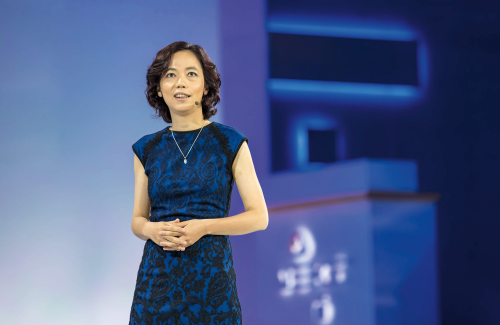
Fei-Fei Li is a distinguished computer science researcher recognized for her creation of ImageNet, a pioneering dataset, that drove progress in computer vision, and paved the way for AlexNet. Her contributions, spanning nearly 15 years as a professor at Stanford University and co-director of the Stanford University Human-Centered AI Institute, have significantly shaped the AI field.

According to VentureBeat, the New York Times described the featured individuals as “a group of researchers, tech executives and venture capitalists” who “had worked for more than a decade to fuel AI” before chatbots “exploded in popularity.”

The list’s lack of gender diversity, particularly the absence of women like Fei-Fei Li, has sparked widespread criticism and calls for a more inclusive representation of the diverse talent within the AI community.

Featured Image Source: Caltech EE

Stories

Husband and Wife Duo Revolutionizing Athleisure and Streetwear with Passion and Community Support

In a world where exercise is becoming increasingly important to maintain a healthy lifestyle, finding comfortable and stylish workout clothes is essential. Unfortunately, many brands in the athletic-wear space have similar designs and aesthetics, leaving little room for uniqueness. That’s where MOTN comes in.

Founded by Alice Kim, with the support of her husband, in Los Angeles, MOTN is an athleisure/streetwear brand that aims to provide clothing that encourages people to stay active or to be “always in motion,” as in their slogan.

With their unique approach to combining fitness and streetwear, MOTN has created a loyal community of individuals who are always in motion. As Alice said, “We need other people to encourage us and support us. This is what I hope people wearing MOTN would also feel – that there is a community of people who are always in motion.”

Inspired by Alice’s love for fitness and Josh’s passion for sneakers and fashion culture, one of the main goals of MOTN is to balance workout gear and streetwear. The couple noticed a gap in the market for brands that emphasized both aspects of fashion.

To make their pieces unique, every collection requires dedicated time and thought to execute the style and design they are going for. They aim to create pieces that differ from every collection and keep customers engaged. MOTN values versatility and flexibility, allowing customers the freedom to mix and match pieces or choose an entire outfit to rock.

Starting a new business came with its fair share of challenges, including moments of doubt and uncertainty. Alice often found herself questioning how their brand would stand out in a market that already had thousands of clothing brands. However, Alice shared, “Throughout the uncertainty, I’ve had an amazing group of friends and family, especially my mom, that pushed me and encouraged me to still give it my all and try to make it work!”

Maintaining quality is also a top priority for MOTN. The brand aims to never compromise on quality, even if it means sacrificing on their end, “ Whether it’s taking longer to sample fabrics/materials, sourcing different fabrics/materials, or even taking a hit financially. We know that when it comes to a brand, customers are always first and so we want to prioritize them,” Alice explained.

As an Asian-owned business, the brand has fortunately not faced any large difficulties in the fashion industry. Alice acknowledges the support from the Asian community and is thankful to have individuals who already support MOTN. However, she wants to make it clear that their brand is all-inclusive and not focused solely on the Asian community.

When asked about her biggest piece of advice for someone starting a business, Alice emphasizes the importance of being passionate about what you do and not comparing yourself to others. Growing up, Alice looked up to her single mom, who worked diligently to get to where she is today. Because of that, she acknowledges that building a successful brand takes a lot of hard work and time, but if you work hard and stay committed, people will see your efforts. Alice also stresses the importance of patience and not getting discouraged by slow progress.

Lastly, Alice highlights the value of community support. “Through launching our brand, I realized how important it is to lean into your community,” she says. “The MOTN team may just be two people but the MOTN family is so much bigger, and we cannot thank our community enough for their love and support.”

KN106313-jpg

Stories

Gong Grocer by Thai Kee: A 30-Year Legacy of Family, Tradition, and Entrepreneurship

Gong Grocer by Thai Kee is a family-owned and operated Asian grocery business with a legacy spanning over 30 years. In this article, Brian Nguyen, one of the co-founders and a Director of Gong Grocer, shares insights with Asian Hustle Network.

Brian’s family is well-known in the Sydney community for their Thai Kee roots. Their journey originated with their grandfather, Thai Trinh, the esteemed namesake of the family’s original supermarket, Thai Kee. Gong Grocer represents the family’s evolutionary step, a mission to revitalize and modernize the Asian grocery shopping experience.

Brian acknowledges the shifting expectations of customers in physical in-store retail settings, and it’s their goal to meet these expectations in their new stores. As the Co-Founder and Director, Brian brings a unique blend of family tradition, personal journey, and a commitment to delivering an exceptional Asian grocery shopping experience.

A FAMILY OF IMMIGRANTS

Brian’s parents, uncles, and aunties were immigrants who fled Vietnam during wartime. Striving for a new life, they left behind everything in pursuit of opportunities in Australia.

Australia’s policy of multiculturalism provided a unique chance for Brian’s family and immigrants alike. The open embrace of diversity allowed families like theirs to openly celebrate their culture, thrive, and share their rich heritage with the broader community.

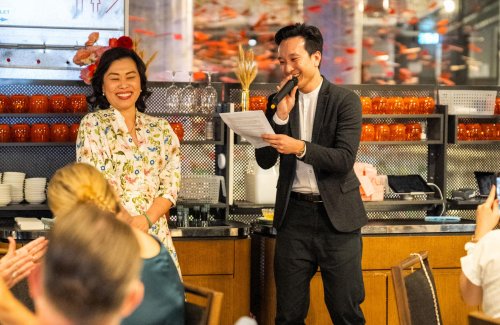
The origin of the name Thai Kee comes from their grandfather Thai Trinh, who they lovingly referred to as their “Ah Gong” (阿公), meaning grandfather in their dialect. He was the patriarch, and the original entrepreneur of the family. He sold Chinese donuts to supermarkets, waking up at 2 am each morning to bake them, then walking and hand delivering these donuts to supermarkets by 9 am each and every day.

THE FIRST THAI KEE SUPERMARKET

Despite limited means, Thai Trinh invested $5,000 in the first Thai Kee Supermarket in Cabramatta, providing a foundation for his children. But aside from money and most importantly, he passed onto his children a profound sense of hard work, dedication, and a deep commitment to one another, in their culture, and their community.

These values, instilled by their Ah Gong, form the cornerstone of their family’s identity. Known as “Thai” from Thai Kee to customers, to the family, he’s always been Ah Gong. 

To honor the spirit of their beloved Ah Gong, Brian and his family launched Gong Grocer by Thai Kee, or 阿公超市, paying homage to the heritage and principles instilled by their grandfather. 

FULL-TIME LAWYER TURNED ENTREPRENEUR

As Brian got older and heard more about his family’s stories, he felt a strong desire to carry on their traditions. He saw it as his mission to come up with new and interesting ways to share their culture with the diverse Chinese, Asian, and Australian communities.

Formerly a full-time lawyer, Brian Nguyen took the leap into entrepreneurship, co-founding Gong Grocer alongside his wife Wendy Lin, who herself manages her own successful business, Lioness Fashion.

Brian draws inspiration from his family’s entrepreneurial legacy, rooted in hard work, service, and dedication. The values instilled by his grandfather, Thai Trinh, continue to guide Brian in his pursuit of business excellence and cultural celebration.

OVERCOMING CHALLENGES

In his career and business journey, Brian Nguyen faced significant challenges, notably in time management. Gong Grocer started as a passion project for him. The transition from law to full-time business, alongside his wife Wendy Lin in Lioness Fashion, posed a wild adjustment.

Shifting from a lawyer to a business owner brought its own set of challenges. Balancing the demands of Lioness Fashion, an internationally recognized brand with immediate growth needs, and Gong Grocer, a venture built from scratch, proved to be extremely difficult. The latter involved design, planning, construction, and eventual launch and operations.

To overcome these challenges and achieve success, Brian drew inspiration from his family’s values. He doubled down on hard work and commitment, using them as guiding principles. Recognizing the need for a strong team, he leaned on his family and those around him to build a purpose-driven team that shared his vision. Together, they navigated the complexities, turning Gong Grocer into a thriving reality.

CELEBRATING GONG GROCER’S FLAGSHIP STORE

One of Brian Nguyen’s proudest achievements in this journey is the flagship supermarket store.

“Seeing the tangible transformation coming to life and physical form, from cutting out a giant hole in a concrete floor to creating a whole new level in a shopping centre, and doing this with my family no less, was incredibly rewarding,” Brian shared.

The grand opening events further highlighted the significance of the brand and its story. Brian was genuinely pleased by the support received from the community and the broader public. This positive response reflects the hard work of Brian and his family as entrepreneurs, their active role in the community, and the strong connections they have forged within the industry.

CONNECT WITH GONG GROCER / BRIAN 

Website: www.gonggrocer.com.au

Instagram: @gonggrocer

LinkedIn: www.linkedin.com/in/brian-nguyen-09a067125/