Awaken* newsletter

August 1, 2024

SHARE:

If you have followed the news in any capacity over the last few years, you have undoubtedly heard about LLMs, and the companies building these models. Though the consumer-facing models from companies such as Open AI have captured the hearts and minds of the public, enterprises have different concerns–things such as data privacy, and model reliability.

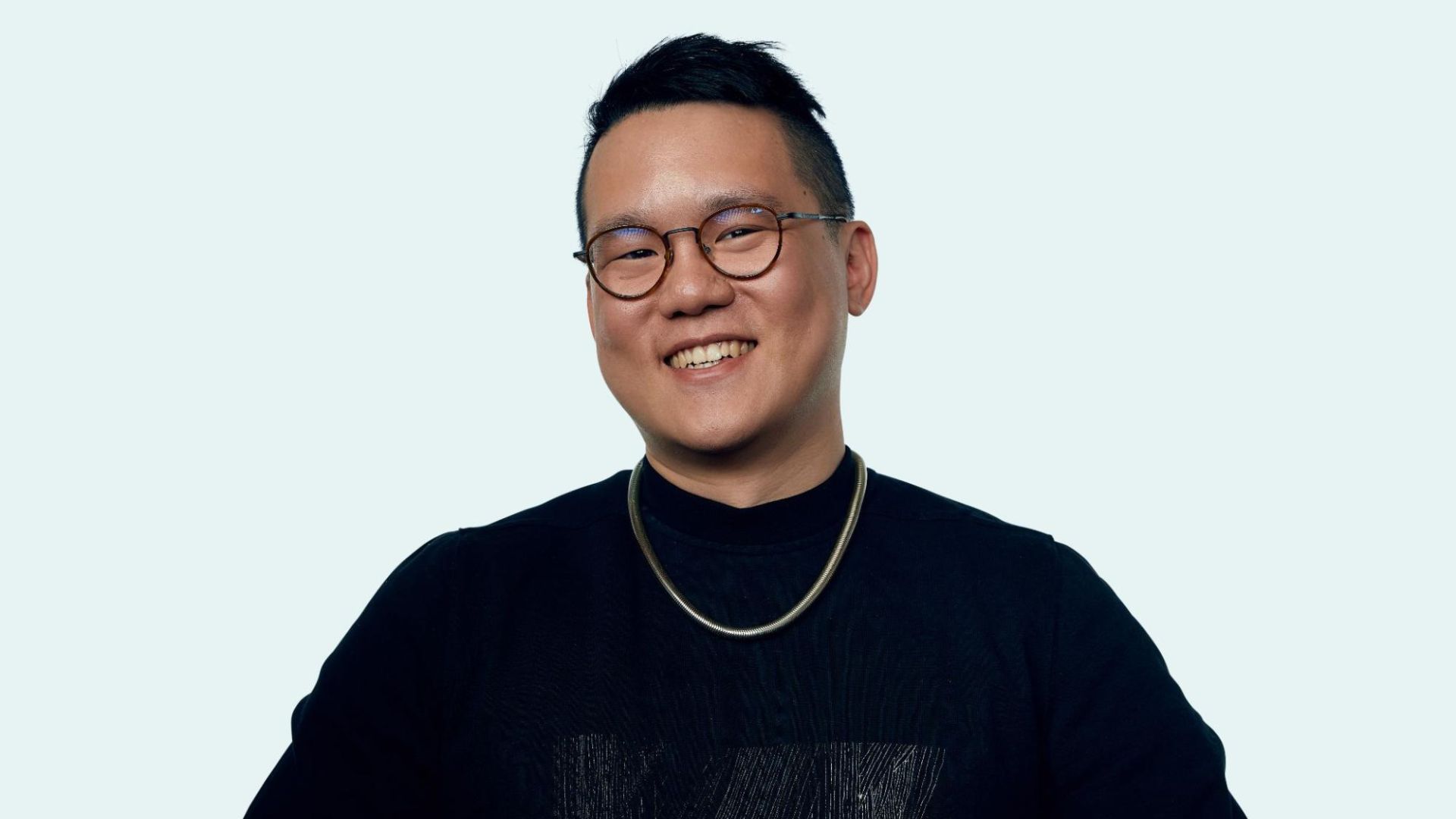
Enter Cohere, a company developing LLMs to address these issues. Started in 2019, Cohere partners with companies such as McKinsey, Oracle, and all the hyperscalers, and boasts a valuation of $5.5 billion. I sat down with one of the co-founders, Ivan Zhang, to talk about his journey.

TLDR; Key Takeaways

If you only have a few minutes, here are a few golden nuggets from my conversation with Ivan:

  • Sales should be customer-centric. This seems obvious, but have you ever started a sales conversation by talking about your product? Instead, try starting the conversation by asking your customer about their pain points, and then addressing them.
  • Data will be a bottleneck for AI development. Not in the sense that we will run out of internet to train on, but rather that there are types of data which we don’t have a lot of published datasets for. 
  • Your startup doesn’t have to be in the Bay to succeed. Cohere is headquartered in Toronto. This works for them because VCs are more open to remote work after the pandemic and Toronto has a lot of budding technical talent.
  • A key signal to look for when hiring is mastery in any domain. Learning how to master something is fairly transferable. Masters in one domain can likely become masters in another.
  • Being the lone Asian in a leadership room takes some time to adjust to. Getting more reps in has helped Ivan get used to his position.

Tell me about your upbringing, what pushed you to become a hacker?

I was born in Shenzhen, China, and moved to Toronto when I was eight. As a kid, I was always on the computer, even in China, playing the most random arcade games. I don’t want to paint Asians with a broad stroke, but if you’re a male Asian person who has been to high school in the past decade, more likely than not, you’ve played a ton of video games. I did that a lot, and I feel like it built a digital tolerance and stamina for sitting in front of a screen for long hours. Gaming was a big part of why I’m so drawn to building things, working really hard, and doing crazy hours in front of a screen. 

When I got to university, I discovered the hackathon community. Every weekend, we would just meet up at random Ontario universities and sometimes U.S. universities. We would build for the whole weekend. Gaming addiction primed me to get really good at software engineering. I spent my entire first year going to hackathons, building stuff on the side. I had this realization that I could be spending 18 hours playing League of Legends, or I could use the same energy to build stuff, which is also very fun and not as frustrating as a solo queue. It felt like a natural progression.

How has your role within Cohere changed as the company has grown?

When you’re in a startup, your role tends to evolve a lot. That’s been especially true for my time at Cohere. When we started, I was hands-on coding every day, building some of our early systems and pipelines. Eventually, the company grew, and we hired people. Some of our founders had to step up and do some people management.

Eventually, we hired people managers as well, so I have to do less of that. Nowadays, I’m much more settled. I’d say I spend probably 50% of my time still doing technical stuff like machine learning and data processing. For the other 50%, I spend time with customers, either building new relationships, fostering existing ones, or really bringing in business. I think that’s a big part of a founder’s job, like founder-led sales.

How was the transition to doing sales? Did that come naturally to you?

As someone who spent most of my time as the most backend of backend developers, it was definitely uncomfortable at first. When you think about sales, you might think of a business guy with a suit trying to convince someone to give you money for stuff. But when I started doing it more and more, it ended up being about genuinely trying to learn more about your customers, asking them good questions, and figuring out what issues they have. It’s honestly the most important thing you could do. Why are you building anything if you don’t know what your customers want? 

Sales has been super fun because it informs my technical work. I’m starting to see patterns across these conversations, which help inform what we should focus on. Another aspect is that as a founder, when you’re doing sales, you’re meeting executives and other founders as well–so you’re building good professional relationships. For anyone who’s new to it, you should expect some discomfort. But, like anything, you just learn to do it.

Why did you guys decide to focus on enterprise?

The enterprise market is often seen as boring, but actually, most of the world’s efficiency will come from automating a lot of these back-end use cases that don’t necessarily need human potential. A lot of these tasks we’re automating don’t need a well-educated human being sitting at a computer for eight hours a day. We’re much more interested in unlocking that human time for something else. Enterprise is where a lot of this kind of work is done. For example, Oracle is one of our customers, and they’ve deployed our models into their NetSuite features. So, a ton of HR and ERP use cases are now powered by our models. Our mission is scaling intelligence to serve humanity, and what better way to do it than to target the people doing this kind of back-end work at scale? 

We also liked the idea of not having to suck up all of our customers’ data to train these models. In enterprise, we actually ship our models on-prem and we air gap them, so we don’t see any of our customers’ data. In those kinds of scenarios, we have to build our models slightly differently. We have to teach our models to use the enterprise’s internal knowledge bases, use the information returned from these knowledge bases, and then write an answer and cite it. This is all RAG (retrieval augmented generation), which is what we’re focused on because we deploy these models in this air-gapped environment where we can’t continuously suck up people’s usage data. We still have an API and a demo, but the majority of our deployments are on-premise.

What are some areas of AI, whether infrastructure or application, that you think more people should be building in?

I think there will be a bottleneck in terms of training data, but not in the way it’s currently been communicated to the public. Some people paint a picture that we’ll run out of the internet to scrape. I think that’s a naive understanding of how these models work and how to train them. In terms of capturing digital signals—thoughts, demonstrations, audio, video, images, sensory data—there’s going to be a big bottleneck in capturing data from the world that’s not already represented on the internet. The internet does a good job of capturing data and it grows exponentially every year, but there’s information about the world that we experience on a daily basis.

Do you mean information that isn’t easily digitally representable, such as smell?

Yeah, so smell for example–we’d have to build this hypersensitive chemical detector. So if we want autonomous interactive robots in the real world that can smell, there is an information problem we have to solve for the robots, right? They don’t have a nose; we don’t have a great digital nose for them. And I’m sure there’s other stuff.

Why have you decided to keep Cohere headquartered in Toronto instead of the Bay Area?

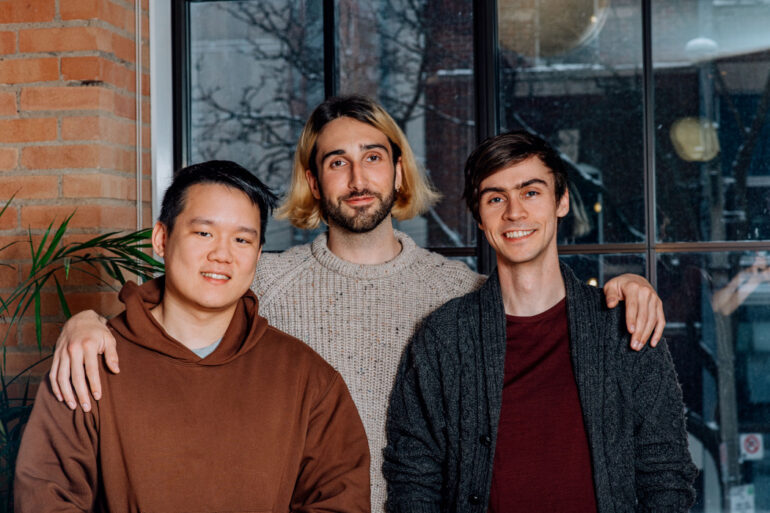
The three of us co-founders just really like living in Toronto. We grew up here, we have roots here. We also realized that it is actually a pretty great city for A.I. At some point in time, most of the people leading A.I. in the Valley came from Toronto. They came from Jeff Hinton’s lab at the University of Toronto. So there’s a ton of great early talent here. And I think because of how the VC attitude has shifted since the pandemic, investors are investing everywhere. They aren’t restricting investments to the Valley. Remote work is a thing now. And so luckily for us, we’ve been able to raise successfully. We’ve been able to build good models. 
I’ve heard that you don’t pursue brand-name resumes when hiring. What are some signals that you look at instead of pedigree that indicate someone could be a great hire?

I’ve thought about this a lot. I try to think about my own trajectory and places that have rejected me and what signals they didn’t see. What it comes down to is that I look for folks who are extremely skilled at something. Once you’re skilled at something, you can take that anywhere else. Sometimes we want to hire more experienced folks, for sure. But especially in a field like ours where disciplines such as pre-training haven’t been around long enough for anyone to have much experience, you want high-energy, high-autonomy individuals who are excited to learn, experiment, and fail fast.

I try to ask a few questions that probe at stuff related to this. Like, “What’s the coolest thing you’ve worked on?” Then I get to see if they’re going into a lot of detail and are really excited about this random thing. “What’s the hardest you’ve worked on anything?” I want to see if they can go the equivalent of 16 hours a day, seven days a week when they’ve actually gone to bat for something. And then obviously, experience in the field is definitely a big plus, but honestly, the best hires we’ve made have just been high-energy, hardworking, genuinely curious people who are also skilled at software engineering.

How has being Asian impacted your founder’s journey?

I’m not ignorant of it. I definitely know it’s a thing. For example, on my board, I’m the only Asian guy on it. But I’ve been fortunate in that, growing up in Toronto and starting this company in Toronto, it’s not that weird to be an Asian guy in tech. So on the technical front, I don’t see it as a hindrance whatsoever. But it’s definitely been a factor for my own comfort in leadership situations–being the only person that looks like me in certain situations. But honestly, once I got the reps in, being in those situations, it was totally fine. And I think there are a few things that, depending on how you were raised, could affect you in doing business at the leadership level here. But generally, once you get the reps in, it doesn’t even matter.

Is there anything you’d like to shout out?

I’d like to shoutout my wife, she’s a big inspiration for me. Shoutouts to my mom, my dad, my sister. I think my parents taught me what it means to work really hard. I think this is true for many of us immigrants, watching our parents and grandparents work the most menial labor jobs just so we can be fed and go to school. It’s super inspiring. It makes me think: Why am I not working harder? Why am I not thinking about how I can level up and help them retire? My family has been a big inspiration to me. Lastly, shoutouts to Cohere and my co-founders. It’s been super fun, and I’m privileged to be working on this tech. I think it’s genuinely the most interesting thing I could be doing right now.

If you are high-energy, hardworking, and highly curious about AI, please consider applying to work with Ivan at Cohere! You can check out available positions at this link.

Thank you for joining us, Ivan!
Related Articles

Image Source: Luis Sinco / Los Angeles Times

News, Stories

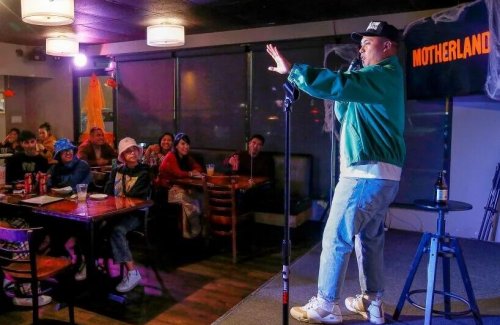
Enjoy Your Favorite Filipino Dishes Along With A Comedy Show at Eagle Rock’s Kusina Filipina

Big egg-shaped platters filled with famous egg noodle pancit, mouthwatering pork sisig, cold cans of beer, and blithe stand-up comic acts are offered as part of the restaurant’s unique dining experience.

The brain behind the comedy events is Filipino-American C.J. Toledano, who was born with the background necessary for such lighthearted entertainment.

The Eagle Rock neighborhood of Filipino Americans is the ideal fusion in creating the weekly program that is so exceptionally Los Angeles.

The restaurant’s co-owners, Jun Miranda and Vener Ramos, greased the wheels to serve the dishes and beverages that the predominantly Filipino audience was clamoring for when actress and stand-up comedian Felicia Folkes performed.

Toledano recalled how the Wednesday show got started and said in the Los Angeles Times that Jun Miranda was all about it.

“He just said, ‘The restaurant is yours on Wednesday nights,” Toledano stated which was backed by Miranda saying “I immediately said yes. Of course, I wanted to help the Filipino community.”

Toledano, who co-hosts the program with Orolfo and Rob Haze, stressed that the event is not just for mutual benefit but that “I have a specific vision for the show and the comedians who do it. [I want] people I’m fans of,” he continued.

He added that the intensely vibrant, funky, and fatty flavors of Filipino cuisine at “Motherland”— including the crispy sisig,a deep-fried chopped pork belly flavored with a little of lemon juice, diced onion, bell pepper, ginger and, a little of chicken liver spread;  dinakdakan, a combination of grilled and boiled pork belly mixed with onions, peppers — and mayonnaise; chicken adobo with quail egg and fried potatoes; and halo-halo, among others—are just as electrifying as the acts on stage.

“I’m a Filipino guy who grew up in Pennsylvania. I didn’t have many Asian friends. So the show is really killing several birds with one stone — I’m in touch with a culture I was never close to. I’m seeing old friends. New comics. It’s exciting for me,” Toledano admitted.

116018653_728607294654083_6041310441211220664_n

Stories

Her Father Ignored Her For 8 Months When She No Longer Wanted To Be A Doctor

This may have happened to you (maybe not the musical writing part), or you may know someone from an Asian background who is currently struggling as their parents had strongly expected or already had chosen a job for them.

But how many of you have bravely rejected your parents’ desires, and followed your true passion? Take it from this courageous girl, Joy Regullano. You might remember her from the viral YouTube sketch called White Fetish, or various random acting gigs like the TV Series Crazy Ex-Girlfriend (her line was “Yeah, bitch!”) or Modern Family (with her line was “You fools!”).

That’s right, Joy is quite too far from wearing a white coat. She’s an actress, comedian, and writer — every Asian parents’ nightmare. So when she told her parents that she didn’t want to be a doctor anymore, her father didn’t talk to her for 8 months. Years later, she wrote a comedy musical about it, called Supportive White Parents.

“Working on this musical has been a major part of my healing journey (my parents are imperfect people who were just passing down intergenerational trauma) and maybe it can be part of yours too,” Joy expresses.

Read through as Joy shares how she has discovered her passion for comedy, and her journey to healing and acceptance through her musical.

MY WHOLE LIFE, I THOUGHT I WAS GOING TO BE A DOCTOR JUST LIKE MY PARENTS

My parents were born and raised in the Philippines. My dad grew up very poor in one of the provinces, but after scoring in the top percentage of all students across the country on an exam, he got a scholarship to a prestigious science high school in Manila that was all expenses paid. My parents met in medical school, and soon after graduating, they came to the US by way of New York. Eventually, they made their way across the country to Eagle Rock in LA and then Orange County, where I grew up. 

My whole life, I thought I was going to be a doctor just like my parents. I tried my best to be the perfect daughter. I got straight A’s and took piano lessons since I was 3 and violin lessons starting at 8. (Well, actually, I got one B+ in AP/IB Physics, but we don’t talk about that B+) I studied math outside of school at Kumon and played educational computer games because it was a productive use of my time. I read medical books my parents had lying around the house and had subscriptions to science magazines in high school, for fun.

But as I grew older, there was a part of me that was starting to love writing and making people laugh. For 7th-grade vocabulary exercises, I cared more about making my sentences funny than using the word right. My favorite part about English and Spanish group projects was writing the scripts and acting in them. I wrote bad high school poetry. But I didn’t think that was an acceptable thing to want to do with my life, so I shoved that part down, deep inside me. I did write for the school newspaper and compete in speech contests and debate teams, but that was about the extent of my (public) creative life. 

But as I grew older, there was a part of me that was starting to love writing and making people laugh.

-Joy Regullano

I LOVED FEELING LIKE I COULD MAKE THE AUDIENCE LAUGH AND CRY JUST BY TELLING AN HONEST STORY

I went to UC Berkeley pre-med and was planning to take over my dad’s clinic when he retired. But in the first semester of my freshman year, I got a B on my first math test and a C on my first chem test, and I panicked. After some soul-searching, I realized I wasn’t actually passionate about any of that and ended up cycling through a bunch of different majors before landing on Theater and Southeast Asian Studies.

I wrote a play in college about a friend who had passed away in high school, and when I put it up in front of an audience, I was hooked. I loved feeling like I could make the audience laugh and cry just by telling an honest story. Just by being myself. I wanted to do that for the rest of my life. I loved Tina Fey and Amy Poehler’s work so much that I couldn’t even watch them for a long time because it hurt that I wasn’t doing what they were doing. 

WHITE PARENTS: A MUSICAL INSPIRED BY MY LIFE

I wrote the book and the lyrics to a comedy musical called “Supportive White Parents” about an Asian girl who tells her parents she doesn’t want to be a doctor anymore, and when they’re disappointed, she wishes on a shooting star for supportive white parents. Eventually, she learns to love her Filipino parents for who they are. My friends Sam Johnides and Tony Gonzalez wrote the music.

The musical was inspired by my life. When I told my parents I didn’t want to be a doctor like them and take over my dad’s clinic, my dad yelled at me, called me selfish, and didn’t talk to me for 8 months. I was absolutely devastated, even though I knew that making people laugh and cry was what I had been put on this earth to do. 

I felt so jealous of my white theater classmates with their seemingly endlessly supportive white parents. And funny enough, they were jealous of me because I had something called “discipline”, played multiple instruments, and knew other languages. And thus, the seed of a musical was born.

Eventually, she learns to love her Filipino parents for who they are.

-Joy Regullano

LAUGHING AT OURSELVES CAN BE ONE OF THE BEST WAYS TO HEAL

There aren’t many Asian American musicals, let alone comedy Asian American musicals. One of my teachers says that comedy is the back door to the truth. I think that laughing at ourselves can be one of the best ways to heal, as well as realizing that we are not alone. 

We as a generation are going through this together, and also, we, as well as our parents, are the products of society and intergenerational trauma. We are all imperfect people who are trying the best we can with the tools we have. 

ACCEPTANCE IS THE QUICKEST WAY TO SANITY AND PEACE

I love the serenity prayer. There are some things that we can change, and we should do what we can to change those things. There are some things we can’t change, and it’ll drive you crazy trying to. You can’t control other people. You can only control yourself. The sooner you can accept other people are how they are, the sooner you’ll stop giving your energy away. 

Also, one thing I learned that blew my mind is that it’s actually not love, to wish that your parents or family were different than who they are. If what I was asking from them was to love me for exactly who I am, with all my imperfections, isn’t that what I should be giving them too? Unconditional love and acceptance? (That’s not to say that you shouldn’t have boundaries – that could be a whole other article.) But accepting things you can’t change is the quickest way to sanity and peace. 

If what I was asking from them was to love me for exactly who I am, with all my imperfections, isn’t that what I should be giving them too?

-Joy Regullano

It’s a daily practice. But try it! After reading “The Subtle Art of Not Giving a F*ck”, I tried to imagine that I only had one f– to give a day. How much energy would I be saving by only getting bent out of shape over the most important things!? I’m not really good at giving only one f– a day. But I’ll keep trying.

One more thing – some people need to be angry before they move to acceptance. I know I did, and I still feel angry sometimes. Accepting yourself and your feelings is part of the process too. Wherever you are in your journey is okay.

CONNECT WITH JOY

Instagram: @supportivewhiteparents @joyregullano

Twitter: @swpmusical @joyregullano

Website: www.supportivewhiteparents.com

Be on the lookout for the upcoming Supportive White Parent concept album, to be released in January 2023, with singles leading up to it! 

Image Source: Melissa Keomoungkhoun / Tatsu Dallas

News

Dallas Omakase Restaurant Makes Memorable Dining Experience For Deaf Couple With Staff Using ASL

Victor Montiel and Melissa Keomoungkhoun were on the verge of tears as they expressed their gratitude to the Tatsu Dallas’ personnel for making their experience unforgettable.

The couple, who are both deaf, revealed in Today that they are used to getting ready in explaining themselves using their voices and American Sign Language, displaying texts from their phones, or even asking for pen and paper.

Melissa’s sister was worried that interaction with the staff would be difficult because she was aware that “omakase” means that diners receive meals that include foods chosen especially by the chef, which means more word-of-mouth discussion.

In advance of this, Melissa wrote Tatsu to inquire as to whether they could still enjoy the meal to its fullest without being able to hear the chef describe each course. She was shocked to learn that they had already gotten the tasting menu, which also listed the available drinks/cocktails, and that a complete menu will be available when they visited.

What surprised them more was the night of their reservation as they were greeted in American Sign Language (ASL) by the staff, including the Beverage Director who is the wife of the chef-owner.

Melissa was quoted saying that “With the staff signing at Tatsu, we didn’t feel left out even though it created some attention in the room.”

She also shared that they gazed in wonder at the excellent service that they received.

The excellent personnel and food service that Tatsu delivers to its guests were posted on Twitter by Melissa’s sister Nataly Keomoungkhoun, the online dining editor of D magazine. Her tweet received thousands of likes and retweets.

The chef-owner Tatsuya Sekiguchi, claims that when working in New York City, he had an encounter that solidified his resolve to always offer the best service he can, he stated “I believe that everyone and every day are unique.” He went on to clarify that his current objective is to just make every meal a special and memorable one.

In her tweet, Nataly put into words how Tatsu exceeded the couple’s expectations where they had the best experience possible.

Image Source: Michael Tran / FilmMagic file

News

Award-Winning Director Ang Lee To Direct Bruce Lee’s Latest Biopic With Son As Lead Role

Multi-award-winning director Ang Lee is set to direct Bruce Lee’s latest biopic with his son Mason Lee playing the role.

The martial arts legend died young at 32 in 1973, a month before “Enter the Dragon,” the first Hollywood/Hong Kong film he co-produced, was set to premiere as mentioned in NBC News.

Since his passing, many biopics have been made like Dragon: The Bruce Lee Story, Bruce Lee: A Dragon Story, Bruce Lee: The Man, and many more.

And now, the Academy Award–winning director of “Brokeback Mountain” and “Life of Pi,” along with Lawrence Grey, Ben Everard, Brian Bell, and Shannon Lee, Bruce Lee’s daughter, will be directing and co–producing his newest biopic in honor of him as an actor, style icon, leader, and philosopher who brought martial arts to the global stage.

Ang’s son, Mason Lee, who is known for his roles in “Hangover Part II” and “Billy Lynn’s Long Halftime Walk,” will be playing the role.

“Accepted as neither fully American nor Fully Chinese, Bruce Lee was a bridge between East and West who introduced Chinese Gung Fu to the world, a scientist of combat and an iconic performing artist who revolutionized both the martial arts and action cinema,” Ang Lee was quoted saying.

He also said that he feels driven to share the story of this intelligent, singular human being who craved belonging, possessed incredible strength in a 135-pound frame, and through unrelenting hard work, converted impossible goals into reality.

Ang Lee is the first person of color to win the Oscar for best director and directed the 2000 martial arts film “Crouching Tiger, Hidden Dragon,” the highest-grossing foreign-language film in U.S. history. 

As an accomplished director, 12 of his 38 films which were nominated for Academy Awards won. 

Meanwhile, 3000 Pictures president Elizabeth Gabler said that Ang has long dreamed of directing Bruce Lee’s biopic, an inspirational tale of twists and turns, a story of the timeless premier real-life action hero.