Awaken* newsletter

May 30, 2024

SHARE:

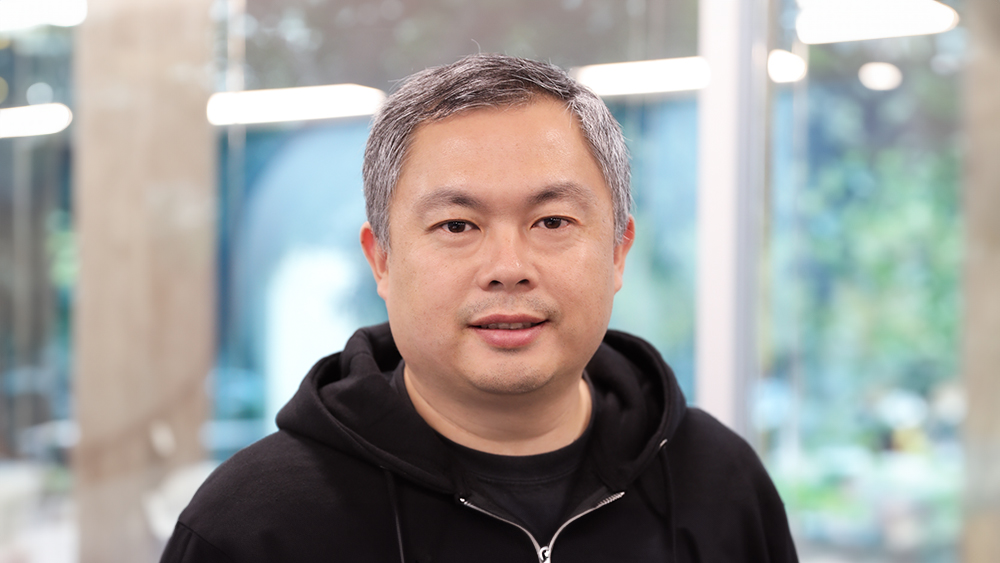
Welcome to another edition of AHN awaken*! Apart from our guest, I’m excited to introduce a new member of our team, Han Yue Yin! Han Yue is a current Stanford GSB student and was my fellow jazz bandmate in college. Although this article was written by me (Edwin), Han Yue co-interviewed with me and will be taking the lead on writing some great articles in the future. Everyone, please welcome Han Yue!

Our guest for this edition is Larry Liu, co-founder and CEO of Weee! (exclamation mark included). Weee! is the leading online Asian supermarket in America, think Amazon but for Asian groceries. Larry is an exceptional founder, and his journey of immigrating to America without any connections into founding a company worth $4.1 billion truly exemplifies the American dream. As an aside, Han Yue and I were especially excited about this interview as avid users of Weee! ourselves. Without further ado:

The Origins of Weee!

Our first question for Larry was how the idea for Weee! first came about:

Originally, we started as a WeChat (Chinese messaging app popular with the American diaspora) group-buying company. I believe it was really an opportunity we observed around the 2014-2015 time frame. This was when WeChat became extremely popular among Chinese immigrants and many people formed WeChat groups to buy food together, among other things. We found this to be a very interesting business model. As you may know, I was an eBay seller for more than 10 years and was familiar with the traditional e-commerce model, which is search-based. So, when I saw the group buys, I thought it was a completely new model, not search-based, but recommendation-based. I believed it was very promising. That’s when we decided to quit our jobs and start the business. However, it turned out not to be the right model. We pivoted in 2017 because social buying was not what we thought it was. It was not the ultimate solution to solve the lack of service experienced by Asian Americans for their food needs. The delivery-to-home model is a much better model. So, we pivoted in 2017. I believe it’s one of the greatest pivots in history.

The reason we pivoted was because we couldn’t grow the original group buy model. We couldn’t raise money because we didn’t grow. This forced us to think very hard about the fundamentals. That’s when we realized that the reason most people used group buys was actually because they didn’t have easy, affordable access to the food they love. It wasn’t apparent in the beginning because people were group buying all kinds of things. But those were only distractions. When we thought deeper, it was about the food. That’s why we had to pivot. 

Following up, we asked Larry what lessons they were able to port over from their group-buying stage into their current business model:

We learned a lot during the group buying stage. We had already built some warehousing and delivery capability during the group buy era. Many vendors didn’t want to sell to the group leaders directly, so we had to build a warehouse to buy a lot of products from the vendors. We acted as the supplier to many of the group leaders. This already made us into the warehousing and delivery side of things. We also learned that people were willing to wait for great products that were hard to find. This gave us the confidence to not do same-day delivery or on-demand.

Obviously, we had to ask what were these products that people were willing to wait for:

It’s usually the products that are hard to find even at Asian supermarkets. For example, super fresh fish, very fresh produce, and fruits. In the early days of group buying, the Pacific Black Cod was very popular. People were buying pork bellies together because they were not easy to find in mainstream supermarkets. During winter time, a lot of Chinese immigrants make sausages themselves, so they buy a lot of pork bellies. 

One of our most popular items was Kyoho grapes. Kyoho grapes are not always available in Asian supermarkets. Additionally, Asian supermarkets have issues with consistent quality, the range of products, and the fact that a lot of people live far away from those supermarkets. That’s why those kinds of products were very attractive. During the group buy days, we would never do tofu, soy sauce, or green onions. Those kinds of products were not considered exciting for group buys. So we only would do, like I said, super fresh seafood or produce or restaurant food or things not so readily available.

The Business of Weee!

One of the big ongoing initiatives at Weee! is adding storefronts for more ethnicities, complete with their own goods. We asked Larry what opportunities and challenges they’ve experienced expanding into more ethnicities:

All of them are very underserved, which makes our business very attractive to all these ethnicities. If you look at U.S. history, there was a very important piece of legislation passed by Congress called the Immigration Act of 1965. It really started this whole demographic shift in this country. It’s a once-in-a-century shift. That’s when the Asian and Latino populations started to grow in the U.S. Right now, if you look at the Chinese population, five to six million people in the U.S., this group is still quite small, less than two percent of the U.S. population, so it’s very hard for mainstream supermarkets to try to serve the specific needs of Chinese Americans. It doesn’t make sense for them to focus on this two percent of the population and try to bring in thousands of products to serve them. That gave opportunities for offline Chinese supermarkets, but the offline model is not the ideal model to serve low-density populations. That’s why there aren’t that many such stores. 

Ranch 99 is the biggest Chinese supermarket chain. The biggest Korean chain is H Mart. It took them more than 40 years to build less than 100 stores. The reason is that the population density is not high enough for them to build thousands of stores. All the mainstream supermarkets have thousands of stores. But these ethnic ones can never achieve that, which means they will always be more inconvenient to access. And that’s physics. You just can’t have that many stores when the population is so low. The good thing for our business is that our model is a better model. You don’t have to drive to us, we deliver to you. We have very large warehouses and we can cover a very wide range. Another big advantage for us is that we can be authentic to multiple ethnicities. An offline Chinese supermarket can never be an Indian supermarket at the same time. An offline Korean supermarket can never be a Filipino supermarket at the same time. No matter how you design this, it’s impossible. But online, you go to us, the first thing we ask you to do is choose the store. You choose the Filipino store, it’s all Filipino. You choose the Vietnamese store, it’s all Vietnamese. We can really be authentic to multiple ethnicities, and that can only be done online.

One thing that caught our attention was Larry’s point about how sparse populations inhibit additional stores which inhibit accessible stores, which would make more people turn to online stores such as Weee! We were curious if the converse was true, whether or not customers use Weee! less in Asian-dense areas where there are accessible in-person stores, like in cities such as Cupertino, CA:

That’s actually not the case. We actually have a lot of customers in Cupertino. Here’s the reason: our assortment is not the same as offline Asian supermarkets. A lot of things we carry, they don’t carry, and a lot of things we carry consistently, they don’t carry consistently. The assortment of items is differentiated. We also have a third-party marketplace. Right now, we have more than 50,000 third-party marketplace products on Weee!, these are all products that brick-and-mortar stores don’t carry. We have sellers in Japan, Korea, and China. Some other sellers are local restaurants and local bakeries. For example, on Weee! you can buy a local bakery product at the same price you would pay in the local bakery, and that is just not available in other apps. You can go to DoorDash, you buy the same product, you pay 40 percent more, 50 percent more depending on what’s your total order value. We have a lot of products that actually aren’t available from Asian supermarkets. In fact, we have slightly better prices than Asian supermarkets because our supply chain is more efficient. Even if you live in Cupertino, we have a better selection and prices. Plus, you don’t have to go out. You don’t have to spend your entire Saturday afternoon grocery shopping. You have better things to do. I’m not saying offline supermarkets shouldn’t exist. That’s not what I mean. We actually don’t see them as competitors. I think that they will exist for a long time and a lot of people like shopping offline. That’s totally fine. We just try to serve underserved communities and we believe we have better products and services than anyone in the marketplace.

A common customer behavior in Asia that hasn’t quite made it to the US is browsing online stores. For instance, most people who go on Amazon already know what they want to buy and only search for that, you generally don’t wander a disparate tab and scroll through those listings. Given that Weee! targets people from Asia, we asked if Larry has noticed such behavior on Weee!

Our customers tend to browse more. With our design, we actually want people to browse more. There’s a common belief that grocery shopping is boring and repetitive. Almost every single website prominently features a ‘buy again’ option. Amazon does that because it makes sense. If you think of shopping as a chore, then it’s logical. However, we see grocery shopping, especially for immigrants, as an opportunity to discover exciting new things that they may not even know exist in the U.S. We always try to create that excitement. That’s why we want people to browse. These exciting products are also important for our user acquisition strategy. People tend to tell their friends about the exciting things they find on our site. If you buy things from Amazon or Safeway, you probably won’t tell your friends about it because it’s the same old thing. But our customers actually tell their friends a lot after they buy something from us because we offer a lot of exciting products.

For our readers (and ourselves!), we asked Larry for examples of some of these exciting products on Weee!:

Nowadays, we’re really strong at seasonal fruits. We really care about flavor because our customers do too. We carry things like the Ori Mandarin from Israel, which is very tasty. Our dragon fruits and coconuts are super popular. In fact, we’re America’s largest retailer of fresh coconuts.

It’s fascinating because this ties in with our multi-ethnicity strategy. We have a lot of customers from different ethnicities. People from Vietnam, China, the Philippines, Southeast Asia, and India all consume coconuts. We are the only place that aggregates so much demand for coconuts and our price is unbeatable. For instance, if you go to Whole Foods, a coconut costs $4.99 each. If you buy on Weee!, it’s $14 for nine. It’s the best price on the market and our volume is really big. We’re also strong in fruits, vegetables, and hot pot-related products. We have all kinds of sliced meat, lamb, beef, pork, and different sauces and vegetables.

Larry’s Personal Growth

Although Weee! is not Larry’s first venture (he did some dropshipping previously), it is the first business he has scaled. As such, we asked him about his process of learning how to be a leader:

It was not very natural. It was a very steep learning curve for me. I managed like two people before I started Weee! at my previous company where I worked in finance. So I had very limited management experience, but as a founder CEO, you just have to learn everything on the fly. Not just managing people, but also how to raise money, how to come up with business strategies, and how to communicate the strategies to your team. 

I read a lot of books. I like to read. So I guess I had some knowledge on paper. This was my opportunity to apply that knowledge to the real world. I also reflect a lot. I’m a huge believer in deliberate practice. So I think I approached the job as something I need to really break down into different areas. For each area, I try to have some mechanism to get feedback and to check whether I did well or not so well. One of the reasons I was really attracted to retail is because retail gives you a very fast feedback loop. If you do a B2B business or pharmaceutical, it can take years for you to get the feedback. But in retail, if you do something right, you can literally see the results in minutes.

Also, I later realized that my finance background gave me an unusual habit. I try to forecast everything. For a lot of people, if you ask them about their strategy, they can’t tell you the impact of that strategy. I think forecasting is important because it requires understanding the mechanism between the input and the output. It also gives you the chance to constantly compare your expectations to the actuals, allowing you to fine-tune your understanding of the business. That feedback is very beneficial for improvement. 

I also hired really good people and learned from them. Our COO is very experienced. When she joined us, she managed teams with hundreds of people. I learned a lot from her. A lot of our management practice is what she brought to us. It’s really a combination of learning from experienced leaders and your own curiosity to constantly get better, to seek feedback, and just a lot of hard work.

We followed up by asking Larry if wished that he had done anything differently in his journey:

I think everything that happened was necessary. If I went back and told myself 10 years ago the things I know today, I still wouldn’t learn from my own advice. There are so many management books, and so many wise people out there. They give talks. Can you really learn from that? Even this conversation, can you really learn from this? I don’t think so. I think it’s just one piece of information. When I read a book now, I see it as one data point, one piece of information. I have to actually do it or be in the process of doing it, then revisit the concept I learned on paper and try to connect that concept to my real experience to make it part of my own. But without the doing part, the information is just a piece of information, nothing more. I could go back and tell myself a lot of things, but it wouldn’t help me 10 years before.

I have the habit of reading certain books over and over again at different stages of my life. For example, one of my favorite books is Sam Walton’s autobiography, “Made in America”. It’s very interesting. Throughout my journey, every time I read it, I pick up different things. The book didn’t change, I changed. A lot of things I didn’t understand before, but now I can understand because my experience grew. Sam Walton, I think when he wrote the book, he was diagnosed with cancer already. He probably gave everything he knew and put it in the book, but unfortunately, most people don’t understand all those things. They have to experience it and then they can relate to that. That’s why I think reading a really good book over and over again is a good idea.

I had heard Larry talk about Sam Walton in other interviews before so I figured that Walton must be one of Larry’s favorite entrepreneurs. We asked Larry what draws him to Sam Walton:

There are a few things I really admire about him. Firstly, in his whole life, he only did this one thing. He started Walmart and then he just stuck to it. He spent his whole life working on that. I’m attracted to that kind of entrepreneur. I’m not attracted to so-called serial entrepreneurs. I admire people who just try to do one thing super well, the best in the world. Also, he’s kind of an underdog. He was in Arkansas, a Midwest town. For a long time, Walmart only served towns with less than 5,000 people. It’s like how we at Weee! focus on serving minorities.  But he, as an underdog, built a business against all the odds. He started in the late 40s, and early 50s. His company went public around 1980. It took him 30 years to bring the company public. But even going public was just the beginning. In the next 20 years, I think Walmart’s stock price grew like a thousand times. Now, I think it has the most revenue out of any U.S. company. He was the richest man in America, but he lived a very simple life. His values very much match my values. So, I do see the parallels with us. If you read his book, you will love him. He’s very simple. I like a simple life. I don’t want things to be so complicated. Just figure out one thing you want to do, and then go for it and spend the rest of your life pursuing it. 

Asian Representation and Identity

Given that Weee! is the largest platform selling ethnic foods, we asked Larry how he sees Weee!’s role in enhancing the representation of ethnic food in the broader American landscape: 

We actually have a lot of mainstream users, and they’re growing very rapidly. We are the top seller on TikTok Shop in the U.S. in the food and beverage category. Almost all our customers on TikTok are mainstream Americans. I think it’s a less intimidating way to shop for products from another ethnicity if you do it online. Let’s say it’s a Middle Eastern store. You just want this one thing, you really like the lamb, what do you have to do? You have to drive to the store, go in, and it’s very unfamiliar. The barrier for mainstream Americans to try Asian supermarkets is a lot higher if they try to do it offline. It’s a lot lower if they do it online.

Personally, I found this extremely insightful as I had never thought of that. When you go to ethnic grocers such as Ranch 99, the store employees sometimes don’t speak very much English. I never thought much of it since I can speak the language, but I can see how the experience could be a lot more intimidating than buying online. For our next question, we asked Larry how being an Asian immigrant has impacted your founder journey:

I’m a first-generation immigrant. I came to the U.S. 20 years ago. My experience really put me in the position to do this business. That’s why I want to be like Sam Walton. I think this is almost a perfect business for me, and I want to keep doing it for as long as I can. There are so many smart people in the world, but what you can accomplish has a lot to do with what position you are in to see and recognize a great opportunity. I just felt like I was at the right place at the right time and I had the right experience and I met the right people. I owe everything to my background as an Asian immigrant to do this business. There were a lot of challenges in the early days. It was very difficult to raise money because people in the VC industry, the mainstream investors, didn’t really understand this opportunity. They couldn’t relate to it. But we were lucky enough to find Asian partners from those investment firms in every round of financing. I think I counted eight or nine rounds. In every single round, there was at least one Asian partner in the deal. They understood what we were trying to do.

Shoutouts

If you ever find yourself looking for Asian groceries, please consider joining millions of other users and trying out Weee! You can order on the web at https://www.sayweee.com/en or through the app, which you can download from all major app stores.

Weee! is also looking to grow their exceptional team across all functions. If you would like to work at the fastest-growing ethnic e-grocer, please check out their available job openings at https://www.sayweee.com/company/careers.

Thank you Larry for joining us!

Related Articles

Sporting News-jpeg

News

The Inspiring Journey of a 17-Year-Old Indian American Baseball Prodigy

Arjun Nimmala’s journey serves as an inspirational story for Indian Americans across the nation.

Born to parents who migrated from Andhra Pradesh, India, Arjun shares a similar background with many first-generation Indian Americans. Arjun grew up in Dover, Florida, where he discovered his passion for baseball and dedicated himself to pursuing his dream of playing in the Major Leagues.

Arjun’s parents, Balu and Neeru Nimmala, brought with them a love for sports from their native country. Both competed in various sports, including track and field, cricket, basketball, and volleyball. Arjun and his younger brother, Akhil, inherited their parents’ athletic abilities and developed a deep passion for baseball.

At the age of 12, Arjun made the decision to focus solely on baseball, leaving behind soccer and basketball. He began to demonstrate his potential as he honed his skills in the sport. 

Arjun’s dedication and hard work paid off during his senior year at Strawberry Crest High School, where he garnered numerous accolades. With an impressive batting average of .479, six home runs, 29 RBIs, and 30 runs scored, Arjun’s exceptional performance earned him the title of Player of the Year.

Arjun’s selection by the Toronto Blue Jays in the first round of the MLB Draft marks a significant milestone in his career. As the first first-generation Indian American to be drafted at such a high position across the four major sports, Arjun has shattered barriers and become a trailblazer in his community. According to MLB, his remarkable achievement follows in the footsteps of other notable Indian American athletes, such as left-handed pitcher Rohan Handa and basketball player Satnam Singh.

At the age of 17, Arjun’s success not only represents the realization of his own dreams but also serves as an inspiration for young Indian Americans aspiring to make their mark in the world of sports.

Featured Image Source: Sporting News

IMG_7365

Stories

She Has Built A Community of Over 150k Parents Through Her Social Media Platform to Share Knowledge and Amplify the Marginalized

In a world where racial divisions persist and human dignity is often overlooked, Esther Park, a Korean American, has chosen to raise her voice and make a positive impact. Growing up as an immigrant child, she witnessed the struggles faced by her parents and the marginalized communities around her.

Esther’s journey led her to work with Liberty in North Korea, a non-profit organization that rescues refugees and advocates for their rights. She passionately believes in the inherent value of every human being, regardless of their background. Esther’s commitment to social justice extends beyond her work at Liberty in North Korea.

As a content creator, she has built a community of over 150,000 parents, using her platform to share knowledge and inspire others. Despite the challenges of balancing her various roles, Esther’s dedication to her daughter, her faith, and her mission remains unwavering. She aims to harness the power of social media to drive positive change, advocating for dignity, equality, and the betterment of society.

Through her journey and her inspiring message, Esther encourages everyone to embrace their influence and use it to uplift others, spreading love and serving those in need. Read through as Esther shares with us her experiences growing up as a Korean American, her work at Liberty in North Korea, her role in the church, and her journey as a social media influencer advocating for marginalized communities and give a voice to the voiceless. 

GROWING UP AS A KOREAN AMERICAN

Growing up in Seattle, Washington, a predominately majority culture city, I was the “popular Asian kid.” My friends would say things like “Oh but you’re the cool Asian.” There were some ways I clung to that. But it also unsettled me. A lot. It bothered me that certain people were determined as “in” and accepted or not by the color of their skin. But I never spoke up. Since then, I’ve witnessed many horrors of racism. And I truly believe in the need for racial reconciliation. Especially now, living as an Asian American through Covid-19, I’ve realized that I need to raise my voice.

MANY ASK IF I GOT INVOLVED BECAUSE I’M KOREAN, BUT MY ANSWER HAS AND ALWAYS WILL BE: “NO, I’M INVOLVED BECAUSE I’M HUMAN”. 

Growing up our family didn’t have much but I know that my mom always worked hard and tirelessly to make sure we had the best childhood growing up. We were fortunate enough that our hard working immigrant parents could make just enough, but I knew early on that it wasn’t the case for everyone. I went to school with friends who simply couldn’t get good grades or make it to all of their classes because they were busy working part time jobs while going to school to support their families from an early age. It was so heartbreaking for me. The experience as an immigrant child is unique yet unsettling. We see our parents working harder than most yet they struggle to even reach the middle class because of language barriers and learning to assimilate to a new culture. I always knew growing up that I’d want to make sure that I could do everything in my power to help minorities and to help those that didn’t have a voice.  

I’ve also spent almost my whole life in the church during ministry and mostly my focus has been on local outreach and missions. I currently oversee our City Partnerships ministry which is where me and my team are able to give our church members an opportunity to serve the city of Los Angeles that may be living under the poverty line. A few of the organizations that we work with is LA Mission, which is a non profit that works with the houseless population in Los Angeles to empower them to get back up on their feet and also with a non profit called Lincoln Heights Tutorial program that is a non profit with a mission to serve underserved and overlooked youth of East Los Angeles. They focus on making a local and significant community impact. They do this through a combination of tutoring services to close the academic gap, and youth programs to prepare teens for life after high school.

THE ROLE MY FAMILY PLAY IN SHAPING MY VALUES, PASSIONS, AND WORK

My mom immigrated to the States when she was in High School, as the eldest she was busy helping my grandparents with language barriers and her and my aunts and uncles all helped with their gas station. My dad came sometime after College, he started off as a dishwasher at a Sushi restaurant and eventually made his way up and now is a Sushi Chef and restaurant owner that is well known for some of his rolls in menus at different Sushi restaurants. He is also known for making Sushi for some of the top Major League Baseball players and South Korea baseball teams. My family came with absolutely nothing besides the thought of raising their families to achieve the “American dream”. I’m sure their eyes were opened to the brokenness of this country, but they worked hard to give their children everything. 

In many ways, my family and a lot of immigrant families were looked down on, this from an early age made me realize that I would never look down on someone for being different. I believe that we are all thread together as humanity and that we all must work together in helping this world become a better and brighter place.

Processed with VSCO with a6 preset

WORK AT LIBERTY IN NORTH KOREA

I’ve spent most of my late 20s working with Liberty in North Korea – a non-profit that rescues North Korean refugees hiding in China. Many ask if I got involved because I’m Korean, but my answer has and always will be: “No, I’m involved because I’m human”. What first sparked my interest in this issue was because I saw other human beings being treated less than just based on the circumstance or situation they were placed in. I hope that helping people dwelling in the margins, living every day in fear and helplessness, will never come with a condition. That we’ll continue to feel the tug to love and serve those in need. After all, we’re all human. 

Liberty in North Korea is a non-profit organization that believes that one day every North Korean man, woman and child will be free. We believe that every human being believes to have their basic human rights and dignities. We’re helping North Koreans escape a brutal regime through a 3,000-mile secret rescue route to freedom. It’s illegal for North Koreans to leave their country yet thousands of North Koreans risk their lives to reach freedom. Once they get into China, they are still not free. Because of the relationship that China has with North Korea, if North Koreans are caught by Chinese authorities they can be sent back to North Korea where they can face harsh punishments and imprisonment. 70% of women that are hiding in China are trafficked or sold as sex brides because of their difficult situations. This is where we come in to help them reach freedom through our rescue routes.

Once they have been rescued and resettled in South Korea and America, we also work with them in their resettlement journey to help them build self efficacy and reach success in their new lives. We also have a program called “Changing the Narrative”, unfortunately most of the world knows and sees North Korea based on what we see on the news which is about the Kim Regime or their nuclear missiles but we want to shift the focus to the 25 million innocent and real lives of the North Korean people, people who are just like you and I. 

I got involved with Liberty in North Korea when I went to UCLA, I helped start the chapter there and started having fundraisers very regularly and got involved with our headquarters that way. The summer of my senior year of college I went on a Christian mission trip to the border of China and North Korea that was life changing. I was able to hear from and befriend many North Koreans that were hiding in China and hear their stories. We would have to go to their homes at 3AM and turn off the lights and whisper to hear their stories. Right after that I interned with Liberty in North Korea where I traveled around the East Coast for 3 months sharing the stories of the North Korean people for hundreds of people. During that internship the HR manager called me and asked if I wanted to apply for a position and working at Liberty in North Korea was my first full time job after graduating at UCLA. 

BUILDING A COMMUNITY OF OVER 150K PARENTS AND PARENTS-TO-BE

During my maternity leave when I was able to step away from my day jobs to recover and to take care of my newborn, I was able to find a way to do something fun and meaningful. I spent a lot of time when my newborn was napping to learn about parenting and different methods and ways to ensure that my daughter was getting the best rest and care possible. I started posting my journey on Instagram and was able to build a following on Instagram and Tiktok of over 150,000 parents and parents-to-be in a matter of 3 months. It was an innovative way of creating value based on my circumstance. I’ve always believed that people come first, so this new venture I’ve entered into has always been about my community. I love being able to engage with them and share what I’ve experienced and learned so that they can learn from my mistakes and so that I can learn from them as well. 

BALANCING WORK AT LIBERTY IN NORTH KOREA,CHURCH, AND SOCIAL MEDIA

To be honest, it’s been hard. But I try to focus on my work at Liberty in North Korea from 9-5 and focus on Church ministry and content creation during the evenings or on weekends when Shiloh is asleep. But when Shiloh is awake I try to interact with her and spend as much time with her as possible. It’s important to me that she sees a mom that isn’t always working and on her screen but that is interacting with her and always putting her first. To be honest, a lot of this is of course because I am passionate about the work that I do but it’s also a means to a way to provide a life to Shiloh where she can flourish and grow in some ways that I may not have been able to. She is my ultimate motivation. 

CHALLENGES FACED IN VARIOUS ROLES, AND HOW I’VE WORKED TO OVERCOME THEM

I think the work I’ve done at non-profits isn’t very “cool” or “flashy”, it’s hard to get people to care about these issues, so that has always been very difficult. I love that there has been a huge movement of young individuals that have risen up to use their voices. For example, there was so much attention around the Black Lives Matters movement and the Stop AAPI Hate movement, which is so encouraging to me. It made me so happy to know that this type of awareness could be made. But it’s been heartbreaking to see that so few people in the world know about what’s going on in North Korea. The UN has deemed that North Korea has one of the greatest human rights crises in the world, yet I feel that there is little to almost no focus in the media on North Korea.

I know that it’s a complicated issue but they need our help. I oversee the grassroots movements of students and supporters at Liberty in North Korea and although it’s been discouraging at times, I am so grateful for the consistent supporters that we have all over the world. We have over 100 student and community led LiNK Teams all over the world that I have the privilege to lead and oversee. They are the ones that are showing up and helping to change the narrative to focus on the North Korean people. 

HARNESSING SOCIAL MEDIA TO DRIVE POSITIVE CHANGE TO ADVOCATE FOR DIGNITY AND EQUALITY

I think what I’m passionate about is two fold:

  1. When people are not treated with dignity and care, I believe that all human beings deserve this. 
  1. When people are suffering because of the lack of resources that they have, when there is an abundance in the world that ought to be shared.

So when it comes to these two areas, I want to be able to use my platform to share about what’s going on in the world and how we can help. For example, sharing different go fund me’s and fundraisers, sharing opportunities to help a specific person or community in need, starting my own fundraiser, sharing ways to contact your congressman or senator to push for change, etc. I have been able to raise over $40,000 holding fundraisers for Liberty in North Korea and other charities that I’ve mostly been able to leverage through my social media channels. 

ADVICE TO MOM CONTENT CREATORS  LOOKING TO MAKE A POSITIVE IMPACT THROUGH SOCIAL MEDIA 

I really don’t like the word “influencer”, but what I do want to share is that we indeed are all influencers whether small or big your following. There will always be someone that is influenced by you. You may be influencing your child everyday because they look up to you and learn from you just by watching you. You may have watched a good Netflix show that you’ve told all of your friends about. You may have taught your mom and dad how to use the latest app on their smartphones. We are all influencing others in some way or another, but whether we are influencing people to do good or to do bad, is the choice that we get to make everyday. My faith is very important to me and something that I have always lived by is to love God and to love others.

I know that God has placed me on this earth to love others and to always put others before myself. But whether you believe in God or not, I’d want to encourage other moms that want to make a positive impact in the world to always think of the other and to always look at everything you do (including social media and content creation) with the lens of “how can I love or serve the other today”. I know that everyone is fighting their own battles and struggling so I try to find ways to make people smile through my content and if that’s the way that God is using me as a channel of His love and blessing, then I’m grateful for that opportunity. 

CONNECT WITH ESTHER

Instagram: @estheryunpark  

Tiktok: @esthersoyunpark 

Youtube: Esther Soyun Park

fb-jpeg

News

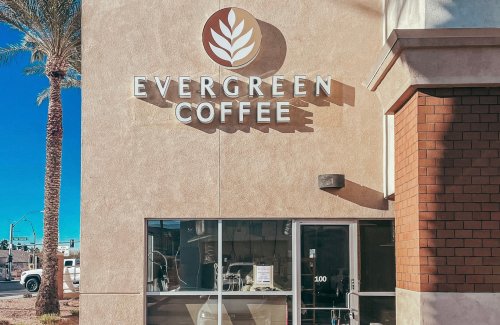
Henderson Welcomes New Asian-Owned Coffee Shop Inspiring the Asian Community

Henderson, Nevada has recently welcomed a new coffee shop that not only offers a unique Asian twist but also serves as a place of representation and empowerment for the community.

In the spirit of celebrating Asian American and Pacific Islander Heritage Month, local business owner Abel Garcia introduces Lovely Mempin to KTNV, the proud owner of Evergreen Coffee, who aims to inspire and empower fellow entrepreneurs from similar backgrounds.

Owning a business has always been a cherished dream for Lovely, driven by her desire to succeed in a society that often limits opportunities for minorities.

“Growing up I felt like there was a very defined narrative of what it meant to be Asian and I struggled with that because I felt like I was never good enough to be Asian or good enough to be American,” Lovely said to KTNV. She was originally from Manila, Philippines, moved to California, and eventually to Las Vegas.

Image Source: Linkedin / Lovely Mempin

Evergreen Coffee showcases a diverse range of Asian delicacies, including the peach mango pie from Lovely’s childhood and Indian-style toast, which breathe life into her cultural heritage.

Customers like Kyle Wong find solace in businesses like Evergreen Coffee, as they provide a sense of belonging and allow genuine representation of Asian culture. Wong appreciates establishments that bring forth authentic Asian experiences, such as tea businesses that evoke a nostalgic sense of home.

Aside from providing a delightful Asian-inspired coffee experience, Evergreen Coffee also symbolizes the strength and resilience of the Asian community in Las Vegas. Through her business, Lovely seeks to inspire others in the Asian community and to set an example for them to be bold and to take risks.

Featured Image Source: FB (Evergreen Coffee)

341742102_699791085234766_8776330555256744004_n-jpg

Stories

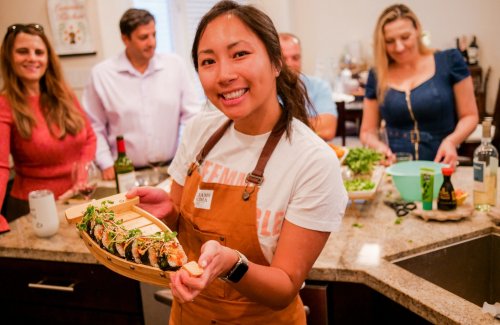
She Started A Sushi Side Hustle After Getting Engaged, Generated $100K One Year Later For Her Wedding

Whether you’re planning a wedding, considering starting a side hustle, or simply looking for some inspiration to pursue your passions, this story is one you won’t want to miss.

Weddings are supposed to be one of the most memorable moments in a couple’s life, but the reality is that the cost of making that dream a reality can be overwhelming, especially for Asian weddings – with the elaborate customs and traditions, and the pressure of inviting every distant relative, including aunts you may not even know.

This is why last year, Lavinia Doan (Bao Nhu) decided to start LAV SUSHI, shortly after getting engaged. She wasn’t sure how to come up with funds for her wedding, and as a daughter of refugees, she had to start from scratch.

In a year of engagement, Lav achieved a milestone: she was able to save up $100K from this side hustle that she used to pay for her wedding. From being a one-woman team, her husband has now joined her in her sushi journey.

FOR THE LAV OF SUSHI

Lav is originally from DC, but she moved to Texas about 5 years ago for a job in oil and gas. She was supposed to work off-shore as an engineer in South America, but due to COVID, she was sent to various places like Midland, Carlsbad, and West Virginia. Although not the most exciting places, she tried to make the most of it by expensing meals, specifically sushi, which she loved. However, she found that the sushi in those places was terrible, so she started making her own.

Lav enjoyed making sushi, but there was a lot of prep work involved, so she started inviting friends over for sushi-making parties to share her passion with them. For her, having friends and family over for a meal was a way to show that she cared for them. Eventually, she left her job in oil and gas and started working in tech, where she was fully remote. Missing the human interaction from her previous job, she began seeking out ways to meet new people.

Being an extroverted person, Lav decided to list sushi classes on Airbnb Experiences as a way to meet people and share her passion with them. What started as a passion project soon turned into a side hustle when she got engaged and needed to find a way to pay for her wedding.

They started with sushi classes which are still their bread and butter, but have since expanded into catering, and homakases (omakase at home).

CHALLENGES OF STARTING HER BUSINESS

It was only two months after the first few classes when Lav got engaged.

Lav and her partner, Dan, started the wedding planning process and quickly realized that the cost of their dream wedding was almost triple what they had planned for. Post-COVID backups and inflation made for an expensive wedding. She knew that they had to either sacrifice their vision for the wedding or find another way to save up.

For them, the wedding was more than just a party to celebrate their marriage; it was an opportunity to give back to their friends, family, and colleagues and treat them to a fun weekend. They felt positively impacted by the people around them and wanted to return the favor at their wedding.

Starting her own business posed the biggest challenge for Lav as she struggled to manage and prioritize her time. In addition to working full time and planning their wedding in the US and Vietnam, she also wanted to maintain a semi-normal social life. She enjoyed spending time with friends, family, her partner, and even alone time. The business was a one-woman show for a long time until she realized that it wasn’t sustainable.

“I would joke with my partner that we would be able to afford the wedding we wanted but wouldn’t have anyone to invite because I hadn’t been able to find time to spend time with friends and colleagues, even my dog and partner were feeling the neglect!” Lav shared. She sacrificed sleep, workouts, and nutrition.

Many nights, after a long day of work and sushi-making, she questioned if it would all be worth it.

EFFECTIVE TIME MANAGEMENT WHILE RUNNING A BUSINESS AND PLANNING A WEDDING

In terms of time management, Lav admits that she is still learning how to do it well.

“I am a normal person and sometimes find myself spending too much time on my phone mindlessly scrolling, forgetting tasks that need to be done, and inefficiently bouncing from one task to the other. But I think it’s okay!” Lav said, and shared a few strategies that have helped her become more productive:

  • Waking up early – She wakes up early every morning at 6 am to work out at a pilates studio that charges her if she misses a class. This incentivizes her to start the day early and avoid the temptation to stay in bed and scroll through her phone.
  • Blocking off hours – She blocks off hours in her schedule to focus on specific tasks, which helps her prioritize and manage her time more effectively.
  • Outsourcing – She has learned to outsource tasks that don’t bring her joy or are too time-consuming. This includes hiring people to help with her sushi business and outsourcing tasks in her personal life.
  • Knowing your worth and what your time is worth – This helps her weed out opportunities that aren’t worth pursuing from a time, profitability, and brand standpoint.
  • Never compromising the mission – Her mission is to bring the joy of sushi into people’s homes and educate them along the way. She refuses to sacrifice the quality of ingredients or cut costs to increase profitability because the joy and fulfillment of bringing this experience to people’s homes are more important to her than money.

MEMORABLE MOMENTS AND EXPERIENCES

Most of Lav’s friends know that she really likes a challenge, so much so that she feels like being purposefully unprepared presents its own challenge.

Lav signed up for the Houston Marathon, her second marathon ever at that point in time, which she had not trained at all for. She also accidentally overbooked a public sushi class for that same evening in her home. It was her biggest class so far.

So she ran the Houston Marathon, walked to a bar to get some drinks with friends, and then went home to start prepping for her sushi class. LAV SUSHI was still very young at this point, so procedures weren’t very optimized at that point. “The class went well, but there were definitely moments where I thought I would drop the rice pot because my legs were quivering, and I could definitely tell that some guests were uncomfortable by how full the class was. Let me tell you, I never overbooked a class again,” she shared.

That’s not the end of it. After class, Lav cleaned up and started packing for a 2-month ski trip in Colorado. She couldn’t remember if she slept or not, but she did manage to catch her 5 am redeye the following morning.

“Sometimes I think about that day, and get tired just thinking about it. But I really did show myself what I can get done in a day. There are countless amazing experiences I have had with clients that I could write a novel. I have made so many friends and connections through the business, and am thankful to have gotten to know these people!” she adds.

EXCITING NEWS FOR LAV SUSHI

Despite all the challenges that Lav faced in running her business, she was able to generate $100K in one year for her wedding.

Lav and Dan got married just a month ago and they are now taking a break from their Houston-based business to focus on personal matters and other projects. They will soon embark on a six-week expedition to Asia to celebrate their second wedding and honeymoon adventure.

Their dedicated team will be taking care of LAV SUSHI in their absence, ensuring the city continues to enjoy the sushi experiences they offer.

In the meantime, they have some exciting news to share:

“We have been working on launching LAV SUSHI in Atlanta and it is fully operating and ramping up. We would LOVE some AHN support in ATL!”

WHAT MAKES LAV SUSHI UNIQUE AND WELL-LOVED

Lav thinks that the reason why clients of 2000+ love LAV SUSHI could be due to the personalized experience that is tailored to their taste preferences, with each menu being curated to suit their needs.

LAV SUSHI also offers unique catering menus that include a live chef and unlimited sushi, which always brings a “wow” factor to the guests. “People love that they can watch the chef’s roll the sushi right in front of them, and that they can make any requests on demand,” Lav said.

Another highlight of LAV SUSHI is their omakase concept, where they curate a surprise menu within the clients’ budget, which they can enjoy in the comforts of their own home.

CONNECT WITH LAV

Instagram: @lavsushi

Facebook: @lavsushi

Tiktok: @lavsushimaking