Awaken* newsletter

May 30, 2024

SHARE:

Welcome to another edition of AHN awaken*! Apart from our guest, I’m excited to introduce a new member of our team, Han Yue Yin! Han Yue is a current Stanford GSB student and was my fellow jazz bandmate in college. Although this article was written by me (Edwin), Han Yue co-interviewed with me and will be taking the lead on writing some great articles in the future. Everyone, please welcome Han Yue!

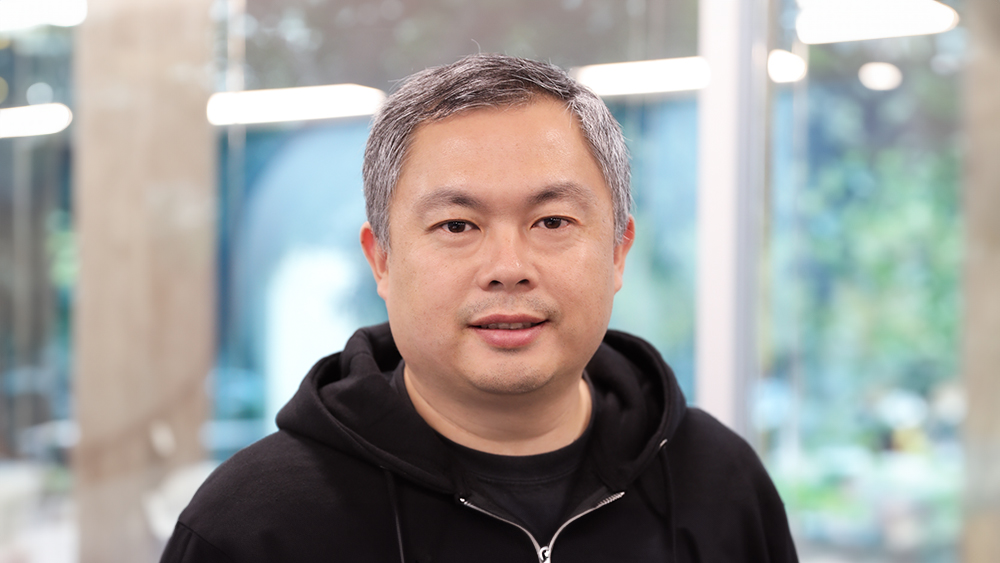
Our guest for this edition is Larry Liu, co-founder and CEO of Weee! (exclamation mark included). Weee! is the leading online Asian supermarket in America, think Amazon but for Asian groceries. Larry is an exceptional founder, and his journey of immigrating to America without any connections into founding a company worth $4.1 billion truly exemplifies the American dream. As an aside, Han Yue and I were especially excited about this interview as avid users of Weee! ourselves. Without further ado:

The Origins of Weee!

Our first question for Larry was how the idea for Weee! first came about:

Originally, we started as a WeChat (Chinese messaging app popular with the American diaspora) group-buying company. I believe it was really an opportunity we observed around the 2014-2015 time frame. This was when WeChat became extremely popular among Chinese immigrants and many people formed WeChat groups to buy food together, among other things. We found this to be a very interesting business model. As you may know, I was an eBay seller for more than 10 years and was familiar with the traditional e-commerce model, which is search-based. So, when I saw the group buys, I thought it was a completely new model, not search-based, but recommendation-based. I believed it was very promising. That’s when we decided to quit our jobs and start the business. However, it turned out not to be the right model. We pivoted in 2017 because social buying was not what we thought it was. It was not the ultimate solution to solve the lack of service experienced by Asian Americans for their food needs. The delivery-to-home model is a much better model. So, we pivoted in 2017. I believe it’s one of the greatest pivots in history.

The reason we pivoted was because we couldn’t grow the original group buy model. We couldn’t raise money because we didn’t grow. This forced us to think very hard about the fundamentals. That’s when we realized that the reason most people used group buys was actually because they didn’t have easy, affordable access to the food they love. It wasn’t apparent in the beginning because people were group buying all kinds of things. But those were only distractions. When we thought deeper, it was about the food. That’s why we had to pivot. 

Following up, we asked Larry what lessons they were able to port over from their group-buying stage into their current business model:

We learned a lot during the group buying stage. We had already built some warehousing and delivery capability during the group buy era. Many vendors didn’t want to sell to the group leaders directly, so we had to build a warehouse to buy a lot of products from the vendors. We acted as the supplier to many of the group leaders. This already made us into the warehousing and delivery side of things. We also learned that people were willing to wait for great products that were hard to find. This gave us the confidence to not do same-day delivery or on-demand.

Obviously, we had to ask what were these products that people were willing to wait for:

It’s usually the products that are hard to find even at Asian supermarkets. For example, super fresh fish, very fresh produce, and fruits. In the early days of group buying, the Pacific Black Cod was very popular. People were buying pork bellies together because they were not easy to find in mainstream supermarkets. During winter time, a lot of Chinese immigrants make sausages themselves, so they buy a lot of pork bellies. 

One of our most popular items was Kyoho grapes. Kyoho grapes are not always available in Asian supermarkets. Additionally, Asian supermarkets have issues with consistent quality, the range of products, and the fact that a lot of people live far away from those supermarkets. That’s why those kinds of products were very attractive. During the group buy days, we would never do tofu, soy sauce, or green onions. Those kinds of products were not considered exciting for group buys. So we only would do, like I said, super fresh seafood or produce or restaurant food or things not so readily available.

The Business of Weee!

One of the big ongoing initiatives at Weee! is adding storefronts for more ethnicities, complete with their own goods. We asked Larry what opportunities and challenges they’ve experienced expanding into more ethnicities:

All of them are very underserved, which makes our business very attractive to all these ethnicities. If you look at U.S. history, there was a very important piece of legislation passed by Congress called the Immigration Act of 1965. It really started this whole demographic shift in this country. It’s a once-in-a-century shift. That’s when the Asian and Latino populations started to grow in the U.S. Right now, if you look at the Chinese population, five to six million people in the U.S., this group is still quite small, less than two percent of the U.S. population, so it’s very hard for mainstream supermarkets to try to serve the specific needs of Chinese Americans. It doesn’t make sense for them to focus on this two percent of the population and try to bring in thousands of products to serve them. That gave opportunities for offline Chinese supermarkets, but the offline model is not the ideal model to serve low-density populations. That’s why there aren’t that many such stores. 

Ranch 99 is the biggest Chinese supermarket chain. The biggest Korean chain is H Mart. It took them more than 40 years to build less than 100 stores. The reason is that the population density is not high enough for them to build thousands of stores. All the mainstream supermarkets have thousands of stores. But these ethnic ones can never achieve that, which means they will always be more inconvenient to access. And that’s physics. You just can’t have that many stores when the population is so low. The good thing for our business is that our model is a better model. You don’t have to drive to us, we deliver to you. We have very large warehouses and we can cover a very wide range. Another big advantage for us is that we can be authentic to multiple ethnicities. An offline Chinese supermarket can never be an Indian supermarket at the same time. An offline Korean supermarket can never be a Filipino supermarket at the same time. No matter how you design this, it’s impossible. But online, you go to us, the first thing we ask you to do is choose the store. You choose the Filipino store, it’s all Filipino. You choose the Vietnamese store, it’s all Vietnamese. We can really be authentic to multiple ethnicities, and that can only be done online.

One thing that caught our attention was Larry’s point about how sparse populations inhibit additional stores which inhibit accessible stores, which would make more people turn to online stores such as Weee! We were curious if the converse was true, whether or not customers use Weee! less in Asian-dense areas where there are accessible in-person stores, like in cities such as Cupertino, CA:

That’s actually not the case. We actually have a lot of customers in Cupertino. Here’s the reason: our assortment is not the same as offline Asian supermarkets. A lot of things we carry, they don’t carry, and a lot of things we carry consistently, they don’t carry consistently. The assortment of items is differentiated. We also have a third-party marketplace. Right now, we have more than 50,000 third-party marketplace products on Weee!, these are all products that brick-and-mortar stores don’t carry. We have sellers in Japan, Korea, and China. Some other sellers are local restaurants and local bakeries. For example, on Weee! you can buy a local bakery product at the same price you would pay in the local bakery, and that is just not available in other apps. You can go to DoorDash, you buy the same product, you pay 40 percent more, 50 percent more depending on what’s your total order value. We have a lot of products that actually aren’t available from Asian supermarkets. In fact, we have slightly better prices than Asian supermarkets because our supply chain is more efficient. Even if you live in Cupertino, we have a better selection and prices. Plus, you don’t have to go out. You don’t have to spend your entire Saturday afternoon grocery shopping. You have better things to do. I’m not saying offline supermarkets shouldn’t exist. That’s not what I mean. We actually don’t see them as competitors. I think that they will exist for a long time and a lot of people like shopping offline. That’s totally fine. We just try to serve underserved communities and we believe we have better products and services than anyone in the marketplace.

A common customer behavior in Asia that hasn’t quite made it to the US is browsing online stores. For instance, most people who go on Amazon already know what they want to buy and only search for that, you generally don’t wander a disparate tab and scroll through those listings. Given that Weee! targets people from Asia, we asked if Larry has noticed such behavior on Weee!

Our customers tend to browse more. With our design, we actually want people to browse more. There’s a common belief that grocery shopping is boring and repetitive. Almost every single website prominently features a ‘buy again’ option. Amazon does that because it makes sense. If you think of shopping as a chore, then it’s logical. However, we see grocery shopping, especially for immigrants, as an opportunity to discover exciting new things that they may not even know exist in the U.S. We always try to create that excitement. That’s why we want people to browse. These exciting products are also important for our user acquisition strategy. People tend to tell their friends about the exciting things they find on our site. If you buy things from Amazon or Safeway, you probably won’t tell your friends about it because it’s the same old thing. But our customers actually tell their friends a lot after they buy something from us because we offer a lot of exciting products.

For our readers (and ourselves!), we asked Larry for examples of some of these exciting products on Weee!:

Nowadays, we’re really strong at seasonal fruits. We really care about flavor because our customers do too. We carry things like the Ori Mandarin from Israel, which is very tasty. Our dragon fruits and coconuts are super popular. In fact, we’re America’s largest retailer of fresh coconuts.

It’s fascinating because this ties in with our multi-ethnicity strategy. We have a lot of customers from different ethnicities. People from Vietnam, China, the Philippines, Southeast Asia, and India all consume coconuts. We are the only place that aggregates so much demand for coconuts and our price is unbeatable. For instance, if you go to Whole Foods, a coconut costs $4.99 each. If you buy on Weee!, it’s $14 for nine. It’s the best price on the market and our volume is really big. We’re also strong in fruits, vegetables, and hot pot-related products. We have all kinds of sliced meat, lamb, beef, pork, and different sauces and vegetables.

Larry’s Personal Growth

Although Weee! is not Larry’s first venture (he did some dropshipping previously), it is the first business he has scaled. As such, we asked him about his process of learning how to be a leader:

It was not very natural. It was a very steep learning curve for me. I managed like two people before I started Weee! at my previous company where I worked in finance. So I had very limited management experience, but as a founder CEO, you just have to learn everything on the fly. Not just managing people, but also how to raise money, how to come up with business strategies, and how to communicate the strategies to your team. 

I read a lot of books. I like to read. So I guess I had some knowledge on paper. This was my opportunity to apply that knowledge to the real world. I also reflect a lot. I’m a huge believer in deliberate practice. So I think I approached the job as something I need to really break down into different areas. For each area, I try to have some mechanism to get feedback and to check whether I did well or not so well. One of the reasons I was really attracted to retail is because retail gives you a very fast feedback loop. If you do a B2B business or pharmaceutical, it can take years for you to get the feedback. But in retail, if you do something right, you can literally see the results in minutes.

Also, I later realized that my finance background gave me an unusual habit. I try to forecast everything. For a lot of people, if you ask them about their strategy, they can’t tell you the impact of that strategy. I think forecasting is important because it requires understanding the mechanism between the input and the output. It also gives you the chance to constantly compare your expectations to the actuals, allowing you to fine-tune your understanding of the business. That feedback is very beneficial for improvement. 

I also hired really good people and learned from them. Our COO is very experienced. When she joined us, she managed teams with hundreds of people. I learned a lot from her. A lot of our management practice is what she brought to us. It’s really a combination of learning from experienced leaders and your own curiosity to constantly get better, to seek feedback, and just a lot of hard work.

We followed up by asking Larry if wished that he had done anything differently in his journey:

I think everything that happened was necessary. If I went back and told myself 10 years ago the things I know today, I still wouldn’t learn from my own advice. There are so many management books, and so many wise people out there. They give talks. Can you really learn from that? Even this conversation, can you really learn from this? I don’t think so. I think it’s just one piece of information. When I read a book now, I see it as one data point, one piece of information. I have to actually do it or be in the process of doing it, then revisit the concept I learned on paper and try to connect that concept to my real experience to make it part of my own. But without the doing part, the information is just a piece of information, nothing more. I could go back and tell myself a lot of things, but it wouldn’t help me 10 years before.

I have the habit of reading certain books over and over again at different stages of my life. For example, one of my favorite books is Sam Walton’s autobiography, “Made in America”. It’s very interesting. Throughout my journey, every time I read it, I pick up different things. The book didn’t change, I changed. A lot of things I didn’t understand before, but now I can understand because my experience grew. Sam Walton, I think when he wrote the book, he was diagnosed with cancer already. He probably gave everything he knew and put it in the book, but unfortunately, most people don’t understand all those things. They have to experience it and then they can relate to that. That’s why I think reading a really good book over and over again is a good idea.

I had heard Larry talk about Sam Walton in other interviews before so I figured that Walton must be one of Larry’s favorite entrepreneurs. We asked Larry what draws him to Sam Walton:

There are a few things I really admire about him. Firstly, in his whole life, he only did this one thing. He started Walmart and then he just stuck to it. He spent his whole life working on that. I’m attracted to that kind of entrepreneur. I’m not attracted to so-called serial entrepreneurs. I admire people who just try to do one thing super well, the best in the world. Also, he’s kind of an underdog. He was in Arkansas, a Midwest town. For a long time, Walmart only served towns with less than 5,000 people. It’s like how we at Weee! focus on serving minorities.  But he, as an underdog, built a business against all the odds. He started in the late 40s, and early 50s. His company went public around 1980. It took him 30 years to bring the company public. But even going public was just the beginning. In the next 20 years, I think Walmart’s stock price grew like a thousand times. Now, I think it has the most revenue out of any U.S. company. He was the richest man in America, but he lived a very simple life. His values very much match my values. So, I do see the parallels with us. If you read his book, you will love him. He’s very simple. I like a simple life. I don’t want things to be so complicated. Just figure out one thing you want to do, and then go for it and spend the rest of your life pursuing it. 

Asian Representation and Identity

Given that Weee! is the largest platform selling ethnic foods, we asked Larry how he sees Weee!’s role in enhancing the representation of ethnic food in the broader American landscape: 

We actually have a lot of mainstream users, and they’re growing very rapidly. We are the top seller on TikTok Shop in the U.S. in the food and beverage category. Almost all our customers on TikTok are mainstream Americans. I think it’s a less intimidating way to shop for products from another ethnicity if you do it online. Let’s say it’s a Middle Eastern store. You just want this one thing, you really like the lamb, what do you have to do? You have to drive to the store, go in, and it’s very unfamiliar. The barrier for mainstream Americans to try Asian supermarkets is a lot higher if they try to do it offline. It’s a lot lower if they do it online.

Personally, I found this extremely insightful as I had never thought of that. When you go to ethnic grocers such as Ranch 99, the store employees sometimes don’t speak very much English. I never thought much of it since I can speak the language, but I can see how the experience could be a lot more intimidating than buying online. For our next question, we asked Larry how being an Asian immigrant has impacted your founder journey:

I’m a first-generation immigrant. I came to the U.S. 20 years ago. My experience really put me in the position to do this business. That’s why I want to be like Sam Walton. I think this is almost a perfect business for me, and I want to keep doing it for as long as I can. There are so many smart people in the world, but what you can accomplish has a lot to do with what position you are in to see and recognize a great opportunity. I just felt like I was at the right place at the right time and I had the right experience and I met the right people. I owe everything to my background as an Asian immigrant to do this business. There were a lot of challenges in the early days. It was very difficult to raise money because people in the VC industry, the mainstream investors, didn’t really understand this opportunity. They couldn’t relate to it. But we were lucky enough to find Asian partners from those investment firms in every round of financing. I think I counted eight or nine rounds. In every single round, there was at least one Asian partner in the deal. They understood what we were trying to do.

Shoutouts

If you ever find yourself looking for Asian groceries, please consider joining millions of other users and trying out Weee! You can order on the web at https://www.sayweee.com/en or through the app, which you can download from all major app stores.

Weee! is also looking to grow their exceptional team across all functions. If you would like to work at the fastest-growing ethnic e-grocer, please check out their available job openings at https://www.sayweee.com/company/careers.

Thank you Larry for joining us!
Related Articles

From Personal Struggle to Business Triumph- Khai Pham’s Journey with Milky-jpg

Stories

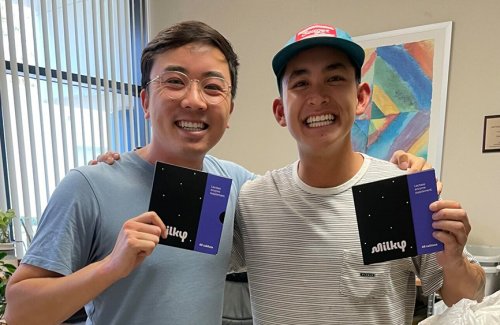
From Personal Struggle to Business Triumph: Khai Pham’s Journey with Milky

Meet Khai Pham, a visionary entrepreneur reshaping how we manage lactose intolerance.

Armed with a business degree from USC, Khai’s journey took an unexpected turn after an eye-opening internship experience. After leading strategy and operations at a tele-orthodontics startup, he took the big step to start his own venture: Milky.

Milky stems from Khai’s personal struggle as a lactose intolerant person. Collaborating with Dr. Michael Seidman, he created Milky, a revolutionary lactase supplement designed for convenience and portability.

The path to Milky’s creation was marked by challenges. Khai and his team encountered manufacturing hurdles and setbacks, but their unwavering dedication and problem-solving spirit prevailed. Join us as we delve deeper into Khai’s journey with Milky.

KHAI PHAM’S JOURNEY WITH VENTURE FOR AMERICA

Venture for America profoundly shaped Khai’s career. Khai revealed the exceptional prospects that startups offer compared to larger corporations. In bigger companies, promotion chances often hinge on the person above you advancing or departing. However, in startups experiencing rapid growth, the entire business expands, creating numerous opportunities.

As a result, Khai’s hard work earned him two well-deserved promotions in just one year, leading him to become an Associate Director, with his initial compensation increasing four times by the time he turned 23. More importantly, Khai was able to engage with more substantial challenges much earlier in his career.

LEADERSHIP LESSONS AS YOUNGEST DIRECTOR

Climbing the ranks at Candid and achieving the distinction of being the youngest Director brought both challenges and growth to Khai Pham. In his perspective, the most demanding aspect of this journey was the increasing gap between decision-making and its outcomes. During the earlier stages of one’s career, tasks are straightforward; you receive assignments like crafting financial models, and when you perform well, immediate feedback follows. That immediate validation is comforting for junior professionals.

However, as one advances into more senior roles, the time gap between decision and result widens significantly. Senior leaders must make weighty choices, such as shaping the market strategy for a new product. Yet, the effects of these decisions might remain concealed for months, even years. This adjustment, bridging the gap between choices and their eventual outcomes, is a formidable mental challenge that confronts most individuals, Khai included. This evolution in leadership style and responsibility marked Khai’s journey as he navigated the complexities of decision-making at Candid.

KHAI’S PERSONAL STRUGGLES THAT LED TO THE BUSINESS OPPORTUNITY

Khai Pham’s personal battle with lactose intolerance ignited the creation of Milky, a transformative lactase supplement.

Khai shared that aside from being lactose intolerant, he also coped with ADHD, which often led him to forget bringing a Lactaid, making casual outings for ice cream, boba, or pizza very hard. Though the idea of a more portable version of Lactaid had crossed his mind, Khai initially didn’t see it as a true business opportunity.

When Khai moved to New York and found his favorite boba shop, Machi Machi, in Koreatown, he kept running the same problem of forgetting his Lactaid. He also noted that the pharmacy in Koreatown always seemed to run out of Lactaids. “Lactaids fly off the shelves at their location,” one of the pharmacy’s employees said. Intrigued by this, Khai went to visit various drug stores across lower Manhattan, asking their employees about Lactaid sales.

Khai shared that the farther he ventured from Koreatown and Chinatown, the less frequently stores experienced Lactaid stock shortages. This was the moment that Khai recognized his idea of a super-thin lactase supplement as a viable business opportunity, setting in motion the Milky journey.

“What I slowly began to realize is that people can’t help you if they don’t know you need help.”

Khai Pham

THE EXPONENTIAL POWER OF NETWORKS

Khai Pham’s collaboration with Dr. Michael Seidman marked a turning point for Milky, their second joint venture. Many wonder how a board-certified surgeon like Dr. Seidman came to co-found a company with Khai. The answer is simple: asking for help.

“I used to play it close to the chest when I was starting a company because I didn’t want to be embarrassed if it didn’t work out. What I slowly began to realize is that people can’t help you if they don’t know you need help,” Khai shared.

With this profound realization, Khai began sharing his desire to start a dietary supplement business with his coworkers and his search for a scientific co-founder. One day, a coworker mentioned a friend whose father, Dr. Seidman, had both a medical background and a penchant for formulating ideas. And the rest was history.

How Khai and Dr. Seidman met illustrates the exponential power of networks, but only if you open up and tell people that you need their help.

KHAI’S INSIGHTS IN NAVIGATING ENTREPRENEURSHIP

When asked what advice he would offer to his younger entrepreneurial self, Khai Pham emphasizes that failure doesn’t equate to poor decision-making. He notes that while they are connected, making the right choice with the information at hand doesn’t guarantee success.

Khai’s experience has taught him that if a decision carries even a 10% chance of yielding a 1000x return, it’s worth taking that calculated risk. Even if it doesn’t pan out, it doesn’t make the decision wrong. He candidly shares that in his earlier career, he often focused on the immediate results of his actions, sticking to high-probability decisions, and missing out on better, higher-expected-value opportunities. For Khai, the key metric for decision-making is expected value, not just the probability of success, a lesson he holds close as he navigates the entrepreneurial landscape.

MILKY’S VISION TO REVOLUTIONIZE DIETARY ACCESSIBILITY

When contemplating the future of Milky, Khai envisions creating an entire ecosystem of dietary accessibility.

While Milky’s initial focus centers on lactose intolerance, Khai recognizes that many individuals face a variety of dietary restrictions, including issues like acid reflux. The prevailing frustration lies in the disconnect between scientific solutions and user experience. Drawing a parallel to Lactaid, Khai points out the impracticality of carrying around large plastic bottles of products like TUMS.

The Milky team aspires to create a world where your entire medicine cabinet can be conveniently carried in your pocket, offering a seamless solution to dietary challenges, thus transforming the lives of those managing lactose intolerance and other dietary issues.

CONNECT WITH KHAI / MILKY

Instagram: @shop__milky

TikTok: @milky

Linkedin: Khai Pham

Stories

How Sheldon Ho Created a Tool to Help Cantonese Speakers Learn Mandarin

For years, Cantonese Americans/Canadians like Sheldon Ho have struggled to learn Mandarin, feeling like existing language learning apps weren’t designed with them in mind.

Through the Canto to Mando Blueprint, there’s a solution that takes advantage of their existing Cantonese knowledge to help them master Mandarin in a fraction of the time.

The Canto to Mando Blueprint is the brainchild of Sheldon, who personally struggled for years with Mandarin learning. Not only has it helped countless Cantonese Americans reconnect with their Chinese culture, but it has also enabled them to learn more of their native tongue.

The success of this program speaks for itself – it has over 400 students and counting! It’s time for the world to take notice of this groundbreaking innovation in language learning. 

Read through as Sheldon shares more about his story and how the Canto to Mando Blueprint is changing the game for Cantonese Americans learning Mandarin.

FAILING TO LEARN CHINESE AS A KID

Growing up, I was really resentful of my culture.

I think having failed at learning Chinese as a kid made me detached from my Chinese culture and resent it. As a result, I grew up hating being Chinese and always felt it was uncool. It made me want to be “extra” Western. 

I would speak to my parents in English intentionally instead of Cantonese and as a result, my Cantonese became mediocre. I never realized this all came as a result of having failed Chinese as a kid but now that I’m older, I can see how things would have been different had I learned the language better when I was young. I would have learned more about my culture, and ancestors, and since the culture is naturally pretty cool, I would have definitely embraced it more.

AN ASIAN AMERICAN CHINESE LANGUAGE LEARNER’S PERSPECTIVE

The big thing plaguing the language learning industry is learning resources that are made for the mass market. I think that language learning businesses definitely cater to the mass market with good reason. ALL Americans Can benefit from one single Chinese learning resource made for English speakers. There’s a lot more money in that space because the market is a lot larger and they have the opportunity to help more people. Given that logic, there’s absolutely no incentive to make something for the Cantonese American market.

Another thing plaguing the language learning industry is having solely native speakers teaching the language. This is due to the curse of knowledge. It’s when you know too much in your brain and you can’t relate to your students as much anymore. They actually find it HARDER to learn from you. 

That’s why from an Asian American Chinese language learner’s perspective, I think representation is really important. I think having more Asian American teachers as opposed to pure Chinese teachers is really beneficial. 

When I was learning, all teachers were from China and while their Mandarin level was top-notch, there was a gap in their ability to relate to my struggles as a Chinese learner. This is because they have never been in my position as they grew up in a 100% Chinese environment. Employing techniques made for kids in China doesn’t work the same with us.

This is why most Asian Americans flunked out of Chinese school when they were kids. It’s made by native Chinese people who don’t understand the differences between the struggles of learning Chinese here in the West vs in China. In the same way, I also can’t relate to the struggles they may have faced learning English. I can confidently say that I’m probably not gonna be a good English teacher because I don’t understand the struggles ESL learners face. 

On the other hand, I understand very well what struggles Cantonese Americans may face when trying to learn Mandarin and improve their Cantonese. I literally went through all those struggles myself. I was the kid unable to write his own Chinese name.

THAT “YOU LOOK CHINESE BUT YOU CAN’T SPEAK CHINESE” MOMENT

I’ve tried countless times to learn Mandarin. I think I’ve had “I’m gonna learn Mandarin this year” as my new year’s resolution for like 10 years straight.

Each time I failed, I wasted MORE time but more importantly, it made me feel like more of a failure. I felt like maybe I was just too dumb to learn my language, maybe I was just too dumb overall. How many more tutors, apps, and university classes am I gonna waste time and money on?

I went through my lowest point when I was unable to talk to the family of the girl I was dating at the time. It was a really big “you look Chinese but you can’t speak Chinese” moment for me where I felt quite embarrassed.

It was a big mental hurdle that really messed with me. Things changed when I finally took time to think about how I could learn by leveraging my existing Cantonese. What if I just took my Cantonese and brought it over to Mandarin? Through an arduous process of figuring out how to do that, I finally learned Mandarin. 

Once I learned this, I realized how easy it is to learn this language for Cantonese speakers. I realized that we’ve been being taught wrong all our lives and that is the reason why we haven’t been able to learn. This motivated me to create this platform. I wanted to help Cantonese Americans finally get this Mandarin learning thing handled and hopefully through that, help them with embracing their culture.

CANTONESE AMERICANS ARE IN A WEIRD MIDDLE GROUND

I always felt that Mandarin was so hard to learn. It always baffled me that I was thrown into the same class as Craig, someone who had no Chinese background at all. 

I tried so many different learning apps and went to so many different Mandarin classes and tutors in college and it was ALWAYS the same. We always wasted WEEKS on basic stuff like “ni hao.” This felt stupid to me as a Cantonese person. I knew “ni hao.”

Cantonese Americans are in a weird middle ground. For the most part, we speak just enough Cantonese to have an advantage over people with no Chinese background – yet we can’t read Chinese, and aren’t good enough to take advantage of Mandarin resources meant for true native Canto people in Hong Kong which leverage your Cantonese. As a result, we have to stick with English resources made for white people.

So fundamentally, when setting up our program the only goal in mind was to create something for Cantonese Americans who can speak a little bit of Cantonese. We wanted to make something for the Cantonese American who spoke a little but couldn’t read or write Chinese. We’d teach them all the fundamentals while leveraging their existing Cantonese.

PLATFORMS MADE FOR PURE ENGLISH SPEAKERS CAN’T DO THIS

With our method, students improve their Cantonese while learning Mandarin. Most Cantonese speakers want to learn Mandarin but it’s also important to them that they improve in their heritage language. 

Because Mandarin and Cantonese have such similar structures – if you know how to leverage them, you can improve on both languages at the same time. This way, as your Cantonese gets better, so does your Mandarin, and vice versa.

Platforms made for pure English speakers can’t do this since they’re not made for Cantonese speakers. The next thing is the speed at which you learn. Our students start speaking literally from day 1 because we’re essentially just teaching you how to bring your Cantonese over to Mandarin in the beginning. 

There are a lot of tips and tricks that make things a lot faster. For example, the Cantonese ‘G’ becomes a Mandarin J about 80% of the time. This takes away a lot of the memorization work when it comes to learning Mandarin. 

So the main difference is just the speed of learning. It’s a lot faster. I don’t want to say the other apps or university courses don’t work because of course they do. But when you have to wait months for marginal results it’s really easy to get discouraged. That’s why we made it a PRIORITY to get people speaking from Day 1 so they see results right away.

SUCCESS STORIES

A large portion of our students happens to be in healthcare. There was this nurse who often felt ashamed at work. Chinese patients would reach out to her because she looked Chinese but when she couldn’t reply in Mandarin – she would feel sad for being unable to help her own people. This is what made her reach out to me and within the first couple weeks of doing the program, she shared with us how good it felt to be able to communicate with Chinese patients, and that was a big win. 

Another success story is about this girl who wanted to surprise her parents with her Mandarin. She started texting them on day one of the program, and it made them really happy.

But my favorite story is about one of our students who had been dating her Taiwanese boyfriend for 10 years. Each time she hung out with his family, it’d be in English. She would have very basic and shallow conversations with her boyfriend’s mom. Note that it’s been 10 years!

Recently, she told me that she had a full Mando conversation with her boyfriend’s mom and that she was so excited that she could finally speak Mandarin. If I could put it in her words, it was like the mom went from being almost mute to being the most talkative person in the world! Excitement grew on her face and she said “OMG I can take you to Taiwan now and show you everywhere!”

IT’S WHAT I WISH I HAD

What we have is a program and curriculum specifically designed for Cantonese Speakers to leverage their Cantonese (no matter what level) to learn Mandarin and improve their Cantonese. 

Along the way, we have tutors for support who are fluent in BOTH Cantonese, Mandarin, and English. From my experience, oftentimes, Mandarin tutors only speak one language. They speak Mandarin amazingly – but the lessons aren’t conveyed in the best way in English. They can’t convey certain concepts to English speakers. We make sure our tutors are able to do that, as well as in the Cantonese perspective. Lessons are all given with the Cantonese English Perspective in mind.

The truth is, in most cases, Mandarin tutors are overqualified in the wrong thing. Cantonese diaspora don’t need someone who studied classical chinese literature and classical chinese to teach them Mandarin. They just need someone who can speak good Mandarin, and understands how to convey that effectively in English to them.

We make sure our tutors have that. I took big a part in training our tutors on how to view things from a Cantonese-American perspective. 

I’ve been through the journey myself as a Cantonese Canadian who learned Mandarin. I pretty much know what each student will struggle with, where the pain points will be, and what type of questions everyone will have. I’ve poured that knowledge into the program and poured that knowledge into our tutors. 

An example is the simple understanding that Cantonese Americans can speak a little bit of Cantonese, but can’t read or write Chinese. How do you tailor-make something for that person? That’s what we sat down for months to figure out. It’s what I wish I had.

HOW THE COMMUNITY HAS RECEIVED THEM

The Cantonese American community has been really thankful to have something made for them.

A lot of people dealt with the same struggles I dealt with so I’ve received a lot of comments from people thanking our team for what we’re building as well. 

From the broader language learning community, there’s been a lot of intrigue about seeing a course that dives this deep into linguistics. We really dug into textbooks to find information like how Cantonese tones map to Mandarin and at what percentage. For instance, it’s really fascinating to know that you can map your Cantonese tones to Mandarin with about 80% accuracy. This means that Cantonese speakers can essentially skip memorizing Mandarin tones and still be right about 80% of the time. This is knowledge that takes YEARS off the Mandarin learning curve.

PROGRAM TAKEAWAYS

Three things that I hope users will take away from using our platform and learning Mandarin through our program:

  • How beautiful Chinese culture is and how great it feels to reconnect with it. If they can get a deeper sense of belonging and more interest in their roots, that’d be incredible.
  • A deeper love for Cantonese. Through our program, students will also improve their Cantonese. As they learn about the differences between Cantonese and Mandarin, they’ll see that Cantonese has its own writing system that makes it really unique. Through this, I hope they feel more pride as Cantonese speakers. I grew up resenting my Cantonese side because Mandarin is more popular – but ironically, as I learned more Mandarin, I grew to love Cantonese more and more.
  • A renewed sense of confidence in their ability to learn. A lot of people feel traumatized as kids because Chinese school was so ineffective. We feel that we’re failures because we couldn’t learn our native tongue and then make memes on subtle Asian traits to feel better about ourselves. I can confidently say that the way they teach Chinese in the West is not the best. I want to help people recover and feel better from that Chinese school trauma.

MANDO TO CANTO

I was surprised by how many Mandarin speakers are interested in learning Cantonese so I’m excited to share that the next big project we’re working on is Mando to Canto! We’re currently in the R&D phase.

CONNECT WITH SHELDON 

Instagram: @sheldonhoho

Stories

Linda Marigliano on Sharing Lessons of Love and Immigration Stories

Love – a universal language that transcends boundaries, cultures, and time.

It’s a force that can inspire, challenge, and ultimately transform our lives. And I’m not just talking about the heart-fluttering, romantic kind of love, but also the tough love, the kind of love that helps us grow, teaches us the hardest lessons, and makes us strong in the face of challenges. Linda Marigliano’s “Tough Love” podcast embarks on a mission to uncover these lessons hidden within the folds of love stories.

Linda is a creator, co-founder, author, and podcaster. She created Tough Love during the most difficult times of her life. It was in the middle of a rigid lockdown in Australia in 2021. After being in a long distance relationship for three years, Linda quit her high profile radio job planning to move overseas and begin a new life with her boyfriend who lived in LA, but the pandemic happened and the world stopped. She found herself stuck in Australia due to border closures and was forced to move back in with her strict parents in her mid-30s. 

Her podcasting journey began with the ambition to share her own story, inspire diversity, and share Australia’s proud immigration stories. Building the podcast from scratch was a challenge she embraced with passion.

Facing Challenges Head-On

Linda’s most significant challenge in this journey was launching, producing, and marketing the podcast as an independent creator. She had to master every facet of the podcasting industry, acquiring equipment to set up her home studio and venturing into the field as a roving reporter, capturing real-life scenes like a documentary. The hustle was relentless as she faced rolling deadlines and created a media campaign to promote the series.

As the podcast’s host, Linda also faced the personal challenge of sharing her vulnerable story. Linda had to let the listeners into her own uncertainty in modern life as she opened up her Italian Chinese family home. She addressed topics about how she froze her eggs during Season 1 and how she navigated her heartbreaking long distance relationship.

These stories, though challenging to share, created a devoted community of listeners who resonated with her journey through uncertain times.

Achievements and Milestones

The “Tough Love” podcast has been a remarkable success. In 2021, it earned the title of Best Lockdown Podcast at the Australian Podcast Awards and was a finalist in the Best New Podcast category. What makes this achievement even more impressive is that “Tough Love” is a completely independent project, with no financial backing from a production company.

In 2023, Linda achieved another milestone in her journey. Not only did she release her own book, “Love Language,” a deeply personal and true story that inspired the podcast, but she also performed a SOLD OUT live podcast show at the iconic Sydney Opera House.

This performance brought her Chinese mother, Janet, into the spotlight, sharing her experiences of growing up in a tiny village in Malaysia and how her unwavering loyalty to her family back home has shaped the way she lives her life. This narrative moved the audience, making them eager to learn more about Janet, her upbringing and her immigrant journey as a teenager who had a difficult time fitting in when she first moved to Australia.

Mission and Vision

Linda’s mission for the podcast is to share her compelling story using innovative documentary storytelling and music, offering practical lessons for modern life, while her vision involves expanding her audience to live shows, events, and exploring television and film opportunities. 

With Linda’s focus on her Chinese Malaysian culture, especially through her friends and her mother’s portrayal in it as a strong business woman even in her late 60s (and fan-favorite), amplifies diverse Asian perspectives, resonating with a dedicated community of listeners.

Message from Linda

If there is one episode of the Linda Marigliano’s Tough Love podcast you should listen to, make it the Season 2 ‘Help, My Parents Are Getting Older’ episode. This one showcases how we feel when we realize our parents are aging and what it means to remain loyal to family. We attend a salsa party with my Chinese mother, Janet, and she tells us about her Malaysian upbringing. It’s a moving, heartbreaking, but ultimately joyous scene.

I am incredibly proud to have inherited my mom’s deep Asian hustle spirit! There’s delight in hard work, and I love hearing the Asian hustle stories you share.

Now, I’m finally living in LA, reunited with my boyfriend, and the hustle continues. I’m open to exploring the city and connecting with the Asian community, so please reach out. And stay tuned for Linda Marigliano’s Tough Love Season 3!

CONNECT WITH LINDA

Instagram: @lindamarigliano

Linkedin: Linda Marigliano

Tiktok: @lindamarigliano

Facebook: Linda Marigliano

Stories

A Cancer Survivor’s Life-Changing Journey to Self-Discovery and Empowerment

Jeanny Chai is an entrepreneur, coach, and cancer survivor. She’s inspired hundreds of women to break free from unfulfilling jobs and relationships. But she wasn’t always this way. In this exclusive interview she talks about how she went from a scared loner kid to a powerful leadership coach. 

Childhood Pressures and Shaping of Mindset

Growing up, Jeanny was always under pressure to achieve. Sound familiar? In episode 3 of her podcast, Asians Breaking Ceilings, she shares the expectations her parents placed on her.  “Oh, you’re going to be a doctor.” 

She lived under constant pressure to be perfect. “I was called careless when I missed math problems and my parents were displeased. I got disapproval and felt like a burden whenever I made mistakes, like spilling milk or getting sick. I felt like I had to be perfect to avoid anyone getting mad at me.”

You don’t need anyone’s permission, apology, validation, or approval for you to make the transition from unfulfilled to living your leadership potential.

Jeanny Chai

Her Battle with Cancer and Path to Transformation

As an adult she was free from her parents but then cancer got her. Her doctor told her that she had 3 tumors, stress-induced. Her reaction? “ashamed, scared, angry and then finally hopeful.” Despite cancer being a shitty experience, she had HOPE. How? 

Hope came when she realized that she was allowed to ask for help. It wasn’t her job to suffer alone in silence. She had managed to handle all the other stressors in her life alone, but this one was too much for her – and that was okay. For the first time ever, Jeanny learned asking for help was not a sign of failure or weakness. This theme would return later on.

A Glimmer of Hope in Solitude

Cancer threw Jeanny’s life and routine out the window. Yet the hardest part wasn’t the physical pain – it was the overwhelming sense of loneliness she experienced. Unable to have visitors, she was profoundly isolated, physically and emotionally. She shares, “When you are under so much medication, your days and nights mesh together and you get lost in your own thoughts,”

But in that time of sadness, Jeanny felt a glimmer of hope. One day, she heard a loud voice that declared, “You are already good enough.” The unexpected declaration left her in a state of awe. 

Jeanny had never entertained such a notion about herself before; this was a pivotal moment.  She kept repeating this idea to herself for the next few years, and that’s when she started to feel stronger, more confident, and more in control of her life. This also marked the starting point of her business, Bamboo Myth.

A Journey of Self-Discovery

After casually beating cancer, Jeanny embarked on a five-year journey of self-discovery.

“When I got sick, I was no longer focused on becoming the next Elon Musk or landing a job at the next unicorn start-up in Silicon Valley. Instead, I bought myself an electric piano and an acoustic guitar.  Later I bought a saxophone and ukulele and I gave myself voice lessons. I bought myself a baby rabbit, who was my bedside companion during my chemotherapy treatment. I remembered that I loved music, singing, and animals and learned to create my own happiness,” she shared.

With cancer showing her that life was short, Jeanny decided to leave the corporate world and start her own business, pursuing purpose instead of promotions. 

“Asians Breaking Ceilings” Podcast

Fast forward a few years and her business is thriving. She speaks about the Bamboo Ceiling at Fortune 500 companies and major conferences. 

She also runs a 12-week coaching program called “Live Your Leadership Potential,” and has coached over 300 Asian women, bringing “life-changing” results. Her program centers on 2 core principles that help women regain confidence, energy, and agency.

She teaches that what’s needed isn’t communication strategies, but permission to speak without guilt or shame. Once women overcome this barrier, their natural leadership abilities and newfound confidence are allowed to shine.

The best part? Jeanny emphasizes that this mindshift set doesn’t require years of therapy or yoga; all it takes is a focused approach to transform from burnout to happiness.

Now she is making these cultural-specific leadership strategies available to everyone,  through her podcast. In it, she shares a powerful new definition of success. 

“Confidence, assertiveness, and happiness are an inside job. So my new definition of success is this: Being able to decide, create, and ask for what you want in your career and life. And my podcast is designed exactly to do just that,” Jeanny shared.

Advice for Those with Similar Struggles

Did you resonate with any of this? Jeanny has the the following advice for individuals who struggle with people-pleasing, fear, or lack of self-compassion:

First, you must stop stuffing your feelings and coping by working harder and harder. Realize that you don’t need anyone’s permission, apology, validation, or approval for you to make the transition from unfulfilled to living your leadership potential.  

Stop getting more certifications and degrees to fill that feeling of “not being enough.”

Listen to my podcast! Start with Episode 1 and let yourself feel again. Many of us have numbed out our emotions so we can handle and cope with all the stress but this is the opposite of what we need to do to begin the transformation. 

Find a safe person (therapist, coach) and tell them your story. As Brene Brown says, shame thrives in silence. That’s why I’m paving the way by speaking up so others can speak up and be transformed for good.

And take this FREE assessment that I’ve created just for Asian Americans. It helps you identify in just under 5 minutes what is your biggest roadblock to success:

https://quiz.tryinteract.com/#/5daf9bbeb77a6e0014e41210

There is personal advice emailed to you based on your quiz results. 

CONNECT WITH JEANNY CHAI

Instagram: @jeannychai

Linkedin: Jeanny Chai

Twitter: @bamboomyth

Facebook: Bamboo Myth

Website (Bamboo Myth): bamboomyth.com

Website (Podcast): asiansbreakingceilings.com