Awaken* newsletter

April 4, 2024

SHARE:

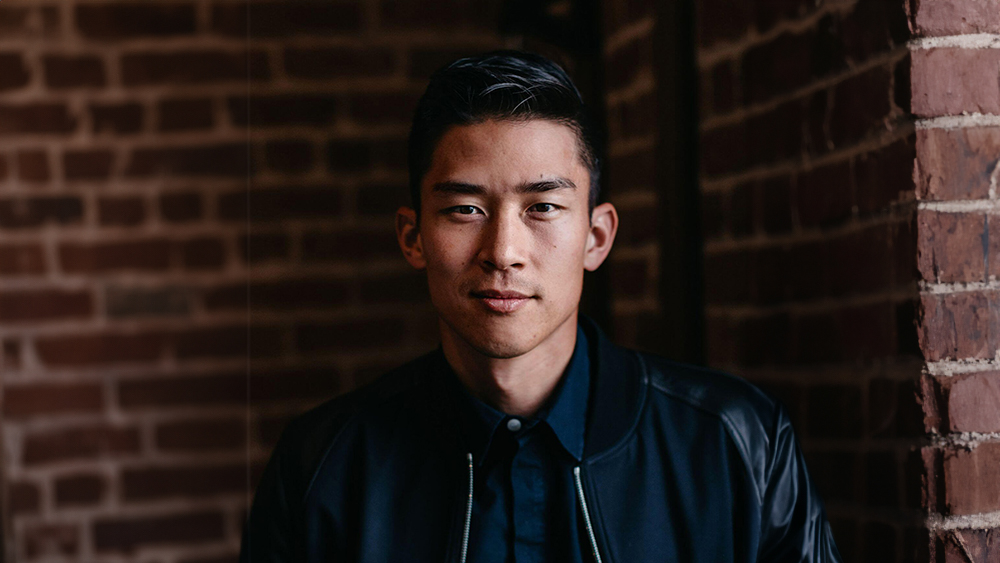
On November 10th, I had the honor of chatting with Bryant Chou. Bryant is the co-founder of Webflow, one of the leading website-building platforms in the world with a valuation of $4 billion. Within startup-land, Webflow is especially notable for being mostly bootstrapped, waiting five years before raising an additional round after their seed round in 2014.

In our conversation, we touched on a variety of topics ranging from being Asian American to working at startups vs. big tech. 

Note: Quotes were lightly edited for brevity and clarity.

EARLY CAREER

I started our conversation by asking Bryant if he had any entrepreneurial endeavors before his first official company. While he never directly started a business, Bryant did display early signs of his scrappiness.

My mom gave me twenty dollars a week for all of my lunches and whatever discretionary income. So, of course I spent most of it on food, but that essentially meant that I had nothing really left over. But I also really wanted to be a normal high school student and go to prom and go to dances and stuff like that. So I made money in high school by entering Counter-Strike tournaments. I would earn, I don’t know, a few hundred bucks in these local LAN parties. And that’s how I paid for dances. So I always kind of adapted and tried to apply myself in different ways, with whatever skill sets I had.

He continued on to talk about his motivation for getting into startups:

To be honest, I don’t know if I would have done startups if I was at Facebook or Google. You know, I didn’t land those jobs coming out of school. I wasn’t smart enough. Didn’t pass those interviews… I think because I was at a mid-tier tech company, it kind of gave me more hunger to do something on my own. I wanted a change and believed software startups were the future. I took the plunge in 2011, driven by the belief that startups would be significant, 

However, he also cautioned about rushing into startups: 

You need to think about the things that really need to be true in order to be a founder and do it successfully. One of those things is working in a space that you really want to affect and make a difference in. You just want to make sure that you’re working on something that’s worthy of 16 hour days, you know?

BRYANT’S ROLE AT WEBFLOW

Although Bryant is perhaps best known as being the co-founder and CTO of Webflow, I saw that Bryant had recently shifted his focus away from technology to growth and marketing for Webflow, so I asked him about that:

Because we were bootstrapped, we never really invested in growth and marketing. So what started as an impatient maneuver on my end, like, ‘hey, I think we need to start doing these things’ turned into, ‘hey, this is actually something that is ROI positive.’ Who would have thunk? I suppose even though I’m an engineer and builder and product person at heart, I’m also a company builder in that sense. So I’ve–for example, started our marketing, started sales, started data, started security, so all these things are just things that are just like, ‘hey, we need to do these things. Let’s figure out how to do it.’ And I think that’s something that most entrepreneurs are going to have to do. I don’t think you’d necessarily have an option to not do it.

Coincidentally, I had talked to the new CTO of Webflow, Allan, a few months prior. Alan was super nice and very sharp–a great backfill for Bryant.

NAVIGATING ASIAN IDENTITY

As the Asian Hustle Network, I naturally had to ask Bryant about how he felt being Asian qualified his experience as a founder, he started out by acknowledging the position of Asian men:

It’s a well-known fact that Asian men in Western societies have a different bar to hurdle than other people. One of the reasons why I was so keen to help produce the 38 in the Garden movie with Jeremy Lin is because he articulated this so well. Have you seen that documentary? 

I had not, in fact, seen the documentary. Oops. I watched it after the interview on his recommendation and it was very, very good. Please give it a watch! Bryant continued:

It’s my one and only film and probably the last one that I’ll ever be involved in. I’m totally okay with this because I believe this cause is important. Part of the reason why I agreed to chat with you is because we obviously have a chip on our shoulder. We are seen differently in society. I’ve dealt with it in various ways myself. I’ve taken a colorblind approach to business interactions and never thought about my race or ethnicity in certain environments. I think that’s ultimately what you have to do. As Asian people in Western society, you’re supposed to be heads down, let your actions speak for themselves. I still very much have that approach. Who knows if it’s the most optimal thing to do.

Despite his colorblind approach, Bryant was clearly very cognizant of the fact that people perceive Asians differently, and had a suggestion for our readers:

To just walk amongst people of the same race and they speak your language, I think that’s like a worthy thing to do and to dive into. I identify as Taiwanese, at least as much as I identify as an American. When I go there, I literally feel different. I feel like I’m one of the same, like I’m among my people, I’m not viewed as a minority, I’m just viewed as a normal person. I think every Asian-American should have that sensation at some point in their life that they feel like they’re seen as someone just like everyone else, and the only place where I felt that has been Taiwan.

I knew Bryant grew up in the Bay where there were a lot of Asians, so I asked him if he felt the same sensation in those areas, he suggested:

The broader construct of society that we live in is still the US, which is still 85% non-Asian. I think Asian Americans make up about 12% of the population, maybe even less. I don’t think it’s so much about not being in the majority. It’s more about the sensation that you get that you are biologically or ethnically more similar to the people that you’re walking around with in Asia.

NAVIGATING ENTREPRENEURIAL CHALLENGES

Moving onto the next topic, I asked Bryant about his emotional experience as I had heard a lot of founders talk about how difficult this aspect of running a startup was:

I thought it would be harder technically than it would be emotionally. But I would say the social emotional components of building a company are 100 times harder than the technology itself.

I followed up by asking if there were any specific experiences that stood out to him:

They’ll come up in different forms. In 2020, there were a lot of social justice issues that made running a company very challenging. Ultimately, when you’re at a company, you need to be hyper-rational. You’re faced with a conundrum between being a good steward of the company’s mission and vision and maybe what people inside your company believe, and sometimes those things clash.

It was clear that this level of situation took an emotional toll on Bryant, so I asked him how he copes with it and prevents it from seeping into his personal life:

You compartmentalize most of it. It helps to have a supporting spouse and partner. It’s great to have kids that can distract you from this.

ADVICE FOR YOUNG PROFESSIONALS

Adding on his comments about entrepreneurial pain, Bryant offered:

I think like if you’re in your 20s, I would actually be chasing that kind of pain. It’s the best time to chase pain and suffering. If it means that will lead to a certain level of intellectual expansion, social emotional awareness. There’s no better time to find the limits of what you’re capable of than when you’ve graduated, when you’ve got a whole life in front of you. Like, it’s time to see what you’re made of. So I’d be a huge proponent of young folks going to startups that are hectic and crazy, working in environments where they can learn, dedicating time and energy to perfecting a craft. Those are things that you don’t learn in school. And those are only things that you can chase on your own accord.

This made me think about how I have a lot of friends who go into Big Tech. A good number of them say that they want to pursue their own company eventually, but want to get their start at a big company to build up their skills. I asked Bryant what he thought about this approach:

There’s two kinds of learning that you can do at a big tech company. One is technology related. So you can go and immerse yourself in a technology, and be surrounded by technologists that can help you. That’s something very valuable for sure, but learning how to do things the way Meta or Google does things is not transferable at all to startups. None of their processes matter. None of their ways of thinking about building products matter. It’s just a whole ‘nother ball game. There are maybe some professional skills that you get to pick up. Communication, the ergonomics around the work–such as just documenting your work, making your work transparent, and just picking up good habits–that’s for sure. But there’s nothing like working in an early stage startup where you’re building something from nothing. You know, you’re almost never doing that at a big company.

I was somewhat surprised that Bryant felt that the Meta or Google way of thinking about products was applicable, so I pressed him to elaborate:

So actually, that’s a great example of something that I did retain. It’s more so the principles at which you approach building a product, right? Developing customer empathy, ensuring you’re not over-engineering things really matters. Facebook and Meta have an abundance of resources. Engineers at large companies are very good at building incredible things that are well-defined in a narrow spectrum. However, in a startup, you’re trying to go as wide as possible with what an engineer could potentially contribute to and build 60 to 80% of it. It doesn’t need to be perfect.

Bryant’s comment about over-resourced companies made me think about the opposite, under-resourced companies, and how I often hear about employees at those companies working weekends and long nights. I asked Bryant if he thought that was necessary in a startup:

There’s a time and place for it. I don’t believe nights and weekends are required. It’s important for people in their 20s to find their limits professionally and personally. This means making time for personal things like dating, hanging out with friends, and attending events. It’s about striking the right balance. For instance, I encourage my team members to take vacations when needed. It’s crucial for startup leaders to have a good pulse on their employees, understanding their strengths and weaknesses, and checking in on their well-being. I don’t believe anyone at SpaceX or elsewhere can stare at a problem for 100 hours a week and feel productive. It’s important to step out of your zone, draw inspiration from different things, and take breaks. To live a balanced life. When I say that people should find their limits professionally and personally, it’s like that limit is different for each person. But you have to feel like you’re able to stretch, build the muscle for your mental and physical strength to stretch when you need it. I think that’s really important to do.

SHOUTOUTS  

Webflow is hiring across multiple functions! Please visit this link to find and apply for open roles, or feel free to get in touch with Bryant at bryant@webflow.com if you would like to reach out personally for opportunities.

38 at the Garden, the short film about Jeremey Lin which Bryant helped produce is available to watch on HBO Max. The film is 38 minutes short and is a must-watch for all Asian Americans.

Thank you Bryant for speaking with us!
Related Articles

News

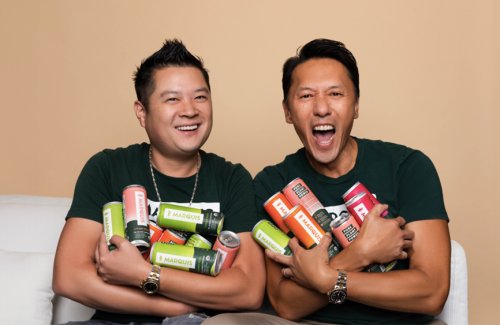
Marquis Blends Asian Roots and Modern Flair with Innovative Energy Drinks

The energy drink industry is on an exciting upswing, having expanded by a remarkable $7 billion over the past half-decade. Stepping into this dynamic field is Marquis, a family-founded beverage brand rooted in AAPI heritage. Their approach involves crafting a sparkling drink featuring a unique caffeine blend, setting them apart in the market.

Unlike most energy drinks and functional beverages that cram 200 to 300 milligrams of caffeine into each serving, Marquis opts for a milder 100 milligrams. Interested buyers can find Marquis beverages both on the official website, drinkmarquis.com, and select Target stores, including the Downtown branch located at 735 S. Figueroa Street, as well as local Erewhon Markets.

LA natives Christopher Lai and Danny Huang, co-founders of Marquis, are leading the charge for a healthier caffeine experience. Lai shared with LA Downtown News that around 90% of American adults consume caffeine daily, but Marquis’ caffeine drink comes with added benefits.

Marquis crafts its beverages with organic ingredients, sidestepping added sugars and excess calories. Their concoction combines green tea, green coffee, and yerba mate to offer a balanced, natural energy lift throughout the day. Huang emphasized their ability to provide sustained, natural energy with a fraction of the usual caffeine content.

Marquis beverages boast antioxidants, vitamins B and C, setting them apart in promoting health-conscious choices. Lai’s focus on differentiation from other energy drink companies reflects in Marquis’ careful crafting and dedication to responsible caffeine consumption.

The brand’s flavors, including citrus yuzu, lychee peach, mango ginger, super berry, and pineapple passion, carry a unique touch shaped by their “Asian-ness,” as described by Huang. Their latest flavor, lemon lavender, adds a botanical dimension. Huang revealed that these flavors are a testament to their history, culture, and personal experiences, a way to share nostalgia and love with the world.

Featured Image Source: LA Magazine

Screen Shot 2023-07-09 at 2.39.59 PM-png

Stories

An Entrepreneur’s Dream to Bring a Taste of Cambodia to the World and the Miracle That Started It All

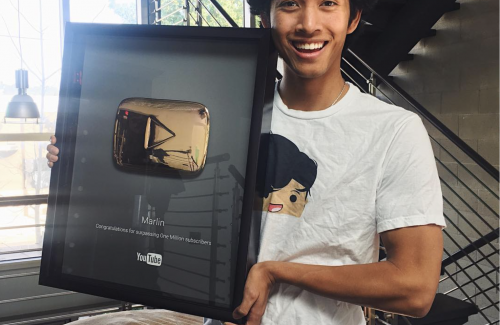
Marlin Chan is a remarkable individual whose journey embodies determination and triumph in the face of adversity. Born to Cambodian immigrants, Marlin’s family overcame hardships that spanned continents, shaping the very essence of his character.

His parents faced the harsh realities of the 1970’s Cambodian Genocide that forced their separation for nearly 2 decades. After being apart for 18 years, a fortunate stroke of serendipity allowed them to miraculously reunite and lead to the birth of the miracle baby Marlin.

Inspired by his grandmother’s beef crisps, Marlin started a business venture called “Yay’s” to pay homage to his culture. Through Yay’s, Marlin continues his family’s legacy of hard work and determination, sharing a unique taste of Cambodia to the world.

Asian Hustle Network had the privilege to sit down with Marlin Chan and delve into his inspiring journey. Join us as we explore his remarkable story of strength, dreams, and resilience.

CHALLENGES THAT MARLIN’S PARENTS FACED AS CAMBODIAN IMMIGRANTS

During the Cambodian Genocide, my parents faced the challenge of survival, as those of higher status, like artists, government officials, and intellectuals were among the first to be targeted and eliminated. 

Because there were countless horror stories of Khmer U.S. Air Force members being killed upon arrival at the Phnom Penh’s air station, it prevented my dad from returning home after serving the U.S. Air Force to save his family. This marked the onset of my parents 18-year separation.

Amid their time in the work camps, my mom tragically lost my sister to chickenpox and malnutrition due to the mistreatment by the Khmer Rouge. This tragic event left her devastated. To escape the work camps, my mom and her family had to navigate minefields at night to be unseen.

Like many immigrants, my dad faced the challenge of not knowing the English language upon his arrival in America so he turned to television to learn how to speak the language. Meanwhile, my mother successfully made her way to America to start a new life and began selling noodles on the streets of Stockton, California to support our family.

THE REMARKABLE REUNION OF LONG-LOST LOVE AFTER 18 YEARS

One day, my father visited a local donut shop for the first time to meet with an old friend, and the donut shop owner recognized him from their days in Cambodia. 

As the owner was inquiring about my mother, he revealed that the last he heard about her and her family’s whereabouts was in Stockton, California. My father’s face drained of color, and he froze upon hearing this shocking revelation. Immediately, he asked if the owner had their contact information and without skipping a beat, he got in touch and embarked on a road trip to Northern California the very next morning.

Upon arriving in Stockton, California, my dad found my mom, still hopeful and strong-willed as she had always been, but her health wasn’t in the best condition. She was living in a one-bedroom shared apartment with multiple other families. They promptly went for health check-ups and discussed restarting a life together again. In that same year, I was born on October 7, 1993. The Stockton Newspaper published an article of Marlin Chan as the miracle baby that beat the odds of survival with my parents’ long-lost reunion and my mother’s ability to bear children at forty.

LESSONS THAT SHAPE MARLIN’S JOURNEY

As a child of Cambodian immigrants, here are some of the things I learned:

  • Stay curious, for knowledge is a treasure that never diminishes and our curiosity fuels our drive to innovate. 
  • Having a positive outlook can transform our perception of life, particularly during trials.
  • Material wealth is temporary. The value in developing your knowledge and skills is what truly holds the key to unlocking your infinite potential for abundance, which created a drive for me to continually invest in myself.

Relentlessness and grit are values I learned from my parents’ stories at a young age. I come from a determined, resilient family that fights for love. Hearing stories of my mom walking from Cambodia to the border of Thailand in search of refuge taught me the power of determination. Based on these principles, I have always believed in my potential and fostering a strong work ethic. While I may not always be the most attractive or intelligent person in the room, I strive to outwork everyone to the best of my abilities.

FACING FAILURE, FINDING STRENGTH

When I was eighteen years old, I was selected as one of the top 10 finalists to compete on ‘Internet Icon,’ a show created by Ryan Higa, my content creator idol. Unfortunately, I ended up placing 8th on the show, and as a young eighteen-year-old, I was devastated. I doubted whether I could become a full-time content creator if I couldn’t win this competition.

In the following year, I took a service industry job at Chipotle and completely stopped making videos. By the end of that year, I felt a renewed sense of fervor and determination to pursue my career in content creation. The skills I learned from my job at Chipotle, such as executing with excellence to avoid repetition, transferred to my work ethic for content creation.

By doing something that wasn’t creative, it shifted my perspective with content creation and allowed me to pursue my passions with more fervor and focus. I realized that I would only be a failure if I gave up since you miss 100% of the shots you don’t take. This experience resonated with the Japanese proverb, “Fall seven times, stand up eight.”

Over the next three years, I moved to Los Angeles, California, and gained over 1 million subscribers, turning content creation into a full-time job. I learned that if I could visualize my goals, they could become my reality, or even exceed beyond my imagination.

LOOKING AHEAD

My greatest accomplishment would be giving my parents a better life and inspiring kids to foster their talents and pursue their passions.

Looking ahead, my goals for the future are centered around bringing joy and delight to the world with my food and creations. I aspire to represent Asian Americans, who are under-represented in American media and encourage my Asian community to share a piece of their culture with others.

My dream is to become the first Cambodian American to bring a taste of Cambodia to every home with Snack Yay’s on a global scale. Bringing exposure to the Cambodian community would be a true fulfillment of my mission in life.

ABOUT HIS BRAND YAY’S

My Grandma, known as ‘Yay’ in Khmer, has been crafting beef crisps since the early 90’s to cover her apartment rent in Stockton, California. Beef crisps consist of thinly sliced marinated beef air-dried to a delightful crunch with flavor profiles that offer a symphony of umami, sweetness, and spiciness. Consumer goods expert Kathryn Tuttle described them as a fusion of ‘Beef Carpaccio meets potato chips meets bright Asian flavors.’ What sets these apart from traditional American beef jerky is their light and crispy texture. While regular beef jerky takes about 3 hours to dehydrate, beef crisps demand up to 20 hours for that perfect crispiness.

Growing up, I thought beef crisps was a snack that was readily available in stores. My earliest memories involved enjoying this delectable treat outdoors, helping my grandma sell them to our community. The concept of making Yay’s as a brand first came to me in December 2017. Though the idea took root then, I didn’t start the business until June 2023. Pioneering and expanding something unprecedented like this has not been an easy feat. It was very discouraging at first to reach out to over 57 different manufacturers and be told numerous times that it couldn’t be done because of the technical hurdles in producing beef jerky with this level of crispiness.

Yay’s is currently self-manufactured to ensure we use the highest quality ingredients. Every bag we send out meets our standards because we take the time to slow-dry the meat for over 20 hours, while typical beef jerky takes 3 hours to produce.

We initially started out in a small commercial kitchen in Camarillo, California, and transferred to a medium-sized commercial kitchen in New Jersey this year to increase production. We are sourcing USDA Prime meat from the same suppliers that many Michelin-starred restaurants in New York City use. Every bag of Yay’s is handcrafted because we value quality. For me, the possibility of sharing a taste of Cambodia to the world is a dream come true.

MARLIN CHAN’S INSPIRATIONAL MESSAGE TO YOUNG AAPI INDIVIDUALS

Never give up. Remember to focus on your own journey because you are uniquely you, and your authenticity is your ultimate gift to share with the world. Being referred to as a miracle baby since birth has shaped my perspective to preserve through the seasons of life and be grateful of the blessings in my life. Maintaining a positive attitude is a powerful tool to develop unwavering confidence in your potential to achieve anything you set your mind to.

CONNECT WITH MARLIN CHAN

Instagram: @marlinramseychan

Youtube: @snackmarlin

Yay’s Instagram: @snackyays

SBS

News

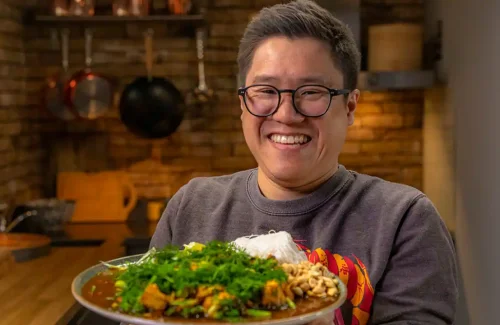
He Used to Dislike Food, But Now He’s a Chef Mastering Asian Flavors

Chef Jeremy Pang’s journey into the world of cooking took an unexpected turn from his childhood aversion to food. In his early years, he confessed that he had a distaste for meals.

However, his life took an exciting turn when his family relocated to Singapore, exposing him to open-air food markets, where culinary artisans specialized in single dishes. This experience transformed his perspective, igniting a passion for Asian cuisine that would shape his career.

The pandemic prompted a shift in Pang’s family dynamic, leading him to cook with his son and discover his preferences. Through this shared experience, they explored crafting homemade pizzas and flapjacks. This is when they found out that his son really likes the flavors of Chinese food, like light and tasty dishes with fish and crispy veggies.

An advocate of the Asian tradition of feasting, Pang believes that sharing multiple dishes is integral to the dining experience. This philosophy, deeply ingrained in his approach to cooking, led him to create “Simple Family Feasts,” a guide designed to make the concept accessible to all.

Image Source: Irish News

Central to Pang’s culinary finesse is his artful balancing act of flavors and textures. He highlights the significance of contrast – harmonizing crispy and tender, soft and resilient, while incorporating fresh vegetables or quick-fried selections. This balance is the key to an unforgettable dining experience.

Featured Image Source: SBS

img_2350-jpg

Stories

JFERRER’s Mission to Empower Young Asian Creatives Through His Documentary

JFERRER is a talented Creative Director from Southern California. His journey began in high school when he discovered his love for film. Little did he know that this passion would lead him to an incredible path of self-discovery and empowerment.

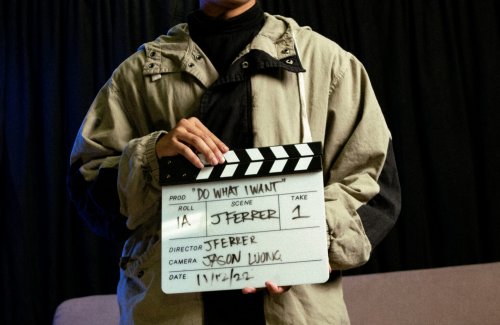
It was in college that JFERRER embraced his cultural heritage as a Filipino American, realizing the significance of being Asian in shaping his identity. Despite facing doubts from others, he remained determined to pursue his dreams. This led him to create a documentary titled “DO WHAT I WANT,” shining a spotlight on the incredible work of young Asian creatives.

Now, JFERRER is gearing up for his next mission with “DO WHAT I WANT: SPIN OFF EDITION,” focusing on up-and-coming Asian American DJs in Southern California. Join us as we delve deeper into his story and his mission through an insightful interview with Asian Hustle Network.

THE ARTISTIC VOYAGE OF JFERRER

The world of music has been a constant inspiration for me. When I listen to a song, my mind instinctively creates music video scenes that synchronize perfectly with each beat. I knew that I had to make these vivid visions into reality and on the screen. I started taking clips of videos and putting them into music and created a whole new vibe and energy for the song. It was exciting to help people experience the song in a whole new way.

As my passion for storytelling through visuals grew, so did the scope of my aspirations. Beyond music videos, I became interested in capturing and celebrating diverse narratives and talent. This interest and experience took on a life of its own and I became involved with crafting and managing live events tailored specifically for emerging creatives.

These events became platforms for budding talents to shine, fostering a community of artistic expression and collaboration. I realize that creativity knows no bounds and I want to unleash it and inspire others to find their own creative gifts.

THE IMPACT OF HIS CULTURAL UPBRINGING ON HIS CREATIVE DIRECTION

I grew up in a Filipino American family. Throughout my life, I’ve been fortunate to be surrounded by creative family members and friends. Knowing the immense talent and gifts of Asian Americans around me, yet seeing the simple, one-dimensional portrayals of Asian/Asian American characters in movies and television was disappointing.

I want to showcase the rich diversity and talents of Asian Americans and promote positive and authentic representation.

BREAKING BOUNDARIES WITH “DO WHAT I WANT”

Asian Americans do not rely on their creative side to make money. If we wanted financial stability, we would typically look at careers in the medical field, business, or engineering, right? Creative energy would just be reserved for hobbies. But why can’t it be our full-time career? That’s what I wanted to challenge in “Do What I Want”. I wanted to break free from the stereotypes and challenge the notion that you can’t be successful doing something creative and fun. 

I believe in eliminating the fear of pursuing our passions and going against the grain. We have the power to choose our own paths and find immense success in doing what we love. This is the essence of the documentary I want to create – to shine a light on a community of like-minded individuals who have shattered barriers and defied expectations.

In this documentary, we will meet incredible artists, each driven by their unique passions and determined to leave their mark on the creative world. They stand as living examples of why this project exists – to showcase Asian creatives who fearlessly pursued their dreams, despite parental and societal pressures.

The title “DO WHAT I WANT” embodies the spirit of this documentary, as each person featured chose to follow their heart’s desires. They rejected the notion that their career should be dictated by others and, instead, embraced their true calling. This is a celebration of those who broke free from the confines of societal expectations and carved out their own path to success.

NAVIGATING CHALLENGES AND SEIZING OPPORTUNITIES AS A YOUNG CREATIVE

In the realm of young creatives today, networking their art stands as a paramount challenge. Excelling in their craft is undoubtedly crucial, yet without the ability to effectively brand their work and themselves, opportunities for exposure may be limited.

Embracing the significance of self-branding, however, holds the key to unlocking a broader audience and creating a multitude of opportunities that lie ahead. So, dare to showcase your true potential, and let your art shine brightly in the vast sea of possibilities. Together, your creativity and strategic branding will pave the way for a remarkable journey of growth and success. Keep believing in yourself, and the world will undoubtedly take notice of your inspiring creations.

A MESSAGE OF EMPOWERMENT FOR ASIAN AMERICAN ARTISTS THROUGH DO WHAT I WANT

I believe that “DO WHAT I WANT” has the power to ignite a flame of empowerment within the Asian and Asian American communities. It serves as a reminder for individuals to embrace their authenticity and follow their true passions, refusing to conform to societal norms or the cookie-cutter lifestyle. I envision a wave of inspiration, encouraging people to break free from limiting beliefs and embrace the unique paths that await them.

“DO WHAT I WANT” carries a profound significance for Asian American youth. As they witness the success and creativity of these artists, they can find a sense of connection and envision their own future selves achieving greatness. The documentary not only inspires confidence but also fosters a sense of community and unity among Asian Americans, reminding them that they too, can embrace their dreams and make a lasting impact in the world.

INSIGHTS AND ADVICE FROM JFERRER

Throughout my creative journey, the most valuable lesson I’ve learned is the importance of letting go of seeking validation from others. Happiness cannot be solely dependent on the approval of others. While I appreciate and consider the professional opinions of others when it comes to my work, I firmly believe that I must retain ownership of my decisions. Embracing this mindset empowers me to stay true to my vision and creative expression, paving the way for genuine fulfillment and growth.

By freeing myself from the need for constant validation, I can embark on a path driven by authenticity and self-belief. This newfound sense of independence fuels my creativity and allows me to push boundaries without being confined by external expectations. As I continue to evolve creatively, I welcome constructive feedback and embrace the opportunities to learn and grow, but I will always hold firm to my convictions, knowing that the true essence of my work lies within my passion and dedication to making a meaningful impact.

CONNECT WITH JFERRER

Instagram: @itsjferrer