Awaken* newsletter

April 4, 2024

SHARE:

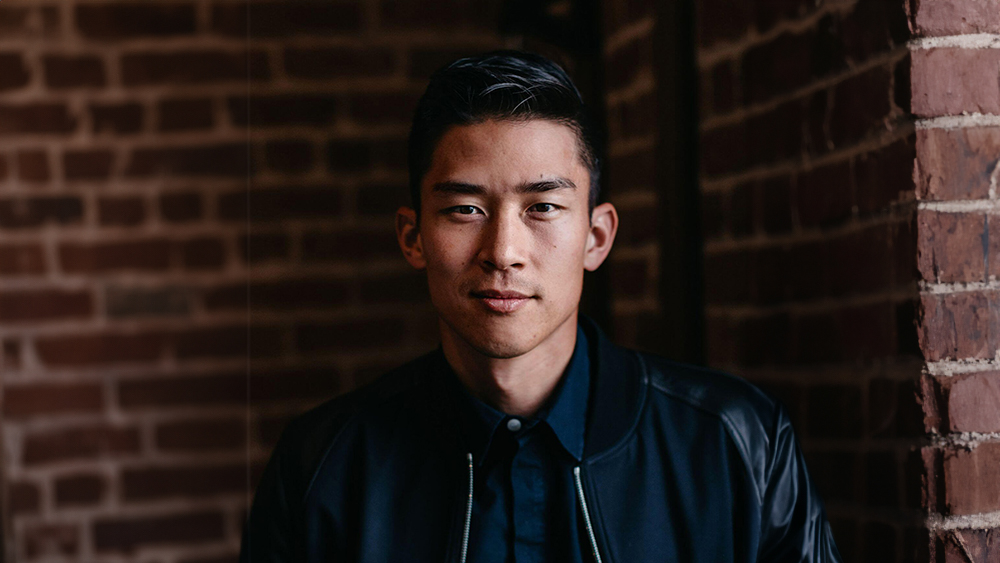
On November 10th, I had the honor of chatting with Bryant Chou. Bryant is the co-founder of Webflow, one of the leading website-building platforms in the world with a valuation of $4 billion. Within startup-land, Webflow is especially notable for being mostly bootstrapped, waiting five years before raising an additional round after their seed round in 2014.

In our conversation, we touched on a variety of topics ranging from being Asian American to working at startups vs. big tech. 

Note: Quotes were lightly edited for brevity and clarity.

EARLY CAREER

I started our conversation by asking Bryant if he had any entrepreneurial endeavors before his first official company. While he never directly started a business, Bryant did display early signs of his scrappiness.

My mom gave me twenty dollars a week for all of my lunches and whatever discretionary income. So, of course I spent most of it on food, but that essentially meant that I had nothing really left over. But I also really wanted to be a normal high school student and go to prom and go to dances and stuff like that. So I made money in high school by entering Counter-Strike tournaments. I would earn, I don’t know, a few hundred bucks in these local LAN parties. And that’s how I paid for dances. So I always kind of adapted and tried to apply myself in different ways, with whatever skill sets I had.

He continued on to talk about his motivation for getting into startups:

To be honest, I don’t know if I would have done startups if I was at Facebook or Google. You know, I didn’t land those jobs coming out of school. I wasn’t smart enough. Didn’t pass those interviews… I think because I was at a mid-tier tech company, it kind of gave me more hunger to do something on my own. I wanted a change and believed software startups were the future. I took the plunge in 2011, driven by the belief that startups would be significant, 

However, he also cautioned about rushing into startups: 

You need to think about the things that really need to be true in order to be a founder and do it successfully. One of those things is working in a space that you really want to affect and make a difference in. You just want to make sure that you’re working on something that’s worthy of 16 hour days, you know?

BRYANT’S ROLE AT WEBFLOW

Although Bryant is perhaps best known as being the co-founder and CTO of Webflow, I saw that Bryant had recently shifted his focus away from technology to growth and marketing for Webflow, so I asked him about that:

Because we were bootstrapped, we never really invested in growth and marketing. So what started as an impatient maneuver on my end, like, ‘hey, I think we need to start doing these things’ turned into, ‘hey, this is actually something that is ROI positive.’ Who would have thunk? I suppose even though I’m an engineer and builder and product person at heart, I’m also a company builder in that sense. So I’ve–for example, started our marketing, started sales, started data, started security, so all these things are just things that are just like, ‘hey, we need to do these things. Let’s figure out how to do it.’ And I think that’s something that most entrepreneurs are going to have to do. I don’t think you’d necessarily have an option to not do it.

Coincidentally, I had talked to the new CTO of Webflow, Allan, a few months prior. Alan was super nice and very sharp–a great backfill for Bryant.

NAVIGATING ASIAN IDENTITY

As the Asian Hustle Network, I naturally had to ask Bryant about how he felt being Asian qualified his experience as a founder, he started out by acknowledging the position of Asian men:

It’s a well-known fact that Asian men in Western societies have a different bar to hurdle than other people. One of the reasons why I was so keen to help produce the 38 in the Garden movie with Jeremy Lin is because he articulated this so well. Have you seen that documentary? 

I had not, in fact, seen the documentary. Oops. I watched it after the interview on his recommendation and it was very, very good. Please give it a watch! Bryant continued:

It’s my one and only film and probably the last one that I’ll ever be involved in. I’m totally okay with this because I believe this cause is important. Part of the reason why I agreed to chat with you is because we obviously have a chip on our shoulder. We are seen differently in society. I’ve dealt with it in various ways myself. I’ve taken a colorblind approach to business interactions and never thought about my race or ethnicity in certain environments. I think that’s ultimately what you have to do. As Asian people in Western society, you’re supposed to be heads down, let your actions speak for themselves. I still very much have that approach. Who knows if it’s the most optimal thing to do.

Despite his colorblind approach, Bryant was clearly very cognizant of the fact that people perceive Asians differently, and had a suggestion for our readers:

To just walk amongst people of the same race and they speak your language, I think that’s like a worthy thing to do and to dive into. I identify as Taiwanese, at least as much as I identify as an American. When I go there, I literally feel different. I feel like I’m one of the same, like I’m among my people, I’m not viewed as a minority, I’m just viewed as a normal person. I think every Asian-American should have that sensation at some point in their life that they feel like they’re seen as someone just like everyone else, and the only place where I felt that has been Taiwan.

I knew Bryant grew up in the Bay where there were a lot of Asians, so I asked him if he felt the same sensation in those areas, he suggested:

The broader construct of society that we live in is still the US, which is still 85% non-Asian. I think Asian Americans make up about 12% of the population, maybe even less. I don’t think it’s so much about not being in the majority. It’s more about the sensation that you get that you are biologically or ethnically more similar to the people that you’re walking around with in Asia.

NAVIGATING ENTREPRENEURIAL CHALLENGES

Moving onto the next topic, I asked Bryant about his emotional experience as I had heard a lot of founders talk about how difficult this aspect of running a startup was:

I thought it would be harder technically than it would be emotionally. But I would say the social emotional components of building a company are 100 times harder than the technology itself.

I followed up by asking if there were any specific experiences that stood out to him:

They’ll come up in different forms. In 2020, there were a lot of social justice issues that made running a company very challenging. Ultimately, when you’re at a company, you need to be hyper-rational. You’re faced with a conundrum between being a good steward of the company’s mission and vision and maybe what people inside your company believe, and sometimes those things clash.

It was clear that this level of situation took an emotional toll on Bryant, so I asked him how he copes with it and prevents it from seeping into his personal life:

You compartmentalize most of it. It helps to have a supporting spouse and partner. It’s great to have kids that can distract you from this.

ADVICE FOR YOUNG PROFESSIONALS

Adding on his comments about entrepreneurial pain, Bryant offered:

I think like if you’re in your 20s, I would actually be chasing that kind of pain. It’s the best time to chase pain and suffering. If it means that will lead to a certain level of intellectual expansion, social emotional awareness. There’s no better time to find the limits of what you’re capable of than when you’ve graduated, when you’ve got a whole life in front of you. Like, it’s time to see what you’re made of. So I’d be a huge proponent of young folks going to startups that are hectic and crazy, working in environments where they can learn, dedicating time and energy to perfecting a craft. Those are things that you don’t learn in school. And those are only things that you can chase on your own accord.

This made me think about how I have a lot of friends who go into Big Tech. A good number of them say that they want to pursue their own company eventually, but want to get their start at a big company to build up their skills. I asked Bryant what he thought about this approach:

There’s two kinds of learning that you can do at a big tech company. One is technology related. So you can go and immerse yourself in a technology, and be surrounded by technologists that can help you. That’s something very valuable for sure, but learning how to do things the way Meta or Google does things is not transferable at all to startups. None of their processes matter. None of their ways of thinking about building products matter. It’s just a whole ‘nother ball game. There are maybe some professional skills that you get to pick up. Communication, the ergonomics around the work–such as just documenting your work, making your work transparent, and just picking up good habits–that’s for sure. But there’s nothing like working in an early stage startup where you’re building something from nothing. You know, you’re almost never doing that at a big company.

I was somewhat surprised that Bryant felt that the Meta or Google way of thinking about products was applicable, so I pressed him to elaborate:

So actually, that’s a great example of something that I did retain. It’s more so the principles at which you approach building a product, right? Developing customer empathy, ensuring you’re not over-engineering things really matters. Facebook and Meta have an abundance of resources. Engineers at large companies are very good at building incredible things that are well-defined in a narrow spectrum. However, in a startup, you’re trying to go as wide as possible with what an engineer could potentially contribute to and build 60 to 80% of it. It doesn’t need to be perfect.

Bryant’s comment about over-resourced companies made me think about the opposite, under-resourced companies, and how I often hear about employees at those companies working weekends and long nights. I asked Bryant if he thought that was necessary in a startup:

There’s a time and place for it. I don’t believe nights and weekends are required. It’s important for people in their 20s to find their limits professionally and personally. This means making time for personal things like dating, hanging out with friends, and attending events. It’s about striking the right balance. For instance, I encourage my team members to take vacations when needed. It’s crucial for startup leaders to have a good pulse on their employees, understanding their strengths and weaknesses, and checking in on their well-being. I don’t believe anyone at SpaceX or elsewhere can stare at a problem for 100 hours a week and feel productive. It’s important to step out of your zone, draw inspiration from different things, and take breaks. To live a balanced life. When I say that people should find their limits professionally and personally, it’s like that limit is different for each person. But you have to feel like you’re able to stretch, build the muscle for your mental and physical strength to stretch when you need it. I think that’s really important to do.

SHOUTOUTS  

Webflow is hiring across multiple functions! Please visit this link to find and apply for open roles, or feel free to get in touch with Bryant at bryant@webflow.com if you would like to reach out personally for opportunities.

38 at the Garden, the short film about Jeremey Lin which Bryant helped produce is available to watch on HBO Max. The film is 38 minutes short and is a must-watch for all Asian Americans.

Thank you Bryant for speaking with us!
Related Articles

Spectrum News-jpg

News

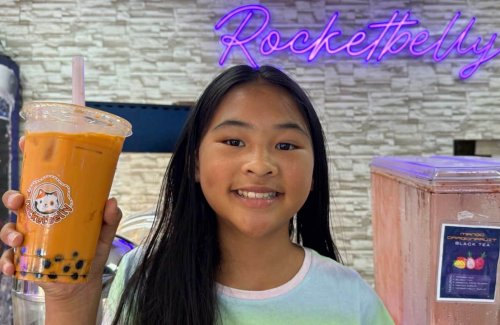
Young Entrepreneur Olivia Huynh Rockets to Success with Unique Bubble Tea Shop

In the heart of North Texas is an extraordinary 11-year-old, Olivia Huynh, with big dreams and ambitions as diverse as acting, singing, and artistry.

At her young age, Olivia is the proud owner of Rocketbelly, an Arlington-based bubble tea shop claiming to be the sole self-serve boba tea destination in Texas. “She really is the owner,” said Olivia’s mother, Mary Huynh, to Spectrum News. “She thought of the concept and runs the place. Most of the money we used came from money she’s earned in modeling and acting gigs.”

Olivia was 4 years old when she expressed her desire to be in movies. Her mother created a YouTube channel, featuring a young Olivia’s DIY arts and crafts, sweet treat tutorials, and imaginative gift ideas. Simultaneously, Olivia started auditioning for commercials, landing roles in major brand advertisements.

As for Rocketbelly, the outer space-themed shop opened its doors in the fall of 2022,  offering a diverse range of 10 milk tea and two fruit tea flavors, along with 28 different toppings, including freshly made boba.

Image Source: Spectrum News

The Huynh family has ambitious plans to expand Rocketbelly to multiple locations across North Texas, while Olivia remains resolute in pursuing her acting career with the full support of her family.

Featured Image Source: Spectrum News

jennfinalimages-197-jpg

Stories

This Couple Created a Mahjong Inspired Game That Celebrates Diverse Cultures

Meet Jennifer Guo and Adam Szakacs, a couple with a creative vision. They wanted their child to cherish both her Chinese and Jewish roots, despite living far from family. So, they invented something extraordinary.

Inspired by their grandmothers’ unexpected friendship over mahjong, they reimagined the game as “Not Your Ma’s Jong.” This isn’t just any game; it’s a lively card version of mahjong that celebrates their backgrounds. It carries a powerful message – embracing your heritage and sharing it with others is something to be proud of.

Through Not Your Ma’s Jong, Jennifer and Adam hope to bring people closer. By sharing traditions, they aim to show that understanding each other’s cultures can create harmony.

In an exclusive interview with Asian Hustle Network, Jennifer and Adam share their journey in creating “Not Your Ma’s Jong.” Read through as we get a glimpse of how this game could help forge connections and celebrate diverse cultures.

Whether celebrating certain holidays, traveling together to meaningful places, or simply making a memorable recipe together, spending quality time together is the most important thing – and playing a game like Not Your Ma’s Jong is one way to spend time together.

Jennifer Guo

Can you tell us about the inspiration behind creating Not Your Ma’s Jong and how it connects to your Chinese and Jewish heritage?

Jenn: I learned how to play mahjong as a kid by watching my grandma play in China. Mahjong was a part of our daily lives and at the center of every family occasion. For me, mahjong is a way to connect with those memories.

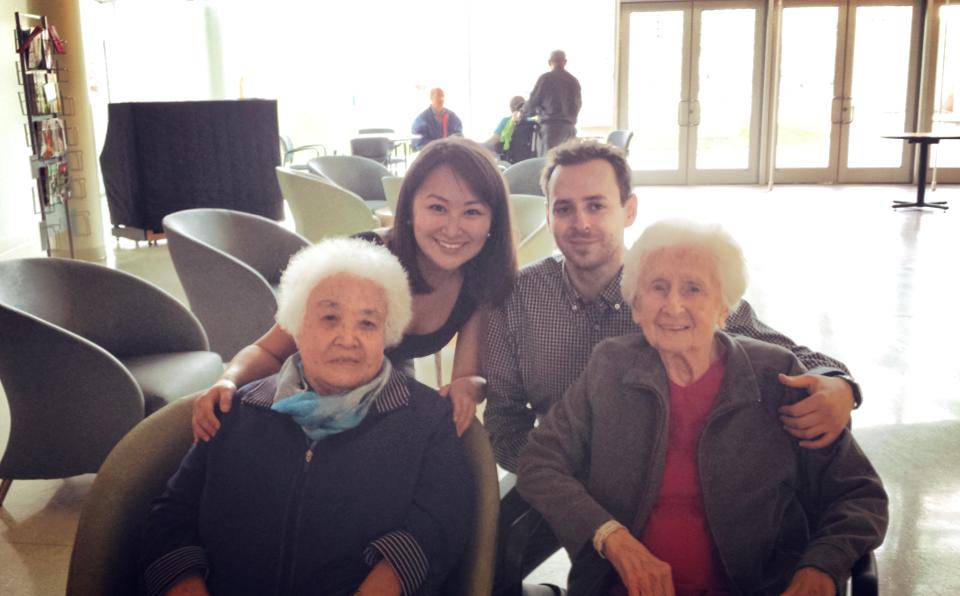
My grandma used to split her time between her home in Xi’an, China, and Toronto where she stayed with my parents. In 2014, we brought my grandma to visit Adam’s granny who was healing from a hip injury. My grandma speaks only Mandarin, so we started by translating some simple hellos and small talk. It was so special to have them meet and communicate with each other.

Adam: At one point, we were talking about their respective cultures and the things they enjoy. My granny plays a lot of card games and also mentioned mahjong. Jenn’s grandma’s eyes lit up, and she told us about playing throughout her life. Jenn’s grandma is certainly the more avid player, but once my granny’s hip recovered and she was back home, they were able to play together.

Jenn: When I was pregnant with our first daughter in 2018, we started thinking about how we could connect our children with their cultures and heritage. I realized that living in Canada, they would not have the same exposure to Chinese traditions like mahjong as I did growing up. We started thinking about ways to honor the memories we had of growing up with our parents and grandparents and decided to create a simplified version of mahjong, which became Not Your Ma’s Jong.

Jenn and Adam with their grandmas

As an international card game played around the world, what do you believe makes Not Your Ma’s Jong unique and appealing to a diverse audience?

Adam: We realized that even though our grandparents played mahjong and we played with them, we never played with our friends. We started asking around and kept hearing the same thing–most of our friends had heard of mahjong or seen their families play, but few knew how to play themselves.

Jenn: Not Your Ma’s Jong is a simplified version of mahjong, using 75 cards as opposed to 144 tiles in the traditional game. The rules are also simplified to create a fast-paced and fierce game that anyone can pick up quickly. When we started playing test versions with our friends, the excitement showed us we were on to something!

Could you share some examples of how you incorporated Chinese and Jewish emblems into Not Your Ma’s Jong? How do these cultural elements enhance the gameplay experience and foster cultural understanding?

Jenn: We wanted to dedicate the game to our grandmas. Many of the cards are symbols from growing up with them – some with Adam’s Jewish granny, and some with my Chinese grandma. Some center around memories of family feasts we’d eat together, gifts they’d give us, or how they made us feel – and while the symbols are specific to our cultures, those memories and feelings are universal.

Other cards are a bit whimsical – we imagined what their friendship could have been if they had lived near each other earlier in their lives. Things like doing tai chi together in a park, or building a muscular snowman together! We wanted to make them relatable for people who grew up in any culture, with special winks for people who grew up Chinese or Jewish.

What are some of the challenges you faced while developing and popularizing Not Your Ma’s Jong? How did you overcome those challenges, and what lessons did you learn along the way?

We had a lot of fun creating Not Your Ma’s Jong – but turning it into a product and making people aware of it was hard! After the initial Kickstarter campaign, the remaining games sat in our home for over a year until we started to get some media attention. We were fortunate that a blog article turned into a newspaper feature which then got our story and the game featured on TV twice! Hasbro took an interest at that point, licensed the game and it’s now being sold around the world. This showed us that people love it once they hear about it! That initial exposure was the hard part.

Can you share any heartwarming stories or feedback you have received from players of Not Your Ma’s Jong?

Adam: The initial Kickstarter campaign was a very personal experience for us. We received stories and repeat orders from some of the earliest recipients of the game, sharing how they played with their parents, children, or nieces and nephews, and how it caused them to reminisce about their own family stories when they saw the illustrations on the cards. We still love getting emails and seeing reviews from people who feel a connection to the game.

What advice would you give to individuals or families who are seeking to explore and celebrate their own cultural heritage? How can games like Not Your Ma’s Jong play a role in this process?

Jenn: It was important to us to not let our families’ cultures and memories fade away for our daughters, and creating this game was one of our ideas to do that. I know it’s hard – especially with young kids – but I think it’s important for parents to think back on their childhoods and choose some of the traditions that they want to continue with their children. Whether celebrating certain holidays, traveling together to meaningful places, or simply making a memorable recipe together, spending quality time together is the most important thing – and playing a game like Not Your Ma’s Jong is one way to spend time together.

In conclusion, what message or lasting impact do you hope Not Your Ma’s Jong will leave on players and society as a whole?

Jenn: The world can sometimes feel so divided – we hope people see this game, and the story behind it, as a small example of how people with different cultural backgrounds and languages can find common ground and develop a friendship. We hope they get a glimpse into Chinese and Jewish cultural experiences and relate with their own experiences too!

CONNECT WITH NOT YOUR MA’S JONG

Instagram: @notyourmasjong

Threads: @notyourmasjong

Website: notyourmasjong.com

People Daily-png

News

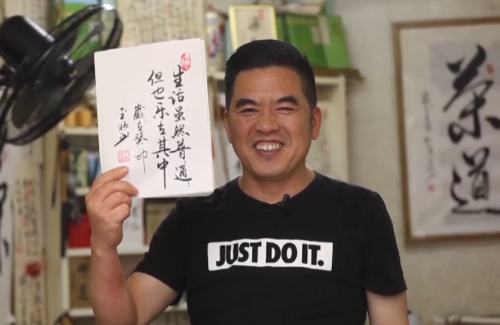
Meet The Chinese Pancake Shop Owner with Exceptional Calligraphy Skills

Mastering the art of calligraphy has transformed Kang Jinming, a humble 50-year-old proprietor of a cozy pancake roll shop, into a local sensation known as “the calligrapher at a pancake shop.” Situated in the heart of Hefei city, the capital of China’s Anhui Province, Kang’s unassuming establishment is renowned for its delectable stuffed pancake rolls, a favorite among the locals.

Over weekends, as customers savor their pancake rolls, Kang surprises them with a small yet significant gift—a carefully composed note featuring a line of poetry, a fragment of prose, an age-old adage, or a beautifully scribed Chinese character. Most commonly, the characters for “Le” (joy) and “Qu” (fun) are included in these tokens.

For 30 years, while taking care of his shop, he practiced calligraphy. When there are no customers around, Kang quietly sits at a small table and practices his writing with a brush. After closing his shop, he continues on bigger pieces of paper. His love for calligraphy makes him use anything he can find to write on – old books, newspapers, and even cardboard.

Kang’s establishment has become a local attraction, drawing both online attention and physical visits from locals and tourists alike. Looking to the future, Kang aims to create a few calligraphy pieces and have them framed as a legacy for the next generation.

“That’s what lies in the innermost part of my heart—knowing that I’ve left something in the world and society and that I’ve been happy doing what I love. I will be content with my life,” he shared with People Daily.

Featured Image Source: People Daily

Asian journal-jpg

News

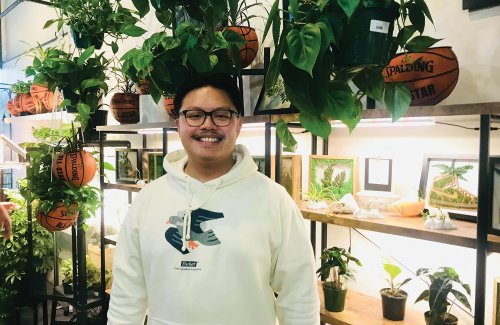
How Plants Became a Source of Hope During the Pandemic for Peter Dario

When tough times hit during the pandemic, people everywhere turned to plants for comfort. Lockdowns and worries made people feel alone, but planting things brought them joy and hope. Terrace Plant Shop is an example of this.

The proud Filipino-American owner, Peter Dario, faced a big tragedy two years ago, when he lost his dad and grandpa to COVID-19. This was really tough for his family. To help heal, they started getting into plants, even though Peter wasn’t into them before.

Peter wasn’t sure if it would work at the beginning. But despite the uncertainty, he took the leap.

Terrace Plant Shop goes beyond being a store – it stands as a symbol of resilience. People who also navigated pandemic struggles found hope in its story. It proved that even when things are tough, positivity can grow.

Beyond plants, the shop offers an array of treasures like soil, pots, and even candles. Among the diverse plant offerings, the Monstera Adansonia, with its striking heart-shaped leaves, steals the spotlight. The “Friendship Plant,” or Pilea Peperomioides, is another crowd favorite. Its low-maintenance nature and cheerful appearance are a hit.

Terrace Plant Shop also offers workshops that teach people how to craft terrariums, miniature plant havens. These interactive sessions cater to groups and teams, fostering creativity and connection.

Featured Image Source: Asian Journal