Awaken* newsletter

April 4, 2024

SHARE:

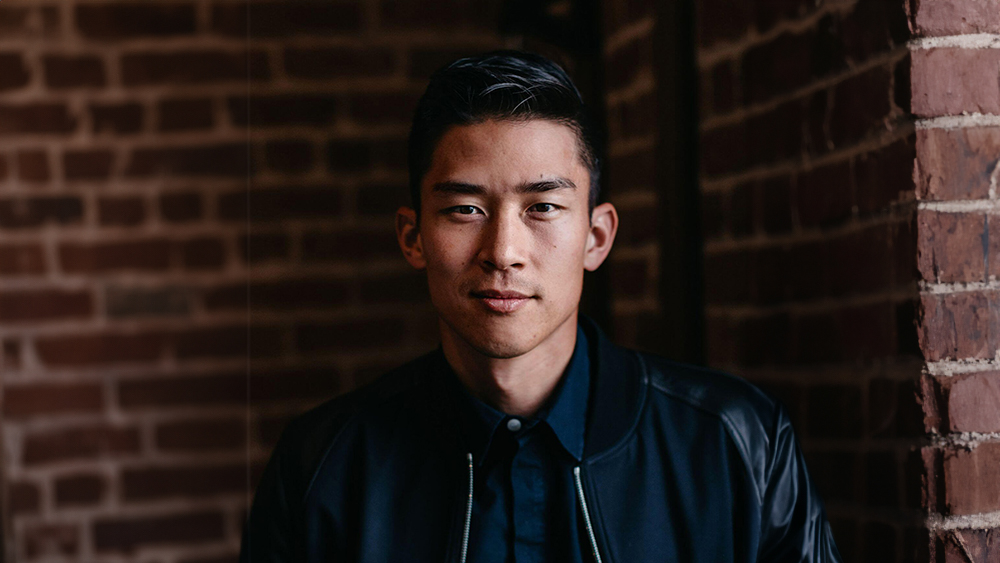
On November 10th, I had the honor of chatting with Bryant Chou. Bryant is the co-founder of Webflow, one of the leading website-building platforms in the world with a valuation of $4 billion. Within startup-land, Webflow is especially notable for being mostly bootstrapped, waiting five years before raising an additional round after their seed round in 2014.

In our conversation, we touched on a variety of topics ranging from being Asian American to working at startups vs. big tech. 

Note: Quotes were lightly edited for brevity and clarity.

EARLY CAREER

I started our conversation by asking Bryant if he had any entrepreneurial endeavors before his first official company. While he never directly started a business, Bryant did display early signs of his scrappiness.

My mom gave me twenty dollars a week for all of my lunches and whatever discretionary income. So, of course I spent most of it on food, but that essentially meant that I had nothing really left over. But I also really wanted to be a normal high school student and go to prom and go to dances and stuff like that. So I made money in high school by entering Counter-Strike tournaments. I would earn, I don’t know, a few hundred bucks in these local LAN parties. And that’s how I paid for dances. So I always kind of adapted and tried to apply myself in different ways, with whatever skill sets I had.

He continued on to talk about his motivation for getting into startups:

To be honest, I don’t know if I would have done startups if I was at Facebook or Google. You know, I didn’t land those jobs coming out of school. I wasn’t smart enough. Didn’t pass those interviews… I think because I was at a mid-tier tech company, it kind of gave me more hunger to do something on my own. I wanted a change and believed software startups were the future. I took the plunge in 2011, driven by the belief that startups would be significant, 

However, he also cautioned about rushing into startups: 

You need to think about the things that really need to be true in order to be a founder and do it successfully. One of those things is working in a space that you really want to affect and make a difference in. You just want to make sure that you’re working on something that’s worthy of 16 hour days, you know?

BRYANT’S ROLE AT WEBFLOW

Although Bryant is perhaps best known as being the co-founder and CTO of Webflow, I saw that Bryant had recently shifted his focus away from technology to growth and marketing for Webflow, so I asked him about that:

Because we were bootstrapped, we never really invested in growth and marketing. So what started as an impatient maneuver on my end, like, ‘hey, I think we need to start doing these things’ turned into, ‘hey, this is actually something that is ROI positive.’ Who would have thunk? I suppose even though I’m an engineer and builder and product person at heart, I’m also a company builder in that sense. So I’ve–for example, started our marketing, started sales, started data, started security, so all these things are just things that are just like, ‘hey, we need to do these things. Let’s figure out how to do it.’ And I think that’s something that most entrepreneurs are going to have to do. I don’t think you’d necessarily have an option to not do it.

Coincidentally, I had talked to the new CTO of Webflow, Allan, a few months prior. Alan was super nice and very sharp–a great backfill for Bryant.

NAVIGATING ASIAN IDENTITY

As the Asian Hustle Network, I naturally had to ask Bryant about how he felt being Asian qualified his experience as a founder, he started out by acknowledging the position of Asian men:

It’s a well-known fact that Asian men in Western societies have a different bar to hurdle than other people. One of the reasons why I was so keen to help produce the 38 in the Garden movie with Jeremy Lin is because he articulated this so well. Have you seen that documentary? 

I had not, in fact, seen the documentary. Oops. I watched it after the interview on his recommendation and it was very, very good. Please give it a watch! Bryant continued:

It’s my one and only film and probably the last one that I’ll ever be involved in. I’m totally okay with this because I believe this cause is important. Part of the reason why I agreed to chat with you is because we obviously have a chip on our shoulder. We are seen differently in society. I’ve dealt with it in various ways myself. I’ve taken a colorblind approach to business interactions and never thought about my race or ethnicity in certain environments. I think that’s ultimately what you have to do. As Asian people in Western society, you’re supposed to be heads down, let your actions speak for themselves. I still very much have that approach. Who knows if it’s the most optimal thing to do.

Despite his colorblind approach, Bryant was clearly very cognizant of the fact that people perceive Asians differently, and had a suggestion for our readers:

To just walk amongst people of the same race and they speak your language, I think that’s like a worthy thing to do and to dive into. I identify as Taiwanese, at least as much as I identify as an American. When I go there, I literally feel different. I feel like I’m one of the same, like I’m among my people, I’m not viewed as a minority, I’m just viewed as a normal person. I think every Asian-American should have that sensation at some point in their life that they feel like they’re seen as someone just like everyone else, and the only place where I felt that has been Taiwan.

I knew Bryant grew up in the Bay where there were a lot of Asians, so I asked him if he felt the same sensation in those areas, he suggested:

The broader construct of society that we live in is still the US, which is still 85% non-Asian. I think Asian Americans make up about 12% of the population, maybe even less. I don’t think it’s so much about not being in the majority. It’s more about the sensation that you get that you are biologically or ethnically more similar to the people that you’re walking around with in Asia.

NAVIGATING ENTREPRENEURIAL CHALLENGES

Moving onto the next topic, I asked Bryant about his emotional experience as I had heard a lot of founders talk about how difficult this aspect of running a startup was:

I thought it would be harder technically than it would be emotionally. But I would say the social emotional components of building a company are 100 times harder than the technology itself.

I followed up by asking if there were any specific experiences that stood out to him:

They’ll come up in different forms. In 2020, there were a lot of social justice issues that made running a company very challenging. Ultimately, when you’re at a company, you need to be hyper-rational. You’re faced with a conundrum between being a good steward of the company’s mission and vision and maybe what people inside your company believe, and sometimes those things clash.

It was clear that this level of situation took an emotional toll on Bryant, so I asked him how he copes with it and prevents it from seeping into his personal life:

You compartmentalize most of it. It helps to have a supporting spouse and partner. It’s great to have kids that can distract you from this.

ADVICE FOR YOUNG PROFESSIONALS

Adding on his comments about entrepreneurial pain, Bryant offered:

I think like if you’re in your 20s, I would actually be chasing that kind of pain. It’s the best time to chase pain and suffering. If it means that will lead to a certain level of intellectual expansion, social emotional awareness. There’s no better time to find the limits of what you’re capable of than when you’ve graduated, when you’ve got a whole life in front of you. Like, it’s time to see what you’re made of. So I’d be a huge proponent of young folks going to startups that are hectic and crazy, working in environments where they can learn, dedicating time and energy to perfecting a craft. Those are things that you don’t learn in school. And those are only things that you can chase on your own accord.

This made me think about how I have a lot of friends who go into Big Tech. A good number of them say that they want to pursue their own company eventually, but want to get their start at a big company to build up their skills. I asked Bryant what he thought about this approach:

There’s two kinds of learning that you can do at a big tech company. One is technology related. So you can go and immerse yourself in a technology, and be surrounded by technologists that can help you. That’s something very valuable for sure, but learning how to do things the way Meta or Google does things is not transferable at all to startups. None of their processes matter. None of their ways of thinking about building products matter. It’s just a whole ‘nother ball game. There are maybe some professional skills that you get to pick up. Communication, the ergonomics around the work–such as just documenting your work, making your work transparent, and just picking up good habits–that’s for sure. But there’s nothing like working in an early stage startup where you’re building something from nothing. You know, you’re almost never doing that at a big company.

I was somewhat surprised that Bryant felt that the Meta or Google way of thinking about products was applicable, so I pressed him to elaborate:

So actually, that’s a great example of something that I did retain. It’s more so the principles at which you approach building a product, right? Developing customer empathy, ensuring you’re not over-engineering things really matters. Facebook and Meta have an abundance of resources. Engineers at large companies are very good at building incredible things that are well-defined in a narrow spectrum. However, in a startup, you’re trying to go as wide as possible with what an engineer could potentially contribute to and build 60 to 80% of it. It doesn’t need to be perfect.

Bryant’s comment about over-resourced companies made me think about the opposite, under-resourced companies, and how I often hear about employees at those companies working weekends and long nights. I asked Bryant if he thought that was necessary in a startup:

There’s a time and place for it. I don’t believe nights and weekends are required. It’s important for people in their 20s to find their limits professionally and personally. This means making time for personal things like dating, hanging out with friends, and attending events. It’s about striking the right balance. For instance, I encourage my team members to take vacations when needed. It’s crucial for startup leaders to have a good pulse on their employees, understanding their strengths and weaknesses, and checking in on their well-being. I don’t believe anyone at SpaceX or elsewhere can stare at a problem for 100 hours a week and feel productive. It’s important to step out of your zone, draw inspiration from different things, and take breaks. To live a balanced life. When I say that people should find their limits professionally and personally, it’s like that limit is different for each person. But you have to feel like you’re able to stretch, build the muscle for your mental and physical strength to stretch when you need it. I think that’s really important to do.

SHOUTOUTS  

Webflow is hiring across multiple functions! Please visit this link to find and apply for open roles, or feel free to get in touch with Bryant at bryant@webflow.com if you would like to reach out personally for opportunities.

38 at the Garden, the short film about Jeremey Lin which Bryant helped produce is available to watch on HBO Max. The film is 38 minutes short and is a must-watch for all Asian Americans.

Thank you Bryant for speaking with us!
Related Articles

News

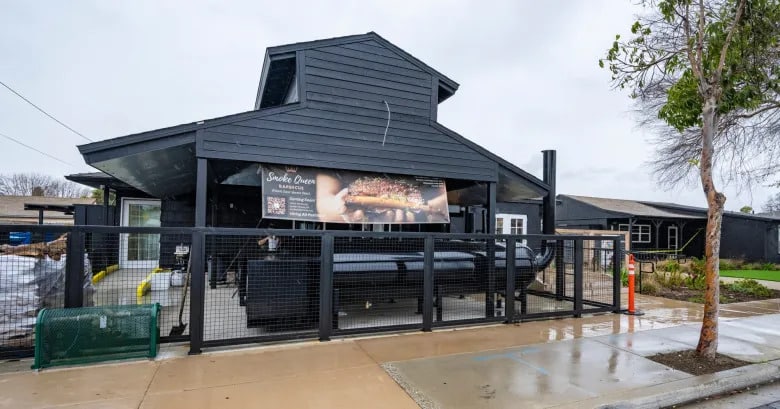
AAPI-Owned Smoke Queen Barbecue Celebrates its Brick-and-Mortar Debut

Winnie Yee-Lakhani’s Smoke Queen Barbecue celebrated its opening in Garden Grove on March 9, marking a significant shift from its origin as a pandemic experiment.

As the co-owner of Bruxie and a seasoned service franchisee, Winnie used the lockdowns to explore her passion for barbecue, leading to the birth of Smoke Queen Barbecue in 2020.

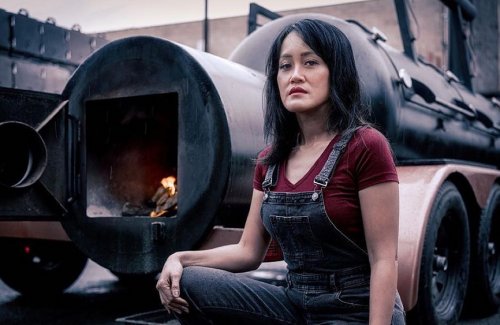
Smoke Queen Barbecue challenges stereotypes in Orange County’s dining scene and the wider American barbecue community, with Winnie, a petite Asian woman of Malaysian-Chinese descent, excelling in this traditionally male-dominated field.

Image Source: Orange County Register

In collaboration with pitmaster Jared Ruiz and her brother, Kevin Yee, Winnie’s culinary innovation fuses traditional Asian flavors with American smoking techniques. The menu features smoked brisket, pork belly, spare ribs, and chicken seasoned with unique Asian ingredients, like Thai basil, fermented soybean paste, black vinegar, and kaya custard.

Image Source: Orange County Register

The new Smoke Queen Barbecue location in Garden Grove’s Cottage Industries boasts a contemporary design with a charcoal-hued wooden slat exterior and a covered outdoor seating area. Smoke Queen Barbecue currently operates on Fridays, Saturdays, and Sundays from noon until 4 p.m., with plans for expanded hours and days in the near future. 

Featured Image Source: Facebook

Garry Tan

Awaken* newsletter

Garry Tan on Startups, Advocacy, and Overcoming Cultural Mindsets

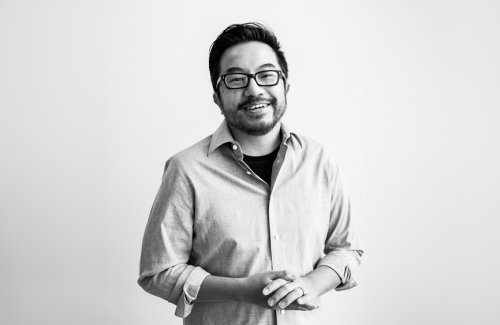
Few people in Silicon Valley are as high-profile as Y Combinator’s President and CEO, Garry Tan. Garry has worn many different hats over his illustrious career. In addition to leading the world’s most successful startup accelerator, Garry was the 10th employee at Palantir, co-founded Posterous (one of the earliest blogging sites), founded Initialized Capital (a VC fund with over $3.2B AUM), and has even ventured into the world of politics, becoming a prominent activist in San Francisco local politics. I got the chance to pick Garry’s brain about how being Asian has affected his life, and I hope that his answers can help and inspire our readers. Without further ado:

OVERCOMING DETRIMENTAL MINDSETS

My experience is that children of working class parents (especially Asian immigrants) tend to have a sticky mindset of scarcity–even when they improve their socioeconomic status. Garry has previously talked about his “$200 million mistake”. That is–he declined Peter Thiel’s offer to be a founding member at Palantir. To me, this seemed like a manifestation of this mindset, so I asked Garry how he overcame it:

I was able to realize that these things were two-way doors. Quitting a big tech company on good terms actually means you can go back anytime. There are one-way doors and two-way doors. For people who grow up with our upbringing, everything feels like a one-way door. But if you can recognize when that is wrong, then you have reclaimed some of the privileges those who come from money have by default.

The one-way vs two-way door framework is something Amazon founder Jeff Bezos has talked about extensively. You can hear him go more in depth here.

The stigma around mental health in the Asian community is another mindset that is gaining more attention. Personally, because my immigrant parents had to fight tooth and nail for survival, I don’t feel that I have the right to complain about my mental health since my life is comparatively easy. I asked Garry if this resonated with him and how he overcame this mental block:

I pretended I didn’t have any problems and spent a lot of time just trying to blend in, but in the end things about my childhood or unusual trauma-based reactions would pop up in my professional life. At some point I started going to therapy individually and it helped me immensely. All these things I didn’t have control over suddenly became something I could integrate and be aware of, and make better choices about. Carl Jung says if you don’t make the unconscious conscious, it will rule you, and you will call it fate. 

A third common mindset I see among Asian Americans is to keep their heads down and avoid rocking the boat, even if it means holding in their thoughts. Given that Garry is a very outspoken person, I asked him how he developed his confidence:

I remember in high school, I was editor of the school newspaper and noticed that students in our poorer high school got much more harsh sentences and expulsions for the same infractions that would get a slap on the wrist at the rich school. I was so angry about it, and I wrote an article exposing it but that was censored by my high school newspaper teacher. I was already going to graduate and go to Stanford so I let it slide, but deep inside me there was an anger at being silenced that I never forgot. Before newspaper, I would publish underground newspapers using Pagemaker and my English teacher would photocopy the newspapers for the class – it gave me a power I never forgot because otherwise I was the scrawny Asian nerd in the corner, but when I could channel the words of my community it gave me standing. I never forgot that.

ON ASIAN COMMUNITIES

On the topic of communities, I asked Garry about what motivated him to become a fierce advocate for the Asian community:

I feel strong solidarity with my Asian American community in San Francisco. We are a major part of the city but we are not seen. We are not heard. The local leaders would even denigrate our attempts at securing safety for our Asian American elders. Now I know I need to fight for those who don’t have a voice. One of the coolest things I found was a nonprofit called Dear Community that connects Asian Americans new to SF, often young professionals, to each other and to the existing SF Chinatown communities. It’s amazing to see smart driven people come together around that, and fight for our people in this city.

I also pointed out how he recently went to Singapore to attend a startup event called SWITCH, and asked him how he felt about the startup scenes popping up in Asian countries:

Startups are happening all around the world. You can learn from YouTube and the web. YC alums are everywhere in the world. I’m excited to see that what started in the Bay Area is now a global phenomenon and only growing.

THE ASIAN FOUNDER EXPERIENCE

On a friend’s recommendation, I asked Garry “Who are some non-technical Asian founder role models I might want to look towards? In terms of working at an early stage startup as a non-technical employee, what are the most valuable skills to learn?” Garry’s response kind of challenged the premise of my question:

In startups and in technology, being technical is a key strength. Be technical if you can be. And then be a polymath: it’s far easier for a technical person to pick up the soft skills than the other way around. 

In hindsight, I will admit that it seems silly to expect to get an outlier outcome (in the positive direction) in the tech industry if you aren’t willing to put in the effort to become technical. He got me on that one.

Lastly, I asked Garry the same question I ask all our guests–how does he think about his Asian-ness in the context of being a founder:

I didn’t think about it until much later. Frankly I tried to pretend it wasn’t an issue, even though there was absolutely a bamboo ceiling even for me. I was passed over for promotions and/or people didn’t think I was capable of doing what I have done. I would rage-quit jobs and it would work out, but I could see it going a different way. As a founder, I found that I needed to up-level my ability to speak up and speak out, and especially be as assertive as possible when I knew I was absolutely right. I had an unspoken desire that I was not even aware of for harmony, and without being aware of it I would sometimes self-abandon, and then be passive aggressive about it later. I don’t do that anymore, and it was a key step in my development as a leader. I wish I developed it earlier, and it was all because of unconscious programming from my childhood. 

The biggest lesson I took away from this interview was how the infallible and outspoken Garry Tan was not always so, and that at one point he was very much like the stereotypical Asian kid. Garry’s story proves that with self-awareness and determination, anybody can undergo tremendous growth and become an industry leader.

SHOUTOUTS

If you have an ambitious startup idea and want to be part of an amazing community of founders, apply to Y Combinator! Y Combinator runs batches twice a year–in the winter and summer. Applications for the summer 2024 batch are open, you can apply at https://www.ycombinator.com/apply

Thank you Garry for the interview!

Featured Image Source: Y Combinator

eunice 2-a -jpg

Stories

Former Teacher Launches Very First Asian Heritage Magnetic Dress-Up Dolls

Dolls have been with us for many centuries now, evolving from wooden dolls, clay dolls, and paper dolls, to plastic dolls, but the message that they send us has always been the same. They are often imbued with symbolism about what is acceptable and desirable in our society.

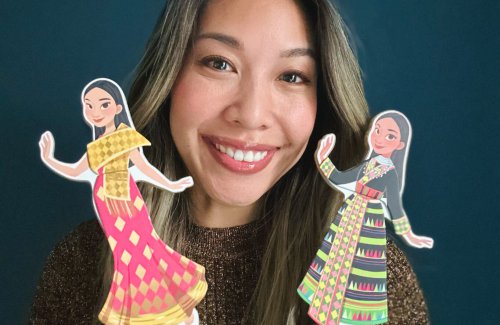
For children, dolls can mean a lot of different things, but most importantly, dolls can help them build their creativity, imagination, individuality, and even self-esteem. For this reason, Eunice Chen launched the World’s Very First Asian Heritage Wooden Magnetic Dress-Up Dolls.

Read through as we learn more about the journey that led Eunice to create Stay Curious Toys, all of which she shared through an exclusive interview with Asian Hustle Network.

THE CREATION OF STAY CURIOUS DOLLS

When Eunice first embarked on her project of designing an Asian princess and giving her many traditional Asian clothing, it was purely for her own enjoyment and fulfillment of one of her childhood wishes. She wanted to share her designs as a free resource to the Asian community, so she created paper doll versions and posted them online.

“I wasn’t expecting much response, but it BLEW UP!” Eunice said. She got thousands of likes and hundreds of comments from people thanking her and asking her to turn it into a real toy product.

Months passed and people were still asking her to make the dolls into a wooden toy. She did not know where to begin and literally just Googled and researched online. Somehow, she stumbled across a factory that she (later on) discovered also makes wooden toys for big brand names such as Disney, Fisher-Price, and Melissa and Doug! One thing led to another, and now she owns her own toy company called Stay Curious Toys, with her first products being magnetic dress-up dolls. 

PIVOTING FROM BEING AN ELEMENTARY TEACHER TO A FULL-TIME DESIGNER

Before becoming a designer, Eunice was an elementary school teacher. In December 2020, she decided to do a complete career pivot to become a designer, and had a dream of working as a designer in the animation industry. Growing up though, Eunice also wanted to become a fashion designer.

Little did she know that all of her dreams would come true, and that she would have the opportunity and enjoy designing her own toys and their clothes too.

Despite having no formal education in art and no connections in the art industry, Eunice worked hard, took art classes and learned to ask for help. She is now working as a full time designer on a Disney TV show, has illustrated four books, and designed toys.

OVERCOMING CHALLENGES

Just like everyone, Eunice faced some challenges along the way, one of which was fear of failure, and a lot of self-doubt.

“I still don’t know the best way to deal with it and I haven’t overcome it, but I just continue to push through. I know that if I take small steps towards my goal or dreams daily, then one day I will get to the destination,” she said.

CULTURAL ROOTS AND MODERN FLAIR

Eunice’s multicultural upbringing in Canada/US and Taiwan plays a significant role in shaping her dolls. Infusing Eastern and Western influences, she creates designs that celebrate Asian heritage while offering a modern and fresh perspective.

In Taiwan, Eunice had a lot of Asian role models to look up to and instill within her a lot of pride in her identity. It showed her more diversity in the types of careers and interests an Asian person could pursue.

In the US/Canada, Eunice experienced what a lot of Asian Americans go through, how they always feel like an outsider and constantly having to be perfect or prove themselves. But she also witnessed the grit behind every immigrant and stories of their families.

However, in both places, she hadn’t seen Asian dolls that truly represented the richness and diversity of Asian Culture. And in some way, her creation is something that she wished she had when she was a girl.

WORKING ON A DISNEY TV SHOW

“I knew I had limited time and a lot of catching up to do, and since I was starting from the very bottom, I had no ego (or no shame). So I just kept putting myself out there and tried to learn from everyone and everything. I also developed thick skin and learned to take rejection lightly. Eventually, after countless applications, I got an art test for Pupstruction to design a bus for the show. They liked my design and hired me!” Eunice shared.

Eunice uses the same lessons she learned from landing her Disney job now with Stay Curious Toys: “keep a clear goal, continue to learn, don’t let rejections or setbacks deter you from your goal, and make friends!”

LIFE-ALTERING PERSPECTIVE

A near-death experience shaped Eunice’s outlook on life. 

“It made me realize that life was too short to be lived for other people’s approval. And so I started making choices for myself…and through that process, I discovered that when I was making things that I truly enjoyed, it resonated with people and people responded,” she shared.

ADVICE FROM EUNICE

For those who want to pivot their career – “Be clear in what you want–even if you can’t see the final, ultimate goal, you have to know and believe what your next steps are. And in any change, risk is involved, so you have to know when to take that risk/jump. It is also important to filter out the noise/feedback you get from your friends and family–listen to them and then make your own assessment with the information you got from them. Each person and situation is different, so I am only sharing what has worked for me. But ultimately, the most important thing is to make or do what you love, and not what others want you to do.”

For those who want to pursue a career in art – “Make sure you develop a strong set of foundational art skills and learn those from good artists and references. Think about which field in the art industry you’d like to be in and curate your art portfolio to match the type of job you’d like. Stay humble and hungry, and surround yourself with peers and mentors by reaching out to them and asking questions. Keep putting yourself and your art out there, and know that even the best artists experience imposter syndrome.”

CONNECT WITH EUNICE CHEN / STAY CURIOUS TOYS

IG: @eunicesketches / @staycurioustoys

Website: eunicesketches.com / staycurioustoys.com

*Pre-order at staycurioustoys.com, starting February 1, 2024. The first 100 customers will receive an exclusive tote bag designed by Eunice.

News

Three Business Heirs in Asia Pave the Way for Socially Conscious Investments

Across Asia, a new wave of second- and third-generation business heirs is redirecting family enterprises toward sustainable investments, challenging traditional profit-centric businesses.

Komal Sahu, Chief of Sustainable Finance at AVPN, the largest network of social investors in Asia, notes that younger generations are recognizing their family’s wealth as a catalyst for positive transformation. By integrating environmental, social, and governance factors into their investments, these heirs aim to drive positive change while maintaining financial viability.

Al Jazeera has shared three business heirs across Asia that exemplifies this:

In Malaysia, 27-year-old Abe Lim, an heir to a lubricant and cleaning products business, departed from her father’s profit-focused approach, despite being groomed to take over the company. Instead, she founded Purpose Plastic, successfully transforming discarded plastic into home decor and other products while emphasizing sustainability.

Image Source: Al Jazeera / Abe Lim

In some cases, the older generation encourages innovative thinking to secure the ongoing success of their businesses. The Lopez family in the Philippines, known for success in telecommunications and energy, divested from coal in 2016 to focus on renewable energy. Marianna Lopez Vargas, partnerships manager at the Oscar M Lopez Center, believes that a complete transition to renewables is achievable with the right incentives.

Singapore-based Fernando Scodro, responsible for his family office’s investment strategy, is educating his family about socially conscious investing, which leads to impactful investments like COGNI, a Brazilian startup focused on energy efficiency.

As these Asian business heirs redefine success, their commitment to sustainable investments signals a profound shift toward a more socially and environmentally conscious business landscape.

Featured Image Sources: Al Jazeera, Esquire PH, X