Awaken* newsletter

March 21, 2024

SHARE:

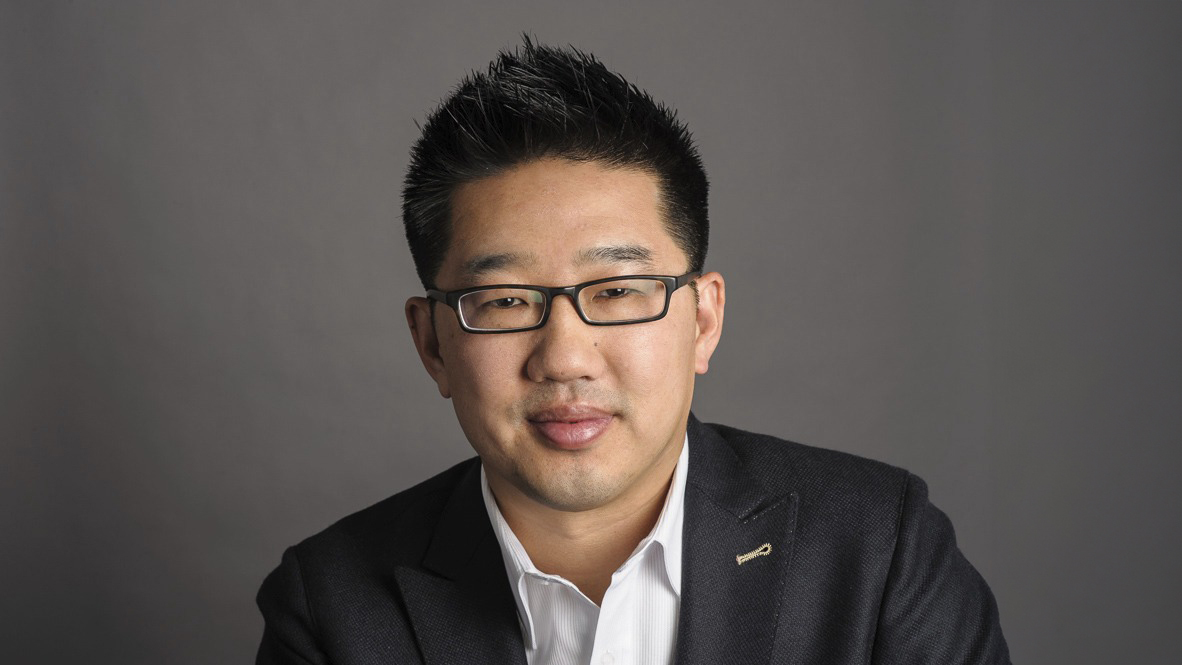
On December 15th, I had the honor to chat with Kevin Chou. Kevin is one of the foremost Asian American founders, having founded a number of gaming and web3 companies (Rally, Forte, Blocto, Gen.G, and Kabam) and currently spends his time working on Superlayer, a crypto venture studio he co-founded two years ago. Kevin also serves on the board of trustees at his alma mater UC Berkeley and notably made the largest donation to the school from an alumni under 40 years old. Without further ado:

FINDING YOUR OWN VOICE

In my research for this interview, I came across an article where Kevin said “Not working has helped me realize that by far the most important thing is finding that voice in your head that’s truly, authentically you”, but he never got around to sharing how to find your own voice, so that’s what I asked him:

One way to think about it is to try to meet as many people as possible, people that seem to inspire you–could be from all walks of life. It could be somebody in the government, the political field, someone doing nonprofit work, or even a church figure. Reach out to as many senior people, people that you admire, people whose work seems really cool. Reach out exactly like how you did. Say, “I’m a new graduate. I’m still trying to figure out what I want to do with my career. I’m really inspired by what you’ve done. Can I set up 30 minutes with you to talk about what you do, what you like about it, what advice you have, etc.?” It’s shocking how few people do this. I know it’s potentially a little scary. You’re reaching out to people who you don’t even know. 

Personalize a note, find them on LinkedIn, or social media, or email, and just send them a note. It’s actually surprising. I took a look at your note. And I was like, “You know what, it’s half an hour of my time. If I could help somebody, I think about it as just paying it forward.” I think a lot of people who’ve had some success in their life are very happy to pay it forward and try to help young people figure out what they want to do, because I think we were all there when we graduated.

On a personal note: I’ll add that my success rate with my cold emails to these founders is about 5-10%, which Kevin noted was within expectations. That’s not to discourage anyone from emailing, but to set realistic expectations as to the response rate. If your response rate is better than mine, I’d love to hear what you’re doing so I can copy you!

ON BEING ASIAN

At Asian Hustle Network, our one recurring question is: “how has being Asian qualified your experience as a founder?”, here is Kevin’s response:

I think about it all the time. I didn’t grow up in an Asian community. I grew up in a very small, rural community. So it was a lot of white and Hispanic folks, and I didn’t really have any Asian restaurants in my town. There were only two other Asian kids in my high school. When I was a kid, I thought it was weird that I was Asian. I looked different from people, ate different food than other people, and my parents didn’t speak English as fluently. I tried to blend in and not really focus on it. Then I went to college at Berkeley. There, I found a lot of friends and felt like I fit in a lot more. As a founder, it’s again, thrust into an environment with very few Asians as CEOs. There are a lot of Asians in technical roles. I think I’ve been incredibly successful. Lately, there have been more and more Asian founders, but there’s not as much of a cohesiveness around it as much as, for example, the Indian founder community is very tight. The Pakistani community is very tight. There are a lot of other ethnic communities that are founders that I think are tighter.

I had recently talked to Bryant Chou from Webflow, and his method of approaching this was to take a colorblind approach when it came to business. I mentioned to Kevin that his approach seemed the opposite of Bryant’s:

I definitely feel differently about it. I’m doing business with a lot of people. In general, when I’m doing business, I’m working with all different types of people. But in terms of people that I want to help out, it’s very natural that I’m more likely to say yes to an interview or try to help somebody else out if I see a little bit of myself in them. Ethnicity helps. I’ve done a lot of business in Asia, including having a 300 person office in China and starting an esports company called Gen.G, which is based in Seoul, Korea. 

Going to Asia, it’s a huge advantage to speak the language and understand some of the cultural aspects. I think about how I can take advantage of the good parts of being an Asian founder and entrepreneur, and then there are probably times where it’s a net negative, and I try to mitigate those as much as possible. 

For example, during COVID, there was a big group of Taiwanese American entrepreneurs, like Steve Chen from YouTube, and Kevin Lin from Twitch, and Jameson Hsu. We decided to go to Taiwan during COVID. There are lots of times where we’re celebrating Chinese New Year together, and just like Chinese New Year events that you go to, and you meet a bunch of other founders. Having kids and a family, I spend a lot of time just enjoying meeting people from those cultural events. 

Pulling on this thread, I asked Kevin what kinds of detriments he felt Asians faced:

I don’t think there’s as much of a detriment anymore. I would say in 2006, I was incredibly lucky that I was a VC. When I joined investment banking, there were like two other Asians in my hundred person office. And in all of the venture industry, there were maybe 10 Asians (circa 2005). How many CEOs were successful, CEOs of companies that were Asian, you had Jensen who ran Nvidia and that’s about it. There were just not many Asians. You think about all the .com companies, all of the e-commerce companies that were started in the late nineties and in that era of the technology world. It’s hard to think of many Asians. I would say Jerry Yang comes to mind.

Although he wasn’t the CEO initially, back then it was really hard to be a CEO who was Asian and trying to pitch to someone who’s generally not Asian. The investors do a lot of pattern matching. For example, they might think, “These kids are from MIT. That’s a good pattern match. I’m interested.” While nobody’s explicitly saying, “I don’t want to fund a woman or someone of a certain ethnicity,” they’re just pattern matching. They’re taking lots of meetings and they might think, “Something’s a little off about this one.” Think about it, how many CEOs have been Asian? It was a lot harder, but today there are a lot more, which is good. I think it’s less of an issue today. On the positive side, a lot of Asian founders get credit for being smart, being technologists, and for hustling. I don’t think it’s much of a detriment anymore the way it was 20 years ago. That’s good for the better in that regard. 

Going off his comment on the lack of Asian CEOs, I asked him what kinds of things he practiced or studied to overcome the additional headwinds he faced:

If you want to be a CEO, everyone has different perspectives on this. My perspective, especially in the context of the Asian Hustle Network, is that one of the Asian stereotypes is that they’re quiet, smart, and they work really hard, but they don’t know how to get out there. They don’t know how to sell or get deals done. So, I think being a good communicator and developing your own leadership style in a way that is authoritative, compelling, and authentic is important. Everyone has their own way of doing this, but there is a certain projection or pattern match of somebody who is going to be a good CEO. As a founder, you’ve got to be someone who can overcome obstacles, regardless of your ethnicity or gender. You have to be good at running through walls. Being good at sales, being able to get your ideas across in a compelling way, these are all incredibly important. These days you can do that via a variety of means. It doesn’t have to all be in person. 

FUNDRAISING 

I have some friends who are looking to raise a pre-seed round for their startup. But they were having some difficulty as they weren’t located in the Bay Area and didn’t have existing connections to angel investors. I wanted to see if Kevin had any advice for people in their position:

It’s definitely a lot easier if you’re from Stanford, MIT, Cal, or other top programs with a technical background. If you’re not from that, my biggest advice is to move to San Francisco or New York. If this is what you want to do, you have to do it right. If you wanted to be an actor or be in show business, you would go to New York or Los Angeles. That’s where everything is. The various angel investors, seed investors, and larger institutional investors are primarily in these two markets. I would say the Bay area still tops, but New York is a very close second these days. It’s much easier if you go out, attend some of the easier events, meet some people, spend some time networking, and then get invited to other events. You start meeting investors, figure out what events they are going to, go there and meet them, and talk to them about your ideas. There’s no substitute for meeting somebody face to face and talking.

Kevin later added a few additional thoughts:

As a young entrepreneur, there are two ways to build a company. The way I did it was through luck. I raised half a million dollars for my first round in 2006, which wasn’t a lot of money. We were incredibly frugal and had enough money to pivot a few times. This is a harder way to do it because it involves a lot of networking to find investors. I was fortunate to have spent two and a half years as a VC in the industry, so I knew a lot of VCs. My own firm and a few others were willing to write me a check, but I chose the firm I used to work with because they offered better terms. However, the best way to build a startup is raising a few hundred thousand dollars, around $200,000. Those types of deals are easier to get. Ideally, you can even avoid raising anything because what you can do is get a few friends together who are technical and build the thing, launch it, and get some success. Then raise money. It’s much easier raising money once you’ve built something than when it’s just a story.

When I say I’ve been pitched hundreds of Gen AI startups, I would say 80% of those pitches did not build anything yet. A lot of those emails start with, “I’m looking for pre-seed funding and here’s what I’m looking to try to do.” I generally don’t even read those emails. And I think a lot of other investors don’t either at this point. So if you haven’t met the team, if the team doesn’t have a really good background in exactly the area that they’re tackling, it’s an easy archive email. 

Whenever somebody built something and emailed me, “Here’s a link to the thing I built,” or “Here’s a video of the thing working,” I generally take the time to go take a look at it because I’m always interested in what’s new. I’ll take way more meetings with somebody who’s built something. 

And there you have it! Just building something and getting a few users will put you ahead of most pitches.

TAKING CARE OF YOURSELF AS A FOUNDER

The last question I asked Kevin was how he dealt with the emotional toll that being a CEO takes.

You have to have either a community or a relationship. Besides parental relationship, some meaningful relationship in your life that is going to ground you through the tough times, because without that, it’s just so easy to slip into that place. These days, it’s much more normal to talk about the importance of mental health. Mental health, emotional health is incredibly important. I think it’s all rooted in physical health, too. It’s really hard to run a startup if you’re not physically healthy. If you’re not physically healthy, that also drags down your emotional and mental health. So I think physical health is actually the very base of the pyramid.

From SoulCycles to sports, for example, I highly recommend a book that has been really helpful for me. It’s a book called Younger Next Year. This book came out, I think, over two decades ago. I recommend it to everyone. You don’t even have to read the book. The very basic thing to do is strength training two times a week, and then try to do some cardio exercises, another three to four days a week. So basically spend five or six days a week being physically active, with two of those days being strength. Exercise and eat reasonably okay. That is my number one advice to people with a stressful lifestyle. Having a grounding of physical health is super important. 

Then we get to the question that you started with, which is emotional health. Emotionally, mentally, it is incredibly important to have a community and to have a relationship that you care about. I know all this sounds like, “How am I going to do all this stressful stuff in your life?” But the whole point is, if you’re going to run a marathon, you have to pace yourself. The number one thing that I find is, if time permits, have something that you like doing. Ideally, that’s something that ties into physical health, because that way, you kill two birds with one stone. Whether it’s hiking, or a sport or something else, do things that you enjoy a few hours a week, because otherwise, you’ll just burn yourself out. So physical health, relationships for mental health, and then do some play every week.

I asked Kevin what exercises he tends to do and mentioned that I do mostly cardio:

Strength training is the number one thing that I recommend for everyone. That can come with all sorts of different things like circuit training, some sort of boot camps. It doesn’t have to be super intense, you’re not looking to necessarily get ripped and get a six pack. It’s just strength training, kind of a total body core strength training. Find something that you like that gives you energy, it could be a class, it could be one on one, it could be doing videos, something that you enjoy. Strength training doesn’t have to be a chore, it should be reasonably fun. On the cardio side, I love playing tennis, and lately pickleball. That’s what I do most of the time. On the weekends, I’m generally hiking, because I like spending time in nature with my family. 

There’s a website called Bay Area Hiker, or BA Hiker, I think. It has all sorts of great hikes that are all ranked by community. You can search by area and city. We like driving out to Half Moon Bay. Near the ocean, there’s a ton of great hikes along the one freeway. If you drive south from San Francisco, as you get towards Pacifica, there’s a lot of great hiking trails that take you above the one freeway. You get a gorgeous view of the ocean and the waves coming in. It’s just beautiful.

SHOUTOUTS 

If you like mobile games, check out Bored Button, a free mobile game where you can earn valuable loyalty points–made by one of Kevin’s companies. Bored Button is available to download on the Apple App Store, Google Play Store, and the Amazon App Store.

Thank you Kevin for speaking with us!
Related Articles

82EF93C1-0E09-4458-B3F1-EE5FF945AC38

Stories

Meet the CrossFit Athlete Breaking Records and Stereotypes in a Field We All Thought We Knew

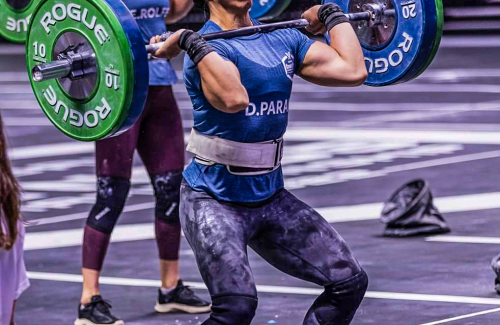
Meet Dana Paran, a Filipino-American athlete who has broken down stereotypes and redefined what it means to be a CrossFit champion. Dana’s path, as one of the first people from her background to make her imprint on the global scene, is a powerful symbol of dedication and diversity.

Dana’s path to success is paved with sacrifices that reflect her unwavering commitment, including a daily routine that revolves around rigorous training, meticulous nutrition, and forsaking ordinary celebrations in pursuit of greatness.

Through an exclusive AHN interview with Dana, we witness not just a remarkable athlete, but a true advocate for change and a trailblazer for a more diverse and inclusive future in sports.

Join us as we discover more about her journey in the world of CrossFit.

HOW DOES IT FEEL TO REPRESENT THE PHILIPPINES AND ASIAN ATHLETES IN THE WORLD OF CROSSFIT?

Mixed emotions. I feel very privileged and extremely proud to represent the Philippines as one of the first Fil-American athletes – the fact that I am one of the first points out the lack of DEI (diversity – equity – inclusion) in the sport.

Representation matters. Seeing professional athletes that represent minorities is crucial for aspiring athletes. I hope that I can inspire Filipino/AAPI/Asian athletes to continue to break stereotypes.

COULD YOU SHARE A SPECIFIC INSTANCE WHERE YOU HAD TO MAKE A SIGNIFICANT SACRIFICE TO PURSUE YOUR GOALS?

Honestly, from the outside looking in, my entire career is one overarching ‘sacrifice.’ My daily activities are all dictated by the fact that I need to be able to train for 5-8 hours, fuel my body to sustain my training, and get enough rest and recovery to do it all again when I wake up.

For now, I miss out on celebrating weddings, date nights, vacations, and holidays all in the pursuit of greatness. On the days that my motivation battery is at 0, I am able to lean on the fact that all of the elements of my training are not actually a ‘sacrifice,’ but a temporary expenditure for tomorrow’s success. 

AS AN ATHLETE WHO HAS COMPETED IN VARIOUS INTERNATIONAL CHAMPIONSHIPS, HOW DO YOU APPROACH THE MENTAL AND EMOTIONAL ASPECTS OF COMPETITION?

“Have courage” is a mantra I repeat to myself in moments of doubt – whether I am training or before the 3-2-1 countdown in competition. To me, having courage means having strength in the face of something that frightens me, hardships, or adversity.

It’s an affirmation to myself that “I belong here & I believe in myself.”

WHAT ARE SOME OF THE CHALLENGES YOU HAVE FACED IN FINDING SUPPORT IN A SPORT WITH LIMITED SPONSORSHIP OPPORTUNITIES FOR ATHLETES LIKE YOU?

CrossFit is a niche sport and Asian brands actively marketing in the CrossFit space seem close to non-existent. I have tried to branch out to brands that market to the general ‘fitness’ industry but have been met with little interest on their end for partnerships. 

While it is discouraging to be rejected, I am hopeful that a “no” today will become a “yes” tomorrow. The reality is every competition I go to I have Asian spectators approach me to say how special it is to see themselves in an Elite athlete. I am hopeful that, as we show that we belong in CrossFit, Asian athletes will have many opportunities to align with brands that mirror who they are.

AS YOU AIM TO ELEVATE YOUR ATHLETIC CAREER TO NEW HEIGHTS, WHAT ARE SOME OF THE GOALS YOU HAVE SET FOR YOURSELF?

The CrossFit Games is the biggest and final stage in our sport.

Only the fittest of the fittest in the world qualify and it is an amazing opportunity to showcase what got you there in the first place. As I work towards that opportunity, I have been sure to ‘stay in my lane,’ recognizing the aspects of my training that are conducive to success and tailoring my training, recovery, and the people around me to ensure that I’m moving forward. 

While competing at the Games (and other Elite level competitions, such as the Rogue Invitational) is an athletic goal, another of my goals will always be encouraging diversity in the sport & making fitness inclusive to those who have historically felt unwelcome. I am actively networking with individuals and brands that align with my purpose to amplify that message. 

WHAT IS THE MOST IMPORTANT PIECE OF ADVICE YOU WOULD GIVE TO ANYONE PURSUING THEIR PASSIONS, WHETHER IT BE IN SPORTS OR ANY OTHER FIELD?

Being successful doesn’t have to come at the expense of your well-being. As a society, we have accepted that drops in physical health should be attended to, but mental health is overlooked or ignored.

I’ve realized that protecting your peace & knowing when to take a step back to “refill your own cup” is incredibly important. You cannot push through with an empty cup & it’s okay to acknowledge that you need to rest and recover in order to keep moving forward.

CONNECT WITH DANA

Instagram: @dvnveverest

Facebook: Dana Paran

© Jordan Katz 2019

Stories

This Ai-Powered Coaching Platform Helps Managers and Teams Improve Effectiveness and Relationships in The Workplace

Pianpian’s own experience struggling with leadership and relationships in her professional life inspired her to create a solution that would help others facing similar challenges.

Amotions, founded by Pianpian Xu Guthrie, is a platform that aims to improve managers and hybrid teams’ productivity and connection by upskilling their soft skills such as emotional intelligence with AI-powered coaching.

Recognizing that not everyone can afford an executive coach or passively consume content to learn skills like emotional intelligence, interpersonal skills, and leadership skills, she set out to create an accessible and affordable platform that could provide people across various social-economic circumstances with the tools and support network they need to reach their potential.

At Amotions, they believe that each person has unlimited potential and can grow with the right support and encouragement, and with the right tools and support, anyone can achieve greatness.

COMING UP WITH THE IDEA OF AN AI VIRTUAL COACH

Growing up in a rural village house in Taishan, China, Pianpian’s parents worked tirelessly to provide her with education and opportunities. When she discovered the internet in high school, it opened up a world of possibilities for her, allowing her to connect with mentors and educators from around the world.

Pianpian received her master’s degrees in sociology from Yale University with a thesis on social mobility and psychological well-being. She was a teaching and research fellow in social science at Yale and Hong Kong University of Science and Technology. She then led product management and growth at multiple tech companies in hybrid and remote settings before founding Amotions, Inc.

Inspired by her own struggles with managing teams and relationships in the tech industry, Pianpian came up with the idea of building an AI virtual coach that could help people regulate their emotions in high-pressure situations, build better connection with their colleagues and people around them, and reach their full potential.

“I had the idea of building an AI virtual coach which can listen to me and give me tips when I am raising my voice and say “Seems like you are getting upset, take a deep breath, calm down first, so you are not getting into an argument with your coworkers and destroy your relationships.” Then as I discussed the idea with the team members and potential users and customers, I realized that we can also utilize the power of a human support system,” Pianpian shares.

Amotions uses technology to connect users with knowledgeable peers, coaches, advisors, and mentors, providing a powerful network of support for those looking to advance their careers and personal development. Amotions is poised to transform the way people learn and grow, empowering individuals to reach their full potential with the help of technology and human kindness.

WHERE AMOTIONS COMES IN

Millions of people struggle with emotion management and relationship issues in their personal and professional lives, but there are no accessible and affordable solutions. Executive coaches are expensive, and passive learning methods like books and videos are often ineffective in learning important skills like emotional intelligence and leadership.

As teamwork and collaboration become increasingly important in the modern workplace, there is a growing need for individuals to improve their interpersonal skills and develop emotional intelligence. This is where Amotions comes in.

Amotions aims to provide a platform and support network for everyone to continue to grow themselves both professionally and personally. Their solutions are designed to be accessible and affordable for people of all social-economic circumstances around the world.

“As a mother, I want my children to have the self-motivation and support network to grow themselves, and have great relationships in their professional and personal lives. I hope to create the kind of environment needed for them and many others. The world will be a better place when a lot of people are happy with their lives and care about each other,” Pianpian said.

IMPROVING THE PERFORMANCE OF MANAGERS AND HYBRID TEAMS

Amotions leverages AI-powered coaching to enhance the connection and performance of managers and hybrid teams.

Through daily practices, real-time insights, communities, and AI-powered coaching conversations, Amotions helps upskill people-facing roles, leading to improved employee efficiency and engagement.

With sentiment analysis and recommendations, powered by AI, and integration with calendars, Slack, and Zoom for context, Amotions provides a platform approach that allows companies, experts, and coaches to upload content. Users can also converse with an AI coach and participate in peer communities for support and practice. 

AMOTION-AL CHALLENGES

One of the biggest challenges that Pianpian faced in building Amotions was determining the best products and experience to address these challenges and acquire customers and users.

“We have been reaching out to people in our network, as well as reaching out to potential users and customers, and having lots of conversations with them. Support from people like the Asian Hustle Network founder Bryan Pham and members like Jenny He, Kerry Wei, Jane Lee and others helps too, as well from other founders, mentors, friends, alumni from Yale, Sun Yat-sen University, and other universities I attended, former colleagues, and kind people I encountered,” Pianpian shared.

THE FOUNDING TEAM

The founding team of Amotions is comprised of Pianpian Xu Guthrie, Jerry Hong, and a few other engineers and designers.

Pianpian has over ten years of experience as a product lead at various companies, including GoDaddy, Ticketmaster, Priceline, and several startups. She also earned a Master’s degree in Sociology from Yale University, providing her with a deep understanding of social science.

Jerry, on the other hand, has over 20 years of experience as a senior software engineer and manager, working for companies such as Ticketmaster and several startups.

With their extensive backgrounds in software product development and social science, the founding team brings a unique perspective to creating effective solutions for emotion management and relationship issues in professional and personal lives.

NOT YOUR ORDINARY WORKPLACE TRAINING SOLUTIONS

Amotions differentiates itself from other workplace training solutions in the market by offering an AI-powered coaching platform that provides quick solutions for users’ problems, available 24/7.

Unlike traditional corporate trainings, which are not effective for long-term learning, Amotions’ platform allows users to learn by doing, reflecting, interacting with others, and getting real-time feedback. Additionally, the platform is affordable and accessible for people from various socio-economic backgrounds, offering daily practices, peer communities, sentiment analysis, and recommendations powered by AI.

Amotions’ approach focuses on developing soft skills, such as emotional intelligence, interpersonal skills, and leadership skills, that are essential for success in the modern workplace, providing a comprehensive solution that goes beyond one-off training sessions.

THE FUTURE FOR AMOTIONS

Pianpian envisions the company as a tool to empower millions of individuals worldwide to reach their full potential and transform organizations through high-performing teams and next-generation leaders.

“We start with helping managers and teams develop soft skills and solve problems they face, and I can see that we expand to help employees upskills and reskills also technical skills and functional skills, and to be the biggest player in the professional development and personal development space,” she said.

As the company grows, it plans to continue leveraging technology to personalize the experience and provide real-time insights and recommendations to users.

We are looking to connect with founders and company leaders and angel/pre-seed/seed investors interested in innovation and building high-performing teams to get feedback on what we are building and learn more about their needs. Please let me know if you are interested in connecting with me for a 15-minute conversation, or if you know if anyone I should connect with.

What can you offer to this community?

Happy to help with manager training and leadership development, soft skills development, product management, emotional wellness, Chinese and Japanese cultures and markets, or any way I can. We also offer free trials and discounted access to our product.  

CONNECT WITH PIANPIAN

Website: amotionsinc.com

Linkedin: Pianpian Xu Guthrie

Twitter: @PianpianCarolyn

ig-png

News

Indian Teen Entrepreneur Aaman Shah Makes Waves in the Sneaker Industry

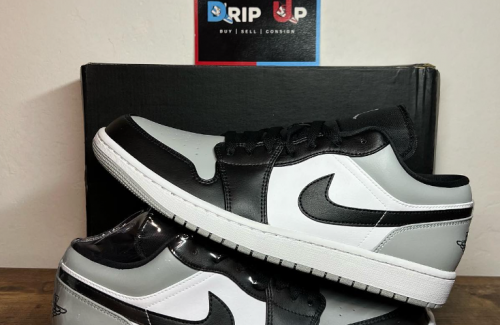
Aaman Shah’s inspiring entrepreneurial journey started when he was just 16 years old. Aaman comes from India and started a company called DripUp – a global enterprise reaching the USA, India, and Canada, with a specific focus on engaging the youth.

Aaman Shah’s story started with his curiosity about sneakers, wondering why people are willing to spend lots of money on sneakers like Nike and Jordan. He went to other places outside his hometown and noticed lots of people loving sneakers. Collaborating with his friends Dhruv Seth and Mufi Dharani, Aaman delved into the latest sneaker trends, discovering their potential for substantial profit.

Aaman went from being a sneaker fan to someone who sells them. In 2020, he saw people spending $20,000 on sneakers that used to cost just $200. That’s when he got the idea to start DripUp.

DripUp has carved a niche in the sneaker market by leveraging online platforms such as Instagram, WhatsApp, and Facebook. Aaman’s ingenious approach to the business, centered around fostering a strong sneaker culture while ensuring customer satisfaction, has earned DripUp a reputation as a trusted source for premium sneakers and watches. Through the challenges of the ever-evolving market and the complexities of running a business as a student, DripUp has not only survived but thrived.

When people ask why customers spend a lot on sneakers, Aaman Shah says it’s because they’re special and not everyone can get them. He thinks people buy from him because they know he’s trustworthy, according to his interview with Startup Story Media.

Aside from just making money, Aaman aims to have good relationships with his customers. He sells special sneakers like Yeezy and Jordans, and he’s honest about how much he makes from it.

Even though the sneaker business has some tough parts, Aaman Shah’s dedication to the sneaker world and his ability to handle tough situations show that he’s a strong and determined young businessperson.

Featured Image Source: Instagram

V2 2023 AHN News & Stories Cards-png

News

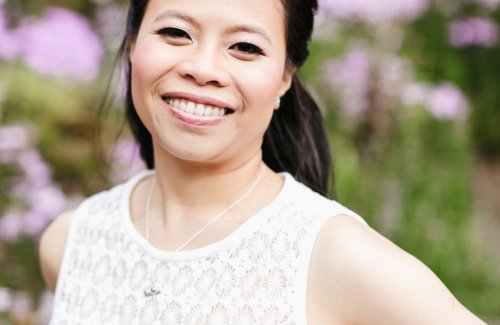
Kylie Chang and Erin Kwon Triumph as Miss Asian Global and Miss Asian America 2023

In a big event celebrating Asian American beauty and success, the Miss Asian Global and Miss Asian America Pageant, known for being the longest-running beauty contest for Asian Americans in the US, has picked its winners for this year: Kylie Chang and Erin Kwon. This event is really important as it shows how Asian Americans can be confident leaders.

According to NextShark, Kylie Chang, who is 18 years old, won the 38th Miss Asian Global title at a special place called the Herbst Theatre in San Francisco. She shared with KRON4 that she was really happy and said all her hard work paid off.

She loves dancing and shares that joy with kids who might not have the same chances. She volunteers as a dance teacher at Friends of Children with Special Needs, which helps them feel good about themselves. Kylie also does good things with fashion – she’s a part of an organization called Catwalk for Charitable Causes that uses fashion to help charities.

Erin Kwon is 24 years old and is studying to become a doctor in Irvine, California. She’s also this year’s Miss Asian America. Erin really cares about older Asian Americans and wants them to know more about staying healthy. She helps people in hospices, which are places where very sick people get special care, as an advocate for better healthcare education in the Asian American elderly community.

“I didn’t even expect to place. I just wanted to have an experience where I meet other women and just do something outside of my comfort zone, but I got way more than I ever expected so I’m very, very pleased,” Kwon told KRON4.

The contest has been around since 1985 when Rose Chung started it at an event called the Asian Arts Festival. It’s all about helping young Asian women grow and become strong leaders.

Featured Image Source: Miss Asian Global