Awaken* newsletter

March 6, 2024

SHARE:

Few people in Silicon Valley are as high-profile as Y Combinator’s President and CEO, Garry Tan. Garry has worn many different hats over his illustrious career. In addition to leading the world’s most successful startup accelerator, Garry was the 10th employee at Palantir, co-founded Posterous (one of the earliest blogging sites), founded Initialized Capital (a VC fund with over $3.2B AUM), and has even ventured into the world of politics, becoming a prominent activist in San Francisco local politics. I got the chance to pick Garry’s brain about how being Asian has affected his life, and I hope that his answers can help and inspire our readers. Without further ado:

OVERCOMING DETRIMENTAL MINDSETS

My experience is that children of working class parents (especially Asian immigrants) tend to have a sticky mindset of scarcity–even when they improve their socioeconomic status. Garry has previously talked about his “$200 million mistake”. That is–he declined Peter Thiel’s offer to be a founding member at Palantir. To me, this seemed like a manifestation of this mindset, so I asked Garry how he overcame it:

I was able to realize that these things were two-way doors. Quitting a big tech company on good terms actually means you can go back anytime. There are one-way doors and two-way doors. For people who grow up with our upbringing, everything feels like a one-way door. But if you can recognize when that is wrong, then you have reclaimed some of the privileges those who come from money have by default.

The one-way vs two-way door framework is something Amazon founder Jeff Bezos has talked about extensively. You can hear him go more in depth here.

The stigma around mental health in the Asian community is another mindset that is gaining more attention. Personally, because my immigrant parents had to fight tooth and nail for survival, I don’t feel that I have the right to complain about my mental health since my life is comparatively easy. I asked Garry if this resonated with him and how he overcame this mental block:

I pretended I didn’t have any problems and spent a lot of time just trying to blend in, but in the end things about my childhood or unusual trauma-based reactions would pop up in my professional life. At some point I started going to therapy individually and it helped me immensely. All these things I didn’t have control over suddenly became something I could integrate and be aware of, and make better choices about. Carl Jung says if you don’t make the unconscious conscious, it will rule you, and you will call it fate. 

A third common mindset I see among Asian Americans is to keep their heads down and avoid rocking the boat, even if it means holding in their thoughts. Given that Garry is a very outspoken person, I asked him how he developed his confidence:

I remember in high school, I was editor of the school newspaper and noticed that students in our poorer high school got much more harsh sentences and expulsions for the same infractions that would get a slap on the wrist at the rich school. I was so angry about it, and I wrote an article exposing it but that was censored by my high school newspaper teacher. I was already going to graduate and go to Stanford so I let it slide, but deep inside me there was an anger at being silenced that I never forgot. Before newspaper, I would publish underground newspapers using Pagemaker and my English teacher would photocopy the newspapers for the class – it gave me a power I never forgot because otherwise I was the scrawny Asian nerd in the corner, but when I could channel the words of my community it gave me standing. I never forgot that.

ON ASIAN COMMUNITIES

On the topic of communities, I asked Garry about what motivated him to become a fierce advocate for the Asian community:

I feel strong solidarity with my Asian American community in San Francisco. We are a major part of the city but we are not seen. We are not heard. The local leaders would even denigrate our attempts at securing safety for our Asian American elders. Now I know I need to fight for those who don’t have a voice. One of the coolest things I found was a nonprofit called Dear Community that connects Asian Americans new to SF, often young professionals, to each other and to the existing SF Chinatown communities. It’s amazing to see smart driven people come together around that, and fight for our people in this city.

I also pointed out how he recently went to Singapore to attend a startup event called SWITCH, and asked him how he felt about the startup scenes popping up in Asian countries:

Startups are happening all around the world. You can learn from YouTube and the web. YC alums are everywhere in the world. I’m excited to see that what started in the Bay Area is now a global phenomenon and only growing.

THE ASIAN FOUNDER EXPERIENCE

On a friend’s recommendation, I asked Garry “Who are some non-technical Asian founder role models I might want to look towards? In terms of working at an early stage startup as a non-technical employee, what are the most valuable skills to learn?” Garry’s response kind of challenged the premise of my question:

In startups and in technology, being technical is a key strength. Be technical if you can be. And then be a polymath: it’s far easier for a technical person to pick up the soft skills than the other way around. 

In hindsight, I will admit that it seems silly to expect to get an outlier outcome (in the positive direction) in the tech industry if you aren’t willing to put in the effort to become technical. He got me on that one.

Lastly, I asked Garry the same question I ask all our guests–how does he think about his Asian-ness in the context of being a founder:

I didn’t think about it until much later. Frankly I tried to pretend it wasn’t an issue, even though there was absolutely a bamboo ceiling even for me. I was passed over for promotions and/or people didn’t think I was capable of doing what I have done. I would rage-quit jobs and it would work out, but I could see it going a different way. As a founder, I found that I needed to up-level my ability to speak up and speak out, and especially be as assertive as possible when I knew I was absolutely right. I had an unspoken desire that I was not even aware of for harmony, and without being aware of it I would sometimes self-abandon, and then be passive aggressive about it later. I don’t do that anymore, and it was a key step in my development as a leader. I wish I developed it earlier, and it was all because of unconscious programming from my childhood. 

The biggest lesson I took away from this interview was how the infallible and outspoken Garry Tan was not always so, and that at one point he was very much like the stereotypical Asian kid. Garry’s story proves that with self-awareness and determination, anybody can undergo tremendous growth and become an industry leader.

SHOUTOUTS

If you have an ambitious startup idea and want to be part of an amazing community of founders, apply to Y Combinator! Y Combinator runs batches twice a year–in the winter and summer. Applications for the summer 2024 batch are open, you can apply at https://www.ycombinator.com/apply

Thank you Garry for the interview!

Featured Image Source: Y Combinator
Related Articles

cnbc-jpg

News

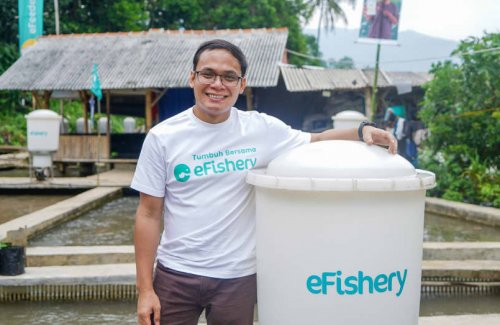
CEO Rose from Poverty to Build a Billion-Dollar Startup in Indonesia

EFishery, an agritech startup in Indonesia, has achieved unicorn status with a valuation of $1.4 billion, following a successful Series D funding round.

The company, co-founded by Gibran Huzaifah, who grew up in a disadvantaged neighborhood in Jakarta, raised $200 million in the latest funding round, led by Abu Dhabi’s 42XFund, with its value tripling from more than $410 million in 2022.

Notable participants in the funding round include Malaysia’s state pension fund Kumpulan Wang Persaraan, ResponsAbility Investments AG, 500 Global, and existing investors such as Northstar Group, Temasek Holdings Pte, and SoftBank Group Corp.

EFishery serves approximately 70,000 fish and shrimp farmers in Indonesia, providing them with technological solutions for their aquaculture operations. The recently secured funding will enable EFishery to fuel its expansion plans in Indonesia and India. Moreover, CEO Gibran Huzaifah expressed his ambition to pursue an initial public offering (IPO) in either the United States or Indonesia within the next two years.

According to Bloomberg, Huzaifah aims for EFishery to become a global leader in the aquaculture industry over the next five years, with an IPO potentially taking place as early as 2025.

Huzaifah grew up in the vicinity of slums in eastern Jakarta facing financial hardships due to his father’s job loss during his university years. With limited resources and no support network in a new city, Huzaifah found himself seeking shelter in various places, including the university campus and local mosques. At one point, he endured a three-day period without food. 

The personal story of CEO Gibran Huzaifah from poverty to building a billion-dollar startup serves as an inspiration to anyone facing adversity, showing that success can be achieved regardless of one’s humble beginnings.

Featured Image Source: CNBC

golden gate ventures-png

News

Jeffrey Paine Unveils the Secrets of Building a Successful Start-up

Entrepreneurship is often regarded as a skill that can be taught, but according to Jeffrey Paine, co-founder of Golden Gate Ventures, certain innate personality traits play a crucial role in a founder’s success.

According to The Peak Magazine, Paine believes that while 80% of entrepreneurship can be learned, the remaining 20% is an inherent quality. He emphasizes the importance of fluid intelligence, the ability to process information and make decisions with limited data and tight deadlines. However, he also highlights the need for founders to be disagreeable yet humble to make effective decisions.

Golden Gate Ventures was born out of Paine’s desire to solve a funding gap he observed in the South-east Asia (SEA) startup ecosystem. Alongside Vinnie Lauria, Paine launched the venture capital firm to bridge the gap between start-ups in the region and investors from the Bay Area.

Since its inception, Golden Gate Ventures has invested in nearly 70 companies across SEA, Greater China, and the US, including successful ventures like Carousell and RedMart. The firm is now expanding its operations in Vietnam, recognizing the country’s potential for growth and its pool of technical talent.

Paine identifies Vietnam, Singapore, and Indonesia as the region’s Startup Golden Triangle, each offering unique advantages for entrepreneurs and investors. Singapore boasts capital, talent, and ambitious founders with a global outlook. Indonesia’s large market size and potential returns make it an attractive investment destination. Vietnam, on the other hand, stands out with its technical talent and ability to tackle complex projects such as Web3 and cryptocurrency.

Looking ahead, Paine predicts that starting a business in the next decade will become more challenging due to a maturing startup ecosystem and the control exerted by a few dominant players. Entrepreneurs will need to identify untapped opportunities and build companies that can adapt to changing trends.

Golden Gate Ventures aims to support founders in this evolving landscape through its Founder First initiative, providing financial, human, and social capital to equip entrepreneurs for success.

Featured Image Source: Golden Gate Ventures

8newsnow-jpg

News

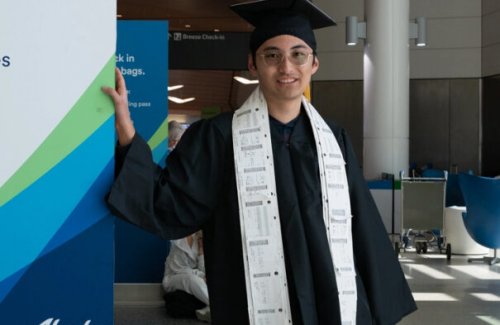
This LA Grad Student Flew Through an Academic Year to Save on Rent

A resourceful graduate student from Los Angeles has gained attention for his clever solution to cut down on housing costs while attending the University of California, Berkeley.

Known as Bill, he shared his story on Reddit in a post titled “I survived living in LA and commuting to Cal by plane over the past academic year to save on rent, AMA (ask me anything).”

Bill’s strategy was simple yet unconventional: he flew between Los Angeles International Airport (LAX) and San Francisco International Airport (SFO) multiple times a week for classes. Waking up early, he caught a 6 a.m. flight from LAX to SFO and then took the 8:30 a.m. train to reach Berkeley on time.

Despite the grueling nature of his commute, Bill approached it as an adventure rather than a burden. He never missed a class during the academic year.

Bill also managed to track his expenses, spending a total of $5,592.66 on flights between LAX and SFO. This included costs for train fares, parking, gas, inflight WiFi, and flights with different airlines.

Bill’s unique approach to saving on rent has impressed a lot of people, showing that creative solutions can help overcome financial challenges in pursuit of education.

Featured Image Source: 8NewsNow

IG ravthechef-png

News

How This 29-Year-Old Entrepreneur Turned a Home Business into a South Asian Culinary Sensation

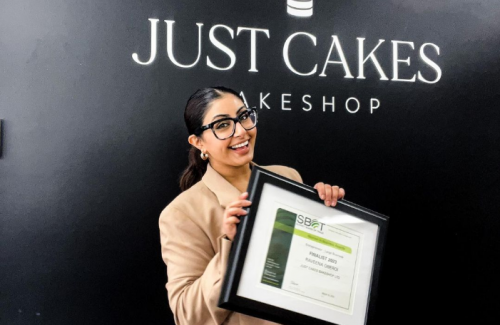
29-year-old Raveena Oberoi has successfully incorporated South Asian flavors into her business, Just Cakes Bakeshop.

Raveena’s passion for baking began during her high school years when she turned to the kitchen as an outlet for dealing with bullying. Inspired by shows like Food Network and Cake Boss, she developed a deep love for baking and crafting unique cake designs.

Starting as a home business, she faced challenges when she moved to Vancouver for her psychology studies at UBC, as she no longer had access to a kitchen. Undeterred, she commuted back to her hometown of Abbotsford every weekend to fulfill cake orders. After graduating in 2015, Raveena took a leap of faith and traveled to Paris to study pastry arts at Ecole Bellouet Conseil.

Upon her return, she opened Surrey’s first Just Cakes Bakeshop (JCB) in 2017.

Raveena’s hard work paid off, and today she serves as a judge on Food Network’s Wall of Bakers, operates two JCB storefronts, and supplies products to over 85 retailers in the province. Proudly representing the young South Asian community, she infuses nostalgic flavors into her creations, such as the popular cardamom dream mousse.

A significant milestone for JCB occurred in April 2023 when their signature cakes in a jar became available at all Blenz Coffee locations in British Columbia and Alberta. Raveena reflects on the remarkable growth of this product, going from making just 100 jars a month in her mother’s kitchen to producing close to 15,000 jars monthly from their dedicated facility.

Since its establishment in 2017, Just Cakes has experienced substantial growth, expanding its team to 30 employees and generating $2.2 million in revenue this fiscal year. The company’s innovation is exemplified by the introduction of Canada’s first cake jar vending machine, the Jar Bar, currently located at Burnaby’s Brentwood Mall and Abbotsford’s Sevenoaks Mall.

Featured Image Source: @ravthechef