Awaken* newsletter

March 6, 2024

SHARE:

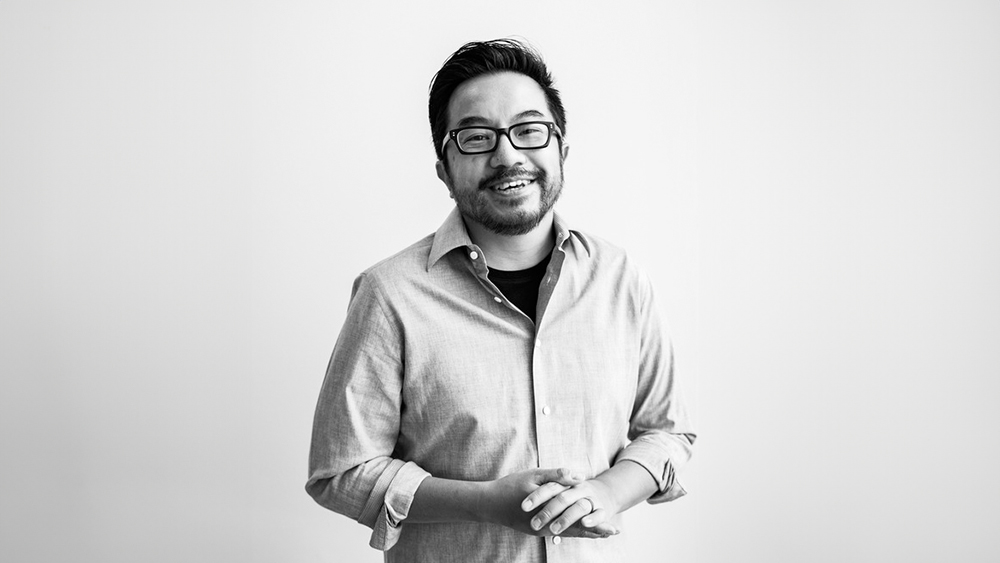
Few people in Silicon Valley are as high-profile as Y Combinator’s President and CEO, Garry Tan. Garry has worn many different hats over his illustrious career. In addition to leading the world’s most successful startup accelerator, Garry was the 10th employee at Palantir, co-founded Posterous (one of the earliest blogging sites), founded Initialized Capital (a VC fund with over $3.2B AUM), and has even ventured into the world of politics, becoming a prominent activist in San Francisco local politics. I got the chance to pick Garry’s brain about how being Asian has affected his life, and I hope that his answers can help and inspire our readers. Without further ado:

OVERCOMING DETRIMENTAL MINDSETS

My experience is that children of working class parents (especially Asian immigrants) tend to have a sticky mindset of scarcity–even when they improve their socioeconomic status. Garry has previously talked about his “$200 million mistake”. That is–he declined Peter Thiel’s offer to be a founding member at Palantir. To me, this seemed like a manifestation of this mindset, so I asked Garry how he overcame it:

I was able to realize that these things were two-way doors. Quitting a big tech company on good terms actually means you can go back anytime. There are one-way doors and two-way doors. For people who grow up with our upbringing, everything feels like a one-way door. But if you can recognize when that is wrong, then you have reclaimed some of the privileges those who come from money have by default.

The one-way vs two-way door framework is something Amazon founder Jeff Bezos has talked about extensively. You can hear him go more in depth here.

The stigma around mental health in the Asian community is another mindset that is gaining more attention. Personally, because my immigrant parents had to fight tooth and nail for survival, I don’t feel that I have the right to complain about my mental health since my life is comparatively easy. I asked Garry if this resonated with him and how he overcame this mental block:

I pretended I didn’t have any problems and spent a lot of time just trying to blend in, but in the end things about my childhood or unusual trauma-based reactions would pop up in my professional life. At some point I started going to therapy individually and it helped me immensely. All these things I didn’t have control over suddenly became something I could integrate and be aware of, and make better choices about. Carl Jung says if you don’t make the unconscious conscious, it will rule you, and you will call it fate. 

A third common mindset I see among Asian Americans is to keep their heads down and avoid rocking the boat, even if it means holding in their thoughts. Given that Garry is a very outspoken person, I asked him how he developed his confidence:

I remember in high school, I was editor of the school newspaper and noticed that students in our poorer high school got much more harsh sentences and expulsions for the same infractions that would get a slap on the wrist at the rich school. I was so angry about it, and I wrote an article exposing it but that was censored by my high school newspaper teacher. I was already going to graduate and go to Stanford so I let it slide, but deep inside me there was an anger at being silenced that I never forgot. Before newspaper, I would publish underground newspapers using Pagemaker and my English teacher would photocopy the newspapers for the class – it gave me a power I never forgot because otherwise I was the scrawny Asian nerd in the corner, but when I could channel the words of my community it gave me standing. I never forgot that.

ON ASIAN COMMUNITIES

On the topic of communities, I asked Garry about what motivated him to become a fierce advocate for the Asian community:

I feel strong solidarity with my Asian American community in San Francisco. We are a major part of the city but we are not seen. We are not heard. The local leaders would even denigrate our attempts at securing safety for our Asian American elders. Now I know I need to fight for those who don’t have a voice. One of the coolest things I found was a nonprofit called Dear Community that connects Asian Americans new to SF, often young professionals, to each other and to the existing SF Chinatown communities. It’s amazing to see smart driven people come together around that, and fight for our people in this city.

I also pointed out how he recently went to Singapore to attend a startup event called SWITCH, and asked him how he felt about the startup scenes popping up in Asian countries:

Startups are happening all around the world. You can learn from YouTube and the web. YC alums are everywhere in the world. I’m excited to see that what started in the Bay Area is now a global phenomenon and only growing.

THE ASIAN FOUNDER EXPERIENCE

On a friend’s recommendation, I asked Garry “Who are some non-technical Asian founder role models I might want to look towards? In terms of working at an early stage startup as a non-technical employee, what are the most valuable skills to learn?” Garry’s response kind of challenged the premise of my question:

In startups and in technology, being technical is a key strength. Be technical if you can be. And then be a polymath: it’s far easier for a technical person to pick up the soft skills than the other way around. 

In hindsight, I will admit that it seems silly to expect to get an outlier outcome (in the positive direction) in the tech industry if you aren’t willing to put in the effort to become technical. He got me on that one.

Lastly, I asked Garry the same question I ask all our guests–how does he think about his Asian-ness in the context of being a founder:

I didn’t think about it until much later. Frankly I tried to pretend it wasn’t an issue, even though there was absolutely a bamboo ceiling even for me. I was passed over for promotions and/or people didn’t think I was capable of doing what I have done. I would rage-quit jobs and it would work out, but I could see it going a different way. As a founder, I found that I needed to up-level my ability to speak up and speak out, and especially be as assertive as possible when I knew I was absolutely right. I had an unspoken desire that I was not even aware of for harmony, and without being aware of it I would sometimes self-abandon, and then be passive aggressive about it later. I don’t do that anymore, and it was a key step in my development as a leader. I wish I developed it earlier, and it was all because of unconscious programming from my childhood. 

The biggest lesson I took away from this interview was how the infallible and outspoken Garry Tan was not always so, and that at one point he was very much like the stereotypical Asian kid. Garry’s story proves that with self-awareness and determination, anybody can undergo tremendous growth and become an industry leader.

SHOUTOUTS

If you have an ambitious startup idea and want to be part of an amazing community of founders, apply to Y Combinator! Y Combinator runs batches twice a year–in the winter and summer. Applications for the summer 2024 batch are open, you can apply at https://www.ycombinator.com/apply

Thank you Garry for the interview!

Featured Image Source: Y Combinator
Related Articles

pioneer press-jpg

News

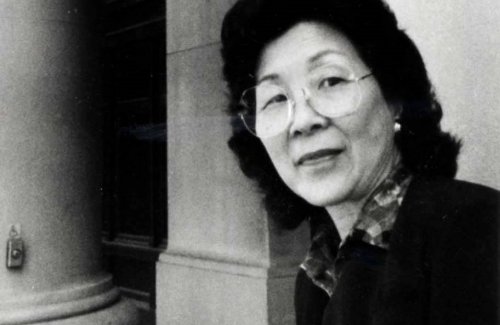
Culinary Icon Leeann Chin’s Journey to Building an Asian Cuisine Empire in Minnesota

Many Minnesotans are familiar with the name Leeann Chin and her beloved chain of Chinese restaurants across the state. But not everyone knows the extraordinary story behind her rise to success.

In 1980, at the age of 47, Leeann, a determined Chinese woman, opened her first restaurant in Minnetonka. Her life wasn’t easy from the start. She was forced into marriage as a young girl and moved to Minnesota with her husband.

Life in Minnesota was tough for Leeann. She had to raise six children in a small house with just one bathroom. Despite all the challenges, she remained strong and devoted to her family.

Cooking became Leeann’s way of expressing love, even though she didn’t say it with words. When her older daughter tragically passed away, Leeann found comfort in the kitchen, and her passion for cooking grew. Her delicious Chinese dishes quickly gained fame when she catered a luncheon for her sewing clients. They loved her food so much that they encouraged her to teach cooking and cater more events.

With hard work, Leeann’s restaurant business flourished. She even got support from unexpected sources, like Carl Pohlad, the owner of the Minnesota Twins, thanks to a party she catered where Sean Connery, the famous actor, was a guest.

As word spread about her delectable dishes, lines of eager customers formed around her restaurant, and her culinary empire flourished. In time, General Mills acquired her successful chain, marking a remarkable milestone in her journey.

Leeann’s passion for cooking didn’t end with her success; it carried on through her daughter Katie Chin, who also pursued a career as a chef. Together, they became celebrated national TV cooking stars, preserving Leeann’s legacy for future generations.

Today, Katie honors her mother’s memory with a cookbook, showcasing Leeann’s cherished recipes, including the famous chicken chow mein.

Featured Image Source: Pioneer Press

msnbc-jpg

News

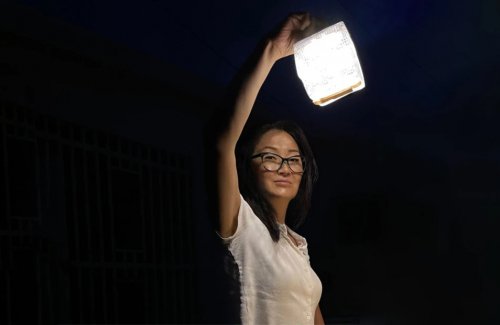
Korean Mompreneur Created Solar-Powered Solutions to Combat Air Pollution and Aid Disaster Zones

Inspired by her son’s asthma diagnosis, NYC local mom Alice Min Soo Chun decided to take action against air pollution, leading to the creation of innovative solar-powered solutions. Now, her groundbreaking solar technology is making a significant impact in regions affected by disasters, including war-torn Ukraine.

Her latest invention, the Mega Puff, is a fantastic foldable lantern that can also charge your phone. Unlike other solar chargers that take forever to charge, the Mega Puff does it in just one day. This smart mom has already donated thousands of these lanterns to help disaster victims.

As a child growing up outside Syracuse, Alice faced the harsh reality of bullying due to her Korean heritage. She found comfort in making origami with her mom. Later on, she became a teacher and launched her own company, Solight, to help others.

Since then, she has sold over one million solar-powered products and her efforts caught the attention of prominent figures like Disney CEO Bob Iger, who championed her cause after reading about her work.

Alice Min Soo Chun said to ABC7NY, “Small things matter, but if we all work collectively, we can change the world.”

Featured Image Source: MSNBC

SUPERIOR TELEGRAM-jpg

News

A New Family-Inspired Eatery Brings Vietnamese and Chinese Cuisine to Superior, Wisconsin

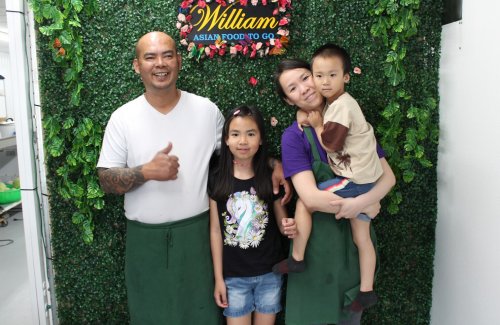
William Asian Food to Go, a charming new eatery nestled at Superior, Wisconsin, has recently entered the culinary scene, offering a delightful blend of Vietnamese and Chinese cuisine.

The name of the restaurant has special meaning for the proprietors because it honors their 4-year-old son, William Tran. The devoted owners, Dung Tran and Nguyet Ho, have filled the entire business with their familial love. Their gifted 9-year-old daughter Ngoc’s meticulously created artwork lends the interior decor a lively charm.

“The reason we opened this one is not for me and my wife, it’s for them,” Tran said to Superior Telegram.

Drawing upon their Vietnamese heritage, the couple presents a diverse menu that artfully captures the authentic flavors of Vietnam and China. Whether you crave fried rice, spring rolls, stir-fry, rice vermicelli dishes, or Vietnamese sandwiches, every dish is expertly prepared and made fresh to order.

Bringing nearly 15 years of culinary expertise to the table, Tran’s skills are well-reflected in the dishes he crafts with passion and precision. Notably, his brother once ran the beloved Pho Cali restaurant in Superior from 2017 to 2022, contributing to Tran’s local connection and commitment to providing an exceptional dining experience.

Although starting the company has been difficult, Ho and Tran are excited to see it expand. They are unwavering in their commitment to the family, making sure that the warmth and affection that gave birth to William Asian Food to Go are now at the core of their business.

Featured Image Source: Superior Telegram

IMG_7442-jpg

Stories

Immigrant Mother Pursues Her Passion for Fashion After Long Deferral to Raise Her Children

Michelle Jing Chan is a Chinese American artist and children’s book illustrator who, in an interview with Asian Hustle Network, opens up about her mother’s remarkable journey as a first-generation immigrant and the profound impact it has had on their relationship.

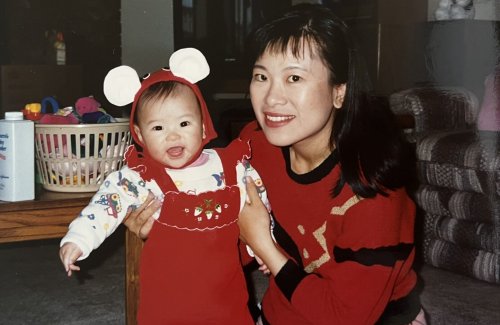
Michelle’s mother, May, is a survivor of Mao Zedong’s reign. She emigrated from Guangzhou, China, to California, facing numerous challenges along the way. She pursued her passion for fashion, but eventually put her dreams on hold to raise Michelle and her brother in Colorado.

After retirement, May embarked on a new venture where she creates Chinese-inspired baby clothes and puts them up for sale. The response from the community has been overwhelmingly positive, with many people showing keen interest in purchasing her creations.

In this article, Michelle shares a heartfelt glimpse into her mother’s story and their shared journeys. Join us as we explore May’s experiences as a first-generation immigrant, from surviving challenging times to embracing a new life in the United States.

HER MOTHER’S IMMIGRANT JOURNEY

Michelle: I’m a Chinese American artist and children’s book illustrator. I grew up in Colorado and now live in the Pacific Northwest. Although my background is in engineering and business, my passion is in art and storytelling–particularly in stories that empower queer and Asian youth to be their authentic selves.

My mom is a first-generation immigrant who grew up in Guangzhou, China, and emigrated to California in her early twenties. In China, she and her family survived Mao Zedong’s reign and the struggles that it brought, including facing famine, almost losing one of her sisters in an accident at a labor camp, and being targeted by Red Guards for my grandfather’s opposition to Mao during the Cultural Revolution.

When they emigrated to the US, they lived near LA and had a robust community of other Chinese immigrants. However, my mom and her family were poor and didn’t speak English. The rest of her family all found service jobs. Similarly, my mom worked as a waitress at a restaurant near Hollywood.

PUTTING DREAMS ON HOLD

Early in the morning before the restaurant opened, she would attend adult English classes. She always had an interest in fashion and it became even stronger after working near Hollywood and seeing designers and celebrities come into the restaurant. She saved up enough money to go to school and study fashion design. During that time, she continued to work at the restaurant on weekends and at a fashion company after school.

After completing her program, she planned to enter the fashion industry in California. However, she met my dad, a first-generation immigrant from Hong Kong, through a family friend. They got married and she moved to Colorado where my dad lived, and they had me and my brother shortly afterwards. In Colorado, opportunities in fashion design were much scarcer than in LA.

She decided to put her own dreams on the back burner and became a stay-at-home parent, dedicating the next decade and a half of her life to raising me and my brother. It wasn’t until I was in high school that she started working again, and she didn’t return to the fashion industry until a few additional years later.

MICHELLE’S RELATIONSHIP WITH HER MOM

Growing up, I was very close to my mom, but I don’t think I fully grasped the emotional weight of what it must have been like for her to sacrifice her career for her children. I definitely took for granted the fact that my mom was always able to pick us up after school and had the time and energy to make clothes and Halloween costumes for us, tailor clothes if they didn’t fit, and come up with other creative craft projects to keep us entertained.

As an adult now–especially as a creative myself–I understand more fully how isolating and difficult that sacrifice must have been. Also, our town in Colorado is conservative and not very diverse, so the adjustment for her coming from LA must have also been challenging and lonely. What strikes me now is how unselfish and giving she is. She has never voiced resentment for the educational or creative opportunities that I’ve had even though she didn’t have access to those same doors herself.

While my parents and I didn’t see eye to eye on my career in children’s book illustration at first, they are now some of my biggest cheerleaders. In fact, being in a creative career myself has allowed me to bond with my mom in a new way as she is embarking on her own creative journey. We can now connect over our creative passions, which is a new dimension to our relationship that didn’t exist before.

CREATING CHINESE-INSPIRED BABY CLOTHES

My mom loves kids and designing kids’ clothes. As I mentioned earlier, she made clothes for us growing up–including many of our Halloween costumes! She also loves Chinese fashion and still has suitcases of clothes from her life in LA. As she and my dad are now retired, pursuing this new venture seemed like a natural integration of these interests.

She uses Gerber brand onesies and transforms them into Chinese-inspired designs by adding ribbons, gold fabric, and traditional qipao-style buttons. She sews all these designs by herself in my childhood home.

She’s blown away by the response to her shop so far and is still processing the influx of orders! (Thank you again to the AHN community!) She wants to expand into clothes for toddlers and perhaps someday, older kids as well. In my eyes, the sky’s the limit for her and her talent and I’m excited to see where she goes from here.

VALUES MICHELLE INHERITED FROM HER MOM

The biggest thing she has taught me is how to have a strong work ethic. My mom, dad, and my grandparents work harder than anyone I know. Now as an adult, I carry that with me always.

MICHELLE’S MESSAGE TO HER MOM

Thank you for everything you’ve done for me and my brother. I know it’s a debt I will never be able to repay, but I hope I can give you a small fraction by supporting your creative dreams like you’ve come to support mine.

CONNECT WITH MICHELLE

Instagram: @michellieart

Twitter: @michellieart

Tiktok: @michellieart

Website: michellejingchan.com

CONNECT WITH MAY

Instagram: @pandacub.babywear

Website: etsy.com/shop/PandaCubBabyWear