Awaken* newsletter

March 6, 2024

SHARE:

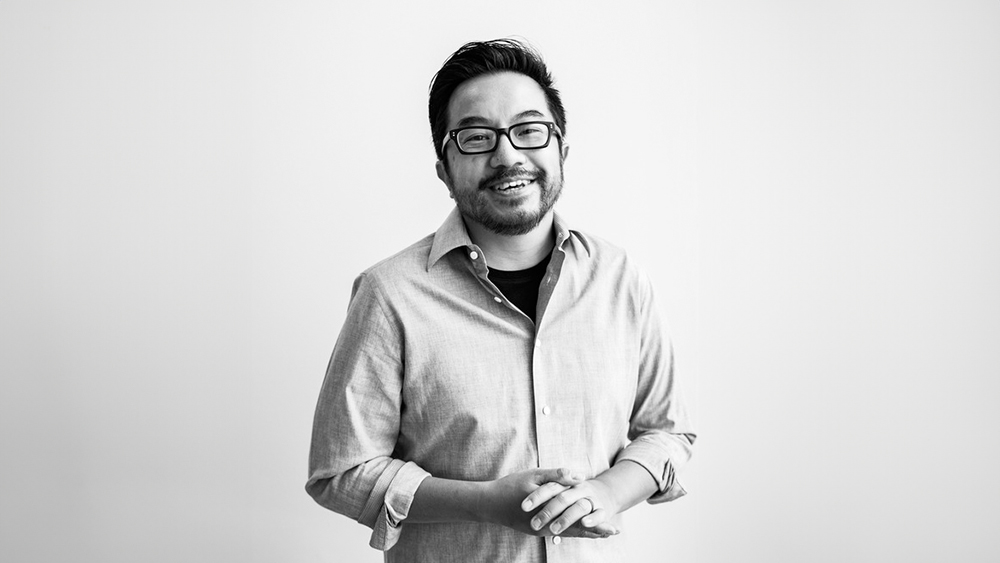
Few people in Silicon Valley are as high-profile as Y Combinator’s President and CEO, Garry Tan. Garry has worn many different hats over his illustrious career. In addition to leading the world’s most successful startup accelerator, Garry was the 10th employee at Palantir, co-founded Posterous (one of the earliest blogging sites), founded Initialized Capital (a VC fund with over $3.2B AUM), and has even ventured into the world of politics, becoming a prominent activist in San Francisco local politics. I got the chance to pick Garry’s brain about how being Asian has affected his life, and I hope that his answers can help and inspire our readers. Without further ado:

OVERCOMING DETRIMENTAL MINDSETS

My experience is that children of working class parents (especially Asian immigrants) tend to have a sticky mindset of scarcity–even when they improve their socioeconomic status. Garry has previously talked about his “$200 million mistake”. That is–he declined Peter Thiel’s offer to be a founding member at Palantir. To me, this seemed like a manifestation of this mindset, so I asked Garry how he overcame it:

I was able to realize that these things were two-way doors. Quitting a big tech company on good terms actually means you can go back anytime. There are one-way doors and two-way doors. For people who grow up with our upbringing, everything feels like a one-way door. But if you can recognize when that is wrong, then you have reclaimed some of the privileges those who come from money have by default.

The one-way vs two-way door framework is something Amazon founder Jeff Bezos has talked about extensively. You can hear him go more in depth here.

The stigma around mental health in the Asian community is another mindset that is gaining more attention. Personally, because my immigrant parents had to fight tooth and nail for survival, I don’t feel that I have the right to complain about my mental health since my life is comparatively easy. I asked Garry if this resonated with him and how he overcame this mental block:

I pretended I didn’t have any problems and spent a lot of time just trying to blend in, but in the end things about my childhood or unusual trauma-based reactions would pop up in my professional life. At some point I started going to therapy individually and it helped me immensely. All these things I didn’t have control over suddenly became something I could integrate and be aware of, and make better choices about. Carl Jung says if you don’t make the unconscious conscious, it will rule you, and you will call it fate. 

A third common mindset I see among Asian Americans is to keep their heads down and avoid rocking the boat, even if it means holding in their thoughts. Given that Garry is a very outspoken person, I asked him how he developed his confidence:

I remember in high school, I was editor of the school newspaper and noticed that students in our poorer high school got much more harsh sentences and expulsions for the same infractions that would get a slap on the wrist at the rich school. I was so angry about it, and I wrote an article exposing it but that was censored by my high school newspaper teacher. I was already going to graduate and go to Stanford so I let it slide, but deep inside me there was an anger at being silenced that I never forgot. Before newspaper, I would publish underground newspapers using Pagemaker and my English teacher would photocopy the newspapers for the class – it gave me a power I never forgot because otherwise I was the scrawny Asian nerd in the corner, but when I could channel the words of my community it gave me standing. I never forgot that.

ON ASIAN COMMUNITIES

On the topic of communities, I asked Garry about what motivated him to become a fierce advocate for the Asian community:

I feel strong solidarity with my Asian American community in San Francisco. We are a major part of the city but we are not seen. We are not heard. The local leaders would even denigrate our attempts at securing safety for our Asian American elders. Now I know I need to fight for those who don’t have a voice. One of the coolest things I found was a nonprofit called Dear Community that connects Asian Americans new to SF, often young professionals, to each other and to the existing SF Chinatown communities. It’s amazing to see smart driven people come together around that, and fight for our people in this city.

I also pointed out how he recently went to Singapore to attend a startup event called SWITCH, and asked him how he felt about the startup scenes popping up in Asian countries:

Startups are happening all around the world. You can learn from YouTube and the web. YC alums are everywhere in the world. I’m excited to see that what started in the Bay Area is now a global phenomenon and only growing.

THE ASIAN FOUNDER EXPERIENCE

On a friend’s recommendation, I asked Garry “Who are some non-technical Asian founder role models I might want to look towards? In terms of working at an early stage startup as a non-technical employee, what are the most valuable skills to learn?” Garry’s response kind of challenged the premise of my question:

In startups and in technology, being technical is a key strength. Be technical if you can be. And then be a polymath: it’s far easier for a technical person to pick up the soft skills than the other way around. 

In hindsight, I will admit that it seems silly to expect to get an outlier outcome (in the positive direction) in the tech industry if you aren’t willing to put in the effort to become technical. He got me on that one.

Lastly, I asked Garry the same question I ask all our guests–how does he think about his Asian-ness in the context of being a founder:

I didn’t think about it until much later. Frankly I tried to pretend it wasn’t an issue, even though there was absolutely a bamboo ceiling even for me. I was passed over for promotions and/or people didn’t think I was capable of doing what I have done. I would rage-quit jobs and it would work out, but I could see it going a different way. As a founder, I found that I needed to up-level my ability to speak up and speak out, and especially be as assertive as possible when I knew I was absolutely right. I had an unspoken desire that I was not even aware of for harmony, and without being aware of it I would sometimes self-abandon, and then be passive aggressive about it later. I don’t do that anymore, and it was a key step in my development as a leader. I wish I developed it earlier, and it was all because of unconscious programming from my childhood. 

The biggest lesson I took away from this interview was how the infallible and outspoken Garry Tan was not always so, and that at one point he was very much like the stereotypical Asian kid. Garry’s story proves that with self-awareness and determination, anybody can undergo tremendous growth and become an industry leader.

SHOUTOUTS

If you have an ambitious startup idea and want to be part of an amazing community of founders, apply to Y Combinator! Y Combinator runs batches twice a year–in the winter and summer. Applications for the summer 2024 batch are open, you can apply at https://www.ycombinator.com/apply

Thank you Garry for the interview!

Featured Image Source: Y Combinator
Related Articles

News

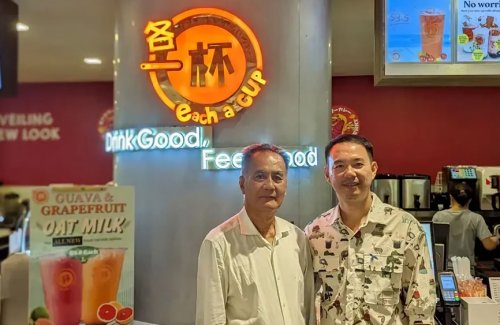
The Success Story of Each-A-Cup in the World of Bubble Tea

Back in 1999, Singapore was swept by the bubble tea craze. And while a lot of bubble tea shops have come and gone, Each-A-Cup kept thriving. This enduring success story is shown through the experiences of its founders: father and son, Michael and Ivan Chua.

Before entering the F&B industry, Michael Chua enjoyed a successful career as a musician, touring with Taiwanese singer Teresa Teng. However, his entrepreneurial spirit led him to start an ice cream business in Taipei, which later became Gelare. Afterward, he co-founded Healthy 2000, a beverage business in Taiwan. Sensing the growing interest in bubble tea in Singapore, Michael rebranded Healthy 2000 as Each-A-Cup in 1999, marking the beginning of their journey.

During the early years, Each-A-Cup faced fierce competition from rivals like Quickly and Happy Cup. However, they stood out due to the novelty and quality of their offerings, gaining widespread recognition.

The bubble tea industry in Singapore took a downturn in 2001 as prices dropped dramatically, and the market became oversaturated with hundreds of bubble tea shops. Many struggled to maintain quality, and even reputable brands faced losses. However, Michael remained resilient, believing in the enduring appeal of bubble tea.

Recovery came in 2003, and Each-A-Cup began rebuilding the business. Ivan, Michael’s son, joined in 2007, bringing fresh energy and ideas to the brand. The second wave of the bubble tea craze saw new players entering the market, but Each-A-Cup’s commitment to authenticity and quality set them apart.

As the founders, Michael and Ivan Chua, continue to guide the brand, the future of Each-A-Cup looks as bright as ever in the dynamic world of bubble tea.

Featured Image Source: CNA Lifestyle

Collin Hall

Stories

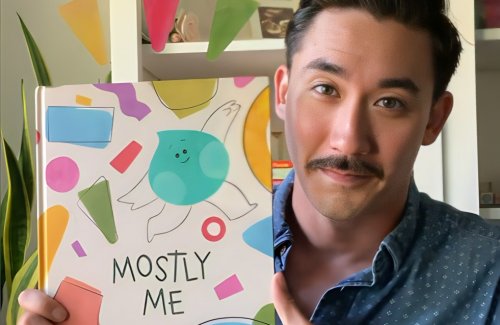
Celebrating Individual Narratives and Multiracial Identities Through the Book ‘Mostly Me’

In a world where the narrative of identity often falls into predefined categories, Mostly Me by Collin Hall emerges as a refreshing beacon of self-discovery.

Released on September 18 by Gloo Books, this picture book takes readers on a captivating journey, skillfully illustrating the complexities of biracial identity.

Author and Illustrator

Written by Collin Hall and beautifully illustrated by Crystal Dawn Chaffee, both of whom share a biracial heritage, Mostly Me is a heartfelt project born from personal experiences. Collin embarked on this creative journey shortly after the birth of his first daughter, driven by a powerful desire to equip her with the tools to embrace her multiracial identity.

Collin Hall is a proud biracial Korean/American based in Austin, TX, offering a voice that resonates deeply with those navigating the intricate terrain of identity.

Diverse Representation

According to the *Cooperative Children’s Book Center’s 2022 Diversity Statistics database, only 0.7% of children’s books published in 2022 were authored by multiracial individuals and focused on multiracial characters.

Collin’s Personal Journey

Collin Hall shares, “The biggest hurdle for this project was the internal identity-wrestling before words were even on paper. Having to re-engage with a part of myself I had avoided for a long time was hard, and typically paired with a good dose of uncertainty and guilt. Finding my own footing was, and is, a process, but one that put me in a much better spot to discuss multiracial identity with my own kids in the future.”

He also shared how re-learning Korean nursery rhymes was also a challenge and that it took longer than he expected.

Embracing In-Between Spaces

Mostly Me may be short and whimsical, but it carries a profound message—it’s entirely acceptable to exist within the fluid spaces of identity. It encourages individuals to wholeheartedly embrace all aspects of their heritage, irrespective of societal expectations.

I’ve got some green, I’ve got some blue. 

Some have asked, “So what are you?” 

Not quite blue, not fully green. 

I’m something new. I’m in-between.

Affirmation and Unity

Mostly Me serves as an affirmation, resonating with Collin and Crystal’s own experiences and the experiences of every multiracial child navigating the intricate landscape of identity. It instills the confidence to boldly claim one’s space in the world, reminding us all that there is no universal guidebook for this journey. Instead, it offers the comfort of shared emotions, questions, and experiences.

Within the pages of Mostly Me, Collin Hall extends an invitation to readers to embark on a profound journey of self-discovery. This remarkable book celebrates the beauty of embracing multiracial identities, encourages us to revel in the uniqueness of our individual narratives, and, above all, empowers us to find the strength to assert our presence in a wonderfully diverse world.

As we eagerly anticipate its release, Mostly Me promises to inspire and resonate with readers of all backgrounds, young and old, seeking to understand the rich tapestry of identity that defines us all.

CONNECT WITH COLLIN HALL / MOSTLY ME

Instagram: @mistercollin

Order here: gloobooks.com/products/mostly-me

Gloo Books: @gloobooks

*Independent analysis of data accessed on 07/02/2023 by Gloo Books using the Cooperative Children’s Book Center (CCBC), School of Education, University of Wisconsin-Madison Diversity Statistics Book Search (https://ccbc.education.wisc.edu/diversity-statistics-book-search/). Permission to publish granted by the CCBC 07/13/2023.

News

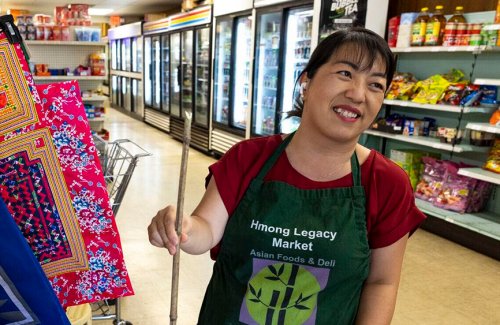
Hmong Legacy Market: Bridging Cultures Through Food and Community

At Hmong Legacy Market, located on Madison’s South Side, you’ll discover a treasure trove of homemade Asian cuisine. From steaming bowls of beef pho to whole roasted tilapia seasoned with herbs and chili, and delightful sesame rice balls filled with mung beans and coconut, this independent Asian grocery store offers a culinary journey.

Ze Yang, one of the owners, can often be found expertly preparing dishes like squash curry. To her, food is more than sustenance; it’s a connector, a storyteller, and a unifying force that brings people together.

As a young child in the 1980s, Ze Yang lived in a refugee camp in Thailand with her family, having fled Laos during the aftermath of the Vietnam War. In 1991, Ze Yang’s family received the opportunity to immigrate to the United States, sponsored by a distant uncle who had settled in California. Their early days in the U.S. were marked by challenges—language barriers, cultural shock, and financial difficulties. However, their farming skills from Laos allowed them to grow crops like green beans, tomatoes, and peppers, which they sold to support their family.

After six years in California, Ze Yang’s family decided to move to Wisconsin, drawn by the promise of better public schools and economic opportunities. Ze Yang’s parents worked tirelessly, holding multiple jobs to make ends meet. This experience inspired Ze Yang to become a teacher, focusing on helping immigrant children adapt to the American education system.

Ze Yang’s family thrived. They bought a house, built a family, the kids went to school, but they also wanted to pursue their entrepreneurial dream. They longed to create a space where people from diverse backgrounds could gather, savor homemade dishes, and access pantry staples from across Asia. This is why they opened Hmong Legacy Market, offering an extensive array of products, from giant spring roll skins to bamboo shoot chili oil, and from mango mochi to traditional Hmong celebratory clothing.

More than just a grocery store, Hmong Legacy Market is committed to the well-being of the community. In 2021, it partnered with Public Health Madison and Dane County to serve as a mobile COVID vaccination clinic. Looking ahead, Ze Yang envisions the store’s legacy continuing to thrive, driven by the spirit of family and the desire to improve and grow.

Featured Image Source: Madison

News

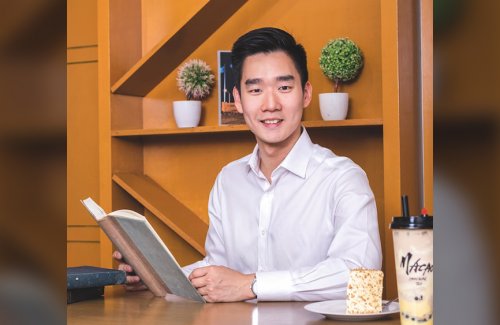
Entrepreneur Avin Ong: From Selling Hangers to CEO of Macao Imperial Tea

Avin Ong, the visionary behind Macao Imperial Tea and CEO of The Fredley Group of Companies, has carved a remarkable path to success in the world of food and beverage. His journey, from humble beginnings to leading a multi-million-dollar empire, reflects his belief that opportunities are abundant for those willing to seize them.

Growing up in a blue-collar family with limited resources, Ong’s early life was far from extravagant. His family’s livelihood revolved around assembling hangers and selling them in the bustling streets of Divisoria, Metro Manila.

Today, Ong oversees a diverse portfolio of businesses, including New York Fries and Dips (NYFD), Nabe Japanese Izakaya and Hot Pot, Café Kitsuné, and the immensely popular Macao Imperial Tea. His recipe for entrepreneurial success is built on several key principles.

Firstly, Ong emphasizes the importance of seizing opportunities when they arise. Having experienced financial hardship in his past, he has become adept at embracing opportunities without hesitation, even if he feels unprepared.

Secondly, Ong stresses the significance of understanding your target market intimately. He recognizes that different consumer segments require tailored approaches. For instance, Café Kitsuné caters to a more upscale audience, while Macao Imperial Tea targets a younger demographic through social media influencers like TikTok. 

Furthermore, Ong emphasizes the scalability of his brands, which has allowed for rapid expansion. Starting with less capital-intensive concepts like NYFD and Macao Imperial Tea, he has achieved impressive milestones, such as opening 13 new stores in a single day.

Innovation and adaptability are also cornerstones of Ong’s success. During the pandemic, while some of his ventures struggled, Macao Imperial Tea’s sales surged by over 300 percent.

Lastly, Ong’s humility shines through in his readiness to admit failures and setbacks. While he had to close some branches, he prioritized retaining his loyal team members by reallocating them to more successful establishments. He shared with Tatler Asia how he acknowledges that surprises are inevitable in life, as exemplified by his initial failure to gain admission to De La Salle University. However, his determination led him to eventually fulfill his dream of attending the esteemed institution.

Featured Image Source: The CEO Magazine