Awaken* newsletter

March 6, 2024

SHARE:

Few people in Silicon Valley are as high-profile as Y Combinator’s President and CEO, Garry Tan. Garry has worn many different hats over his illustrious career. In addition to leading the world’s most successful startup accelerator, Garry was the 10th employee at Palantir, co-founded Posterous (one of the earliest blogging sites), founded Initialized Capital (a VC fund with over $3.2B AUM), and has even ventured into the world of politics, becoming a prominent activist in San Francisco local politics. I got the chance to pick Garry’s brain about how being Asian has affected his life, and I hope that his answers can help and inspire our readers. Without further ado:

OVERCOMING DETRIMENTAL MINDSETS

My experience is that children of working class parents (especially Asian immigrants) tend to have a sticky mindset of scarcity–even when they improve their socioeconomic status. Garry has previously talked about his “$200 million mistake”. That is–he declined Peter Thiel’s offer to be a founding member at Palantir. To me, this seemed like a manifestation of this mindset, so I asked Garry how he overcame it:

I was able to realize that these things were two-way doors. Quitting a big tech company on good terms actually means you can go back anytime. There are one-way doors and two-way doors. For people who grow up with our upbringing, everything feels like a one-way door. But if you can recognize when that is wrong, then you have reclaimed some of the privileges those who come from money have by default.

The one-way vs two-way door framework is something Amazon founder Jeff Bezos has talked about extensively. You can hear him go more in depth here.

The stigma around mental health in the Asian community is another mindset that is gaining more attention. Personally, because my immigrant parents had to fight tooth and nail for survival, I don’t feel that I have the right to complain about my mental health since my life is comparatively easy. I asked Garry if this resonated with him and how he overcame this mental block:

I pretended I didn’t have any problems and spent a lot of time just trying to blend in, but in the end things about my childhood or unusual trauma-based reactions would pop up in my professional life. At some point I started going to therapy individually and it helped me immensely. All these things I didn’t have control over suddenly became something I could integrate and be aware of, and make better choices about. Carl Jung says if you don’t make the unconscious conscious, it will rule you, and you will call it fate. 

A third common mindset I see among Asian Americans is to keep their heads down and avoid rocking the boat, even if it means holding in their thoughts. Given that Garry is a very outspoken person, I asked him how he developed his confidence:

I remember in high school, I was editor of the school newspaper and noticed that students in our poorer high school got much more harsh sentences and expulsions for the same infractions that would get a slap on the wrist at the rich school. I was so angry about it, and I wrote an article exposing it but that was censored by my high school newspaper teacher. I was already going to graduate and go to Stanford so I let it slide, but deep inside me there was an anger at being silenced that I never forgot. Before newspaper, I would publish underground newspapers using Pagemaker and my English teacher would photocopy the newspapers for the class – it gave me a power I never forgot because otherwise I was the scrawny Asian nerd in the corner, but when I could channel the words of my community it gave me standing. I never forgot that.

ON ASIAN COMMUNITIES

On the topic of communities, I asked Garry about what motivated him to become a fierce advocate for the Asian community:

I feel strong solidarity with my Asian American community in San Francisco. We are a major part of the city but we are not seen. We are not heard. The local leaders would even denigrate our attempts at securing safety for our Asian American elders. Now I know I need to fight for those who don’t have a voice. One of the coolest things I found was a nonprofit called Dear Community that connects Asian Americans new to SF, often young professionals, to each other and to the existing SF Chinatown communities. It’s amazing to see smart driven people come together around that, and fight for our people in this city.

I also pointed out how he recently went to Singapore to attend a startup event called SWITCH, and asked him how he felt about the startup scenes popping up in Asian countries:

Startups are happening all around the world. You can learn from YouTube and the web. YC alums are everywhere in the world. I’m excited to see that what started in the Bay Area is now a global phenomenon and only growing.

THE ASIAN FOUNDER EXPERIENCE

On a friend’s recommendation, I asked Garry “Who are some non-technical Asian founder role models I might want to look towards? In terms of working at an early stage startup as a non-technical employee, what are the most valuable skills to learn?” Garry’s response kind of challenged the premise of my question:

In startups and in technology, being technical is a key strength. Be technical if you can be. And then be a polymath: it’s far easier for a technical person to pick up the soft skills than the other way around. 

In hindsight, I will admit that it seems silly to expect to get an outlier outcome (in the positive direction) in the tech industry if you aren’t willing to put in the effort to become technical. He got me on that one.

Lastly, I asked Garry the same question I ask all our guests–how does he think about his Asian-ness in the context of being a founder:

I didn’t think about it until much later. Frankly I tried to pretend it wasn’t an issue, even though there was absolutely a bamboo ceiling even for me. I was passed over for promotions and/or people didn’t think I was capable of doing what I have done. I would rage-quit jobs and it would work out, but I could see it going a different way. As a founder, I found that I needed to up-level my ability to speak up and speak out, and especially be as assertive as possible when I knew I was absolutely right. I had an unspoken desire that I was not even aware of for harmony, and without being aware of it I would sometimes self-abandon, and then be passive aggressive about it later. I don’t do that anymore, and it was a key step in my development as a leader. I wish I developed it earlier, and it was all because of unconscious programming from my childhood. 

The biggest lesson I took away from this interview was how the infallible and outspoken Garry Tan was not always so, and that at one point he was very much like the stereotypical Asian kid. Garry’s story proves that with self-awareness and determination, anybody can undergo tremendous growth and become an industry leader.

SHOUTOUTS

If you have an ambitious startup idea and want to be part of an amazing community of founders, apply to Y Combinator! Y Combinator runs batches twice a year–in the winter and summer. Applications for the summer 2024 batch are open, you can apply at https://www.ycombinator.com/apply

Thank you Garry for the interview!

Featured Image Source: Y Combinator

Related Articles

250407-jpg

Ideas

E-E-A-T Explained: How to Improve Your Search Performance

To increase search quality, Google introduces the E-E-A-T framework—an acronym for Experience, Expertise, Authority, and Trustworthiness. These four qualities drive SEO and ultimately audience search. Here is a deep dive into the framework to boost your SEO game.

Experience

If your content includes relevant case studies, quotes from professionals, and SEO keywords tailored to your audience’s needs, you have met the experience quality standard.

Expertise

Unlike experience, expertise comes from you as the writer. Being an expert doesn’t mean using jargon—it means supporting your claims with statistics, insights, proven results, or even your own qualifications on the topic.

Authority

Authority goes beyond expertise. It is your brand’s reputation in a given field. Authority is earned over time by consistently producing high-quality content that establishes credibility.

Authority

Trustworthiness

The most important quality and the culmination of all three previous aspects. Trustworthiness involves having a strong reputation, providing reliable and accurate evidence, and ensuring website security, such as using HTTPS.

authority

Why AHN Solutions?

Understanding the EEAT framework significantly enhances your SEO performance. However, achieving all four qualities can be challenging. Let AHNS handle your SEO—our services ensure your content is reliable, accurate, and trustworthy.

If you want to learn more about our services, visit the AHN Solutions website at asianhustlenetwork.com/services/

seo-

Development, Ideas

Is Your SEO Outdated? AHN Solutions Can Help!

SEO is constantly on the run, and what used to be your waving lucky cat might lose its charm the next day. Here are three key signs that your SEO’s “waving lucky cat” mode may have been deactivated. 

Dropping Search Rankings

If Google search is keeping your website on the low-low, it’s time that your SEO strategy needs a reboot. Or else, algorithm updates or stronger competition could be dragging you down.

Low Organic Traffic

If your organic traffic is at a standstill, your keywords may be outdated, or your content may not be what the audience needs anymore.

High Bounce Rate

If visitors visit your website like a casual one-click-stand, then there’s a problem, too. It could mean slow load times, poor mobile navigation, or irrelevant content. Whatever it may be, all of them may hurt your SEO performance.

Why AHN Solutions?

If your brand is facing any of these SEO challenges, it’s time for an update. AHN Solutions offers expert SEO strategies to help you improve rankings, increase traffic, and drive more conversions.

If you want to learn more about our services, visit the AHN Solutions website at asianhustlenetwork.com/services/

smart-paid-ads

Development

AHN Solutions: Smarter Paid Ads, Bigger Results!

Running a successful paid ads campaign is not just about budget–paying hard doesn’t mean paying smart. To maximize your ad performance, here are three tips that AHN Solutions believes you can take to step up your paid ads game.

Define Your Audience Clearly

Bring out the magnifying glass because we’re going deep into our target demographics, interests, behaviors, and lookalike audience. Make sure you’ve got everything covered and detailed as much as possible. By doing so, you gain a much deeper and more unique understanding of your audience; henceforth, you can adapt your strategy to target them.

Define your audience clearly

Optimize for Each Platform

Each audience group has a different preferred content format and platform. You can not run ads on Facebook and expect to touch Gen Z? Customize your ad format, visuals, and messaging based on the platforms and the desired target audience.

Use Compelling Creatives & CTAs

It’s the era of visuals. Impactful content must go with eye-catching visuals and resonant CTAs. Test different versions to identity the most resonant one with your audience.

Why AHN Solutions?

While these tips are extremely valuable for improving your SEO game, having a professional handle will not only save resources but also boost results. AHNS’ services in branding, SEO, and website development will take care of the technical details, so you can focus on growing your business.

If you want to learn more about our services, visit the AHN Solutions website at asianhustlenetwork.com/services/

Duolingo Shares Climb 7% as Users Swarm to App to Learn Mandarin (4)-png

Stories

Jennifer Lau on Shaping the Future of Triathlons and Elevating Women in Sports

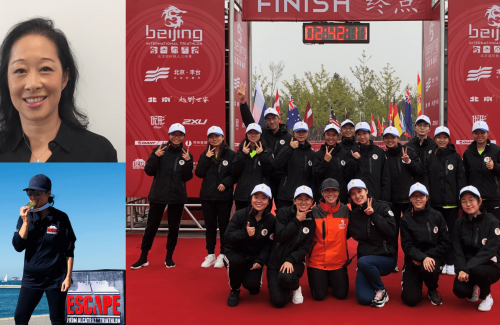
In celebration of Women’s History Month, we shed light on the incredible women transforming the world and driving the community forward. This month, we are honored to interview the visionary at the helm of the world’s toughest multi-course race—the Escape from Alcatraz Triathlon: Jennifer Lau. As the Vice President of Action Sports Events at IMG, Jennifer is a proud Chinese American who has constantly stayed at the forefront of the sports and entertainment industry for over 25 years.

PIONEERING CHANGE IN SPORTS AND ENTERTAINMENT

It’s the era of women making big moves and solidifying their status in society. Jennifer is also part of the movement. Fueled by a passion for storytelling and inclusivity, Jennifer made her way into the sports and entertainment industry through determination and a vision for change. “I always knew I wanted to work in sports and entertainment,” she shares. “Growing up, I loved reading and watching movies, TV shows, and sports that featured stories I could relate to. Regardless of economic class, gender, or ethnicity, these stories resonated with me, and I wanted to be part of that creative process.” And what is her goal? It has always been through storytelling that she wants to connect and uplift others.

Jennifer has been dreaming of a narrative where she could pave her own path in the male-dominated industry, earn the top ranks with her own talent, and she did just that. She rose through the ranks at IMG and earned her place at some of the world’s most iconic sporting events—the Escape from Alcatraz Triathlon.

Jennifer Lau Vice President of Action Sports Events at IMG
From dreaming of change to leading it, Jennifer Lau is making waves in the sports and entertainment industry.

Reflecting on this, Jennifer shares:

The sports and entertainment industries have historically been male-dominated, presenting challenges in leadership and visibility for women, particularly women of color. Throughout my career, I’ve had to advocate for myself, push boundaries, and challenge preconceived notions about what leadership in sports looks like. I’m grateful to the executive team at IMG. Over the last 25 years, they have always supported me and continue to encourage me to pursue new business opportunities and ideas, which has allowed me to grow and evolve.

FOSTERING INCLUSIVITY IN THE ESCAPE FROM ALCATRAZ TRIATHLON

The Escape from Alcatraz Triathlon has roots in this stretch of odds, which holds a powerful claim of Jennifer’s commitment to inclusivity. The race, known for its strenuous course—plunging into the ice-cold waters of San Francisco Bay, biking on steep and bumpy hills, running through the dirt and rocks—pushes the envelope for many athletes. What makes the 2025 race special is that this year, an impressive number of 405 women will take part in this challenging race, exemplifying the growing influence of women in endurance sports.

This marks a significant milestone as women have long been underrepresented in the sports industry. Jennifer recognizes the need for greater Asian representation in the triathlon space. 

Asian females, like many women, are underrepresented in sports and entertainment—whether behind the scenes, in management, as athletes, or as content producers. Growing up, I rarely saw stories that reflected my identity in the industry, which motivated me to push for more representation. The perspectives and stories from the Asian community are essential in shaping the future of the industry, not only for visibility but for driving meaningful business and cultural impact.

EMPOWERING ATHLETES AND FUTURE GENERATIONS

Beyond race day, Jennifer’s commitment is a reminder of sportsmanship, which is unity and camaraderie. She aims to highlight the human connections behind the competition, with a focus on the fact that the Escape from Alcatraz Triathlon is not about elite athleticism. The race is a beacon of people connecting, sharing, and uplifting each other. “The camaraderie that emerges as athletes cross the finish line makes the achievement even more meaningful. It’s a celebration of resilience, determination, and unity.”

Companionship at the Escape from Alcatraz Triathlon
Sportsmanship is not just about health and fitness, it’s also about unity and camaraderie.

“With the Escape from Alcatraz Triathlon, we’ve noticed that not many Asians participate in the sport,” she explains. “While many run or bike, swimming opportunities are often limited in Asian communities due to a lack of access to pools or open water environments. Our priority is to engage with Asian communities and other underrepresented groups, creating opportunities for them to experience this incredible sport.”

CONNECT WITH JENNIFER LAU

“One of my proudest achievements is seeing the events I’ve helped create continue to provide opportunities for athletes, inspire future generations, and entertain global audiences. Witnessing athletes who started in our events go on to compete at the Olympic level is incredibly rewarding.”

Instagram: @jenwlau 
LinkedIn: Jennifer Lau