Awaken* newsletter

March 15, 2024

SHARE:

Edwin Ong

2024.03.06

翻译:田头草

在硅谷,极少有人能像 Y Combinator 的总裁兼首席执行官 Garry Tan (陈嘉兴) 那样高调。Garry在其辉煌的职业生涯中担任过许多不同的职务。

除了领导世界上最成功的创业加速器(Y Combinator) 之外,Garry 是 Palantir (帕浪)的第 10 名员工,共同创立了 Posterous(最早的博客网站之一),创立了 Initialized Capital(管理规模超过 32 亿 美元的风险投资基金),甚至还由投资而步入政界,成为旧金山当地政治的杰出活动家。

(译者注;Palantir 帕浪公司基本上没有中文的介绍,帕浪服务的用户牛气冲天)

(译者注:Posterous 被Twitter 于2012 年收购)

我有幸有机会了解Garry 的亚裔身份如何影响他的生活,我希望他的答案能够帮助和启发我们的读者。言归正传:

一、克服有害的心态

1. 因稀缺环境而诱发稀缺的粘性心态

Ong: 

我的经验是,工薪阶级父母(尤其是亚洲移民)的孩子往往有一种因稀缺环境而诱发稀缺的粘性心态——即使他们的社会经济地位已经有所提高。加里此前曾谈到过他的“价值 2 亿美元的错误”。也就是说,他拒绝了 Peter Thiel 成为 Palantir 创始成员的邀请。对我来说,这似乎是这种心态的体现,所以我问Garry他是如何克服的:

(译者注:Peter Thiel,“奇葩的牛人,自由穿梭于法律、金融、投资及创业之间。”)

(译者注:当时Garry 是微软高薪稳定的员工)。

Tan: 

我能够意识到这些东西是双向门。以良好的条件退出一家大型科技公司实际上意味着你可以随时回去。有单向门和双向门之分。

对于与我们一样环境长大的人来说,一切都感觉像是一扇单向门。但如果你什么时候能意识到这是错误的,那么你就改造了那些有钱人默认拥有的一些特权。

Ong: 

亚马逊创始人杰夫·贝索斯(Jeff Bezos)多次谈论单向门与双向门框架。你可以在这里听到他更深入的阐述。https://m.youtube.com/watch?v=VFwCGECvq4I&ab_channel=LexClips

(译者注:单向门VS双向门,贝佐斯认为决策有两种。一种决策是单向门(one-way door),不可逆转而且非常重要。另一种决策是双向门(two-way door),90%以上的决策都属于此。也就是说,可以制定决策并执行,一旦事实证明决策错误,马上可以推倒重来,损失不大。)

2. 亚裔社区对心理健康的耻辱感

Ong: 

亚裔社区对心理健康的耻辱感,是另一种越来越受到关注的心态。就我个人而言,因为我的移民父母为了生存而拼尽全力,我觉得我没有权利抱怨我的心理健康,因为我的生活相对安逸。我问Garry这是否引起他的共鸣以及他如何克服这种心理障碍:

Tan: 

我假装自己没有任何问题,花了很多时间试图融入其中。但最终,有关我童年的事情或不寻常的留下创伤的反应,会在我的职业生活中突然出现。在某个时候,我开始单独接受治疗,这对我帮助很大。

所有这些我无法控制的事情突然变成了我可以整合和意识到的事情,并做出更好的选择。卡尔·荣格说:你未觉察到的潜意识决定着你的人生,你却将其称之为“命运”。(译者注:荣格是瑞士心理学家、精神科医师,分析心理学的创始人。)

3. 第三种常见心态是低着头,避免搅局

Ong:

我在亚裔美国人中看到的第三种常见心态是低着头,避免搅局,即使这意味着抑制自己的想法。鉴于Garry是一个非常直言不讳的人,我问他是如何培养自信的:

Tan:

我记得在高中时,我是校报的编辑,注意到我们在比较贫困高中的学生因为同样的违规行为而受到严厉的判决和开除,而在富人区的学校则仅会受到不痛不痒的轻罚。我对此非常生气,我写了一篇文章揭露它,但被我的高中指导报纸的老师审查(没过)了。我已经快毕业,并已被斯坦福大学录取了,所以我就顺其自然了。

但在我内心深处,有一种对被压制的愤怒,我永远不会忘记。

在出报纸之前,我会使用 Pagemaker (译者注:一款页面排版软件)出版“地下”报纸,而我的英语老师会为班级复印报纸 – 这给了我一种我永远不会忘记的力量。因为否则我就是角落里骨瘦如柴的亚洲书呆子,但是当我可以传达我社区的声音,我有了立足点。我从未忘记过这一点。

二、关于亚裔社区

Ong:

关于社区的话题,我问Garry 是什么促使他成为亚裔社区的积极倡导者:

Tan: 

我对旧金山的亚裔美国人社区有强烈的团结感。我们是这座城市的重要组成部分,但我们却没有被看到。我们没有被听到。

当地领导人甚至会诋毁我们为确保亚裔美国长辈安全所做的努力。现在我知道我需要为那些没有发言权的人而战。

我发现的最酷的事情之一是一个名为“亲爱的社区”的非营利组织,它将刚新到旧金山的亚裔美国人(通常是年轻的专业人​​士)以及传统的旧金山唐人街社区联系起来。看到聪明的人们聚集在一起,为这座城市的人民而战,真是太棒了。

(译者注:了解旧金山的严重的社会现状的读者,就能更深入理解Garry 的这段话)。

Ong:

我还提到他最近去新加坡参加一个名为SWITCH的创业活动,并问他对亚洲国家涌现的创业场景有何感想:

Tan:

初创公司正在世界各地涌现。您可以从 YouTube 和网络上学习。 YC 校友遍布世界各地。我很高兴看到从湾区开始的事情现在已经成为一种全球现象,而且还在不断增长。

三、亚裔创始人经验

Ong:

在朋友的建议下,我问Garry:“我可以向哪些非技术性的亚洲创始人榜样学习?对于在初创公司作为非技术员工而言,最有价值去学习的技能是什么?” Garry的回答有点挑战了我问题的前提:

Tan:

在初创公司和技术领域,技术是关键优势。如果可以的话,请更重于科技。然后成为一名博学者:科技人员掌握软技能比反过来要容易得多。

Ong:

事后看来,我承认,如果你不愿意付出努力来成为技术人才,那么期望在科技行业获得优异成果似乎很愚蠢。他给我上了一课。

四、如何看待自己的亚裔身份

Ong:

最后,我问了Garry,和我问所有受访人的问题一样——作为创始人,他如何看待自己的亚裔身份:

Tan:

直到很晚我才想到这一点。坦白说,我试图假装这不是问题,虽然绝对存在“竹制天花板”- 既使对我来说。我没有获得晋升和/或人们认为我没有能力做我所做的事情。我会愤怒地辞掉工作,这是解决问题的一种方式,但我看到事情可以有不同的解决方式。

作为一名创始人,我发现我需要提高自己畅所欲言的能力,尤其是当我知道自己绝对正确时,要尽可能自信。

我有一种隐而不发的心理,我甚至没有意识到这是为了和谐。在没有意识到的情况下,我有时会自我放弃,然后又被动地攻击它。我不再这样做了,这是我作为领导者发展的关键一步。我希望我早点发展这种能力,这都是因为我童年时无意识的编程。

(译者注:Garry 在 14 岁时开始编程,他通过制作网页和网站的互联网部分获得每小时 7 美元的报酬。这笔收入帮助他的父母支付了买房的第一笔首付。)

Ong:

我从这次采访中得到的最大收益是,“永远正确、直言不讳”的 Garry Tan 并不总是如此,而且在某一时刻,他非常像典型的亚裔孩子。Garry 的故事证明,只要有自我意识和决心,任何人都可以实现巨大的成长并成为行业领导者。

呼吁

Ong:

如果您有一个雄心勃勃的创业想法,并希望成为一个令人惊叹的创始人社区的一部分,请申请 Y Combinator! Y Combinator 每年运行两次批次——冬季和夏季。 

2024年夏季批次的申请已开放,您可以通过 https://www.ycombinator.com/apply 进行申请

感谢Garry 接受采访!

照片来源:Y Combinator

英文采访链接

Garry Tan on Startups, Advocacy, and Overcoming Cultural Mindsets

附:福布斯中国对陈嘉兴的介绍

https://www.forbeschina.com/billionaires/61673

Related Articles

IMG_4718-jpeg

Stories

Empowering the Future: Jason Chan on Uplifting Communities

“Hustle is more than just work, it is a movement that can change the world,” Jason Chan, Chief of Staff to AT&T President of the West Region and Director of External Affairs. 

Inspired by the hustle, sacrifice, and unwavering determination of his family and the first generation of Asian American immigrants, Jason felt a profound calling to make a difference for his community. This passion led him to a career in government affairs and advocacy, where he focuses on fostering collaboration between government entities, corporations, and organizations to create policies that truly support and uplift the communities they serve.

A Tale of Challenge and Inspiration

“I’ve been inspired by the countless stories of resilience and perseverance within our community,” states Jason. As a member of the Asian American, Native Hawaiian, and Pacific Islander (AANHPI) community, he is driven by a deep sense of responsibility to honor the legacy of those who paved the way before him—laying the groundwork for future generations.

Jason emphasizes that success is rarely a linear journey, and challenges are an inevitable part of the process. One of the most significant obstacles in his career has been navigating roles where AANHPIs are underrepresented, particularly in decision-making positions. This lack of representation has required Jason to work even harder to demonstrate his value, advocate for diversity, and ensure that the AANHPI community receives the recognition it deserves. 

What helped Jason overcome these challenges was leaning on a strong network of allies and mentors who believed in his vision and capabilities. He came to see setbacks not as failures but as opportunities for learning, growth, and redefining what’s possible. Jason firmly believes that the key to overcoming hardships lies in surrounding yourself with people who inspire, uplift, and challenge you to reach your fullest potential.

“During my time as Appointments Secretary for then-Mayor Gavin Newsom, it wasn’t always easy to challenge existing systems and push for diverse appointments. But I stayed committed to my belief that representation matters, and over time, those efforts led to tangible changes in the city’s leadership.” Jason exclaims.

The experience further solidified Jason’s conviction in the power of creating spaces for diverse voices and perspectives. It served as a powerful reminder that meaningful change becomes achievable when people unite and collaborate. With this belief at heart, Jason remains dedicated to his mission of uplifting others and dismantling the barriers that hinder progress.

Jason believes that overcoming hardships lies in surrounding yourself with people who inspire, uplift, and challenge you to reach your fullest potential.

Jason believes that overcoming hardships lies in surrounding yourself with people who inspire, uplift, and challenge you to reach your fullest potential.

From Dreams to Success

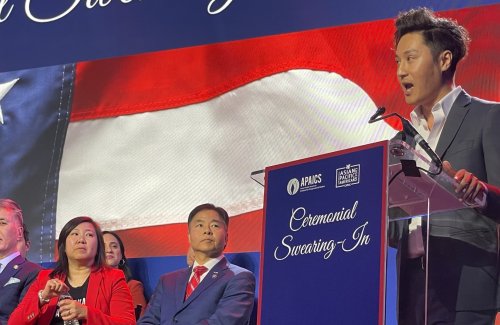
Jason has achieved numerous milestones, including being named Chairman of both the Asian Pacific American Institute for Congressional Studies (APAICS) and the California Asian Pacific Islander Legislative Caucus Institute (CAPILCI). These prestigious positions highlight his dedication to advocating for the representation and equity of the AANHPI community. Through these roles, Jason has been able to directly influence policies at both the national and state levels while fostering leadership development for the next generation.

In his current role at AT&T, Jason has demonstrated his commitment to supporting the AANHPI and LGBTQ+ communities through strategic partnerships, building strong relationships with stakeholders, and advocating for initiatives and policies that promote diversity and inclusion. His efforts have resulted in stronger connections, increased visibility for underrepresented groups, and meaningful investments in fostering equity and inclusion. However, Jason’s proudest accomplishment lies in the mentorship and guidance he has provided to emerging leaders, helping to shape the next generation of changemakers.

Jason shares with Asian Hustle Network, “Never underestimate the power of your story and the impact you can make. Our journeys, no matter how humble or challenging, hold immense value. They shape who we are and inspire others to dream bigger and aim higher.”

For Jason, the most rewarding achievement of his journey is witnessing the leaders he has mentored make meaningful contributions to their communities and careers. To him, success is not measured by personal accolades but by the impact one has on others and the legacy of opportunities created for future generations.

Success and the Journey Ahead

Jason’s vision is to create pathways that empower individuals to reach their full potential and, in turn, give back to their communities. He is dedicated to uplifting the Asian community by ensuring policies and decisions reflect our stories, perspectives, and needs. Through his work, he hopes to inspire others to take bold steps toward achieving greater representation and making their voices heard.

Jason affirms, “Let’s continue to hustle—not just for our personal ambitions, but for the collective success of our community. Together, we can create a future where every voice is heard, every dream is supported, and every barrier is broken.”

Connect With Jason

Facebook: Jason Chan

Linkedin: Jason C.

Twitter: Jason Chan

Instagram: @jayson326

Elegant Cinematic Wedding Thumbnail HD 169 (4)-png

News

Việt Nam Vô Địch: The Phenomenon of “Đi Bão”

“Đi bão! Đi bão!” “Việt Nam vô địch, Việt Nam vô địch!” Chanted the brewing crowd filling Vietnam’s streets after the nation won the AFF Cup.

As the world witnessed the triumph of Vietnam’s soccer team, foreigners and tourists coming to Vietnam were captivated by something else, đi bão. 

The term đi bão is an Internet term that the Vietnamese people coined to describe a parade-like occasion to express national pride, the latest example being the AFF Cup celebration. Through the victory, the term has risen into international popularity as a cultural phenomenon in Vietnam. 

On the surface level, foreigners would witness Vietnamese people flooding the street on their motorcycles, cheering, and raising flags. Yet, in a deeper investigation, the term đi bão defies translation. To a Vietnamese, the definition of the term is as foreign to any expat, yet it invokes a meaning, a feeling, a glorious aspect of Vietnamese culture that anyone on this earth can understand as if it were their mother tongue. Pride. 

People flooded the streets at 1 A.M. to celebrate Vietnam winning the AFF Cup (Image Source: Báo Phụ Nữ)

As the Vietnam soccer team won over Thailand in the AFF Cup, everyone knew what was going down. Silence. Then horns blared, motorbike engines revved, and metal clanged as thousands of flags were raised. Was it the spirit of football? Unlikely. What Vietnamese people love the most is a chance to gather and celebrate, cheering for their national flag. 

Pots and pans were used during ‘đi bão’ to support the cheering effort (Image source: Lao Động)
Thousands of Vietnamese rejoice as the match ends, signifying Vietnam’s triumph (Image Source: Hải Long, Dân Trí)

Đi bão is a one-night chance for the Vietnamese people to parade, to party, and to celebrate a collective victory of the nation. The people dressed in red with a smear of yellow makeup, the color of the Vietnamese flag, as bikers violated every traffic rule imagined. It didn’t matter, as everyone was in a sense of euphoria. Cheeky cardboard signs went up, shirts went off, and occasionally, a person too hyped for the occasion would lead the crowd’s chant.

The people of Hanoi raise their glasses and celebrate (Image source: Mạnh Quân, Dân Trí)
A son and dad celebrating Vietnam’s victory (Image source: Nam Anh, Dân Trí)
A man in a costume leads the crowd (Image source: VOV)

Đi bão beautifully reflects an element of Vietnam’s culture, the Vietnamese identity. The emotions and the experience transcend beyond any boundaries, borders, and football team. It was the loud sounds filled with excitement and pride that made the term đi bão so understandable and relatable. It was the collective joy that made even foreigners experience what it is like to be a Vietnamese for a night.

Tiến Linh [left], Duy Mạnh [middle], Xuân Son [right] in AFF Cup 2024 (Image source: Mạnh Quân, Dân Trí)

Tomo Credit headshots-3538-jpg

Awaken* newsletter

Transforming Access to Credit: A Conversation with Kristy Kim, Founder & CEO of TomoCredit

In this month’s edition of the Awaken* Newsletter, we speak with Kristy Kim, Founder and CEO of TomoCredit, a fintech startup focused on improving access to credit for underserved consumers. By using AI to evaluate real-time cash flow data rather than traditional credit scores, TomoCredit connects consumers with lenders.

Kristy discusses her journey as an immigrant, an Asian female founder, and an entrepreneur working to transform the financial industry. Through her leadership, TomoCredit aims to provide more people with better access to capital and lending opportunities.

Can you start by giving us an overview of your company and what you’re trying to solve?

Kristy Kim: Sure! At TomoCredit, our mission is to bridge the gap between underserved consumers and lenders using AI technology. We are focused on serving individuals who have been left behind by traditional financial systems, especially those without credit scores or with limited credit history.

There are millions of people in the U.S. who are underbanked, and the financial institutions that could potentially help them either don’t have access to their data or don’t understand their risk profile. We leverage AI to evaluate consumers based on their cash flow instead of relying solely on traditional credit scores. This enables us to match these individuals with lenders who are willing to serve them without taking on additional risk. Our platform helps both consumers and lenders—consumers get access to capital, and lenders expand their market in a low-risk way.

What motivated you to start TomoCredit?

As a first-generation immigrant from South Korea, I moved to the U.S. at eleven. In my early twenties, I faced the challenges of building my own credit history. After graduating from UC Berkeley, I worked in investment banking.

Despite having a stable income, I was denied an auto loan five times because I lacked a credit score. This experience highlighted a significant gap in the financial system, where many immigrants, young adults and many other underserved communities are excluded due to the absence of a credit history. After being turned down multiple times, I knew something had to change. I saw that the traditional credit system wasn’t serving millions of people, particularly immigrants, who had the ability to repay but lacked a credit history to prove it.

That experience of being excluded from the financial system really motivated me to find a way to help people like myself access the credit they needed. Determined to address this issue, I founded TomoCredit to provide credit solutions for those who, like me, struggle to access traditional credit avenues.

I wanted to create a system that didn’t rely on traditional credit scores but instead used alternative data, like cash flow, to assess creditworthiness. The idea was to connect underserved consumers to lenders in a way that wouldn’t increase their risk. TomoCredit was born out of this desire to make the financial system more inclusive—so others wouldn’t face the same rejections I did, and would have the chance to access capital and thrive.

As an immigrant founder, have you faced any challenges or biases in fundraising or building relationships with big institutions?

Kristy Kim: Yes, there are definitely challenges that come with being an immigrant founder, and at times, it can feel like an uphill battle. But, interestingly, my background has also played to my advantage.

As an immigrant, I have a unique lens on the problems facing underserved communities. I know firsthand what it’s like to struggle with the traditional credit system. I’ve faced the same barriers that many of our customers face, and that gives me an edge when I’m speaking to financial institutions. I’m able to say, “Look, I know my customers better than anyone else. These people are creditworthy, but they’re being overlooked by the traditional system.”

There is some bias, of course, especially when you’re dealing with legacy institutions, but I think they also recognize that I bring something different to the table—an intimate understanding of the market and the customers they often don’t have access to. Lenders are willing to listen because they know that by partnering with us, they can expand their pool of potential customers without taking on additional risk.

You’ve been in this industry for over five years now. What keeps you motivated despite the challenges you’ve faced?

Kristy Kim: That’s a great question. Honestly, the progress we’ve made keeps me motivated. Every year, I see the interest in our approach growing, and it reinforces that we’re heading in the right direction.

When we first started, it felt like I was an outsider trying to convince traditional financial institutions to embrace an entirely new way of evaluating credit. But now, year after year, we see more and more mainstream players realizing that there’s a huge market for underserved consumers—and that these consumers are creditworthy if we just use the right tools to understand them. It’s exciting to be at the forefront of this change.

For me, it’s not just about building a business—it’s about creating lasting impact. The U.S. consumer credit industry is worth over $4 trillion, and the fact that we are focusing on a largely ignored segment of that market feels like we’re making a real difference. And, of course, as a founder, seeing our technology evolve and improve with time and data is incredibly motivating.

How does your solution differ from other competitors in the market who are also targeting underserved consumers?

Kristy Kim: The key differentiator is that we don’t just rely on traditional credit scores to assess risk.

Our AI model is powered by cash flow data—essentially, we evaluate consumers based on their spending and income patterns, which gives a far more accurate picture of their financial health. Over the past five years, we’ve accumulated a wealth of data that allows us to refine our model, and with every new data point, we get better at underwriting.

Unlike competitors who may be using generic data or building from scratch, we have a more granular understanding of how underserved consumers behave financially. Additionally, the beauty of our system is that we’re not just looking at data from one financial institution—we’re aggregating data from multiple sources. Our customers might have accounts with multiple banks, and that gives us a fuller picture of their financial habits. In comparison, other companies might only have access to data from one bank, which limits their ability to assess risk accurately.

As a founder, what has been the most rewarding part of your journey so far, and what has been the hardest?

Kristy Kim: The most rewarding part has been seeing the validation from both the industry and our customers. When leaders of financial institutions tell me that TomoCredit makes sense, it’s incredibly validating. It’s a feeling of affirmation that, yes, we’re on the right path. But it’s also rewarding to see the real-world impact we’re having on people’s lives. We’ve helped thousands of people access capital who otherwise wouldn’t have had the chance.

On the flip side, the hardest part has been dealing with the mental burden of being a startup founder. When things are going well, it feels like everything is moving at full speed, but when challenges arise—whether it’s fundraising hurdles, market uncertainty, or hiring struggles—the pressure is immense. Unlike larger companies with more resources, startups have less margin for error. It can feel like one wrong move could jeopardize everything, and that can be emotionally exhausting. But it’s in those moments that you really find your resilience, and you learn that, no matter how tough it gets, you have to push forward.

As a seasoned founder, what key lessons from your previous startup experience have you applied to building TomoCredit?

When I launched my first company, I was in my early twenties, full of energy but lacking experience. It was a trial-and-error journey, where I learned a lot, but I quickly realized that having a clear vision and understanding the real impact you want to make is crucial.

Starting TomoCredit was a completely different experience. This time, I approached it with a clear strategy, having learned the importance of tackling a problem that I was personally passionate about. My previous startup experience taught me how to make more strategic decisions, prioritize what matters most, and stay resilient through the inevitable ups and downs of entrepreneurship.

What advice would you give to aspiring founders, particularly those who may be feeling discouraged after a tough year?

Kristy Kim: My advice would be to stay grounded in your purpose and conviction. It’s easy to get distracted by the ups and downs of the startup world, but at the end of the day, your mission should drive you more than the fear of failure or the setbacks you face along the way.

When I first started my company, it wasn’t about just building a business—it was about solving a real problem that I deeply cared about. The passion for the idea needs to be stronger than the fear of failure. Even if things don’t work out the way you hope, you can still be proud knowing that you tried to create something that could have made a real impact.

The most successful founders I know are the ones who are able to maintain a strong sense of purpose, even when it feels like everything is falling apart. If you believe in what you’re doing and are committed to the long-term vision, that will carry you through the hard times.

What are some recent key achievements or milestones that you’re excited to share?

Kristy Kim: Thanks for asking. First, our AI-driven platform continues to help underserved consumers access credit by using cash flow data to connect them with lenders.

We’ve also made significant strides in improving our underwriting capabilities by leveraging years of data to assess creditworthiness more accurately. This year, we paused issuing new credit cards to focus on refining our AI and underwriting technology. While we haven’t issued new cards yet, we’re still accepting customers and offering other financial services. Additionally, our partnerships with larger financial institutions are also growing, with increasing interest from major players. These collaborations are essential to our mission of expanding access to lending for underserved communities.

And lastly, on the team front, we’ve made several key hires, including the former CTO at Experian and the former CEO of LegalZoom. Their expertise in open banking and scaling high-growth companies will help us continue to expand our offerings and further our mission.

Looking ahead, what’s next for TomoCredit?

Kristy Kim: We’re expanding our offering, bringing more lenders into the network, and continuing to refine our AI technology to provide better risk assessments.

We’ve been growing the B2B side of our business over the last year, and we’re seeing significant interest from bigger players in the financial sector. We’re also planning to expand our product offerings to include more types of loans, like auto loans and mortgages, to help more customers get the access they need.

We’re also actively hiring, which is very exciting for us. We’re looking for a talented marketing person to help us build our brand and spread the word about what we’re doing. Our mission is to make financial access easier for everyone, and we’re excited to continue growing and impacting even more lives.


Kristy Kim’s journey proves that determination, a clear vision, and a deep understanding of your market can break through even the toughest barriers. At TomoCredit, she’s not just building a company; she’s seeking to reshape how credit is accessed, especially for those often left behind by traditional systems. Stay tuned for more updates on TomoCredit’s journey, and learn how they’re challenging the status quo while creating new opportunities for underserved communities.

Author: Donna Yu

24-10-05_JILLY-BING-jpg

News

Jilly Bing Brings Riley, the First Doll to Celebrate Mixed Asian Heritage and Diversity

Jilly Bing, the company known for the Jilly Doll and its mission to break down stereotypes about Asian American girls, is once again pushing boundaries for its community. Celebrating its heritage, Jilly Bing is expanding its collection with the Riley Doll, a new character designed to represent mixed Asian and Caucasian backgrounds.

A Founder’s Dream

Elenor Mak, the Chinese American founder of Jilly Bing, was inspired by her search for a doll that reflected her daughter’s heritage. This pursuit brought the Jilly Doll to life as a collection aimed at bringing representation to playtime, helping Asian children make sense of the world, their identities, and the roots of their traditions.

Elenor Mak, the Chinese American founder of Jilly Bing with the Riley Doll (Left) and the Jilly Doll (Right).(Image source: Jilly Bing)

Elenor Mak, the Chinese American founder of Jilly Bing with the Riley Doll (Left) and the Jilly Doll (Right).(Image source: Jilly Bing)

Mak stated to PR Newswire, “As the number of Americans identifying as mixed-race Asian grows, the Riley Doll offers children a reflection of their experiences, showing they can be 100% Asian, 100% Caucasian, and 100% themselves.”

From Dream To Reality

Riley is confident, loves snacks from her favorite Asian stores, and enjoys adventure. Mak continued, “The Riley Doll was created in response to strong consumer demand, as a mixed Asian doll was the top request from the Jilly Bing community. For so many of us, growing up meant feeling pressured to choose one side of our heritage. The Riley Doll is here to show kids they don’t have to choose—they can celebrate every part of who they are.”

The Riley Doll was created to help children celebrate their identity. (Image Souce: Jilly Bing)

The Riley Doll was created to help children celebrate their identity. (Image Souce: Jilly Bing)

The doll further propels Jilly Bing’s mission of bringing Asian American characters to life, representing the community’s diversity in backgrounds, appearances, interests, and personalities. Priced at $68, Riley is now available exclusively online at jillybing.com.

Featured Image Source: Jilly Bing